Picture this: a farmer in 19th century England stumbles upon a massive, fossilized tooth while digging in his field. Little did he know that this single discovery would help birth an entire scientific discipline that would forever change how we understand life on Earth. Before paleontology existed as a formal science, ancient bones were often dismissed as curiosities, mythical dragon remains, or even evidence of biblical giants. The systematic study of these prehistoric treasures didn’t emerge overnight—it was painstakingly constructed by brilliant minds who dared to question conventional wisdom about Earth’s ancient past.
When Giants Walked Among Ignorance

Long before scientists had names for creatures like Tyrannosaurus rex, people were finding massive bones that defied explanation. Indigenous cultures across North America had their own interpretations of these discoveries, often weaving them into spiritual narratives about thunder beings or ancient monsters. In medieval Europe, dragon folklore might have originated from accidental dinosaur bone discoveries. Imagine a peasant uncovering a massive skull with razor-sharp teeth—without any scientific framework to understand what they’d found, supernatural explanations seemed perfectly reasonable. These early encounters planted seeds of curiosity that would eventually bloom into rigorous scientific inquiry.
The Renaissance of Fossil Thinking

Leonardo da Vinci was among the first to propose that fossils weren’t just rocks that happened to look like living things. During the 1500s, while most scholars believed fossils were either biblical relics or nature’s strange artwork, da Vinci suggested they were actual remains of ancient creatures. His revolutionary thinking challenged religious doctrine and laid groundwork for future paleontological discoveries. The Renaissance period marked a shift from purely religious explanations toward observation-based reasoning. Scholars began collecting and studying fossils more systematically, though they still lacked the tools and knowledge to fully understand what they were examining. This period represents paleontology’s awkward teenage years—full of potential but not quite mature enough to stand as a legitimate science.
Mary Anning: The Fossil Hunter Who Changed Everything

Meet Mary Anning, perhaps paleontology’s most underrated pioneer. Working along England’s Jurassic Coast in the early 1800s, this remarkable woman discovered the first correctly identified ichthyosaur when she was just ten years old. Her finds weren’t lucky accidents—Anning possessed an uncanny ability to read rock formations and predict where fossils might be hiding. Despite facing gender and class discrimination, Anning’s discoveries provided crucial evidence for extinction and geological time scales. She found the first British pterosaur and several important marine reptiles, yet rarely received proper credit during her lifetime. Today, paleontologists recognize her as one of the field’s founding mothers, whose meticulous work established standards for fossil collection and preparation that scientists still follow.
Georges Cuvier: The Father of Extinction

Georges Cuvier revolutionized paleontology by proving that extinction was real—a concept that seemed impossible to many 18th-century minds. Using comparative anatomy, he demonstrated that fossil animals were fundamentally different from any living species, forcing scientists to confront the uncomfortable truth that entire species had vanished from Earth. His work on mastodon remains provided undeniable proof that these creatures no longer existed anywhere on the planet. Cuvier’s methodical approach to fossil analysis established paleontology as a legitimate scientific discipline, complete with rigorous standards for evidence and interpretation. He essentially gave paleontology its backbone, transforming it from casual fossil collecting into serious scientific research.
The Great Bone Wars Begin

America’s Wild West wasn’t just famous for cowboys and gold rushes—it became the battleground for paleontology’s most infamous rivalry. Othniel Charles Marsh and Edward Drinker Cope engaged in a bitter, decades-long competition known as the “Bone Wars,” racing to discover and name new dinosaur species across the American frontier. Their rivalry, while professionally destructive, led to an explosion of dinosaur discoveries. Teams working for both paleontologists dynamited fossil sites, stole specimens, and even sabotaged each other’s excavations. This chaotic period might seem unscientific by today’s standards, but it resulted in the discovery of famous dinosaurs like Triceratops, Stegosaurus, and Allosaurus. The competitive atmosphere pushed both men to refine excavation techniques and develop better methods for transporting fragile fossils across vast distances. Their feud inadvertently accelerated paleontology’s development as a rigorous field science.
Darwin’s Missing Links and Fossil Evidence

Charles Darwin’s theory of evolution created an urgent need for paleontological evidence. Critics demanded fossil proof of transitional forms—the “missing links” that would demonstrate gradual change between species over geological time. Paleontologists suddenly found themselves at the center of one of science’s most heated debates. The discovery of Archaeopteryx in 1861 provided exactly the kind of transitional fossil Darwin’s theory predicted. This bird-like dinosaur possessed both feathers and reptilian features, offering tangible evidence for evolutionary change. Paleontology transformed from a descriptive science into evolution’s detective agency, searching for clues about life’s interconnected history. Darwin himself was deeply frustrated by what he perceived as gaps in the fossil record, but paleontologists have since filled many of these gaps with spectacular discoveries that confirm evolutionary predictions.
Technology Meets Ancient Bones

The 20th century brought technological revolutions that transformed how paleontologists work. X-ray technology allowed scientists to peer inside fossilized specimens without damaging them, revealing hidden anatomical details that had been invisible for millions of years. Electron microscopy opened up entirely new scales of investigation, enabling researchers to study cellular structures preserved in fossils. Computer tomography (CT scanning) revolutionized the field by creating detailed 3D models of fossil specimens, allowing scientists to virtually dissect creatures that died eons ago. These technological advances turned paleontology from a primarily outdoor pursuit into a high-tech laboratory science. Modern paleontologists can now reconstruct ancient ecosystems with unprecedented accuracy, understanding not just what creatures looked like, but how they moved, what they ate, and how they interacted with their environments.
Molecular Paleontology: When DNA Meets Deep Time

The discovery that genetic material could survive in ancient specimens opened an entirely new chapter in paleontological research. Scientists have successfully extracted and analyzed ancient DNA from specimens tens of thousands of years old, providing direct genetic evidence about extinct species and their relationships to modern organisms. While extracting DNA from dinosaur bones remains beyond current capabilities (despite what Hollywood movies suggest), molecular paleontology has revolutionized our understanding of more recent extinctions. The analysis of mammoth DNA has informed modern conservation efforts and even sparked discussions about de-extinction technologies. This merger of genetics and paleontology represents one of the field’s most exciting frontiers, where ancient molecules tell stories that bones alone cannot reveal.
Mass Extinctions: Reading Earth’s Disaster Stories

Paleontologists have identified at least five major mass extinction events in Earth’s history, each recorded in rock layers like chapters in a disaster novel. The most famous—the extinction that killed non-avian dinosaurs 66 million years ago—was solved through paleontological detective work that identified asteroid impact evidence. These extinction studies have profound implications for modern conservation biology. By understanding how past ecosystems collapsed and recovered, paleontologists provide crucial insights about current biodiversity crises. The field has evolved from simply describing ancient life to predicting how ecosystems might respond to environmental changes. Each mass extinction event offers unique lessons about resilience, adaptation, and the fragility of complex ecosystems—knowledge that becomes increasingly relevant as modern species face unprecedented environmental challenges.
Feathered Dinosaurs: Rewriting Prehistoric Narratives

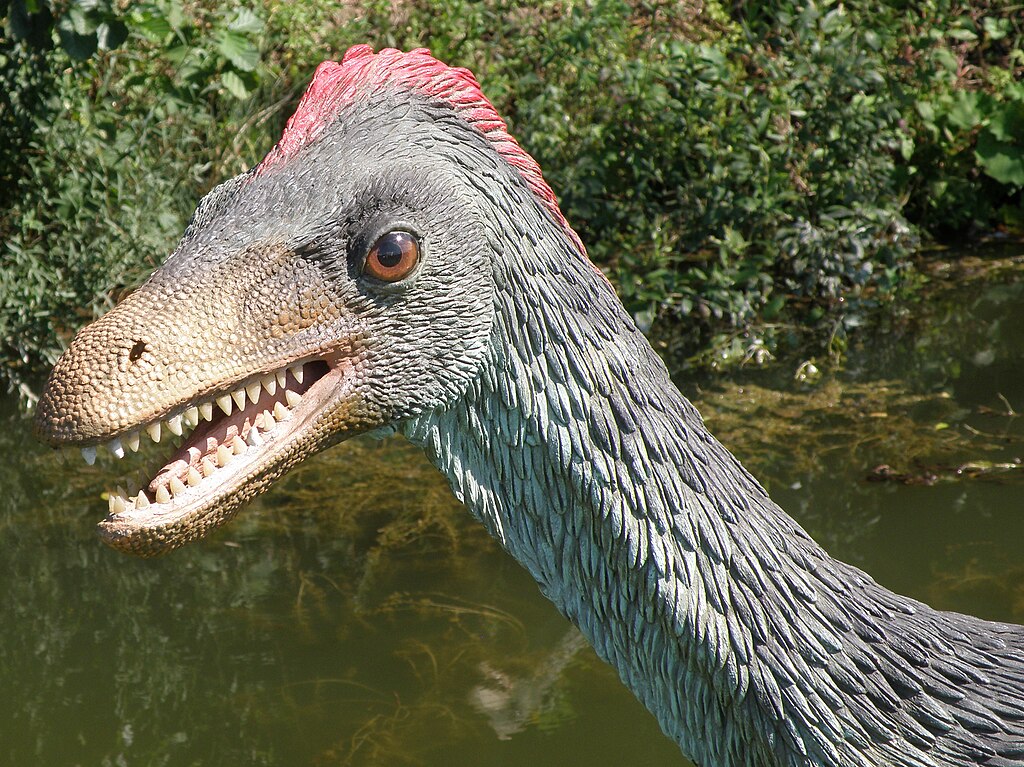
The discovery of feathered dinosaurs in China during the 1990s completely revolutionized how we imagine prehistoric life. These specimens preserved actual feathers, showing that many dinosaurs were colorful, fluffy creatures rather than the scaly monsters depicted in popular culture. Advanced techniques now allow scientists to determine the actual colors of dinosaur feathers by analyzing preserved melanosomes—cellular structures that contained pigments. We now know that some dinosaurs had iridescent black feathers, while others sported bright reds and browns. These discoveries have transformed dinosaurs from mysterious monsters into vibrant, complex animals with rich behavioral repertoires. The feathered dinosaur discoveries also strengthened the evolutionary connection between dinosaurs and modern birds, providing some of the most compelling evidence for evolution ever discovered.
Trace Fossils: Reading Ancient Behavior

Not all paleontological discoveries involve bones—sometimes the most revealing fossils are simply traces of ancient activity. Footprints, coprolites (fossilized feces), and burrows provide direct evidence of how prehistoric creatures behaved, moved, and interacted with their environments. Dinosaur trackways reveal complex social behaviors, showing evidence of herding, parental care, and migration patterns. Some tracks preserve moments of drama, such as predator-prey interactions frozen in stone. Coprolites contain undigested remains that reveal ancient food webs and dietary preferences with startling accuracy. These trace fossils often provide more information about ancient ecosystems than skeletal remains alone, offering glimpses into the daily lives of creatures that lived millions of years ago.
Modern Paleontology: Beyond Dinosaurs

While dinosaurs capture public imagination, modern paleontology encompasses far more than charismatic megafauna. Paleobotanists study ancient plant life, revealing how terrestrial ecosystems evolved and responded to climate changes. Micropaleontologists examine microscopic fossils that tell stories about ancient oceans and atmospheric conditions. Paleontology now intersects with climate science, providing data about how Earth’s systems responded to past environmental changes. This research has become crucial for understanding current climate trends and predicting future environmental scenarios. The field has evolved from a purely historical science into a predictive tool for understanding Earth’s future. Modern paleontologists work in laboratories, use sophisticated imaging equipment, and collaborate with specialists from dozens of other scientific disciplines to unlock secrets preserved in stone.
Citizen Science: Democratizing Discovery

Today’s paleontology isn’t limited to professional scientists with advanced degrees. Citizen science programs allow ordinary people to contribute to paleontological research through online platforms, field expeditions, and fossil preparation work. Amateur fossil hunters make significant discoveries that advance scientific knowledge. Programs like eFossils and DinoSomeFun enable volunteers to help classify fossils, measure specimens, and identify new species from their home computers. Social media has created communities of fossil enthusiasts who share discoveries and collaborate on research projects across geographic boundaries. This democratization of paleontological research has dramatically accelerated the pace of discovery while inspiring new generations of scientists. The field that began with a few curious individuals examining strange bones has become a global community of researchers and enthusiasts working together to understand life’s history.
The Future of Ancient Life

Paleontology continues evolving as new technologies emerge and interdisciplinary collaboration expands. Artificial intelligence now helps identify fossil specimens, while virtual reality allows researchers to explore ancient environments in immersive detail. Advanced chemical analysis techniques reveal information about ancient atmospheres, temperatures, and ecosystem dynamics that seemed impossible to determine just decades ago. The field faces exciting challenges as researchers work to understand how life might respond to current environmental changes by studying past extinction and recovery events. Paleontology has transformed from a descriptive science focused on naming species into a predictive discipline that informs conservation strategies and climate research. Space exploration has even created a new branch called astropaleontology, where researchers search for signs of ancient life on other planets using techniques developed for studying Earth’s fossil record.
Conclusion

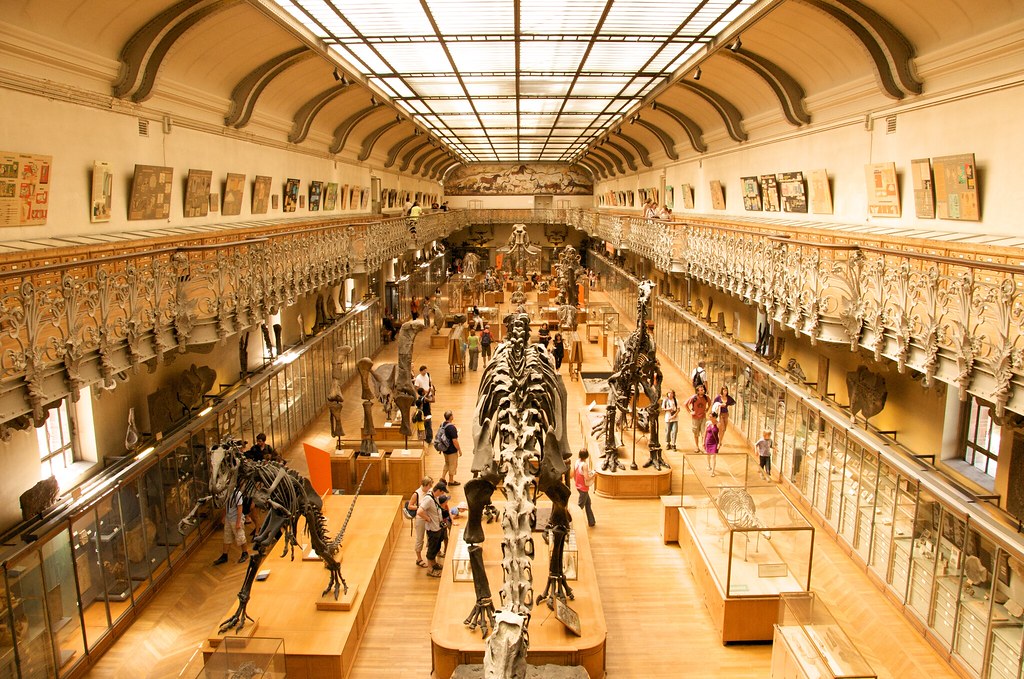
From those first mysterious bones that puzzled our ancestors to today’s high-tech laboratories filled with CT scanners and DNA sequencers, paleontology represents one of science’s most remarkable success stories. What began as simple curiosity about strange stones has grown into a sophisticated discipline that reveals the deepest secrets of life on Earth. The next time you see a dinosaur skeleton in a museum, remember that you’re looking at the end result of centuries of scientific detective work—a testament to human curiosity and our relentless drive to understand our planet’s incredible history. What mysteries do you think still lie buried beneath our feet, waiting for the next generation of fossil hunters to uncover?