
A rancher cracks open a rock in Texas and a rusted iron hammer falls out. A miner splits open a lump of coal and finds a tool that supposedly predates humans by 300 million years. Online, these stories spread like history itself just got caught lying.
Here’s the twist nobody tells you upfront: some of these objects really do embarrass the textbooks, just not in the way the headlines claim. Others fall apart the second a real geologist picks them up. Below are the 11 cases people can’t stop arguing about, and what’s actually left standing once the dust settles.
#1 – The “London Hammer” That Looks Weirdly Modern
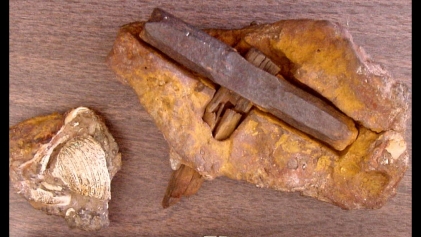
Found near London, Texas, in the 1930s, this iron hammer head with a fragment of wooden handle still attached looks almost boring at first glance. Then comes the claim that made it famous: it was supposedly locked inside rock linked to Cretaceous strata, which would make it over 100 million years old. If true, that single object would break human evolution as we understand it.
Geologists took one look and spotted the problem. The “rock” around the hammer isn’t ancient bedrock at all, it’s a concretion, a hard mineral crust that can form around an object in decades, not eons. The iron itself matches ordinary 19th-century tool-making, high chlorine content and all. Most researchers now peg it as a mining or carpentry tool from the 1800s that got sealed inside a stone-like nodule, then got mistaken for a miracle.
#2 – The Alleged 300-Million-Year-Old “Coal Hammer” of Texas
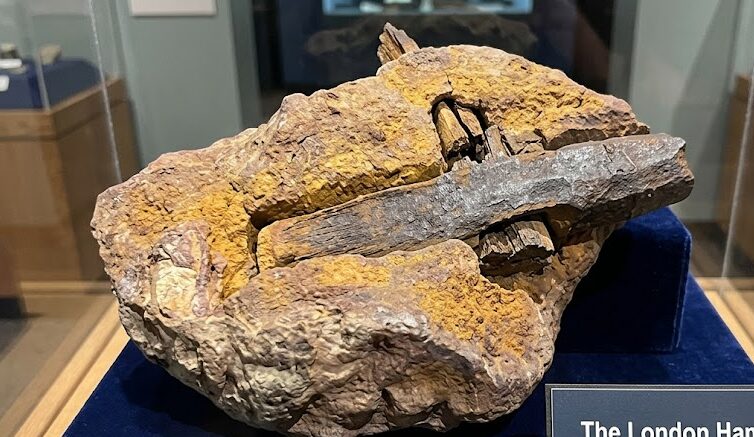
The story practically writes itself: a miner splits open a chunk of coal and a hammer tumbles out, supposedly hundreds of millions of years old. It’s the kind of tale that feels rebellious to share, because it seems to dare science to explain it.
Except almost none of it holds up to documentation. Coal seams crack, collapse, and get infiltrated by newer material constantly. A tool can drop into a fracture, get surrounded by mineral-rich water, and end up sealed inside something that looks ancient to anyone without a microscope. The coal seam is genuinely old. The hammer almost certainly isn’t. It’s a modern object wearing an old address.
#3 – The Klerksdorp Spheres: Machine Parts or Natural Oddities?

Pulled from South African rock layers dated at a staggering 2.8 billion years, these small grooved spheres look unnervingly deliberate, like ball bearings from a lost civilization. Some even have faint lines that resemble machining marks.
Nature, it turns out, is a phenomenal counterfeiter. Most of these spheres are natural concretions of pyrophyllite or similar minerals, shaped by volcanic and metamorphic forces that produce eerily regular forms. Slice one open and you usually find concentric mineral layers, not a machined core. Still, a handful of specimens are unusually symmetrical enough that even skeptical geologists admit the exact growth process isn’t fully mapped out, which is exactly the crack that keeps the mystery alive.
Fast Facts
- Mostly found in pyrophyllite deposits near Ottosdal, South Africa
- Host rock dated to roughly 2.8 billion years old
- Typical size: about 1 to 4 inches across
- Many show two or three parallel grooves circling the surface
- No confirmed specimen has ever shown an internal mechanical structure
#4 – The “Coso Artifact” Spark Plug Inside a Geode-Like Nodule
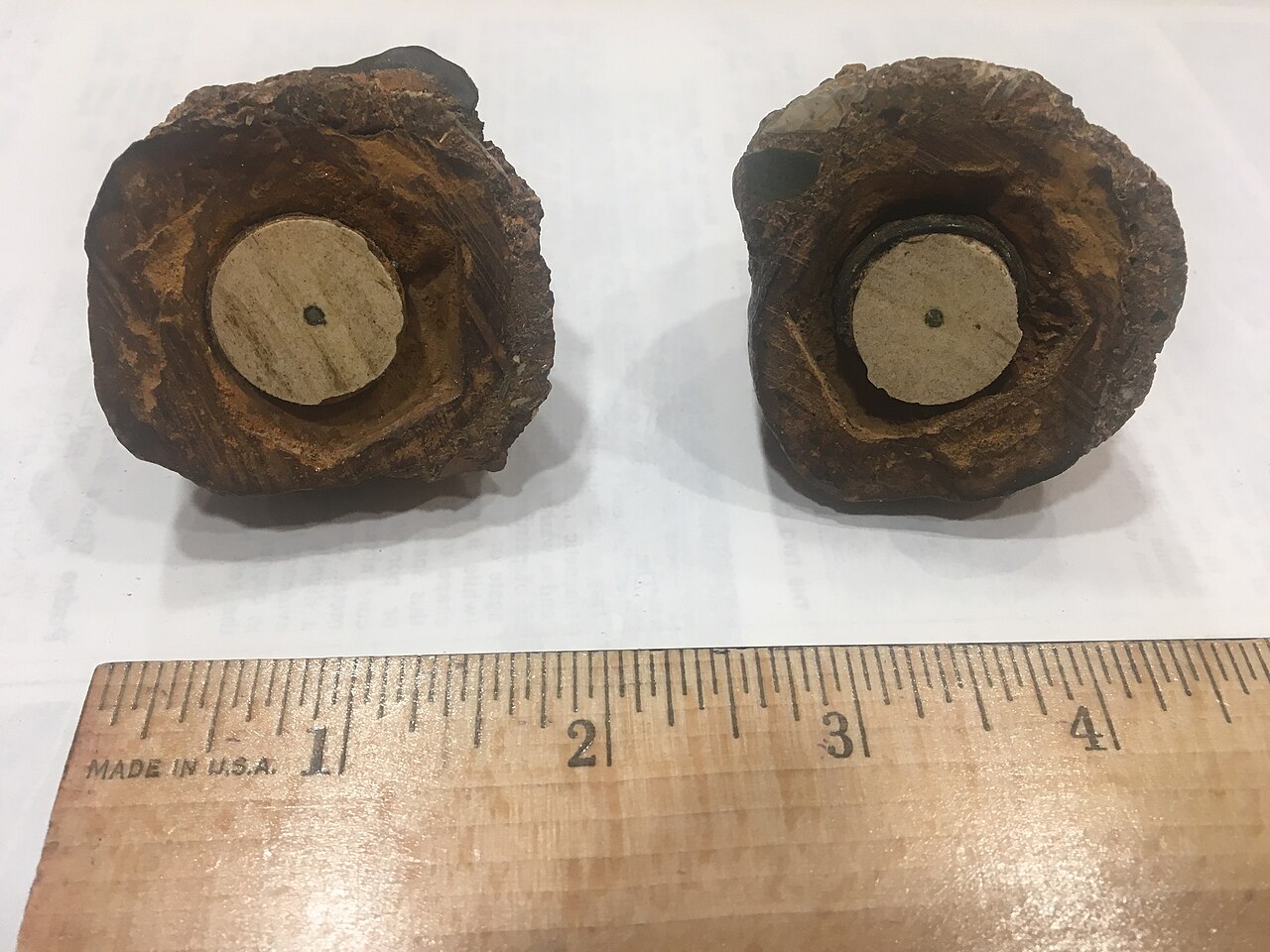
In 1961, three rockhounds near Olancha, California, cracked open what they thought was a geode and found something that looked disturbingly like a spark plug fused inside solid rock. Word spread fast, and soon people were calling it a 500,000-year-old machine part.
The reality is almost funnier than the myth. The “rock” is an iron oxide concretion, the kind that can wrap around a lost object in a few decades. Spark plug historians identified it as a near match for a 1920s-1930s Champion plug used in early engines and farm equipment. Somebody lost a spark plug in mineral-rich mud, nature did the rest, and a misread nodule turned into a supposed time machine.
#5 – The “Nail in Sandstone” and the Problem of Reworked Sediments
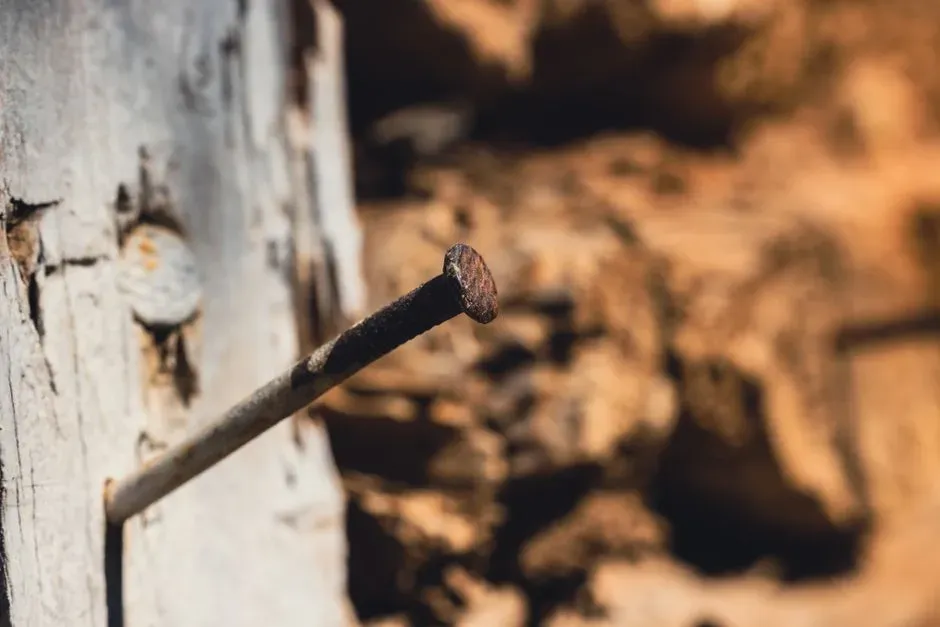
Stories of nails and screws trapped inside stone hundreds of millions of years old show up constantly, and the bait is obvious: if a hand-forged nail really formed alongside the rock around it, every history book would need rewriting overnight.
But sandstone is just compacted sand, and sand moves. It gets reworked by water, landslides, and human digging long after it first formed. If a nail slips into a crack in partially hardened sediment and mineral water cements the gap shut, it visually mimics a nail born inside solid rock. Re-examined specimens often show the metal cutting straight across bedding planes, which means it arrived after the rock existed, not with it. Interesting? Sure. Timeline-breaking? Not with what’s actually been documented.
#6 – The “Ancient” Metal Tube in 65-Million-Year-Old Chalk
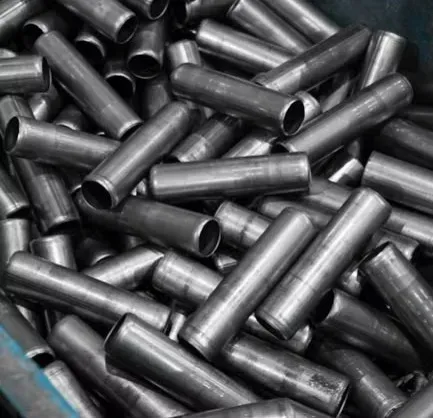
Old newspapers loved this one: deep drilling operations supposedly pulling metal tubes and spheres out of Cretaceous chalk dated to 65 million years, long before any human ancestor existed. One widely repeated French case became a staple of “forbidden history” lists.
The problem is almost every account traces back to a brief, sensational report with no surviving sample and no follow-up. Industrial drilling is messy business, machinery sheds bits of metal that jam boreholes and get hauled up looking embedded in ancient rock when they’re really just lodged in fractures or contaminated during extraction. The chalk may genuinely be that old. The metal almost certainly isn’t. Without lab analysis, it stays a colorful anecdote, not proof of anything impossible.
#7 – The Piri Reis Map and Claims of Lost Surveying Tools

Not a tool you can hold, but the 1513 Piri Reis map keeps getting dragged into these arguments because some claim it shows an ice-free Antarctic coastline, supposedly requiring surveying precision “no accepted timeline can accommodate.”
Cartographers see something far less dramatic. The map is a patchwork of earlier Islamic and Mediterranean charts stitched together with Portuguese voyage reports, and the alleged Antarctic coastline is more plausibly a distorted stretch of South America, warped by the projection habits of the era. Early modern sailors did carry real tools, astrolabes, cross-staffs, dead reckoning, and they were far sharper navigators than pop culture gives them credit for. The real story isn’t secret ancient GPS, it’s that we keep underestimating how methodical pre-modern explorers actually were.
#8 – The Antikythera Mechanism: Greek Gears That Shouldn’t Exist (But Definitely Do)
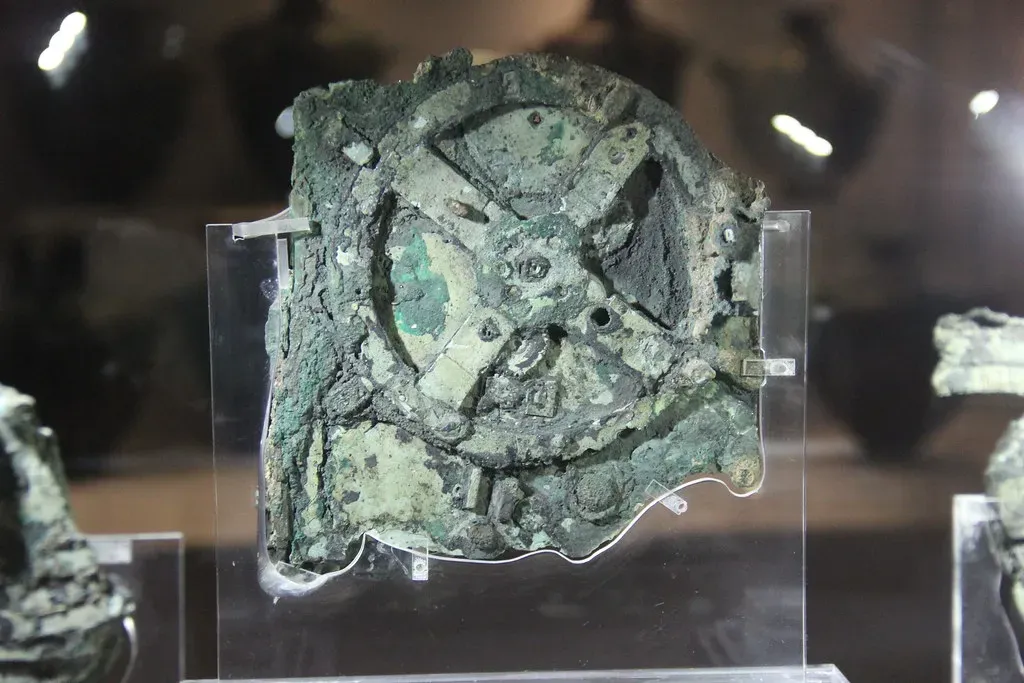
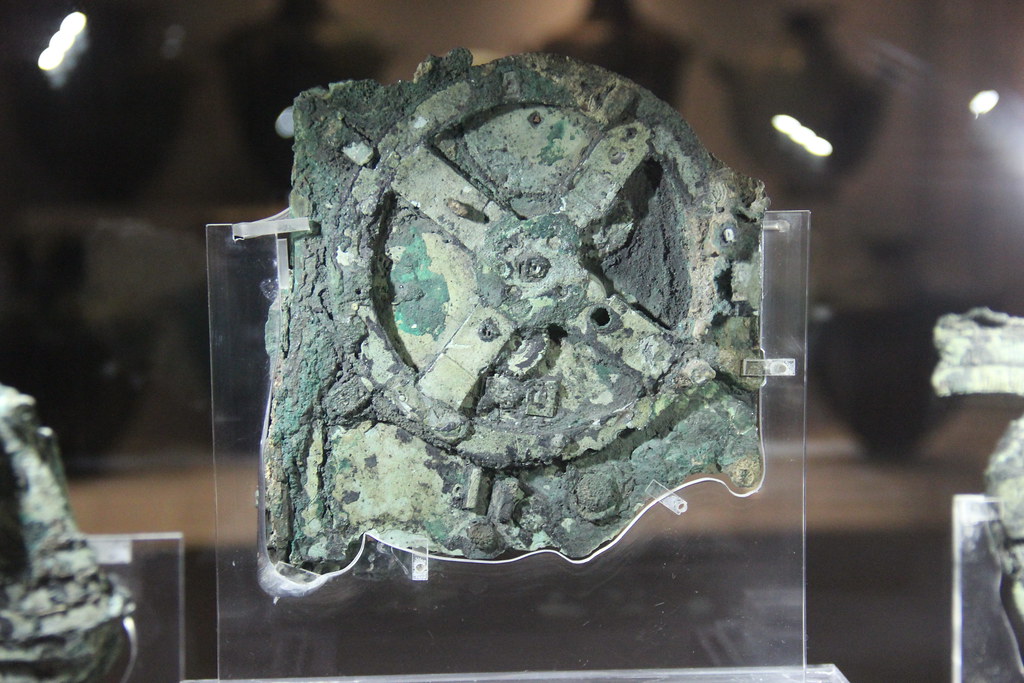
This one is different from every entry so far, because it’s real, it’s been laboratory-scanned, and it genuinely embarrasses old textbooks. Pulled from a 1st-century BCE shipwreck near the Greek island of Antikythera, the corroded bronze lump turned out to be a gear-driven analog computer.
CT scans revealed over 30 precisely cut bronze gears capable of predicting solar and lunar eclipses and tracking astronomical cycles with startling accuracy. Historians used to assume this level of gearing didn’t appear until medieval clockmakers. It forced a quiet admission across the field: ancient Greek engineers had fine-toothed gear technology roughly a thousand years earlier than anyone credited them for. Nothing about it demands a lost super-civilization. It just demands we stop calling ancient cultures primitive.
Why It Stands Out
- Recovered in 1901 from a shipwreck off the coast of Antikythera, Greece
- Contains at least 30 interlocking bronze gears in a single hand-cranked device
- Could predict solar and lunar eclipses years in advance
- Tracked the four-year cycle of the ancient Olympic Games
- No comparable gear complexity resurfaces in the historical record for roughly a thousand years
#9 – Roman Concrete and the “Forgotten Recipe” Problem

Ask anyone when self-healing, ultra-durable concrete was invented and they’ll say “recently.” Meanwhile, Roman harbor piers and sea walls poured over 1,800 years ago are still standing in the ocean, while plenty of 20th-century concrete in similar conditions has already crumbled.
Modern materials science eventually explained why. Romans mixed volcanic ash, lime, and seawater in a way that slowly grows rare mineral crystals inside cracks, actually strengthening the concrete over centuries instead of weakening it. Nobody fully understood this chemistry again until the 21st century. This isn’t a mystery of impossible physics, it’s a story of genuinely advanced material science that got mentally filed under “primitive” simply because it came from the wrong era.
Worth Knowing
- Roman harbor concrete has survived direct seawater exposure for close to 2,000 years
- Key ingredient was volcanic ash, often sourced near the Bay of Naples
- Many modern marine concrete structures show serious wear within 50 to 100 years
- Researchers confirmed the concrete grows a rare mineral in its cracks over time, reinforcing rather than weakening it
#10 – The Baghdad “Batteries” and Misread Ancient Science
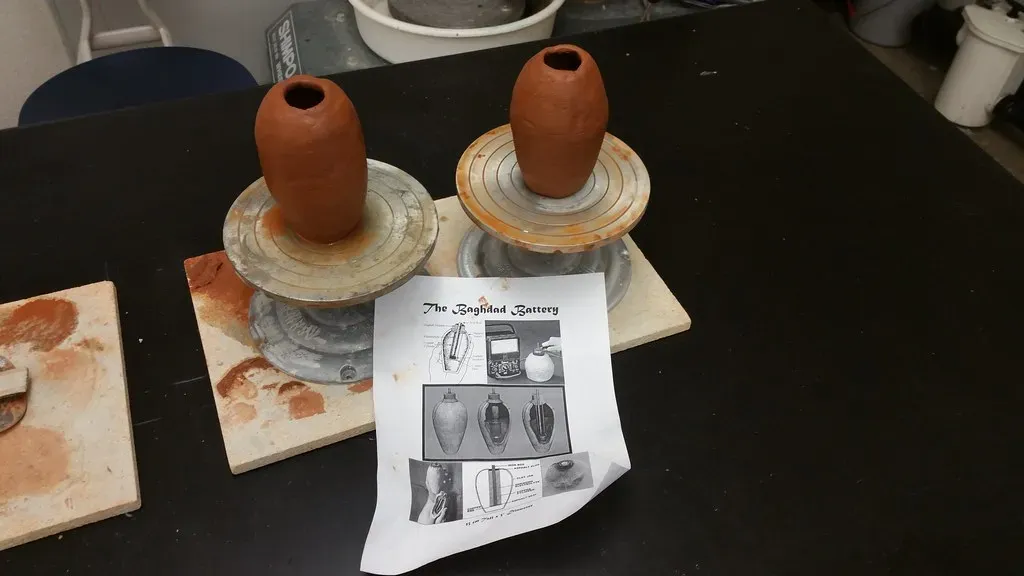
Small ceramic jars from Iraq, dated somewhere between the 1st century BCE and a few centuries CE, come fitted with an asphalt plug, a copper cylinder, and sometimes an iron rod. In the 1930s and 40s, researchers speculated these could function as crude galvanic cells, and the idea that ancient people secretly had batteries exploded across pop culture.
Reproduction experiments confirm you really can generate a faint current if you fill one with the right acidic liquid. But there’s no wiring, no connected devices, and no evidence these jars were ever used for anything electrical. Archaeologists lean toward more grounded explanations, like storage containers for scrolls or vessels tied to metal-plating processes. The real headline isn’t a lost power grid, it’s how far the internet can stretch “technically possible” into “definitely happened.”
#11 – The Out-of-Place Precision of Neolithic Stoneworking
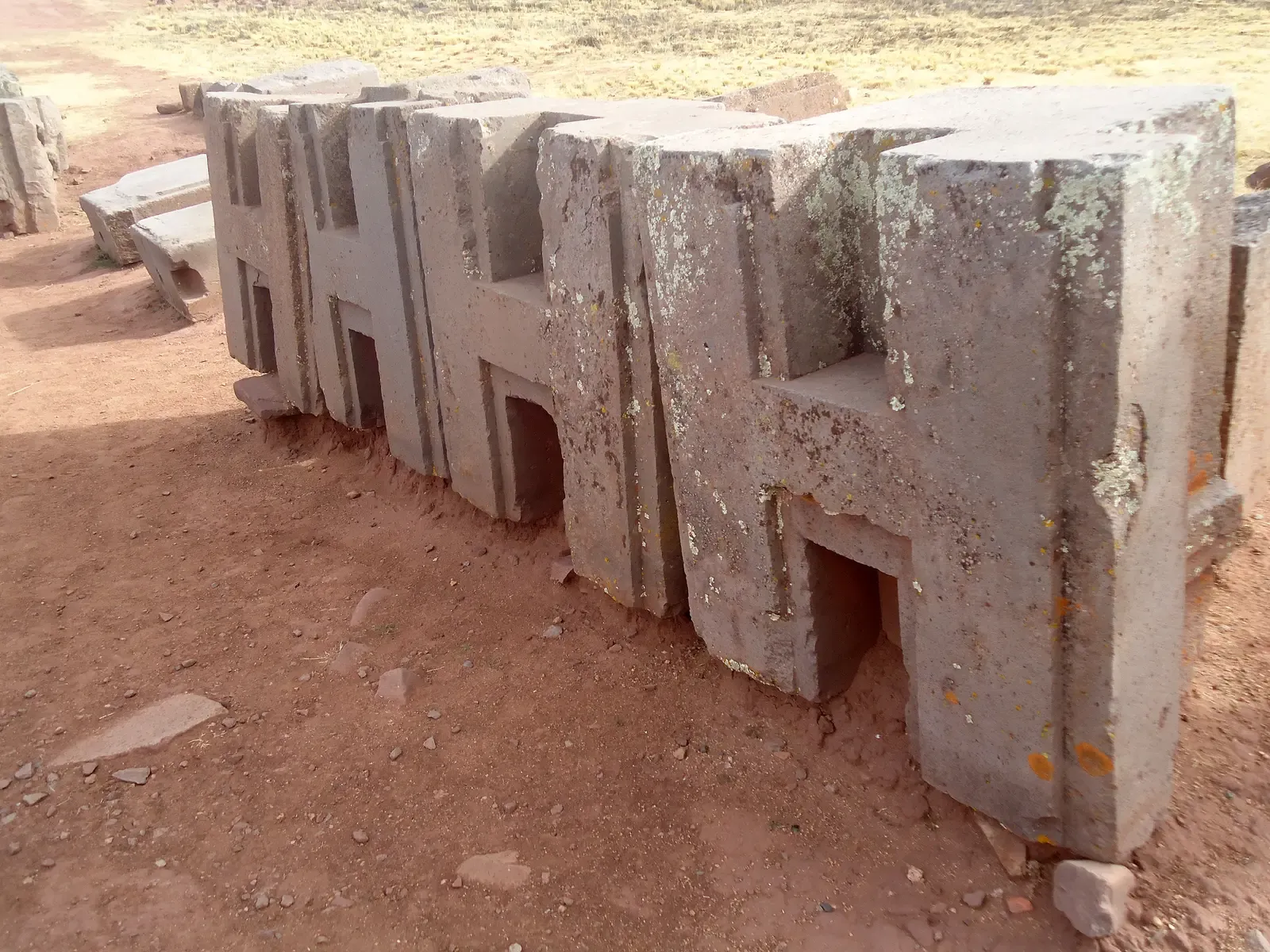
The most unsettling “ancient tools” on this list aren’t loose objects at all, they’re the stone surfaces themselves. Sites like Puma Punku in Bolivia and parts of Giza in Egypt show blocks with joins so tight and angles so sharp they look, at first glance, machine-cut.
Experimental archaeology has repeatedly reproduced these results using abrasive drilling with sand, harder stones, and copper or bronze tubes, plus patient leverage and controlled fracturing. That said, some drill holes show spiral striations that are genuinely hard to match with simple hand tools, and the sheer precision of certain joinery hints at standardized measuring systems we haven’t fully reconstructed. The timeline can accommodate skilled Neolithic engineers just fine. What it struggles with is our own stubborn refusal to believe “primitive” people could organize labor this precise without modern machines.
At a Glance
- Some Puma Punku blocks fit together with gaps smaller than a millimeter
- Certain Giza casing stones were shaped to fit within just a few millimeters
- Experimental archaeologists have replicated similar joins using copper tools and abrasive sand
- Some drill holes show spiral striations consistent with hand-powered rotary drilling
When people say “11 ancient tools that no accepted timeline can accommodate,” they’re half right, just for the wrong reasons. The sensational coal hammers, nails in sandstone, and spark plugs in nodules mostly collapse under close geological scrutiny. They don’t rewrite human origins, they expose how badly laypeople misunderstand rock formation, mining, and context.
But the real shockers on this list, the Antikythera mechanism, Roman concrete, the ultra-precise stonework, don’t challenge the physics of time. They challenge our ego. They prove that advanced, specialized knowledge can erupt, flourish, and then vanish so completely that later ages mistake its remnants for impossible technology.
My honest take after digging through all eleven: we’re not missing a lost civilization of aliens or time travelers. We’re missing humility about our own ancestors. The timeline mostly stands. What keeps breaking is our assumption that older automatically means dumber, and every genuine outlier on this list proves that assumption wrong all over again.