
Most people assume myths about extinct animals grow out of ancient folklore or hazy campfire tales passed down for generations. The truth is stranger and a lot more embarrassing: a shocking number of the “facts” you know about extinct species trace back to one loud, confident storyteller, then got copy-pasted for a hundred years without a single fact-check.
We didn’t just lose these animals to time. We lost the truth to repetition. Thirteen of the most viral extinction stories in history, the ones you’ve probably repeated yourself, turn out to rest on a single account each. Here’s what actually happened, and why nobody stopped to check.
#1 – The “Last Dodo Killed by a Drunken Sailor” Story
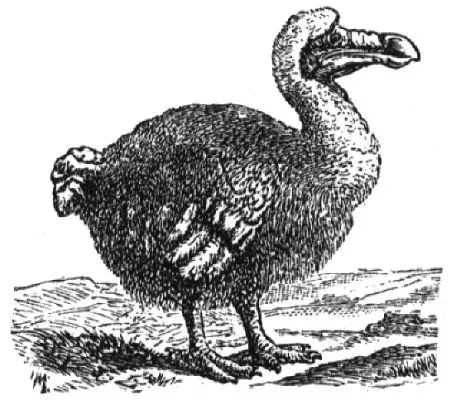
The claim sounds almost too cinematic to be real: one sloppy sailor on Mauritius raised his musket, fired once, and wiped an entire species off the planet in a single afternoon. It’s a great story. It also traces back to a single early-20th-century popular natural history writer who wanted a clean villain and a neater ending than reality offered. Actual ship logs and colonial records from Mauritius tell a messier story: dodos were hunted by many crews over many decades, and nobody ever recorded which bird was “the last.”
The extinction was slow, ugly, and driven by habitat destruction and invasive rats, pigs, and monkeys, not one dramatic trigger pull. So why did the drunken-sailor version survive a hundred years? Mid-century children’s books and documentaries lifted the same anecdote almost word for word without citing where it came from, and once textbook authors repeated it, the story felt official. Once a story gets taught in schools, people defend it emotionally, which is exactly why suggesting the dodo simply faded away, with no final tragic scene, still makes some readers uncomfortable.
Fast Facts
- Dodos lived only on Mauritius, a single island in the Indian Ocean
- The last confirmed sighting was around 1662, with unverified reports lingering into the 1680s
- No written record names a single “last dodo” or its cause of death
- Rats, pigs, and monkeys carried aboard ships destroyed dodo nests for decades
#2 – The Passenger Pigeon “Sky Darkening” Exaggeration

You’ve heard the image: flocks of passenger pigeons were so dense they blotted out the sun for three straight days. It’s one of the most repeated lines in American natural history, and it comes from a single 19th-century sportsman’s memoir, not a scientific survey of any kind. Historians who checked weather logs, hunting records, and local newspapers found something the memoir left out: those “three days of darkness” almost certainly blended a genuinely massive flock with an unrelated heavy smoke event from forest-clearing fires happening at the same time.
Early conservationists, desperate to shock a public that didn’t yet believe extinction was possible, grabbed the quote, stripped away the context, and used it in speech after speech. By the 1920s, nature writers were citing each other instead of the original memoir, and the same overcooked passage quietly ricocheted through a century of articles. That doesn’t mean passenger pigeons weren’t absurdly numerous, they were, but the exact image of “no sunlight for days” became less a fact and more a moral parable, one too good to fact-check.
There will always be pigeons in books and in museums, but these are effigies and images, dead to all hardships and to all delights.
Aldo Leopold
#3 – The Thylacine “Last One Froze to Death in Neglect” Narrative
![#3 - The Thylacine "Last One Froze to Death in Neglect" Narrative (National Archives of Australia [1] Image no. : A1200, L35618 Barcode : 11450586, Public domain)](https://nvmwebsites-budwg5g9avh3epea.z03.azurefd.net/dinoworld/33e8bd8411008157c7f53d0837358b6e.webp)
The standard story goes like this: the last Tasmanian tiger died alone in a Hobart zoo in 1936 after keepers left it outside its shelter overnight, freezing to death in one small, cruel oversight. Most people don’t realize this specific neglect narrative was popularized by a single activist writer in the 1960s, three decades after the animal had already gone extinct. Surviving zoo records are frustratingly thin, they confirm the last captive thylacine died in September 1936, but say nothing about a detailed cause, and veterinary notes and weather reports only suggest cold stress may have contributed.
So why did one dramatic version take over the whole narrative? Because it turned a genuinely complicated story, bounties, habitat loss, decades of government indifference, into a single, rage-inducing scene. A careless zookeeper and one cold night are just easier to hate than a century of policy failure. Even modern documentaries still echo that 1960s wording almost verbatim, and some biologists now push back hard, arguing that framing the thylacine as the victim of one man’s carelessness quietly erases the real systemic lessons we’re supposed to learn from it.
#4 – The Great Auk “Priests Ordered the Last Birds Killed as Witches”
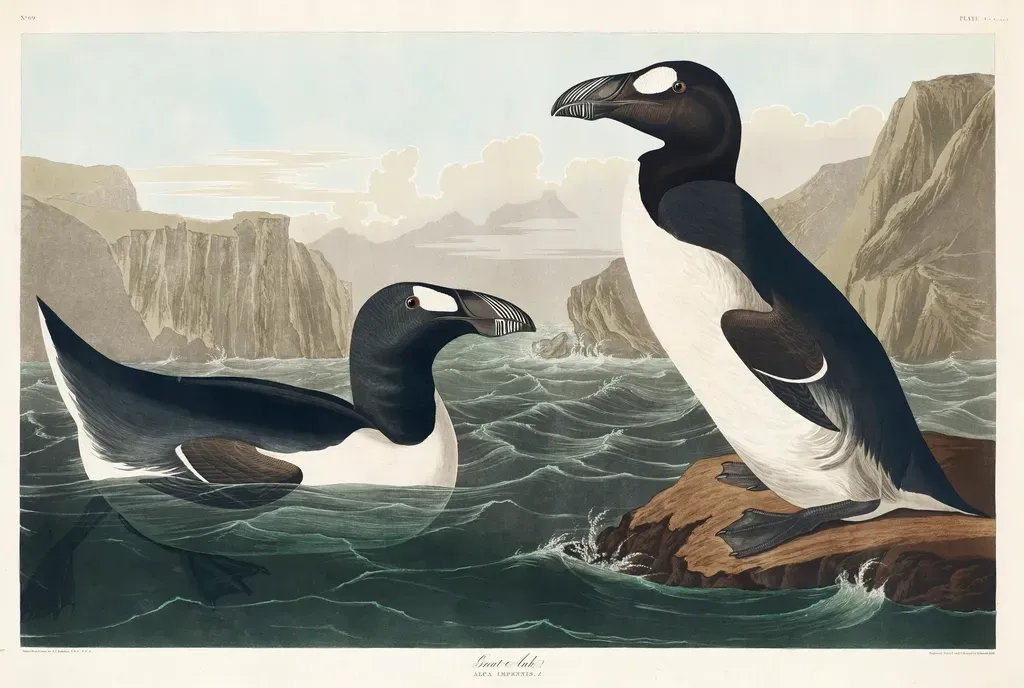
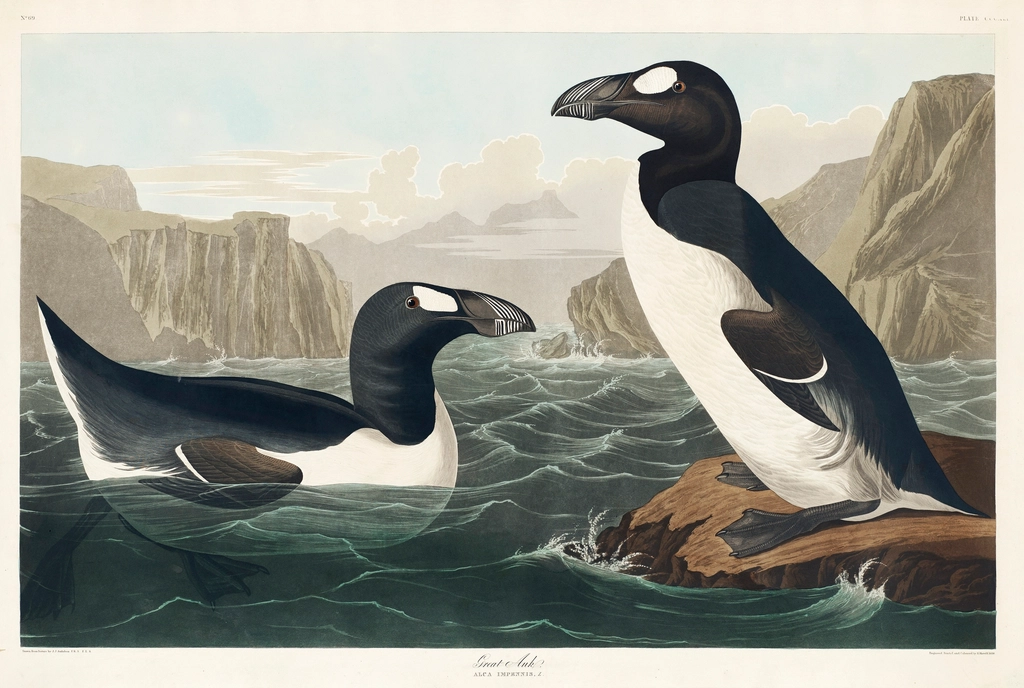
One of the most dramatic claims in all of extinction lore says Icelandic priests ordered the last great auks killed as “witch birds” during a storm, blaming the birds for the bad weather. The uncomfortable truth is that this entire story rests on a single 19th-century secondary account, written by a clergyman retelling local oral history with no surviving court records to back up the details. Somewhere along the way, “a bird was killed by superstitious fishermen” quietly upgraded itself into “the last great auks were officially executed as witches,” and later popularizers just kept repeating each other.
Archaeological digs and hunting records paint a far less magical picture: great auks were harvested for meat, feathers, and oil across multiple North Atlantic colonies for generations. Their extinction was economic, not supernatural. Yes, there’s at least one documented incident of a captured auk being called a witch and killed in a panic, but it almost certainly wasn’t the last pair, and it wasn’t a formal church trial the way modern retellings insist. That distinction matters, because if “superstition” did it, industrial hunting quietly gets let off the hook.
#5 – The Moa “Instant Annihilation in a Single Generation” Claim
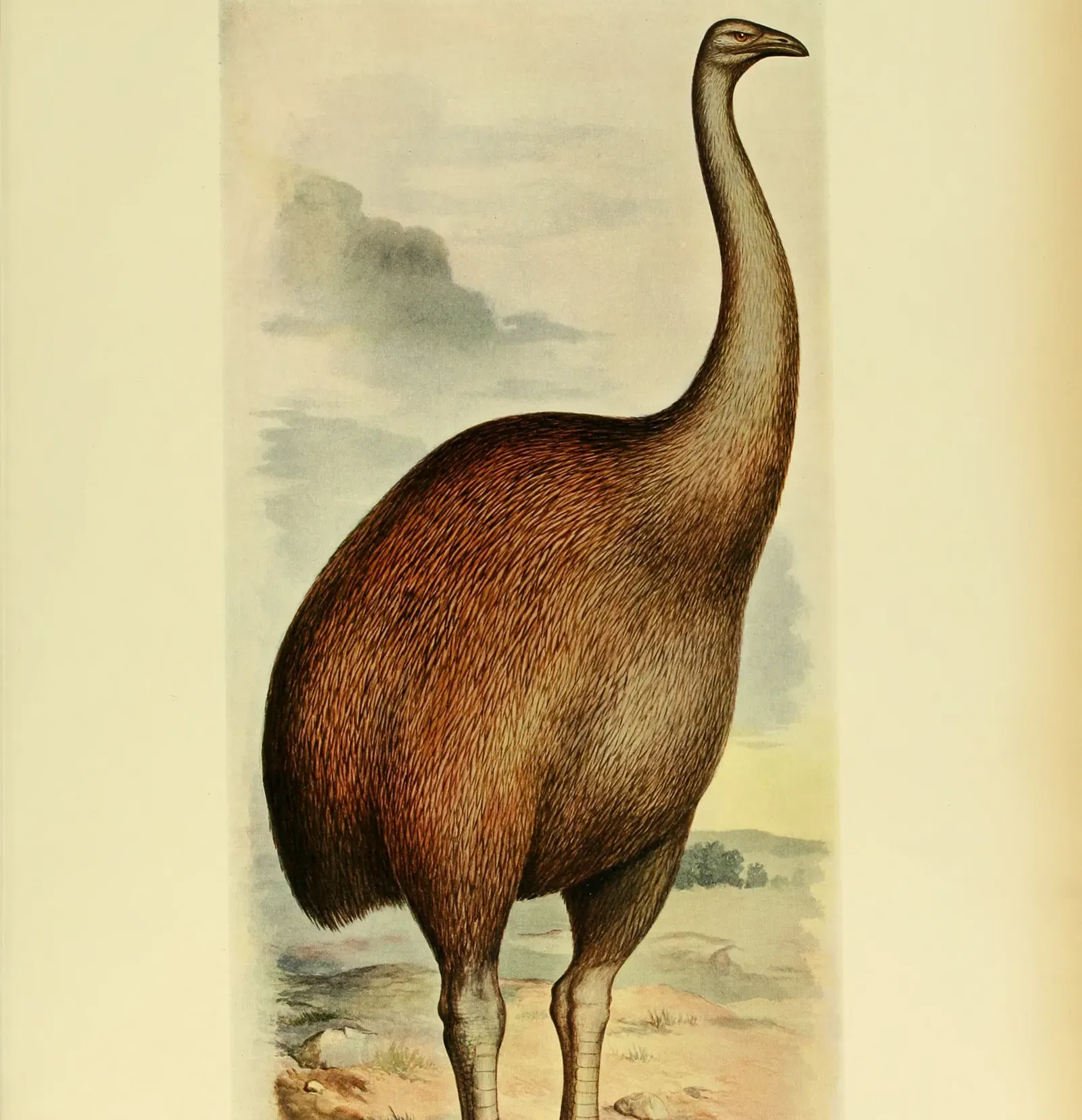
You’ve probably seen the headline version: the giant New Zealand moa was wiped out in “just one human lifetime” after Polynesian arrival, sometimes given as 50 years, sometimes 75. Almost every version of that number traces back to one influential archaeologist’s back-of-the-envelope estimate, published in the mid-20th century as a rough simplification for lay readers. Follow-up work using far more radiocarbon dates tells a more complicated story, intense hunting and habitat burning stretched across a couple of centuries, not one clean, single-generation wipeout.
But the “one lifetime” line was simply too sticky to let go. Textbooks repeated it, documentaries dramatized it, op-eds used it as a shorthand warning about modern overconsumption, and the original author’s own later admission that the number was oversimplified never traveled nearly as far as the original claim did. Many Māori scholars also criticize the framing itself, pointing out that it conveniently pins the blame on early Polynesians while quietly downplaying the ecological damage that came later with European colonization.
Quick Compare
- Original claim: Moa extinction happened within one human lifetime, roughly 50 to 75 years
- Revised research: Radiocarbon evidence points to hunting and burning spread across a couple of centuries
- Common ground: Human arrival is the clear trigger in both versions
#6 – The “Last Quagga Was Stuffed and Then Realized to Be the Last”
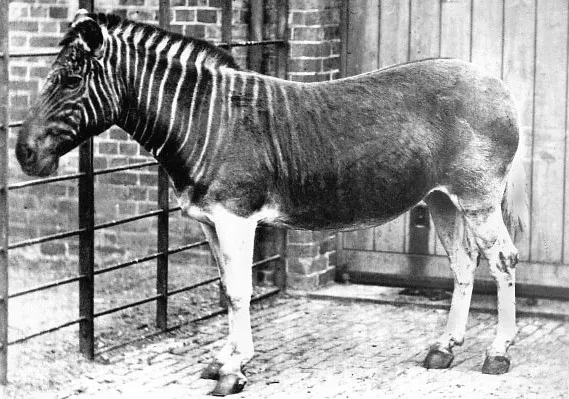
The quagga, a half-striped South African zebra, is often said to have vanished when the last individual died in a European zoo, was promptly stuffed, and only then recognized as the species’ final representative. That picturesque scene traces back to one 19th-century museum curator’s memoir, which conveniently dramatized his own role in the story. His version implied nobody realized the animal’s significance until after its death, which just so happened to position him as the tragic, all-important witness.
Archival shipping lists and old correspondence tell a messier story: multiple zoos and dealers were still trading animals labeled “quagga” around the same time, though taxonomists later concluded many of those were actually misidentified plains zebras. Despite that blurry line, the curator’s account became gospel, quoted in popular articles that gradually dropped his own “as far as we knew at the time” caveats. Modern conservation biologists point out the quagga’s disappearance was really a slow ecological collapse driven by hunting and land conversion, the “last” individual in that glass case had already lost its role in the wild years before it died.
#7 – The Steller’s Sea Cow “All Gone in 27 Years” Oversimplification

Steller’s sea cow, a massive Arctic herbivore, is usually described with a tidy timeline: discovered in 1741, completely extinct by 1768, wiped out in just 27 years flat. That precise-sounding number comes from one widely cited mid-20th-century zoological article that rounded dates for maximum impact. Historians combing through Russian records, fur-trading logs, and Native oral histories later pointed out a crucial detail the article skipped: 1741 only marks when Europeans first noticed the species on one island group, not when hunting pressure across its actual range began.
There’s real evidence the population was already fragmented and declining before Europeans ever picked up a pen. Those 27 years represent the visible end of a much longer erosion, not the whole story. That distinction matters because the “we discovered it and immediately killed it all” narrative is emotionally satisfying but erases earlier climate shifts and regional hunting practices, and it turns Indigenous peoples, who had their own long-standing management systems, into background extras in their own history. The 27-year number still shows up in dozens of modern infographics, nearly all of them tracing straight back to that one mid-century paper.
Worth Knowing
- Steller’s sea cow could reach up to 30 feet long, among the largest marine mammals ever documented
- The species was first scientifically recorded in 1741 by naturalist Georg Steller
- Genetic and fossil evidence suggests the population was already fragmented before European contact
- The famous “27 years” figure only counts from first European sighting to presumed extinction
#8 – The “Mammoths Survived in Siberia Until the 1800s” Claim
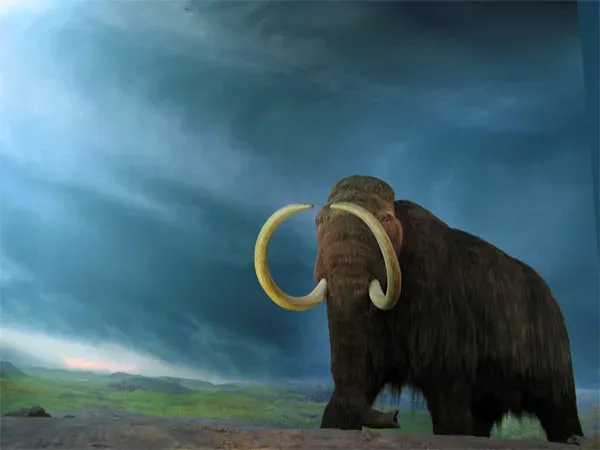
Every few months, a viral post resurfaces claiming woolly mammoths secretly survived in remote Siberia into the 19th century, usually citing explorer stories of hair-covered elephants glimpsed in the snow. Follow the citation trail and almost every road leads back to one 19th-century travel writer, who bundled local folklore, misidentified frozen carcasses, and secondhand rumors into a single dramatic passage. Later popularizers quietly upgraded his “stories of living mammoths” into “evidence,” even though radiocarbon dating places the last known dwarf mammoths on Wrangel Island around 4,000 years ago, not 200.
No physical remains from the 1700s or 1800s have ever tested that young, not once. Paleontologists now treat those old explorer tales the same way they’d treat a modern “living dinosaur” clickbait post, fascinating as folklore, useless as data. Yet a century of cryptozoology books kept reprinting the same 19th-century paragraph, sometimes word for word, leaving casual readers with the false impression that credible scientists still debate whether mammoths walked around in modern times. They don’t, and the persistence of this myth shows just how easily one colorful account can outmuscle a mountain of radiometric evidence in the public imagination.
#9 – The Ivory-Billed Woodpecker “Definitely Extinct” vs. “Definitely Alive” Pendulum
![#9 - The Ivory-Billed Woodpecker "Definitely Extinct" vs. "Definitely Alive" Pendulum (By Original photo by Arthur A. Allen, 1935 [1], watercolored by Jerry A. Payne, USDA-ARS, CC BY 3.0 us)](https://nvmwebsites-budwg5g9avh3epea.z03.azurefd.net/dinoworld/974a3d1908f792279b2cb4fcf04a64f6.webp)
Unlike every other entry on this list, the ivory-billed woodpecker sits in a strange limbo, officially “possibly extinct,” but emotionally either a ghost story or a cause to rally behind. What most people don’t realize is that the total certainty on both sides of that debate traces back to two individual people, not two mountains of data. One charismatic ornithologist wrote with complete confidence in the mid-20th century that the species was gone, based on a handful of failed surveys. Decades later, when alleged sightings resurfaced, a different high-profile enthusiast pushed back just as forcefully, insisting the bird “absolutely persists” based on ambiguous audio and blurry video footage.
The actual field data sitting between those two loud opinions is maddeningly thin. Remote swamp habitat is brutal to survey, and false positives driven by wishful thinking are common. Most serious modern experts speak carefully in probabilities, not absolutes, but that kind of nuance rarely survives contact with a social media post. People quote the “definitely gone” or “definitely here” version because certainty simply feels better than uncertainty, and in practice, one overconfident obituary followed by one overconfident resurrection claim has shaped a century of public belief far more than any cautious, peer-reviewed survey ever has.
#10 – The Baiji “Last One Died on Camera” Television Moment

For years, a widely shared claim insisted the very last baiji, or Yangtze river dolphin, was filmed dying on camera during a specific television documentary, with somber narration all but telling viewers they were witnessing the exact moment a species blinked out of existence. The real origin is far less dramatic, one documentary producer, speaking metaphorically in a promotional interview about capturing “the last of its kind,” later had her words flattened into fact by journalists retelling the story secondhand. The clip really does show a badly injured baiji in a heavily trafficked river stretch, but exhaustive surveys before and after that broadcast never found definitive evidence it was the final individual.
Later reviews concluded the species is functionally extinct, yet still can’t pinpoint one last animal or one final date, and that ambiguity just doesn’t test well with television audiences. A clean, devastating final beat is much more shareable than the messy truth: numbers dwindle, sightings get rarer and rarer, and at some point people simply stop seeing them. Conservation researchers now warn that these “perfect last moment” stories quietly distort public expectations, training people to believe extinction always comes with a cinematic warning shot. Often, it doesn’t come with any warning at all.
At a Glance
- The baiji was declared functionally extinct in 2006 after an extensive river-wide survey
- No scientifically verified sighting has been confirmed since
- The species is believed to have inhabited the Yangtze River for roughly 20 million years
#11 – The “Sabertooth Tigers Were Killed Off by Early Humans Alone” Claim
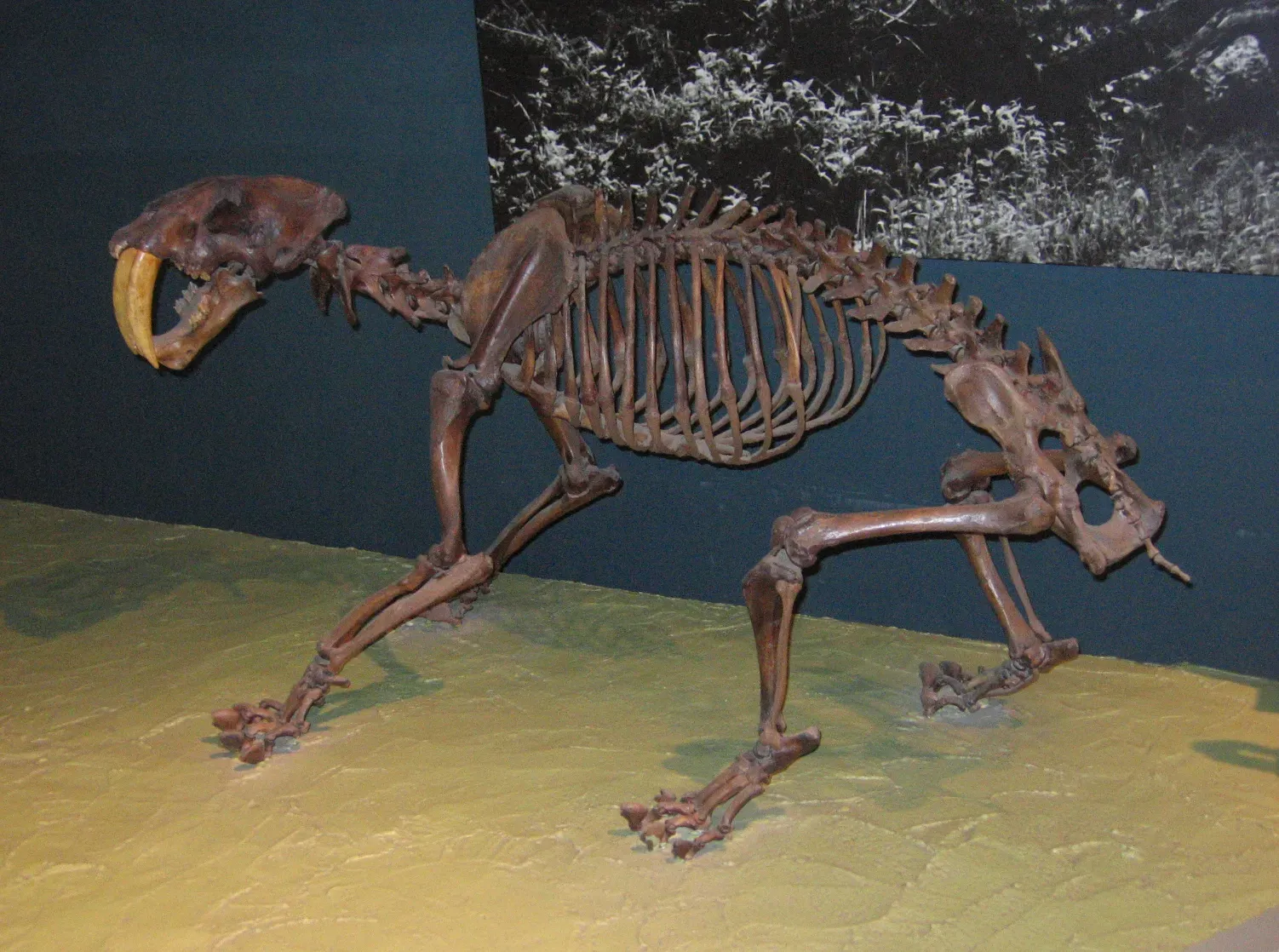
In countless memes and popular books, you’ll find the tidy claim that saber-toothed cats like Smilodon were driven extinct purely by overhunting from early humans, usually framed as a moral indictment of our species from the very beginning of our existence. Track the modern viral version back far enough and you keep meeting the same source: one mid-20th-century paleo-essayist who aggressively pushed a “Pleistocene overkill” model for almost every large mammal extinction, writing in punchy, moralizing prose that assigned humans sole blame even in cases where climate shifts clearly played a role too.
Later science paints a far messier picture, shifting habitats, disappearing prey, competition with other predators, and human pressure all likely combined to finish the job. There’s no clean, single-cause smoking gun for saber-tooth extinction, but that one writer’s “humans as lone super-villains” framing stuck anyway, because it fits a modern appetite for guilt-soaked storytelling. Some conservationists still like the clean version, if “we” killed the saber-tooths all by ourselves, it’s easier to scare people into behaving differently now. But there’s a real risk in oversimplifying: when students eventually learn the actual evidence is mixed, they don’t just correct one fact, they start questioning every extinction story they were ever taught.
#12 – The “Carolina Parakeet Was Wiped Out by a Single Mysterious Disease” Tale

The Carolina parakeet, the only parrot native to the eastern United States, is often said to have vanished because of one mysterious poultry disease, sometimes claimed to have been introduced by European chickens. That neat explanation traces back to one early-20th-century ornithologist’s speculative paper, which floated disease as a possible primary cause without ever proving it. Later researchers digging through land-use maps, hunting records, and bounty laws found strong evidence of a multi-factor collapse instead, habitat loss from logging and farming, deliberate persecution by farmers who considered the birds crop pests, feather-trade exploitation, and possibly, yes, some disease mixed in with everything else.
But the “one killer virus did it” story kept spreading anyway, especially in newspaper columns and popular science books that preferred a tight mystery hook over a complicated truth. No direct pathogen has ever been conclusively identified as the sole or dominant cause, and the reason the disease story survives is uncomfortably convenient: it turns the birds into victims of bad-luck biology rather than victims of deliberate policy choices, quietly absolving the early American governments that failed to protect forests or regulate hunting. Several recent articles still quote that one speculative paper almost exactly, gliding right past a century of more nuanced analysis.
#13 – The “Dinosaurs Were Wiped Out Overnight by One Giant Rock, Full Stop” Oversimplification

Yes, an asteroid impact roughly 66 million years ago played a central role in the end-Cretaceous extinction, that much is rock-solid science. The oversimplified version you see everywhere, though, claims one instant blast killed every non-avian dinosaur overnight, full stop, no further questions. That ultra-clean version traces heavily to one hugely influential popular science book from the late 20th century, whose author leaned hard into the drama: bright flash, global firestorm, dinosaurs gone by morning.
Detailed fossil studies tell a more staggered story. Some dinosaur groups were already declining in diversity before impact; others probably hung on for thousands of years as ecosystems lurched toward a new equilibrium, while volcanism, climate shifts, and ecosystem fragmentation all intertwined with the impact itself. The asteroid was the trigger, not the entire script, but the single-rock, single-night version dominates public imagination because it’s narratively perfect, a cosmic gunshot with instant consequences that conveniently erases messy questions about long-term vulnerability and gradual stress. Those questions, uncomfortably enough, parallel our current climate situation a little too closely for comfort.
The Bottom Line
Across all thirteen of these cases, the same pattern quietly repeats: one vivid storyteller makes a bold claim, later writers repeat it without checking, and within a generation the story hardens into unquestionable fact. Whether it’s a drunken sailor killing the last dodo, a priest condemning the final great auks as witches, or a single mystery virus wiping out the Carolina parakeet, the public version of extinction keeps collapsing into a movie scene anchored to one unchallenged account.
Here’s the uncomfortable part: we don’t just lose species, we lose accuracy right along with them. Neat, angry, morally satisfying stories consistently outcompete messy, data-driven ones, and that’s genuinely dangerous. If we can’t tell the difference between evidence and repetition when we talk about animals that are already gone, how exactly are we supposed to act intelligently about the species still standing on the edge right now?
My honest take: every one of these myths survived because it was more useful as a morality tale than as history. That’s not a compliment to science communication, it’s a warning. The next time a “last of its kind” story goes viral in your feed, ask who actually wrote the original account, and whether anyone since has bothered to check it.