

Every parent remembers memorizing something in school that turned out to be flat-out wrong. Pluto’s planetary status. The “five senses” chart taped above the classroom sink. That tongue diagram promising your taste buds worked in neat little zones.
Turns out, a shocking number of “facts” drilled into generations of students were built on outdated science, sloppy textbooks, or oversimplified history. Teachers weren’t lying – they were repeating what they’d been taught, too.
But research moved on, and most classrooms never got the memo. Here’s what education researchers, neuroscientists, and historians actually say about the lessons that quietly expired – and a few of them might rattle something you’ve been repeating for years.
#1 – Pluto Is the Ninth Planet

For decades, every science textbook listed nine planets, with Pluto proudly holding down the ninth spot since its discovery in 1930. Kids memorized mnemonic devices just to keep the order straight. It felt permanent – until it wasn’t.
In 2006, the International Astronomical Union redefined what actually counts as a planet, requiring a body to clear its orbital neighborhood of debris. Pluto failed that test, getting reclassified as a “dwarf planet” alongside objects like Eris and Ceres. The backlash was immediate and, frankly, still hasn’t fully died down.
Here’s the part most people miss: this wasn’t some petty semantic argument. Astronomers had discovered other Pluto-sized objects in the outer solar system, and without a stricter definition, the planet count could have ballooned into the dozens. The reclassification was actually about keeping the system coherent, not shrinking Pluto’s importance.
Fast Facts
- Pluto was discovered in 1930 by astronomer Clyde Tombaugh
- The 2006 IAU vote created a formal three-part definition of “planet” for the first time
- Pluto now shares “dwarf planet” status with Eris, Ceres, Haumea, and Makemake
- Pluto’s orbit actually crosses Neptune’s path, one reason it never “cleared its neighborhood”
Plenty of adults still refuse to accept it, and that’s fine – nostalgia is powerful. But scientifically, the solar system has eight planets now, not nine, and no amount of childhood muscle memory changes that. That one stings a little. Wait until you see what happened to Columbus.
#2 – Columbus Discovered America
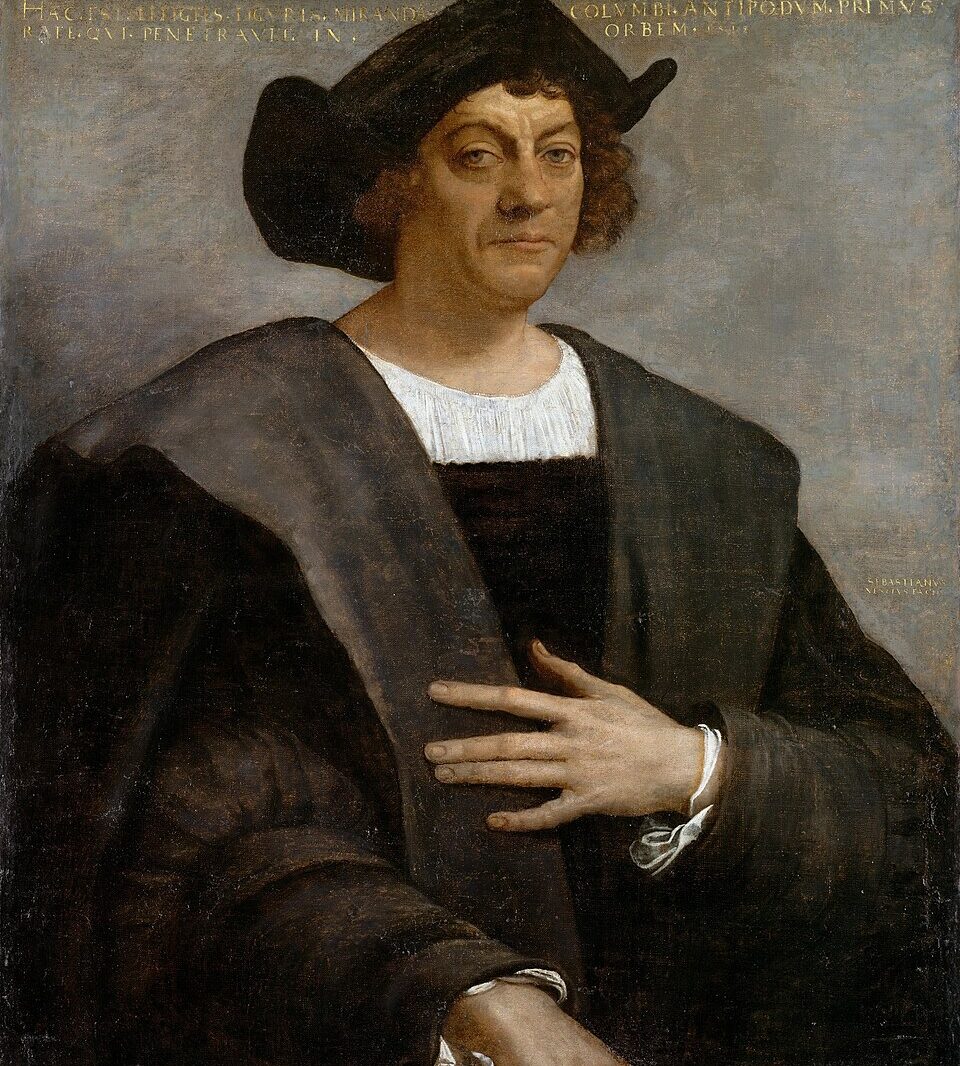
Generations of students learned that Christopher Columbus “discovered” America in 1492, sailing bravely into the unknown to prove the earth wasn’t flat. Almost every piece of that sentence is misleading.
First, the flat-earth part is pure myth – educated Europeans in the 15th century already knew the earth was round; the real debate was over its size, not its shape. Second, and more importantly, millions of Indigenous people already lived across the Americas for thousands of years before Columbus ever set sail, and Norse explorers led by Leif Erikson had reached North America roughly 500 years earlier.
Modern historians argue the word “discovered” itself is the problem. It centers a European perspective while erasing established civilizations – the Aztec, Maya, Inca, and hundreds of other nations with their own cities, governments, and trade networks. Textbooks have slowly shifted toward phrases like “European contact” or “Columbian Exchange” instead.
This isn’t about erasing Columbus from history – his voyages genuinely reshaped global trade and triggered massive cultural exchange. But “discovery” implies nobody was there first, and that framing simply doesn’t hold up anymore.
#3 – Humans Only Use 10% of Their Brain

This one might be the most persistent classroom myth of all time, repeated by teachers, movies, and self-help gurus alike. The claim: humans only tap into a tiny fraction of their brain’s potential, with the rest sitting dormant, waiting to be “unlocked.”
Neuroscience has thoroughly debunked this. Brain imaging technology like fMRI and PET scans shows activity across virtually the entire brain over the course of a day, even during simple tasks. Every region serves a function, and damage to almost any area – not just some untapped 90% – produces measurable effects on behavior, movement, or cognition.
So where did the myth come from? Some researchers trace it to early 20th-century psychologists misinterpreting studies on brain plasticity, others point to marketing for self-improvement products that thrived on the idea of hidden potential. Either way, it stuck around far longer than the science supporting it.
The real story is arguably more impressive: your brain uses about 20% of your body’s total energy despite being a small fraction of your body weight, precisely because so much of it is constantly firing. There’s no dormant 90% waiting for a miracle pill or hypnosis session to unlock.
#4 – Learning Styles Match How Students Learn Best

If you sat through teacher training or a school assembly anytime in the last 30 years, you probably heard about “visual,” “auditory,” and “kinesthetic” learners. The idea was simple: identify a student’s style, teach to it, and watch grades improve.
It sounds intuitive. It’s also not backed by evidence, according to multiple large-scale studies in educational psychology. Researchers have repeatedly tested the “meshing hypothesis” – the idea that matching instruction to a preferred style boosts learning – and found no consistent improvement in outcomes when it’s applied.
That doesn’t mean people don’t have preferences. Plenty of students genuinely prefer diagrams over lectures, or hands-on activities over reading. But preference isn’t the same as effectiveness. What actually improves retention across almost every learner is proven, unglamorous stuff: spaced repetition, retrieval practice, and varied formats that reinforce the same concept multiple ways.
Many teacher training programs have quietly moved away from rigid learning-style categorization in recent years, favoring evidence-based strategies instead. The label isn’t necessarily harmful – but building a curriculum around it, as many schools did for decades, wasn’t the science-backed strategy it was marketed as.
#5 – The Tongue Has Distinct Taste Zones

That diagram of the tongue divided into sections – sweet at the tip, bitter at the back, sour and salty along the sides – was practically gospel in health class. Turns out, it was based on a mistranslation.
The map traces back to a 1901 German study, which was later reinterpreted (and arguably misrepresented) in the 1940s. Every taste bud on the tongue can detect all five basic tastes – sweet, sour, salty, bitter, and umami – not just one designated zone. Sensitivity varies slightly across the tongue’s surface, but the differences are minor, not the neat little sections shown in textbooks.
Modern taste science has also added complexity the old chart never addressed. Umami, the savory taste associated with foods like broth and aged cheese, wasn’t even part of the original Western taste framework, despite being identified by a Japanese chemist back in 1908. It took nearly a century for it to be widely accepted in mainstream science education.
So next time someone insists you can only taste sweetness at the tip of your tongue, feel free to politely disagree – your whole tongue has been in on it the whole time.
#6 – People Are Either Left-Brained or Right-Brained
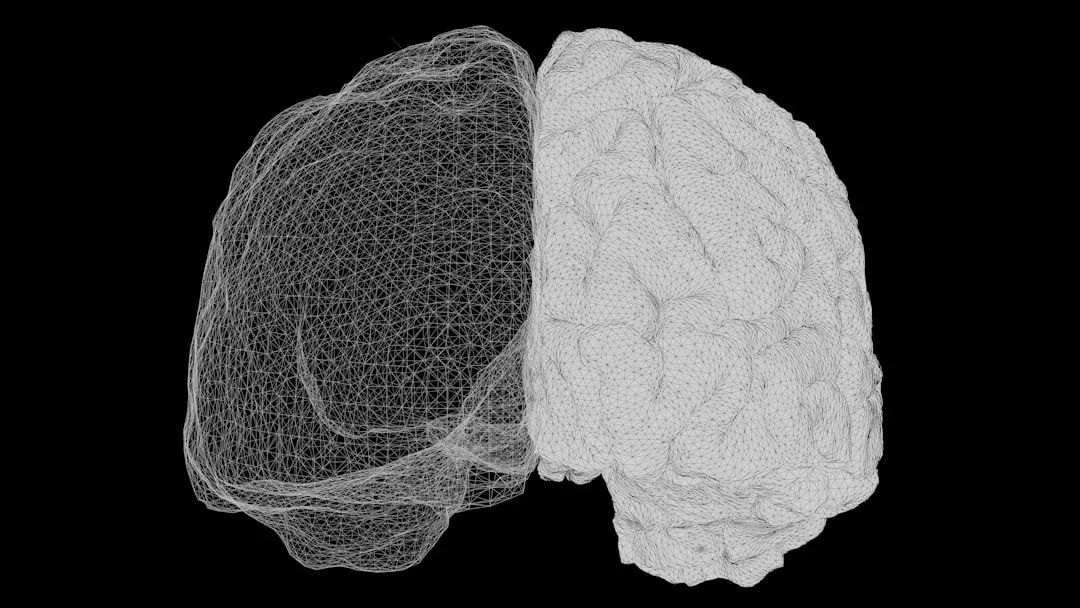
You’ve heard the pitch: left-brained people are logical and analytical, right-brained people are creative and intuitive. It became a personality shorthand – practically a horoscope with a scientific-sounding label attached.
Brain imaging research doesn’t support this dichotomy. Neither hemisphere dominates a person’s overall personality or thinking style, according to studies analyzing thousands of brain scans. While it’s true some functions are lateralized – language processing leans left, spatial processing leans right, for most people – that’s a far cry from claiming entire personality types are hardwired to one side.
A widely cited 2013 brain-imaging study out of the University of Utah scanned over 1,000 brains looking for evidence of hemisphere dominance correlating with personality traits, and found no such pattern. Both hemispheres work together constantly, communicating through a thick band of nerve fibers called the corpus callosum, regardless of whether someone identifies as “creative” or “analytical.”
The idea persists because it’s simple, marketable, and feels explanatory. But the honest answer is messier: creativity and logic both involve networks spread across both hemispheres, not a tidy left-right split.
#7 – The Food Pyramid Is Nutritional Gospel
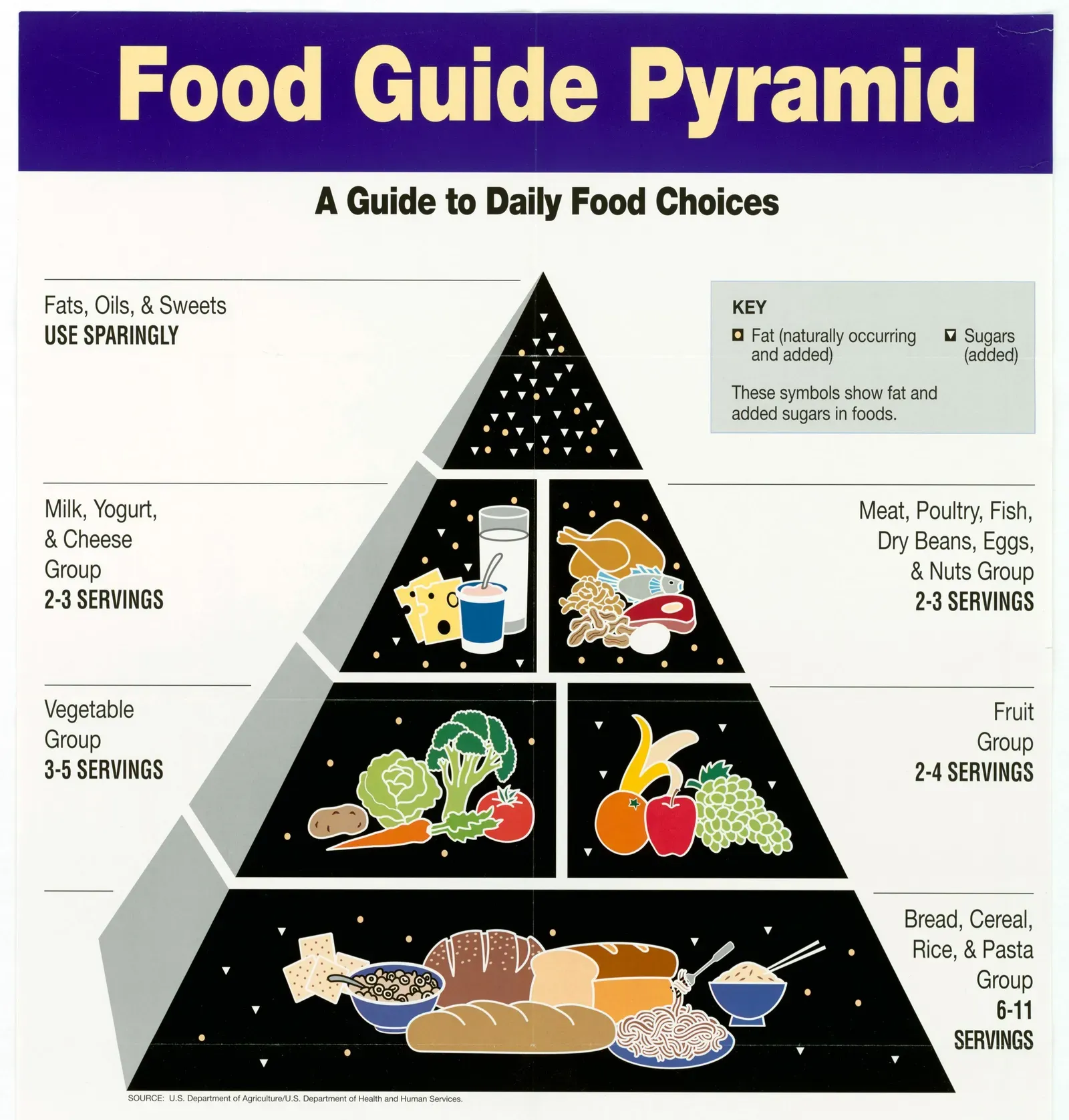
That triangle poster in every cafeteria, with bread and pasta forming the wide base and fats and sugars crammed at the tiny top, shaped how millions of kids thought about eating. It also turned out to be flawed advice dressed up as science.
The original USDA Food Guide Pyramid, introduced in 1992, heavily emphasized grains – recommending 6 to 11 servings a day – while treating all fats as something to minimize. Nutrition science has since made clear that fat quality matters far more than fat quantity, and that refined carbohydrates deserve far more scrutiny than the pyramid ever gave them.
Quick Compare
- 1992 Food Pyramid: Grains at the base, 6 to 11 daily servings recommended, all fats treated as bad
- 2005 MyPyramid: Added a physical activity icon and personalized recommendations, but stayed grain-heavy
- 2011 MyPlate: Simple plate graphic split into fruits, vegetables, grains, and protein, with dairy on the side
In 2005, the USDA replaced the pyramid with MyPyramid, then scrapped that in 2011 for MyPlate – a simpler plate-shaped graphic dividing meals into fruits, vegetables, grains, and protein, with dairy on the side. Each revision reflected growing research on how oversimplified the original model had been, particularly its blanket treatment of carbohydrates and fats.
Plenty of nutritionists argue even MyPlate oversimplifies things, glossing over sugar content, processed food quality, and portion realities. But almost everyone agrees the original pyramid, taught as unquestionable fact for over a decade, was built on incomplete science from the start.
#8 – The Great Wall of China Is Visible From Space

This claim shows up in trivia nights, textbooks, and casual conversation with startling consistency. It’s also almost entirely false.
Astronauts, including those aboard the International Space Station, have repeatedly confirmed that the Great Wall is not visible to the naked eye from low Earth orbit, let alone from the moon, contrary to what generations of students were told. The wall is long, but it’s also narrow – generally between 15 and 30 feet wide – and made of materials that blend into the surrounding terrain rather than contrasting against it.
Worth Knowing
- The Great Wall stretches roughly 13,000 miles when every branch and section is counted
- Most sections measure just 15 to 30 feet wide, far too narrow to spot unaided from orbit
- Low Earth orbit sits about 250 miles above the surface, much closer than the moon ever is
- Highways, airport runways, and city grids are actually easier to see from space due to contrast
Chinese astronaut Yang Liwei publicly said after his 2003 spaceflight that he hadn’t been able to spot the wall at all, a comment that sparked national conversation back home and forced textbook publishers to quietly revisit the claim. Photos of the wall taken from orbit typically require powerful zoom lenses and ideal lighting conditions – nothing close to what the “visible from space” claim implies.
Interestingly, plenty of other human structures – highways, airports, city grids – are actually easier to spot from orbit due to their contrast and reflectivity. The Great Wall myth persisted for decades simply because it sounded impressive, not because anyone verified it.
#9 – Blood Is Blue Before It’s Exposed to Oxygen

Look at the veins on your wrist and they appear bluish, which is exactly why generations of science teachers claimed deoxygenated blood is blue and only turns red once it hits oxygen in the lungs. It’s a tidy explanation. It’s also wrong.
Human blood is red at all times, whether oxygenated or not – the color simply varies in shade. Oxygen-rich blood appears bright red, while oxygen-poor blood appears a darker, brownish-red, according to hematology research, never blue at any stage. The bluish tint of veins is actually a trick of light: skin and tissue absorb and scatter different wavelengths, making the light reflecting back off deoxygenated blood appear blue to our eyes, even though the blood itself isn’t.
This matters medically, too. Surgeons and phlebotomists have always known blood is red – it’s only the classroom shorthand that got it wrong for so long, likely because early biology diagrams used blue ink to distinguish veins from red-inked arteries for clarity, and the color-coding eventually got mistaken for biological fact.
So the next time someone insists their veins are full of blue blood until it “hits air,” you can tell them – gently – that biology textbooks have been misleading people about this for generations.
#10 – Cursive Handwriting Is an Essential Life Skill
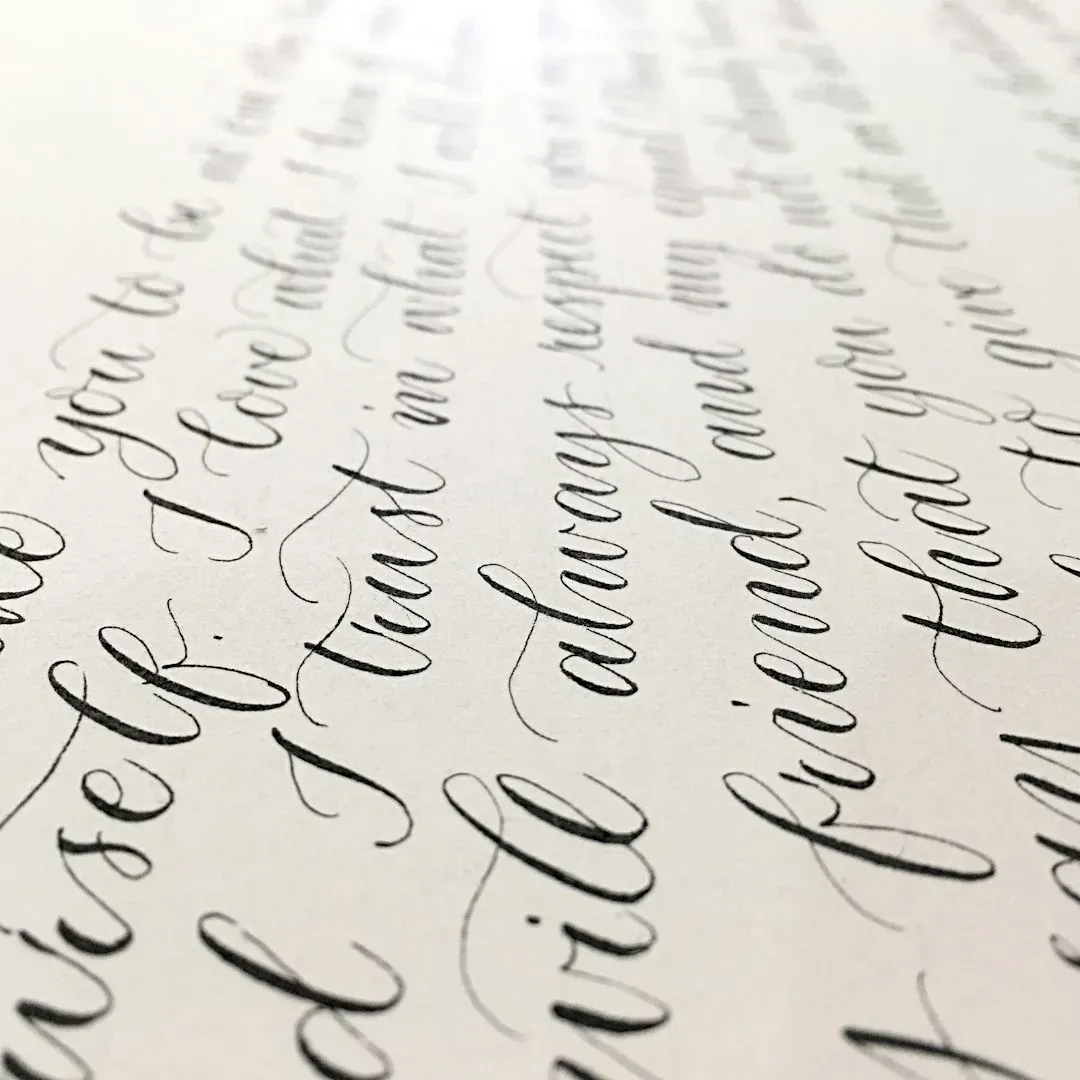
For decades, cursive instruction was treated as non-negotiable – hours of looping letters, drilled repetition, and grades based on penmanship alone. Many schools have since quietly dropped it, and the backlash has been loud.
When Common Core standards rolled out in 2010, cursive was notably absent from the required curriculum in most adopting states, sparking debate that continues today. Supporters argue cursive builds fine motor skills and helps students read historical documents; critics argue the time could be better spent on typing proficiency and digital literacy, skills students will use far more often as adults.
Some states have pushed back, reinstating cursive requirements through separate legislation, arguing there’s value beyond nostalgia – signature literacy, cognitive benefits from handwriting itself, and access to historical letters and documents written in script. It’s genuinely one of the more contentious items on this list, splitting parents and educators down generational lines.
Whether or not cursive deserves its comeback, the argument that it’s an indispensable, unquestionable life skill hasn’t survived contact with a world where most communication happens on a keyboard.
#11 – Strict Grammar Rules Can Never Be Broken
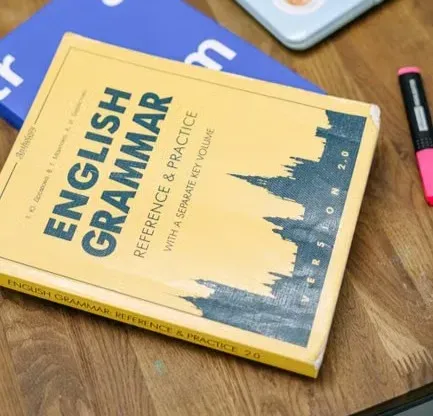
Never split an infinitive. Never end a sentence with a preposition. Never start a sentence with “and” or “but.” These rules were treated as unbreakable law in English classes for generations – and linguists have never fully agreed with any of them.
The “never split an infinitive” rule traces back to 19th-century grammarians trying to force English to behave like Latin, where infinitives are a single word and literally can’t be split. English isn’t Latin, and plenty of celebrated writers split infinitives constantly – Star Trek’s “to boldly go” being the most famous modern example.
The preposition rule has a similarly shaky origin, often credited to 17th-century poet John Dryden’s personal writing preference rather than any actual grammatical necessity. Modern style guides, including many widely used by professional editors, now treat these “rules” as optional stylistic choices rather than grammatical requirements.
None of this means grammar doesn’t matter – clarity and consistency still count. But treating these particular rules as sacred, unbreakable law, the way so many classrooms once did, was more about tradition than accuracy.
#12 – Thanksgiving Was a Peaceful Shared Feast

The story taught for generations goes like this: Pilgrims and Native Americans sat down together in 1621 for a harmonious feast, celebrating friendship and cooperation. Historians have spent years pushing back on how incomplete – and misleading – that framing really is.
The 1621 gathering did happen, involving Pilgrims and Wampanoag people, but it wasn’t a recurring tradition and wasn’t necessarily as harmonious as textbooks suggest. Historical accounts of the event are sparse, based on just a couple of firsthand letters, and the peaceful narrative largely ignores the violent conflict, land seizure, and disease that devastated Indigenous populations in the decades that followed.
Wampanoag historians and tribal representatives have pushed for schools to include the fuller context – including the fact that many Native communities observe a National Day of Mourning around the same holiday, reflecting on colonization’s lasting impact rather than celebrating it.
This doesn’t mean Thanksgiving itself needs to disappear – but the sanitized, feel-good version taught for decades leaves out enough historical reality that most modern historians consider it fundamentally incomplete.
#13 – The Dark Ages Were a Time of Total Ignorance
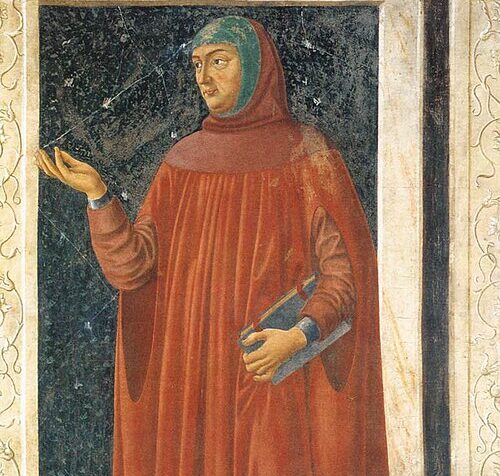
Ask most adults what happened between the fall of Rome and the Renaissance, and you’ll likely hear some version of: nothing. Stagnation. Plague. Ignorance. Schools have taught this stretch as a cultural dead zone for generations – historians increasingly reject that framing entirely.
The term “Dark Ages” itself was coined by Renaissance scholars with an obvious bias – they wanted to make their own era look like an enlightened rebirth by comparison. Major scientific, architectural, and cultural advances actually happened during this period, particularly in the Islamic world, where scholars preserved and expanded on Greek and Roman knowledge in mathematics, medicine, and astronomy while much of Western Europe struggled politically.
Why It Stands Out
- Islamic scholars preserved and translated Greek and Roman texts that might otherwise have been lost forever
- Landmark advances in algebra, optics, and medicine emerged from this era’s scholarly centers
- Early universities, including Bologna and Oxford, were founded during the centuries once dismissed as “dark”
- Agricultural innovations like the heavy plow and crop rotation boosted food production across Europe
Gothic cathedrals, complex agricultural innovations, the establishment of early universities, and significant advances in metallurgy all took place during the centuries once dismissed as uniformly bleak. Many historians now prefer “Early Medieval Period” specifically because it doesn’t carry the same loaded, inaccurate baggage.
The real story isn’t a single dark age at all – it’s a patchwork of regional progress, setbacks, and innovation that doesn’t fit neatly into the dramatic decline-and-stagnation narrative schools taught for so long.
The Bottom Line

Textbooks age faster than most people realize, and plenty of “facts” taught for decades were really just outdated science, mistranslations, or oversimplified history repeated until they felt permanent.
From Pluto’s demotion to the tongue map’s debunked zones, these corrections aren’t nitpicking – they reflect real shifts in what researchers and historians have learned since most of us sat in a classroom. Honestly, the pattern says less about any single myth and more about how slowly institutions update themselves once a “fact” gets printed and repeated enough times.
The uncomfortable truth is that plenty of adults are still confidently repeating myths their teachers never should have taught in the first place. Which one of these surprised you the most? Did we miss one that you were taught? Drop it in the comments.