If you could travel back nearly four hundred million years and drop into the ancient seas, the last thing you’d want to see rushing toward you is Dunkleosteus. This armored giant makes most modern ocean predators look almost polite by comparison, with a bite so powerful it rivals that of a Tyrannosaurus rex and a skull that looks like it was welded together in a nightmare. Yet for all its brutal reputation, we actually know surprisingly little about the soft, living animal behind that bony armor.
That mix of hard evidence and eerie mystery is exactly what makes Dunkleosteus so addictive to read about. Scientists keep finding details that force us to rethink how terrifying ancient oceans really were, and every fossil skull pulled from the rock feels like another piece of a prehistoric horror movie set. Once you realize that this creature could crush armored prey the way you might crack a peanut shell, it’s hard not to stare at its fossils and think: how did anything else in the ocean survive?
1. Dunkleosteus Was Not A Shark – But It Hunted Them Like One
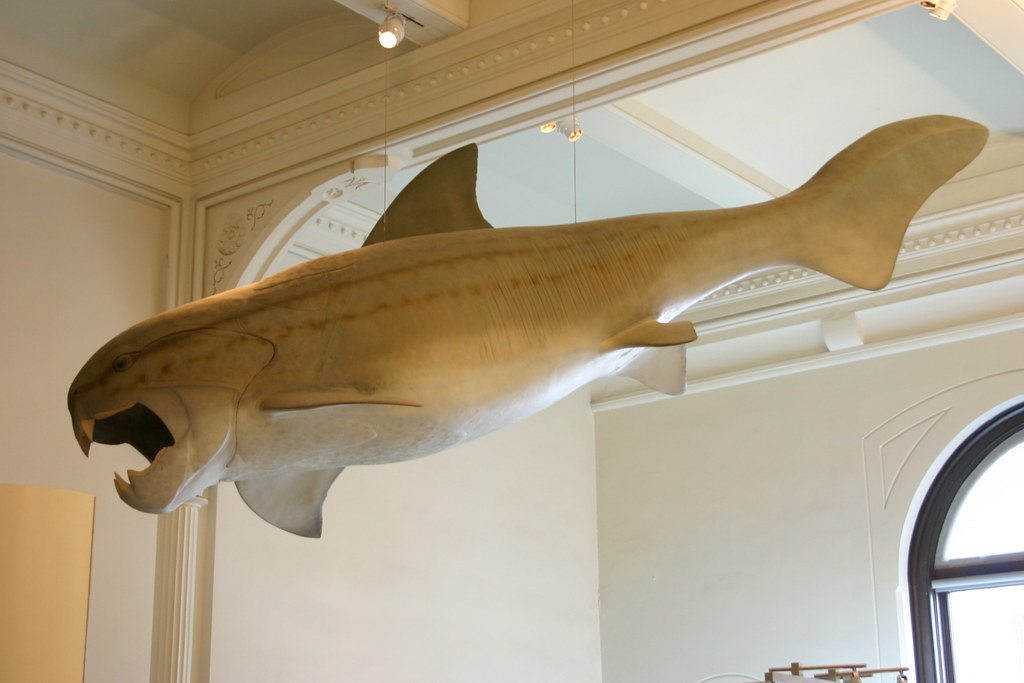
At first glance, Dunkleosteus looks like some early, overbuilt shark prototype, but it actually belonged to a separate group of fish called placoderms. These were early jawed fishes with heavy bony armor on their heads and shoulders, and Dunkleosteus was one of the last and largest of them before they vanished from the fossil record. Its skeleton behind the skull was mostly cartilage, more like a shark’s than a bony fish’s, which is why we mostly find the head armor and not the rest of the body.
Despite not being a shark, it carved out the same ecological role as the great white or orca of its time: a top, apex predator cruising the upper levels of the food chain. Its streamlined body, powerful jaws, and slicing “beak” meant it behaved in a very shark-like way, tracking down big, fast prey rather than nibbling on the seafloor. It’s a good reminder that nature keeps reinventing the same basic jobs, even if the actual workers look very different over hundreds of millions of years.
2. Its Bite Force Rivaled That Of A Tyrannosaurus Rex
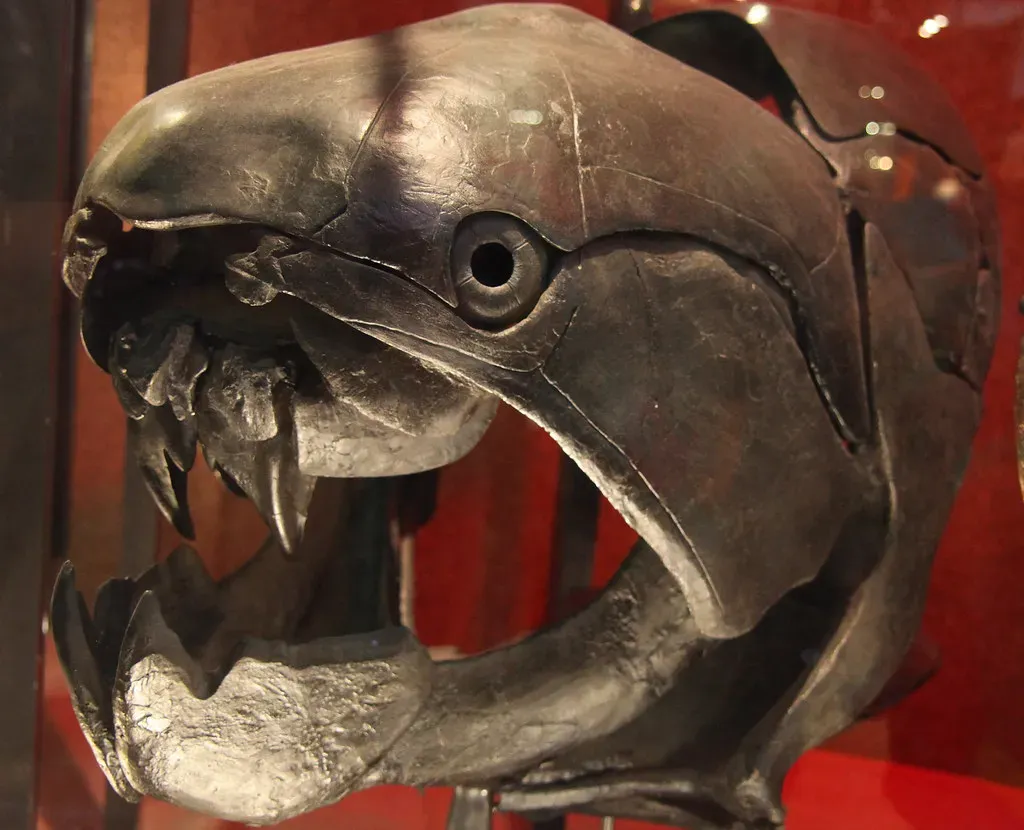
The headline-grabber for Dunkleosteus is its absurd bite force, modeled by scientists using its skull and jaw mechanics. Reconstructions of the muscles and lever system of the jaw suggest it could generate several thousand newtons of force at the jaw tip, putting it in the same league as famous land predators like Tyrannosaurus rex. For a fish, that is off-the-charts outrageous, especially when you remember this was long before big marine reptiles showed up.
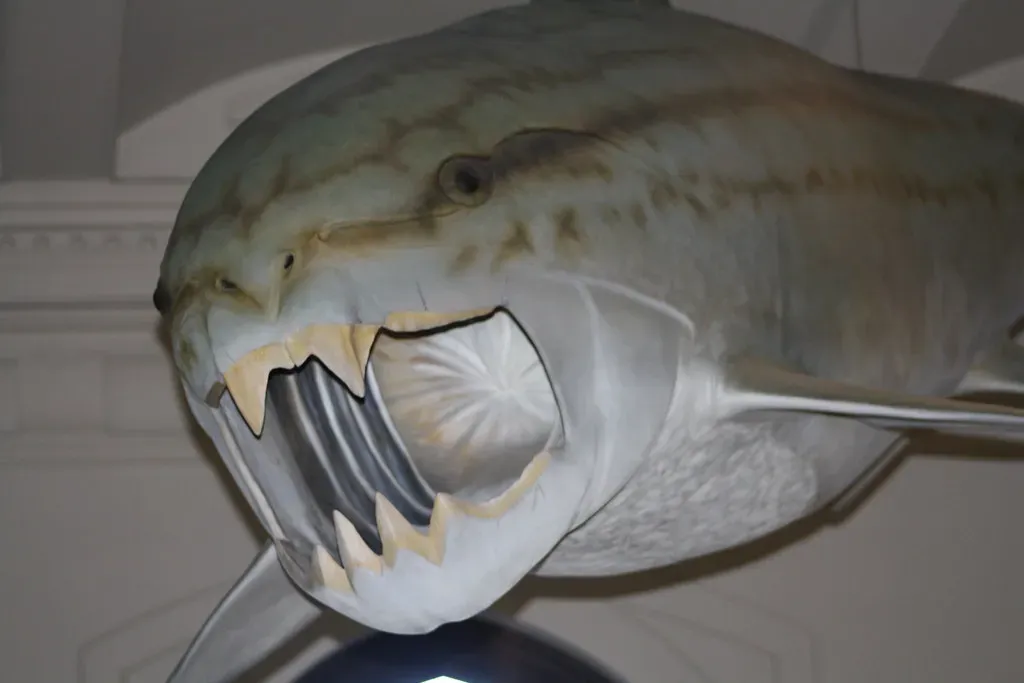
What really makes this terrifying is how that force was delivered. Rather than having rows of teeth like a shark, Dunkleosteus had sharp, bony plates that acted like giant shears, concentrating that power into a narrow cutting edge. Imagine putting a car jack inside a pair of bolt cutters and then closing it on your arm; the bone-shearing effect would be immediate. That kind of bite did not just hold prey, it actively broke them apart.
3. It Could Open Its Jaws In A Lightning-Fast Snap
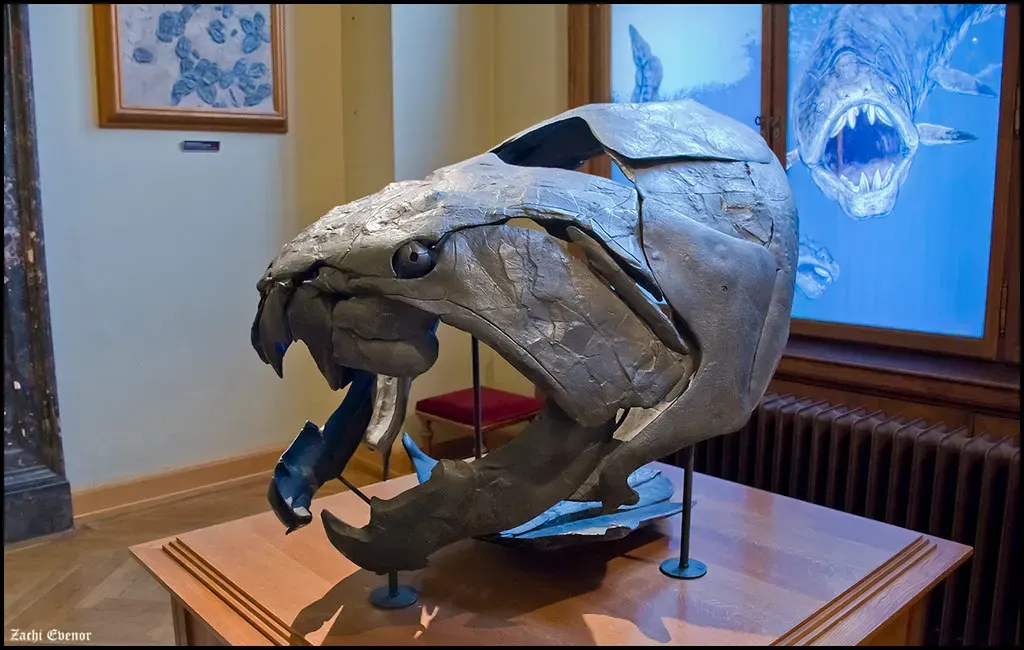
Raw power is one thing, but Dunkleosteus paired that with speed. The way its skull plates and jaw joints were arranged created a kind of built-in mechanical linkage that allowed the mouth to open and close very rapidly. This combination of quick opening and crushing closure meant it could suck prey toward its mouth and then slam shut before the victim had any chance to escape. It was a bit like having a bear trap at the front of a torpedo.
Modern biomechanical studies looking at its skull show that Dunkleosteus had a very efficient system for translating muscle contraction into jaw movement. Rather than relying on slow, grinding pressure, it specialized in a quick, decisive snap that turned passing fish into instant snacks. That is probably one reason it managed to dominate its ecosystems: speed plus crushing power is a nasty combo that few animals can counter once they are in range.
4. Its Skull Was A Living Tank, Built For Ramming And Ripping
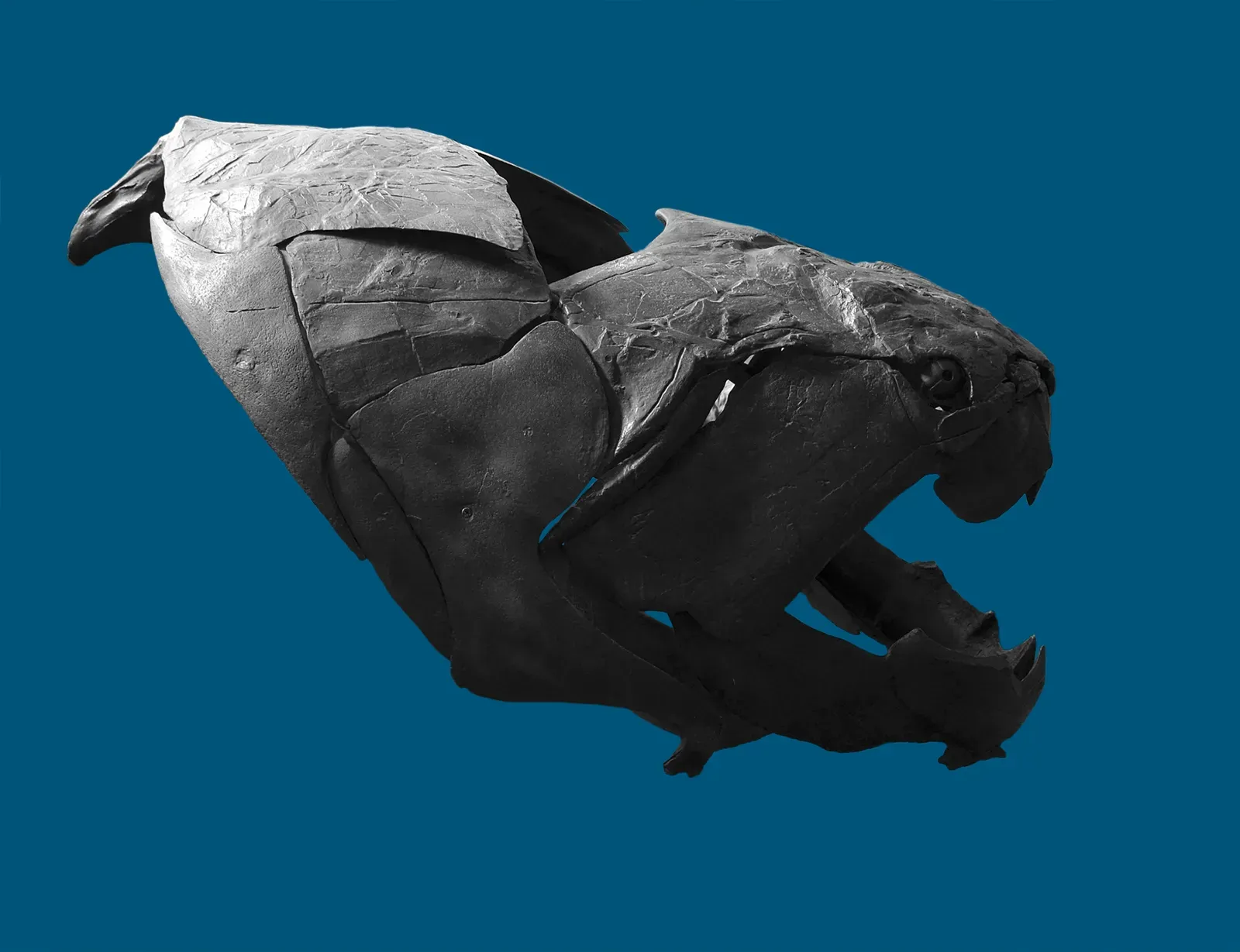
Dunkleosteus wore its skull like a metal helmet, with thick plates interlocking around the head and neck. These armor plates could be several centimeters thick and formed a kind of natural shield that protected vital areas from bites, collisions, and who knows what kind of prehistoric violence. When you look at a Dunkleosteus skull in a museum, it really does feel more like a piece of machinery than an animal part, all edges and bolts and seams.
That armor was not just defensive; it also created a rigid platform to support those crushing jaws. A soft, flexible head would have twisted under that kind of force, but the bony plates held everything steady so the energy was delivered straight into the prey. Some paleontologists have suggested that such heavy armor might even have allowed ramming behavior, like ancient underwater jousting matches. Whether or not it regularly rammed things, you get the clear impression this fish was built to both give and take serious punishment.
5. It Likely Fed On Armored Prey – Even Other Dunkleosteus
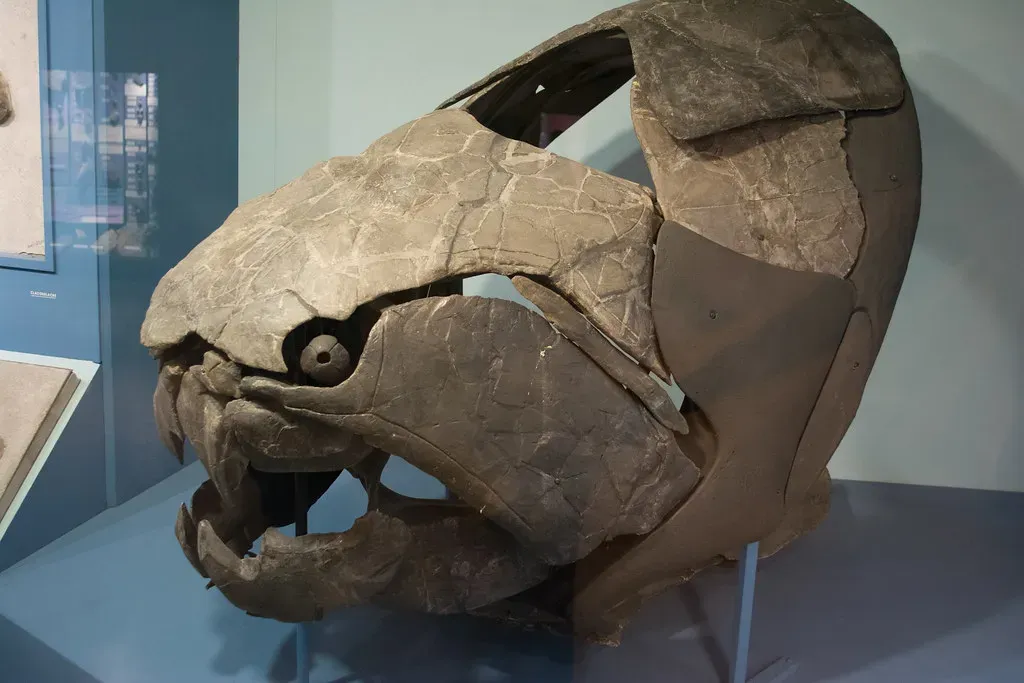
Fossils of Dunkleosteus and its contemporaries tell a slightly gruesome story about its diet. The cutting edges of its jaw plates show wear patterns and chipping that hint at biting through hard, resistant materials, like shells and armor rather than just soft flesh. There are also fossils of other placoderms with bite marks that match Dunkleosteus jaws, suggesting it sometimes targeted armored fish as confidently as you might bite into a crusty loaf of bread.
Even more startling, some Dunkleosteus fossils appear to show evidence that individuals may have bitten each other, either in combat or outright cannibalism. In a crowded sea full of bony-helmeted fish, the biggest predator may not have been picky about whether dinner was a rival, a mate, or a different species. This paints a picture of a brutally competitive ecosystem where armored giants both hunted and occasionally became the prey, all under the shadow of this super-biting tank fish.
6. It Ruled Devonian Seas Long Before Dinosaurs Existed
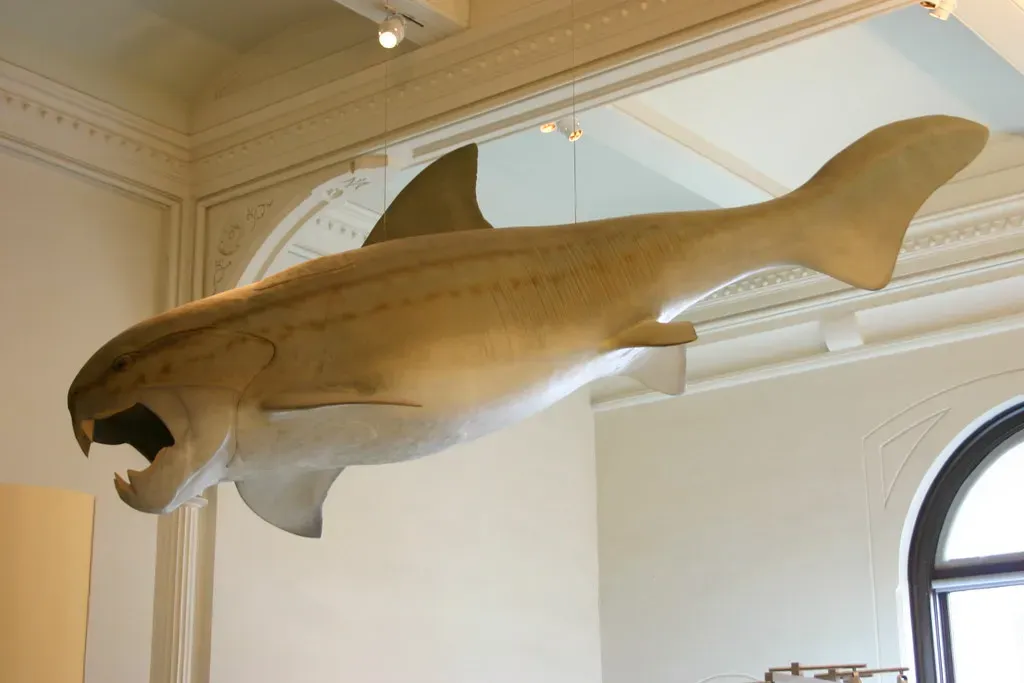
Dunkleosteus lived during the Late Devonian period, roughly around three hundred and eighty million years ago, which is mind-bendingly earlier than the age of dinosaurs. To put that in perspective, more time separates Dunkleosteus from Tyrannosaurus rex than separates T. rex from us. We are closer in time to the last dinosaurs than the dinosaurs were to this armored sea monster. When you realize that, comparing their bite forces starts to feel like comparing two different eras of planetary history.
This was a world where plants were just starting to form real forests on land and most familiar animal groups had not yet appeared. In those seas, placoderms like Dunkleosteus were on top, showing what early experiments in big-bodied, heavily armed predators looked like. The fact that such a sophisticated killing machine evolved that early tells you evolution wastes no time when an empty top-predator niche is available. The oceans have been dangerous places for a very long time.
7. We Only Really Know Its Head – The Rest Is Still A Puzzle
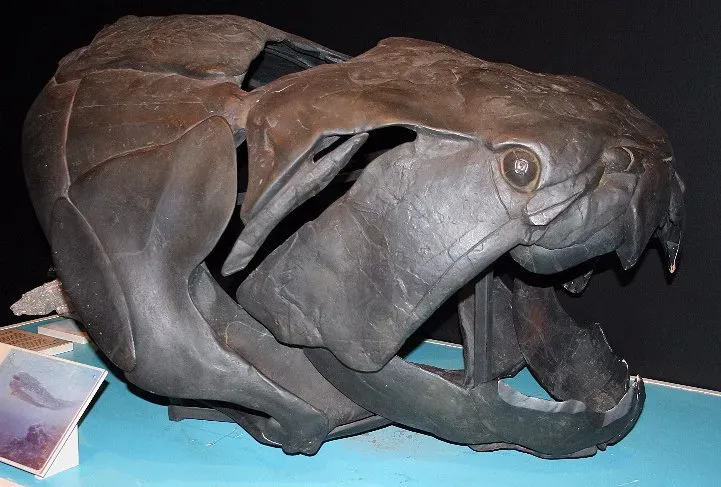
Here is the strangest part: despite all the dramatic reconstructions you see online, most of what we truly know about Dunkleosteus comes from its head armor. The rest of the body was largely cartilaginous and did not fossilize as easily, so paleontologists have had to infer its full shape from a handful of partial remains and comparisons with related species. That means some of those sleek, torpedo-like body reconstructions you see are educated guesses rather than fully proven facts.
Personally, I love that we are still basically reverse-engineering this animal from a giant, terrifying skull. It is a bit like finding only the front bumper of a tank and having to imagine the rest of the vehicle from that clue alone. New fossil finds could tweak our picture of how bulky or streamlined Dunkleosteus really was, or how its fins were arranged. Underneath all the dramatic museum mounts, there is still a quiet scientific humility: we are confident about the head and bite, but beyond that we are careful not to overpromise.
Conclusion: A Prehistoric Monster That Still Deserves Its Hype
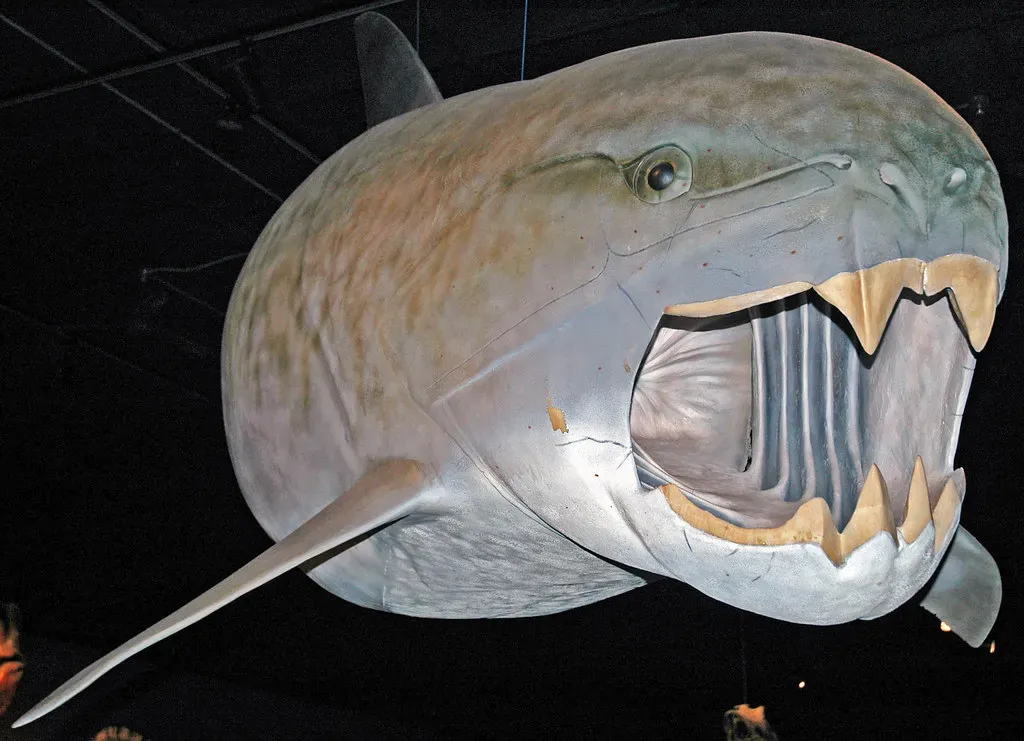
When you put all these pieces together, Dunkleosteus absolutely earns its reputation as a shark killer with a T. rex–level bite, but the reality is more fascinating than the meme. It was not a shark at all, but an armored, experimental predator that dominated long before the classic marine monsters people usually think of. Its jaw mechanics, skull armor, and likely behavior show a creature fine-tuned for violent efficiency, and yet we are still arguing about the shape of its body and some details of its lifestyle. That mix of solid biomechanics and open questions is what keeps it from becoming just another overhyped “sea monster” story.
If anything, I think we tend to underestimate how alien and intense those Devonian seas really were. Dunkleosteus is a reminder that evolution has been building ruthless apex predators for hundreds of millions of years, each era with its own champion. The fact that we can stand in a museum, look into that jagged bony “smile,” and know it once rivaled a Tyrannosaurus in raw biting power is both humbling and a little chilling. Next time you see a great white on a nature documentary, ask yourself: compared to this armored bite machine from deep time, who would you really bet on?