
Every culture on Earth has stories of monsters: snakes the length of rivers, birds that blot out the sun, beasts that crush trees just by leaning on them. For a long time, these tales were dismissed as pure fantasy, but modern paleontology has done something quietly shocking: it has uncovered real animals so extreme that many ancient “myths” suddenly feel a lot less imaginary.
What if some legendary dragons, sea serpents, and giants were actually blurry cultural memories of very real creatures that disappeared just before humans started writing things down? In the last few decades, researchers have been piecing together fossils, radiocarbon dates, and migration patterns, and a picture is emerging: we arrived surprisingly late to a world already full of giants on the verge of vanishing. These eight ancient creatures lived close enough in time and space that, with a tiny twist of fate, they probably would have walked straight into recorded history instead of slipping out the back door of deep time.
1. Woolly Mammoths: The Almost-Remembered Giants
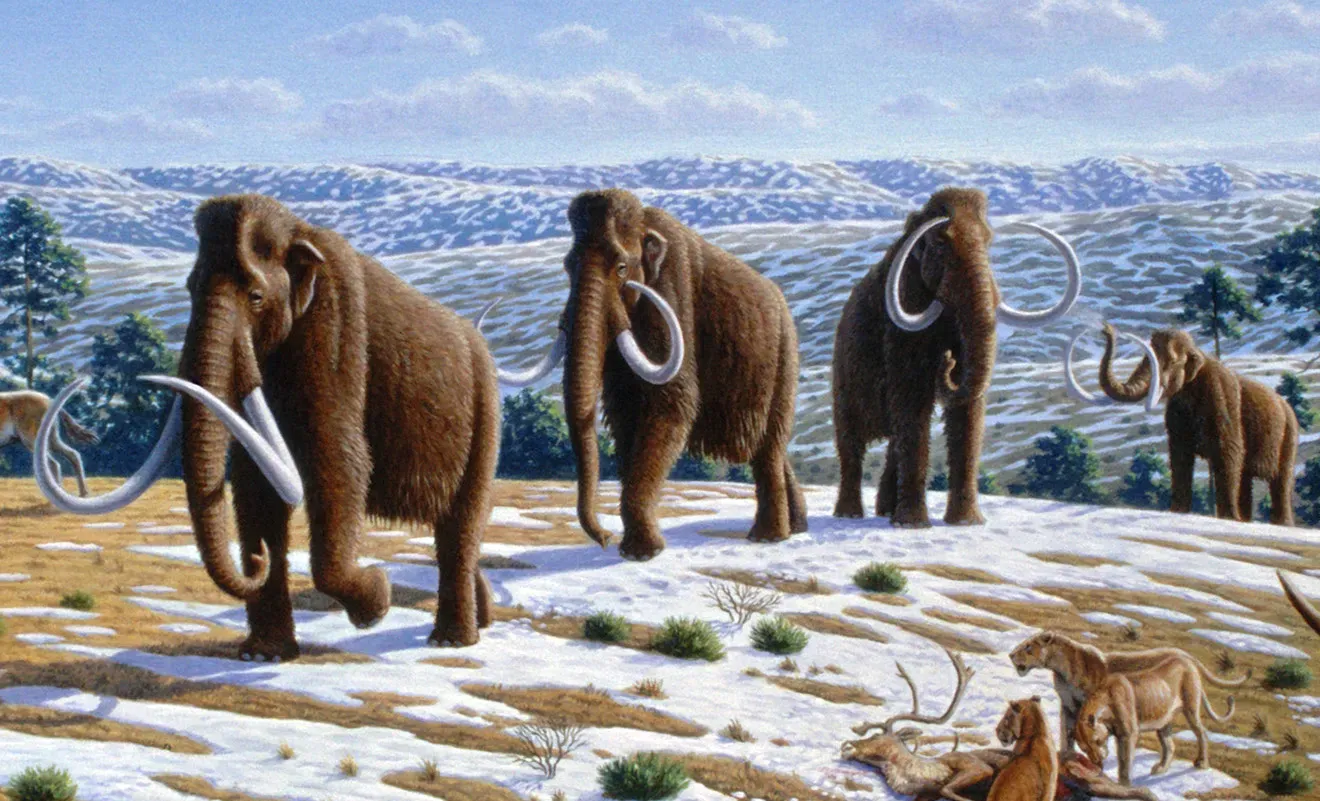
Woolly mammoths feel familiar, almost like historical figures instead of prehistoric beasts. Cave paintings, carved figurines, and etched mammoth scenes on bone show that humans not only hunted them but watched them closely enough to capture details like hair, curved tusks, and even herd behavior. These were not distant, mysterious monsters; they were neighbors, rivals, and probably central to the stories of Ice Age peoples.
What makes mammoths especially haunting is how shockingly recently some of them survived. Small, isolated populations on Arctic islands persisted thousands of years after the great herds vanished from the mainland, overlapping with established human societies that were already experimenting with agriculture and complex culture. If writing had emerged just a little earlier in the right place, we might have had temple inscriptions listing mammoth hunts as royal achievements, or medicinal texts casually describing their fat and bone as ingredients. Instead, we have only images on stone and the eerie feeling that mammoths almost broke into history, but not quite.
2. Giant Ground Sloths: Walking Folklore That Never Got Written Down
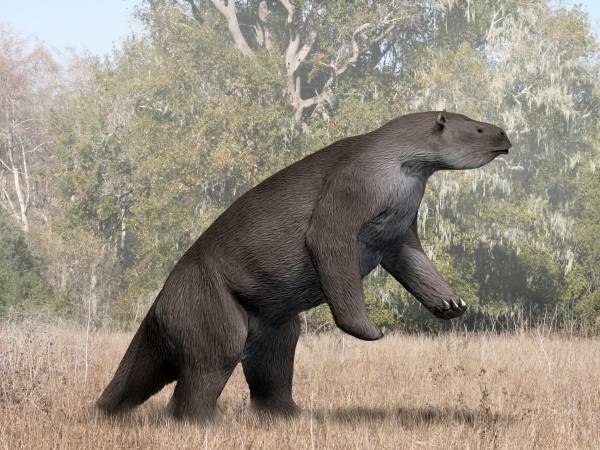
Imagine a sloth the size of an elephant, trundling across open plains, rearing back on its hind legs to pull entire tree branches down like someone grabbing snacks from a high shelf. Giant ground sloths, such as Megatherium in South America and their relatives in North America, were just that: massive, oddly gentle-looking herbivores with long claws and barrel-shaped bodies that would have been impossible to ignore. Early humans shared landscapes with them, and the evidence suggests people hunted them, left butchery marks on their bones, and likely told stories about these slow-motion mountains of fur.
By the time written records appeared in the Americas, though, these sloths were gone, leaving only bones and scattered cave art hints behind. It’s not hard to imagine what might have happened if they had lingered for a few more millennia. Ancient chroniclers would almost certainly have cast them as holy beasts, land-spirits, or even living symbols of stubbornness and strength. Instead, giant sloths occupy this weird limbo: close enough to human memory to feel like folklore, but just too early to have a single clear voice from the past say, in writing, that they were real.
3. Irish Elk: Antlers That Could Have Become Royal Symbols
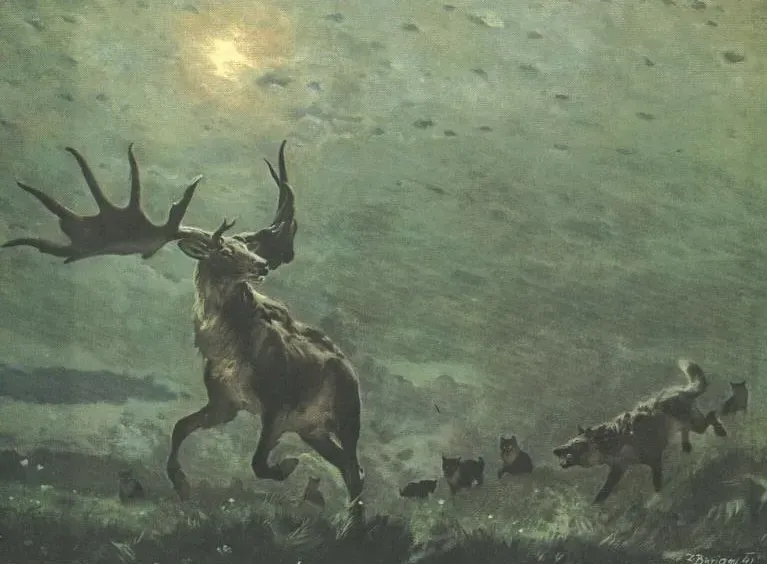
The so-called Irish elk was not really an elk and not exclusively Irish, but it carried one feature that practically begs for legend: antlers that could stretch wider than a car is long. These massive deer roamed across Eurasia, and their broad, palm-shaped antlers would have turned any forest clearing into a living religious painting. For hunter-gatherers, this was the sort of animal that practically demanded ritual, respect, and, frankly, exaggeration.
Fossil evidence shows that humans overlapped with these animals at the very tail end of their existence, especially in regions that later became centers of early European cultures. It takes almost no imagination to picture stylized crowns, clan symbols, or even early coats of arms based on those antlers if the species had survived into the Bronze Age. Instead, what we get are skeletons pulled from bogs centuries later, shocking churchgoers and scholars who struggled to fit something that grand into biblical timelines. The Irish elk feels like nature drafted the prototype for a royal emblem, then deleted it before anyone picked up a pen.
4. Moa and Haast’s Eagle: A Real-Life Monster Movie That Just Missed the Record Books
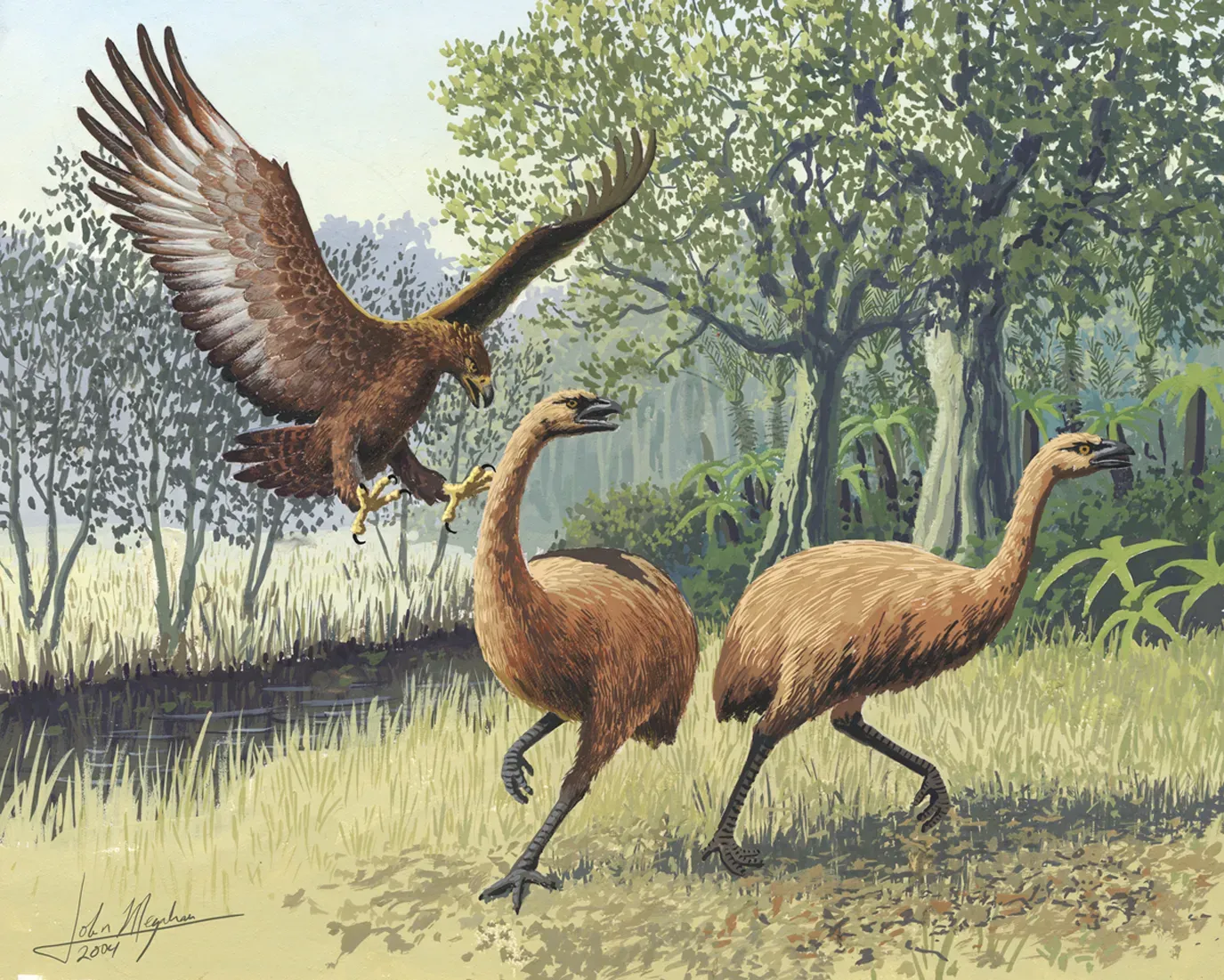
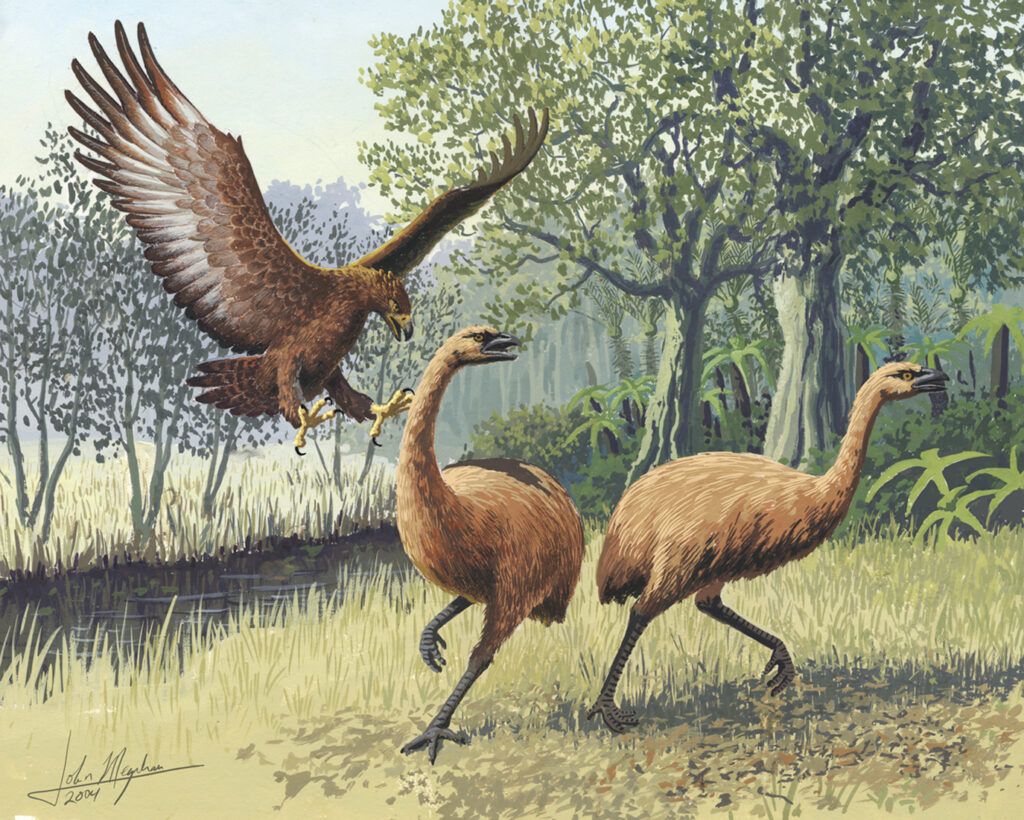
In prehistoric New Zealand, enormous flightless birds called moa roamed the forests, some as tall as a small giraffe. Where you have oversized plant-eaters, you often get oversized predators, and that role fell to Haast’s eagle, a raptor with a wingspan broader than a tall person is long, and talons that could rival a tiger’s claws. This bird did not specialize in rabbits or fish; it hunted giant birds, and by extension, it existed in the same space humans would soon claim.
Polynesian settlers arrived in New Zealand only a little before written records began appearing elsewhere in the world. Archaeological evidence suggests humans hunted moa extensively and likely encountered Haast’s eagle, which would not have hesitated to attack something roughly the size of its usual prey. Oral traditions that developed later echo the idea of a huge, dangerous bird of prey, but no one at the time was writing those stories down. Had the eagle and moa survived only a bit longer, early European explorers or literate cultures in the wider Pacific might have recorded eyewitness accounts that today would sound like over-the-top fantasy, except they would have been completely accurate.
5. Cave Lions: The Lions That Haunted Human Imagination
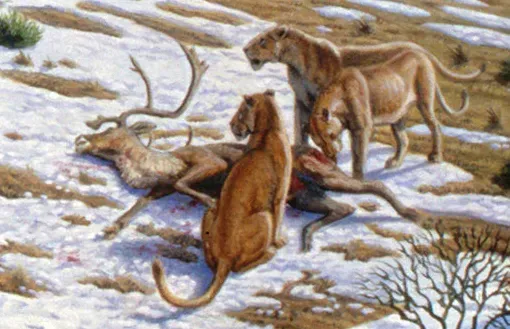
European cave lions were bigger than today’s African lions and, crucially, shared cold, open landscapes with early humans for a very long time. They appear again and again in Ice Age art: carved into bone, painted deep inside caves, sometimes shown interacting with people or other animals in what looks very much like narrative scenes. Clearly, they were important enough to spend precious time and resources depicting, which suggests they filled a psychological space somewhat like dragons, devils, or guardian spirits do in later cultures.
These lions likely survived into the period when humans were already forming permanent settlements and complex social structures in Europe and western Asia, just a step or two away from the emergence of written languages. If they had held out a little longer, there might have been detailed descriptions of their behavior, ceremonial hunts, or royal lion-slaying myths based on actual encounters rather than distant cousins in warmer regions. Instead, when writing finally stabilized in Europe, the cave lion was gone, leaving only stylized echoes in heraldry and myth that probably understate how physically intimidating the real thing actually was.
6. American Mastodons: The Forest Titans of a Nearly-Historic America
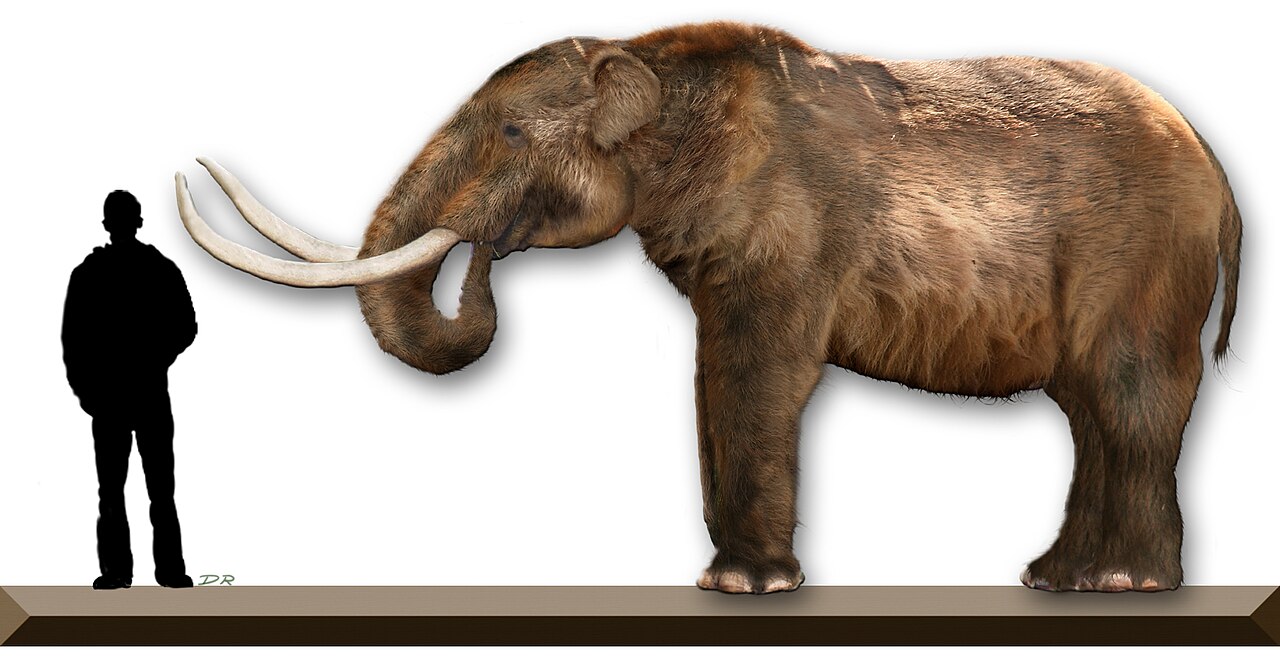
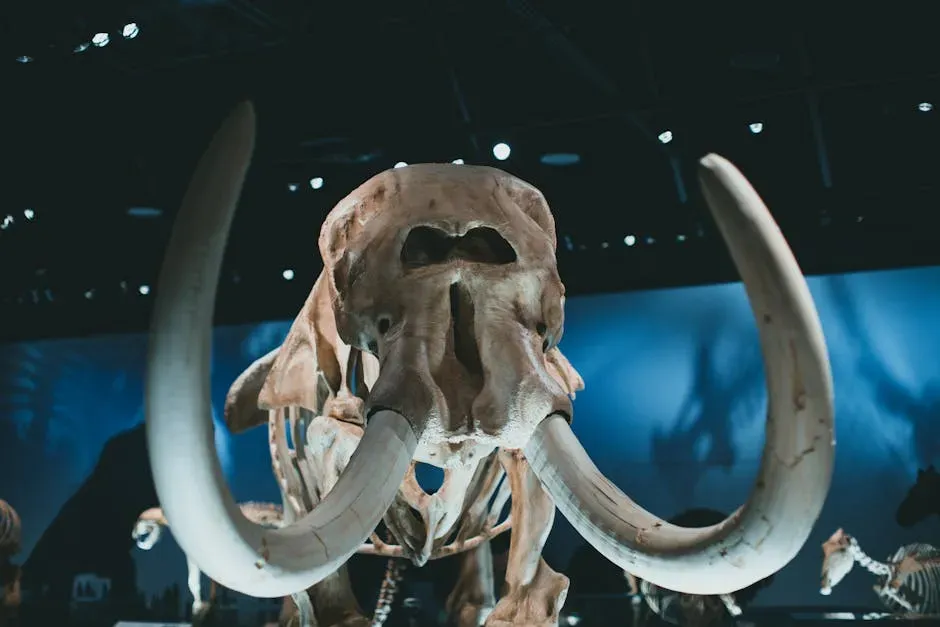
While mammoths often steal the spotlight, American mastodons were just as impressive and, in some ways, even more likely to have become familiar historical animals. They were stockier, forest-loving giants with tusks and trunks, browsing among trees rather than marching over open tundra. In what is now North America, they overlapped with early human groups for thousands of years, and numerous fossil sites show clear evidence of butchering and interaction.
What makes mastodons feel especially close to recorded history is their late survival in some regions of the continent, right up against the threshold of the complex societies that flourished before European contact. Had they endured even slightly longer, they might have been encountered by early explorers, described in letters, or included in Indigenous oral histories that were later written down word for word. Instead, their presence had already faded into deep time by the moment ink met paper, turning living forest titans into mysterious bones that confused early scientists who had never seen anything like them alive.
7. Steller’s Sea Cow: A Sea Giant That Brushed Against the Modern World
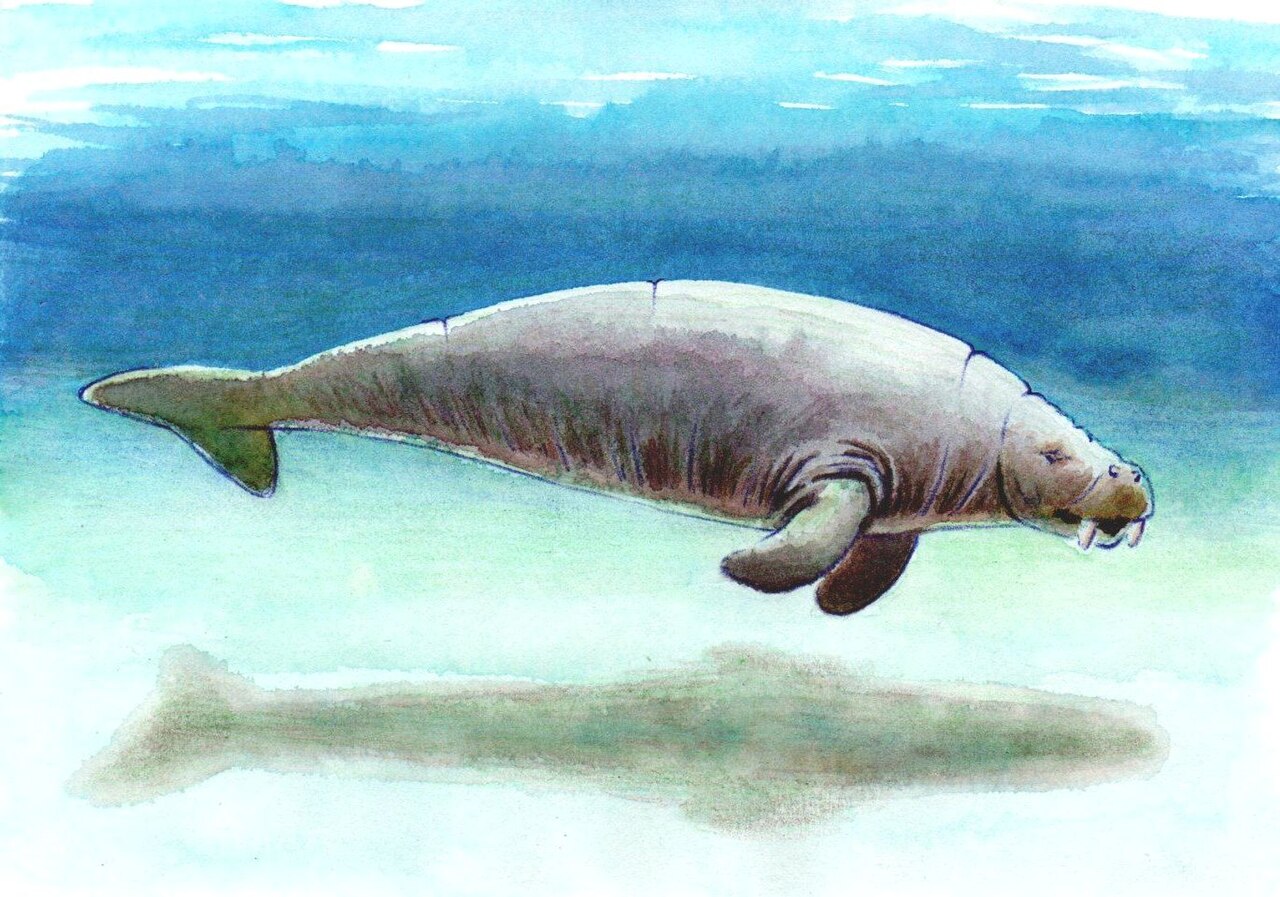
Unlike most creatures on this list, Steller’s sea cow actually did make it into written records, but just barely, and that is what makes it so tragic and so emblematic of “almost” history. This enormous, gentle marine mammal lived in cold North Pacific waters and could reach lengths rivaling a bus. When it was finally documented by European explorers in the eighteenth century, it was already restricted to a tiny range, clinging to existence in remote coastal ecosystems that had escaped earlier exploitation.
Within only a few decades of its discovery, hunting had driven the species to extinction. The result is that our written information is shockingly thin for such a recently lost giant: a handful of descriptions, some scattered bones, and secondhand notes. No detailed long-term studies, no nuanced local ecological perspectives, and no rich folklore recorded in its own voice. Steller’s sea cow sits awkwardly in our consciousness, a reminder that even in the age of ships, maps, and journals, a species could leap from total obscurity to documented reality and then straight into oblivion before anyone really understood what they had found.
8. Giant Kangaroos and Marsupial Lions: Australia’s Ghost Megafauna
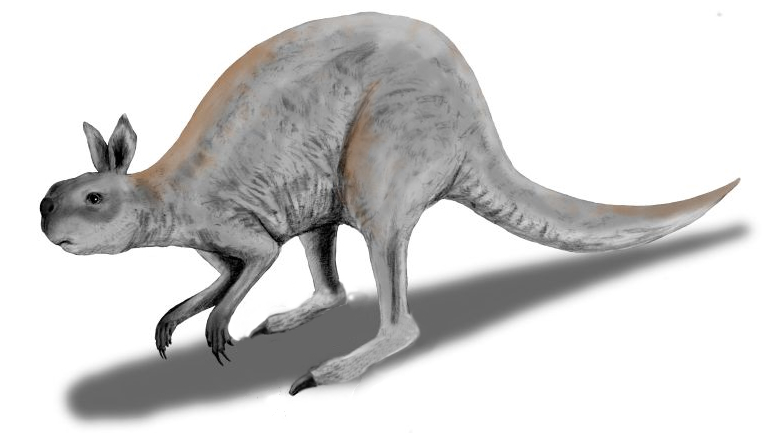
Australia’s prehistoric lineup reads like a surreal alternate universe that almost overlapped with recorded history. There were giant short-faced kangaroos that likely moved more like power-walking athletes than hopping roos, enormous wombat relatives built like armored trucks, and a marsupial “lion” with slicing teeth and strong forelimbs perfectly tuned for ambush. Archaeological evidence and dating suggest that early Aboriginal Australians lived alongside these animals, hunting some of them and undoubtedly weaving their presence into stories, warnings, and teachings.
By the time Europeans arrived with their notebooks and printing presses, these megafauna were long gone, surviving only in oral traditions that were not given the scientific respect they deserved. If even a few of these beasts had persisted into the last few thousand years, we might have had explorers’ journals describing lions that climbed trees with possum-like agility or kangaroos tall enough to look a rider in the eye. Instead, we are left with tantalizing hints in both fossils and stories, and a strong sense that recorded history captured only the second act of Australia’s ecological drama, missing the most spectacular opening scenes.
Conclusion: A World That Vanished One Step Before the Camera Rolled
When you line up these creatures side by side, a pattern jumps out: humanity stepped into its literate, history-writing phase just after an age of giants ended. To me, that timing feels less like a coincidence and more like a wound. Our oldest written myths are strangely modest compared to what actually existed not long before – if anything, the real planet was wilder, stranger, and more over-the-top than our earliest stories dared to claim.
There is an uncomfortable but necessary lesson here. Extinction is not a distant, ancient event; it is something that has been shadowing us the entire way, accelerating as our technology and appetites grow. The “almost historic” beasts on this list are not just curiosities; they are warning signs that we tend to notice the full value of a species only when it is already gone or going. The next time someone shrugs off the loss of a large animal today, I think of mammoths, moa, lions, and sea cows that missed the written record by a heartbeat and wonder which of our modern giants we are quietly editing out of tomorrow’s histories. Which creatures alive now will future people be shocked to learn we let slip away just before they really got to know them?