
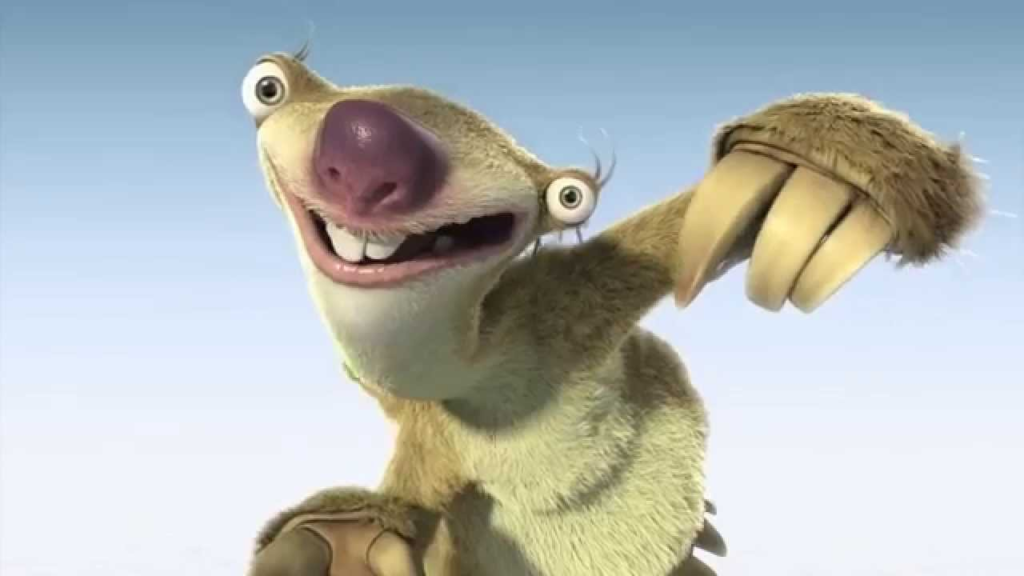
The first time you see Sid the Sloth on screen, it is hard not to laugh. He is clumsy, loud, bug-eyed, and constantly in trouble. But beneath the jokes and the chaos, there is a strange disconnect: Sid is supposed to be a sloth, yet almost nothing about him actually behaves like one. Once you start comparing him to real sloths and their prehistoric cousins, you realize just how far the character strays from the animal he claims to represent.
This gap between Sid and real sloths is more than just a funny design choice. It has quietly shaped how an entire generation thinks about these animals. Many people’s mental image of a sloth is now tangled up with a fast-talking, hyperactive, squirrel-like creature that would not last a day in a real forest. That is why Sid may be the most misrepresented animal in animation history: he is wildly entertaining, but he almost completely rewrites what a sloth even is.
The personality problem: chaotic extrovert vs calm survival specialist
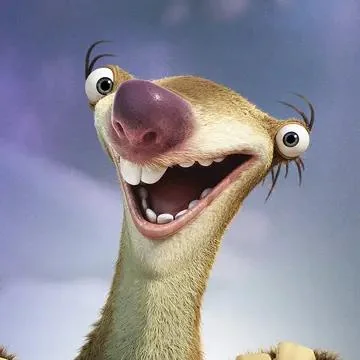
Let’s start with personality, because that is where the disconnect hits hardest. Sid is written as a pure chaos engine: impulsive, talkative, scattered, and constantly making bad decisions. He rushes into danger, yells when he should be quiet, and seems powered by sheer nervous energy. The whole joke of Sid is that he is the loudest creature in the room, no matter where he goes or who he is with.
Real sloths, by contrast, survive by doing almost the opposite of what Sid does. They are quiet, deliberate, and extremely energy-conscious, moving slowly because their diet and biology demand it. Instead of chasing drama, a real sloth avoids attention, blending into the canopy and minimizing movement to stay safe from predators. If a real sloth behaved like Sid, screaming and bouncing around, it would basically be putting a neon sign over its head saying “please eat me.” That personality flip alone makes Sid feel like a completely different species.
The speed myth: sloths are slow, but not “Sid slow” and not “Sid hyper”
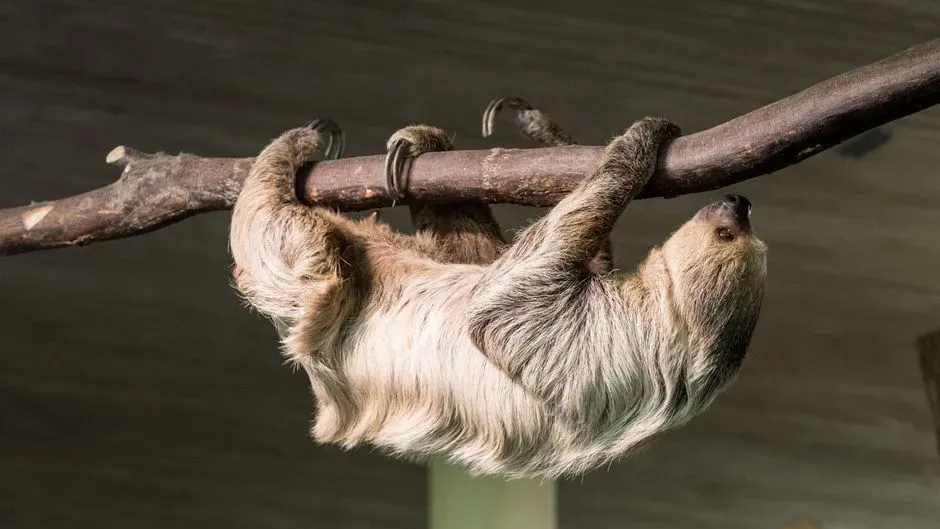
The irony is that Sid manages to misrepresent sloth speed in two directions at once. On the one hand, the movies lean into the idea of slowness as a joke, treating Sid as physically clumsy and awkward, often lagging behind the group. On the other hand, he is mentally and emotionally rapid-fire, with quick speech, fast reactions, and constant chattering. He is both too slow in body and too fast in mind, in a way that does not match how sloths actually operate.
Real sloths are slow for clear biological reasons, especially related to their low-calorie, leaf-heavy diet and their unique metabolism. Their movements are not random or clumsy; they are controlled and efficient, like someone carefully managing a tiny battery that must last all day. When they do need to move faster, such as during a threat or while swimming, they can surprise you with bursts of speed that are still purposeful rather than comedic. Sid, by contrast, exists in a strange in-between: overly dramatic physical slowness played for laughs, combined with an unrealistically speedy brain and mouth that turns him into a walking contradiction.
The body mismatch: Sid looks more like a cartoon gremlin than a real sloth
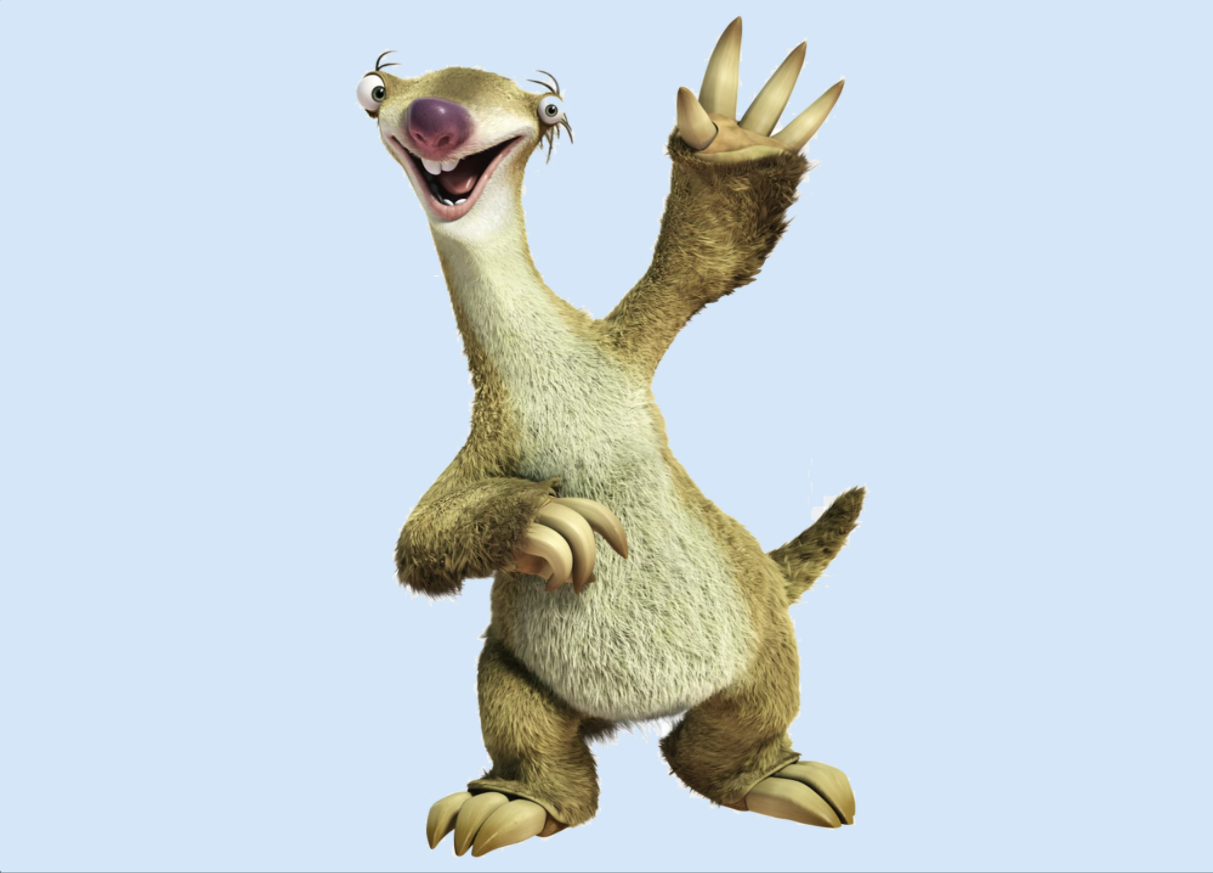
Even if you ignore personality, Sid’s design tells its own story. His eyes are huge and sit far apart on the sides of his head, his limbs are rubbery and exaggerated, and his teeth and mouth are built for broad, stretchy expressions. He wobbles when he walks, flails his arms, and waves his hands around like a nervous comedian. The design works perfectly for slapstick animation, but it slices away almost everything that makes sloths distinct in real life.
Real sloths have specialized limbs with long, curved claws shaped for hanging and climbing, not for dramatic gesturing or running around on open ground. Their faces tend to look gentle and neutral, with a subtle mask-like pattern in some species that makes them appear permanently calm or even a little sleepy. Their fur can host algae and small organisms, acting like a mini ecosystem to help with camouflage. None of that shows up in Sid. Instead of a tree-dwelling specialist built around stealth and energy saving, we get a rubber-faced, ground-walking character whose body is optimized for comedy rather than accuracy.
The wrong sloth entirely: a prehistoric ground sloth pretending to be a tree sloth
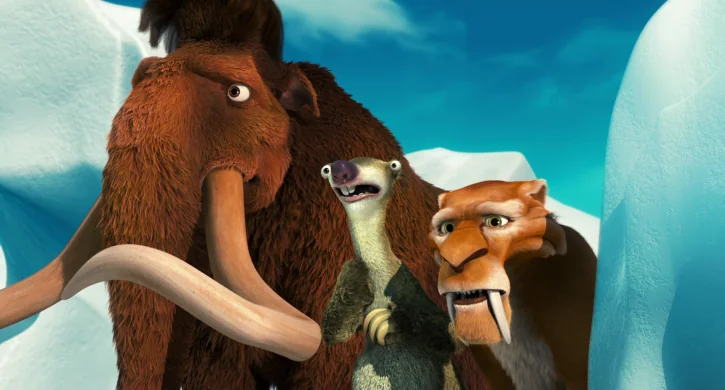
There is another twist that makes Sid’s misrepresentation even stranger: he actually resembles a prehistoric ground sloth much more than he does a modern tree sloth. The Ice Age setting hints at this, because those ancient sloths were big, robust, land-based animals that walked on the ground and could be surprisingly powerful. However, the name “sloth” in people’s minds usually points to the small, slow, tree-hugging mammals we see in nature documentaries today, not their giant Ice Age relatives.
So Sid ends up being a confusing hybrid. He lives in a prehistoric world where a ground sloth would make sense, yet his size, posture, and behavior do not line up cleanly with what scientists know about those animals either. At the same time, audiences still label him as basically the same thing as the modern, tree-dwelling sloths that hang in zoos and sanctuaries. The result is that many viewers walk away with a muddled picture: a single cartoon character trying and failing to represent two very different animals across millions of years of evolution.
The intelligence and emotion gap: real sloths are not stupid, just specialized
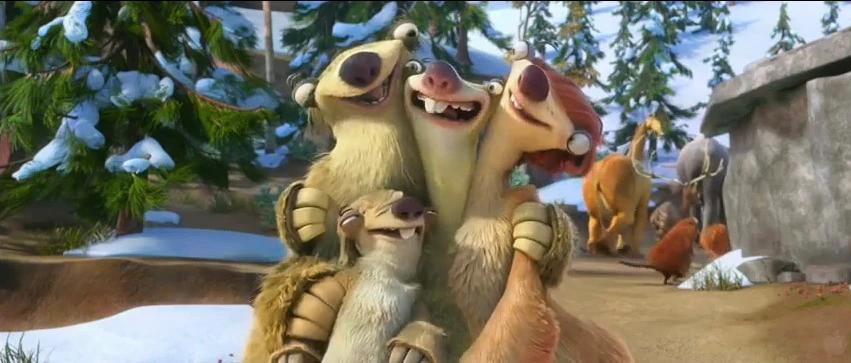
One of the most damaging ideas that sticks to sloths, fuelled heavily by characters like Sid, is that they are dumb. Sid is portrayed as forgetful, goofy, and often clueless, constantly misreading situations and getting basic things wrong. His bad ideas drive a lot of the plot, and other characters often treat him like the harmless idiot of the group. It is funny on screen, but it reinforces a shallow stereotype: slow animals must be stupid animals.
In reality, sloths are not fools; they are animals that have evolved for a very specific lifestyle. Their brains and senses are tuned for their environment: navigating trees, recognizing safe branches, identifying food, and avoiding predators in a quiet, energy-efficient way. That does not look like flashy intelligence to us, because it is not about puzzle solving or tricks on command, but it is very functional. Many people assume sloths have no emotional depth or awareness because of how they move and look, when in fact they show clear signs of stress, comfort, and preference in captivity. By turning Sid into the lovable idiot, the films accidentally flatten an entire animal group into a punchline about laziness and cluelessness.
The cultural fallout: how Sid warped pop‑culture sloth identity
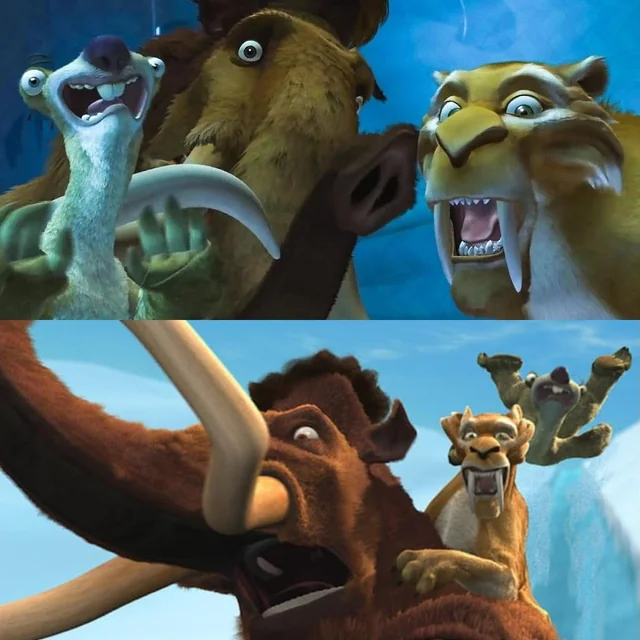
Sid arrived at a time when most people had not really thought much about sloths at all, and that gave his portrayal outsized power. For a lot of kids, he was the first and main reference point: sloth equals Sid. Later, when sloths suddenly became trendy on social media, in memes, and on clothing, the image carried over: silly, lazy, slightly ridiculous, always used as a visual joke rather than a real creature with a complex place in its ecosystem. Sid did not start the stereotype alone, but he poured fuel on it.
I have noticed this in casual conversations, where people mention sloths and immediately mimic Sid’s voice or his hunched walk, as if quoting an inside joke everyone knows. That kind of shorthand is powerful, because it shapes what people expect to see when they meet a real sloth, whether at a zoo or online. Instead of quiet respect for a highly specialized survivor, they often look for comedy: silly faces, clumsy motions, cartoonish behavior. In that sense, Sid is not just a misrepresented sloth; he has become the template for how modern pop culture thinks about sloths at all, and that makes his inaccuracy matter far more than a simple design choice in an animated film.
Conclusion: lovable character, terrible ambassador
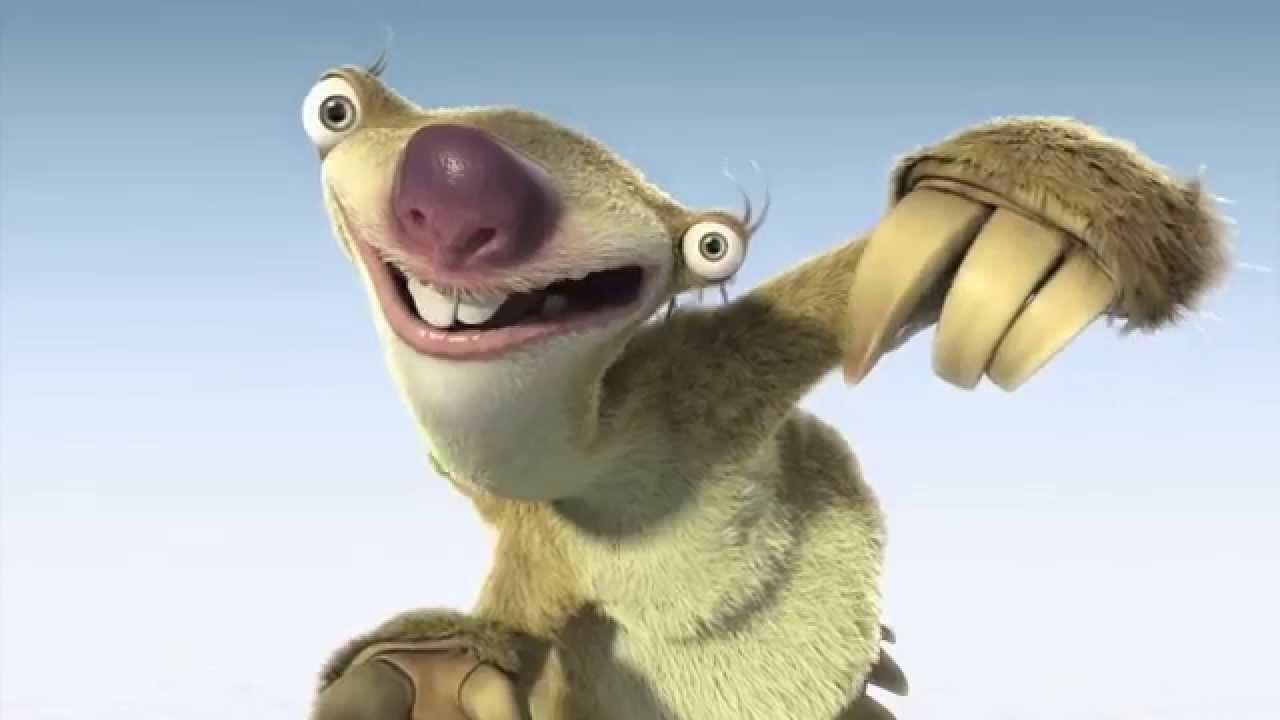
Sid the Sloth is one of those characters I genuinely enjoy while also side‑eyeing almost everything he says about his own species. He is funny, warm, and oddly endearing, but as an ambassador for sloths he is almost completely off the mark. His personality, body, speed, intelligence, and even his prehistoric identity all stray far from what real sloths are like, turning a quiet survival specialist into a noisy, bumbling mascot for laziness and foolishness. When you put it all together, it is hard to think of another animated animal that so thoroughly misrepresents its real‑world counterpart.
In my view, that is what earns Sid the unofficial title of the most misrepresented animal in animation history: no other character has so deeply rewritten public perception of a species while sharing so little with the animal it claims to be. The fix is not to cancel Sid or stop enjoying the Ice Age movies, but to balance the fiction with better, more accurate stories about real sloths. If anything, Sid’s popularity is an opportunity: he hooks people in with laughter, and from there, we can nudge them toward the truth. Next time you see a sloth meme or a clip from the movie, will you picture a cartoon clown, or a quiet expert perfectly adapted to its treetop world?