
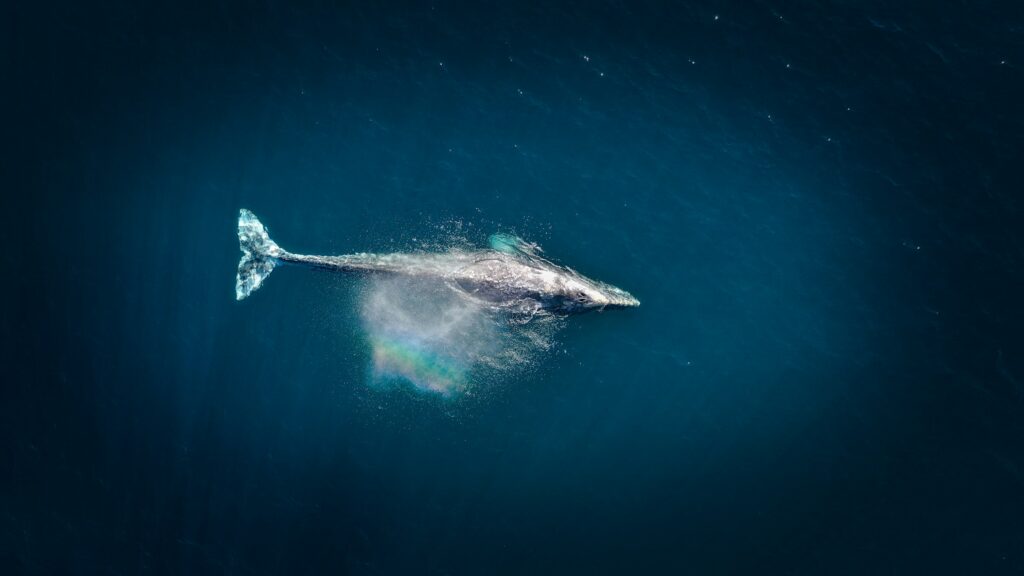
If you looked at a blue whale today and tried to guess its family tree, you probably wouldn’t imagine a dog-sized, hoofed land animal trotting around ancient riverbanks. Yet that is exactly what the fossil record now tells us. Over the last few decades, paleontologists have uncovered a surprisingly detailed step‑by‑step trail showing how whales went from walking on land to ruling the open ocean.
It is not just a loose story anymore; it is one of the best documented major evolutionary transitions we know. Layer by layer, bone by bone, the sequence from small four‑legged land mammal to colossal blue whale has been stitched together like a long‑lost photo album. The deeper you go into that album, the stranger and more fascinating the family resemblance becomes.
From tiny hoofed wanderer to ocean giant: why this story matters
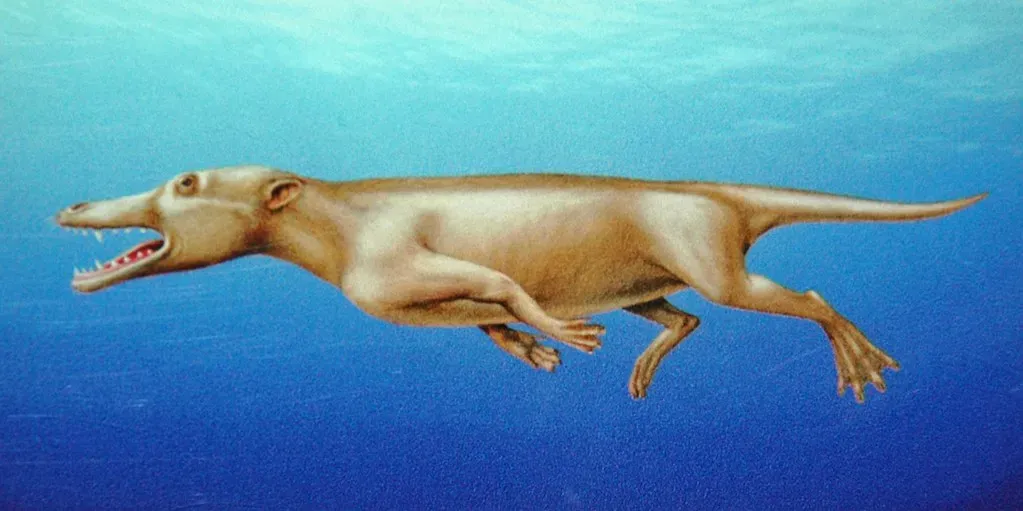
Here is the wild part: the largest animal to have ever lived on Earth descends from a creature that you could have tripped over on a muddy riverbank. Early whale ancestors were small, four‑legged, hoofed mammals that probably looked more like a cross between a deer, a dog, and a tiny hippo than anything we would call a whale. They prowled tropical coastlines and river margins, sniffing out food in shallow water while still relying on land for support.
For a long time, this connection sounded almost too dramatic to be true, and even many scientists were skeptical. But the sheer weight of fossil evidence that has emerged since the late twentieth century has turned that skepticism into one of evolutionary biology’s biggest success stories. The entire arc from land to sea, from feet to flippers and from nostrils to blowholes, is now preserved in rock in a way that is pretty hard to argue with.
The four‑legged land ancestor: small, hoofed, and semi‑aquatic
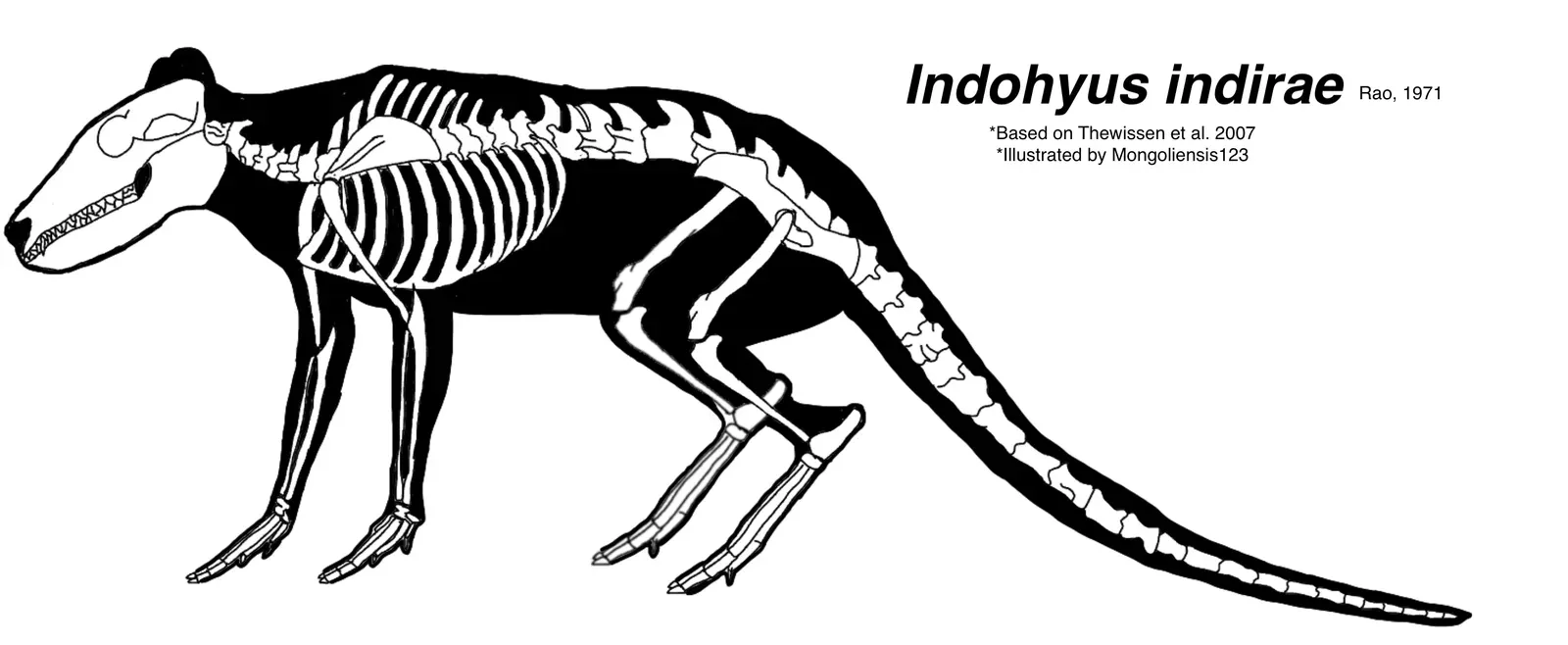
The journey begins around fifty million years ago with small artiodactyls, the same broad group that today includes deer, pigs, and hippos. One key fossil form, an early cousin rather than a direct ancestor, looked nothing like a whale and everything like a nimble, dog‑sized land animal with hooves and legs built for walking and wading. Its skeleton suggests it was comfortable in shallow water but still perfectly capable of scampering on land.
Think of this animal as the curious shoreline explorer of its time. It likely hunted small fish, crustaceans, and other aquatic prey, using the water as a rich feeding ground while keeping one foot – literally – in the terrestrial world. This dual lifestyle set the stage for a slow but profound shift: natural selection began to favor traits that made swimming easier and diving more effective, even if that meant being less agile on land.
Early walking whales: the half‑and‑half experiment
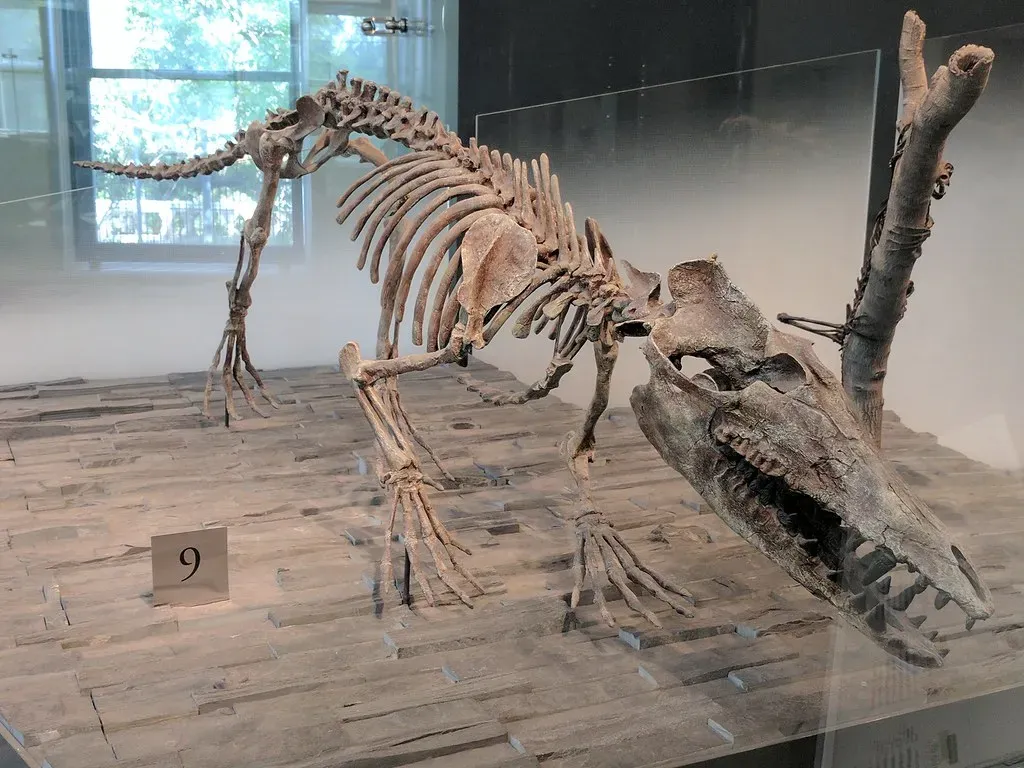
Fast‑forward a few million years and the fossils show something almost uncanny: mammals that still had fully formed legs and could walk yet had skulls, teeth, and body proportions trending toward a life spent mostly in the water. These early whales, often called walking whales, had long, powerful tails and limbs that were starting to function more like paddles than legs. They could still haul themselves onto land, but land was clearly no longer their main stage.
In these forms, you can practically see evolution hedging its bets. Their hips were still strong enough to support walking, but their bones were becoming denser, which helps with underwater stability, and their ears were shifting toward a design that works better for hearing underwater. They were not fully terrestrial and not yet fully marine, like awkward teenagers of evolution stuck between two worlds but perfectly adapted to a new ecological niche along coastlines and estuaries.
The decisive move offshore: limbs become flippers, tails become engines
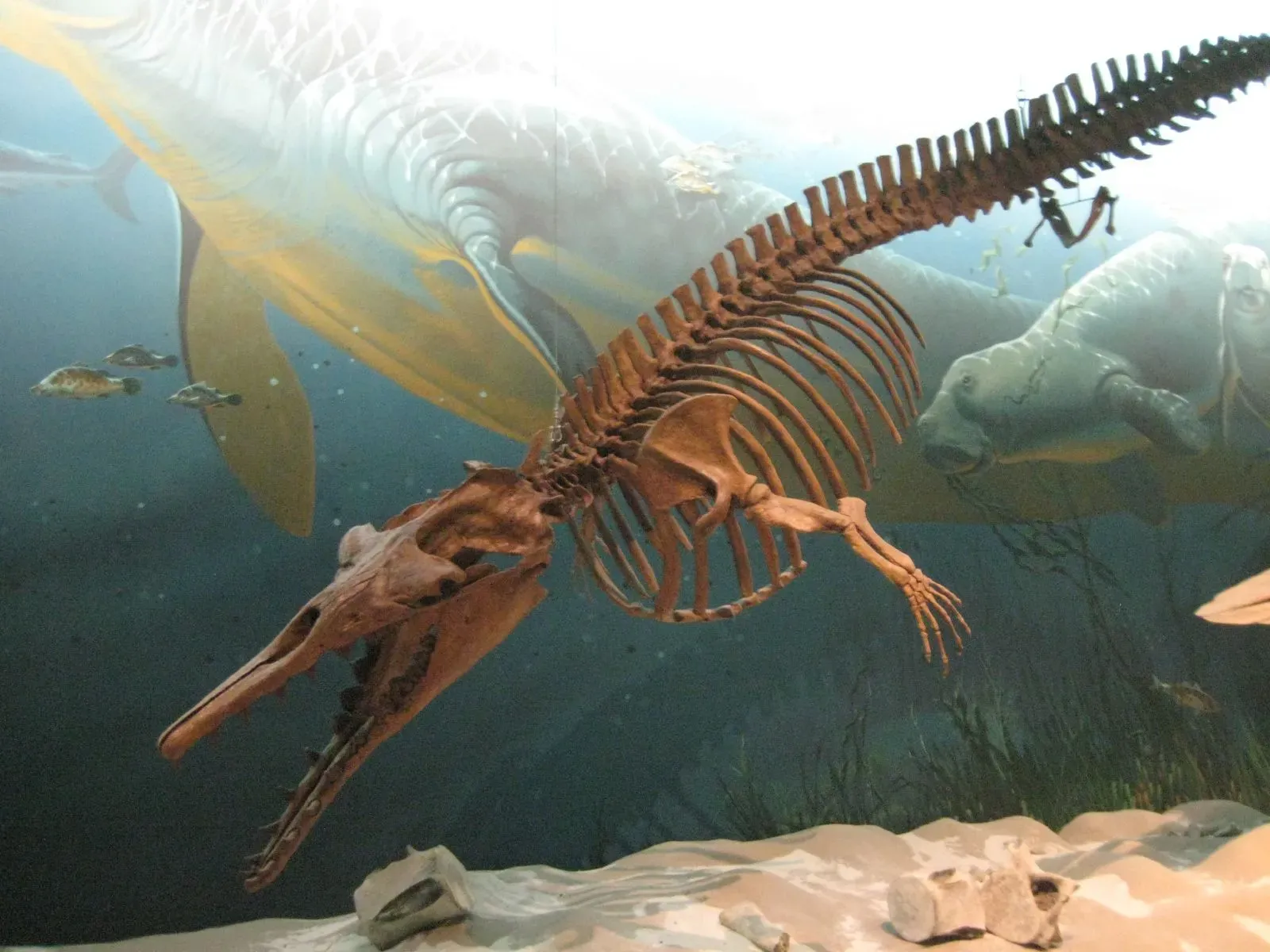
The next wave of fossils shows an even bolder commitment to marine life. Hind limbs shrink and lose their strong connection to the spine, front legs broaden into paddle‑like structures, and the tail becomes the main driving force, eventually developing the powerful shape and musculature that modern whales use for propulsion. At this point, returning to a land‑based lifestyle would have been practically impossible.
This transition from walking to undulating swimming was not an overnight leap but a long series of tiny anatomical tweaks. Joints stiffened to make the forelimbs more efficient flippers, vertebrae in the tail region adapted to support strong up‑and‑down strokes, and bodies elongated into more streamlined torpedoes. If you have ever watched a whale dive and disappear into the blue with a single slow beat of its tail, you are seeing the end result of millions of years of that slow, relentless engineering.
Skulls, teeth, and blowholes: how heads reveal the whale within
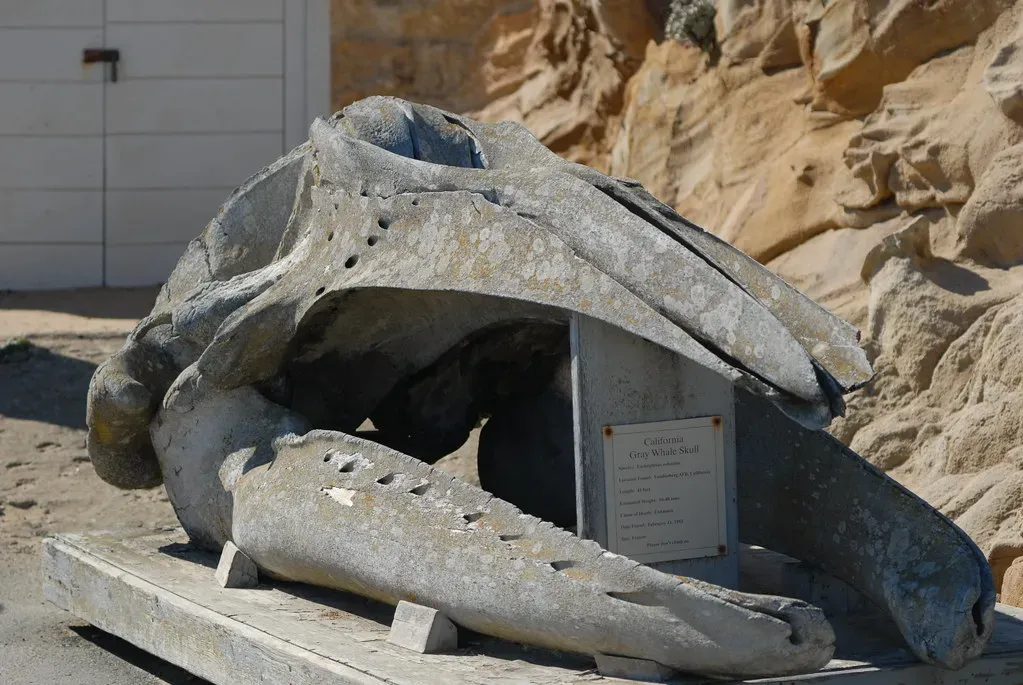
One of the most persuasive lines of evidence for this entire story comes from the skulls. Early ancestors had nostrils right at the tip of the snout, like typical land mammals. As the lineage becomes increasingly aquatic, those openings creep slowly backward along the skull and eventually end up on top of the head as a blowhole. You can line up these skulls by age and literally watch the migration of the nostrils into a breathing system perfectly suited for surfacing in rough seas.
The teeth and ear bones tell a similar tale. Early species had teeth fit for grabbing and chewing a variety of prey, while later forms develop teeth specialized for catching slippery fish or, in the case of baleen whales’ ancestors, a shift toward gulping and eventually filter feeding. Ear bones, too, become more specialized for underwater hearing, enclosing structures that block out vibrations from the skull so the animal can pinpoint sounds in a dense, noisy medium. It is like seeing a head get rewired, step by step, to function as a submarine sensor suite instead of a land mammal’s toolkit.
From toothed hunters to filter‑feeding titans
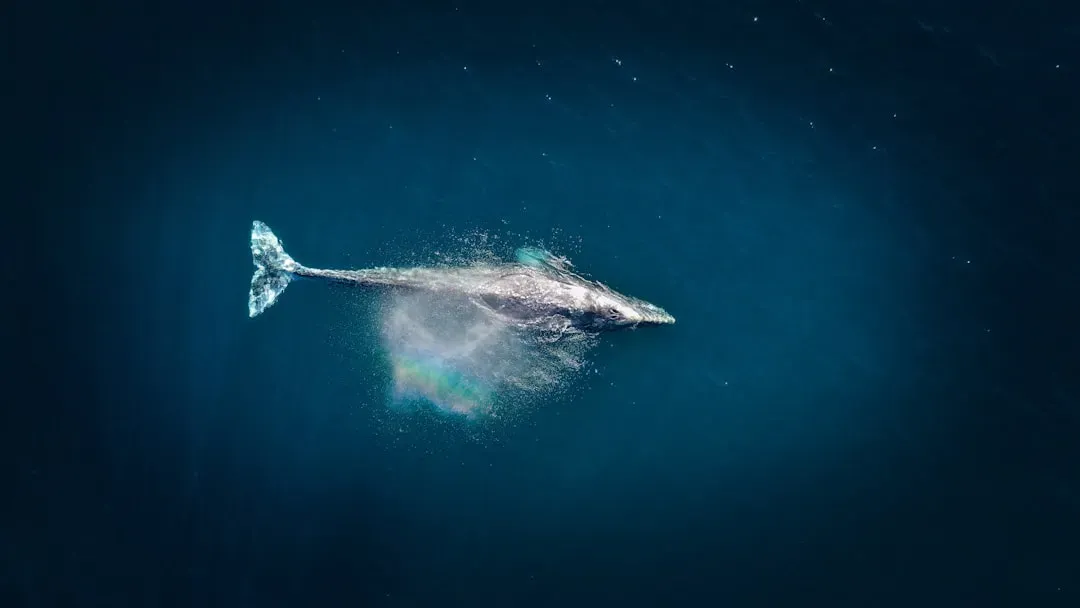
Modern whales split into two main groups: toothed whales, which use echolocation and active hunting, and baleen whales, which include the blue whale and feed by filtering vast clouds of tiny organisms from the water. The fossil record reveals that baleen whales did not start out with baleen plates; their early relatives had teeth and likely hunted more like typical predators. Over time, intermediates appear that seem to have used both suction feeding and early forms of filtering, blurring the line between biting and straining food from water.
This gradual shift helps demystify how something as extreme as a blue whale’s feeding method could evolve. Instead of leaping magically from sharp teeth to giant keratinous filters, whales passed through forms that experimented with new ways of grabbing food, rewarding any step that allowed them to exploit dense swarms of small prey. In oceans rich with tiny crustaceans and plankton, scaling up body size while refining bulk‑feeding strategies was like tapping into an all‑you‑can‑eat buffet, and the blue whale lineage took full advantage.
The almost complete fossil sequence: why scientists are so confident
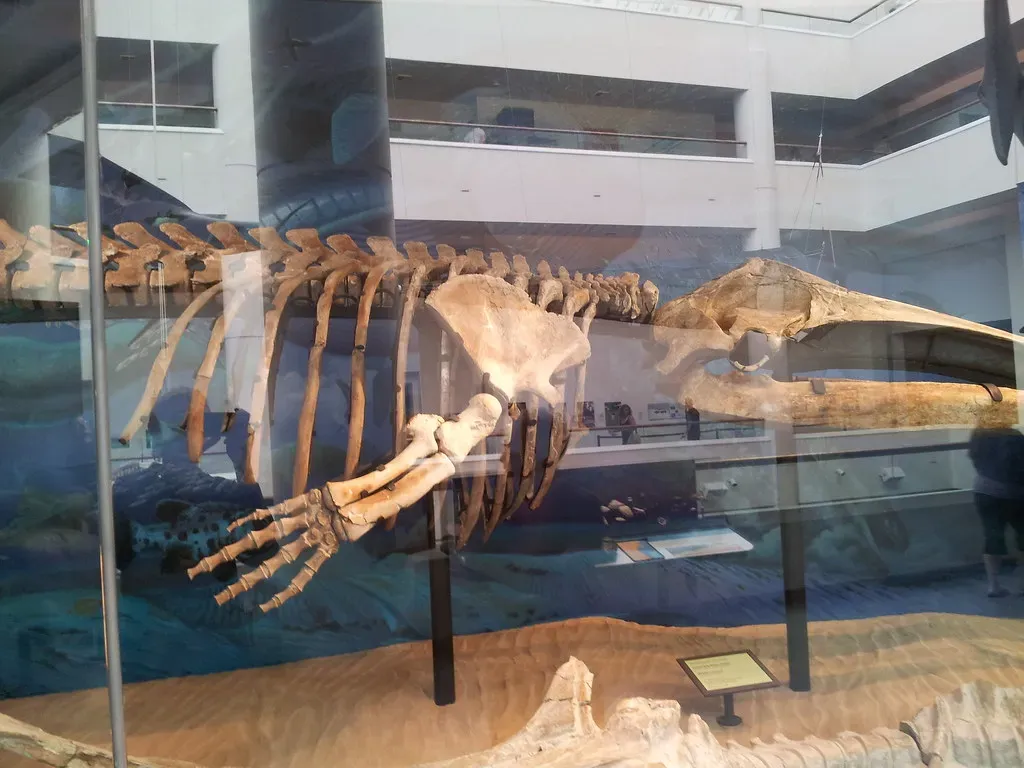
What makes this entire story so compelling is not just that it sounds neat, but that it is anchored in a remarkably continuous fossil trail. Scientists have uncovered a succession of species spanning those fifty million years that show transitional features in limbs, spines, skulls, and even inner ears. Each new discovery has tended to slot neatly into this timeline rather than overturn it, filling in previously missing steps between land walkers and open‑ocean swimmers.
In evolutionary biology, you rarely get a near‑unbroken series from one lifestyle to another; erosion, chance, and sheer time usually erase too many pieces. Whales are a rare exception where geology and luck have conspired to give us a surprisingly complete record. That is why researchers often point to whale evolution as a prime example when they say the evidence for large‑scale evolutionary change is not just abstract theory but something you can literally hold in your hands as a series of bones.
Why this land‑to‑sea journey should change how we see evolution
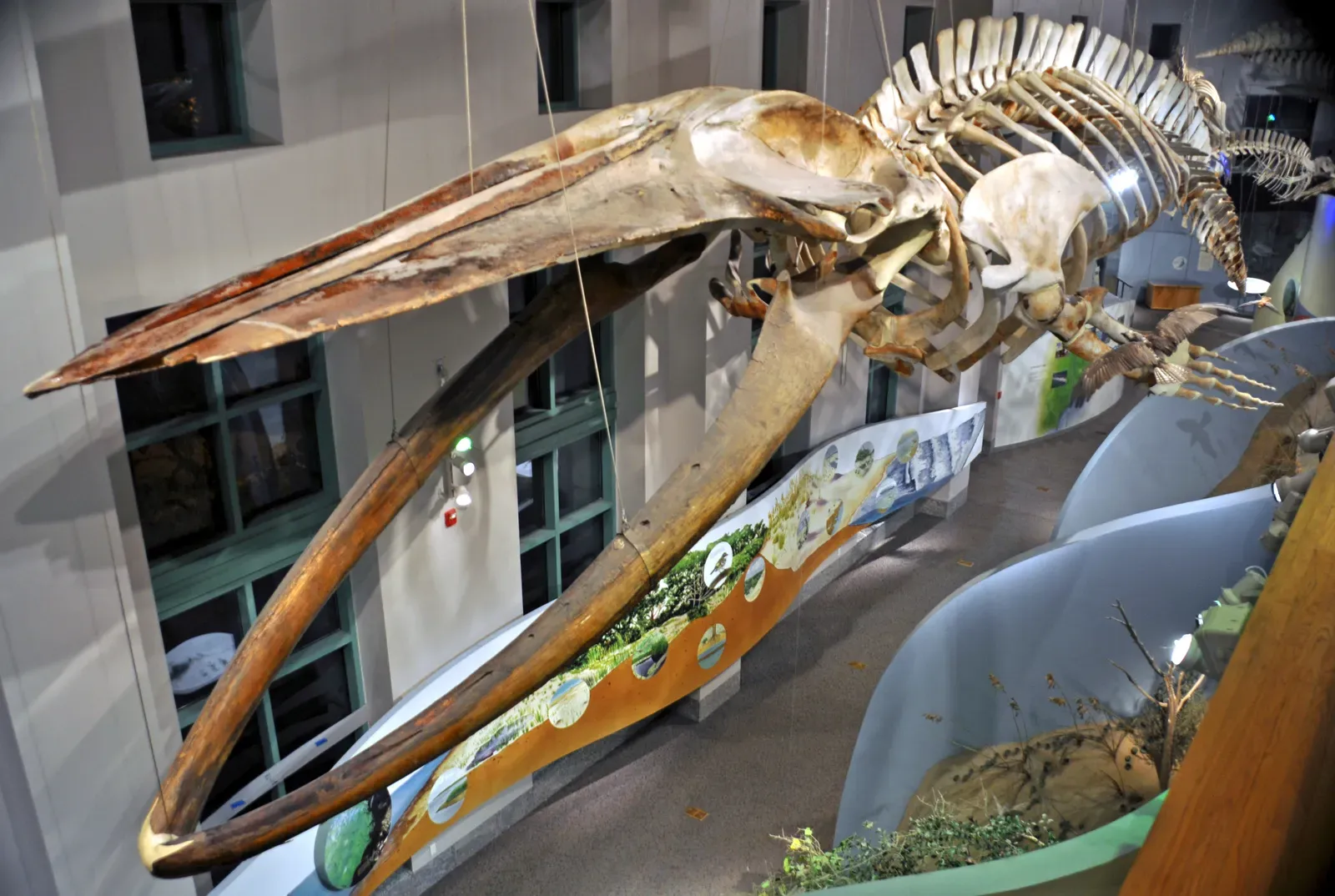
To me, the whale story is one of those humbling, slightly unsettling reminders that nature is far stranger and more flexible than our everyday intuitions. The idea that a compact, four‑legged land mammal could, given enough time, give rise to a blue whale pushes back against any neat, static picture of life. It says that bodies are not fixed designs but rolling experiments, tweaked and retuned as environments and opportunities shift.
It is also a quiet rebuke to the notion that evolution is just guesswork or fuzzy speculation. When you can trace a lineage almost bone‑by‑bone from shore‑walking hoofed animal to deep‑diving titan, the debate starts to feel less like opinion and more like archaeology. The blue whale’s past is not a myth; it is a fossil‑by‑fossil argument carved into stone. Next time you see a photo of a blue whale gliding through dark water, it is worth asking yourself: could you have imagined that such a creature once had tiny hooves and walked the shorelines, and what other impossible transformations might still be hidden in the rocks, waiting to surprise us?