
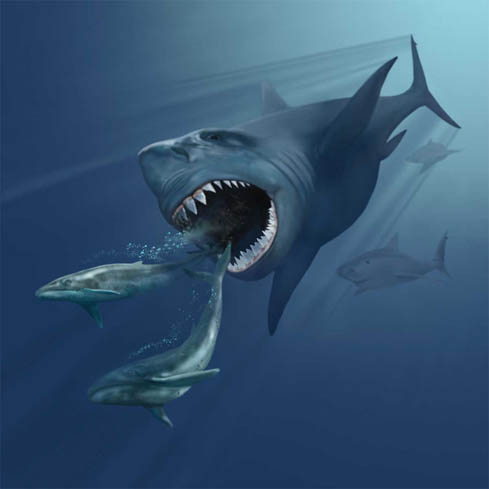
Imagine an animal so huge that the most iconic land predator of all time, Tyrannosaurus rex, could have stood inside its mouth with room to spare. That animal was not a dinosaur, not a sea monster from legend, but a very real prehistoric shark that once ruled the oceans. The idea sounds like wild science fiction, yet it is grounded in fossil evidence that scientists are still piecing together today.
What makes this giant even more unsettling is how recently it swam our seas. While T. rex vanished around sixty‑six million years ago, this monster shark appeared tens of millions of years later and shared the planet with early whales and even our distant primate relatives. In other words, it is far closer to us in time than to the dinosaurs it could have swallowed whole, and that flips most people’s intuition about “prehistoric” life on its head.
A shark that could swallow a T. Rex – how big are we talking?
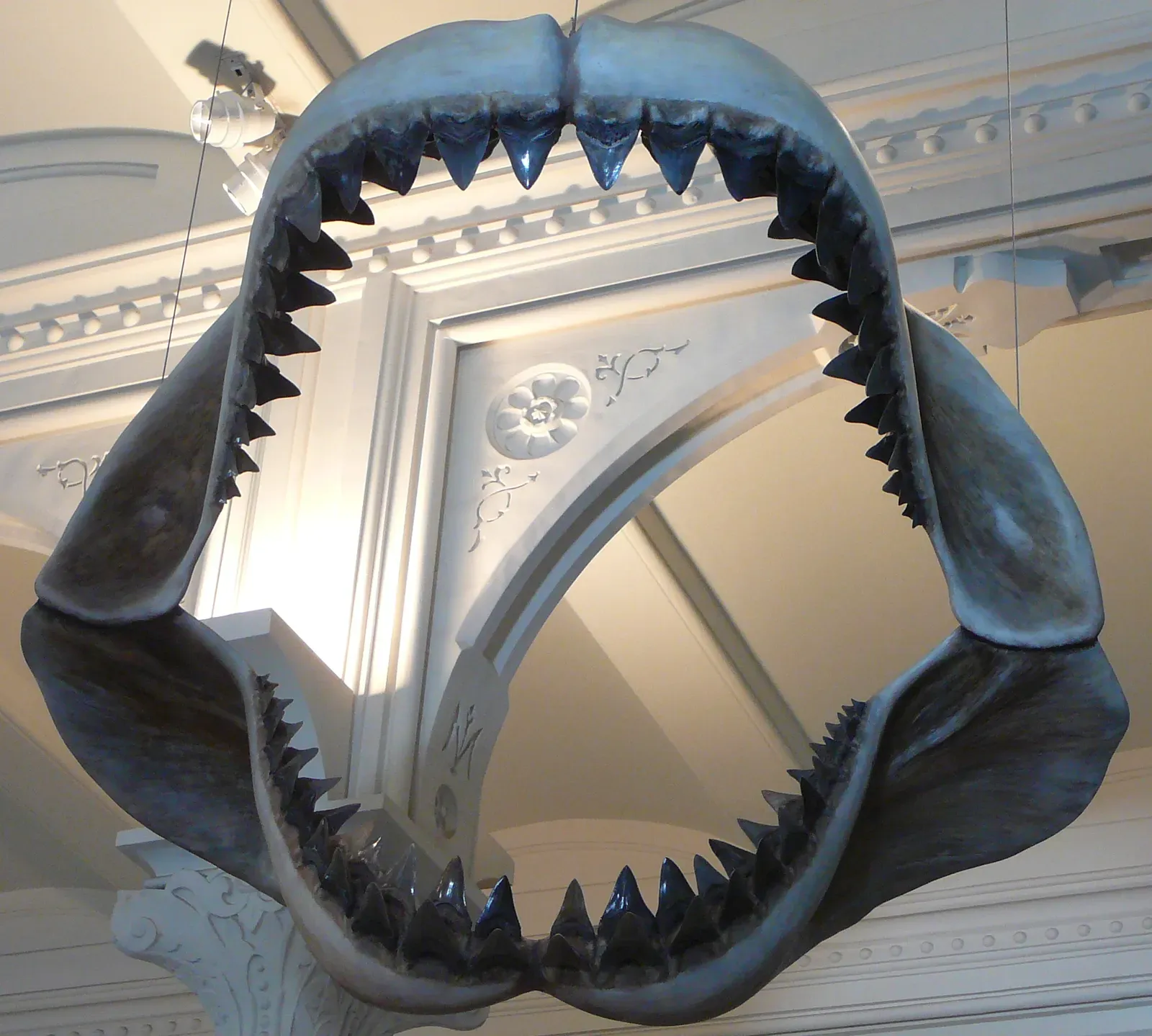
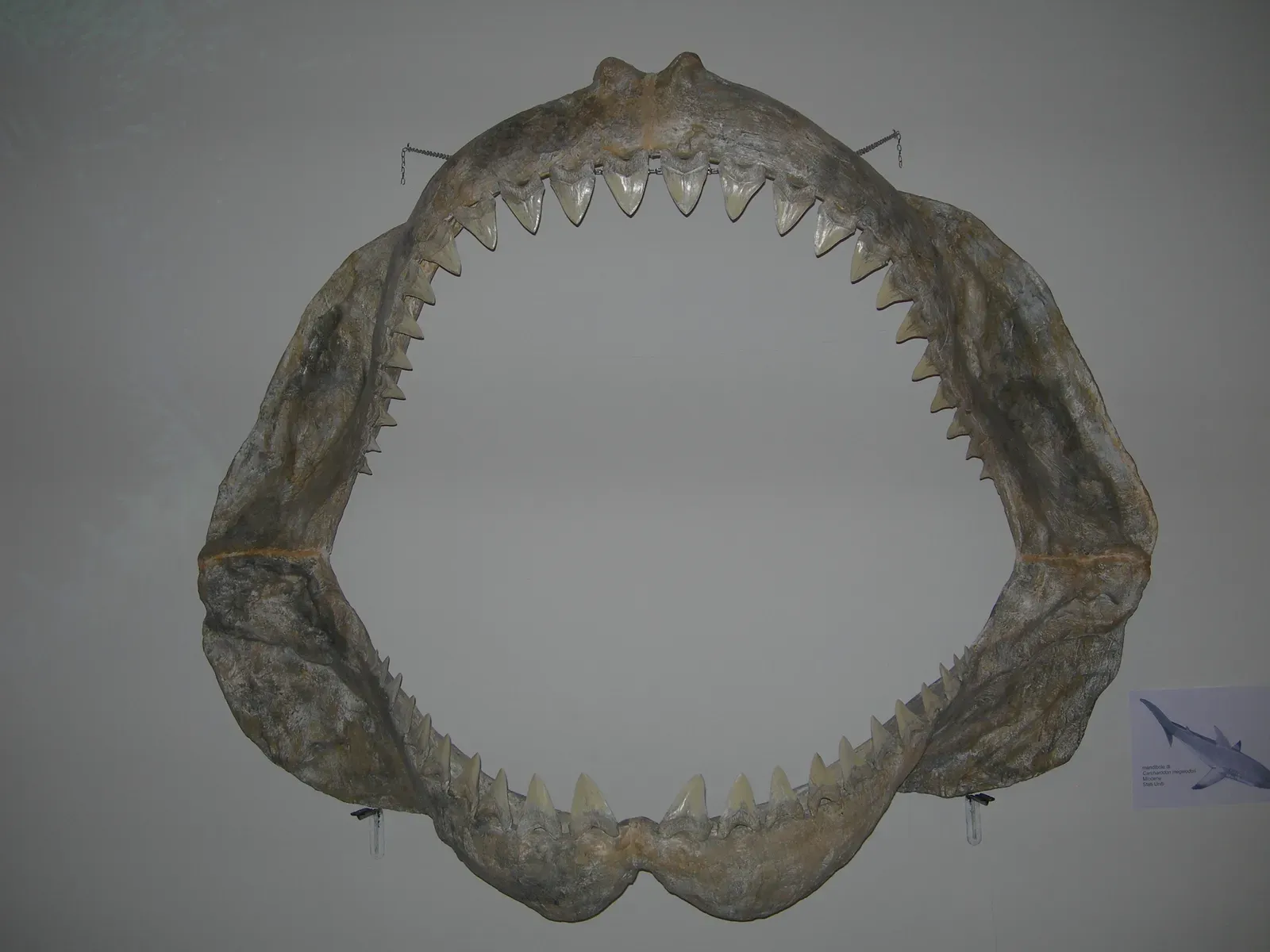
When scientists estimate the size of this prehistoric shark, they are not exaggerating for effect: the largest reconstructions put it at around the length of a city bus, or even two, nose to tail. That means a body stretching more than fifteen meters long, with some estimates pushing well beyond that into the territory of truly colossal marine animals. Its jaws alone are thought to have been more than human‑height tall when fully open, shaped like a bony, tooth‑lined doorway into darkness.
A full‑grown T. rex is usually reconstructed at about twelve to thirteen meters long, but importantly, it was tall and bulky, not a thin eel‑shaped animal. The fact that paleontologists seriously argue that the shark’s open mouth could have accommodated a standing tyrannosaur gives you a sense of scale that numbers alone struggle to deliver. Think of a predator so large that another apex predator, famous for its bone‑crunching bite, would look like a snack passing through its jaws.
This ocean giant lived shockingly recently in Earth’s history
Here’s the twist that surprises people most: this enormous shark did not share the oceans with dinosaurs. Dinosaurs on land were wiped out around sixty‑six million years ago, while this giant shark lived during the Cenozoic Era, long after that extinction. Its heyday was roughly between twenty‑three and three and a half million years ago, overlapping with early forms of whales, seals, and the ancestors of many modern marine mammals.
To put that into perspective, the last populations of this shark vanished only a few million years before our own species appeared, not tens of millions of years earlier with the likes of T. rex. It lived in an Earth that already looked broadly familiar: continents close to their current positions, oceans with many recognizable species, and ecosystems that were starting to resemble the modern world. When you picture this animal patrolling the seas, you should not imagine a Jurassic movie scene, but something much closer to the oceans that exist today, just far more dangerous.
What we really know about this shark – and what is still debated
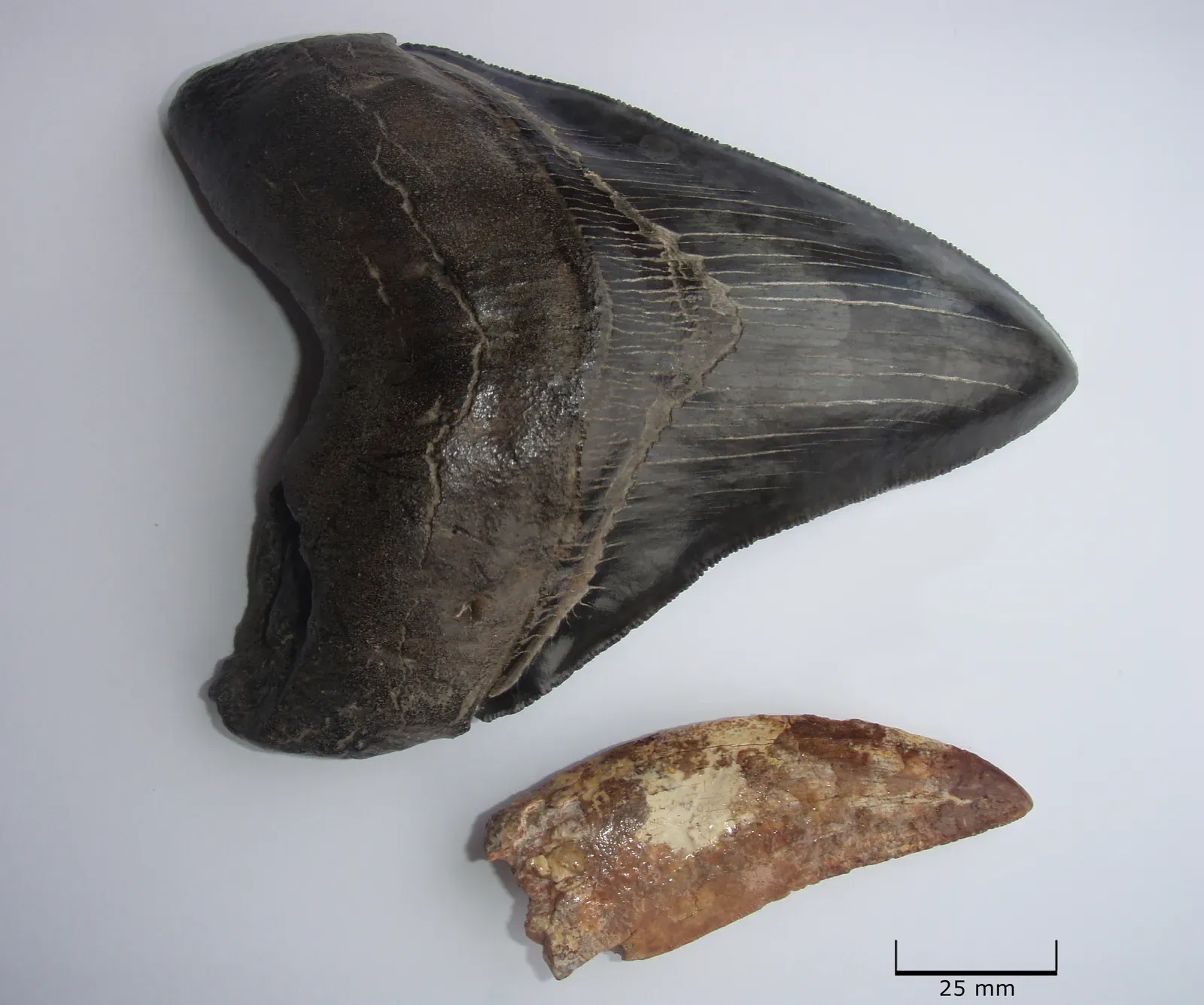
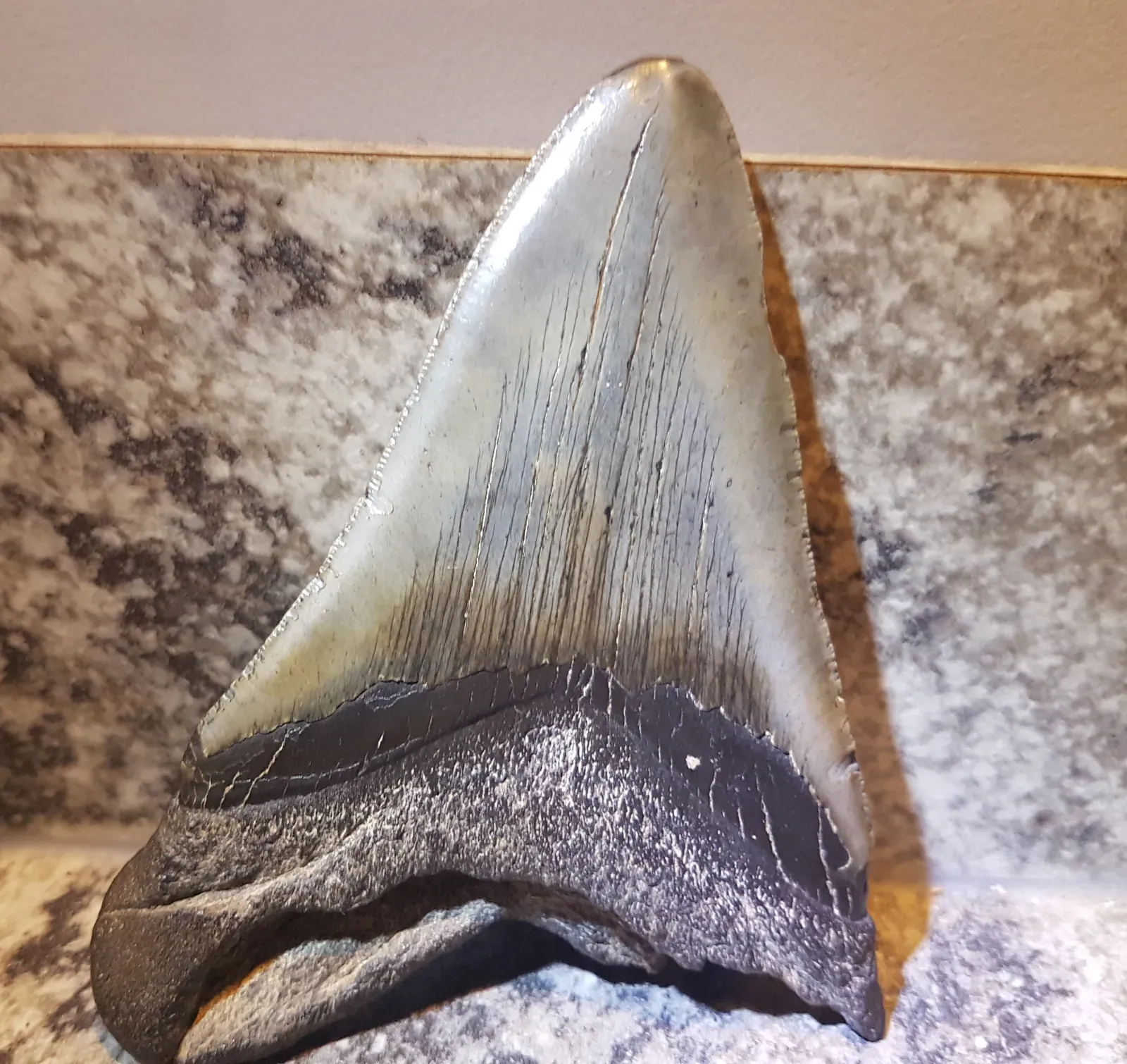
Despite its fame, this prehistoric shark is mostly known from its teeth and a few vertebrae, because shark skeletons are made largely of cartilage that does not fossilize well. The teeth, however, are spectacular: thick, triangular, and serrated, like industrial‑grade steak knives scaled up to nightmare size. Paleontologists use the relationship between tooth size and body length in living sharks to estimate how big this animal was, which is why there is ongoing debate about its true length and bulk.
Some researchers argue that the traditional reconstructions make it too enormous, while others maintain that the colossal sizes are reasonable given the tooth evidence and comparisons with modern great white sharks and other large species. This scientific back‑and‑forth is healthy and important, because it reminds us that paleontology is detective work built from incomplete clues, not a perfectly filmed documentary. What is not in serious doubt, though, is that this shark was absolutely gigantic on any realistic reconstruction and dwarfed even the largest predatory sharks alive today.
An apex predator in an ocean of giants
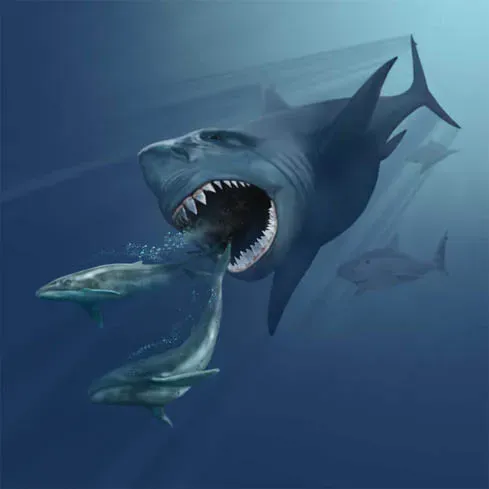
During the time this shark ruled the seas, the oceans were home to an impressive cast of large animals, including early baleen whales, toothed whales, giant seabirds, and massive fish. Instead of feeding on small fish and squid like many modern sharks, this giant probably targeted marine mammals that were themselves several meters long. Bite marks on fossil whale bones that match the size and shape of its teeth strongly suggest it attacked big, powerful prey, ripping off enormous chunks of flesh or even dismembering bodies outright.
In that sense, it was not just another big shark, but the top of the top, a super‑predator sitting at the very peak of the marine food chain. The energy demands of such a large body would have been intense, meaning it likely needed rich hunting grounds and a steady supply of large prey to survive. When you picture it gliding silently through warm coastal waters, trailing pods of whales or sweeping into nurseries full of young marine mammals, you start to appreciate how profoundly it must have shaped the behavior and evolution of everything around it.
Why a giant like this eventually disappeared
For a long time, it was tempting to imagine that this monster shark went extinct simply because it was too big, as if there were some cosmic rule that says “giants must fall.” The more nuanced story emerging from research suggests a web of pressures: changing ocean temperatures, shifts in currents, and evolving competition from other large predators, especially growing and diversifying toothed whales. As climates cooled and habitats transformed, the warm, productive coastal environments the shark depended on may have shrunk or shifted.
At the same time, its likely prey base was not static. Marine mammals evolved, some species moved into new regions, while others dwindled, potentially making it harder for a gigantic specialist predator to find enough food. Smaller, more flexible predators often do better when ecosystems are in flux, and that might have tipped the balance away from slow‑breeding giants at the top of the food chain. In my view, its extinction feels less like a dramatic, single event and more like a long, grinding squeeze from changing oceans and smarter, nimbler rivals.
What this monster shark tells us about our place in Earth’s story
There is something humbling about realizing that a creature big enough to swallow a T. rex lived closer to us in time than to the dinosaurs we grow up obsessing over. It shatters the neat mental timeline where dinosaurs are the peak of ancient terror and everything else is just a side note. Instead, it reminds us that Earth has gone through multiple waves of giants, each ruling, shaping ecosystems, and then vanishing as conditions changed. We just happen to live after one of those waves, not at the end of the story.
Personally, I think the most important lesson is about scale and fragility. This shark was a symbol of raw power, yet all its size, teeth, and dominance could not save it from long‑term environmental shifts. Today, we are the ones reshaping the oceans at high speed, and we like to think of ourselves as untouchable at the top. But if a predator that could have turned a T. rex into a mouthful of meat can disappear, how confident should we really be about our own permanence on a restless planet?