
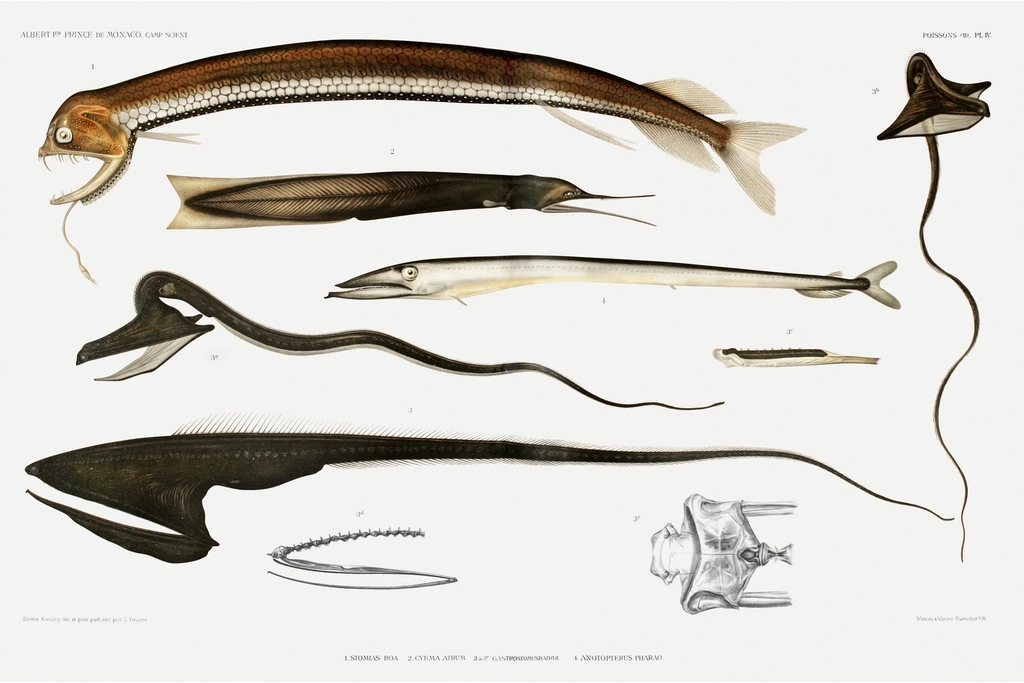
Most people assume we’ve mapped every corner of Earth. Here’s the uncomfortable truth: we’ve explored less than 5% of the ocean floor, and every expedition into the deep still turns up creatures that look like rejected movie monster concepts.
These aren’t Photoshop hoaxes or urban legends. They’re real, documented, peer-reviewed animals living thousands of feet below sunlight, and marine biologists who’ve spent entire careers staring at trawl nets and submersible footage still gasp when new footage surfaces.
From a shark that launches its own jaw like a slingshot to a fish that permanently fuses into its mate’s bloodstream, the fourteen animals below aren’t just bizarre-looking. They’re the kind of biology that makes trained scientists pause and double-check their instruments. Here’s what researchers actually say about the ocean’s strangest residents.
#14 – The Sea Pig That Walks the Ocean Floor Like a Bloated Ghost
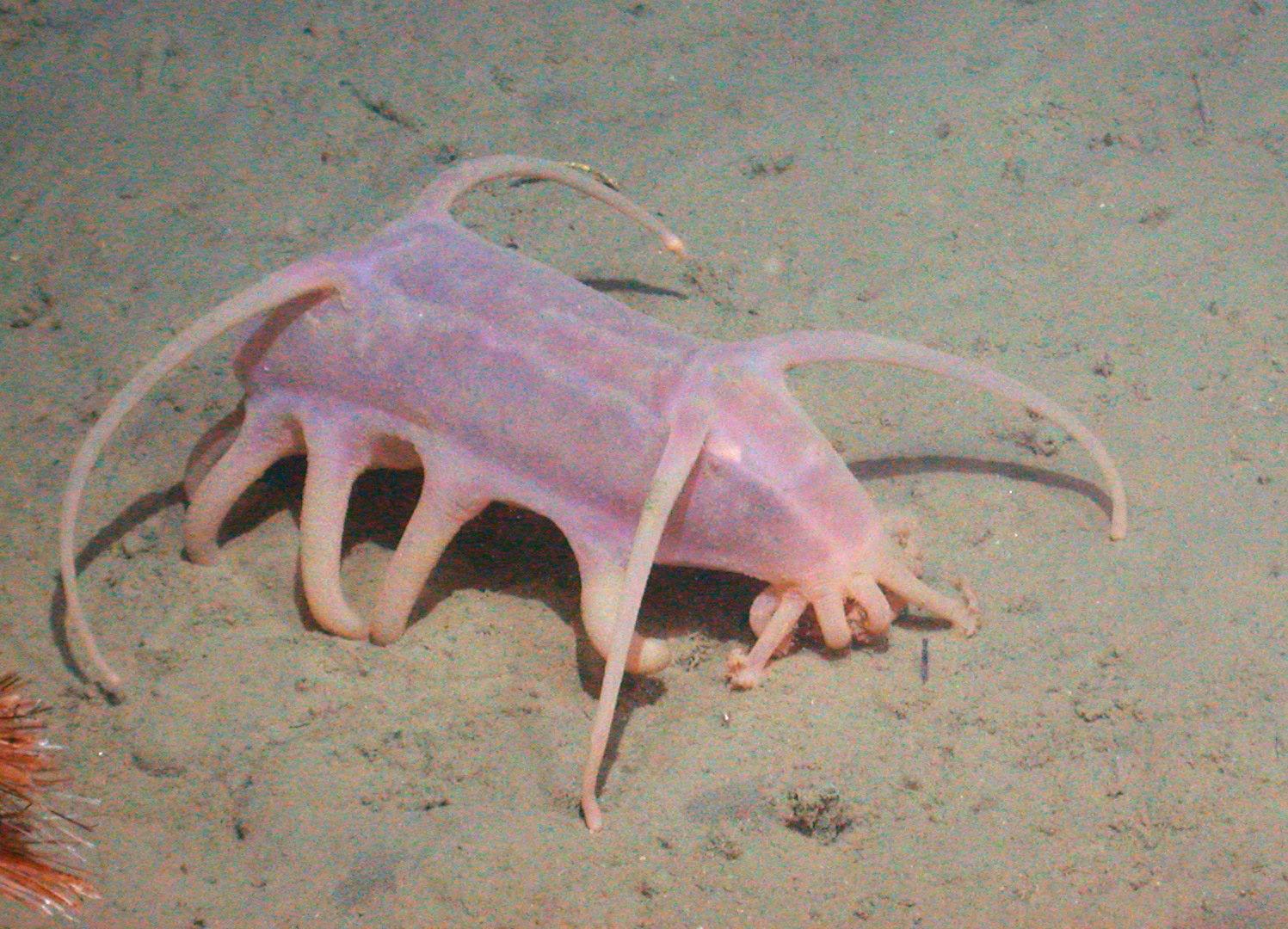
Picture a translucent, pink balloon animal tiptoeing across the seafloor on stubby legs, and you’ve basically pictured the sea pig.
Sea pigs (genus Scotoplanes) are actually sea cucumbers, not pigs, but their bulbous bodies and inflated “legs” – really modified tube feet – make the nickname impossible to shake. They live on the abyssal plain, often thousands of meters down, crawling across sediment in search of edible organic particles drifting down from above. They sometimes gather in swarms of hundreds around a single whale carcass, arriving almost as if summoned the moment a meal hits the seafloor. Scientists studying whale falls actually use sea pig density as a rough clock for how long a carcass has been decomposing – slow, soft, and almost comically undefended, yet in an ecosystem starved of food, that patient wandering is exactly what keeps them alive. But #13 makes this deep-sea oddity look almost normal.
#13 – The Giant Tube Worm That Doesn’t Even Have a Mouth
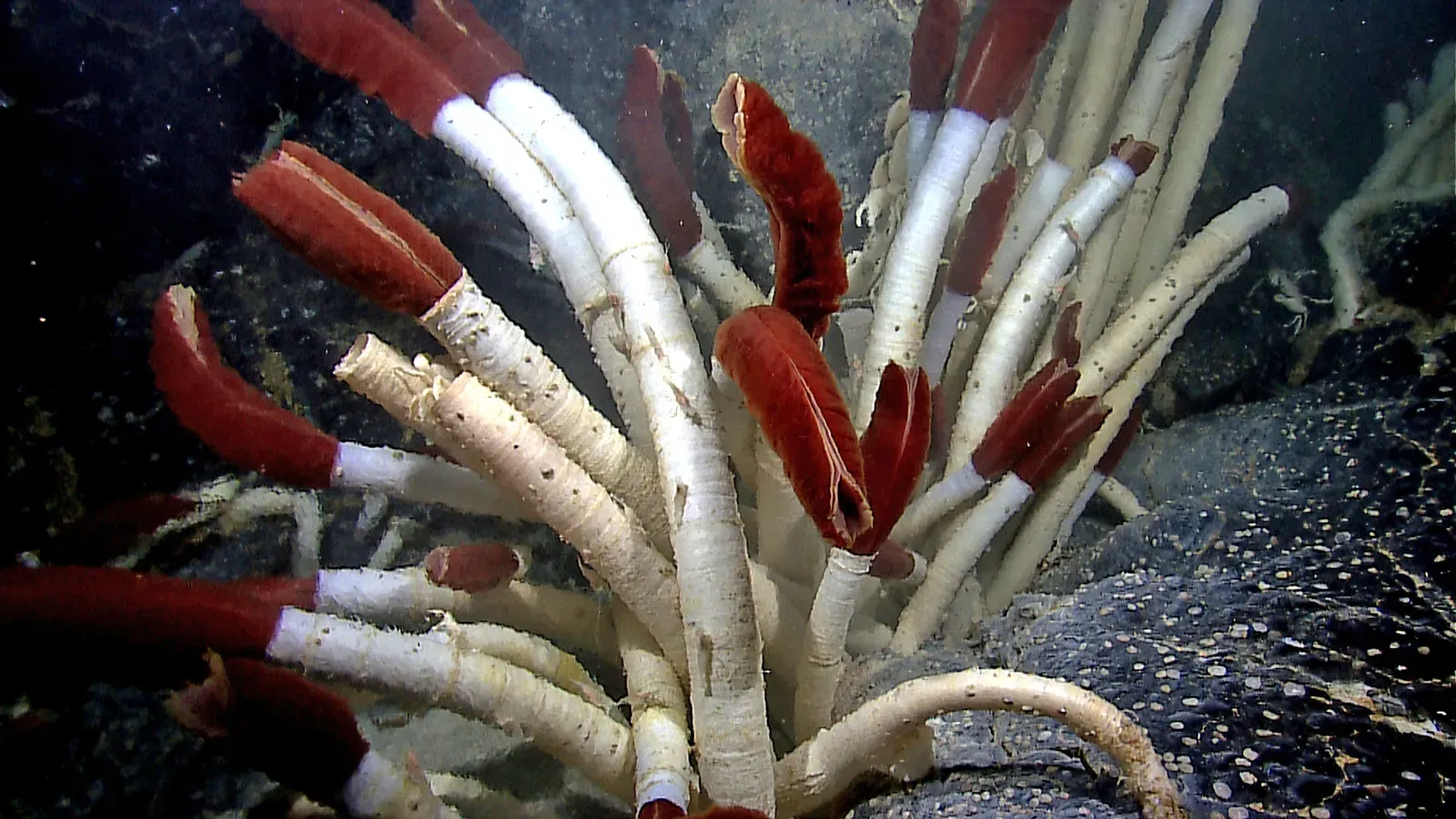
Imagine an animal that grows several feet long, thrives next to boiling volcanic vents, and never eats a single bite of food in its entire life.
Giant tube worms (Riftia pachyptila) live clustered around hydrothermal vents on the deep ocean floor, where scalding, mineral-rich water gushes out of the earth’s crust. As adults, they have no mouth, no stomach, and no digestive tract at all. Instead, they house trillions of chemosynthetic bacteria inside a specialized organ that converts toxic hydrogen sulfide from the vents into usable energy, essentially feeding the worm from the inside. Their blood-red plumes, poking out of tough white tubes, are packed with a special hemoglobin that absorbs both oxygen and sulfide without being poisoned – one of the only known ecosystems on Earth that survives entirely without sunlight. Even that doesn’t compare to what’s next.
Fast Facts
- Hydrothermal vents were first discovered in 1977 near the Galápagos Rift.
- Vent fluid can reach scalding temperatures before mixing with the near-freezing seawater around it.
- Giant tube worms can grow several feet long despite lacking a mouth or gut entirely.
- Vent ecosystems run on chemosynthesis, not photosynthesis, making them independent of sunlight.
#12 – The Ghost Shark With a Retractable Weapon on Its Head
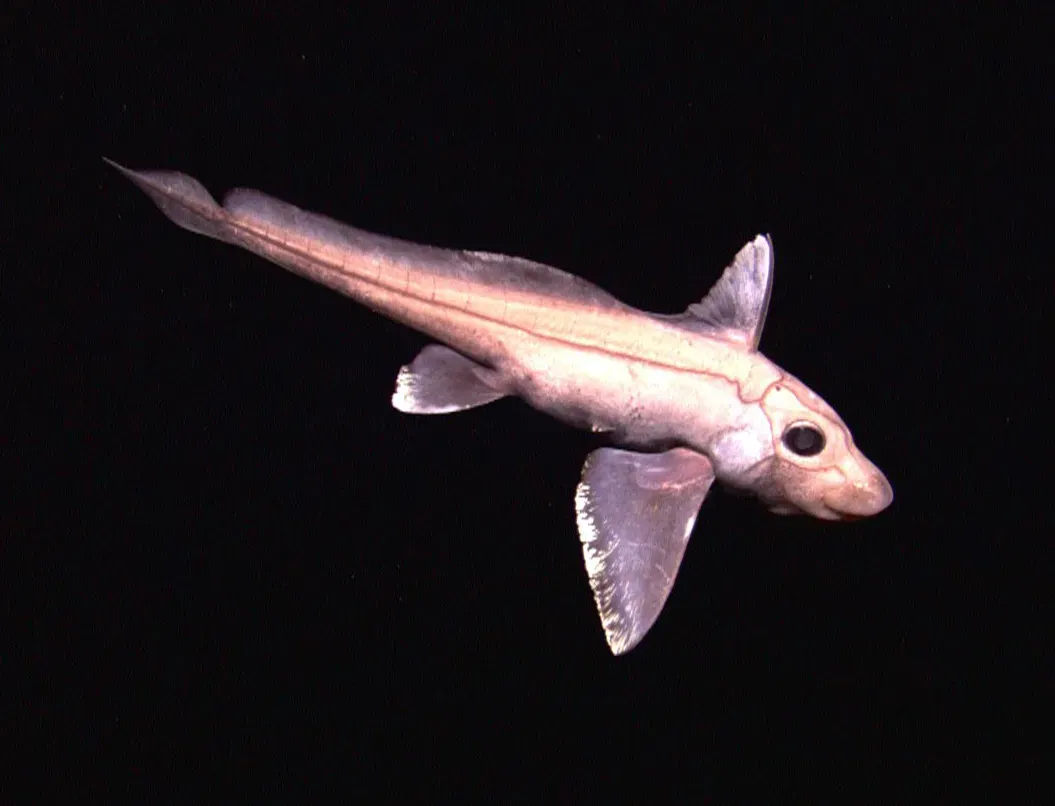
Chimaeras, better known as ghost sharks, are so old and so strange that scientists sometimes describe them as evolutionary experiments that never stopped running.
These cartilaginous fish are distant cousins of sharks and rays, but they split off from that family tree hundreds of millions of years ago and went their own bizarre way. Ghost sharks cruise the pitch-black seafloor using electroreceptors in their snouts to detect prey hiding in the sediment, since eyesight is nearly useless at those depths. Male ghost sharks have a retractable, club-like sexual organ on their foreheads, used exclusively during mating and tucked away the rest of the time, and many species also carry a venomous spine in front of their dorsal fin as defense. Rarely photographed alive and almost never encountered by humans, ghost sharks remain one of the least-studied vertebrate lineages on the planet. Yet #11 might be the strangest survival trick on this entire list.
#11 – The Yeti Crab That Farms Its Own Food on Its Arms
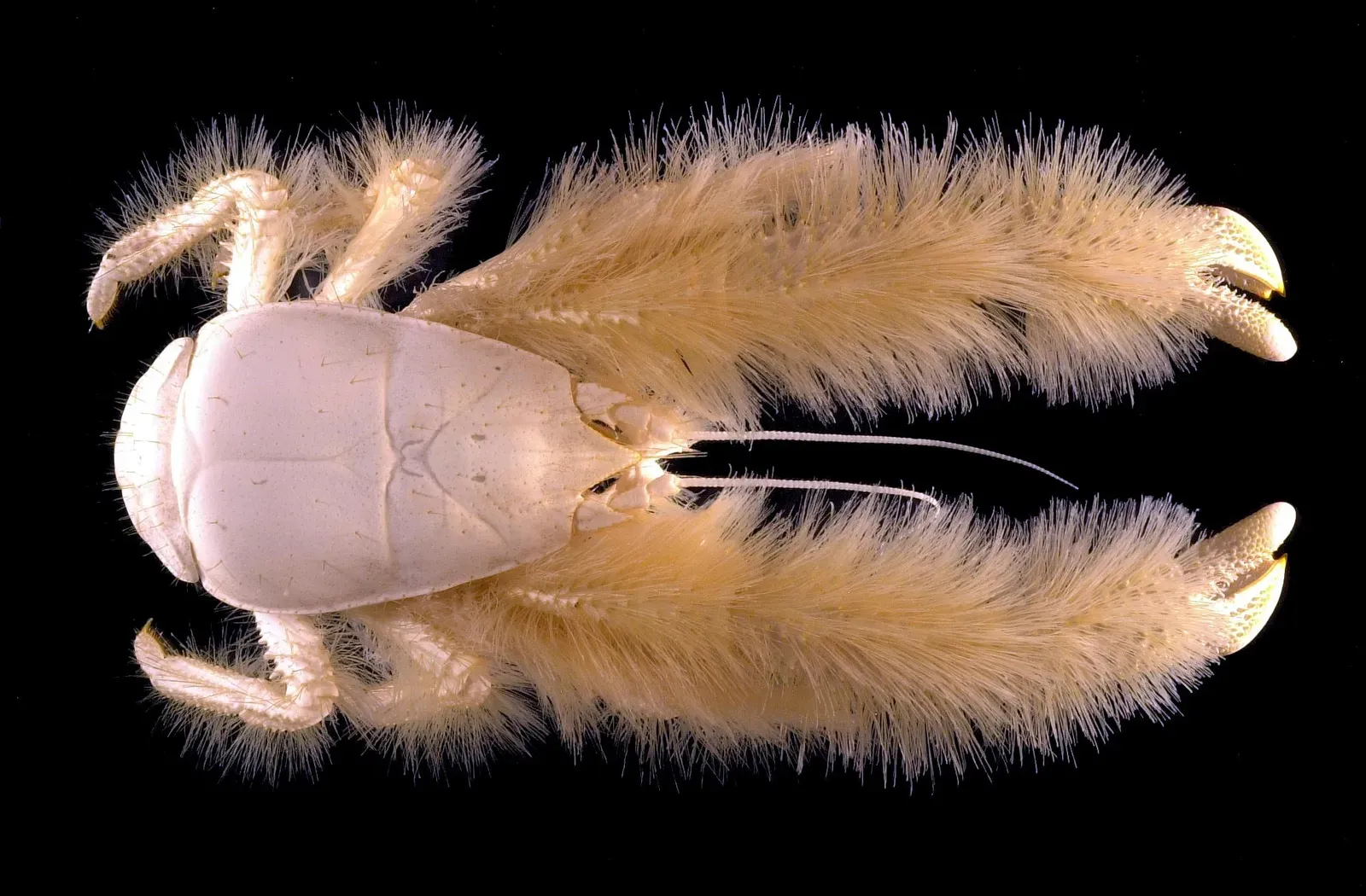
Discovered less than two decades ago, the yeti crab looks like it wandered off a fantasy movie set and into a hydrothermal vent field.
This blind, pale crustacean was first documented near deep-sea vents, its claws and legs covered in dense, hair-like bristles called setae. Those bristles aren’t decorative – the yeti crab actually cultivates colonies of bacteria on its own arms, farming them like a personal garden, then combing and eating the bacterial growth for food. Living near toxic, mineral-rich vent water where sunlight never reaches, it has essentially skipped the eyesight requirement altogether, relying on touch and chemical detection instead, and some species have even been observed “dancing,” waving their arms over vent openings to maximize bacterial growth. Still, nothing quite prepares you for #10.
#10 – The Fangtooth Fish With Teeth It Can’t Even Close Its Mouth Around
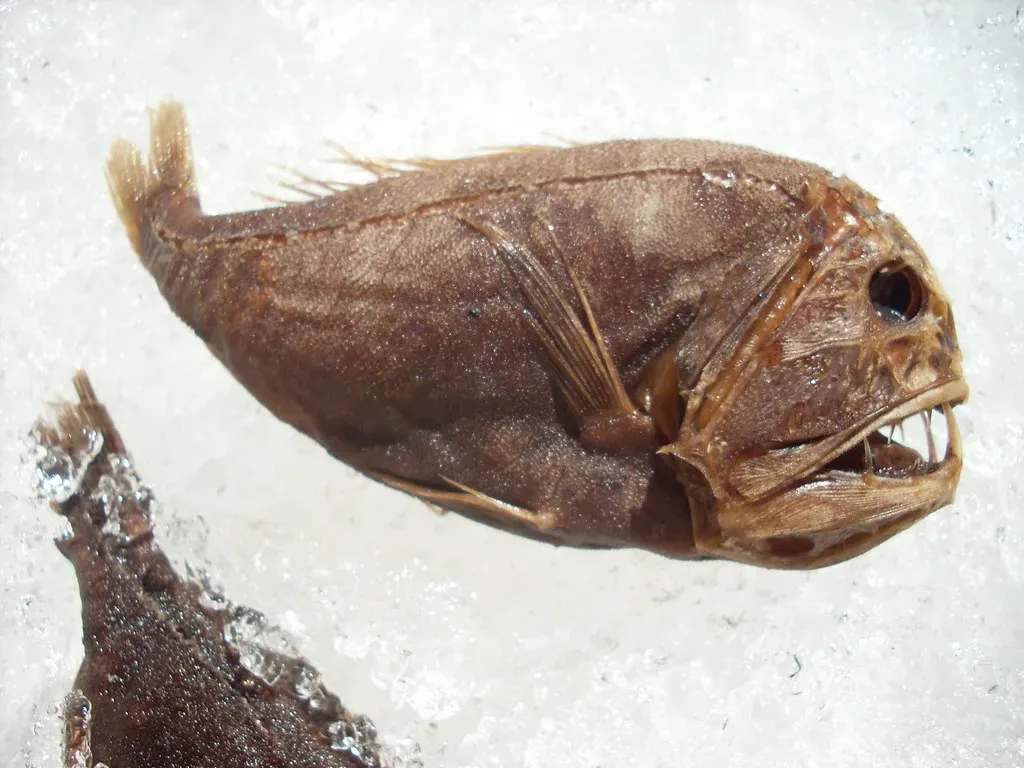
Pound for pound, no fish on Earth has teeth as disproportionately massive as the fangtooth.
The fangtooth (Anoplogaster cornuta) is only a few inches long, but its lower fangs are so oversized that the fish evolved special sockets in the roof of its mouth just so the teeth don’t stab its own brain when its jaw closes. Despite the nightmarish appearance, fangtooths are almost entirely harmless to humans simply because of their tiny size – they’re built to ambush small fish and crustaceans in the crushing dark of the bathypelagic zone, not to threaten divers. Their thin, fragile skin is adapted to withstand extreme pressure changes rather than physical combat, and they have one of the widest depth ranges of any deep-sea fish, occasionally rising into shallower waters at night before retreating back into the abyss by day. And #9 looks like it swam straight out of ancient mythology.
#9 – The Frilled Shark That Looks Like a Sea Serpent From Mythology
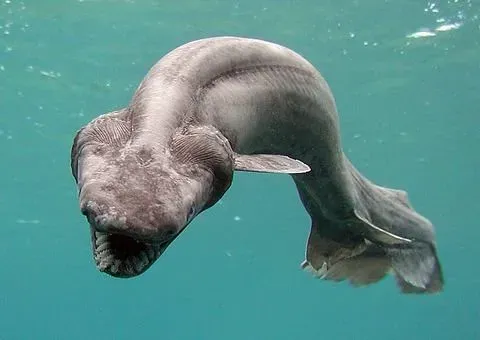
Long before humans invented dragons and sea serpents, evolution had already built something that looks almost exactly like one.
The frilled shark (Chlamydoselachus anguineus) has an eel-like, snakelike body and a mouth lined with rows of needle-thin, backward-curving teeth designed to snag soft-bodied prey like squid. Its name comes from its six pairs of gill slits, whose frilly edges drape over its throat like a collar. This species is considered a “living fossil,” with a body plan that has barely changed for millions of years, making it one of the closest living links to ancient shark ancestors. Frilled sharks are rarely seen alive because they typically stay far below where research vessels or divers can reach, and when one does need to strike, it coils its flexible body like a spring and lunges forward in a single snapping motion, more snake than shark. Compare that to the polar opposite of terrifying: #8.
Why It Stands Out
- Its body plan has stayed largely unchanged for tens of millions of years.
- Six pairs of gill slits give it far more than the single pair most modern sharks have.
- Live sightings are so rare that most specimens come from bycatch or deep trawls.
#8 – The Dumbo Octopus That Flies Instead of Swims
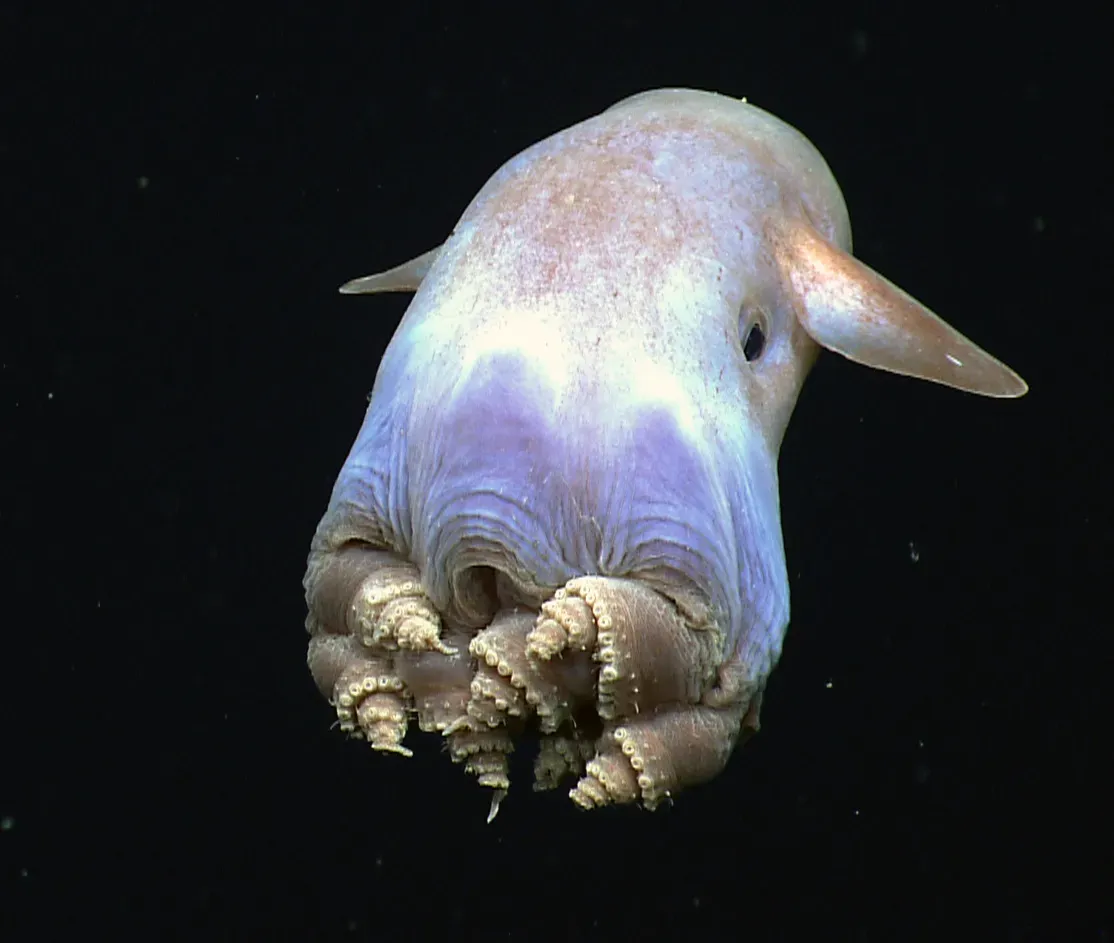
Named after a Disney elephant for a very obvious reason, the Dumbo octopus is arguably the most adorable thing living at crushing, lightless depths.
Dumbo octopuses (genus Grimpoteuthis) have two large, ear-like fins on either side of their mantle that flap gently to propel them through the water, giving them a slow, almost balletic flying motion instead of the jet-propulsion swimming style most octopuses use. They are considered the deepest-living octopuses known to science, found far below where light penetrates at all, and unlike their shallow-water relatives, they don’t even have an ink sac – there’s no need to blind a predator when there’s no light to see in the first place. Rather than actively hunting, they hover just above the seafloor and swallow prey whole, without biting or tearing, a gentle lifestyle that stands in stark contrast to the aggressive image most people have of octopuses. But #7 takes “built for survival” to an entirely new extreme.
#7 – The Gulper Eel Whose Mouth Is Bigger Than Its Entire Body
![#7 - The Gulper Eel Whose Mouth Is Bigger Than Its Entire Body ([1], CC BY 3.0)](https://nvmwebsites-budwg5g9avh3epea.z03.azurefd.net/dinoworld/20dbe341c4ab4199abb703765f94ecbb.webp)
If you had to design an animal purely around the fear of missing a meal, you’d probably end up with the gulper eel.
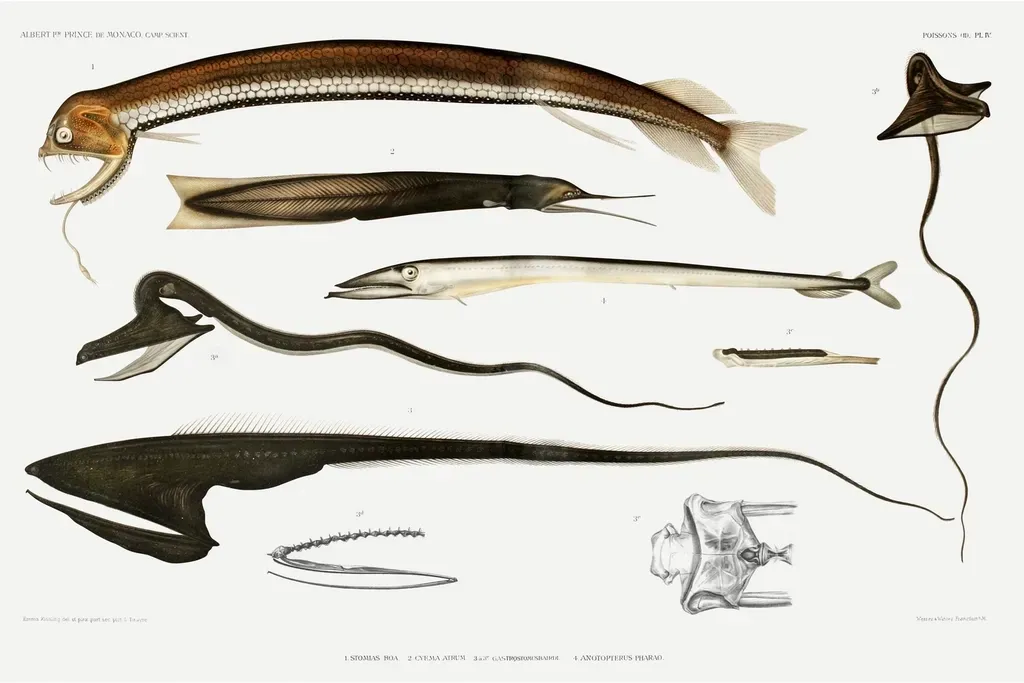
Also called the pelican eel because of its resemblance to the bird’s expandable throat pouch, the gulper eel (Eurypharynx pelecanoides) has an enormous, hinge-like mouth that can unfold to a size far larger than the rest of its slender body. This oversized mouth lets it swallow prey substantially bigger than itself, an essential survival trick in an environment where meals may not come around for a very long time. Its tail often ends in a small, light-producing organ that may lure curious prey close enough to strike, since gulper eels are weak, slow swimmers otherwise – a body that’s mostly loose skin and expandable jaw, built entirely around food scarcity rather than speed. Even that seems modest next to #6.
#6 – The Colossal Squid With Eyes the Size of Dinner Plates
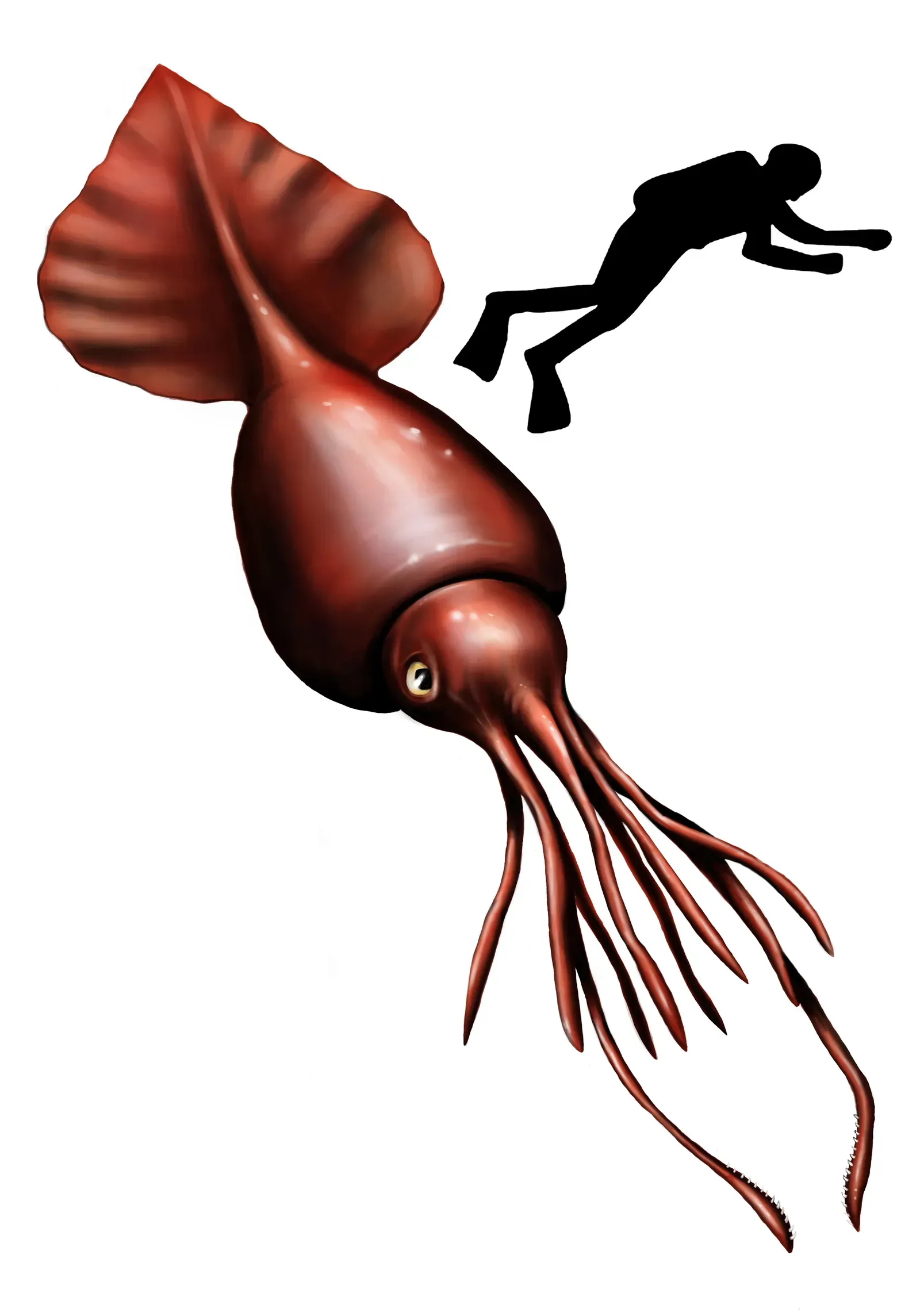
Forget the giant squid – its lesser-known cousin, the colossal squid, is heavier, stranger, and even harder for scientists to study.
The colossal squid (Mesonychoteuthis hamiltoni) is widely considered the heaviest invertebrate on the planet, dwelling in the frigid, pitch-black waters of the Southern Ocean. Its eyes are believed to be the largest in the entire animal kingdom, an adaptation thought to help it detect faint movement and bioluminescent flashes from sperm whales, one of its few natural predators, in near-total darkness. Unlike the giant squid, which relies on suckers lined with small teeth, the colossal squid’s tentacles are equipped with sharp, rotating hooks capable of gripping prey with brutal efficiency, and almost everything scientists know about it comes from specimens pulled from fishing lines or sperm whale stomachs – live colossal squid have almost never been filmed in the wild. Yet #5 might be the most alien-looking fish ever documented.
Quick Compare
- Colossal squid: Heavier overall, hook-lined tentacles, lives in cold Antarctic waters.
- Giant squid: Longer overall length, sucker-lined tentacles, found in oceans worldwide.
- Shared traits: Both are prey for sperm whales and are almost never observed alive.
#5 – The Fish With a Completely See-Through Head
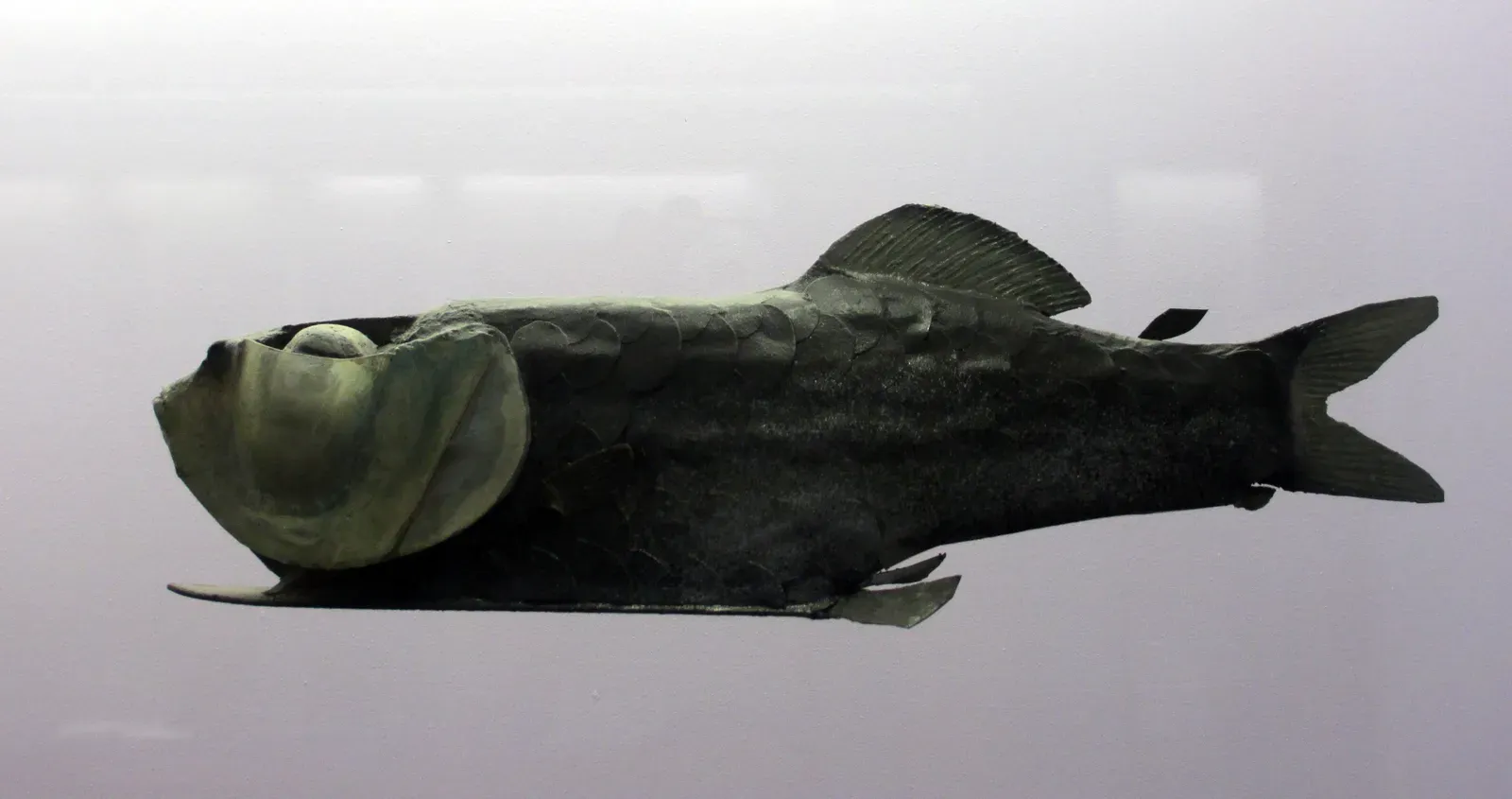
If you think you’ve seen every strange fish design possible, the barreleye fish exists specifically to prove you wrong.
The barreleye (Macropinna microstoma) has a transparent, fluid-filled dome covering its head, and inside that dome sit two glowing, tube-shaped eyes capped with bright green lenses. For decades, researchers assumed those eyes were frozen in place, permanently staring straight up toward the sunlit water above. But researchers eventually confirmed the fish can actually rotate its eyes to look straight ahead, letting it track food directly in front of its mouth instead of just scanning for shadows overhead. The transparent shield likely protects its eyes from the stinging tentacles of the siphonophores it may be stealing food from, and even more unsettling, the two dark spots most people assume are its eyes are actually just its nostrils. Still, #4’s survival trick puts nearly every animal on Earth to shame.
#4 – The Giant Isopod That Can Skip Meals for Half a Decade
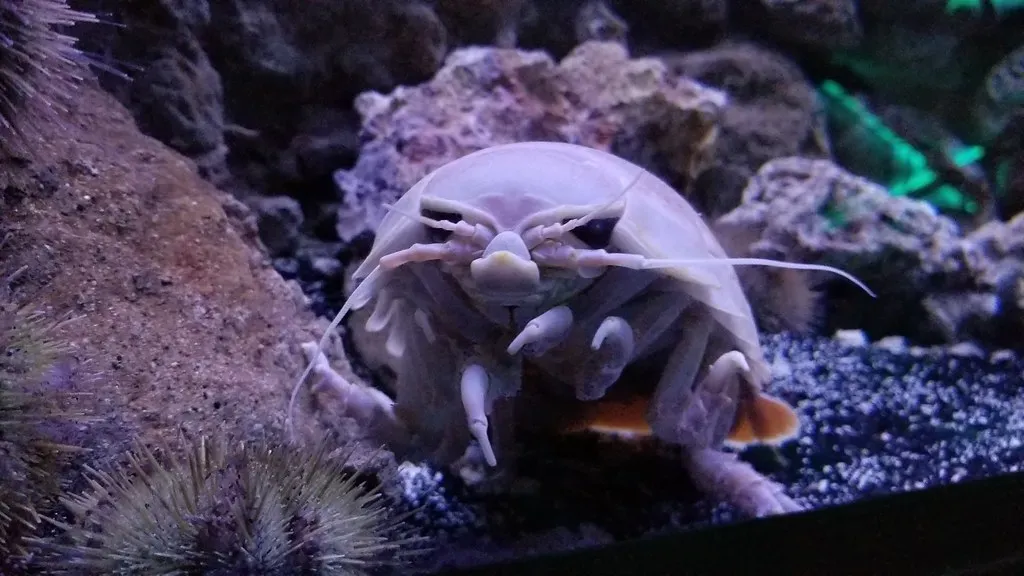
Somewhere in a Japanese aquarium, a giant isopod once refused every single meal offered to it for over five straight years, and it barely blinked.
Giant isopods (genus Bathynomus) are essentially oversized relatives of the pill bugs found under garden rocks, scaled up dramatically by a phenomenon called deep-sea gigantism. They’re carnivorous scavengers that feed on dead whales, fish, squid, and anything else that drifts to the ocean floor, and because meals arrive so unpredictably at those depths, one captive giant isopod famously fasted for five years and 43 days before it finally died – one of the longest documented fasts ever recorded in any animal. When food does turn up, they gorge to such excess that their bodies visibly swell, and scientists recently discovered these isopods carry a borrowed bacterial gene that helps dial down their metabolism even further in cold water, essentially letting them idle their bodies almost to a standstill. And #3 pulls off one of the strangest defense tricks in the ocean.
#3 – The Squid That Turns Itself Inside Out to Escape Predators
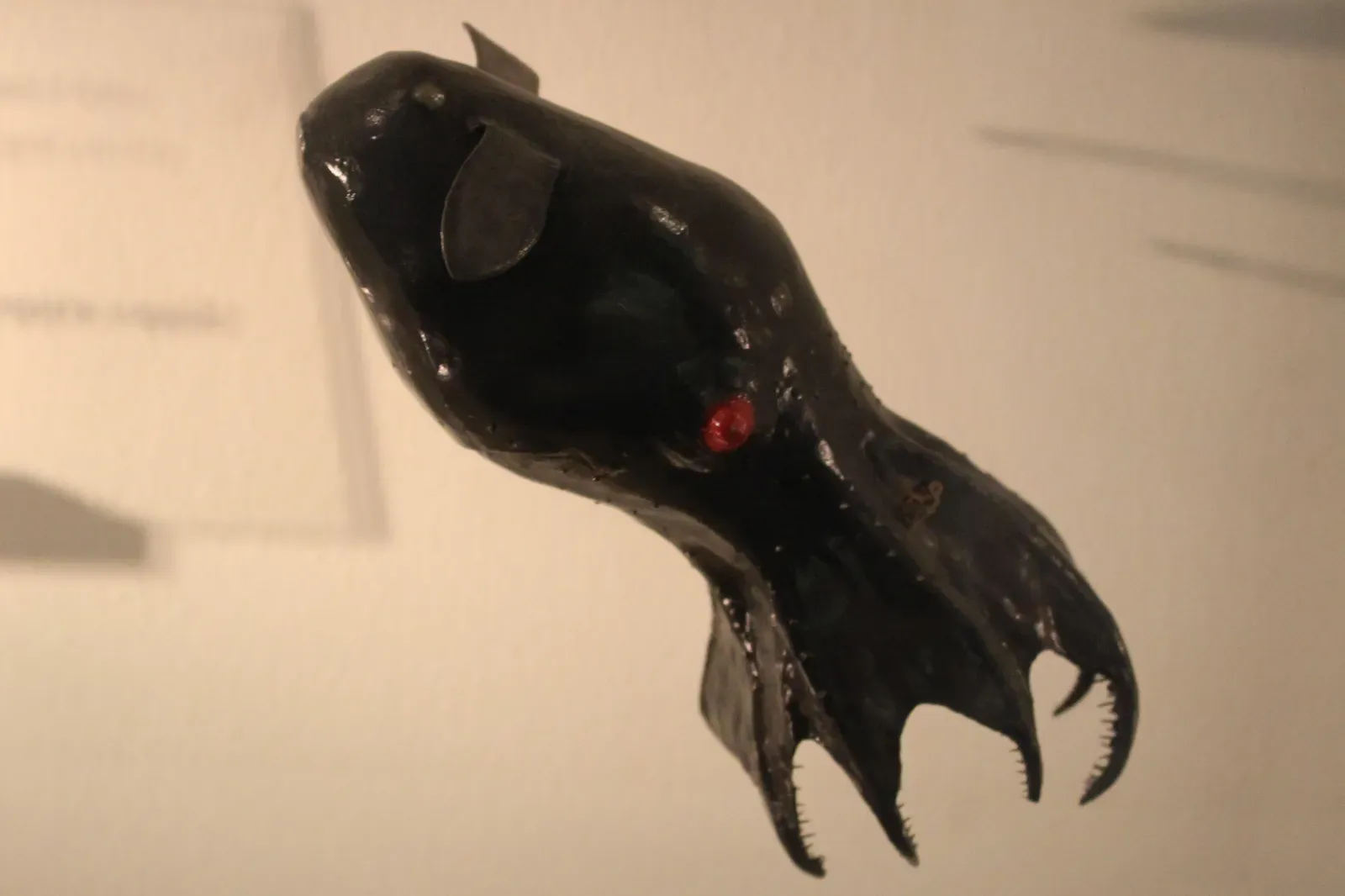
Despite its terrifying name, the vampire squid is one of the gentlest, strangest cephalopods ever documented, and it’s not even a true squid.
Scientists named this animal Vampyroteuthis infernalis, meaning “vampire squid from hell,” but it’s the only living member of the family Vampyroteuthidae – not a true squid at all. Its blood-red skin, webbed arms, and pale eyes give it a menacing look, but it’s actually a gentle scavenger that floats through the deep sea collecting drifting debris called marine snow with long feeding filaments. When threatened, it doesn’t attack – it turns its own webbed arms inside out, cloaking its body in spiky-looking tissue to appear larger and more dangerous than it really is, and if that bluff fails, it expels a sticky cloud of bioluminescent mucus from its arm tips instead of ink, confusing predators long enough to slip away into the darkness. But #2 is where things get genuinely violent.
#2 – The Shark That Shoots Its Own Jaw Out Like a Slingshot
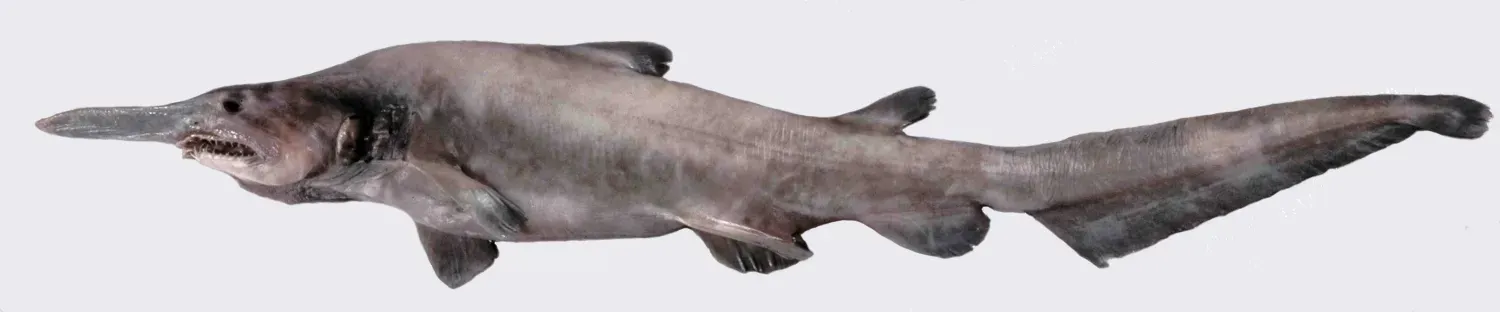
Most sharks bite. The goblin shark launches its entire jaw out of its face like a spring-loaded trap, and researchers only recently caught it on camera.
The goblin shark is a rare deep-sea lamniform shark with a long, flat, blade-like snout, ghostly pink skin, and razor-sharp teeth that make it look like a living relic dredged up from another era. A 2016 study clocked its jaw shooting forward at up to 3.1 meters per second – roughly ten feet per second – launching out to nearly 9% of the shark’s total body length, the fastest and farthest jaw protrusion ever recorded in a shark, a mechanism researchers compared directly to a slingshot. Scientists believe this bizarre feeding style evolved as compensation for the goblin shark’s weak swimming muscles – since it can’t chase fast prey, it ambushes and lets its jaw do all the work. Live individuals have only been documented in the wild a handful of times, including one near Jarvis Island in 2019 and another on the slope of the Tonga Trench in 2024. Still, nothing on this list compares to what happens in #1.
At a Glance
- Jaw speed: up to 3.1 meters per second, roughly 10 feet per second.
- Jaw extension: nearly 9% of the shark’s total body length.
- Rare confirmed live sightings: Jarvis Island (2019) and the Tonga Trench (2024).
#1 – The Male Fish That Literally Fuses Into the Female’s Body
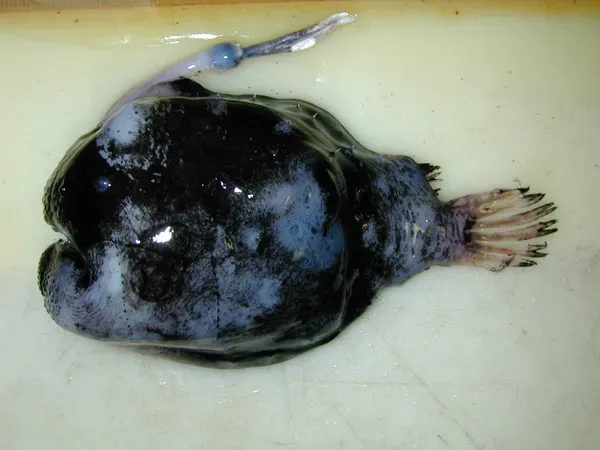
Nothing in the ocean is stranger, or more genuinely difficult to believe, than how deep-sea anglerfish actually mate.
It’s hard to find a partner in the dark depths, so a tiny male anglerfish fuses its tissues to a much larger female during mating, allowing the two to share not only sperm but even blood and skin. This makes anglerfish the only animals known to reproduce this way, a process researchers compare to a permanent, willingly accepted organ transplant. The male eventually loses its eyes, fins, and internal organs except for its testes, its blood system fusing with the female’s so it receives all its nutrients through her circulatory system. For over a century, scientists couldn’t explain how the female’s immune system didn’t reject the male as foreign tissue, until a 2020 study found these anglerfish lack the genes involved in the body’s normal response against foreign tissue – and some females have even been documented carrying multiple fused males at once.
The ocean is not a place for the timid.
Peter Benchley
The Bottom Line
Honestly, the deep sea makes the rest of nature documentaries look tame. A shark that slingshots its own jaw, a squid that turns inside out to bluff predators, and a fish that fuses permanently into its mate’s bloodstream – these aren’t edge cases, they’re just Tuesday in the midnight zone.
What strikes us most is how little of this world we’ve actually seen. Most of these animals have been filmed alive only a handful of times, if ever, and some have never been observed alive at all outside a fishing net or a whale’s stomach.
We’d argue the deep ocean is more alien than anything we’ll find in space, and it’s sitting a few thousand feet beneath our boats, largely unbothered and completely unmapped. Which of these fourteen creatures genuinely shocked you the most? Drop your pick in the comments.