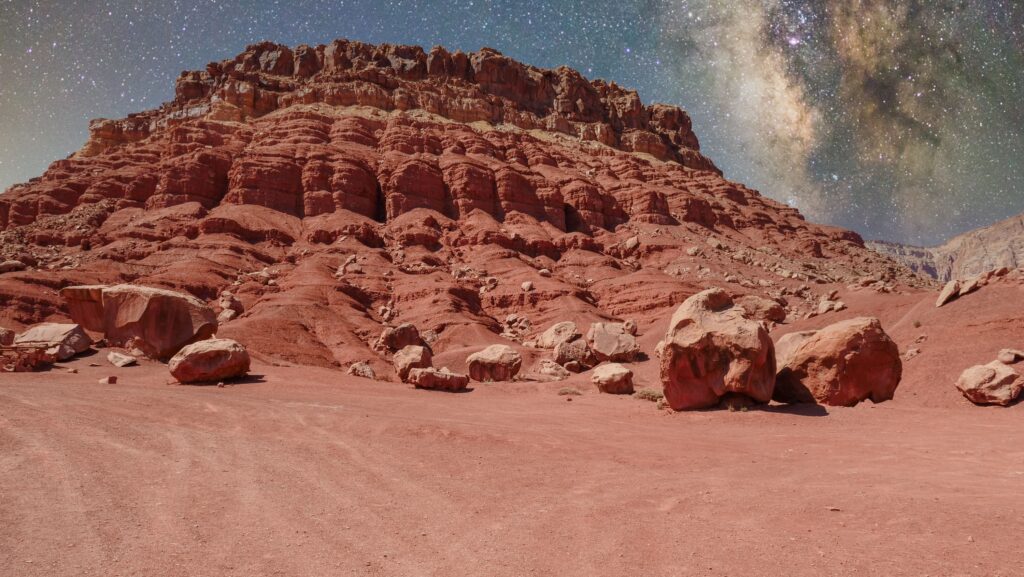
Walk outside, look around at the sky, the trees, the pavement under your feet, and then try to imagine a version of Earth with no plants, no oxygen-rich air, oceans the color of weak tea or even rust, and continents that were just beginning to claw their way above a restless, volcanic sea. That alien world is not science fiction; it is our own planet, billions of years ago. The twist is that the clues to this almost unrecognizable version of Earth are still here, locked inside some of the oldest surviving rocks on the surface.
Over the last few decades, geologists and geochemists have been quietly pulling off something that feels close to time travel. By drilling tiny samples from ancient crystals, slicing paper‑thin rock sections, and measuring chemical fingerprints with absurd precision, they are rebuilding scenes from an era so early that the Moon was still cooling. The story these rocks tell is not a gentle, gradual evolution toward the world we know. It is stranger, harsher, and in some ways much more dramatic than most people realize.
The Oldest Crystals on Earth Hint at an Early, Surprisingly Wet World
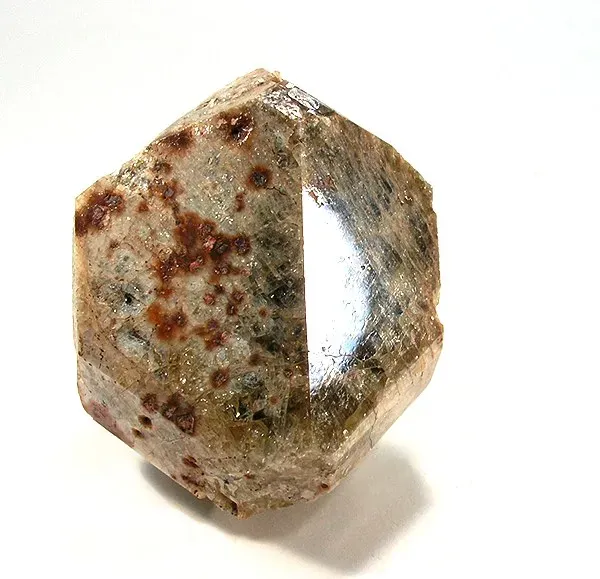
One of the most startling clues comes from tiny minerals called zircons found in Western Australia. Some of these zircons are more than four billion years old, which means they formed when Earth was barely out of its planetary childhood. When scientists examined the oxygen isotopes and internal structures of these crystals, they found signs that they formed in the presence of liquid water, probably from rocks that had interacted with oceans or at least long‑lived surface water.
This is a big deal because it directly challenges the old picture of early Earth as nothing but a hellish magma ocean for hundreds of millions of years. Instead, it suggests that stable bodies of water, and maybe even a kind of proto‑water cycle, existed surprisingly quickly after the planet formed. In other words, while the surface was still being hammered by asteroids and heated from within, there were already places cool enough for rain, rivers, and maybe even shallow seas. That is a very different planet from the cartoonish lava ball we usually imagine.
Greenstone Belts Preserve Ghosts of Primeval Oceans and Early Crust
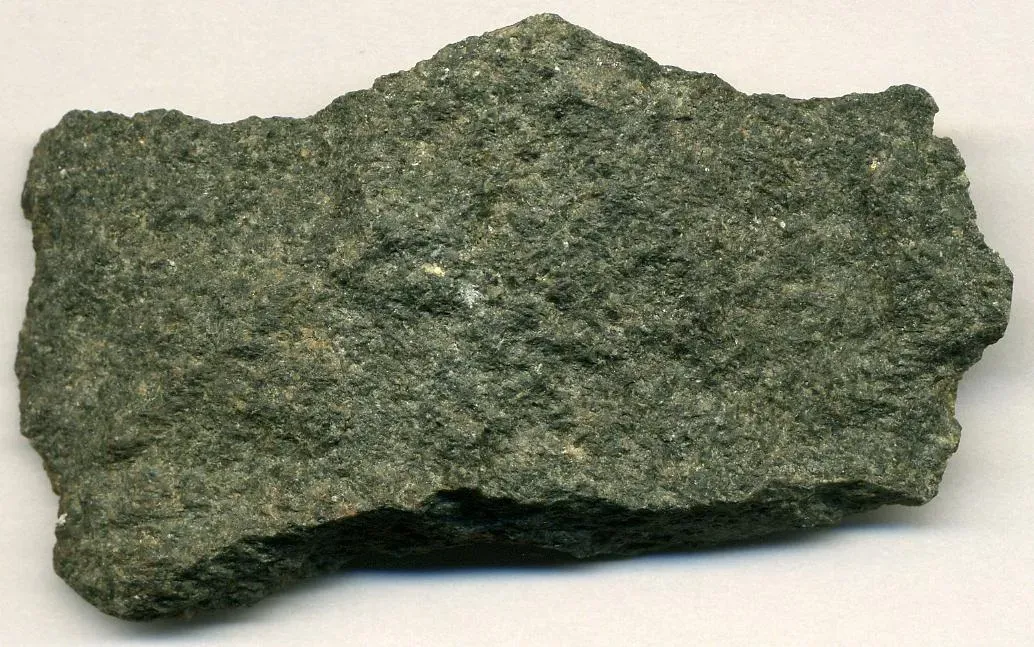
Beyond zircons, some of the oldest intact chunks of crust are preserved in what geologists call greenstone belts, especially in places like Canada, South Africa, and Australia. These belts are made of ancient volcanic rocks and sediments that were later squeezed, tilted, and altered, but not destroyed, by tectonic forces. When scientists study their chemistry and textures, they find clear evidence of undersea volcanic activity, ancient seafloor, and sediments that once settled out of early oceans.
These rocks are like the burned edges of the first drafts of Earth’s continental crust. They hint that by more than three billion years ago, there were already proto‑continents, volcanic island arcs, and deep basins where thick piles of sediment gathered over time. The arrangement and thickness of these rocks suggest a surface that was topographically rough, with volcanic chains rising from wide oceans, more like a planet dominated by island arcs than the stable, wide continents and flat ocean floors we recognize today.
A Choking Atmosphere: Methane Hazes, Almost No Oxygen, and a Weird Sky
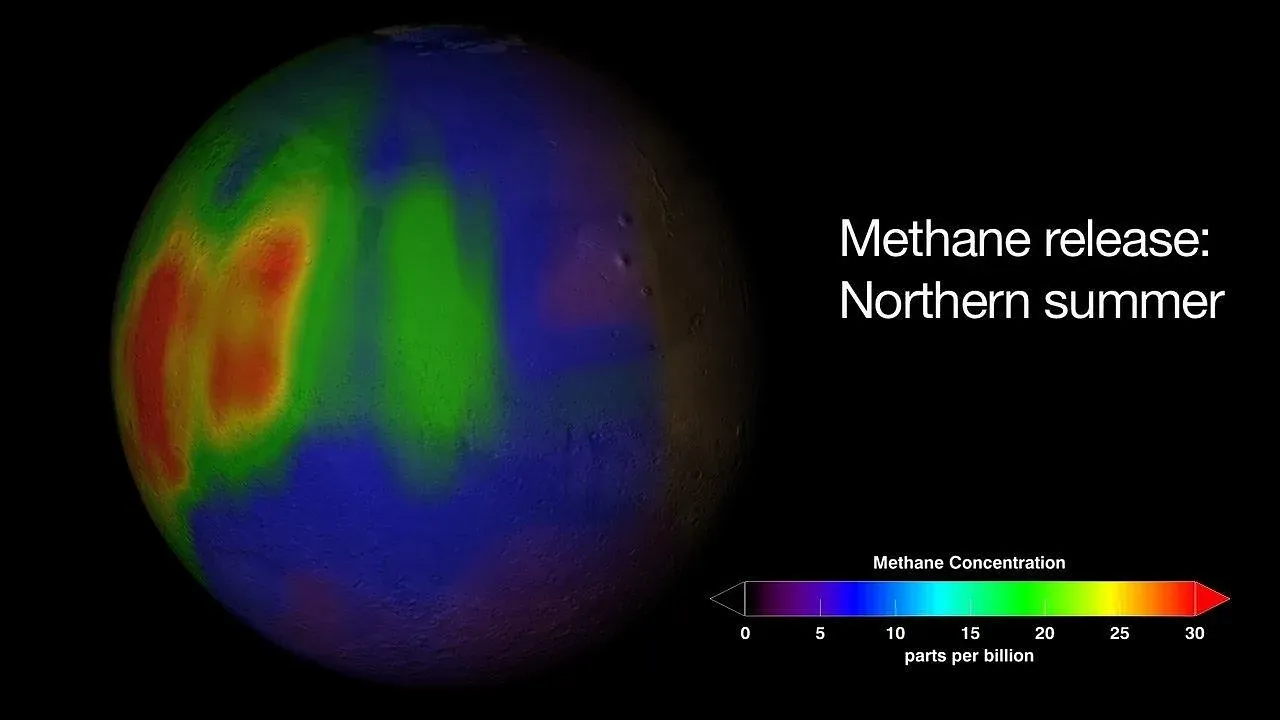
If you could have stood on that early crust and looked up, the sky above would not have been the familiar bright blue we take for granted. Geological and geochemical evidence points to an atmosphere dominated by gases like carbon dioxide, nitrogen, and methane, with only trace amounts of free oxygen. In some intervals, especially before oxygen began to rise, methane may have built up enough to form a thick, organic haze, giving the sky a hazy orange or brownish tint rather than a clear blue dome.
Rocks from this time help support that picture. The absence of widespread oxidized minerals, the presence of certain iron formations, and isotopic patterns in ancient sediments all point to an atmosphere where oxygen was almost nonexistent at the surface. For early life, this was not a problem; for humans, it would be utterly unbreathable. Standing there without protection would have been like trying to inhale inside a chemical laboratory filled with the wrong gas mix – you simply would not last long.
Iron-Rich Seas and Banded Iron Formations Tell a Story of Invisible Life
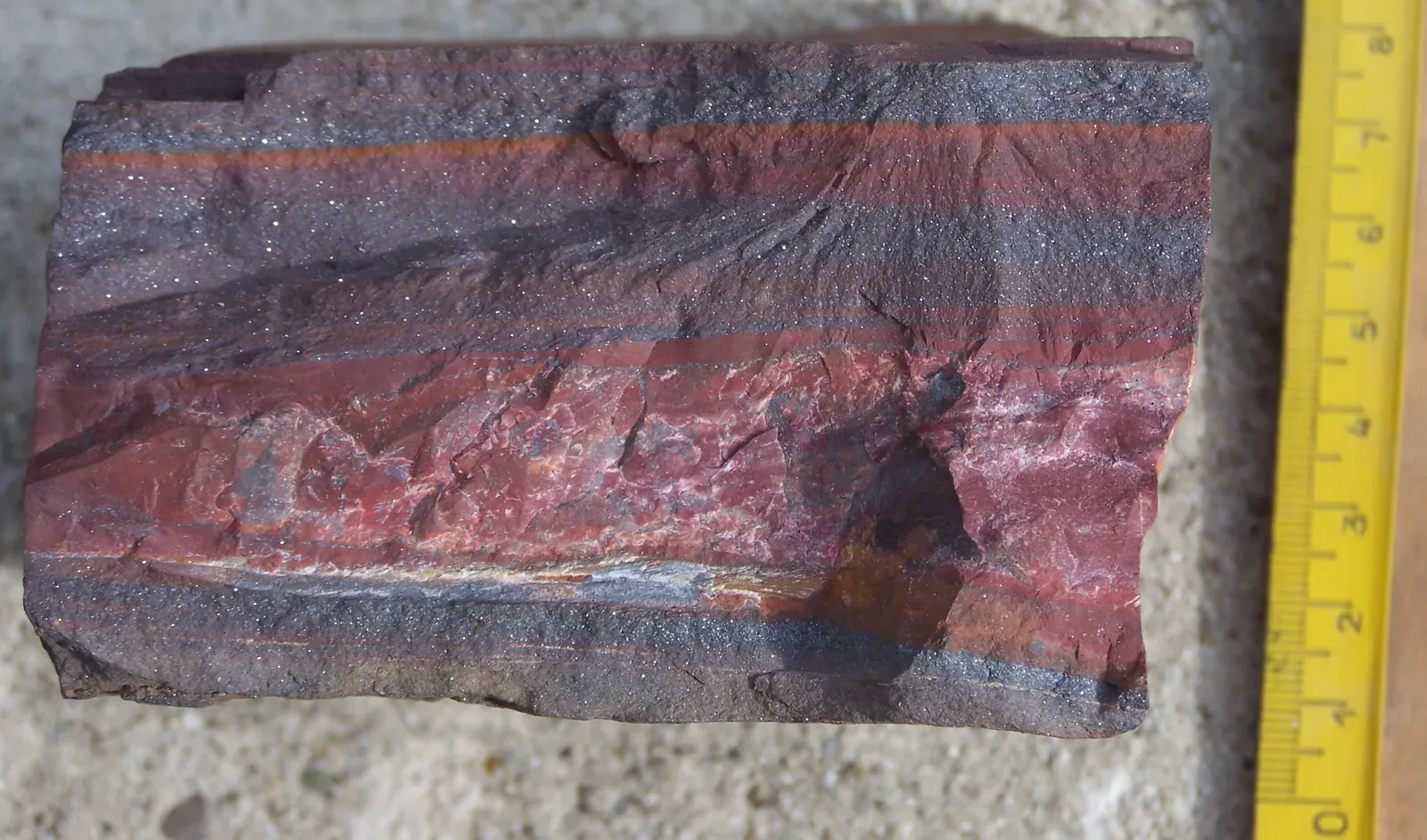
Some of the most visually striking ancient rocks on Earth are banded iron formations, often sliced and polished for display as swirling layers of red, gray, and black. These rocks typically formed on the seafloor billions of years ago when dissolved iron in the oceans combined with oxygen and other chemicals and settled out as alternating layers. The fact that enormous thicknesses of these rocks exist tells us that early oceans were loaded with dissolved iron and that chemistry at the time was profoundly different from modern seawater.
Many scientists link the formation of these iron‑rich layers to the slow, early work of microbes performing a primitive version of photosynthesis. These tiny organisms may have been releasing oxygen locally, which reacted with dissolved iron to form rust‑like minerals that sank to the bottom. The result is that these rock layers act like a kind of fossil shadow of early life and its impact on planetary chemistry. The oceans then would have looked nothing like today’s familiar deep blue – more like murky, mineral‑rich cauldrons, constantly changing color as chemistry fluctuated.
The Great Oxygenation: Catastrophe for Some, Opportunity for Others
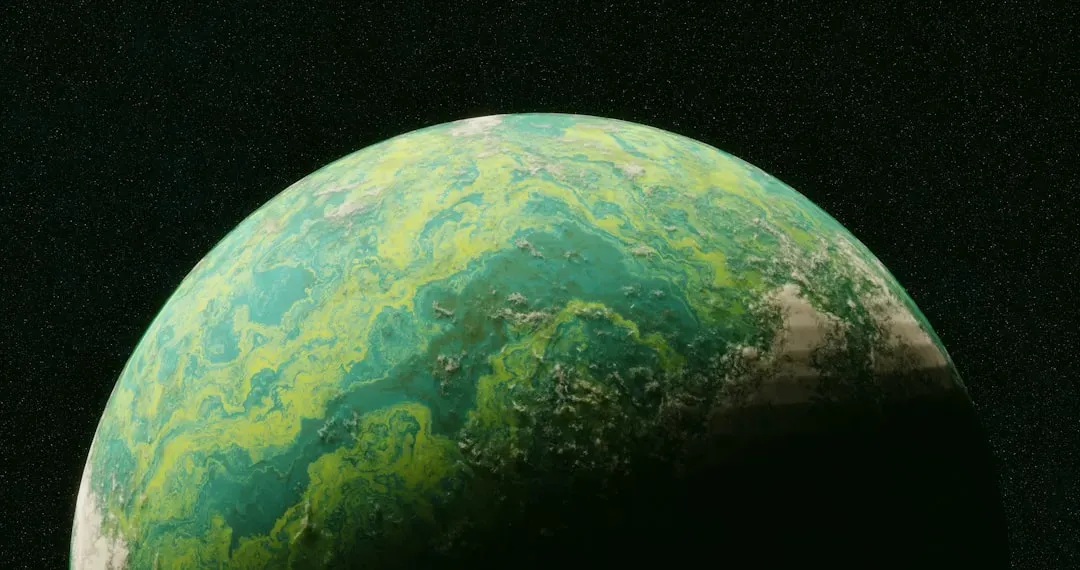
One of the most dramatic changes recorded in ancient rocks is the long, uneven rise of oxygen in Earth’s atmosphere, often called the Great Oxygenation Event. Sedimentary layers, sulfur and carbon isotopes, and the disappearance of certain minerals all line up to show that, over hundreds of millions of years, oxygen slowly went from being a rare side product of microbes to a dominant atmospheric component. To us, this sounds like a happy ending, but to the biosphere of that time it was closer to a global crisis.
Many early microbes had evolved in a low‑oxygen world and actually found oxygen toxic. Some of them were probably driven into restricted, oxygen‑poor niches, while others went extinct as oxygen levels crept upward. In that sense, the chemical fingerprints in these rocks memorialize a planetary mass extinction and restructuring of life long before animals existed. At the same time, oxygen also allowed new metabolic pathways and ultimately opened the door for complex, energy‑hungry organisms like us. The planet humans inherited is basically a sequel built on the ruins of that earlier, oxygen‑shy world.
How Ancient Tectonics Made a Restless, Patchwork Planet
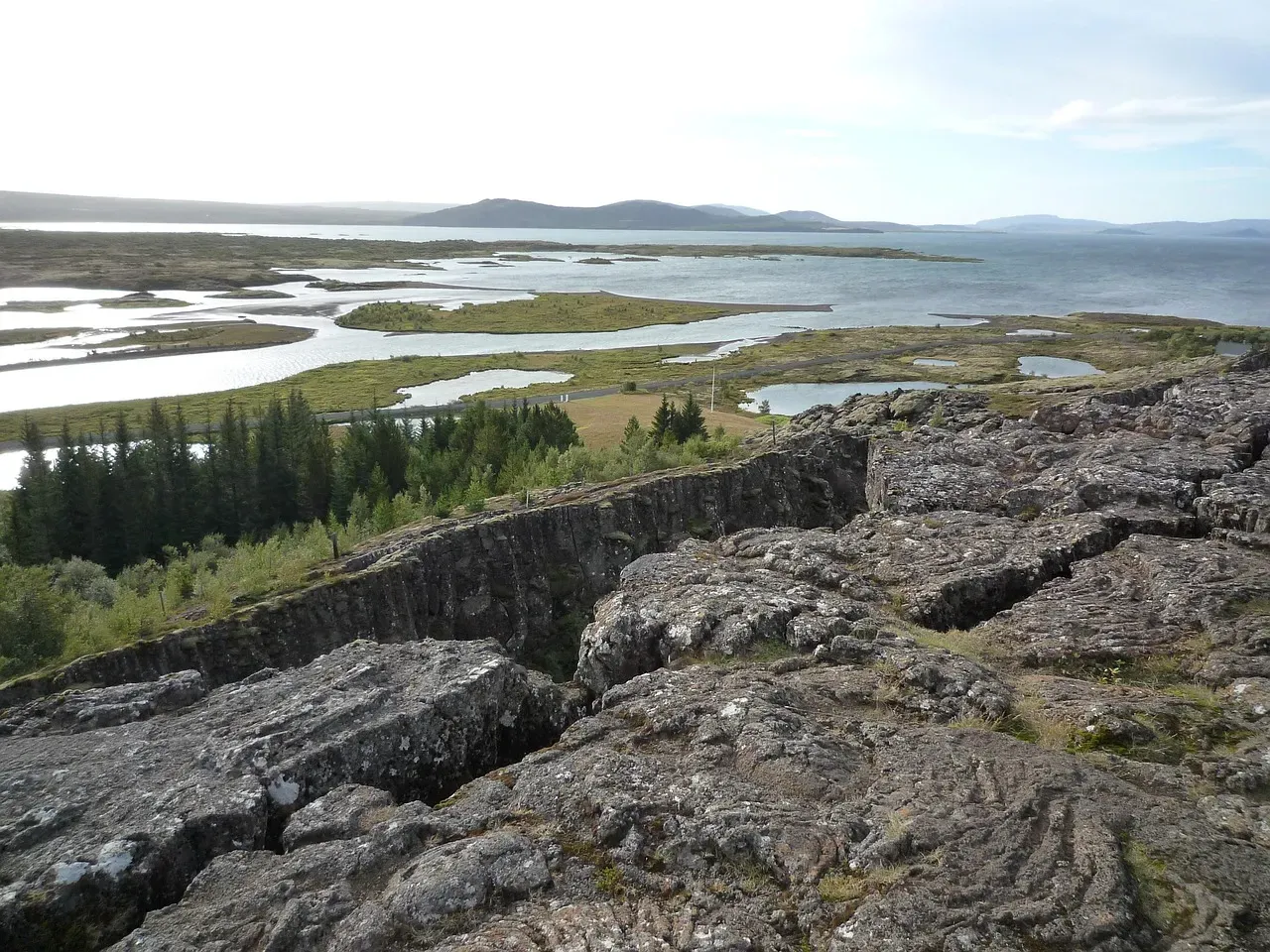
The way Earth’s crust moved billions of years ago is still hotly debated, but old rocks give us important hints. Many of the earliest preserved terrains show signs of intense deformation, rapid recycling, and volcanic activity, suggesting that the crust was thinner, hotter, and more easily reshaped than today. Instead of the relatively stable, thick continents we now live on, the early Earth may have been covered by small, mobile fragments of crust, constantly colliding, sinking, and reappearing through volcanoes.
This matters because tectonics is a major driver of climate, ocean chemistry, and the deep carbon cycle. With a hotter interior and different style of plate movement, volcanic gas release, mountain building, and seafloor spreading would all have operated on different rhythms. Picture a planet where the ground itself was more like a broken jigsaw puzzle on a simmering pot, rather than the slow, stately drift we see today. The ancient rocks that record these collisions and intrusions are telling us that Earth’s surface used to be far more restless, and that the setting for early life was constantly shifting under its feet – or whatever early microbes used instead of feet.
Why This Alien Early Earth Matters for Life Beyond Our Planet
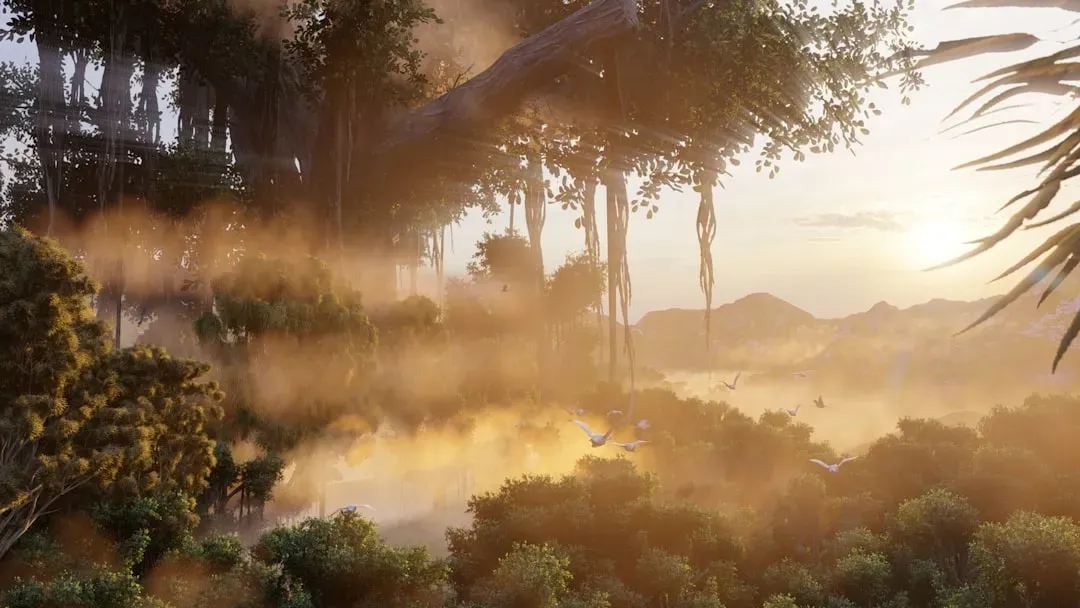
It might seem like this is all just deep‑time trivia, but the implications go far beyond satisfying curiosity about our planet’s past. When astronomers point their telescopes at distant stars and try to understand the planets orbiting them, they are often catching those worlds at stages that look more like early Earth than modern Earth. Knowing that our planet once had iron‑rich seas, methane hazes, minimal oxygen, and patchwork continents helps scientists avoid a dangerous assumption: that a habitable planet must look like twenty‑first century Earth.
In a way, these ancient rocks are training data for the search for life in the universe. They remind us that a planet can host thriving microbial ecosystems while looking utterly hostile by our standards, and that atmospheric oxygen is a late and fragile achievement, not a guaranteed feature. To me, that is one of the most humbling and exciting lessons in all of science: the comfortable world we inherited is only one brief phase in a long, chaotic story. If we want to recognize life elsewhere, we have to learn to recognize it in the strange, half‑familiar mirror of our own planet’s youth.
Conclusion: An Earth We Wouldn’t Survive, but Absolutely Depend On
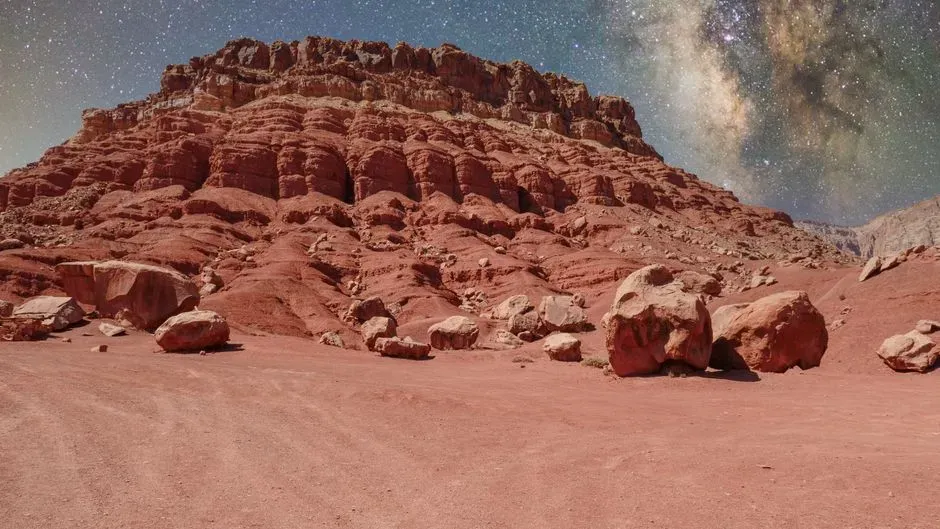
When I read about these ancient rocks and the alien Earth they reveal, I can’t help feeling that we live on borrowed time layered over borrowed worlds. The continents we stand on, the air we breathe, the oceans we vacation beside – all of them are outcomes of brutal, drawn‑out experiments recorded in minerals that most of us will never notice. In my view, it is almost dishonest to talk about Earth as if it has always been gentle and life‑friendly; for most of its history, it was anything but.
Yet without that harsh, unrecognizable planet – the one with choking atmospheres, iron‑rich seas, and fragmentary crust – there would be no humans to marvel at it. That is the paradox these old rocks force us to face: we are the beneficiaries of a world we ourselves could never have survived. Maybe the most responsible thing we can do is to admit how contingent and fragile our version of Earth really is, and to treat it less like permanent property and more like a rare, evolving gift. When you picture that earlier, alien planet hiding inside ancient stones, does our familiar blue world suddenly feel a little less ordinary to you?