
You probably know the feeling: you were having a perfectly decent day, and then you saw someone’s vacation photos, job promotion, new house, or gym selfie – and suddenly your own life looked… smaller. It is strangely effortless to go from neutral to not-enough in about three seconds flat. What makes that so automatic, even when we logically know social media is a highlight reel and not the full movie?
The wild part is this: the mental machinery that flares up when you scroll through other people’s lives was built for small tribes, not global feeds. Our brains evolved in a world where you might compare yourself to fifty people you actually knew, not five thousand strangers and influencers. Yet the very same survival mechanisms that once helped us find our place in the tribe now fuel constant, exhausting comparison. Let’s unpack what is really going on in that Stone Age brain of yours – and why it reacts so strongly to a world it was never designed to handle.
The Stone Age Brain in a Digital World

Imagine taking a caveman, handing them a smartphone, and opening a social app. Their brain would still be wired to track who is stronger, prettier, more respected, or more useful to the group – because for most of human history, being left out meant real danger. Today, those ancient circuits are still running, only now they are trying to make sense of algorithmic feeds and perfectly curated lives. Your nervous system does not know the difference between the tribe around the campfire and the grid on your screen; it only senses status, inclusion, and threat.
Our evolutionary wiring is conservative and slow to change. Even though our environment has been transformed in just a few generations, the basic architecture that drives social instincts is tens of thousands of years old. That mismatch is like running old software on cutting-edge hardware: it mostly works, but it glitches in weird ways – like feeling personally attacked by someone else’s success. When you feel irrationally small after scrolling, you are not weak; you are running a very old program in a very new context.
Why Your Brain Cares So Much About Status

From an evolutionary lens, status was not about ego; it was about survival and access. People with higher standing in a group were more likely to get food, protection, mates, and support when things went wrong. Your brain learned to track where you sit in the social pecking order because that position quietly influenced whether you thrived or struggled. Even today, signals of status – income, attractiveness, influence, achievement – can change how people treat you, so your brain still treats status like a vital life variable.
The problem is that in the modern world, status is no longer clear, local, or stable. Instead of comparing yourself to the few people in your village, you’re up against an endless stream of edited, filtered, and boosted lives. That makes status feel perpetually at risk, as if there is always someone above you, doing more, having more, being more. When everything can be ranked – followers, likes, titles, even steps taken in a day – your brain leans into status-tracking like it is a full-time job, and your self-worth gets dragged along for the ride.
Social Comparison: Your Built‑In Ranking System
Psychologists have a very down-to-earth name for this instinct: social comparison. We figure out who we are and how we are doing by measuring ourselves against other people, not in a vacuum. That means comparison is not a glitch in your personality; it is one of the main ways your brain builds a sense of identity. You compare your body to other bodies, your career to other careers, your relationship to other relationships, often without even noticing it happen.
This built-in ranking system is not always harmful. It can nudge you to improve, learn from others, or recognize that your problems are not unique. But it has a dark side: when your reference points are extreme – the richest, the fittest, the most successful – your own life starts to look painfully small. The mechanism that once helped you calibrate to a realistic peer group now keeps pushing the goalposts out of reach, so satisfaction always lives just one comparison away.
Upward vs. Downward Comparison: The Double‑Edged Sword

There are two broad ways we tend to compare: upward and downward. Upward comparison means you look at people you think are doing better than you – more money, more beauty, more achievement – and you measure yourself against them. That can be inspiring, like watching a skilled athlete and feeling motivated to train. But it can also be crushing, especially when you feel like there is no realistic path from where you are to where they are.
Downward comparison is the opposite: looking at people you believe are worse off to feel a bit better about your own situation. In small and occasional doses, this can give perspective and gratitude, like realizing your rough day is still safer than many people’s worst day. Yet if you lean too heavily on downward comparison, it can turn into quiet arrogance or emotional numbing. The tricky part is that modern feeds turbocharge both types: you can jump from envying an influencer to pitying a stranger in a few swipes, leaving your emotional state see-sawing between envy and detachment.
How Social Media Supercharges Ancient Instincts

Our ancestors compared themselves while gathering berries or sitting around a fire; you do it while holding a glowing rectangle that never runs out of people to compare to. Social platforms gamify attention and status through likes, follows, shares, and views. Every metric becomes a tiny scoreboard, and your Stone Age brain interprets those numbers as signals of where you stand in the tribe. Even when you tell yourself it does not matter, a part of you is still counting.
Worse, the images and stories you see are heavily filtered through algorithms designed to keep you hooked, not to keep you emotionally balanced. You see the most extreme, polished, and dramatic slices of other people’s lives, which are precisely the ones most likely to trigger your comparison circuits. It is like living in a village where every time you step outside, you only see the most successful, best-looking, and happiest members of the tribe. Over time, that distorts your sense of what “normal” even looks like, and your own life starts to feel like a glitch.
Comparison, Anxiety, and the Threat of Rejection

Underneath most painful comparisons lies a quieter fear: rejection. Being disliked, ignored, or excluded once posed a serious threat when survival depended on the group. Your nervous system still reacts to social slights as if they are potential dangers, which is why being left on read or seeing friends hang out without you can sting more than you think it should. Comparison often acts as an early warning system: if you are lower status, less attractive, or less successful, your brain worries you might be easier to abandon.
Anxiety and comparison feed each other in a loop. The more anxious you feel, the more you scan your environment for signs that you do not measure up; the more differences you spot, the more anxious you become. Over time, this can morph into chronic self-surveillance – constantly checking how you look, how you sound, how you rank. It is exhausting, but it can also become weirdly familiar, like an uncomfortable chair you have sat in for years. Breaking that pattern starts with recognizing that the fear is old, but the stakes, most of the time, are not as life-or-death as your body makes them feel.
When Comparison Helps You Grow (And When It Quietly Destroys You)
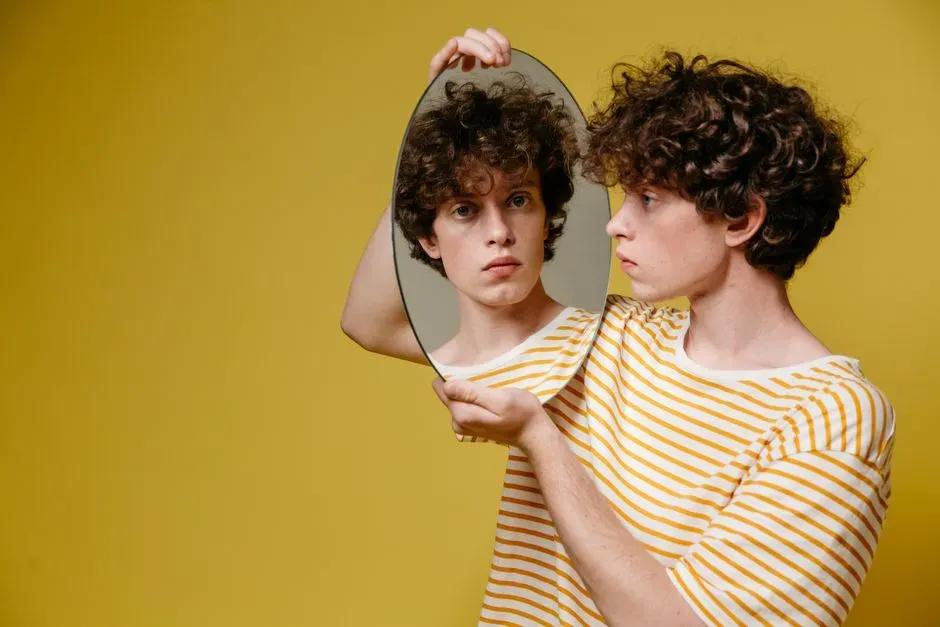
Comparison is not automatically toxic; it depends on how you use it and what story you attach to it. If seeing someone excel makes you curious and energized – “What can I learn from them?” – comparison can become fuel for growth. It can help you spot possibilities you did not know existed, set more meaningful goals, or find mentors and role models. In that sense, your Stone Age ranking system can be repurposed as a compass rather than a whip.
But comparison turns destructive when it flips into moral judgment of yourself: “They are better, so I am worse.” That story reduces your entire life to a scoreboard and conveniently ignores your values, context, and constraints. It also blinds you to the parts of your life that might already be working well because you are only looking at where you fall short. I have fallen into this trap plenty of times, and the ironic thing is that during my most comparison-heavy periods, I was producing less, connecting less, and enjoying life less – the complete opposite of what I thought “measuring up” would give me.
Practical Ways to Tame the Comparison Spiral

You cannot delete the comparison instinct, but you can change how loudly it speaks and how much power it has over your choices. One simple move is to shrink your comparison circle: instead of mentally competing with the entire internet, focus on your past self. Ask whether you are a little braver, kinder, or more skilled than you were a year ago. That sounds almost too simple, but it quietly rewires the game from “Am I winning?” to “Am I growing?” which is far more sustainable.
Another practical strategy is to deliberately curate your inputs. If certain accounts, shows, or communities reliably leave you feeling worse about yourself, treat that feeling as data and step back. On the flip side, spend more time with people whose presence makes you want to be better, not bitter. And when you notice a comparison spike, try naming it out loud in your mind: “I am comparing my behind-the-scenes to their highlight reel.” That tiny moment of awareness does not erase the feeling, but it stops it from silently calling the shots.
Rewriting the Story: From Ranking to Belonging

At the core of all this is a simple, uncomfortable truth: humans are wired less for endless ranking and more for belonging. We started comparing to figure out how to contribute to the group, not to spend every day feeling like we are losing. When you shift your focus from “Where do I rank?” to “Where do I belong, and how can I show up there?”, the emotional charge around comparison starts to soften. Status still matters, but it no longer decides your entire worth.
My personal opinion is that the modern world has taken a normal human instinct and stretched it far beyond what any brain was built to handle. That means opting out – at least partially – is not weakness; it is self-defense. We cannot go back to the Stone Age, and honestly, I do not think most of us would want to. But we can remember that beneath every scroll, like, and envy spike is a very old brain just trying, in its clumsy way, to answer a very old question: Do I still matter to my people?
Conclusion: You Are More Than Your Mental Scoreboard

Humans cannot stop comparing themselves because comparison is stitched into how our brains make sense of the social world. The Stone Age mind that once scanned a small tribe for cues about status and safety now faces an endless parade of strangers whose lives look shinier, richer, and more put-together than they really are. In my view, the real problem is not that we compare, but that we let those comparisons quietly define what we think we are allowed to want, feel, and be.
If there is any rebellion worth committing to in a hyper-comparative culture, it is this: treating your life as something to be lived from the inside, not rated from the outside. That might mean building slower, smaller, more grounded measures of success, and being okay with looking less impressive on paper in exchange for feeling more alive in reality. The Stone Age brain is not going anywhere, but you can choose the story it serves – ranking or belonging, envy or growth, performance or presence. When you close the app and look up, whose scoreboard are you really still playing on?