Everybody knows T. rex. It is the rock star of the dinosaur world, the creature that shows up on T‑shirts, lunchboxes, and blockbuster movie posters. But here is the quietly shocking truth: some of the most fascinating, bizarre, and scientifically important dinosaurs barely get a fraction of that spotlight. They are like the brilliant indie bands overshadowed by one stadium-filling act.
Once you start digging into these overlooked giants, sprinters, and armor-plated tanks, T. rex begins to feel almost…ordinary. These nine dinosaurs rewrote what scientists thought they knew about feathers, armor, speed, and even dinosaur parenting. A couple of them honestly blew my mind the first time I read about them, and I still catch myself bringing them up at random dinners. By the end, you may find your new favorite dinosaur is not the celebrity carnivore you grew up with.
Therizinosaurus: The Freddy Krueger Herbivore
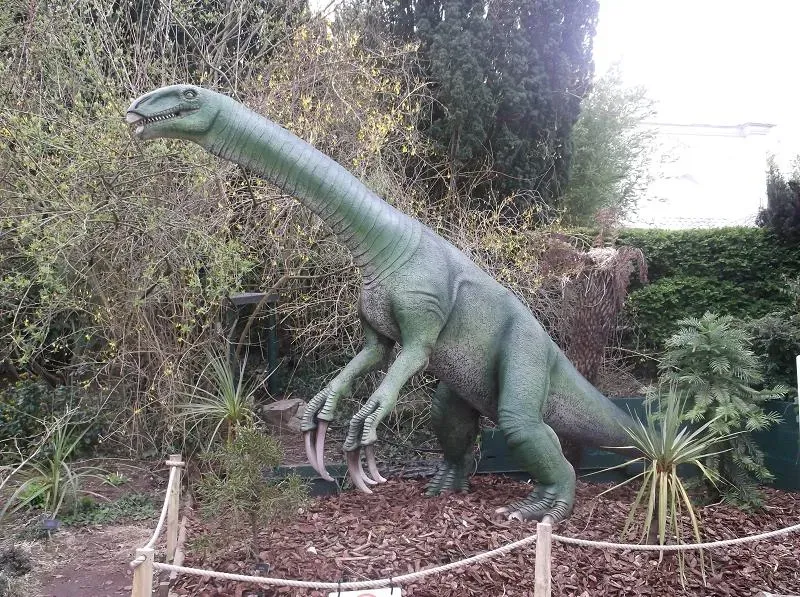
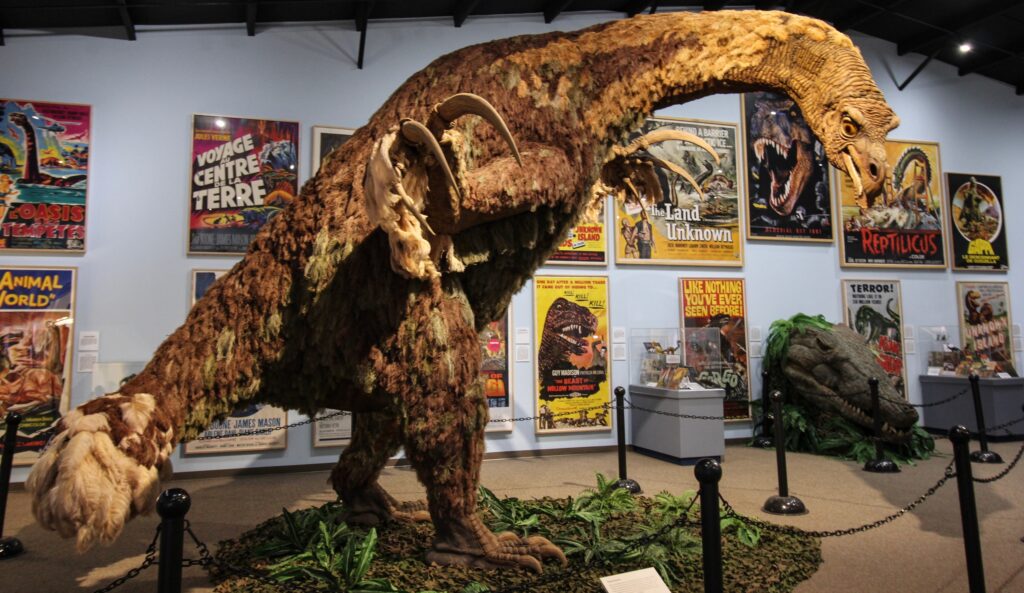
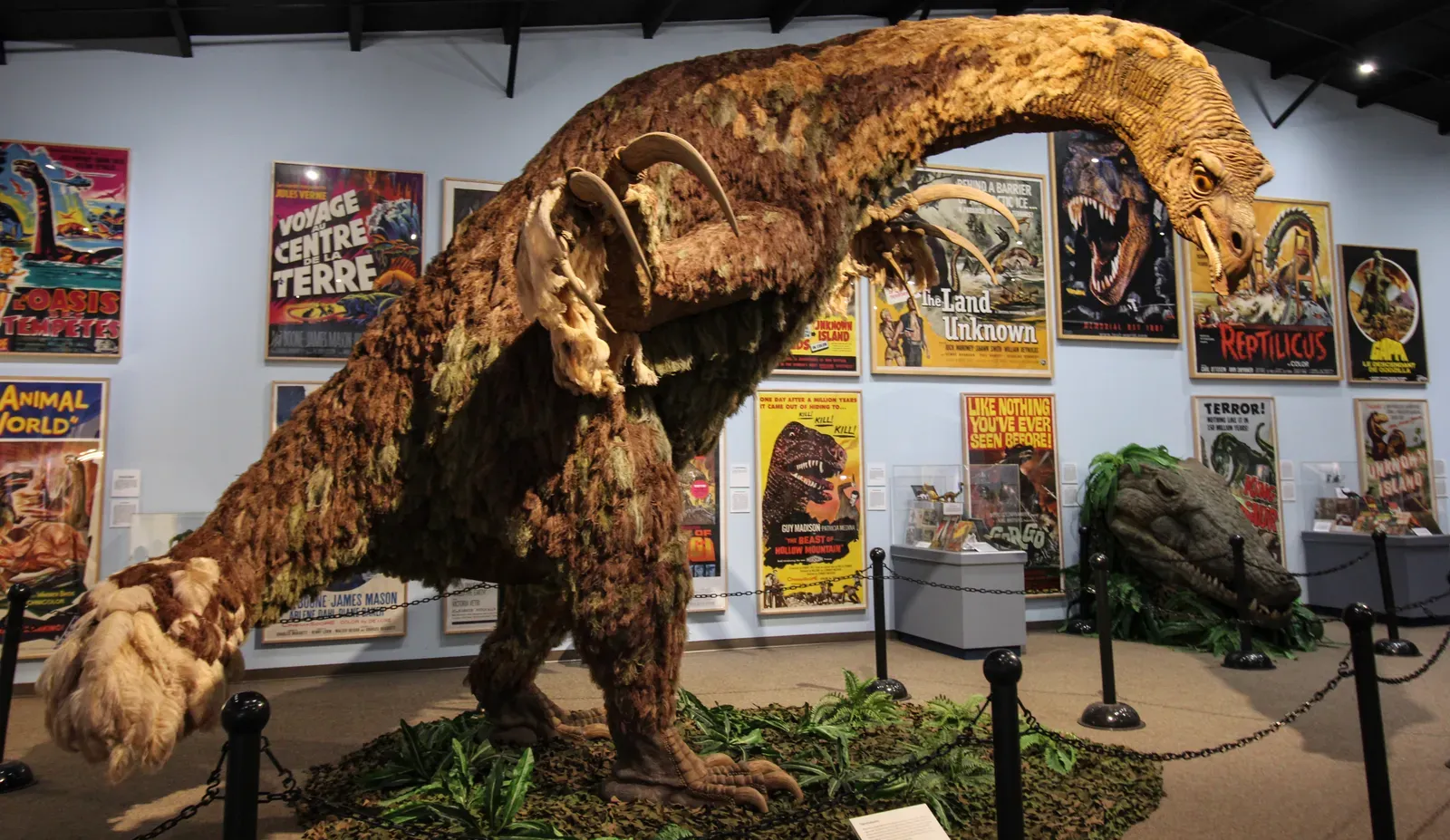
Therizinosaurus looks like it was designed in a late-night brainstorming session where someone said, “What if we gave a herbivore nightmare claws?” This towering, pot‑bellied dinosaur had absurdly long hand claws, each one longer than a human arm, attached to a body covered in feather‑like structures. For years, paleontologists were confused by its fossils, because those talons looked like something a vicious predator would use to shred prey.
The surprise twist is that Therizinosaurus seems to have been mostly a plant‑eater, using those claws to pull down branches, strip leaves, or defend itself from predators. Imagine a giant, feathered sloth crossed with a bird and a horror movie villain, calmly browsing vegetation while armed like a medieval weapon rack. It forces us to rethink the idea that “scary looking” automatically means “meat‑eating.” In a way, it shows how evolution sometimes builds a monster to do a gentle job.
Deinocheirus: The Dinosaur That Made No Sense (Until It Did)
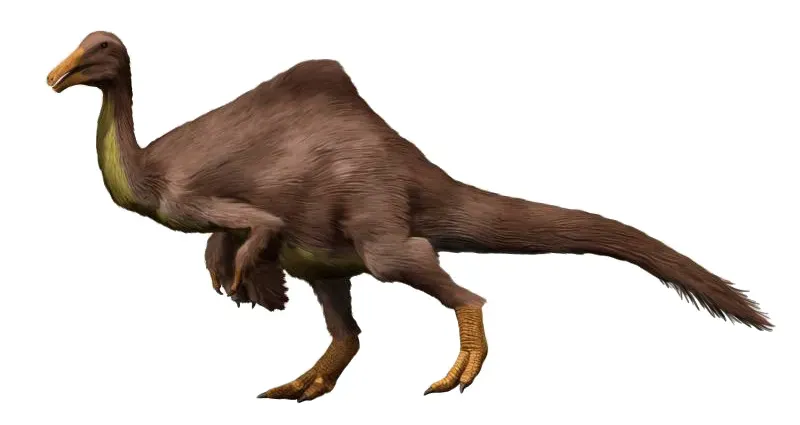
For decades, Deinocheirus was basically a scientific ghost story. Paleontologists originally had only its massive arms and claws, which were roughly as long as a tall human. Those arms sat in museum collections, sparking speculation that they belonged to a terrifying, T. rex‑like super predator. The mystery hung around for nearly half a century, and it felt like one of those frustrating unsolved puzzles you just have to live with.
When more complete fossils finally turned up, the real animal was stranger than anyone’s guesses. Deinocheirus turned out to be a hump‑backed, duck‑billed, pot‑bellied omnivore with a broad beak, a sail‑like back, and heavy feet built for wading. It probably spent its time in river environments, scooping plants and small animals from the water. Instead of being a pure killing machine, it was a weird, mash‑up creature that looked part duck, part camel, part dinosaur. To me, it is a great reminder that nature rarely cares about fitting our expectations.
Psittacosaurus: The Small Dinosaur with a Big Story
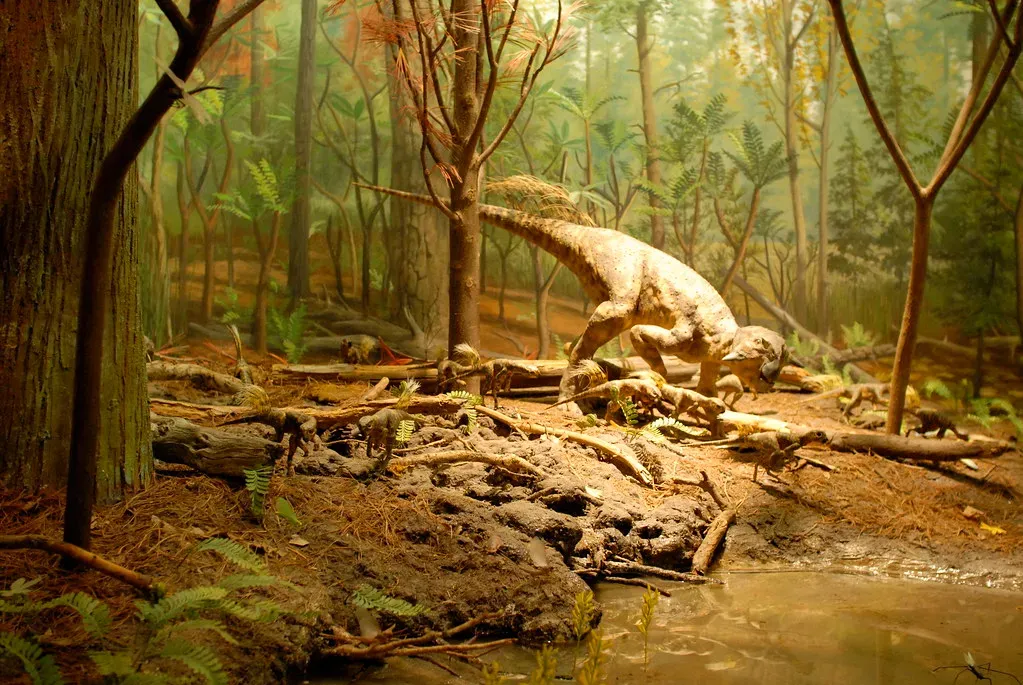
At a glance, Psittacosaurus looks modest: a small, beaked dinosaur about the size of a medium dog, with a parrot‑like face. You could almost imagine it trotting through undergrowth, quietly nibbling plants while trying not to get eaten. But scientifically, Psittacosaurus is a superstar because we have so many fossils of it, including beautifully preserved specimens that capture skin, pigments, and even possible bristle‑like tail structures. It has become one of the most studied dinosaurs of all time.
Some exceptional fossils of Psittacosaurus preserve patterns that suggest camouflage, with darker coloring on its back and lighter tones underneath. That shading is similar to what many modern animals use to blend into forests and dappled light, hinting at its habitat and lifestyle. There is also evidence that young Psittacosaurus may have stayed close to adults, hinting at some kind of parental care or group living. So even though it is not giant or terrifying, this “parrot lizard” quietly tells us a huge amount about what dinosaur skin, color, and behavior may really have been like.
Gigantoraptor: The Giant That Broke the Rules
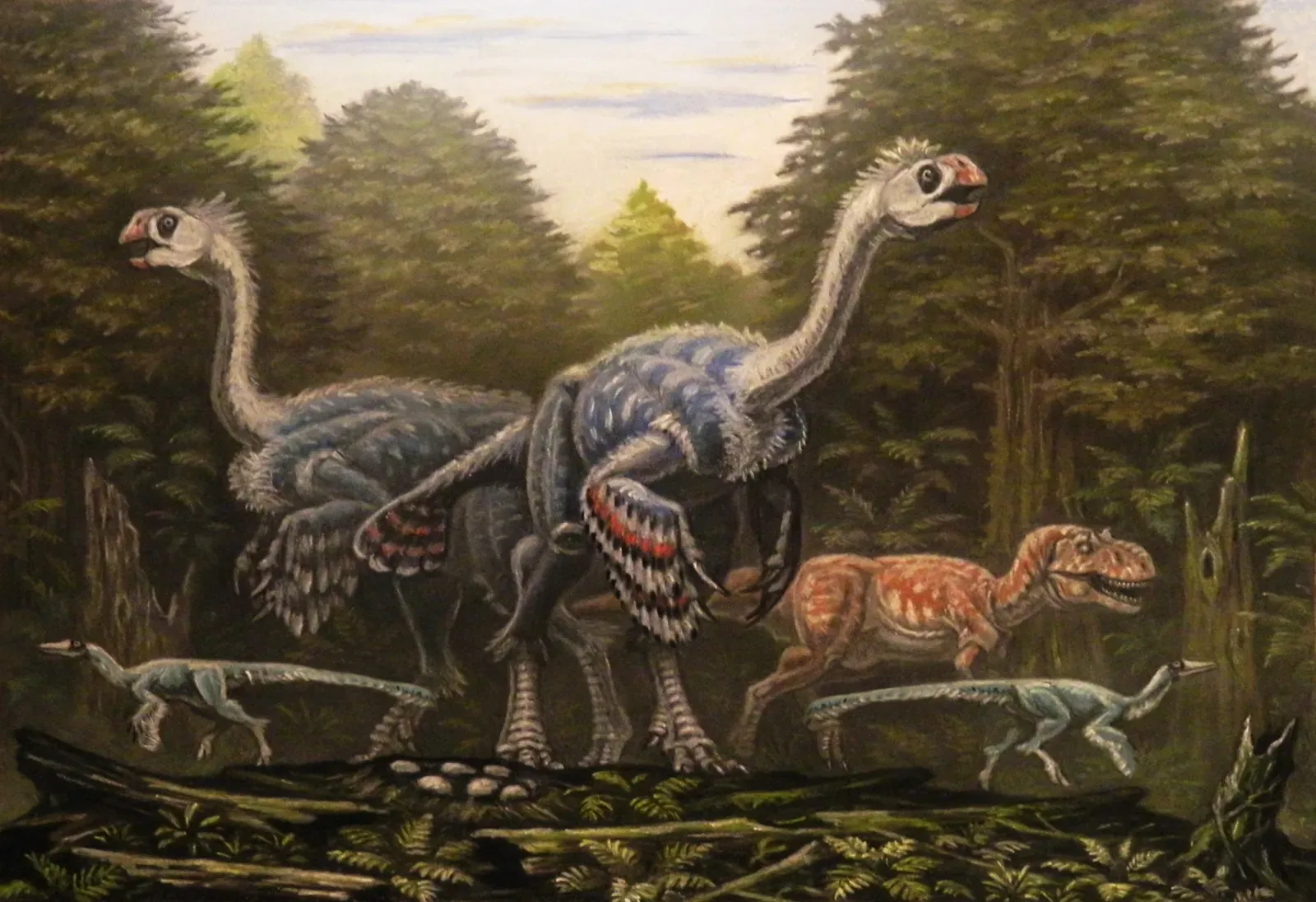
When scientists first realized that many raptor‑like dinosaurs were actually feathered and relatively small, it fit a neat picture: agile, bird‑like predators darting around, more like oversized hawks than dragons. Then Gigantoraptor showed up and smashed that neat picture to pieces. This creature was enormous, about the size of a small bus, and belonged to a group usually made up of much smaller, bird‑like dinosaurs. It was a feathered giant where nobody expected one.
What makes Gigantoraptor especially intriguing is that it did not have the sharp teeth you would expect from a classic predator. Its toothless beak suggests it may have been omnivorous or even largely plant‑eating, despite its raptor heritage and intimidating claws. It sat awkwardly in the dinosaur family tree, half‑way between bird‑like elegance and brute size. For me, Gigantoraptor proves that in evolution, once a body plan works, nature will scale it up, twist it, and test its limits in ways that sometimes look ridiculous on paper, but were clearly good enough to survive in the real world.
Spinosaurus: The Aquatic Hunter That Rewrote the Rulebook
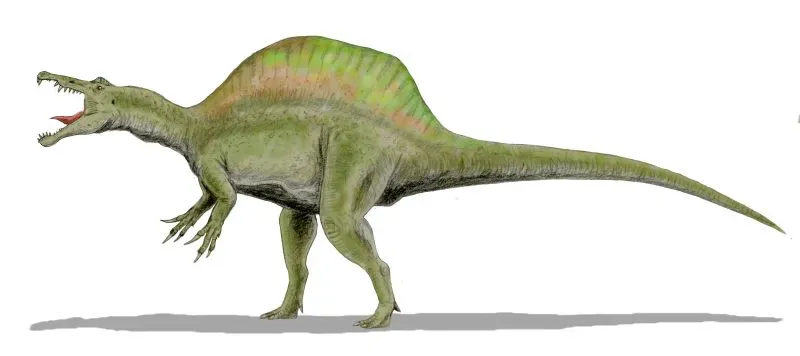
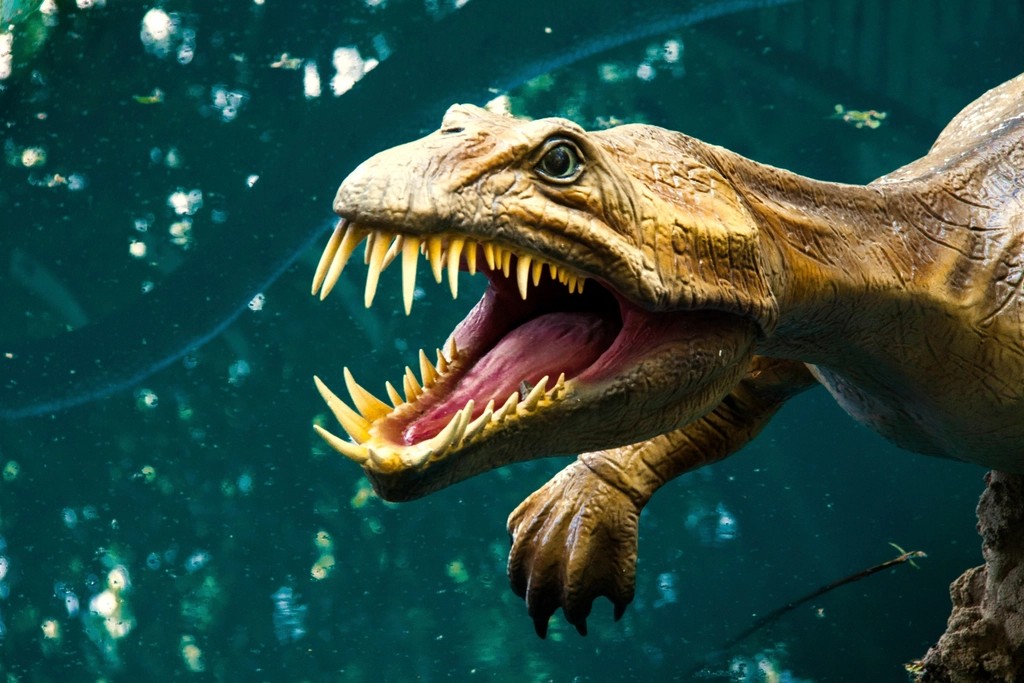
Spinosaurus has gotten a bit more popular in recent years, but it still lives in T. rex’s shadow in everyday conversations. That is wild, because Spinosaurus might have been even longer than T. rex and was built for a completely different lifestyle. Fossil evidence suggests it had dense bones, short hind legs, and crocodile‑like jaws filled with conical teeth, all pointing toward a life spent largely in the water. It was more river monster than classic land‑stalking killer.
Some studies suggest Spinosaurus may have been a specialized fisher, cruising through ancient river systems chasing giant prey like prehistoric lungfish and other large aquatic creatures. Its iconic sail, made of tall spines along its back, might have been used for display, thermoregulation, or both. There is still lively debate around its exact posture and swimming style, which honestly makes it even more compelling. Unlike T. rex, which feels fairly well nailed down, Spinosaurus is still actively reshaping our idea of what a “big predator” could be.
Protoceratops: The Underestimated Horned Pioneer
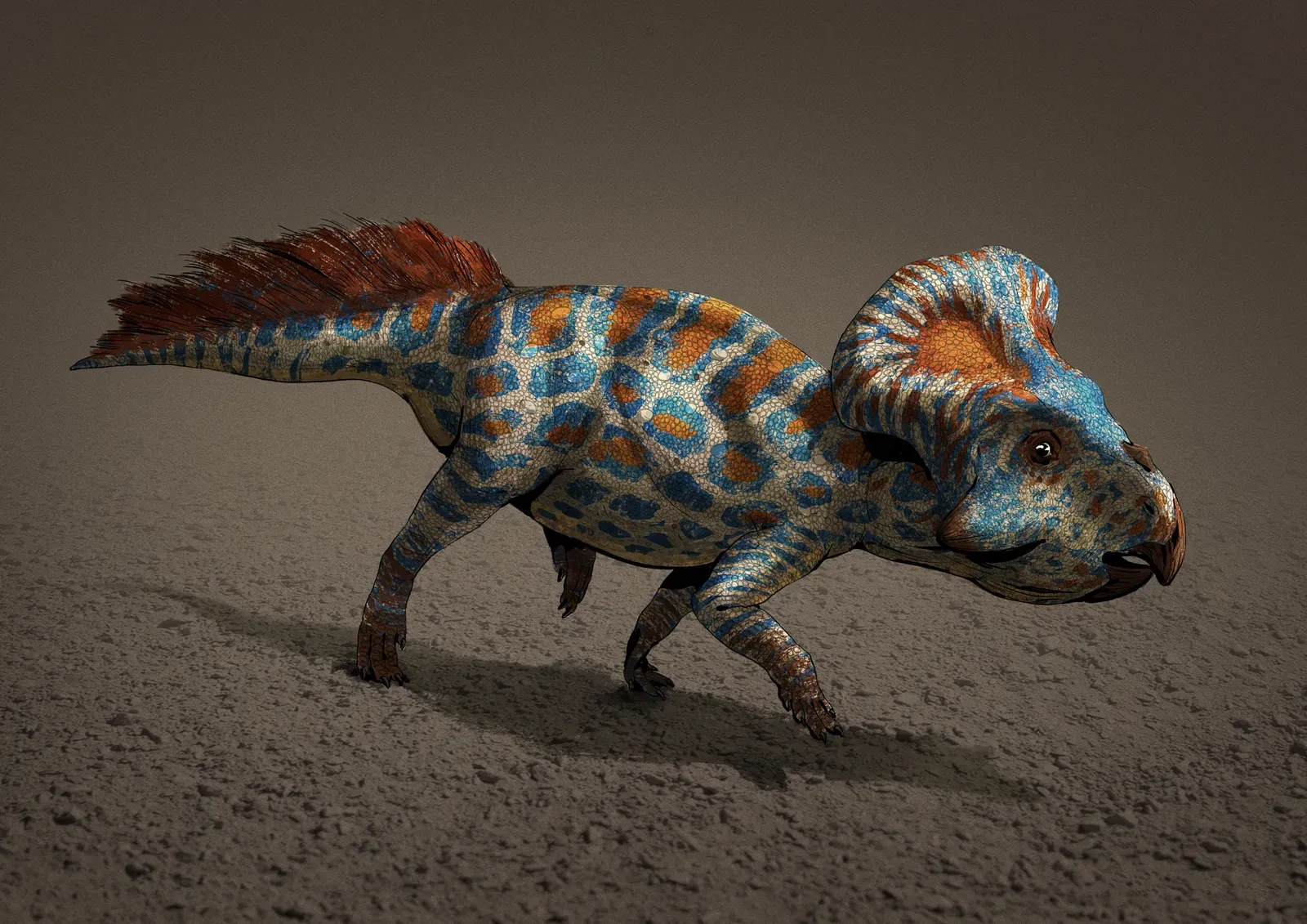
Protoceratops is often treated like the warm‑up act to the big ceratopsians, the group that includes Triceratops. It was smaller, probably about the size of a large sheep, and it lacked the huge horns that make its relatives so famous. Still, this squat, frilled dinosaur was incredibly important for understanding how horned dinosaurs evolved. It had a modest frill, a strong beak, and a stocky body built for a life of constant grazing.
What really elevates Protoceratops is the quality and variety of its fossil record. Paleontologists have found everything from eggs and hatchlings to adults, sometimes in large groupings. That suggests it may have had complex social behavior or moved in herds across ancient deserts and floodplains. The famous fossil of a Protoceratops locked in combat with a Velociraptor, both animals seemingly buried mid‑fight, gives a vivid snapshot of predator‑prey interactions. For a dinosaur that does not usually get merchandised, Protoceratops has quietly shaped a lot of what we imagine about dinosaur family life and conflict.
Microraptor: The Four-Winged Glider
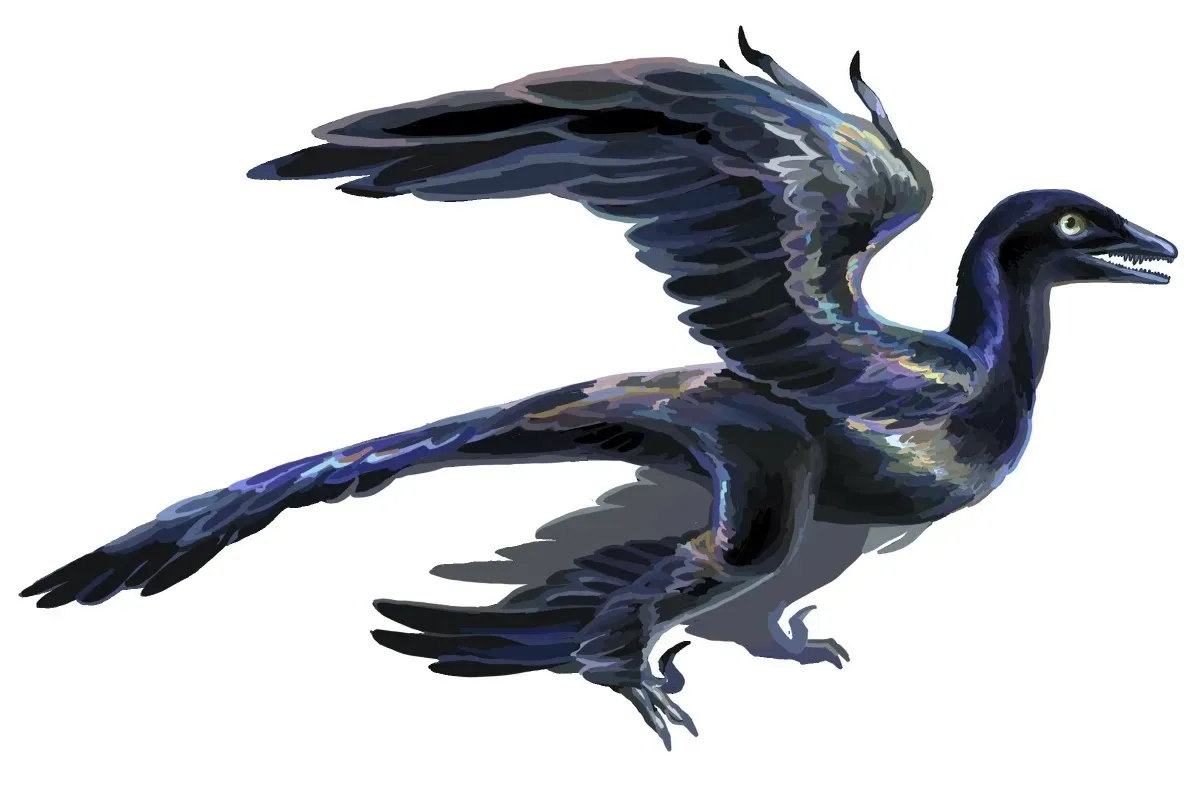
Microraptor is one of those dinosaurs that makes you do a double take when you first see a reconstruction. It was small, about the size of a crow or a cat depending on the specimen, and covered in feathers. But the show‑stopping detail is that it had long flight feathers not just on its arms, but also on its legs, forming a kind of four‑winged body plan. That design feels almost too weird to be real, yet fossils preserve it in stunning detail.
Scientists think Microraptor glided between trees, using its four limbs and tail feathers to control its movement through the air. It probably hunted small animals such as lizards, mammals, or other small dinosaurs, darting around forests much like modern birds of prey. For me, Microraptor makes the dinosaur‑to‑bird transition feel wonderfully tangible, as if you can almost see evolution experimenting with multiple versions of flight before settling on the two‑winged birds we know today. It blows up the old mental picture of dinosaurs as purely earthbound brutes.
Euoplocephalus: The Living Tank with a Subtle Side
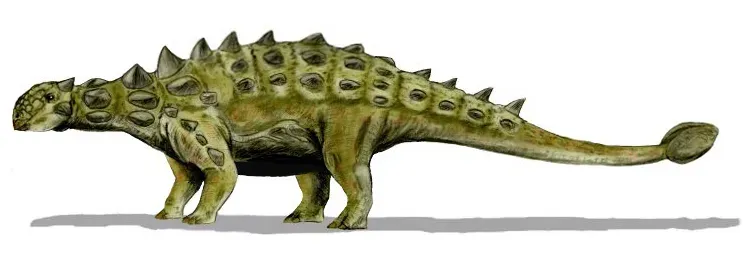
If you have ever wanted proof that nature invented the tank long before humans, Euoplocephalus is it. This hefty, low‑slung dinosaur was covered in bony armor plates and spikes, with a massive club at the end of its tail that could shatter bones. You can picture large predators thinking twice before taking a bite, because one well‑aimed tail swing could have been devastating. It is hard not to respect a creature whose main defense strategy is basically being too armored and too stubborn to kill easily.
Yet Euoplocephalus was more than just a walking fortress. Details of its skull and sensory organs suggest it may have had a decent sense of smell and possibly a more complex lifestyle than we once assumed. It likely moved in groups, browsing low vegetation, communicating visually with body armor patterns and possibly through behavior we can only guess at. Compared to the flashy, teeth‑filled fame of T. rex, this patient, slow‑moving herbivore represents a very different kind of power: survival through endurance, cooperation, and armor rather than speed and aggression.
Maiasaura: The “Good Mother” Who Changed Dinosaur Parenting
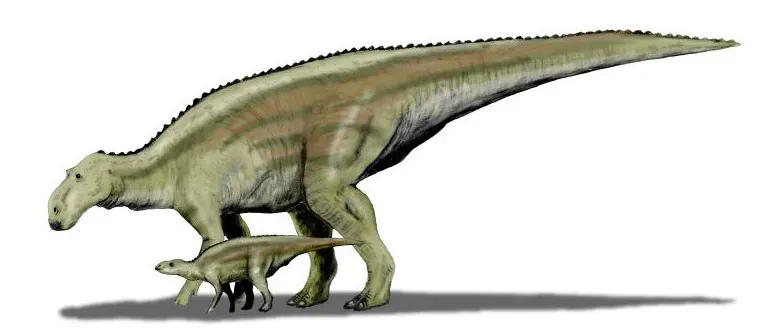
Maiasaura is not the flashiest dinosaur at first glance. It was a duck‑billed herbivore, medium to large in size, that lived in herds and browsed plants in what is now North America. What makes it remarkable is the evidence that it cared for its young in ways once thought impossible for dinosaurs. Nesting sites show clutches of eggs, hatchlings, and juveniles grouped together in what look like organized colonies, almost like a prehistoric neighborhood.
Some nests suggest that the young Maiasaura stayed in the nest for a while after hatching, relying on parents to bring food or protection. That kind of extended care is more like what we see in many birds and mammals than the old stereotype of reptiles that simply lay eggs and walk away. Learning about Maiasaura honestly shifted my own mental image of dinosaur life from solitary monsters to complex, emotional societies. In a quiet way, this “good mother lizard” undercuts the cold, ruthless image that T. rex and similar predators dominate in popular culture.
Conclusion: Expanding the Dinosaur Hall of Fame
The more you learn about these nine dinosaurs, the harder it gets to keep treating T. rex as the unquestioned king of the Mesozoic. Sure, it was big and terrifying, but Therizinosaurus, Deinocheirus, and Gigantoraptor show that weirdness can be just as compelling as raw power. Microraptor and Psittacosaurus bring the story of feathers, color, and behavior into focus, while Protoceratops and Maiasaura hint at rich social lives and parental care. Spinosaurus and Euoplocephalus push the boundaries of what a predator or a defender can look like.
Personally, I think we do ourselves a disservice when we narrow the dinosaur story down to one or two blockbuster names. The real magic lies in the diversity: fish‑hunting giants, armored tanks, four‑winged gliders, gentle monsters with terrifying claws. If anything, T. rex should be the gateway drug, not the whole experience. Next time someone asks about your favorite dinosaur, maybe skip the usual answer and pick one of these misfit legends instead. After all, in a world this strange and wonderful, why keep rooting for the same old star?