
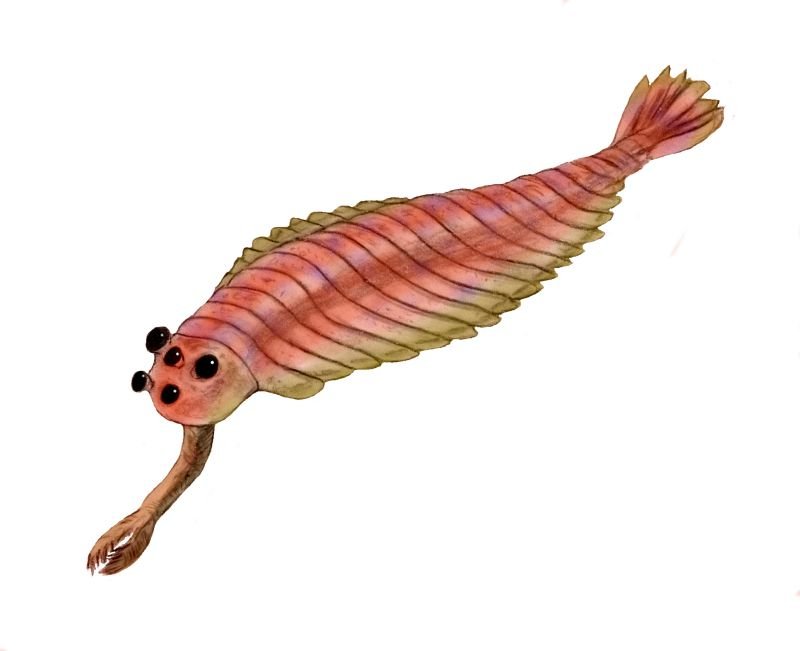
Try to imagine a creature so strange that you cannot honestly compare it to anything walking, swimming, or flying on Earth right now. Not a weird version of a crocodile, not a giant bug, not a bulky rhino with horns in the wrong place, but something that feels like it was sketched by someone who misunderstood what “animal” even means. That is the territory we are stepping into here: the truly alien side of Earth’s own fossil record.
What makes these creatures so fascinating is not just that they are old; it is that they break our mental categories. Some had five-eyed heads, some looked like living chainsaws, and some carried their organs in places that seem completely backward to us. As strange as they sound, they were once perfectly normal parts of their ecosystems. Let’s dive into nine of the most bizarre prehistoric lifeforms that genuinely look like nothing you could find alive today.
Opabinia: The Five-Eyed Anomaly With a Backward Snout
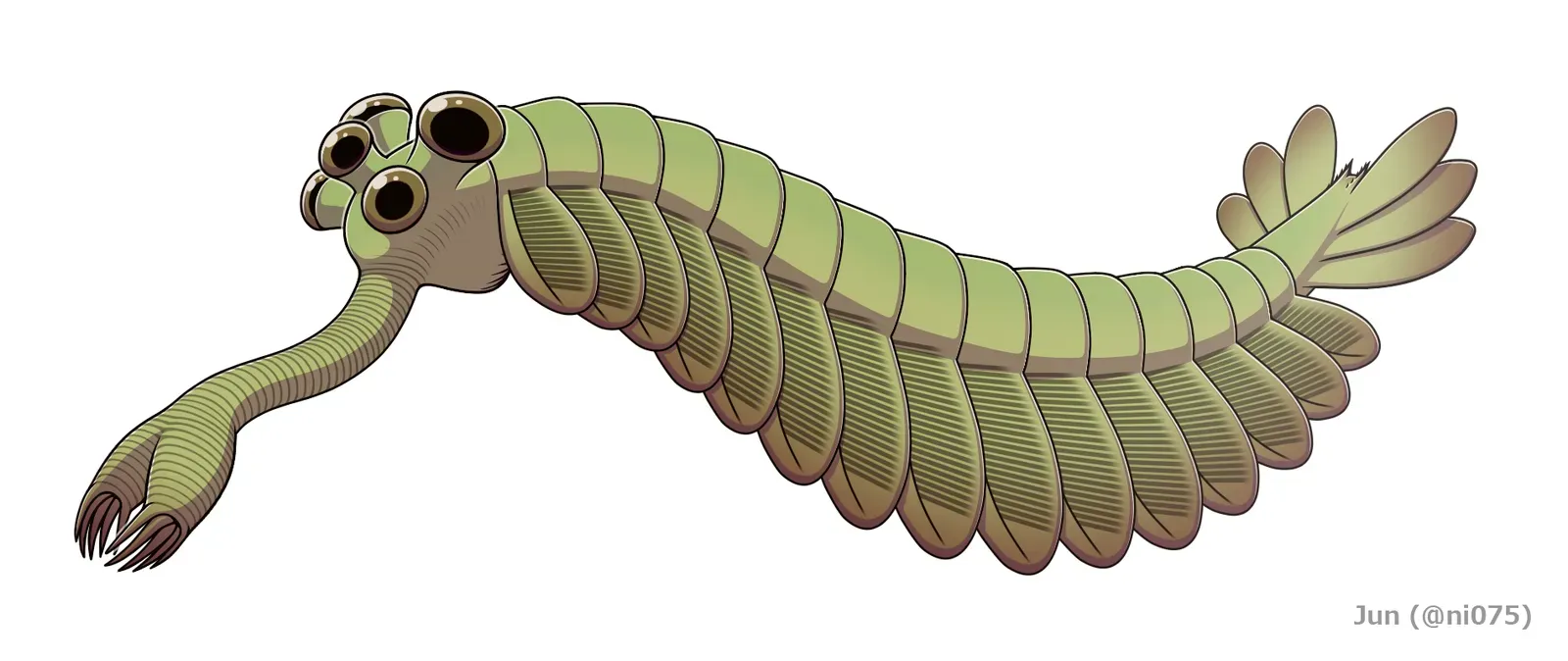
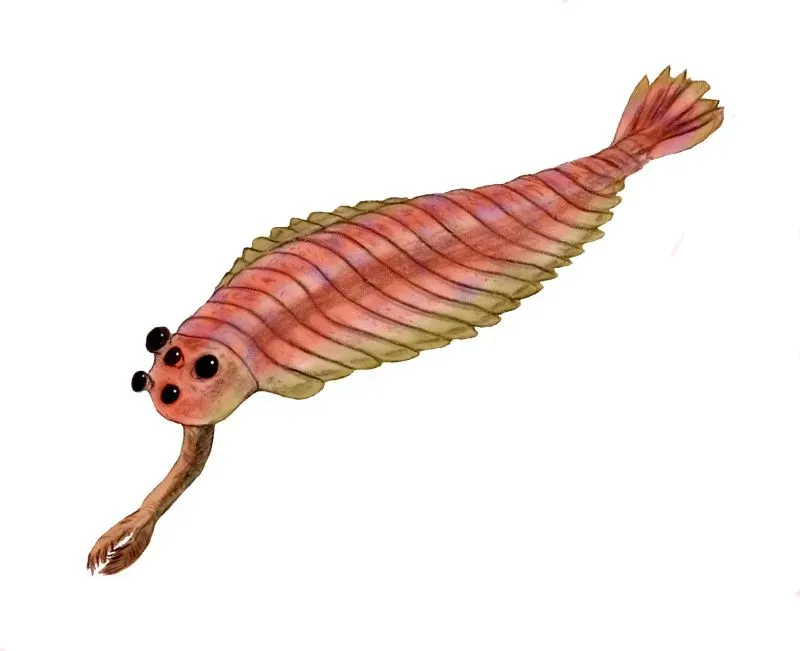
Opabinia looks like something a sleep‑deprived game designer might create at three in the morning and then regret the next day. This small, soft-bodied creature from the Cambrian period had five stalked eyes on top of its head and a long, flexible proboscis ending in a sort of grabby claw. If you tried to compare it to a modern animal, you would probably fail; it is not quite a worm, not quite a shrimp, and absolutely not a bug as we know them.
It likely lived on or near the seafloor, using that strange trunk to pick up bits of food and pass them back to its mouth, which was tucked underneath its head. Researchers still debate exactly how it hunted or scavenged, but the overall impression is clear: this was an animal built around a completely different design philosophy than anything alive now. Whenever I look at reconstructions of Opabinia, it reminds me that nature has tried far more experiments than the surviving lineups of mammals, birds, reptiles, and fish would ever suggest.
Anomalocaris: The Top Predator That Was Almost a Living Can Opener
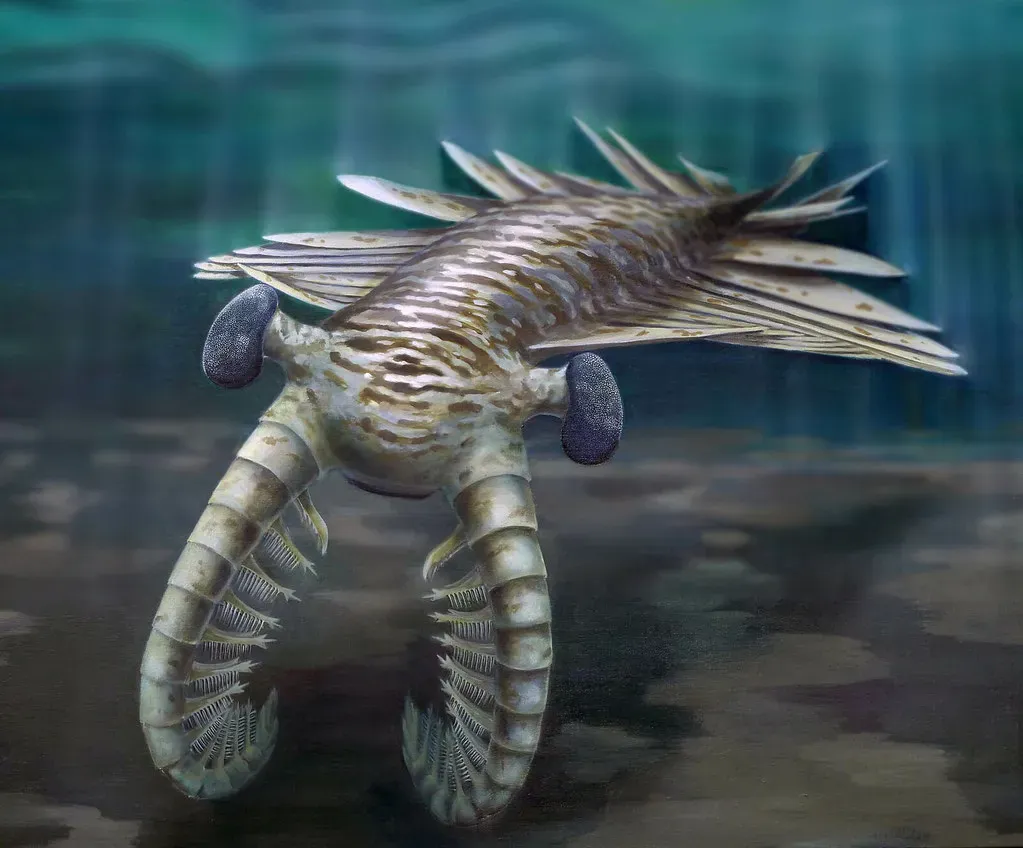
Long before sharks ruled the oceans, Anomalocaris was terrifying everything smaller than it in Cambrian seas. It had a segmented, torpedo‑like body, big swimming flaps along its sides, and a ring-shaped mouth lined with hard plates that probably worked like a crushing, rotating can opener. At the front, it carried two large, spiny appendages that could have grabbed and shoved prey into that circular maw.
The wildest part is that early fossil hunters actually misassembled Anomalocaris from separate body parts, thinking they belonged to different species because the pieces looked so unlike one another. Only later did scientists realize the “weird shrimp,” the “pineapple ring,” and other fragments were parts of the same animal. Unlike any predator today, with its bizarre combo of grasping arms and circular jaw, Anomalocaris feels like an alien boss monster that somehow ended up in Earth’s fossil story.
Hallucigenia: The Spiky Little Night Terror Turned Upside Down
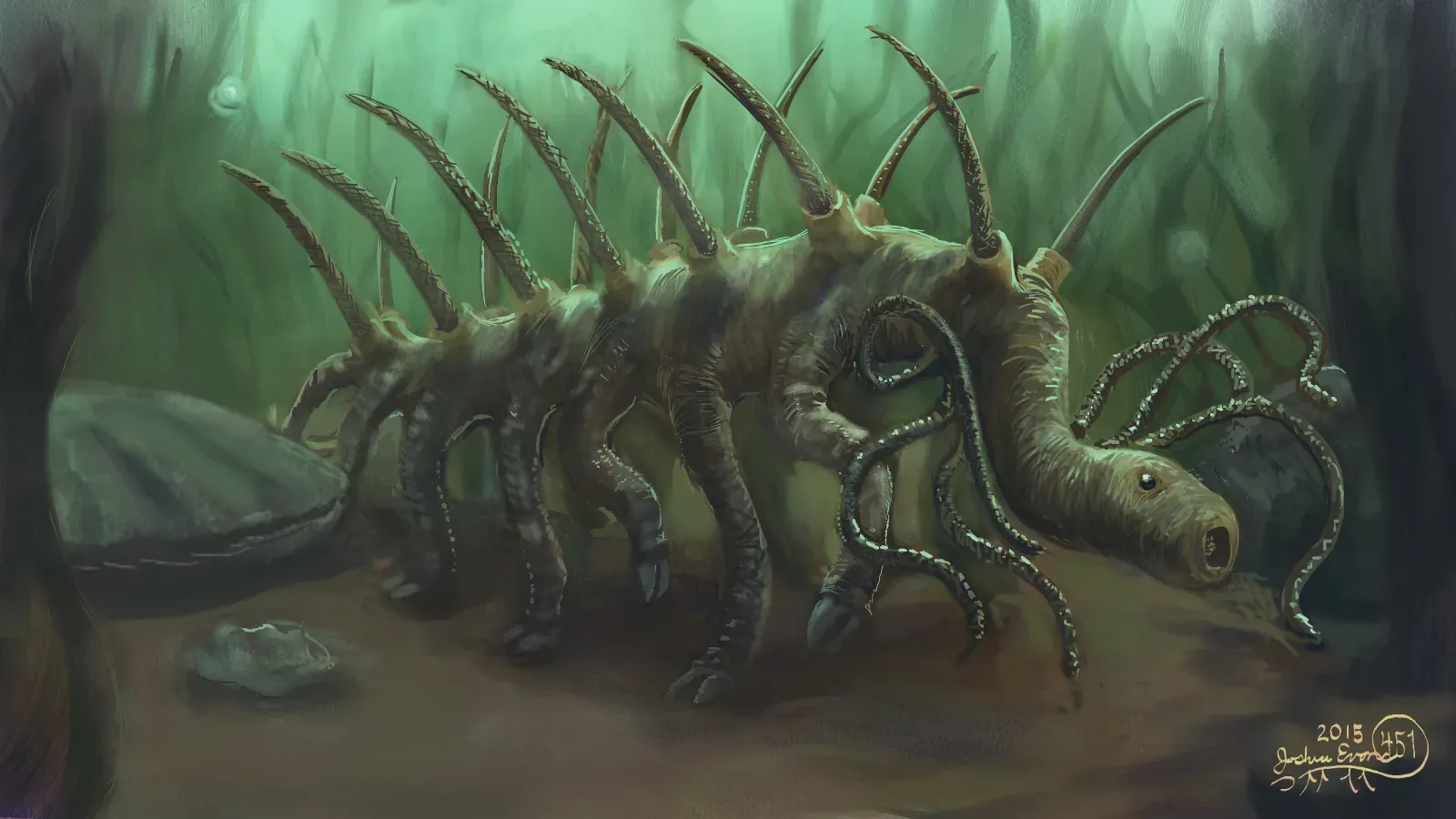
Hallucigenia earned its name for a reason: when it was first described, researchers were honestly not sure which side was up or even what counted as the head. The animal is a slender tube of a body from the Cambrian, covered with long spines on one side and stubby, fleshy legs on the other. For a long time, reconstructions actually had it walking on the spines, like some kind of living bed of nails.
Further study flipped the entire animal over – literally. The “legs” turned out to be the walking structures, and the impressive spikes were more likely defensive weapons pointed upward. Even then, the head is tiny and simple, without the kind of obvious sensory organs we expect. There is nothing alive today that really captures Hallucigenia’s overall look; even the strangest modern worms and sea slugs seem tame in comparison. It is one of those fossils that make you realize how limited our modern reference points actually are.
Tully Monster (Tullimonstrum): The Mystery With Eye Stalks and a Clamped Snout
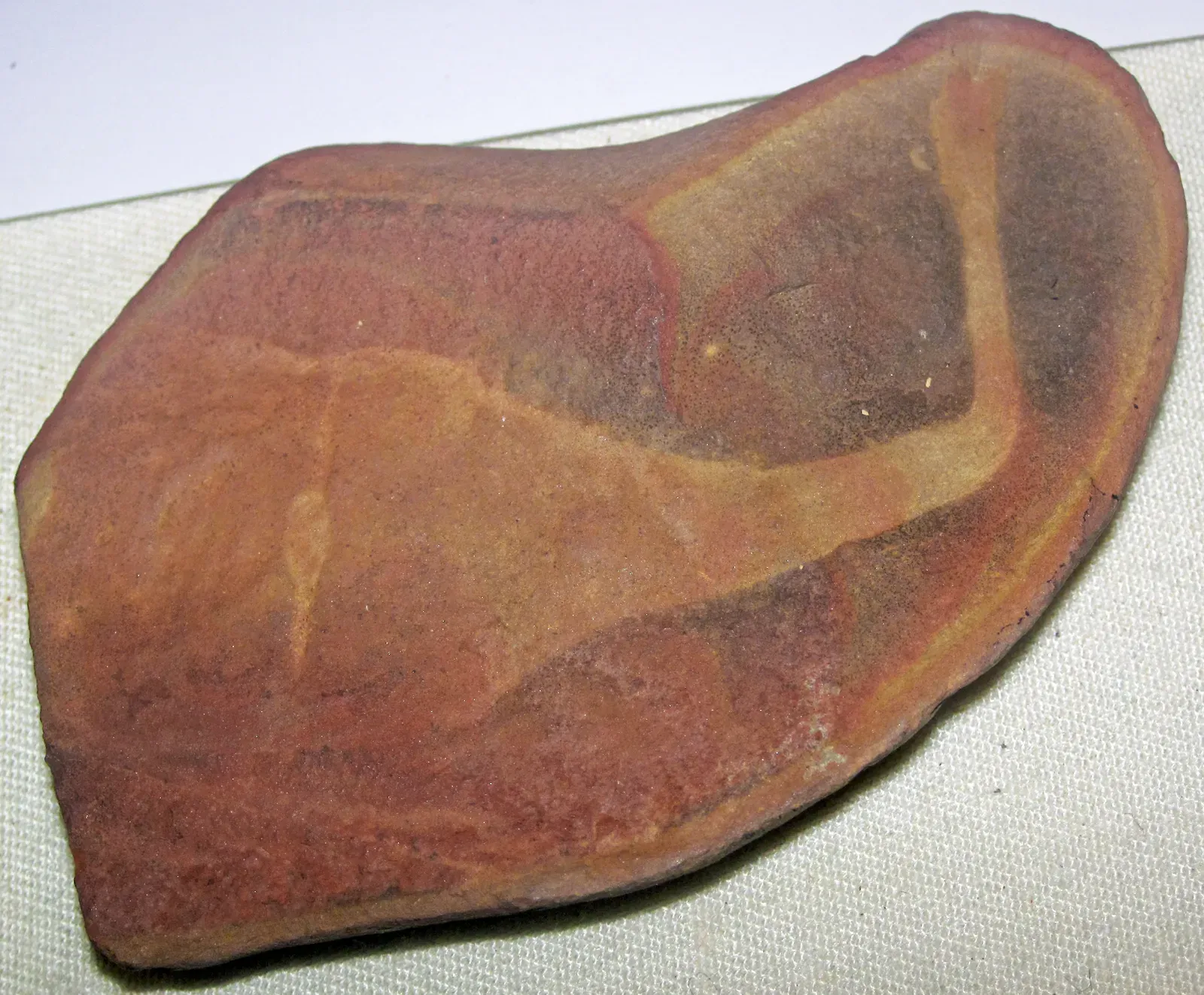
The so‑called Tully monster, discovered in Illinois, is one of the most puzzling animals ever pulled from rocks. Picture a torpedo‑shaped, soft-bodied swimmer with a long, flexible snout ending in a claw‑like structure, and eyes perched on a rigid bar across the top of its body. It almost looks like someone mashed together a squid, a lamprey, and a desk lamp, then erased anything that made anatomical sense.
For decades, scientists have argued about what kind of creature Tullimonstrum actually was: maybe related to jawless fish, maybe a totally separate lineage. Even today, there is no fully settled answer, and honestly that uncertainty is part of its charm. Unlike modern animals, which mostly fit into familiar categories, the Tully monster sits in a gray zone where the usual rules break down. Any time I see it pictured, it feels less like a real animal and more like a reminder that evolution does not care whether we find its designs intuitive.
Dunkleosteus: The Armored Fish With a Guillotine for a Face
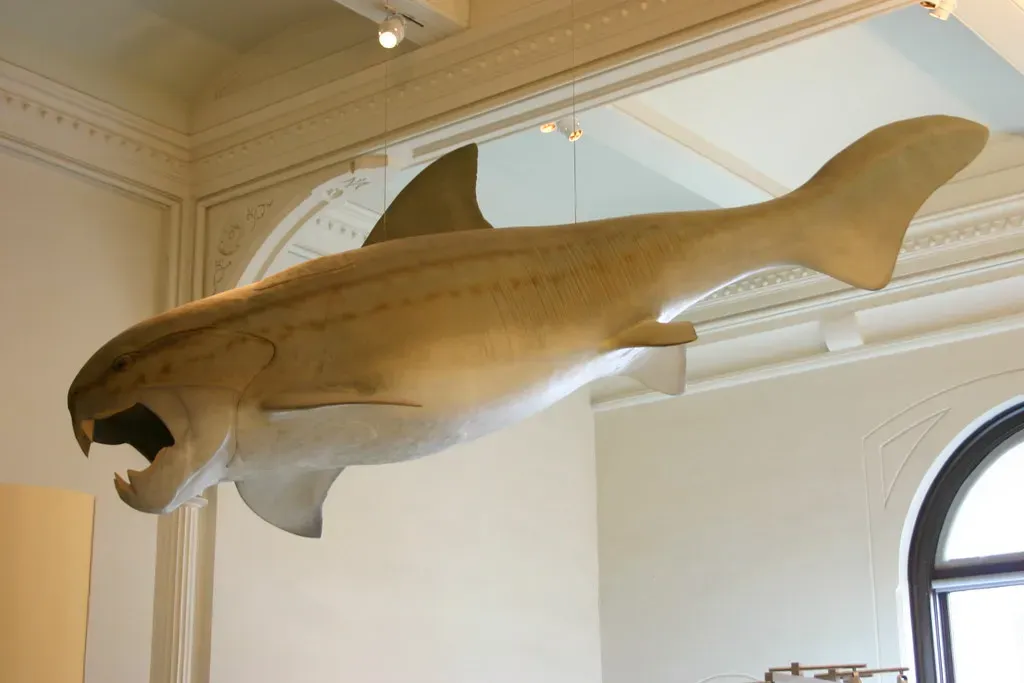
Dunkleosteus was a massive armored fish from the Devonian period, and while we still have big predatory fish today, nothing looks quite like this thing. Its head and front body were wrapped in thick, interlocking bony plates, giving it an almost tank‑like appearance. Instead of teeth, it had sharp bony plates that formed powerful cutting edges, effectively turning its entire jaw into a kind of guillotine.
Some estimates suggest that Dunkleosteus had one of the strongest bites of any fish that has ever lived, more than capable of crushing armored prey. That alone sets it apart visually and functionally from modern sharks, which rely on serrated teeth rather than a bone-sheathed skull. Seeing a reconstruction feels like staring at a predator that fused medieval armor with industrial cutting machinery. If you transported Dunkleosteus into today’s oceans, it would not look like an oversized version of anything we know; it would look like a different category of sea monster altogether.
Helicoprion: The Buzzsaw‑Jawed Oddity
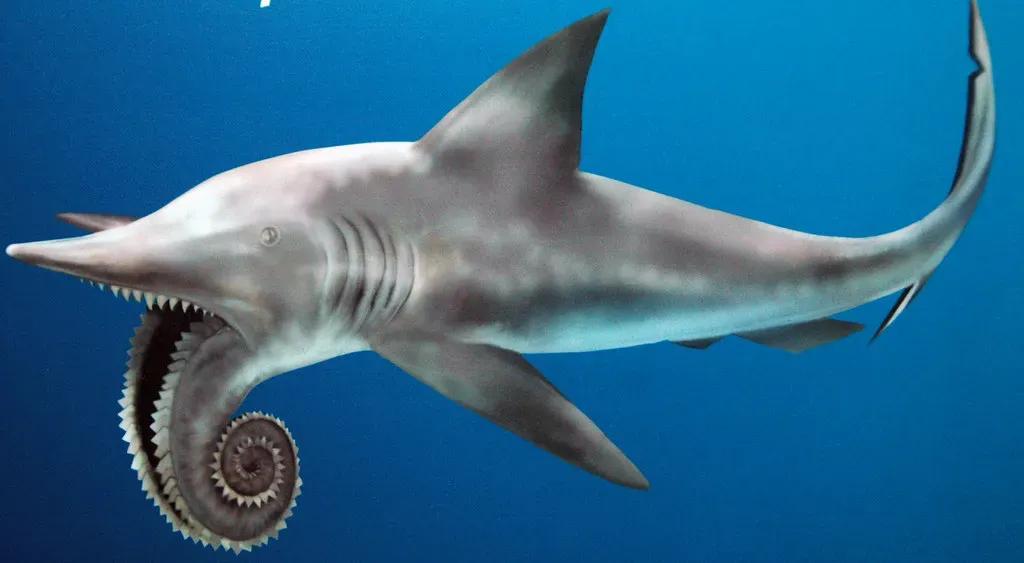
Helicoprion is what happens when evolution puts the wrong idea in the right place. This ancient shark‑like fish is famous for its spiral whorl of teeth, a structure that looks almost exactly like a circular saw blade rolled up inside the lower jaw. For a long time, paleontologists were confused about where that spiral even belonged, with early reconstructions placing it in some very odd positions along the body.
The best‑supported idea now is that the tooth whorl sat inside the mouth, where it could have helped slice or grip soft prey as the jaw closed. Nothing like this exists in modern sharks or any other living vertebrates; our teeth can be replaced, but we do not store them in spiraling stacks that form rotating blades. The mental image of an animal essentially feeding with a built‑in buzzsaw is hard to shake. It is one of those fossils that makes you genuinely grateful that certain evolutionary experiments did not carry over into the present.
Eurypterids (Sea Scorpions): Giant Paddle‑Armed Relics of an Alien Ocean
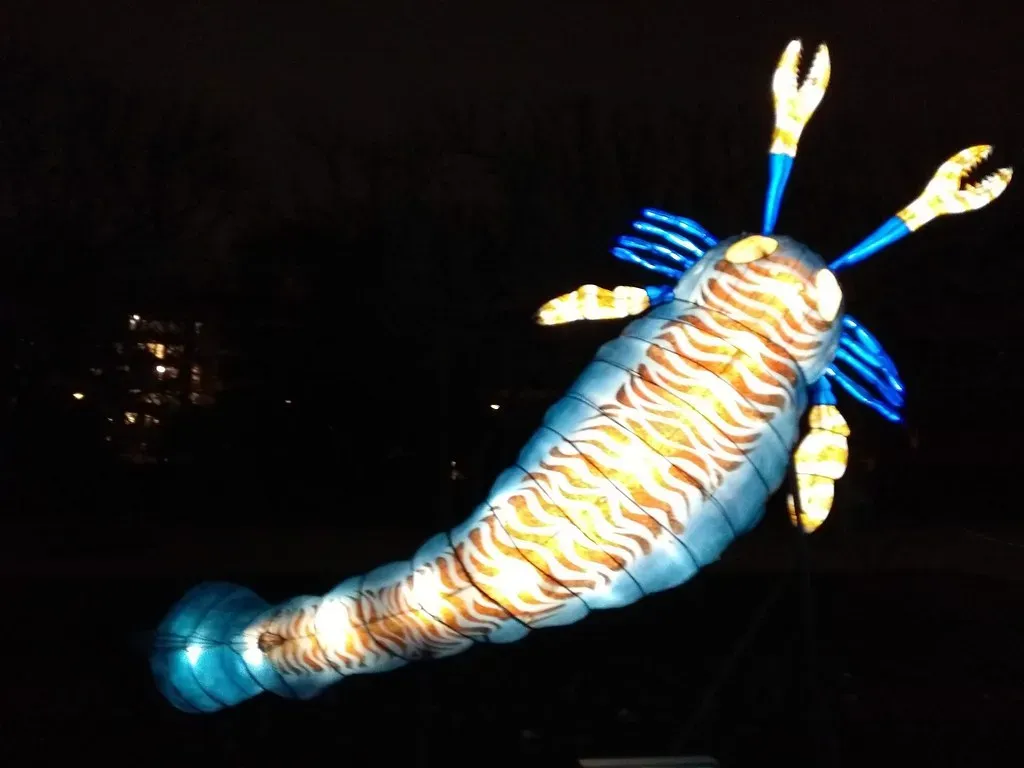
Eurypterids, often called sea scorpions, were arthropods that thrived long before the dinosaurs, and some species reached lengths rivaling a human being. They had broad, flattened bodies, large swimming paddles, and bizarre clawed appendages near the front that give them a half‑scorpion, half‑crab vibe. Yet if you try to map them directly onto any modern animal group, things start to fall apart pretty quickly.
Although they are distantly related to modern arthropods like horseshoe crabs and spiders, their overall build – especially the combination of paddles, body armor, and predatory claws – has no direct match in today’s oceans. Imagine snorkeling and seeing a car‑door‑sized creature gliding past, its oar‑like limbs slowly rowing as it hunts. Even our strangest crustaceans feel low‑key next to a giant eurypterid. For me, they encapsulate the eerie side of deep time: familiar bits of anatomy reassembled into something our current seas simply do not host anymore.
Basilosaurus: The Serpent‑Whale That Broke the Rules
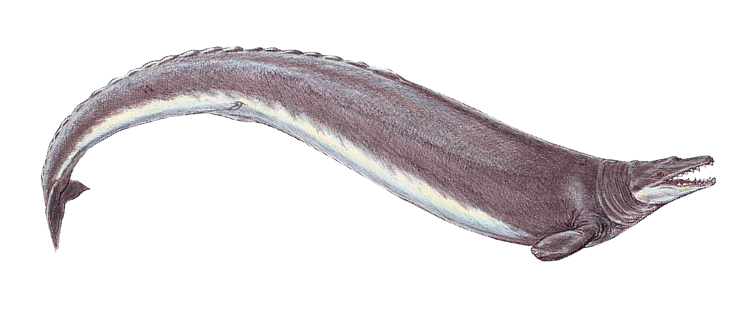
Basilosaurus is technically a whale, but you would not guess that from the shape of its body. Unlike modern whales with their compact, torpedo‑like forms, Basilosaurus had a long, serpentine trunk that made it look more like a sea serpent fused with a mammal skull. It lived during the Eocene, when early whales were experimenting with different ways of being fully aquatic.
It also retained tiny, almost useless hind limbs buried in its body wall, hinting at its land‑walking ancestry in an oddly literal way. No modern whale has that same combination of extreme length, snake‑like flexibility, and visible leftover legs. It is as if evolution briefly flirted with the idea of turning whales into true sea dragons, then changed course. When I think of Basilosaurus gliding through warm ancient seas, I imagine an animal that would have felt wrong to our eyes – clearly mammalian, but stretched and warped into a shape no living marine mammal even comes close to.
Therizinosaurus: The Pot‑Bellied Dinosaur With Scythes for Hands
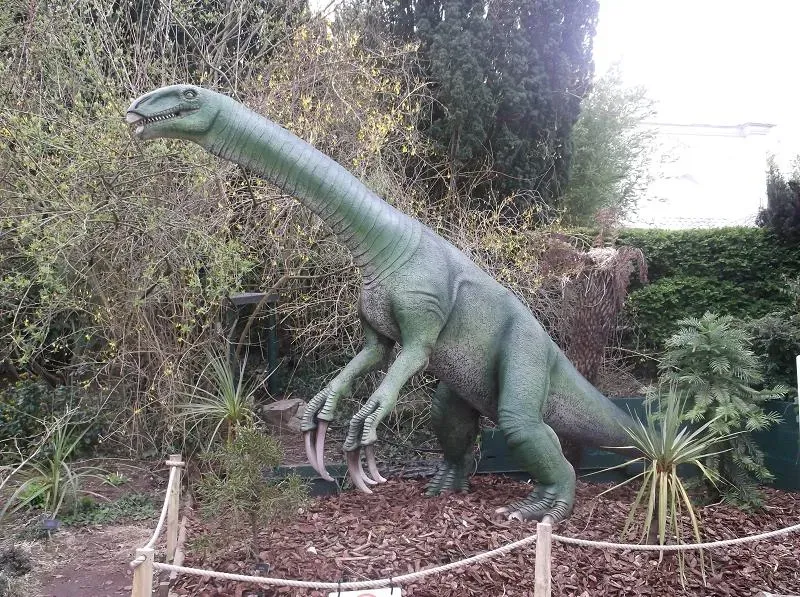
Therizinosaurus might technically be a theropod dinosaur – the same major group that includes T. rex and modern birds – but visually it plays by a completely different rulebook. It had a bulky body, long neck, small head, and enormous claws on its hands that could reach the length of a grown person’s arm. These claws were thin and curved like scythes, not built for stabbing like a raptor’s, and the animal itself appears to have been primarily herbivorous.
There is no direct equivalent walking around now. Giant mammals like bears and gorillas share some rough body bulk but lack the outlandish arm blades. Even the most extreme birds cannot compare to a towering, feathered dinosaur with meter‑long claws that mostly used them to pull down branches or defend itself. Therizinosaurus makes our modern animals look oddly conservative by comparison. It is the kind of creature that forces you to accept that nature once mass‑produced designs that would seem over the top even in a fantasy movie.
Conclusion: Earth’s Past Was Stranger Than Our Imagination
Looking at these nine creatures side by side, the big takeaway is uncomfortable and exhilarating at the same time: the world we live in now is only one of many versions Earth has tried. We are used to thinking of evolution as slowly polishing the same basic body plans, but the fossil record shows that it has also tossed entire blueprints into the trash and started over. Five‑eyed swimmers, saw‑jawed fish, and scythe‑handed herbivores were not glitches; they were successful answers to the challenges of their own eras.
Personally, I find that both humbling and oddly grounding. Our modern animals – whales, eagles, sharks, tigers – feel iconic, but they are just this chapter’s cast, not the whole story. If life has already produced forms this strange and then erased them, there is no reason to assume we have seen the limit of what is possible. Maybe the real question is not whether these ancient creatures look alien, but whether we look just as alien to whatever comes next. When you picture the far future of life on Earth, do you still see familiar shapes, or do you imagine something as shockingly new as Opabinia or Helicoprion once were?