
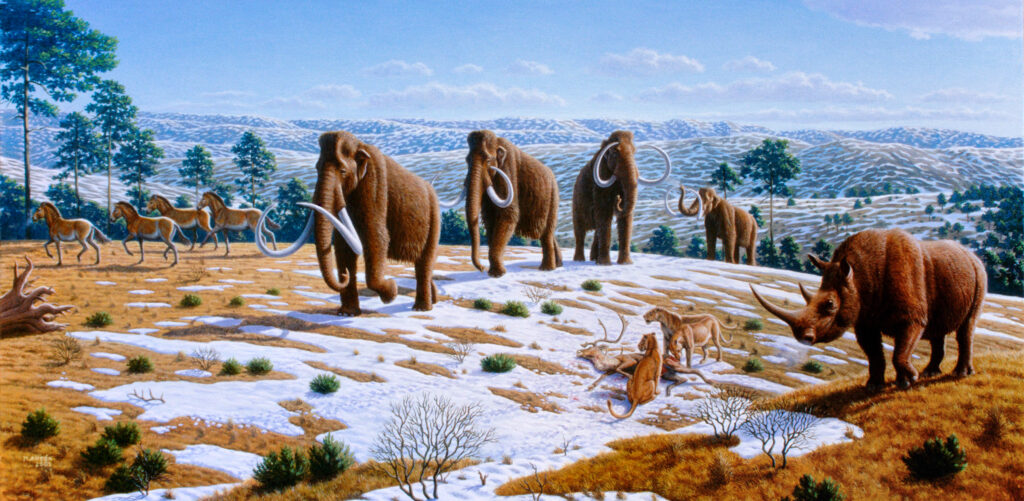
You were taught extinction works like a light switch. One day a species exists, the next day it’s gone, and some textbook prints a tidy year to prove it. Except that’s not how it actually works – and paleontologists are quietly admitting it.
Some of those famous “extinction dates” are just the last fossil anyone happened to dig up, not the actual last living moment of the species. New radiocarbon techniques, overlooked museum drawers, and stubborn bones that refused to match the textbooks have pushed several extinctions thousands of years later than we assumed. A few of these animals were still breathing while humans built pyramids, sailed oceans, and wrote history books. Here’s what the evidence really says – starting with a giant that outlived one of the most famous monuments on Earth.
#13 – The Woolly Mammoth That Outlived the Pyramids
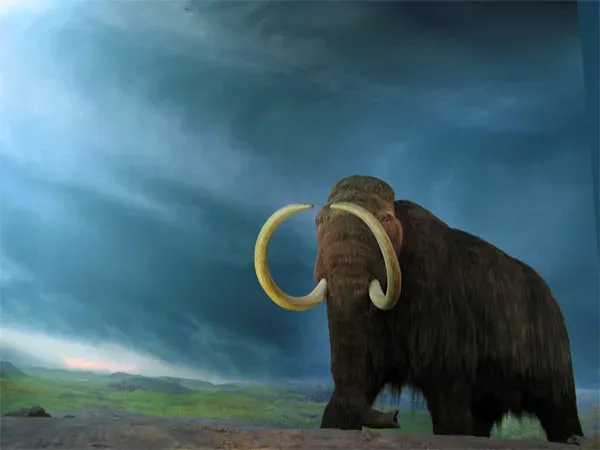
Picture a woolly mammoth and your brain probably files it under “Ice Age, long gone.” But radiocarbon dating on bones and tusks from Wrangel Island, deep in the Arctic, tells a wilder story. A small, isolated population of mammoths was still alive there roughly 4,000 years ago.
That’s about 600 years after the Great Pyramid of Giza was finished. These weren’t the thundering herds of the mammoth steppe – they were a shrinking, inbred colony clinging to a shrinking island. But they were still mammoths, still alive, while ancient Egyptians were already centuries into their civilization.
Fast Facts
- Textbook extinction date: ~10,000 years ago
- Best current evidence: survivors lasting to ~4,000 years ago
Scientists now use Wrangel Island as the go-to example of how an “extinction date” is really just the most recent fossil we’ve found so far. It’s a humbling reminder that the truth is often hiding in a stretch of tundra nobody had properly searched yet.
#12 – Irish Elk: The Giant Deer That Refused to Die on Schedule
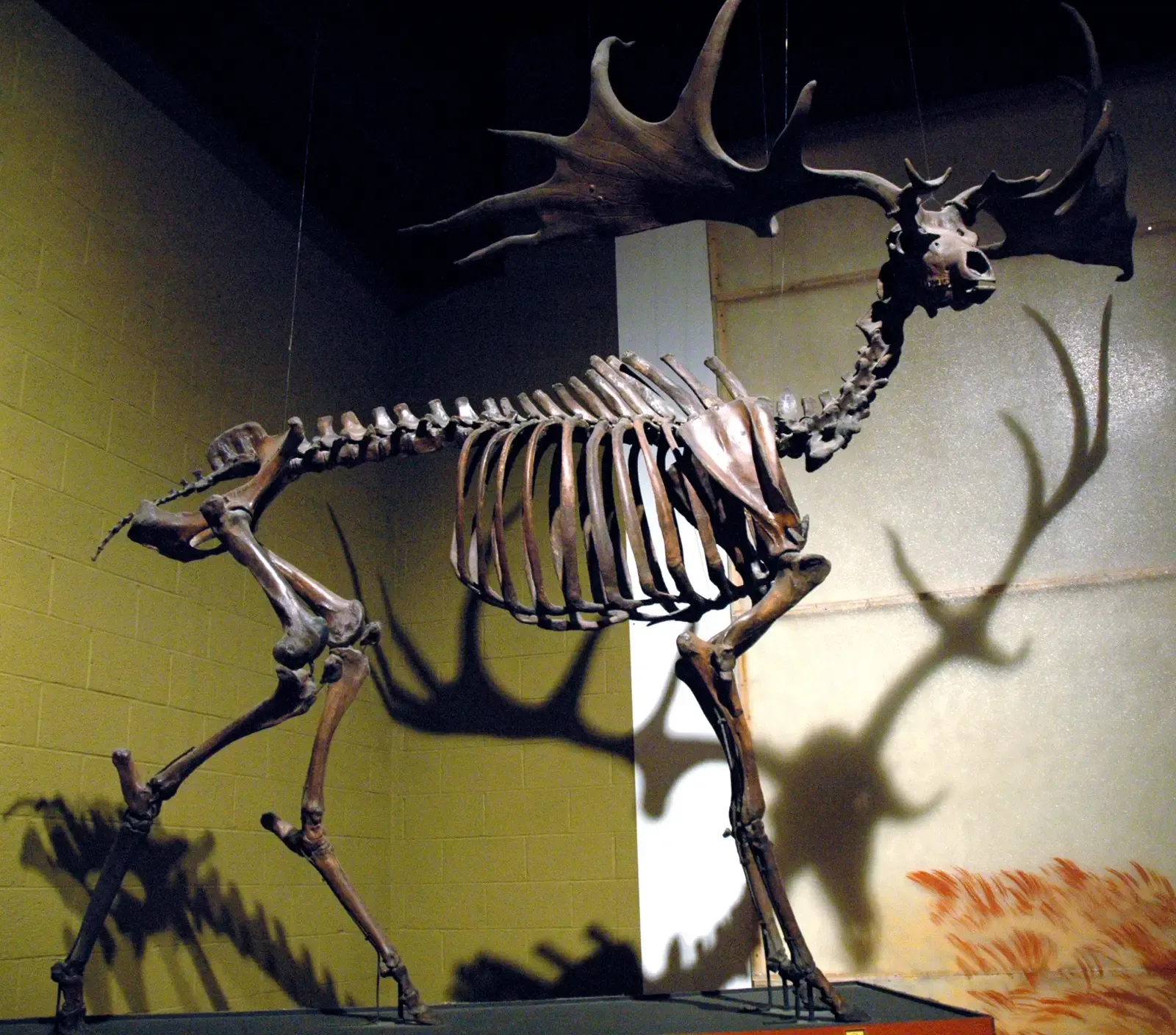
You’ve seen the Irish elk in museum dioramas – that enormous deer with antlers wide enough to clip a doorway – usually labeled “Late Pleistocene” and filed away as an Ice Age relic. The old story says it died out with the glaciers. New dating says otherwise.
Specimens from western Siberia and central Europe now push its last known appearance to somewhere between 7,000 and 5,000 years ago. That means early farming communities may have genuinely crossed paths with these antlered giants, not just carved them into cave walls from memory.
Researchers suspect a slow squeeze of shifting vegetation, human hunting pressure, and the sheer biological cost of carrying those massive antlers. None of it happened overnight.
Worth Knowing
- Famous for antlers spanning up to roughly 12 feet across
- Last confirmed populations traced to western Siberia and central Europe
- Extinction now linked to vegetation change, not glaciers alone
- May have overlapped with early farming communities for centuries
The real headline isn’t how the Irish elk died – it’s how long it refused to. It didn’t vanish the moment the glaciers retreated; it hung on for thousands of years past the neat “Ice Age extinction” story most of us grew up with.
#11 – Ground Sloths Sharing the Americas With Humans
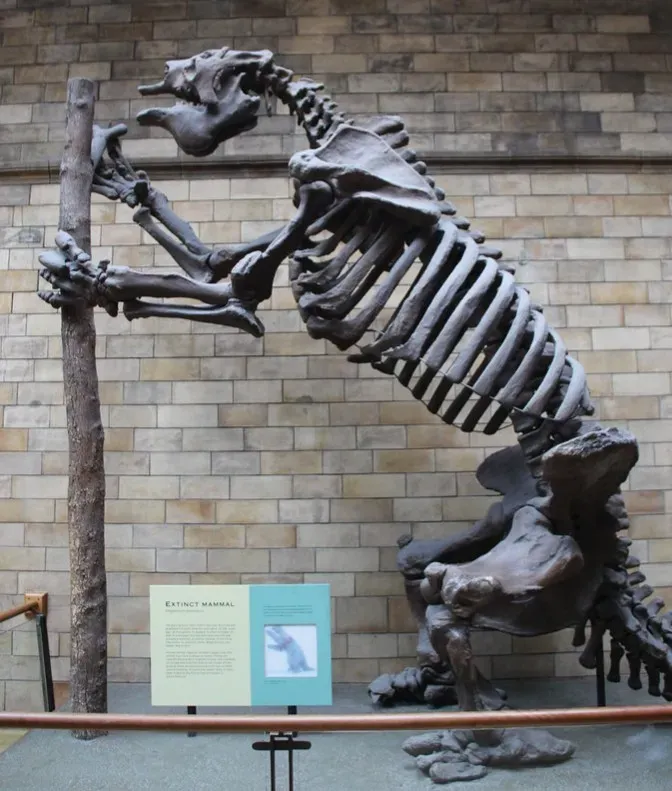
Most people picture giant ground sloths as pure prehistory – lumbering monsters from a world with zero humans in it. That picture is wrong, and the evidence is almost unsettling once you see it.
In Patagonia, dung deposits and bones from giant sloths like Megatherium and Mylodon point to survival until roughly 10,000 to 8,000 years ago, squarely overlapping with human hunters carrying stone weapons. On Caribbean islands like Cuba and Hispaniola, smaller ground sloths appear to have lasted even longer – possibly as recent as 4,500 years ago.
That’s a shockingly modern date for an animal most people assume belongs to the deep prehistoric past. On an evolutionary timescale, 4,500 years ago is basically last week.
This flips a comforting narrative on its head: instead of giant sloths vanishing before people arrived, some species were still around while humans were actively spreading across the Americas. Many researchers now believe a mix of hunting and habitat disruption from early settlers delivered the final blow – meaning people didn’t just arrive after the giants disappeared, they may have helped write the last chapter themselves.
#10 – Saber-Toothed Cats That Lingered After the Ice Age
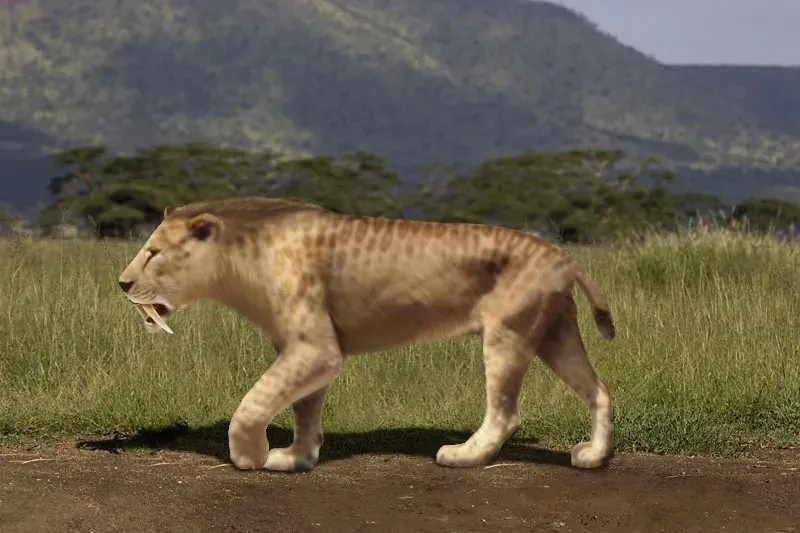
Ask most people when saber-toothed cats disappeared and they’ll say “with the mammoths,” as if every Ice Age predator clocked out on the same day. The fossil record tells a messier, slower story.
In South America, remains of Smilodon populator and related cats now push survival into the early Holocene. Updated radiocarbon corrections – fixing older calibration errors – have quietly shifted some “Pleistocene” bones into much younger territory than anyone expected.
That means these apex predators were still stalking landscapes where humans and their dogs were already established neighbors. This wasn’t a coexistence anyone planned for.
Researchers now argue the true killer wasn’t the end of the Ice Age itself, but the slow, grinding collapse of the large herbivores these cats depended on. As prey vanished and humans moved in, saber-tooths likely blinked out species by species – not in one dramatic, cinematic extinction event, but in a long, quiet decline nobody was around to document in real time.
#9 – Stilt-Legged Horses in North America’s “Empty” West
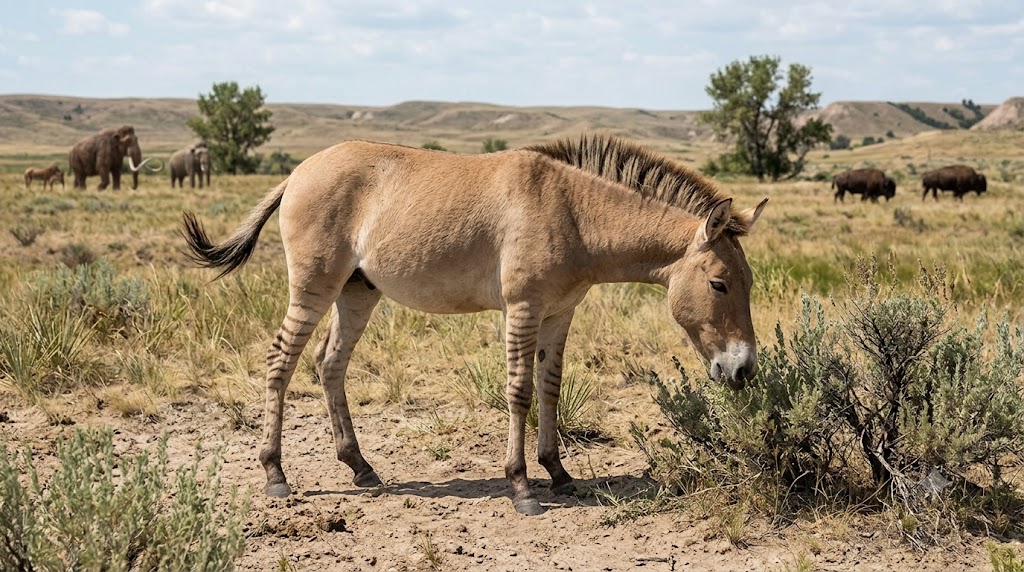
Most Americans learn that native horses vanished from the continent about 10,000 years ago and didn’t return until Spanish explorers brought new ones. That’s still broadly true – but the fine print just got messier.
Fresh dating on bones from the American West and Beringia suggests certain lineages, especially the so-called “stilt-legged” horses, may have survived in scattered pockets well into the early Holocene. A handful of controversial dates push their survival several hundred, maybe a couple thousand, years past the old 10,000-year cutoff.
This doesn’t rewrite the big picture – horses still disappeared from North America and were reintroduced centuries later. But it does kill the idea of one clean, simultaneous extinction event.
Instead, scientists now picture a slow, patchy fade-out: scattered herds surviving in isolated steppe refuges long after most of their kind had already vanished. It’s exactly why paleontologists keep pulling old bones out of museum drawers and running them through new tests – the story keeps quietly changing.
#8 – The American Cheetah That May Have Outrun Our Timelines
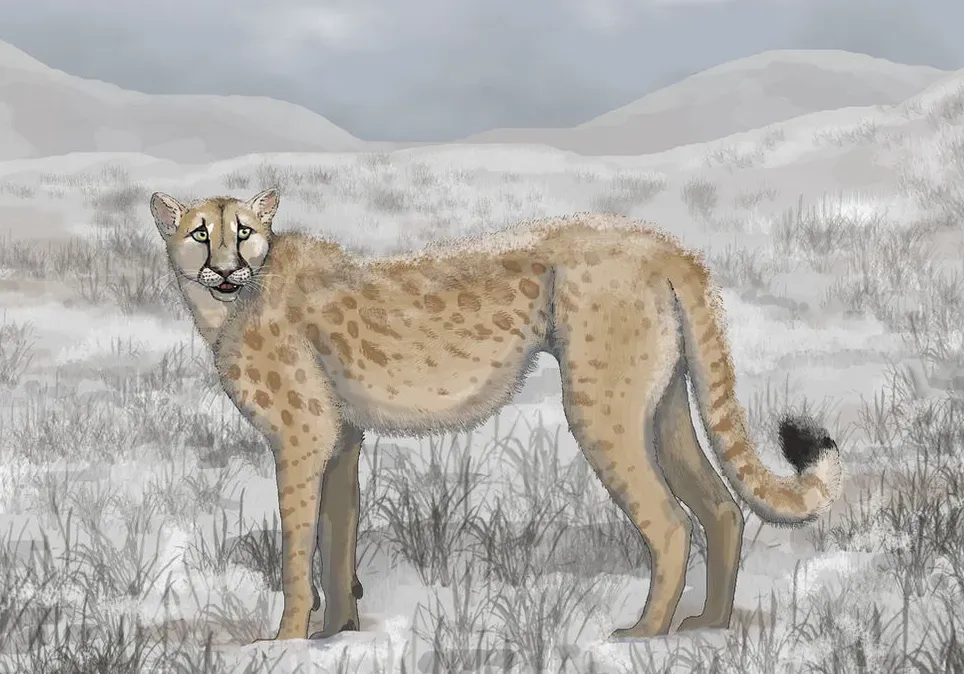
The so-called “American cheetah” – really a cheetah-like cougar relative, not a true cheetah at all – usually gets filed as a straightforward Ice Age casualty, extinct around 12,000 years ago alongside the mammoths. But its fossil record is thin, scattered, and surprisingly easy to misdate.
When older radiocarbon results get corrected with better calibration curves, some bones shift from “firmly Pleistocene” into the very earliest Holocene. That technically drops the last known individuals into a world where humans were already common, established residents of North America.
Quick Compare
- Old assumption: extinct roughly 12,000 years ago, alongside the mammoths
- Emerging evidence: some remains may edge into the earliest Holocene
- Old assumption: no meaningful overlap with early North Americans
- Emerging evidence: possible overlap with established human populations
Researchers remain cautious about over-interpreting a few fragmentary finds. But the pattern fits something scientists see again and again: large predators tend to persist in small, hidden numbers even after their ecosystems start collapsing around them.
For the American cheetah, that likely meant clinging to open grasslands as pronghorn and other fast prey adjusted to a warming, post-glacial world. If this holds up, its final sprint lasted longer – and overlapped with people more – than the old dates ever suggested.
#7 – New Zealand’s Moa: Giant Birds That Outlived First Contact Myths
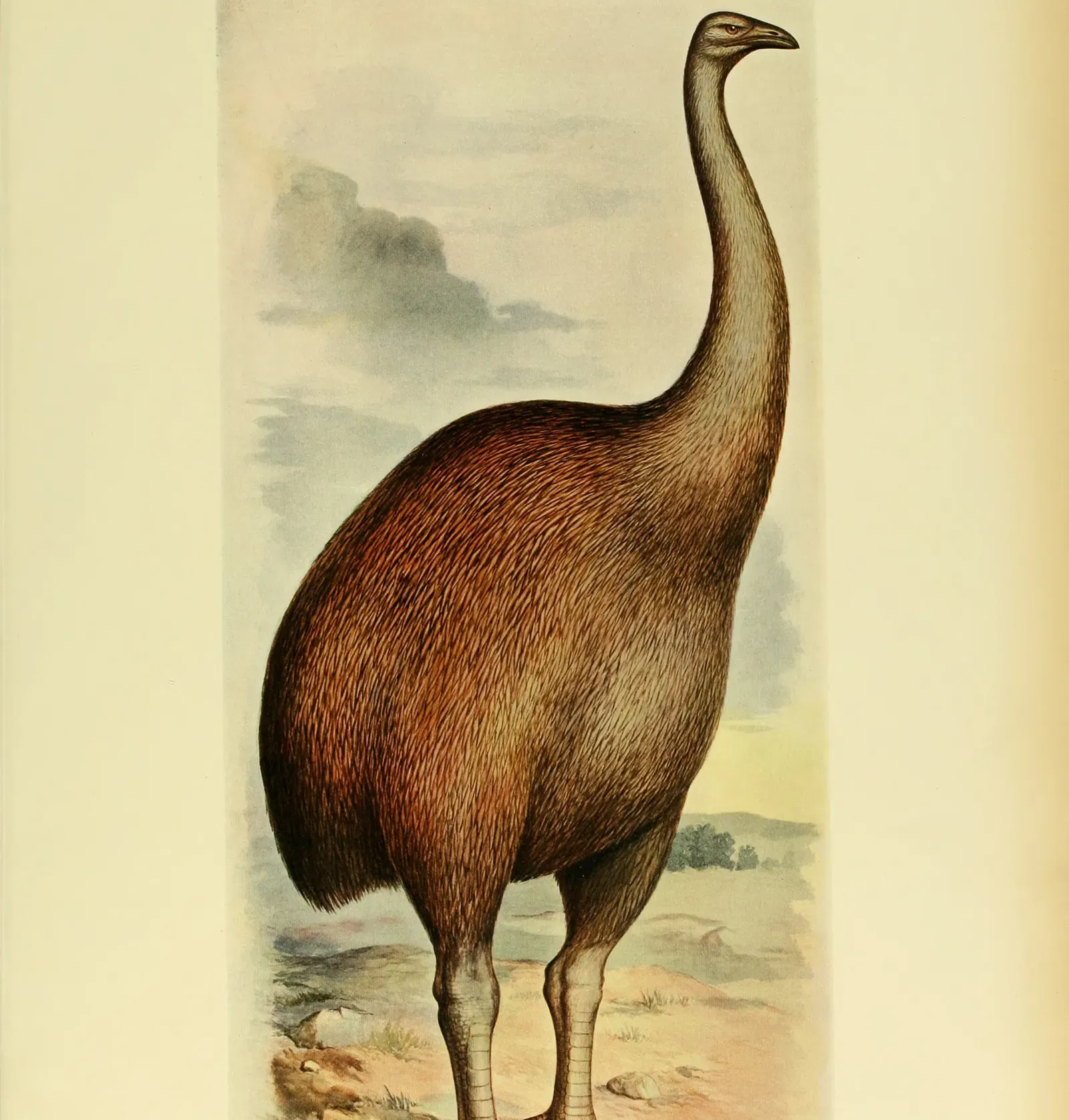
The popular version of this story is brutal and simple: Polynesian settlers arrived in New Zealand, hunted the giant flightless moa relentlessly, and wiped them out almost overnight. It’s a satisfying story about humans as instant super-predators. It’s also apparently too simple.
Refined radiocarbon dating of moa bones, eggshells, and charcoal from ancient fires paints a slower, patchier picture. In remote regions, moa appear to persist while populations near major settlements vanish much faster.
At a Glance
- First human arrival in New Zealand: roughly 13th century CE
- Many moa likely survived into the 15th century or later
This doesn’t let early hunters off the hook – humans are still clearly the driving force behind moa extinction. But it does mean the tidy “blink-of-an-eye” version was oversimplified. Moa and humans coexisted longer, and more messily, than the shock-value story usually admits.
#6 – Madagascar’s Elephant Birds in a World With Written History
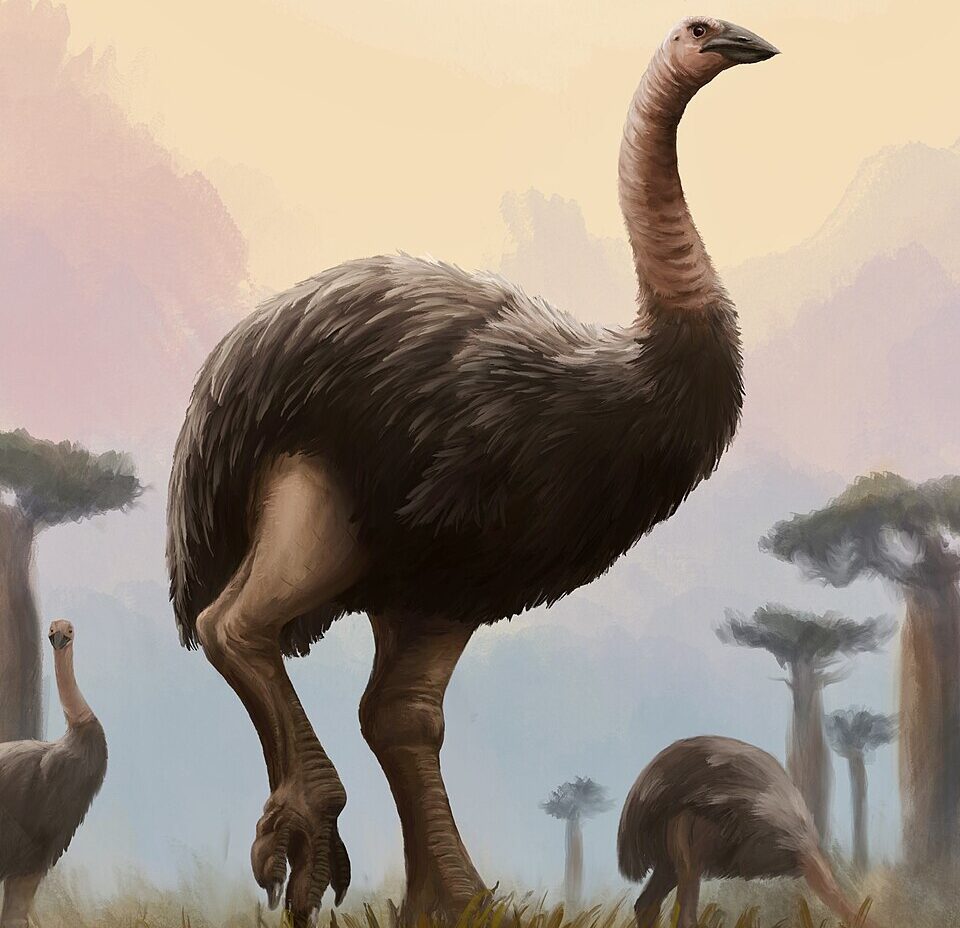
Here’s an uncomfortable one: Madagascar’s legendary elephant birds – massive, flightless, ostrich-like giants – were probably still alive while Europe already had universities and printed books. For years their extinction was vaguely stamped at around 1,000 CE, mostly as a placeholder.
Newer radiocarbon studies on eggshells and bones suggest some populations may have survived until the 13th to 17th centuries. That’s shockingly recent for an animal that size, and it means these birds overlapped with Malagasy kingdoms and active Indian Ocean trade networks.
Some historians even suspect medieval travelers’ tales of gigantic “roc” birds weren’t pure fantasy at all – just garbled secondhand accounts of real elephant birds. For centuries, scientists treated them as “ancient” by default simply because nobody had bothered to pin down a hard end date.
Updated dating now shows a slow decline tracking directly with human land use – forest burning, farming, hunting. Instead of a mysterious prehistoric disappearance, elephant birds look like relatively modern casualties of human expansion, closer in time to the fall of Constantinople than to the dinosaurs.
#5 – Giant Lemurs That Were Practically Our Contemporaries
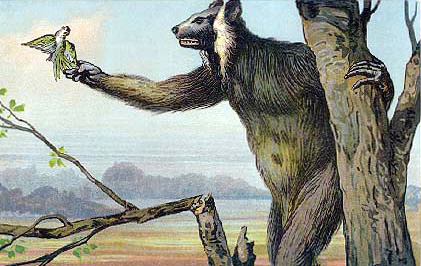
If “lemur” makes you picture something small and adorable, Madagascar’s extinct megafauna will rearrange your mental image entirely. The island once hosted lemurs the size of large dogs – and some of them were almost certainly still alive while medieval cathedrals were already standing in Europe.
Radiocarbon dates from cave deposits and marsh sediments show species like Palaeopropithecus and Megaladapis persisting until roughly 1,000 to 500 years ago. That places them squarely alongside growing human settlement, agriculture, and landscape burning – not in some untouched prehistoric bubble.
In other words, these giant primates didn’t vanish in deep prehistory. They went extinct in what ecologists bluntly call “near time” – recent enough to feel almost personal.
This reframes how scientists talk about Madagascar’s biodiversity collapse entirely. It wasn’t a static museum of ancient relics; it was a living ecosystem where human arrival triggered a cascade of losses that dragged on for centuries, quietly claiming animals that very nearly shared our written history before finally disappearing for good.
#4 – Thylacine: The “Extinct” Tasmanian Tiger People Still Report Seeing
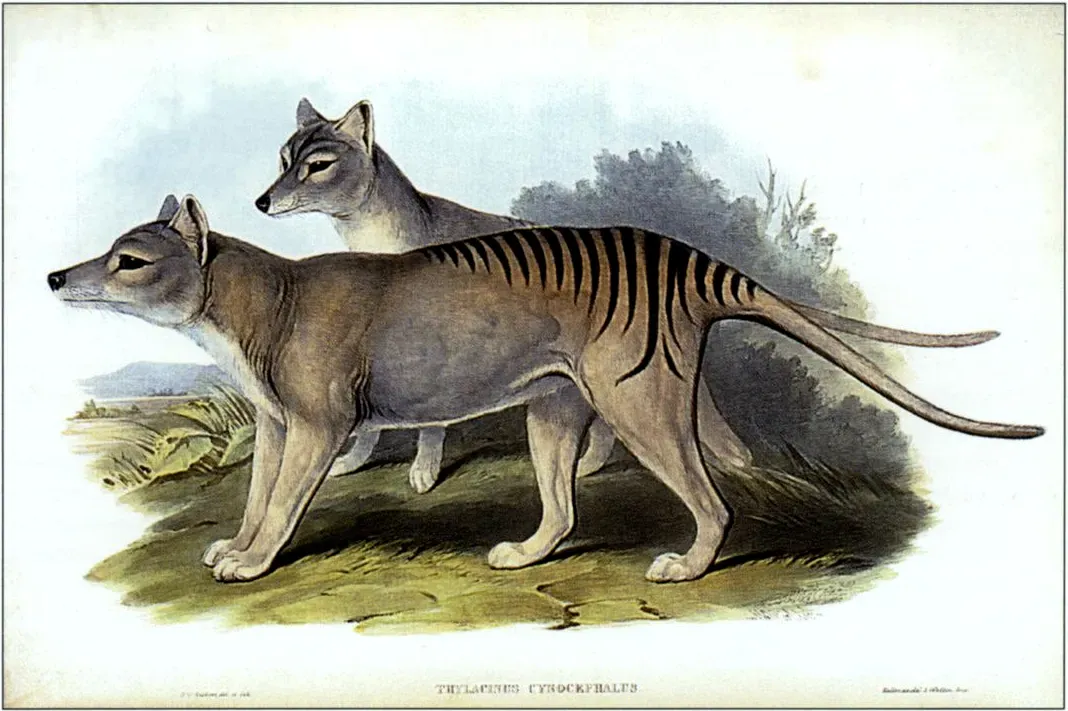
The Tasmanian tiger has an oddly precise extinction date: 1936, the year the last known captive thylacine died in a Hobart zoo. But here’s the twist that keeps the debate alive – statistical analyses of decades of sighting reports suggest wild thylacines may have survived long after that.
Researchers have treated thousands of reports from farmers, hunters, and park rangers as raw data points. Once you filter out obvious hoaxes and shaky accounts, a pattern emerges: credible sightings in remote, rarely-visited Tasmanian forests stay surprisingly strong through the mid-20th century before finally tapering off. Some models even suggest plausible survival into the 1950s or 1960s.
Most experts agree the thylacine is functionally gone today, and modern “I saw one on my hike” claims are almost certainly mistaken identifications of other animals.
But the scientific point still stands: the official 1936 date only marks when we lost the last one in a cage, not when the final wild thylacine actually drew its last breath. It’s become a case study in how large predators can quietly persist in the shadows long after the paperwork declares them gone.
#3 – The Baiji River Dolphin: Extinct on Paper, Possibly Surviving in Murky Water
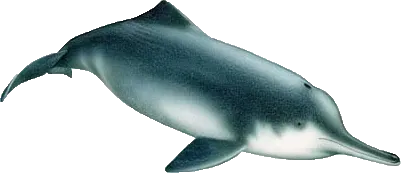
The Baiji, a freshwater dolphin native to China’s Yangtze River, was declared “functionally extinct” in the 2000s after exhaustive surveys turned up absolutely nothing. Most people took that as final, game over. But the murky reality of river surveys leaves an unsettling gap.
Fishermen and river workers have periodically reported strange dolphins that don’t quite match the common finless porpoise. A handful of brief videos and sonar traces have stirred cautious, unresolved discussion among conservation biologists – nobody has produced hard proof, but nobody has fully closed the door either.
What’s actually in dispute isn’t whether the Baiji is in dire trouble; everyone agrees it is. It’s the timing. Large, murky, heavily-trafficked rivers are brutally hard to survey with total certainty, especially in politically complicated regions.
If a few Baiji survived in tiny, invisible numbers after the official verdict, then our “extinction date” is really just an artifact of when the last big search ran out of funding – not when the last dolphin actually died. It’s a genuinely chilling thought: some species may fade out for years after we’ve already given up looking.
#2 – Coelacanth: The “Living Fossil” That Obliterated Its Extinction Date
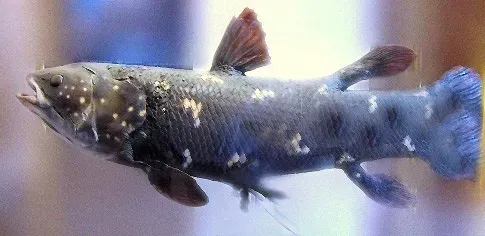
For decades, textbooks stated with total confidence that coelacanths – lobe-finned fish tied to the ancient lineage that eventually crawled onto land – died out 65 million years ago alongside the dinosaurs. Then in 1938, a South African trawler hauled one up alive, and paleontology had to eat its words in front of the whole world.
This wasn’t a distant cousin or a lookalike. It was an actual coelacanth, astonishingly close to its fossil ancestors. Later expeditions found thriving populations near the Comoros Islands, Indonesia, and elsewhere in the western Indian Ocean.
Why It Stands Out
- Believed extinct for roughly 65 million years before its rediscovery
- First living specimen caught off South Africa in 1938
- Thriving populations later confirmed near the Comoros Islands and Indonesia
- Now considered the textbook example of a “Lazarus taxon”
Genetic studies now confirm these fish have been quietly evolving the entire time, hidden in deep, dark waters that almost nobody had bothered to search. They weren’t “frozen in time” – we were simply wrong, for 65 million years, about where to look.
Coelacanths are now the textbook example of what scientists call “Lazarus taxa”: species that vanish from the fossil record for tens of millions of years, then reappear alive and well. Their existence doesn’t mean every extinct species is secretly out there somewhere – but it proves our confidence about deep-time extinction dates has serious blind spots, especially for creatures hiding in places we’ve barely explored.
#1 – Non-Avian Dinosaurs Surviving Past the Impact? The Most Controversial Claim of All
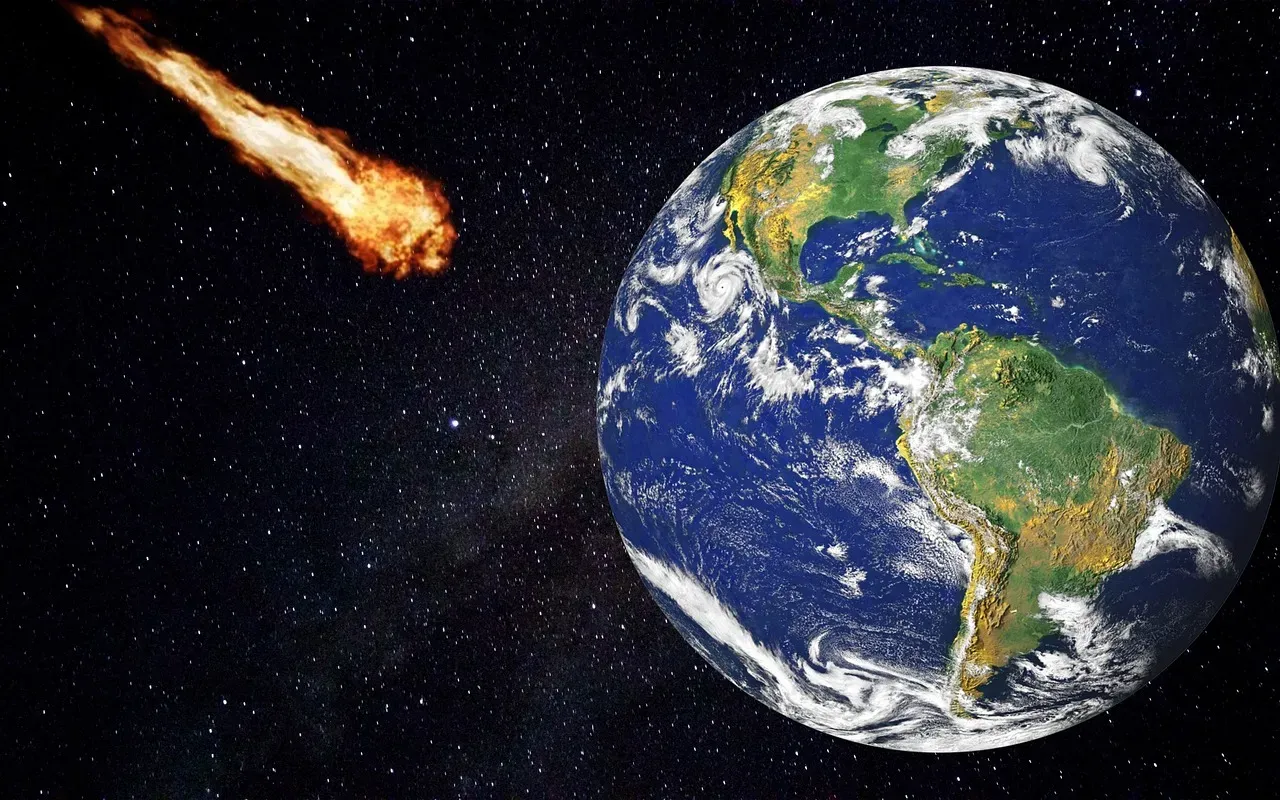
Here’s where the science gets genuinely divisive. Most researchers agree non-avian dinosaurs went extinct about 66 million years ago after a massive asteroid impact wiped out their world in a geological instant. But a handful of controversial fossil finds have quietly reopened a question nobody expected to still be debating.
Certain bone fragments and isolated teeth, originally assumed to be older, have been re-examined and appear to sit slightly above the classic K-Pg boundary layer at a few specific sites. If those placements hold up – and that’s a genuinely huge “if” – it would suggest scattered dinosaur populations limped on locally for thousands, maybe tens of thousands, of years after the main extinction event.
Most paleontologists argue these fossils are “reworked” – physically washed out of older rock layers and redeposited into younger ones, creating a false impression of survival. But the fact that this debate exists at all says something important about how fragile even our most famous timelines really are.
To be absolutely clear: there is no credible evidence that large dinosaurs survived into human history, or even meaningfully into the Cenozoic. Birds remain the only dinosaurs we share the planet with. But the possibility of a drawn-out, regionally patchy ending – instead of one perfectly instantaneous extinction – forces paleontologists to confront an uncomfortable truth: even our biggest, most famous extinction event is built on incomplete rock and imperfect data, not omniscient knowledge.
The Uncomfortable Truth About “Extinct”
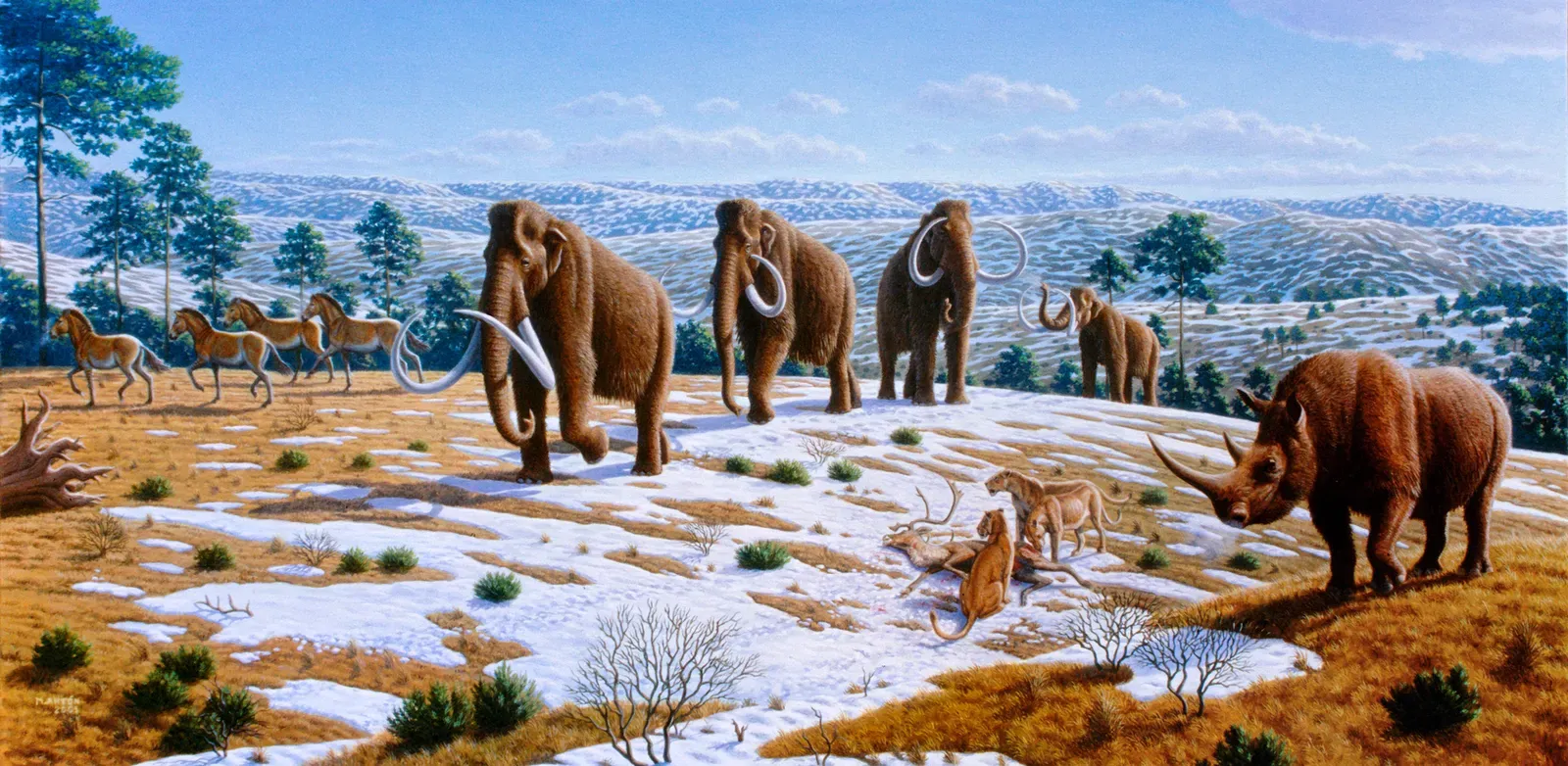
Line these thirteen stories up and a blunt pattern emerges: extinction isn’t a clean line in the sand. It’s a messy, often invisible fade-out, and our “official” dates are far more guesswork than most people ever realize.
Mammoths wandered the Arctic while pyramids rose. Giant lemurs died out within the last thousand years. Tasmanian tigers and river dolphins may have lingered off the scientific radar for decades after we officially gave up on them. Each case quietly pushes the survival timeline forward and exposes how often we’ve called time of death too early.
Here’s my honest take: the uncomfortable implication isn’t just historical curiosity. Some species written off as gone today may still be clinging to existence in tiny, unseen numbers right now, while animals we assume are perfectly safe could already be closer to the edge than their paperwork admits. Science keeps getting better at correcting these mistakes after the fact – but it’s still playing catch-up with a reality that doesn’t wait around for us to notice.
So which supposed “extinct” animal do you secretly think might still be out there – and which of these revised timelines caught you the most off guard?