
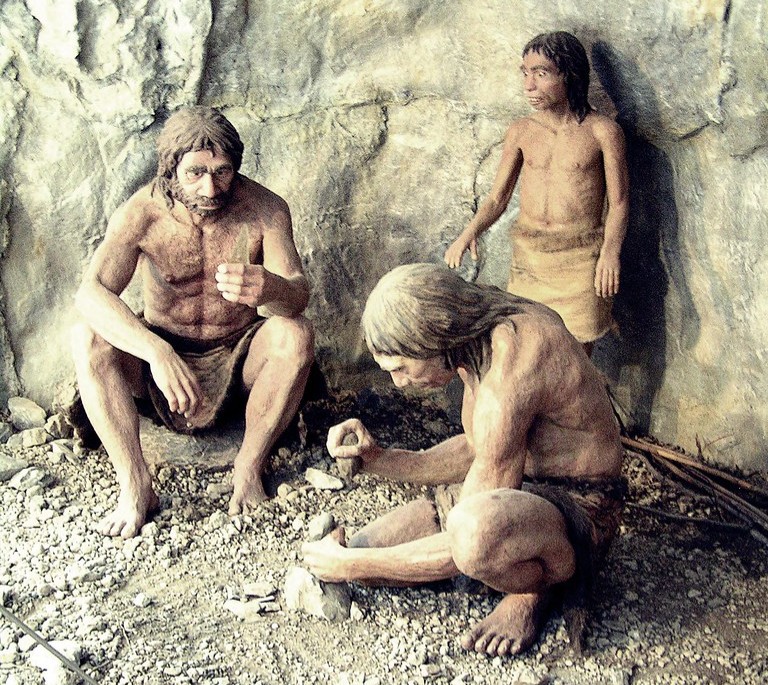
Picture the “caveman” in your head right now. Hunched over, hairy, scowling, dragging a club through the mud with a grunt. That image feels like settled fact because you’ve seen it everywhere – textbooks, cartoons, museum dioramas, Halloween costumes.
Here’s the part that stings a little: almost none of that was ever proven by bone. It was sketched, sculpted, and narrated by people holding a fossil fragment and a deadline, who filled in the rest with cultural instinct instead of data.
Paleoanthropologists aren’t hiding this anymore. Better dating methods, ancient DNA, and decades of new fossil finds have forced a quiet reckoning, and researchers are finally saying out loud what used to stay in academic footnotes: several “classic” early-human traits were basically invented on the drawing board. Here are the 14 that get walked back the hardest, starting with the one plastered across every caveman movie poster ever made.
#14 – The Cartoon “Caveman Brow Ridge”
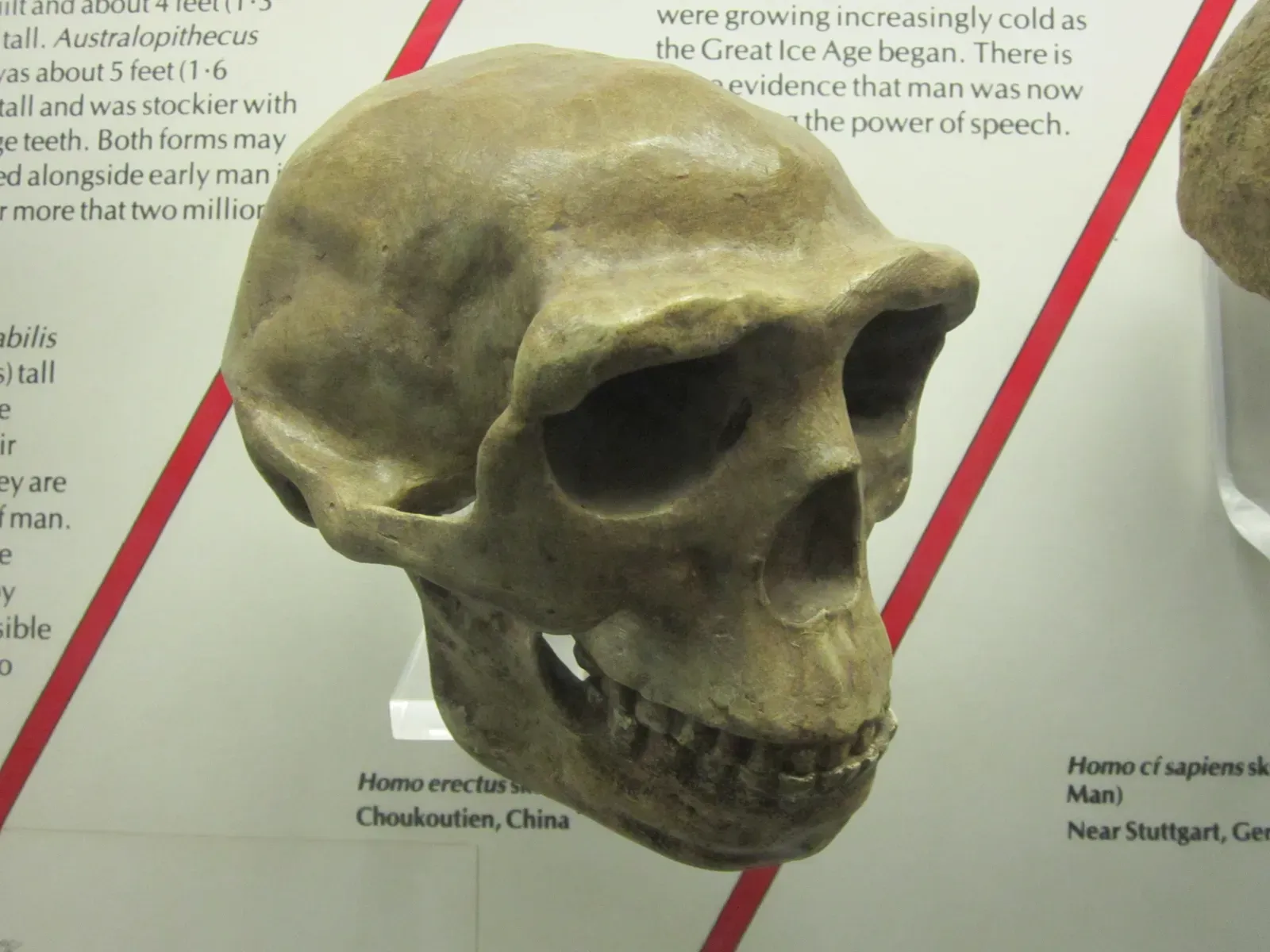
For decades, museum displays leaned on one visual shortcut: huge, shadow-casting brow ridges that made every early human look like it was permanently glaring at you. It became the pop-culture default. The problem is that many reconstructions quietly exaggerated those ridges far beyond what the actual bones show.
The fossil record does include pronounced brow ridges in some species, like Homo erectus and certain Neanderthals, but the range is wide and overlaps with plenty of robust modern humans walking around today. Artists, under pressure to “make it look ancient,” often deepened the shadows over the eyes until the face read as brutish rather than human.
Here’s the detail that rarely makes it into the textbook caption: soft-tissue thickness over the brow is mostly guesswork, because cartilage, fat, and skin don’t fossilize. So while the underlying bone may project outward, we genuinely don’t know how prominent it looked under living skin.
Some modern populations even have relatively strong brow ridges without looking remotely “caveman.” That nuance got flattened into one caricatured template, and newer reconstructions are only now starting to tone the forehead drama back down.
#13 – The Permanently Bent “Ape-Man” Posture
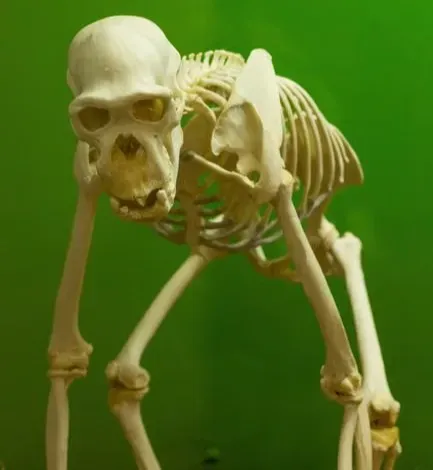
Those famous textbook images of our ancestors slowly straightening from a hunched ape into an upright human? Experts now admit that iconic “march of progress” posture was as much storytelling as science. It made a clean narrative – bent backs for simple brains, straight backs for modern ones – but reality was never that tidy.
Early reconstructions of Neanderthals showed them stooped and awkward for a strange reason: one of the first skeletons ever studied happened to have severe arthritis. An arthritic individual accidentally became the global template for how an entire species stood, walked, and hunted.
Fast Facts
- The famous “Old Man” skeleton was discovered by three Catholic priests in a French cave, an event that took place on August 3, 1908.
- French paleontologist Marcellin Boule began studying the bones in 1908, and his defining publications appeared between 1911 and 1913.
- The individual was elderly and had lost most of his teeth to bone resorption and advanced arthritis.
- Boule’s stooped, brutish reconstruction went on to shape popular perceptions of Neanderthals for more than thirty years.
Later, more complete and better-preserved skeletons told a very different story. Neanderthals and several other archaic humans were fully capable of upright, efficient bipedalism, with vertebral curves, pelvis shape, and limb morphology that point to surprisingly good posture.
The slouching “ape-man” pose was dramatically oversold because it signaled “primitive” at a single glance. Yet pop culture still clings to the half-crouched, knuckle-dragging silhouette long after the science moved on.
#12 – Wild Body Hair Coats On Almost Every Species
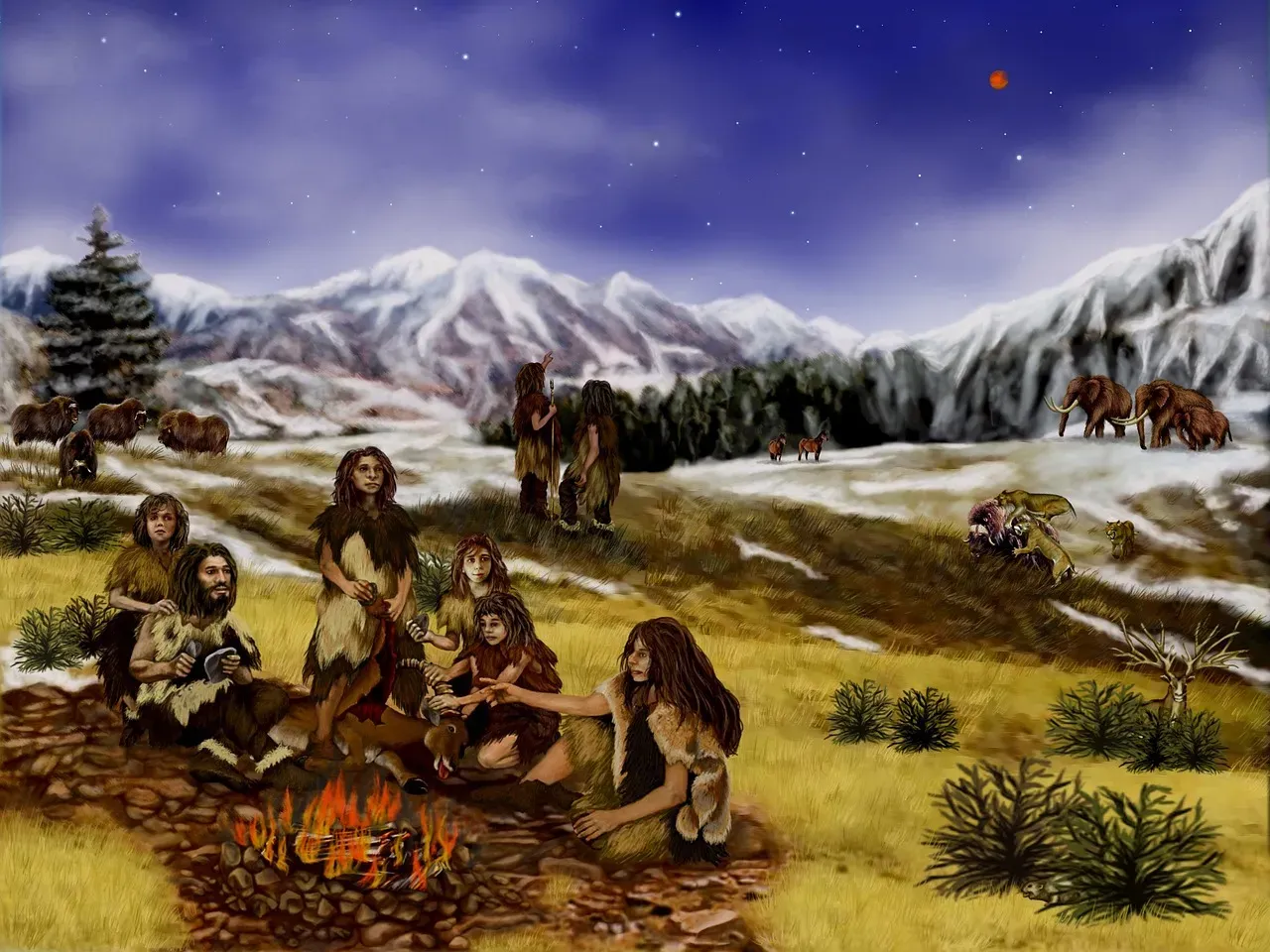
If you grew up thinking early humans were basically walking fur rugs, you’re not alone. Illustration after illustration wrapped hominins in thick body hair, even when the bones said absolutely nothing about it, because there is no direct fossil evidence for exactly how hairy most early human species were.
Hair almost never fossilizes, so researchers have to infer patterns from indirect clues: skin pores, parasite genetics, and thermoregulation needs. Some scientists argue that a major reduction in body hair happened earlier than the art suggests, tied to sweating and long-distance running in brutally hot environments.
Others point out that different populations, climates, and even sexes could have carried very different hair patterns. Despite that uncertainty, artists routinely defaulted to “max hair” for anything older than Homo sapiens, simply because it reads as primitive in a single glance.
The irony is almost funny: some reconstructions of Homo erectus, a species that was likely a capable endurance runner, still show it cloaked in thick fur that would have been a serious liability under the African sun.
#11 – The Oversimplified “Caveman Skin Tone”
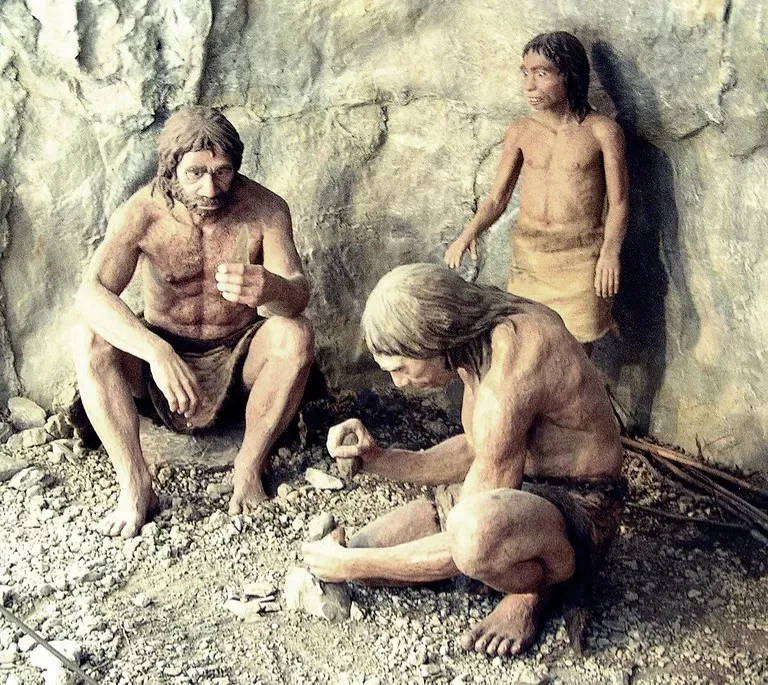
Here’s the uncomfortable part nobody wanted to say out loud for a long time: early-hominin skin color in many reconstructions was driven more by cultural bias and aesthetics than by hard data. Fossils don’t preserve pigment, and we have extremely limited direct genetic data on skin-tone genes for most ancient populations.
Yet for decades, European museums routinely depicted early northern groups as pale and early African groups as very dark, often baking in stark, modern racial assumptions that had nothing to do with the actual evidence available.
What genetics and evolutionary modeling actually show is far messier. Some early Eurasian populations were likely much darker than the pale “stone age farmer” mannequins still standing in display cases, while some African populations may have shown a range of tones across different regions and time periods.
Climate, diet, UV exposure, and population mixing make this extremely complex, and many “confident” skin tones in displays were chosen to fit a narrative, or to avoid controversy, rather than to reflect clear evidence. More curators are now labeling tones as provisional instead of definitive.
#10 – The Stereotyped “Heavy Jaw, Huge Teeth” Look
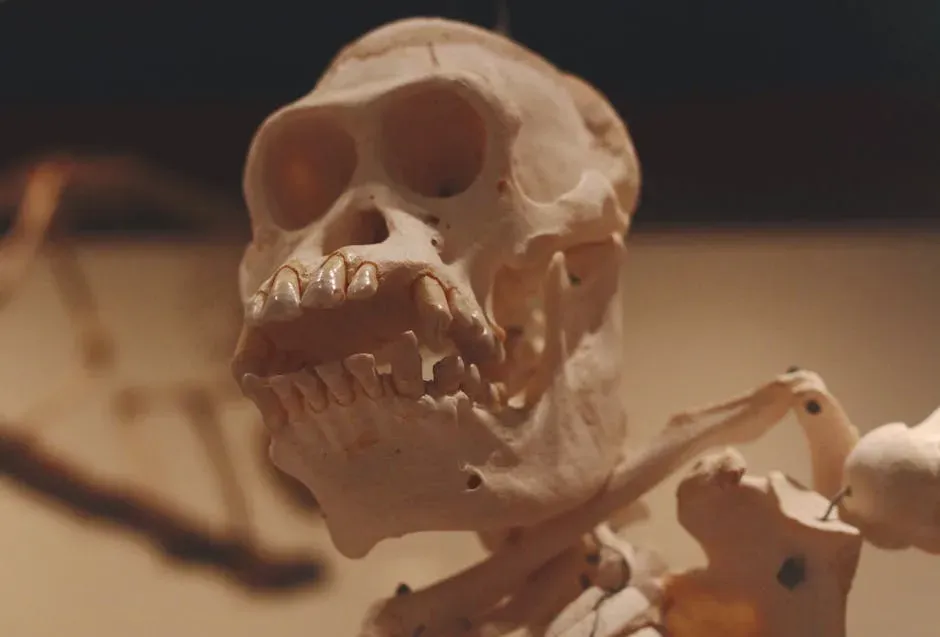
Most people picture early humans with lantern jaws and oversized teeth jutting out like a cartoon villain. It’s true that some species had more robust jaws and larger molars than the average modern human, but a lot of the extreme jawlines in popular art were pumped up well beyond what the fossils alone justify.
Why? Because a heavy jaw is such fast visual shorthand for “primitive” that it became almost mandatory in reconstructions, regardless of what the actual fragments showed.
In reality, jaw and tooth size vary enormously across species and even within a single species. Some early Homo individuals had surprisingly gracile faces with modest teeth, while others were robust, but rarely to the grotesque degree popular art implies.
It doesn’t help that entire faces are often reconstructed from fragmentary skulls with missing or distorted jaws. Artists fill in the blanks, and curators frequently favored the most striking “cave-monster” version to capture attention, quietly reinforcing the myth that primitive means brutal.
#9 – “Men Hunted, Women Gathered” As If Bones Proved It
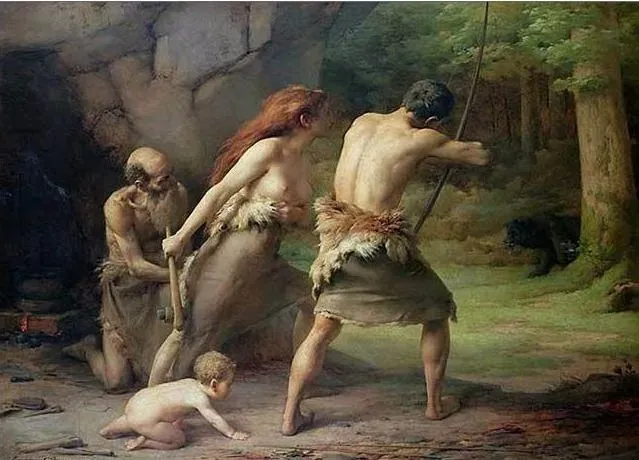
One of the most stubborn traits ever ascribed to early humans isn’t about bones at all; it’s about behavior. For decades, textbooks confidently repeated the idea that males were the hunters while females stayed behind to gather and mind the children.
The fossil record, by itself, does not clearly support that rigid division of labor. Stone tools and animal bones simply don’t come with name tags attached.
Quick Compare
- Old assumption: Big-game hunting was strictly male work, while women stayed close to camp gathering plants.
- New evidence: At the Wilamaya Patjxa site in Peru, archaeologists uncovered a roughly 9,000-year-old adult skeleton buried with a large-mammal hunting toolkit that included several projectile points.
- Old assumption: Hunting gear in a grave automatically signaled a male occupant.
- New evidence: Osteological analysis showed that hunter belonged to a woman, and researchers concluded the pattern fit what they called nongendered labor practices among early hunter-gatherer females who hunted big game.
Recent analyses of burial goods, bone wear patterns, and even isotopic signatures suggest some women likely participated in big-game hunting or other high-risk tasks, while some men may have handled more gathering or childcare than the traditional story allowed.
Yet classic reconstructions show muscular male hunters gripping spears next to passive, smaller women tending fires, as if that split were a discovered fact instead of a projection of twentieth-century gender norms onto ancient bones.
#8 – The Hyper-Muscular, “Gym Body” Neanderthal
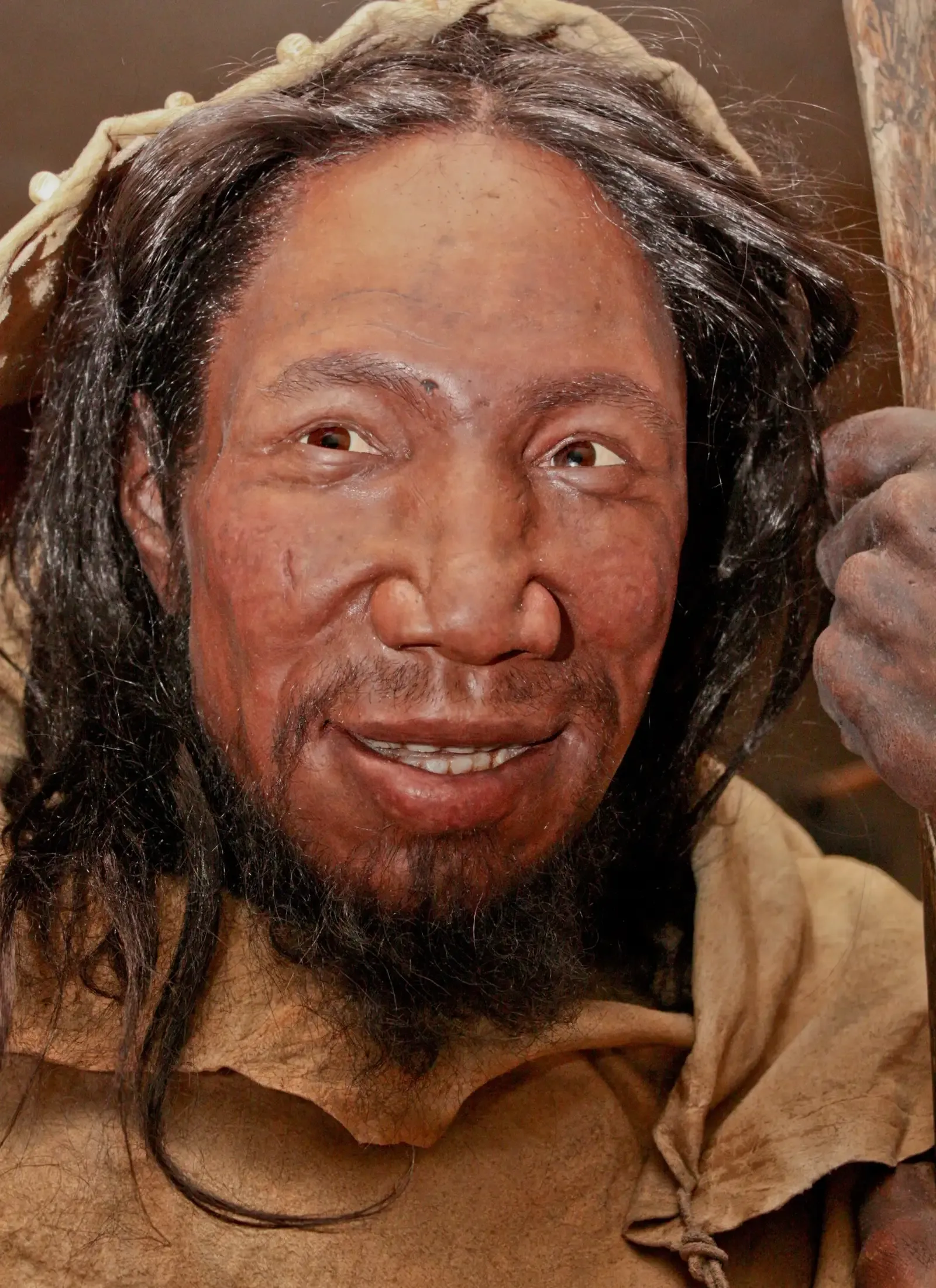
Modern depictions often turn Neanderthals into powerlifters carrying stone tools, hulking and shredded like a comic-book villain. Yes, the bones genuinely show robust builds, thick cortical bone, broad chests, and powerful limb attachments. But turning every Neanderthal into a Marvel character was a leap from data straight into fantasy.
Muscle doesn’t fossilize. Researchers infer it from muscle attachment sites and biomechanics, and that can tell you a lot about strength potential, but nothing about exact volume, definition, or body fat.
Environmental factors like diet quality, disease load, and seasonal food scarcity would have caused huge variation in build across individuals and generations. Many were likely lean and wiry rather than cartoonishly jacked, while others may have carried more body fat in cold climates purely as insulation.
Museum art and documentaries still prefer exaggerated musculature and veiny, ripped physiques because it looks dramatic on a poster. It also quietly feeds the old narrative of Neanderthals as beasts, rather than close relatives who might have looked surprisingly ordinary in a coat and jeans.
#7 – The “Brutish, Angry” Facial Expressions
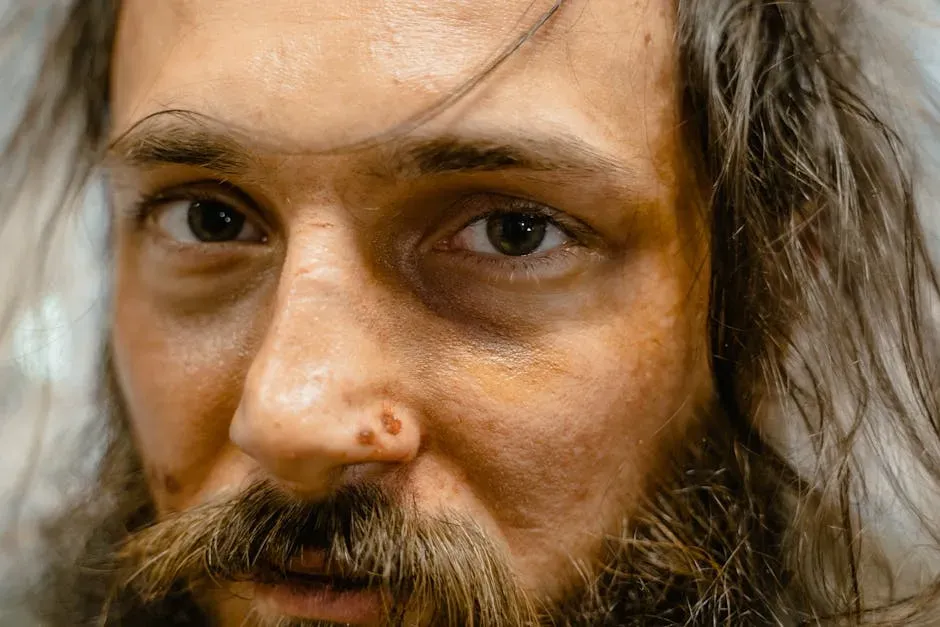
Look closely at older museum dioramas or textbook art and you’ll notice something strange: early humans almost never look calm. They’re snarling, grimacing, baring teeth, or glaring out from under lowered brows in nearly every frame.
Those expressions were pure artistic license, not fossil-based science. Skull morphology can hint at resting face structure, but it cannot tell you the default emotional expression of an entire species.
That choice was never neutral. Painting them as perpetually angry made early humans look more animalistic and less emotionally complex than modern people, even though the same facial muscles that let us smile and frown likely existed in many late hominins.
These were species that had complex social lives, sometimes buried their dead, and may have cared for the injured and elderly, all behaviors that imply rich emotional worlds. Yet dioramas show them mid-scream, because “gentle, thoughtful Neanderthal” simply doesn’t sell as many tickets.
#6 – Perfectly Clean Species Boundaries In “Evolution Charts”
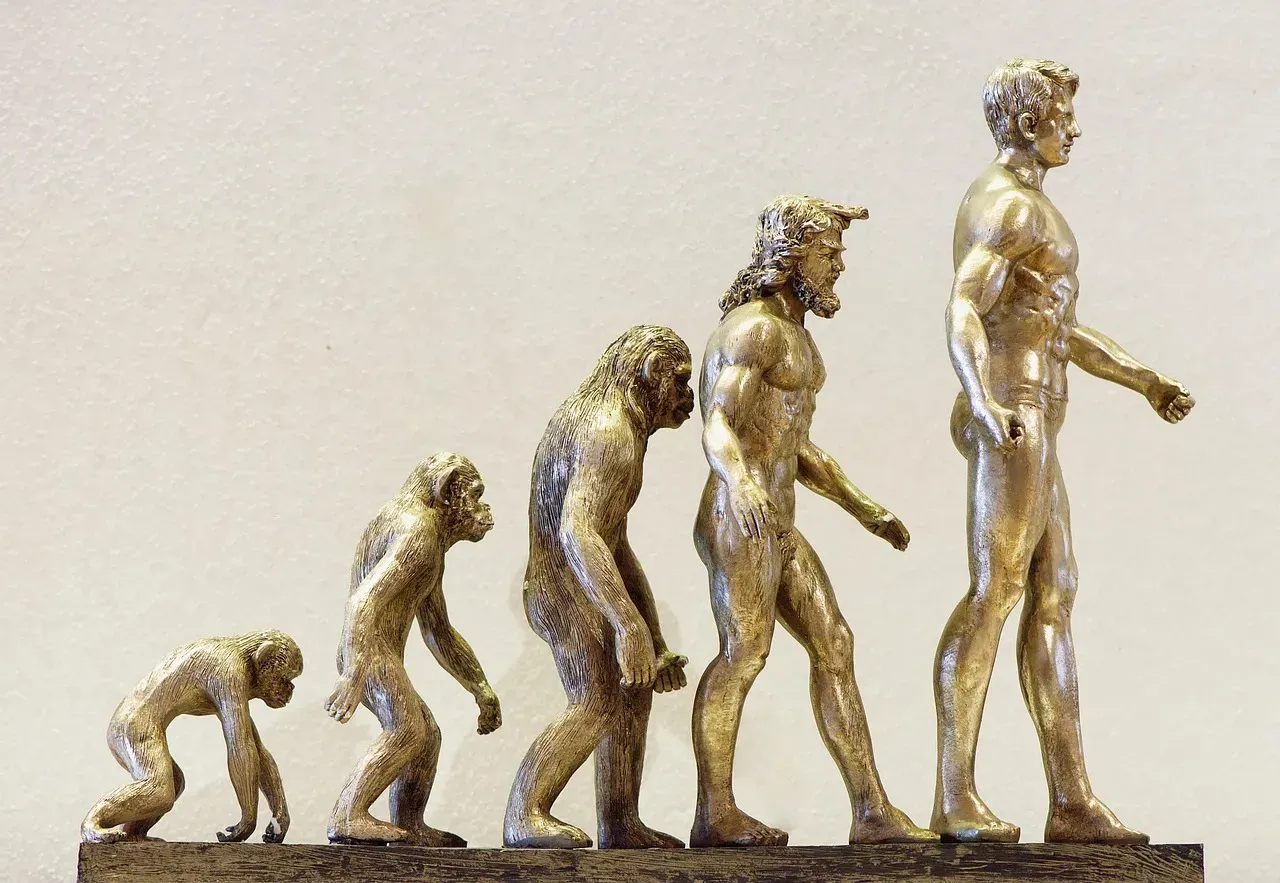
Those neat evolutionary trees and “march of progress” posters give the impression that each early human species had a fixed look and a perfectly distinct set of traits. Real populations show overlap, hybridization, and messy variation that many trait diagrams smoothed away entirely.
Features like cranial capacity, brow prominence, or chin shape don’t flip like a light switch from one species to the next. But for decades, artists and authors presented tidy sequences: small brain plus big jaw equals older, big brain plus small jaw equals newer.
Uncertain fossils that didn’t fit the pattern were often downplayed or quietly left out. Hybrids and regional variants were squeezed into whichever box looked best on the page, creating razor-sharp boundaries that experts themselves never actually saw when handling real bones.
Today, more scientists openly describe the human family tree as “bushy” rather than linear, but most people still picture a clean ladder because the old charts were simply so visually satisfying.
#5 – The “Lonely Hunter” Nuclear Family Campfire
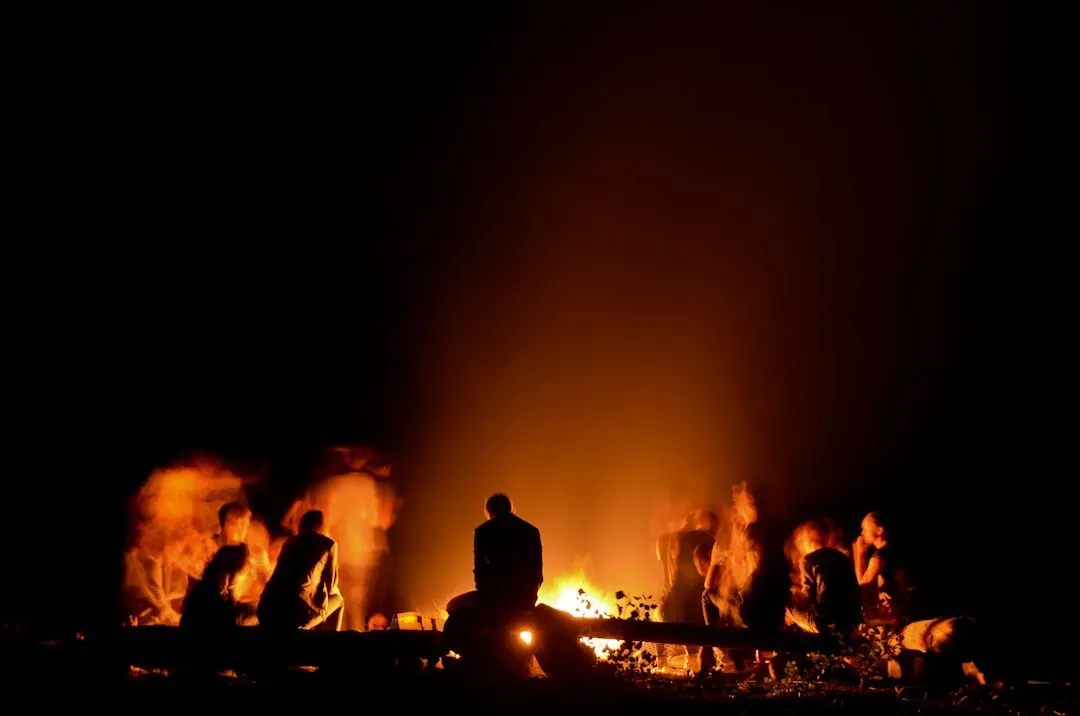
Another trait projected backward with almost zero direct evidence: the idea that early humans lived in small, nuclear families, essentially mom, dad, and a couple of kids, clustered around one isolated campfire.
Archaeological sites more often suggest fluid, networked groups than classic suburban-family units. Hearths, shared tool caches, and overlapping occupation layers point to repeated gatherings and much wider social webs than a single isolated household.
Yet in art and children’s books, we see one stoic male, one nurturing female, two or three children, and maybe a wise elder, as if archaeologists had simply dug up a stone-age census form. That image reflected mid-twentieth-century Western family ideals far more than actual evidence.
Kinship patterns could have been far more flexible, with shared childcare, multiple related adults, and shifting group compositions over time. Some researchers argue the real success of Homo sapiens is tied to broad cooperative networks, not isolated little family units huddled alone in the dark.
#4 – Exaggerated “Small Brains, Big Stupidity”
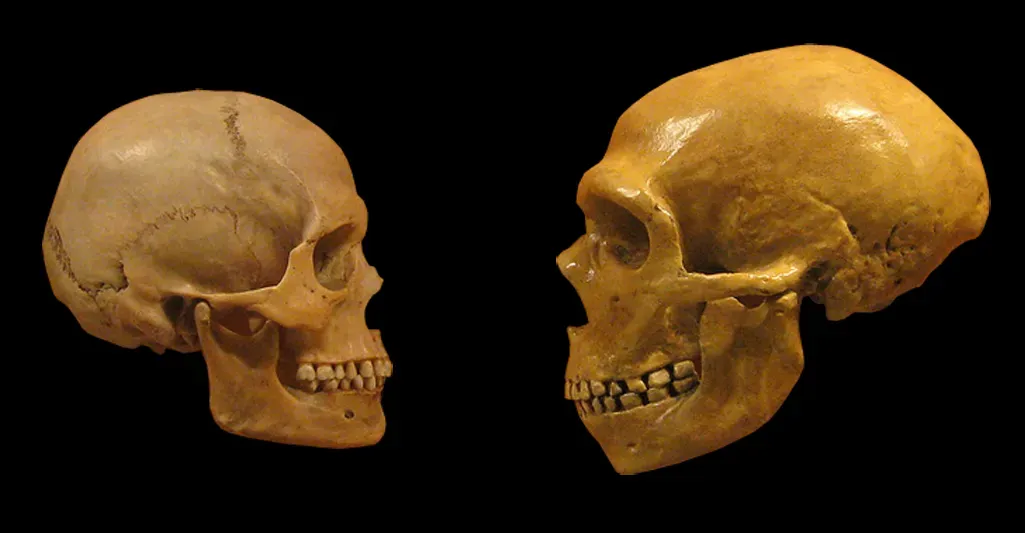
Cranial capacity differences between species are real, but what they actually mean has been wildly oversimplified for generations. Older literature treated brain volume almost like a direct IQ score: smaller meant primitive, larger meant smart. That leap from cubic centimeters to intelligence was far more imaginative than scientific.
Brain organization, connectivity, and internal structure matter enormously, and those details are much harder to infer from a fossilized skull than raw volume is.
Worth Knowing
- Adult Neanderthals typically had a cranial capacity of about 1,500 cubic centimeters, compared to roughly 1,350 cubic centimeters for modern humans.
- One Neanderthal skull found at Amud, Israel measured as much as 1,740 cubic centimeters, well above the modern average.
- Bigger doesn’t automatically mean smarter: cognitive ability depends on factors like body size, neuron density, and how brain regions are connected, not raw volume alone.
- Several species with noticeably smaller brains than modern humans still built complex toolkits and adapted to demanding environments.
We now know some species with smaller brains than modern humans still managed complex toolkits, controlled fire, and navigated genuinely challenging environments. Neanderthal brain sizes even overlap with, and sometimes exceed, those of modern humans, yet they were long portrayed as cognitively inferior by default, complete with blank stares and clumsy movements in every reconstruction.
As evidence of symbolic behavior, pigment use, and possible ritual keeps emerging, the “small brain, dumb creature” narrative looks embarrassingly shallow. Public-facing images just haven’t caught up yet.
#3 – The Constantly “On The Edge Of Survival” Look

Look at older depictions and you’ll notice another pattern: early humans always look half-starved, ragged, and seconds from freezing to death. Torn skins, gaunt faces, and a general air of desperation were the visual norm for decades.
Yet long-term survival over tens of thousands of years actually implies periods of relative abundance, accumulated knowledge, and real stability, not constant crisis. Bones can show malnutrition and stress, sure, but they also show individuals living to old age, healing from serious injuries, and raising multiple children successfully.
Archaeological evidence of constructed shelters, tailored clothing, and well-used storage pits suggests many groups were not living in permanent emergency mode. They had seasons of plenty, shared resources, and traditions that cushioned against bad years.
The “perpetual crisis” aesthetic came more from modern romanticism about harsh prehistory than from balanced evidence. It makes for dramatic storytelling, but it erases the ingenuity that let humans spread across wildly different environments and actually thrive.
#2 – Overconfident Claims About Early Language And Speech
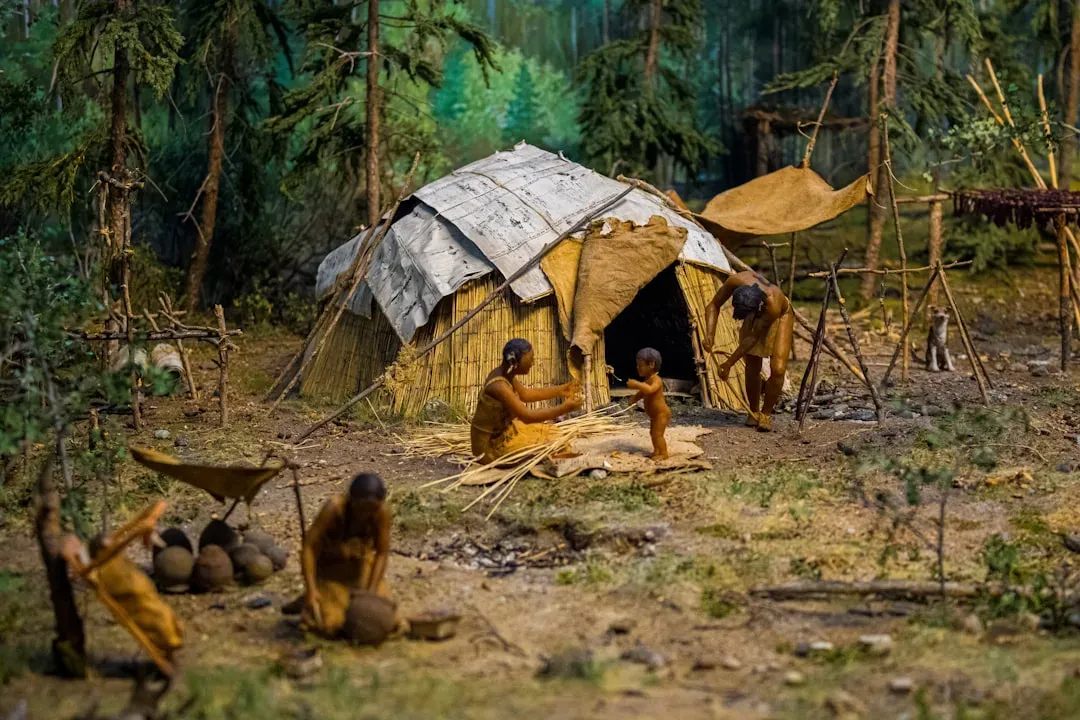
One of the most tempting traits to project backward is language itself. Did Neanderthals argue, joke, tell stories around the fire? For years, reconstructions simply assumed earlier hominins grunted while Homo sapiens suddenly spoke in full sentences, as if a language switch flipped overnight.
The hard evidence for exactly how different their speech abilities were is frustratingly thin. We can study hyoid bones, basicranial shape, neural canals, and genetic markers like FOXP2, but these give rough constraints, not detailed vocabularies or grammar rules.
Despite that, popular accounts have swung wildly, painting Neanderthals as near-mute brutes one decade and fully modern conversationalists the next, often depending on whichever version made the better headline.
Most experts now stress that we’re dealing with probability ranges, not certainties. Many earlier confident claims about “no real language before this species” were essentially educated stories, not ironclad conclusions, and the honest answer looks like gradual, complex communication rather than a simple on-off switch.
#1 – The One “Standard Caveman” Look For All Our Ancestors
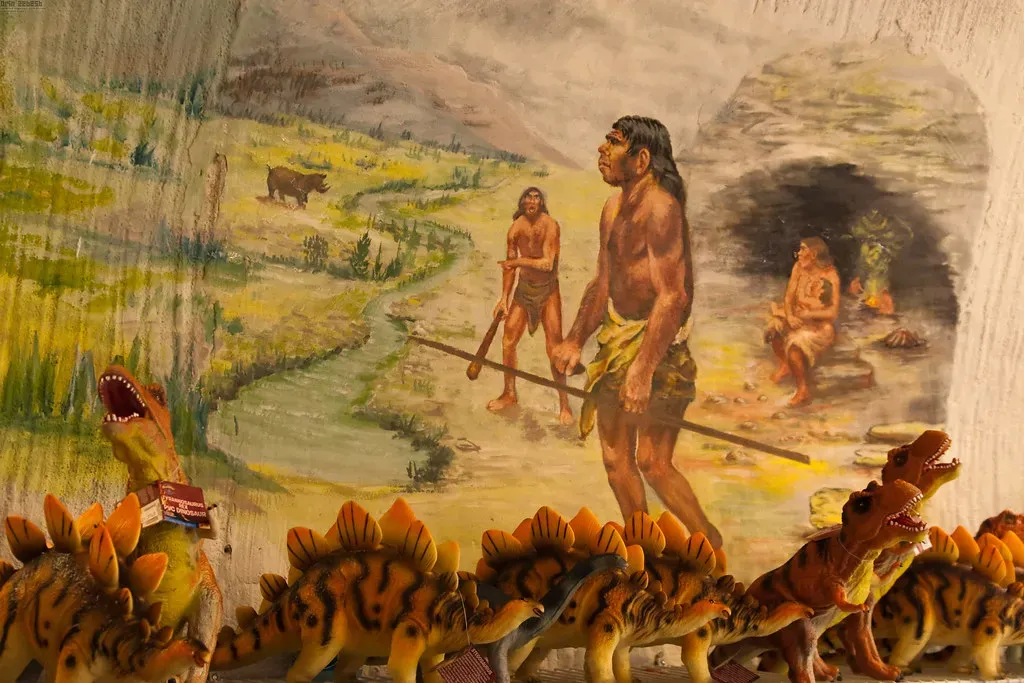
The most misleading trait of all isn’t a single bone feature; it’s the idea that there was ever one standard caveman look. From toy sets to Halloween costumes, we’ve been sold a single template: medium height, barrel-chested, scruffy beard, big brow, fur tunic, club over the shoulder.
That composite character was basically invented by artists and storytellers, then retrofitted onto a wildly diverse fossil record spanning hundreds of thousands of years and multiple distinct species.
At a Glance
- Homo erectus: roughly 1.9 million to 110,000 years ago, generally tall and slender, among the first hominins to range widely beyond Africa.
- Neanderthals: roughly 400,000 to 40,000 years ago, stocky and cold-adapted, centered in Europe and western Asia.
- Denisovans: known mostly from DNA and a handful of fossils, once spread across parts of Asia.
- Homo sapiens: emerging roughly 300,000 years ago, with striking variation in height, build, and features across regions and eras.
Real early humans varied by region, climate, diet, and time period. Some were tall and slim, others short and stocky, some had relatively delicate faces, and many overlapped heavily with the range of variation we still see in living people today.
Yet most public imagery compresses all of that into a single caveman mascot, as if Homo erectus, Neanderthals, Denisovans, and early Homo sapiens all shared one wardrobe department. Paleoartists today are finally pushing back, showing a range of hairstyles, clothing, scars, ornaments, and body types, but the old cartoon persists because it’s just so easy to sell in one glance.
The Bottom Line
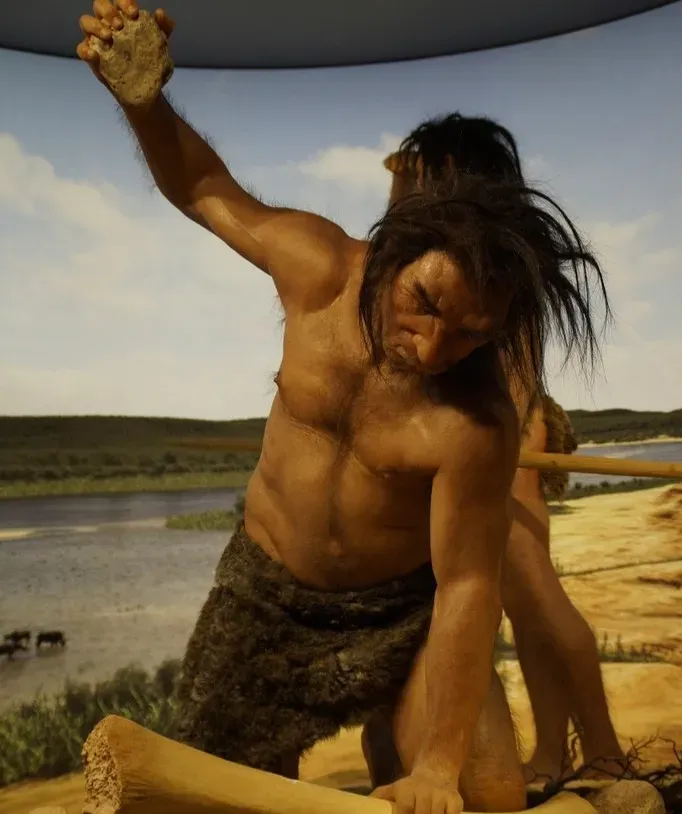
Line these fourteen “traits” up side by side and an uncomfortable pattern emerges: wherever the fossils went silent, imagination stepped in, and culture quietly steered that imagination in a very specific direction.
We didn’t just reconstruct bones. We reconstructed our own fears, biases, and favorite story beats, then bolted them onto skeletons that never asked for any of it. Hyper-browed brutes, silent hunters, passive women, lonely nuclear families, and neat species ladders made for emotionally satisfying narratives, but that’s not the same thing as honest science.
My honest take? None of this makes the researchers who built those old displays villains. It makes them human, filling gaps the same way we all do, with the culture they were standing in. The real correction isn’t outrage, it’s curiosity. So now that you know how much of the “caveman” was guesswork wearing a lab coat, which old fact are you suddenly doubting the most?