
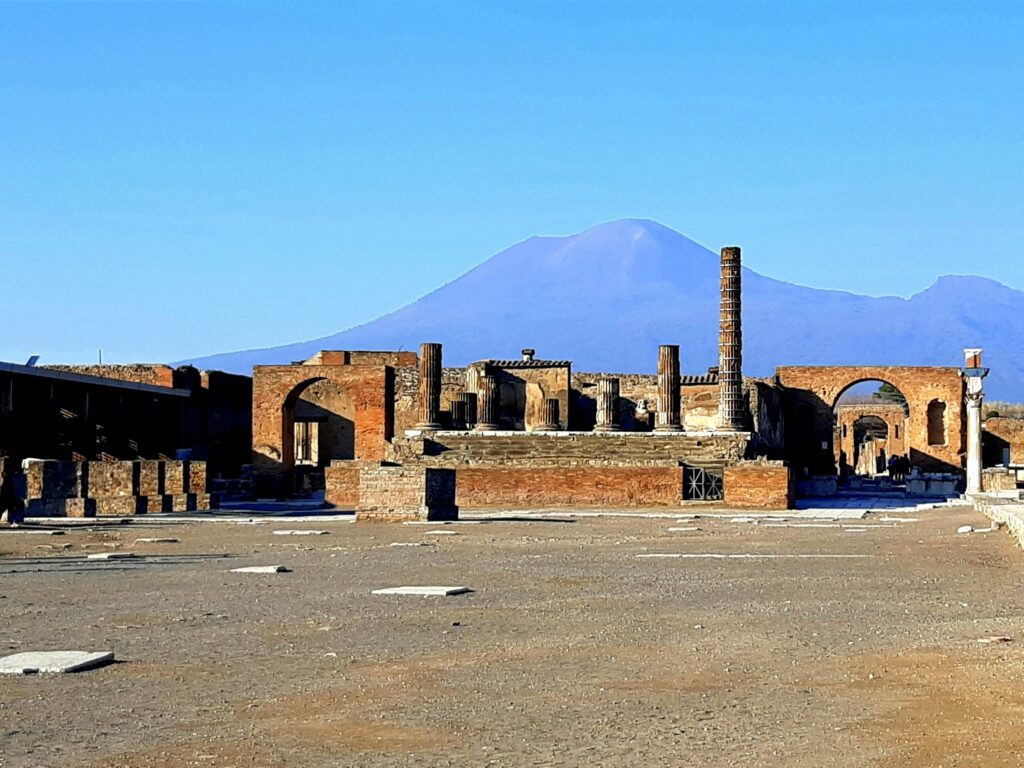
Some of the best stories in archaeology start the same way: with a disaster. A volcano erupts, a river floods, a desert wind howls for centuries – and entire communities vanish under ash, mud, or sand. It sounds like the end of everything, but for archaeologists, that sudden burial is the very thing that keeps a place frozen in time, waiting to be found again.
There’s something almost eerie about standing in a city or village that looks like its people just left yesterday, even though they have been gone for hundreds or thousands of years. These eight sites survived precisely because catastrophe sealed them off from the world. Each one is a time capsule, brutally created but beautifully preserved, giving us rare, intimate snapshots of how people really lived, worked, loved, and died. Let’s dig in – literally and figuratively.
Pompeii, Italy: A Roman City Stopped Mid‑Breath
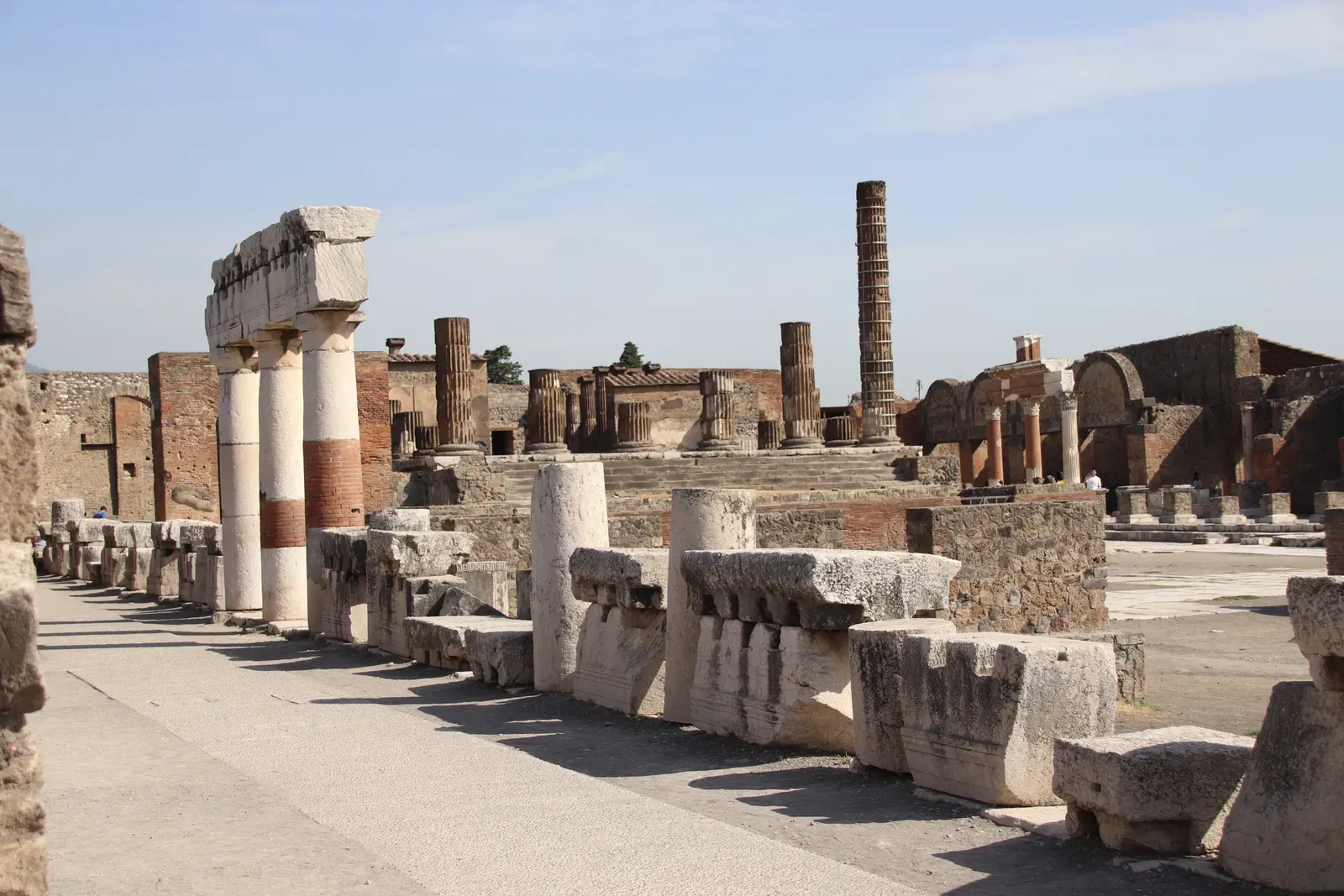
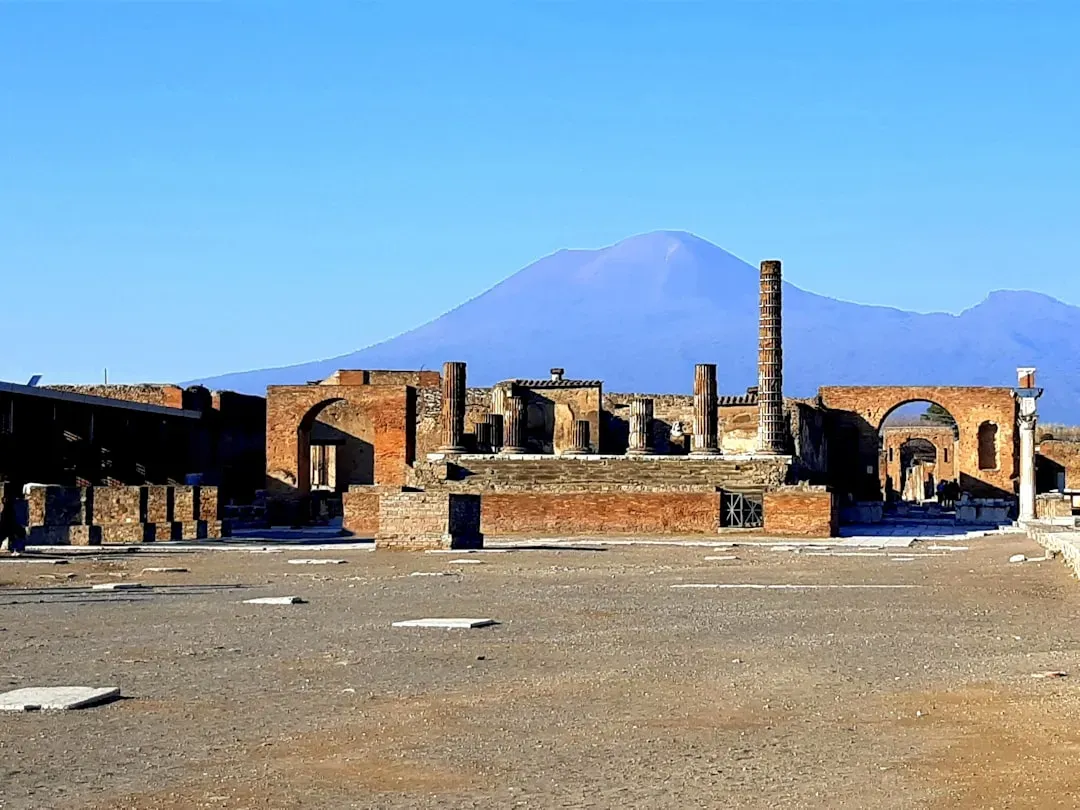
Imagine walking through a city where tables are still set, loaves of bread are still in the oven, and painted walls still glow with color, even though nearly two thousand years have passed. That’s Pompeii, buried in the year 79 of the common era when Mount Vesuvius unleashed a lethal mix of ash, pumice, and toxic gases. The city was smothered in hours, with layers of volcanic material sealing buildings, streets, and even the shapes of people who never got away.
What makes Pompeii so shocking is not just that it was destroyed, but how much of everyday life survived under the ash. Graffiti on the walls preserves jokes, flirtations, and political slogans, while frescoes and mosaics show everything from mythological scenes to wild party moments. You can wander through bars, bakeries, bathhouses, and even a brothel, seeing a Roman town far more vividly than from any marble statue in a museum. It’s hard not to feel a little uneasy as you realize this extraordinary level of preservation came at the cost of immense human tragedy.
Herculaneum, Italy: Carbonized Wood and Luxury on the Bay of Naples
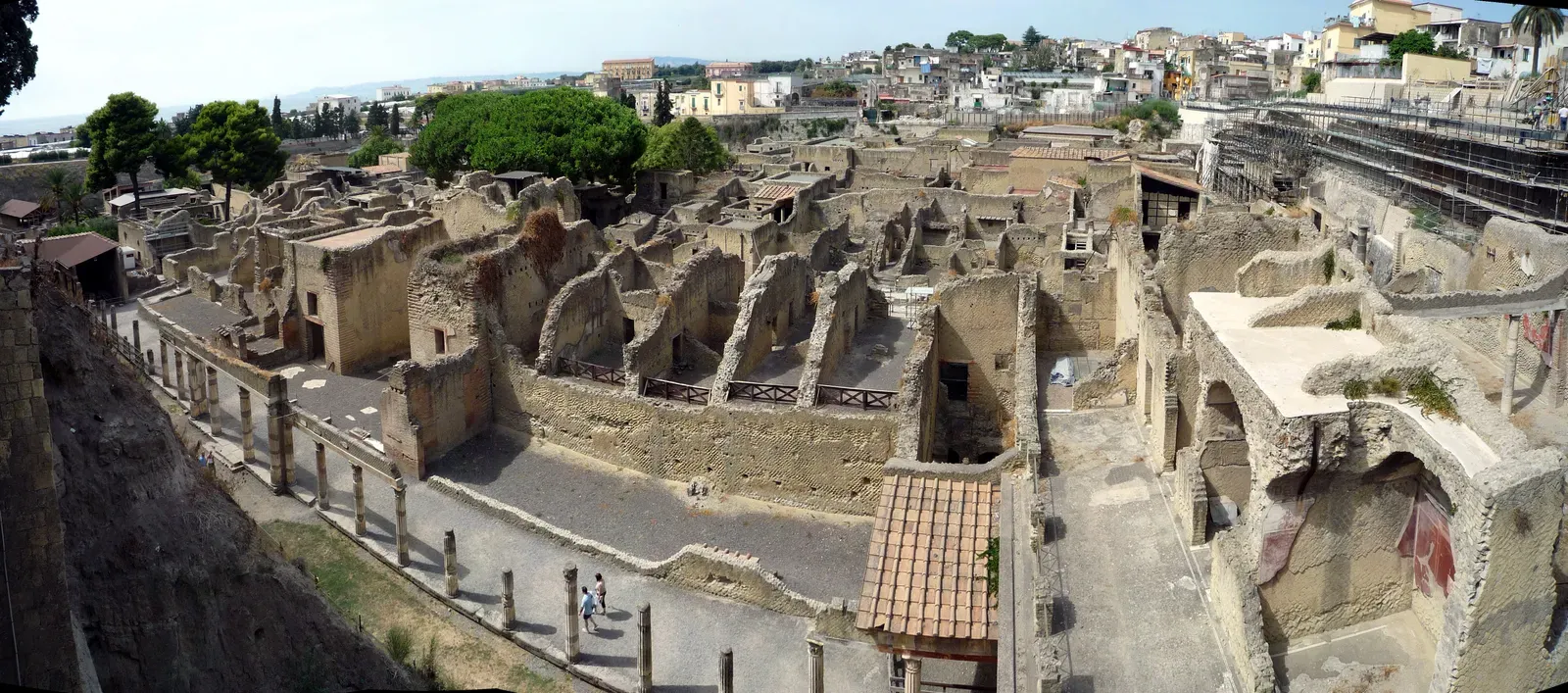
Just up the coast from Pompeii, Herculaneum experienced the same eruption but a different kind of burial. Instead of just ash, it was engulfed by scorching pyroclastic surges – fast‑moving clouds of gas and debris – that entombed the town under an incredibly thick layer. That brutal process did something remarkable: it carbonized wooden beams, furniture, and even doors, preserving them in a way almost never seen in ancient sites.
Herculaneum feels more intimate than Pompeii, almost like a wealthy seaside neighborhood caught in a nightmare. Multi‑story houses overlook what was once the shoreline, with painted walls, wooden shelves, and household shrines still in place. Archaeologists have found upper floors, delicate wooden beds, and even food remains. Human skeletons discovered in boat houses near the ancient beach tell of a desperate last attempt to escape. If Pompeii shows the bustling, sometimes chaotic energy of a Roman town, Herculaneum is like stepping into the private lives of the elite, preserved because molten horror rolled straight through their streets.
Akrotiri, Santorini: The Bronze Age City Beneath a Volcanic Caldera
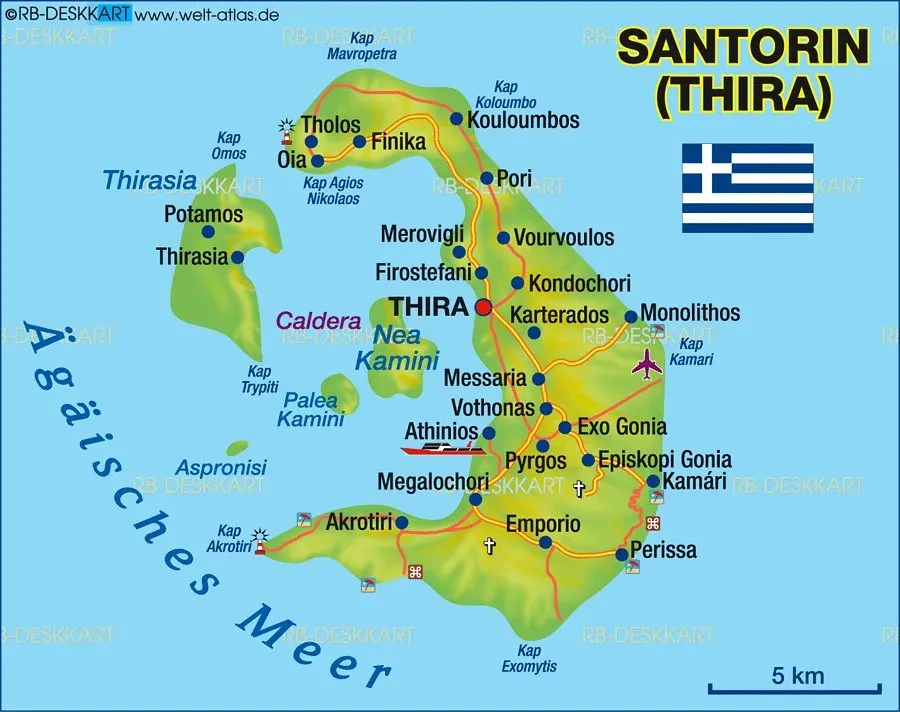
Long before classical Greece, there was Akrotiri, a Bronze Age settlement on the island now called Santorini. A massive eruption in the second millennium before the common era buried the town under thick volcanic ash, while the central part of the island collapsed into the sea to form the dramatic caldera we admire today. For centuries, Akrotiri lay hidden, its walls and frescoes preserved like a prehistoric art gallery in the dark.
When excavations began in the twentieth century, archaeologists uncovered multi‑story houses, sophisticated drainage systems, and stunning wall paintings showing ships, landscapes, and elegantly dressed people. What’s striking is that almost no human remains have been found, suggesting that the inhabitants may have had time to evacuate before the final, catastrophic phase of the eruption. Akrotiri is often linked – sometimes a bit too romantically – to the legend of Atlantis, but even without myths, it stands on its own as proof that complex, urbane societies were thriving in the Aegean long before the famous classical city‑states rose to power.
Çatalhöyük, Türkiye: An Early City Slowly Entombed in Its Own Mudbrick
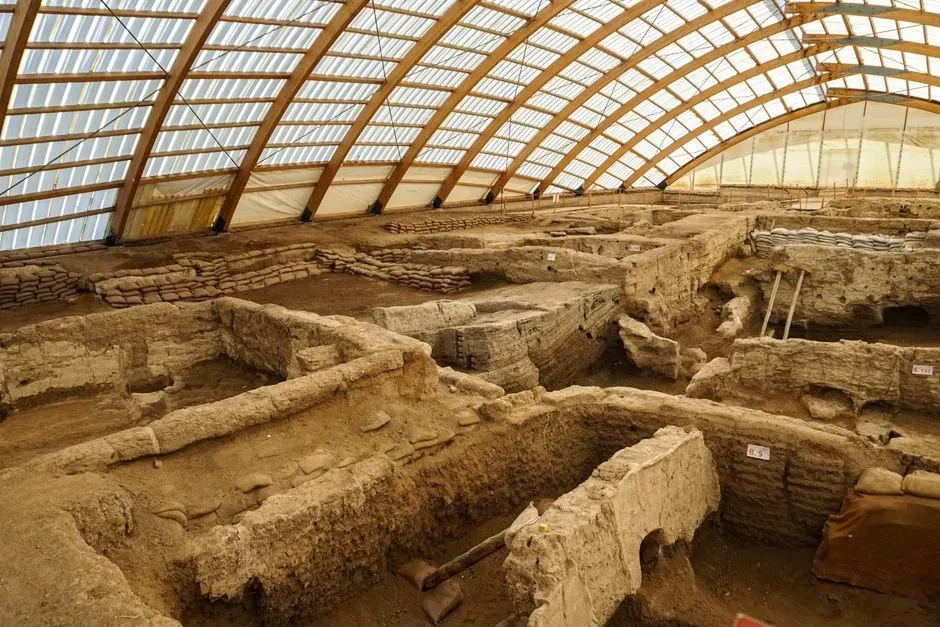
At first glance, Çatalhöyük looks less like a city and more like a strange, flat hill in central Türkiye. In reality, that mound is the product of centuries of people building, living, burning, and rebuilding mudbrick houses in the same place. Over time, collapsed walls and floors turned into layer upon layer of compacted earth, slowly burying older houses beneath newer ones. It is not a single dramatic disaster, but a long, quiet burial created by human habit and mud.
Dating back to the seventh millennium before the common era, Çatalhöyük is often described as one of the earliest large, dense settlements in the world. The houses were packed together with no streets, people apparently moving along rooftops and climbing ladders down into their homes. Many burials were placed under house floors, and walls were decorated with vivid paintings and reliefs. Because so many layers of occupation were sealed by new construction, archaeologists get a rare, almost vertical timeline of how this community evolved over many centuries, preserved in the very mud that once held up their roofs.
Dura-Europos, Syria: Desert Sands Guarding a Frontier City
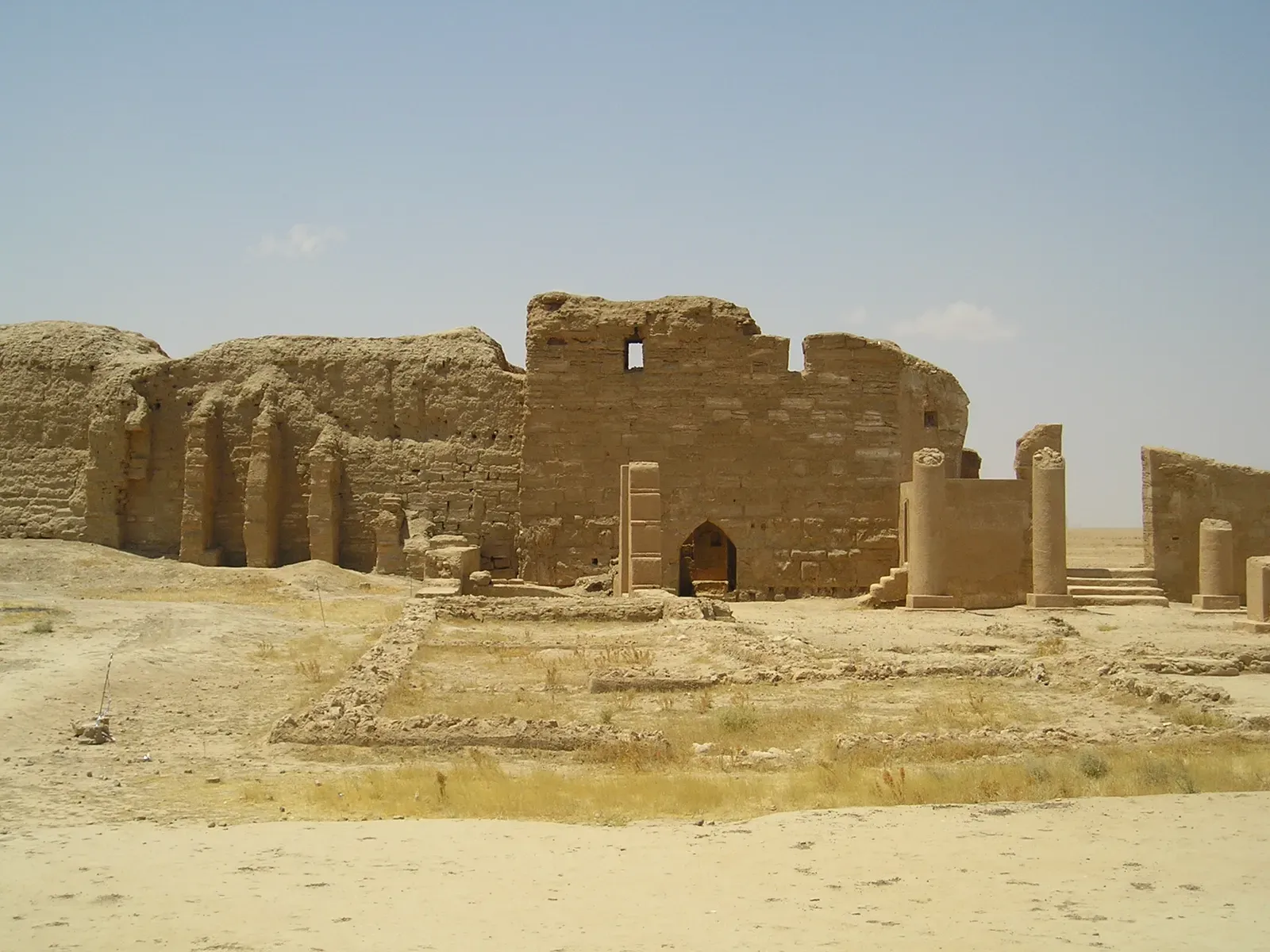
On a cliff above the Euphrates River, the ancient city of Dura‑Europos sat at a crossroads of empires, cultures, and religions. Founded by the Seleucids and later controlled by the Romans, it was eventually attacked in the third century of the common era. In a last‑ditch attempt to defend their walls, the Romans filled tunnels and parts of structures with earth and rubble. After the city finally fell, the desert winds and sands continued the job, slowly covering what remained.
That combination of hurried defensive backfill and natural sand burial created a treasure trove. Archaeologists have uncovered some of the earliest known Christian house‑churches, an elaborately decorated synagogue, and temples to various local and imperial deities, all preserved with their paintings still on the walls. Objects and inscriptions in multiple languages show just how mixed and multicultural life was in this frontier town. The site also contains chilling evidence of ancient chemical warfare in those defensive tunnels, a reminder that the same layers that protect the past can also reveal its darker sides.
Cladh Hallan, Scotland: Peat, Sand, and Mysterious Mummies
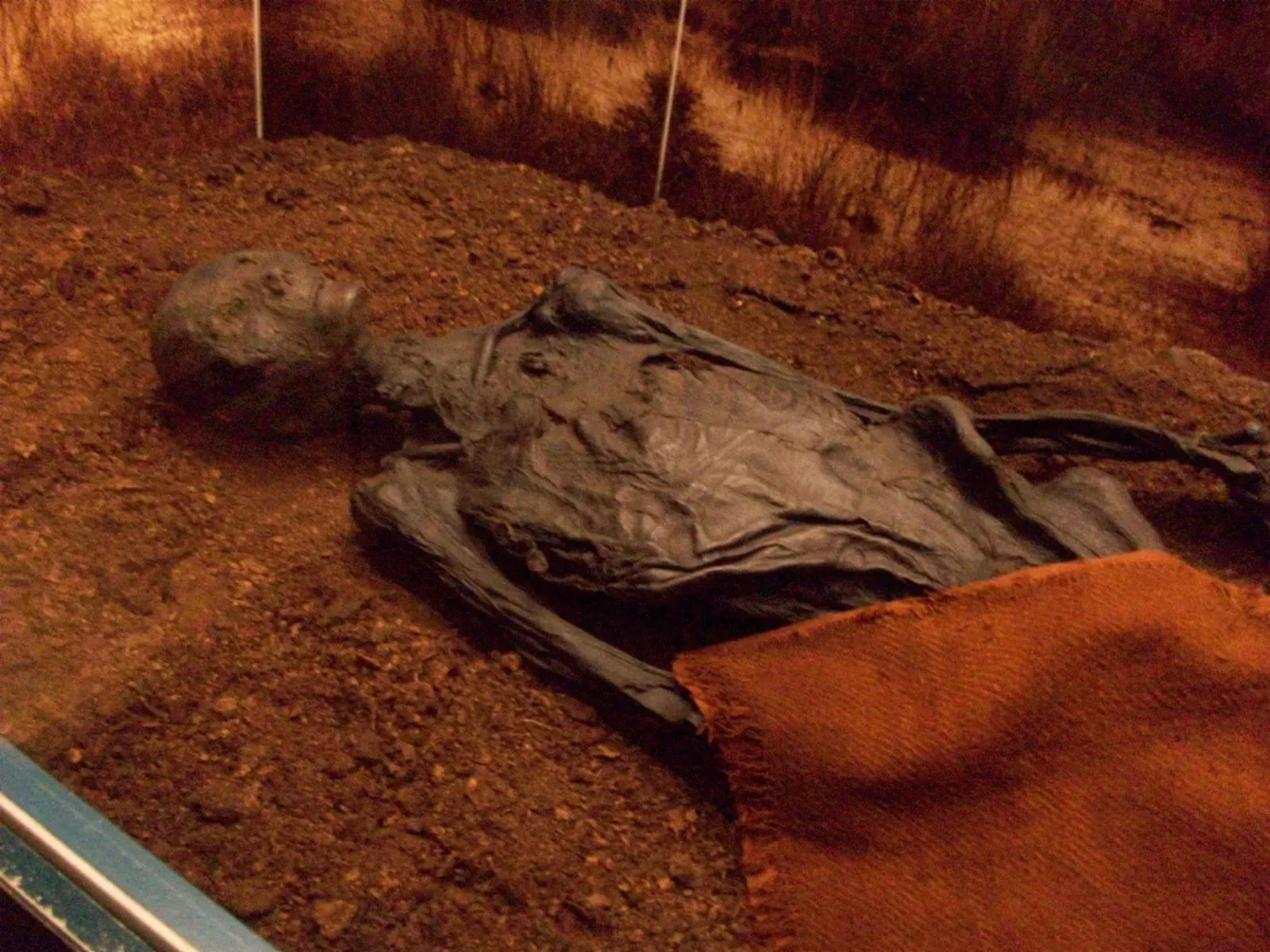
On South Uist in Scotland’s Outer Hebrides, the prehistoric settlement of Cladh Hallan lay buried under wind‑blown sand and peat for centuries. Unlike the dramatic scenes of volcanic destruction, this was a slower, more gradual burial, with shifting dunes and boggy soils quietly sealing off houses and their contents. When archaeologists began excavating, they discovered something completely unexpected: deliberately arranged human bodies that had been preserved in a way more commonly associated with bogs and mummification.
The skeletons turned out to be composite – bones from different individuals intriguingly assembled into single “persons.” Before burial under the houses, the bodies appear to have been exposed to peat bog conditions that preserved soft tissue, then later brought back and interred within the settlement. The sand and peat overlying the site helped keep these remains and the surrounding structures in remarkable condition. Cladh Hallan forces us to rethink what we think we know about Bronze Age ritual and identity, showing that even small communities at the edge of Europe were experimenting with complex, almost unsettling practices around death and memory.
Tell el-Amarna’s Workmen’s Village, Egypt: Desert Rubble and Sand-Sealed Daily Life
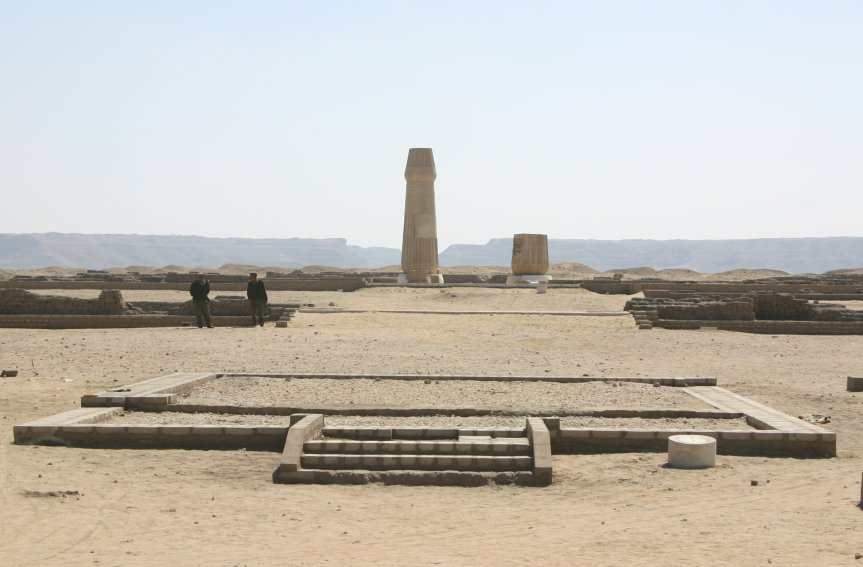
Most people think of grand temples and royal tombs when they picture ancient Egypt, but the Workmen’s Village at Tell el‑Amarna tells a very different story. Located in the desert beyond the main city built by the pharaoh Akhenaten in the fourteenth century before the common era, this village housed the laborers and craftsmen who worked on royal projects. When the royal court abandoned the city after Akhenaten’s reign, the desert began its slow work, burying houses, streets, and trash dumps under sand and collapsed mudbrick.
Because the area was left largely undisturbed for millennia, archaeologists found an almost overwhelming amount of detail about ordinary lives. Everything from animal bones and beer jars to children’s footprints in mud floors turned up in the excavations. The sand acted like a giant, dry blanket, limiting decay and protecting delicate remains. Instead of pharaohs and gold, we get diet patterns, work routines, religious practices, and even hints of personal struggles among people whose names are mostly lost. It is hard not to feel that this village, buried by neglect and desert winds, tells us more about ancient Egypt than any polished inscription on a temple wall.
Skara Brae, Orkney: A Stone Age Village Revealed by a Storm, Shaped by Sand
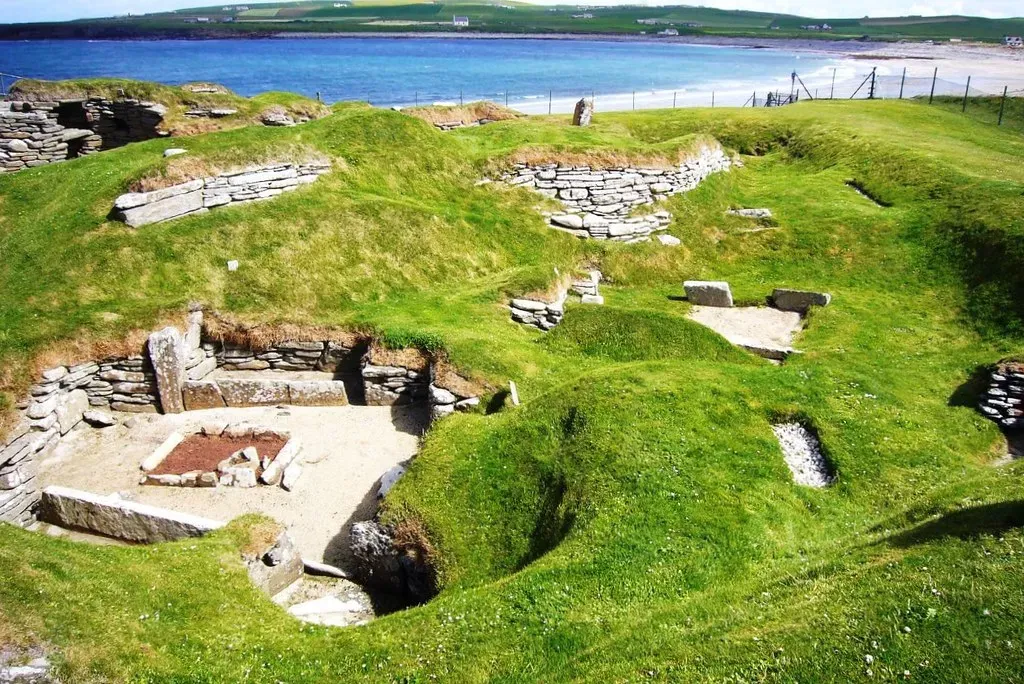
Skara Brae, on the coast of Orkney in Scotland, was already ancient by the time the Great Pyramid was built. This Neolithic village was eventually abandoned and covered by sand and grass, turning into an unremarkable mound overlooking the sea. In the nineteenth century, a powerful storm ripped away part of that mound and exposed stone buildings, passageways, and built‑in furniture that had been hidden for thousands of years.
The sand that had once buried Skara Brae turned out to be its guardian. Stone beds, shelves, and hearths are still in place, making it feel almost like a Stone Age model home tour. You can see how people arranged their spaces, controlled light and warmth, and organized daily tasks. Without the thick blanket of sand and turf sealing it off, waves and wind would likely have destroyed the whole settlement long ago. Instead, we get one of the most complete prehistoric villages in Europe, preserved because nature first took it away from view.
Joya de Cerén, El Salvador: The “Pompeii of the Americas” Under Volcanic Ash
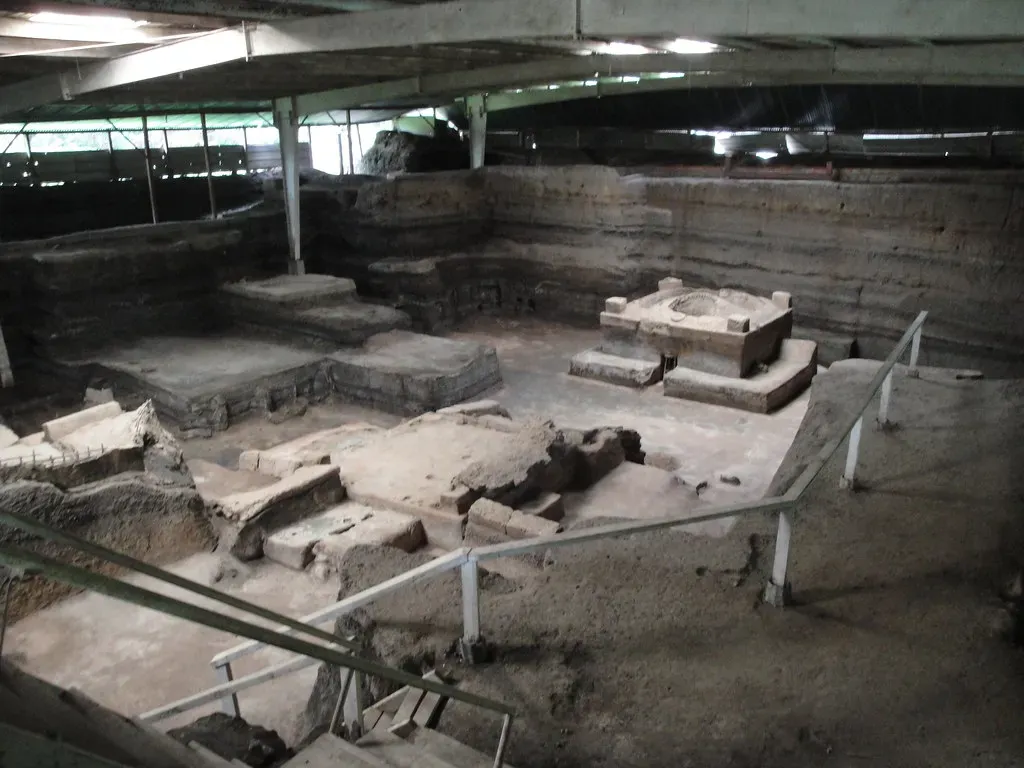
In El Salvador, the small farming village of Joya de Cerén was buried in the sixth century of the common era when a nearby volcano erupted, raining ash and debris over the area. Unlike many famous Maya sites built of stone and plaster, this was a humble place of thatched houses and earthen structures. Those fragile materials would normally disappear quickly, but the sudden ashfall covered them so rapidly and deeply that walls, roofs, and even crops in the fields were preserved.
Excavations have revealed storage jars still full of food, sleeping mats on floors, and tools left where their owners dropped them. What is striking is the feeling that this was not an elite or ceremonial site, but a snapshot of everyday rural life in Mesoamerica. The people seem to have escaped, as there are no bodies, yet everything they left behind stayed locked in place for over a thousand years. Because of that burial, Joya de Cerén gives us an almost unfairly detailed view of how ordinary households functioned, something that would be nearly impossible to reconstruct from ruins exposed to weather and looters.
Conclusion: Catastrophe as Archaeology’s Harshest Gift
It’s uncomfortable to admit, but some of the most extraordinary archaeological sites owe their survival to moments of absolute horror. Volcanic eruptions, collapsing mudbrick, choking sands, and creeping peat all erased communities while, at the same time, preserving them. Without that sudden burial, most of these places would have eroded, been dismantled for building materials, or simply faded into unremarkable stains in the soil. Instead, we get vivid scenes of daily life, from Roman bakers and Egyptian laborers to Bronze Age experimenters with the dead.
Personally, I think these buried sites force us to confront a hard truth: what we know about the past is wildly skewed toward what disaster happened to protect. We build sweeping stories about entire cultures based on a few lucky, catastrophic time capsules, while countless others vanished without trace. That should make us both grateful and cautious. Grateful, because ash, mud, and sand have given us an almost miraculous level of detail in a few rare places. Cautious, because we should always remember how much we are missing. When you look at Pompeii, Joya de Cerén, or Skara Brae, it is worth asking yourself: how many other worlds were buried, washed away, or never preserved at all – and how differently would we see human history if they had survived too?