
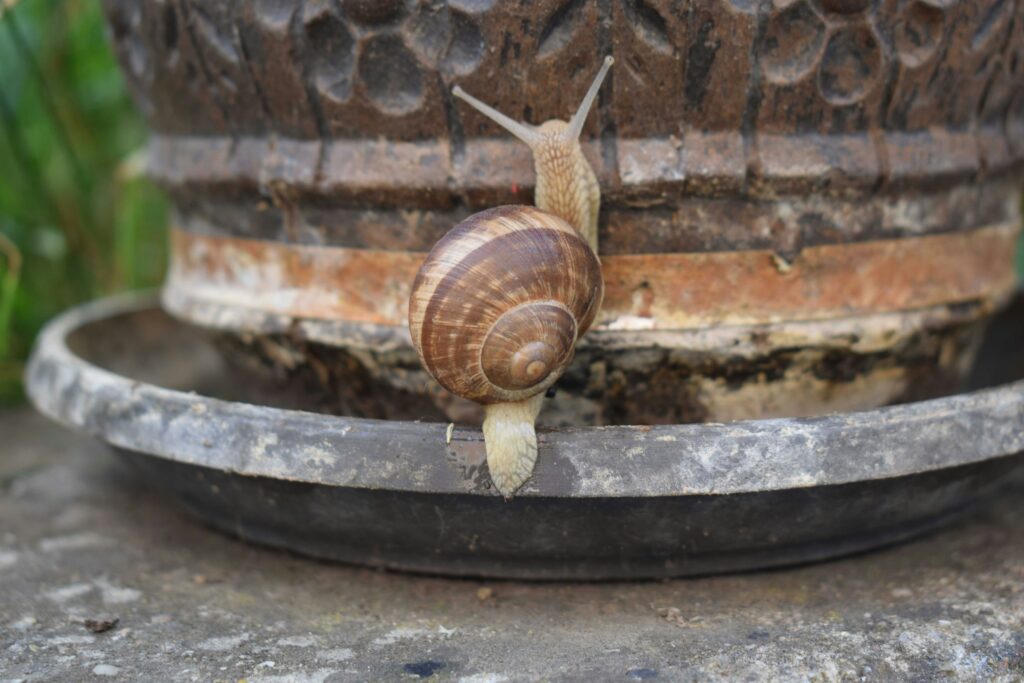
You lift the pot to sweep underneath it, and something moves. Not one something – a dozen somethings, scattering in every direction like you just switched on the lights at a party nobody invited you to.
Most people flinch, mutter “gross,” and set the pot back down. But here’s the part nobody tells you: those creatures aren’t squatting there by accident, and they’re not going anywhere either. Entomologists call these micro-habitats “refugia” – tiny, man-made shelters that mimic the exact dark, damp conditions certain species evolved to need in order to survive at all. Some of these tenants physically cannot live anywhere else nearby. Once you understand why, you’ll never look at an overturned flowerpot the same way again.
#1 – Woodlice (The Armored Squatters)
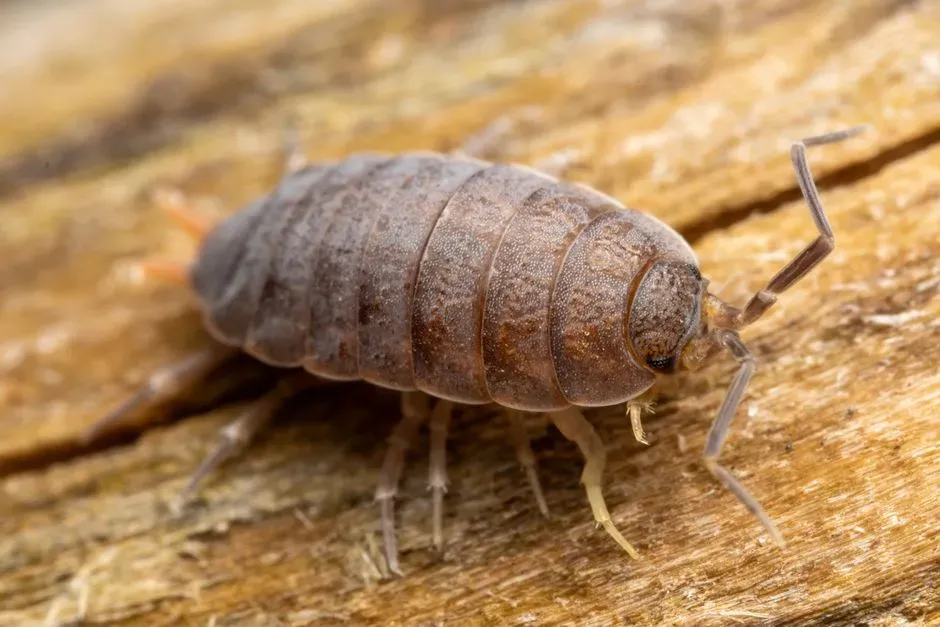
Woodlice, also called roly-polies or pill bugs, are arguably the most loyal pot-dwellers on this list – and that loyalty is written into their biology. They’re not actually insects. They’re crustaceans, more closely related to shrimp and crabs than to any bug crawling on your tomato leaves. That one fact explains almost everything about why they never move out.
Because they evolved from marine ancestors, woodlice breathe through gill-like structures that must stay moist to function. The underside of a plant pot creates a near-perfect humidity chamber, trapping condensation against the soil while blocking sun and wind. Step outside that shelter for more than a few hours in dry air, and a woodlouse can literally suffocate.
Fast Facts
- Woodlice are crustaceans, not insects – closer relatives of shrimp and crabs
- They breathe through gill-like structures that must stay moist to work
- A single large pot can shelter colonies numbering in the hundreds
- They feed almost exclusively on decaying plant matter, acting as free composters
They also do quiet work most homeowners never notice. Woodlice feed almost exclusively on decaying organic matter, breaking down dead leaves and root debris into nutrients the plant above can actually use. Every gardener assumes any bug under a pot is a pest – woodlice are the exception, functionally free composters working the night shift for free.
Colonies can number in the hundreds under a single large container, all descended from one founding population. Once established, they rarely disperse unless the pot is moved for good or the soil dries out completely. In a very real sense, that’s generations of the same family, living exactly where their great-great-grandparents settled.
#2 – Earwigs (The Misunderstood Pincers)
![#2 - Earwigs (The Misunderstood Pincers) (By fir0002 flagstaffotos [at] gmail.com
Canon 20D + Sigma 150mm f/2.8, GFDL 1.2)](https://nvmwebsites-budwg5g9avh3epea.z03.azurefd.net/dinoworld/7069c51fe5069ef01a06c59a4f0ac475.webp)
Few insects have a worse reputation than the earwig, and almost none of it is deserved. The myth that earwigs crawl into human ears and lay eggs is completely false – it’s one of the most stubborn bug rumors still repeated by otherwise reasonable adults. What earwigs actually do is hide in dark, tight crevices during daylight, which makes a pot’s rim the perfect daytime bunker.
Earwigs are nocturnal foragers, emerging after dark to feed on aphids, mites, and decaying plant material. That makes them quietly beneficial in a garden, controlling pest populations most people blame on “bad luck” with their tomatoes. During the day, though, they retreat en masse to the nearest dark seam, and pot rims fit that description perfectly.
Female earwigs are also unusually devoted mothers by insect standards. They guard their egg clusters under debris for weeks, cleaning them of fungal spores and defending them from predators – a level of parental care almost unheard of in the insect world. A pot base, undisturbed and shielded from rain, is an ideal nursery.
This is exactly why the same colony tends to return to the same pot season after season, rebuilding nests in the identical grooves and soil pockets, year after year, like clockwork.
#3 – Slugs (The Moisture Addicts)
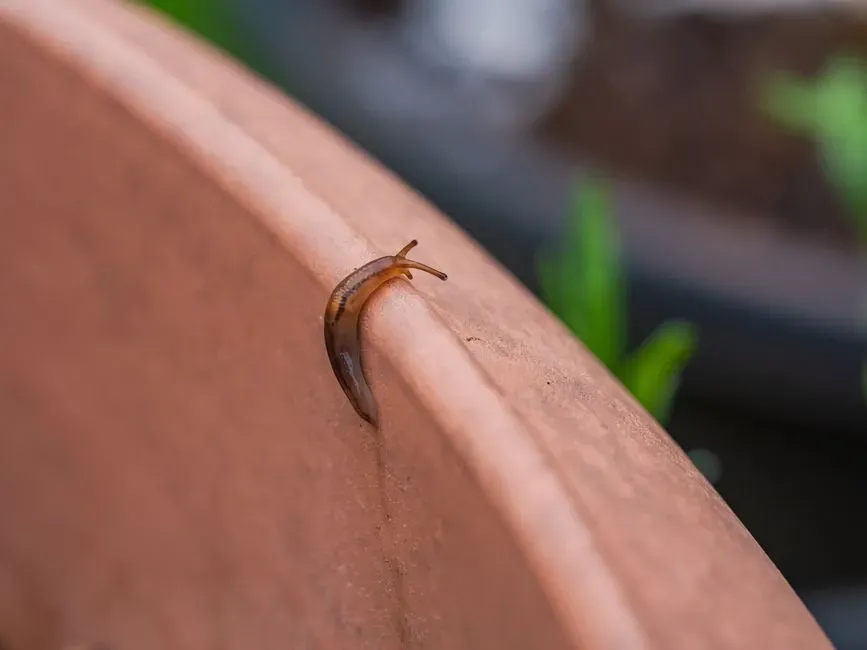
Slugs top the list of garden complaints, and plant pots are practically slug real estate. A slug’s body is roughly 80-90% water, which means dehydration is the single biggest threat to its survival. Anywhere that traps moisture and blocks sunlight becomes prime property, and the underside of a pot checks every box.
Slugs have no internal skeleton, relying instead on mucus and hydraulic pressure to move. That mucus itself requires constant moisture to produce, so a dry surface is essentially a death sentence for a slow-moving mollusk with nowhere fast to retreat. Pot bases offer cool, unbroken shade exactly where slugs need it most during hot afternoons.
Interestingly, slugs are surprisingly territorial despite their simple nervous systems. Research on garden mollusks has shown many species display homing behavior, returning to the same shelter spot after nightly feeding trips rather than wandering randomly. That’s why gardeners often find the “same” slug under a pot morning after morning – because in a real sense, it is the same one.
Their diet under the pot rarely differs from their diet in the open garden: decaying leaves, fungi, tender seedlings. The shelter isn’t for food. It’s purely a survival bunker against sun and predators, and it works.
#4 – Snails (The Slow, Loyal Residents)
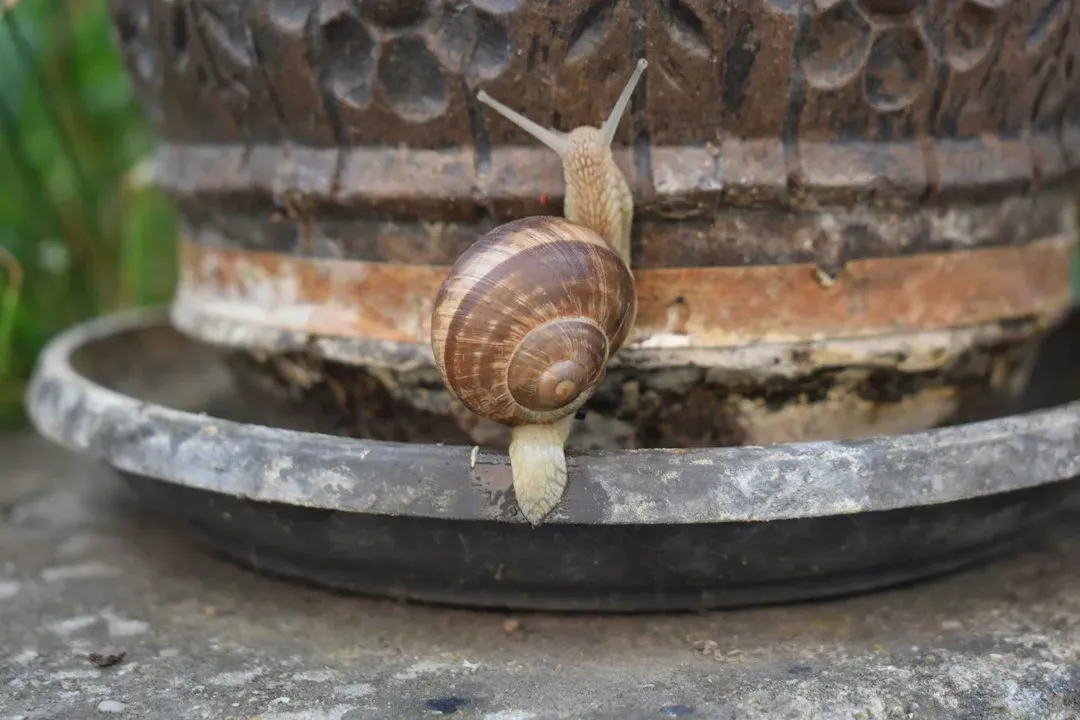
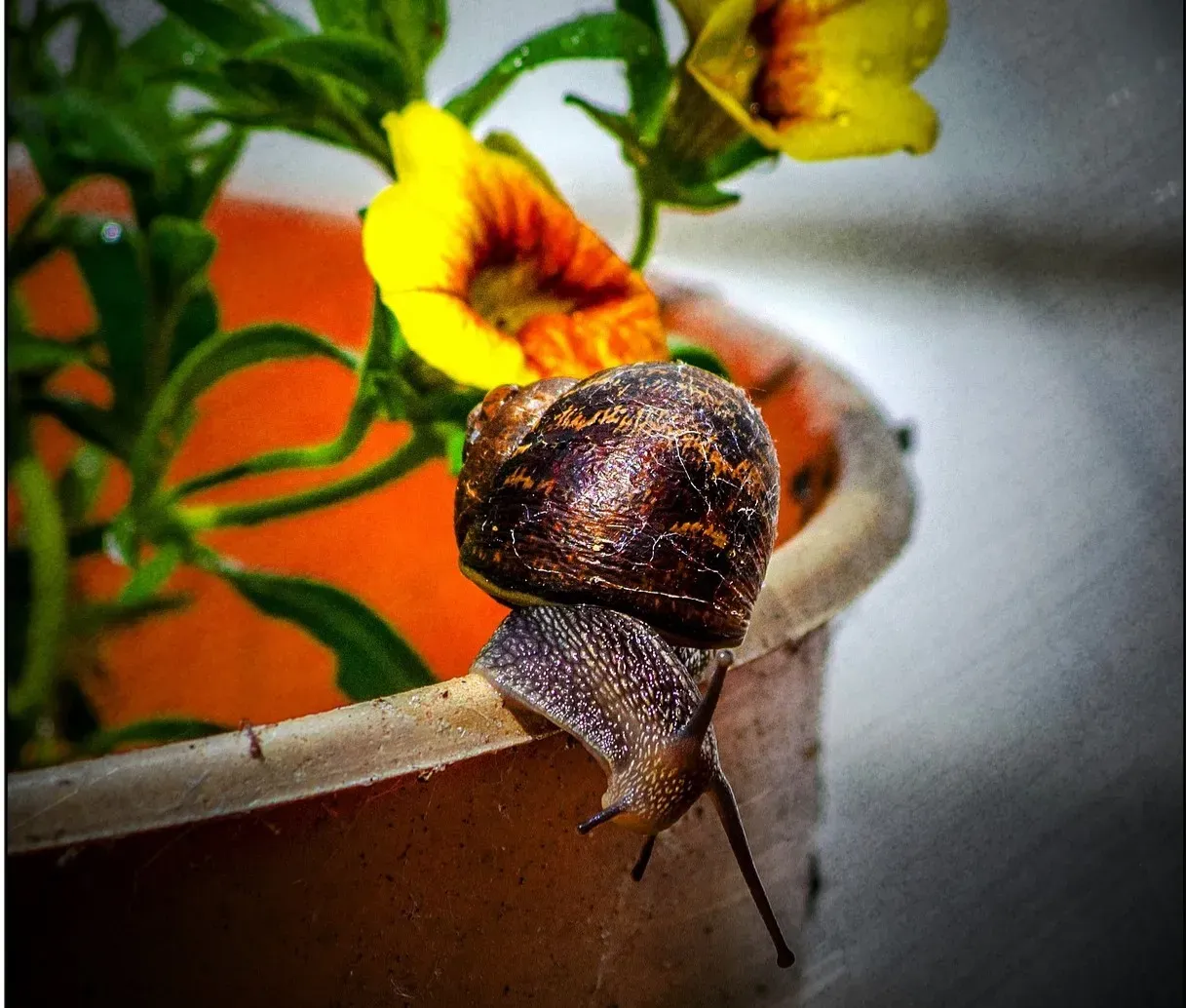
Snails share nearly identical biology to slugs, but their loyalty to a single pot is even more extreme, thanks to one advantage: portable armor. A snail’s shell isn’t just protection – it’s a moisture-sealed vault the animal can retreat into completely when conditions turn dry, sealing the opening with a mucus membrane called an epiphragm.
Despite that built-in defense, snails still prefer pot shelters because a shell alone doesn’t stop overheating. On hot days, a snail exposed to direct sun can reach lethal internal temperatures within minutes. The shaded underside of a container drops ambient temperature by several degrees compared to open soil – a small difference that can mean the difference between life and death.
Snails are also famously slow to disperse, with home ranges sometimes measured in single-digit meters over an entire lifetime. Combined with a documented tendency toward homing behavior, this means once a snail claims a pot as shelter, it may spend its entire multi-year lifespan never straying more than a few feet from that exact spot.
Many species can live three to five years in favorable conditions – a surprising lifespan for an animal most people assume dies within a single season.
#5 – Ants (The Underground Architects)
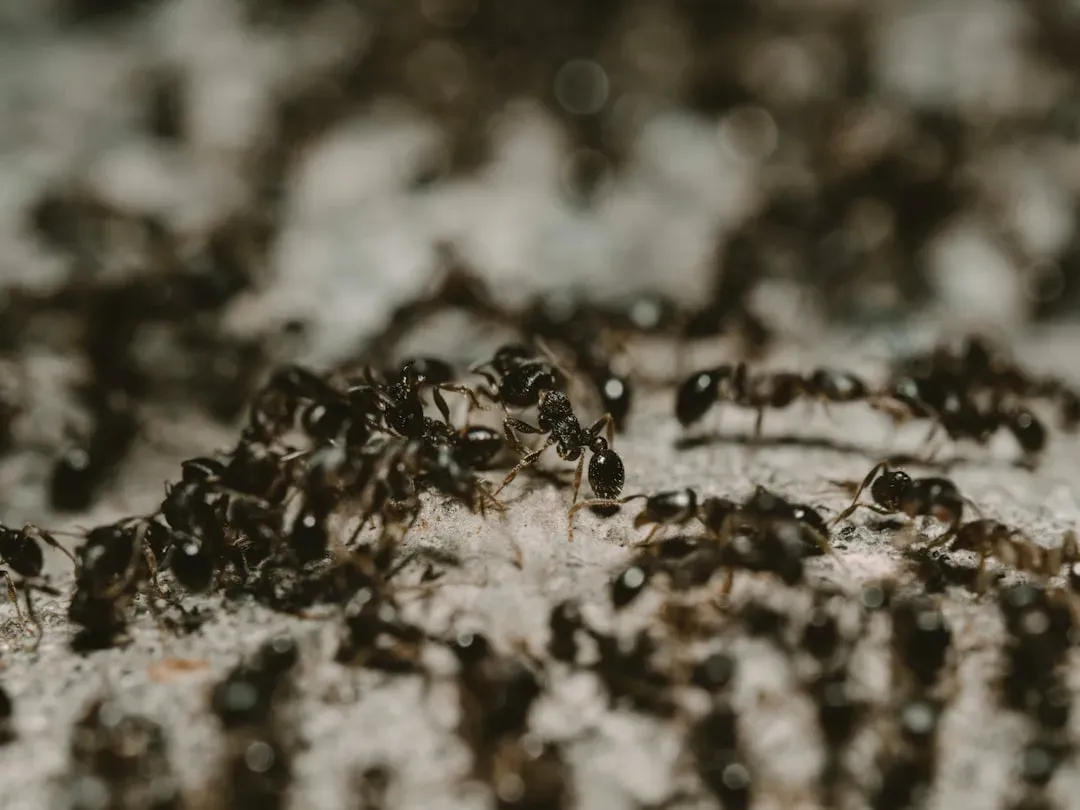
Ants don’t just hide under plant pots – they often build entire subterranean cities beneath them. A single mature colony can house tens of thousands of individuals, all connected through tunnel networks that a pot’s dark, undisturbed base makes ideal to excavate.
Pots create two conditions ants specifically seek out: stable temperature and complete darkness from above. Because the soil beneath a container isn’t compacted by foot traffic or disturbed by tilling, it becomes one of the few spots in a yard where a colony can dig uninterrupted for months. Many species also prefer excavating near warm surfaces, since ceramic or concrete pots absorb daytime heat and radiate it slowly overnight, effectively heating the nursery chambers where larvae develop.
Here’s the controversial part: while most homeowners treat any ant colony as an infestation requiring instant chemical warfare, several soil ecologists argue backyard colonies are actually beneficial and shouldn’t be disturbed at all. Ants aerate soil more effectively than earthworms in dry climates, and their tunneling improves water penetration to plant roots. Killing an established colony under a pot can, ironically, make the surrounding soil compaction worse, not better.
Once a queen establishes a nest, that colony can persist for years, sometimes decades, long after the original gardener has forgotten the pot was ever moved there in the first place.
#6 – Centipedes (The Silent Predators)
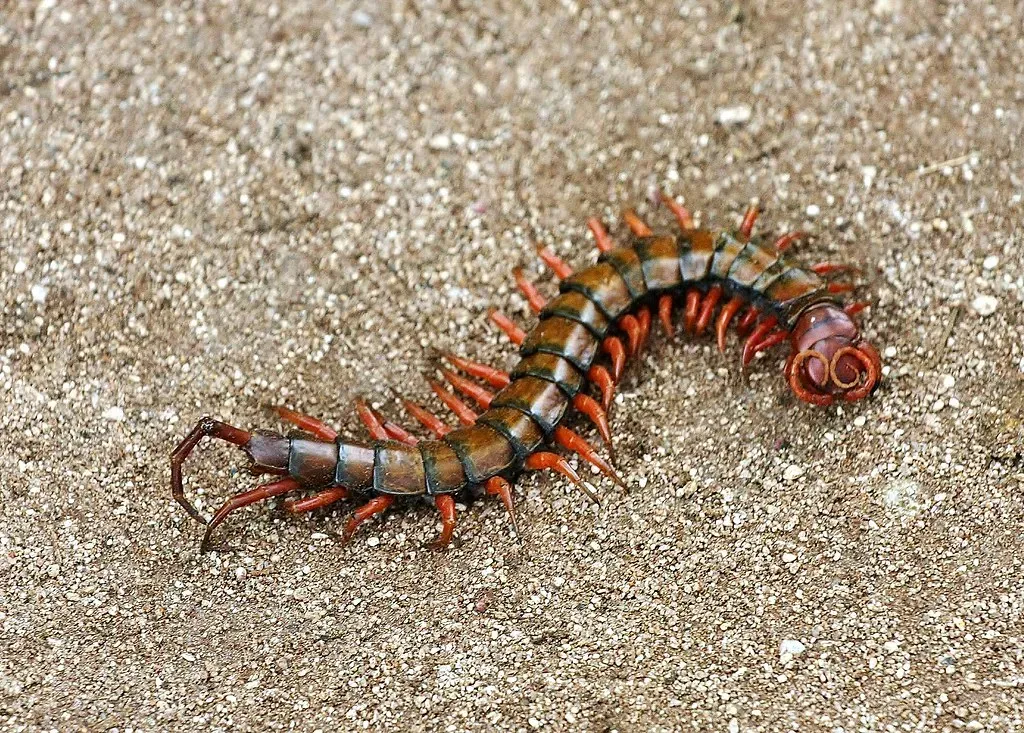
Centipedes get lumped in with “creepy bugs,” but they’re one of the more useful residents hiding under your pots. Centipedes are exclusively predatory, which means every single one you find under a container is there hunting – not feeding on your plants.
Their venomous front pincers, technically called forcipules, are used to subdue prey like small insects, spiders, and even other centipedes. Because they hunt by ambush and ground-level pursuit rather than flight, they need cover that hides them from both predators above and prey below – a plant pot rim does exactly that.
Centipedes are also extremely sensitive to moisture loss through their exoskeleton, which lacks the waxy waterproof coating many other arthropods have. That makes shaded, humid pot bases not just convenient but essential, especially during dry summer stretches when open soil can kill an exposed centipede within hours through desiccation alone.
Unlike ants or woodlice, centipedes are largely solitary and territorial, so a single pot base often hosts just one or two individuals rather than a colony – quiet, effective pest control operating completely out of sight, and completely out of mind.
Quick Compare
- Centipedes: venomous predators, fast-moving, mostly solitary hunters
- Millipedes: harmless decomposers, slow-moving, often found in small clusters
- Centipedes: eat insects and other small arthropods
- Millipedes: eat decaying leaves and wood, recycling nutrients back into soil
#7 – Millipedes (The Gentle Decomposers)
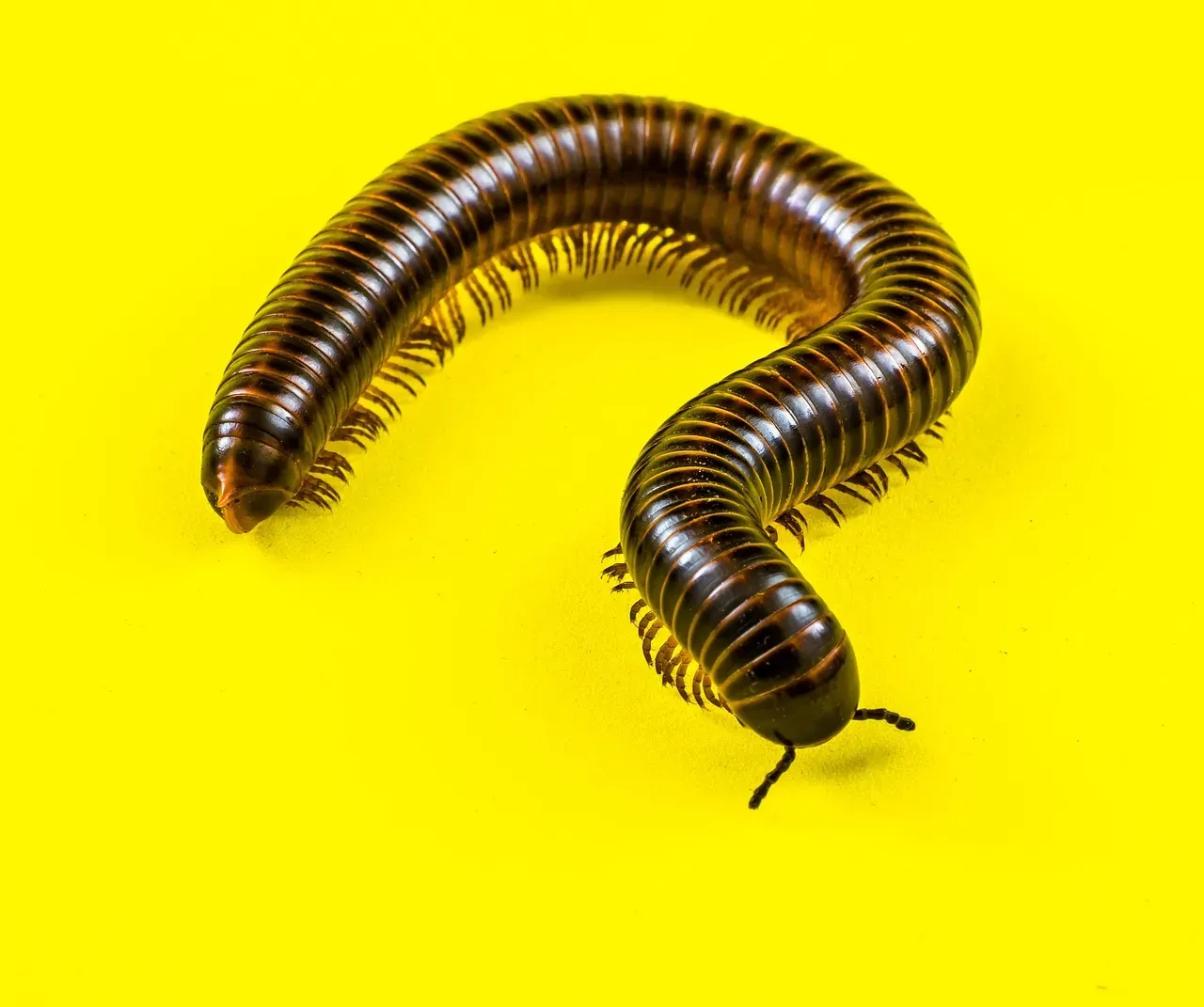
It’s easy to confuse millipedes with centipedes, but their lifestyles are almost opposite. Millipedes are detritivores, not predators, feeding on decaying leaves, wood, and root matter rather than hunting other creatures.
Their slow, methodical movement and lack of venomous pincers make them far more vulnerable to predators and dehydration, which is exactly why permanent shelter matters so much to them. A pot base offers both cover from birds and the reliable moisture their soft, segmented exoskeletons require to keep from drying out.
Millipedes play an underrated role in soil health. As they consume leaf litter and organic debris, they break it down into smaller particles that bacteria and fungi can further decompose, kickstarting the nutrient cycle that feeds your plants. A healthy population of millipedes is often a sign of genuinely rich, well-balanced soil, not a pest problem, no matter how many gardeners recoil when they spot one.
When threatened, most species curl into a tight spiral rather than fleeing, relying on tough exoskeleton plates for defense. Combined with weak dispersal ability, this makes them some of the most sedentary, un-migratory creatures on this entire list – homebodies in the truest sense.
#8 – Ground Beetles (The Nighttime Enforcers)
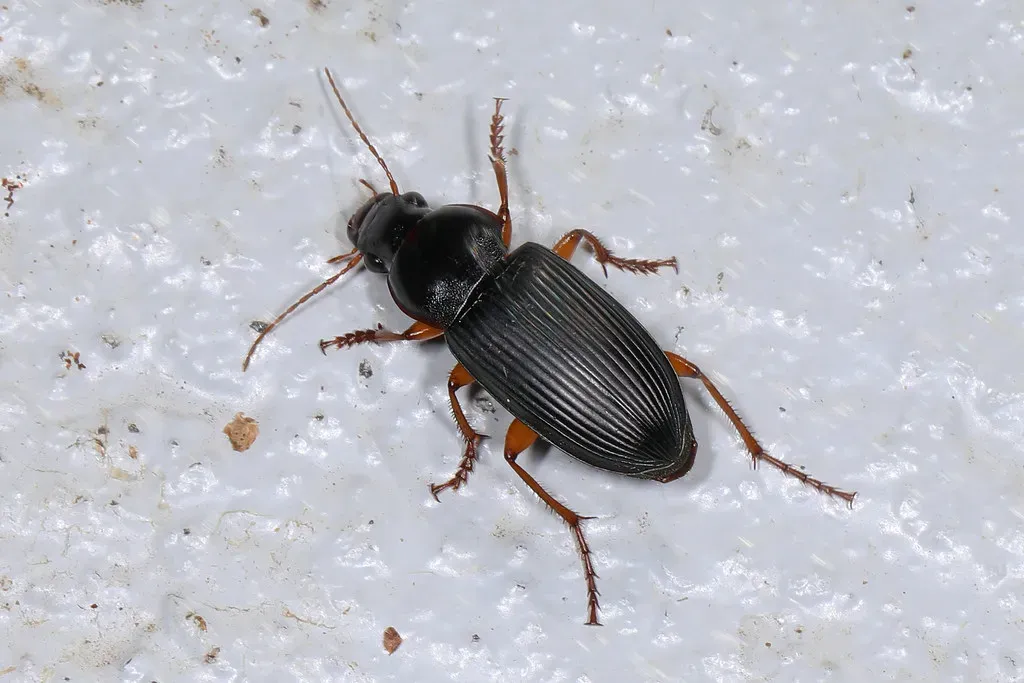
Ground beetles are one of the largest insect families on Earth, and a surprising number of species treat plant pots as permanent daytime headquarters. Many ground beetle species are voracious predators, consuming slug eggs, caterpillars, and aphids in numbers that rival or even exceed chemical pest control.
Why It Stands Out
- One of the largest insect families on Earth, with predatory habits in most species
- Feeds on slug eggs, caterpillars, and aphids – rivaling chemical pest control
- Some species live two to three years, unusually long for an insect this size
- Returns to the same shelter night after night, a behavior tied to pheromone trail marking
Their glossy black exoskeletons, often mistaken for something sinister, are actually built for speed and armor rather than menace. Ground beetles are largely nocturnal hunters, which means daytime cover is non-negotiable for survival – without it, they’re easy targets for birds.
Some species have been documented living two to three years, unusually long for an insect this size, and many return to the exact same shelter location after nightly hunts, a behavior researchers link to pheromone trail marking. That’s part of why the same pot, undisturbed season after season, tends to host beetle “generations” rather than a single insect’s brief lifespan.
Gardeners who obsessively clear every pot and pathway of debris are, according to several entomologists, unintentionally removing one of their most effective natural pest controls – a mildly controversial take, but one increasingly backed by organic-gardening research.
#9 – Spiders (The Overlooked Guardians)
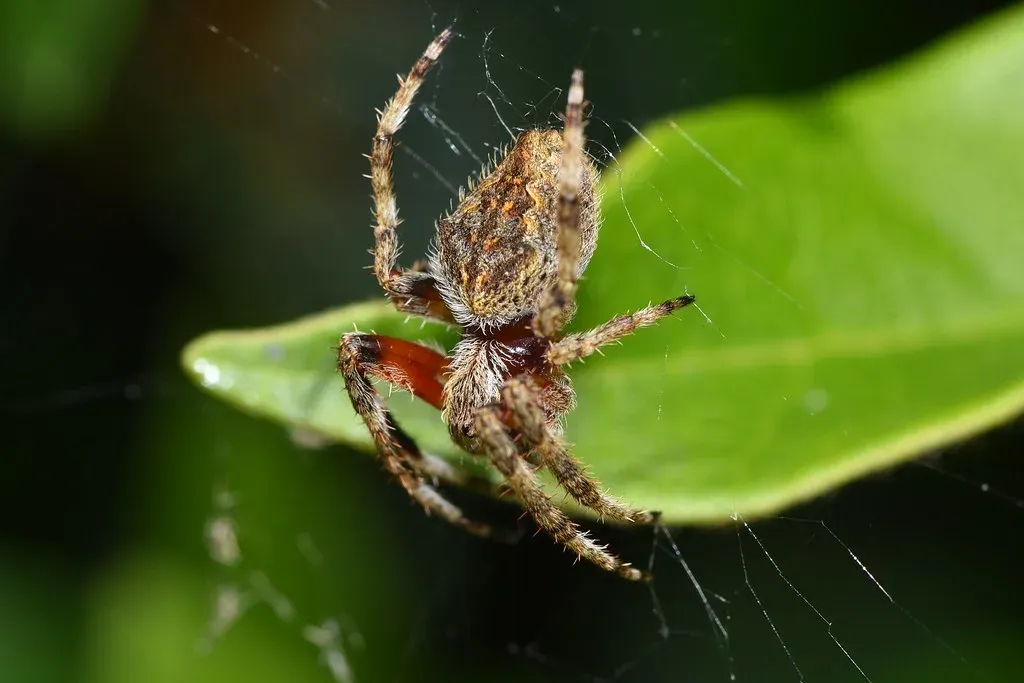
Spiders under a plant pot are almost never there by accident – they’re strategically positioned. Web-building species use the pot’s rim as a structural anchor, stretching silk between the container edge and surrounding soil or stems to create trip-wire traps for crawling insects.
Ground-dwelling hunting spiders, meanwhile, use the shaded underside purely as an ambush position, waiting for prey to wander past rather than actively chasing it. Either strategy benefits enormously from a stable, undisturbed shelter that predators – mainly birds – can’t easily reach.
Contrary to popular belief, the vast majority of spiders found in residential gardens are harmless to humans, and many actively reduce populations of far more destructive pests like aphids, mosquitoes, and moths. Yet spiders remain one of the most feared and most frequently, unnecessarily killed creatures on this list.
Spiders are often the last defense against exploding insect populations in a garden.
Norman Platnick, arachnologist
Female spiders of several common garden species also guard egg sacs for weeks in a single location, another reason a pot may host the same “family line” of spiders across multiple seasons rather than random new arrivals.
#10 – Earthworms (The Reluctant Tourists)
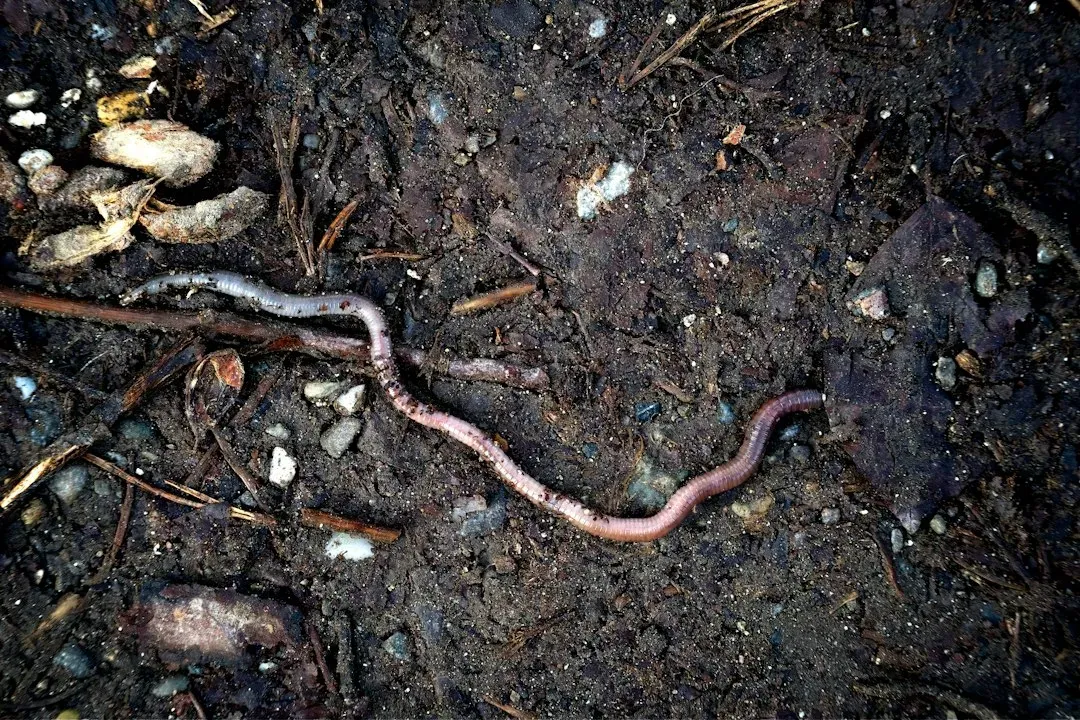
Earthworms aren’t full-time pot residents the way woodlice or ants are, but they show up with remarkable, near-permanent consistency in the soil directly beneath containers. Earthworms breathe through their skin, which must remain moist at all times – a requirement that makes the consistently damp soil under a shaded pot almost irresistible compared to sunbaked open ground.
Unlike surface-dwelling creatures on this list, earthworms are burrowers first, using the area under a pot as one entry point into a much larger tunnel system extending deep into the surrounding soil. Their tunnels dramatically improve aeration and drainage, and their castings are so nutrient-dense that many commercial fertilizers are explicitly modeled on worm compost.
While earthworms don’t form permanent colonies the way ants do, the same burrow systems are frequently reused across generations, meaning the “worm under the pot” phenomenon is often a multi-year pattern rather than a one-off discovery. Given how essential worms are to soil fertility, most horticulturists agree finding one under your pot is a good sign, not a warning sign.
#11 – Springtails (The Nearly Invisible Majority)
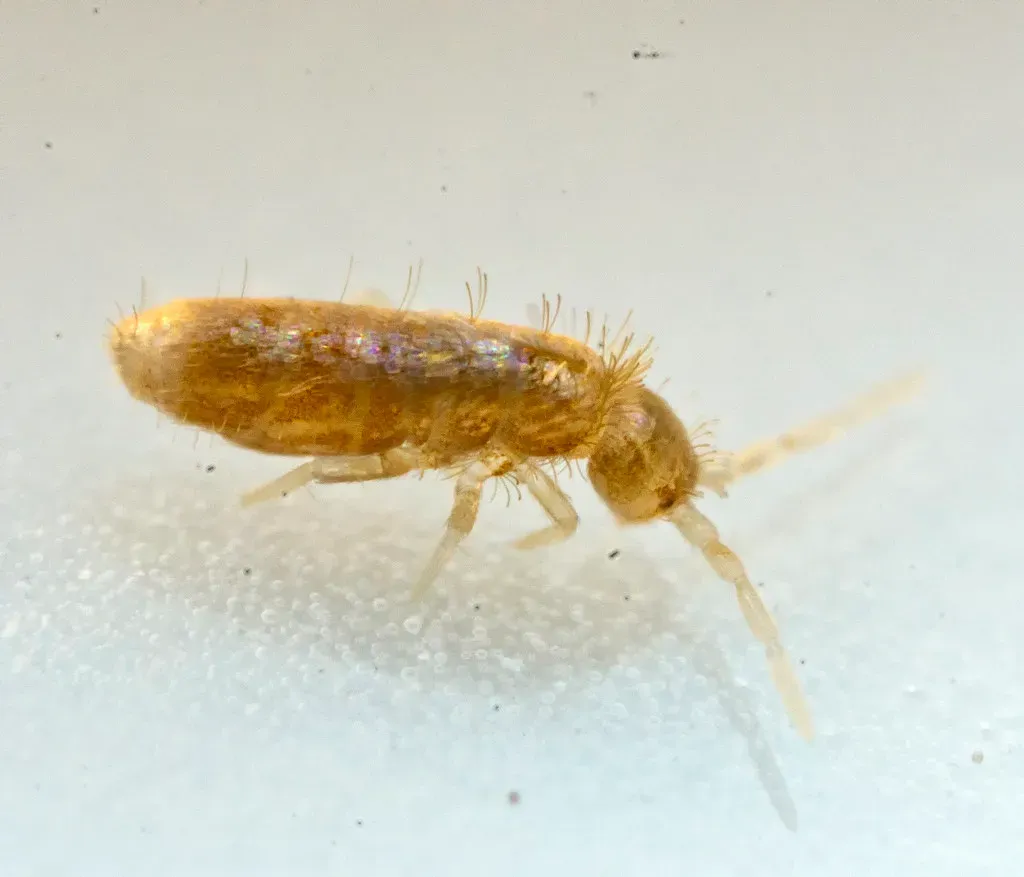
Springtails may be the single most overlooked creature on this entire list, largely because most people have never even heard of them despite them being almost certainly the most numerous. A single square meter of healthy garden soil can contain tens of thousands of springtails, making them one of the most abundant arthropods on the planet, even though they’re barely a few millimeters long.
At a Glance
- Among the most abundant arthropods on Earth – tens of thousands per square meter of healthy soil
- Named for a spring-loaded “furcula” that catapults them away from danger
- Can die from dehydration within hours if exposed to dry air
- Considered a bioindicator species – their presence signals healthy, chemical-free soil
Named for a spring-loaded tail structure called a furcula that lets them catapult away from danger, springtails feed on fungi, algae, and decaying organic material. Their reliance on constant moisture is extreme, even by the standards of this list – springtails can die from dehydration within hours of exposure to dry air, which makes the underside of a pot one of the only viable habitats in an entire garden bed during dry spells.
Despite their microscopic profile, springtails are considered a key bioindicator species by soil ecologists. Their presence in large numbers signals genuinely healthy, chemical-free soil, since they’re highly sensitive to pesticide runoff and die off quickly in contaminated ground. A pot crawling with springtails, ironically, might be sitting on the healthiest patch of soil in the entire yard.
The Bottom Line
That plant pot in your garden isn’t hiding pests. It’s running a functioning micro-ecosystem, and most of these creatures physically cannot survive without it. From moisture-dependent woodlice and springtails to predatory centipedes and beetles quietly protecting your plants, nearly every “invader” on this list is doing more good than harm.
Here’s my honest take: the real mistake isn’t finding them there. It’s reaching for the bug spray the second you do. Every creature on this list is either recycling your soil, hunting something worse, or simply too fragile to survive anywhere else in your yard. Leave the pot where it is, and you’re not tolerating an infestation – you’re hosting the cheapest, most reliable pest control and soil-repair crew you’ll ever get for free. Which one on this list surprised you the most? Drop your answer in the comments.