

Walk outside the morning after a big autumn storm and the world feels slightly rearranged. Leaves are plastered to windows, the air smells sharper, branches are snapped clean in half, and somewhere in the distance a loose gutter is still complaining in the breeze. It looks like a mess, but hidden in that mess is a quiet record of what the wind has just done.
Wind is invisible, and that bothers us more than we admit. We feel it, we hear it, we see what it moves, but we never see the wind itself. That is where the leftovers of a storm become strangely helpful: they are like smudged fingerprints at a crime scene, hinting at direction, speed, turbulence, and raw energy.
I remember one October in a small coastal town, going out with a cheap handheld anemometer and a notebook. By the time the storm passed, my gadget’s numbers meant less to me than the way leaves piled along a certain fence and how every tree on one side of the park had branches twisted in the same direction. That was the moment I realized: if you learn to read what a storm leaves behind, you start to understand the wind that carved it.
Let’s dig into twelve of those clues. Some are dramatic and obvious, others are small and easy to miss. Together, they tell a surprisingly complete story of how an autumn storm breathes, twists, and roars its way through your neighborhood.
#1: Leaf Carpets and Where They Pile Up
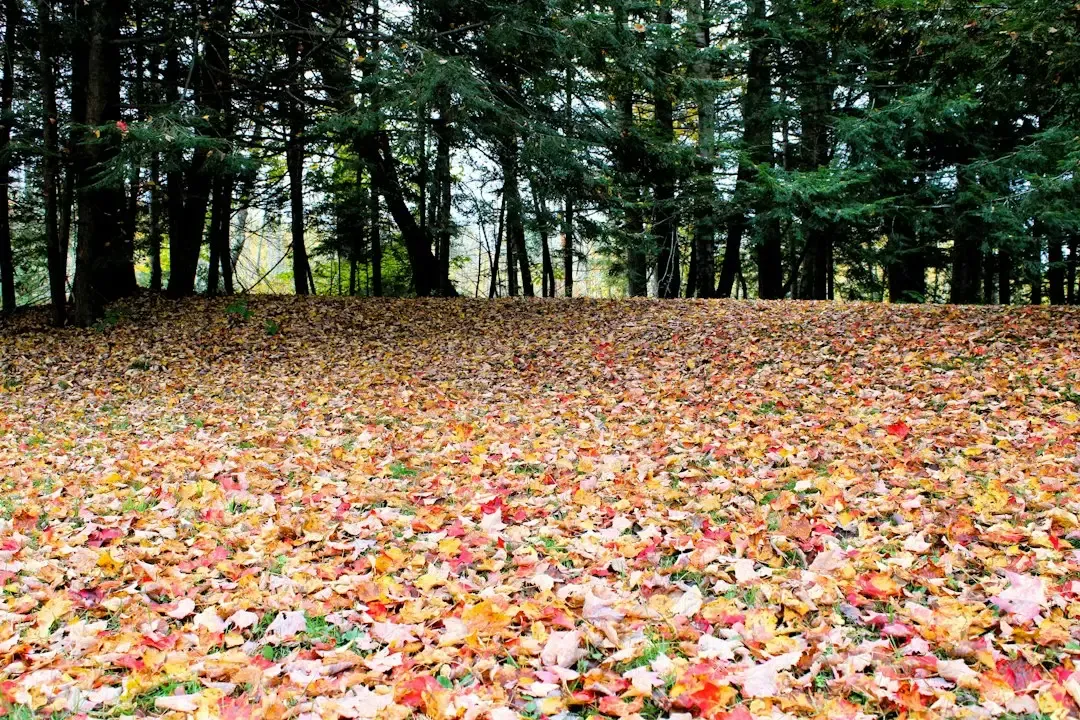
The most obvious calling card of an autumn storm is the sheer quantity of leaves dumped onto the ground. But it is not just the fact that there are leaves everywhere; it is how they are arranged that gives the wind away. Long, narrow bands of leaves pointing in the same direction often trace the path of stronger gusts that swept through like invisible rivers.
Look at where leaves pile up most: against fences, walls, curbs, and hedges. These are places where wind slows down abruptly, dropping the lighter debris it has been carrying. If you see one side of a street smothered in leaves while the opposite sidewalk is relatively clean, that is the wind’s bias written on the pavement. The cleaner side was on the “upwind” edge of the flow; the messy side was in the wind’s natural dumping ground.
On a more detailed level, different leaf sizes tell you about different wind strengths. Small, dry leaves get picked up and carried far, even by moderate gusts. Heavier, wet, or thick leaves usually do not travel as far, so finding them unexpectedly far from their parent tree hints at especially powerful bursts. In that sense, a leaf carpet works like a crude wind-speed map drawn overnight.
If you want a quick post-storm “read” of the wind, try this mini-checklist as you walk your block:
- Are leaves lined up in bands or swirls, rather than spread evenly?
- Is one side of the street noticeably leafier than the other?
- Do you see large, heavy leaves far from any nearby tree of that species?
Put those together and you start to see where the wind ran, where it slowed, and where it surged.
#2: Tree Damage and the Direction of Breaks
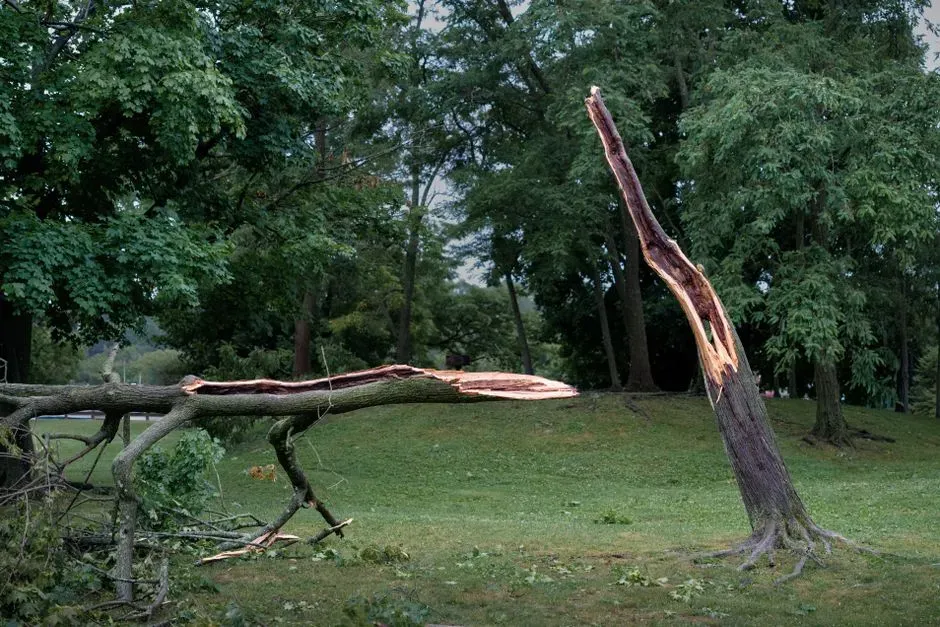
Broken branches might feel like pure bad news, but they are also some of the clearest evidence of how the wind behaved. When you see a limb snapped off and lying on the ground, look at the angle of the break and the way the remaining part of the branch leans or twists. In many cases, the break points roughly away from the direction the strongest gusts were coming from, because the wind bent the branch backward until it failed.
There is a difference between bending and twisting, and storms often do both. Straight-line wind, like you get in strong autumn squall lines, mainly pushes branches in one consistent direction. Tornado-like or vortex-driven gusts can twist branches around before they break, leaving spiral-like damage or oddly corkscrewed tear patterns. Even in milder storms, you might spot subtle twisting in smaller limbs where turbulent eddies rolled through the canopy.
The distribution of broken branches across a group of trees is just as telling. If all the breaks face the same way, you are likely looking at fairly uniform, straight wind. If the damage angles are more chaotic, with some trees snapped in different directions, it hints at shifting gusts, small vortices, or wind that changed direction rapidly as the storm moved. This is one reason foresters and meteorologists often walk storm paths: the trees are like arrows that have been bent and left frozen in place.
Think of a storm as a stress test for every tree in its path. Wherever the wind finds structural weakness – old scars, rot pockets, or overly top-heavy limbs – it leaves behind a break pattern that mirrors not only the health of the tree, but also the character of the wind that struck it.
#3: Fallen Branches and Debris “Wind Shadows”
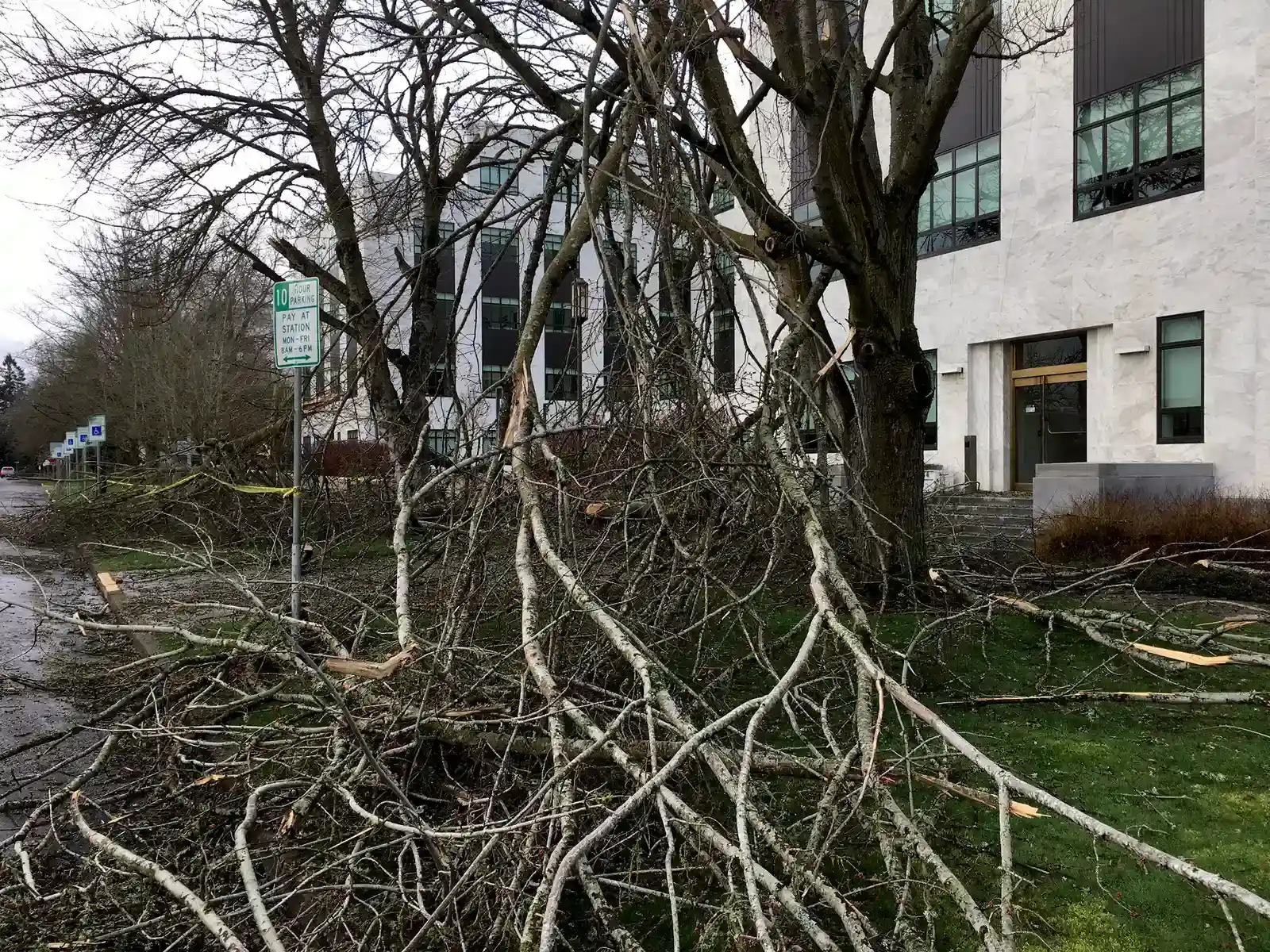
Beyond broken limbs still attached to trees, the scattered branches and sticks on the ground sketch another layer of the storm’s story. Debris often collects in streaks, as if someone dragged a broom across the landscape in one direction. Those streaks trace the main wind flow and where gusts were funneled between buildings, through alleys, or along tree lines.
Pay attention to what places have very little debris, even though they are close to hard-hit spots. These are wind shadows: spaces that sat in the lee of buildings, walls, hills, or forest edges. In those sheltered pockets, the wind loses energy and skips overhead, dropping only the smallest pieces. Walking from a debris-heavy zone into a surprisingly clean corner feels a bit like stepping out of a river onto a dry rock.
Sometimes you will find oddly sorted debris: lighter twigs piled higher on one side of a yard, heavier chunks arranged lower down, as if someone filtered them by weight. That is essentially what the wind is doing. As it weakens, it can no longer carry the heavier pieces, so they fall first; the lighter bits keep going a little farther before settling. It is a crude but surprisingly accurate demonstration of how wind speed controls what it can move.
Here is a simple way to read debris patterns near your home:
- Look for clear bands or streaks of branches: they mark the wind’s preferred lanes.
- Notice areas that are oddly clean right next to messy ones: these are your wind shadows.
- Compare lighter and heavier branches: where do the heavy ones stop, and where do only the light ones continue?
Suddenly, the random mess starts to look more like a map.
#4: Sand, Soil, and Grit Repainted on Surfaces
After an autumn storm, especially near coasts, rivers, or construction sites, you may find a thin film of sand, dust, or soil stuck to walls, cars, and windows. This is the storm’s overspray, and it tells you how the wind collaborated with rain. When raindrops fall through dusty air or splash into loose soil, they capture fine particles. Wind-driven rain then literally paints these particles on the surfaces it slams into.
The resulting patterns are a kind of low-tech flow visualization. Sideways streaks across siding or glass mean that the wind pushed rain at an angle instead of straight down. Heavier buildup on one side of a building indicates which face took the brunt of the storm. Sometimes you will even see arcs or fan-shaped patterns where eddies formed around corners, much like you would see swirling in a smoke tunnel experiment.
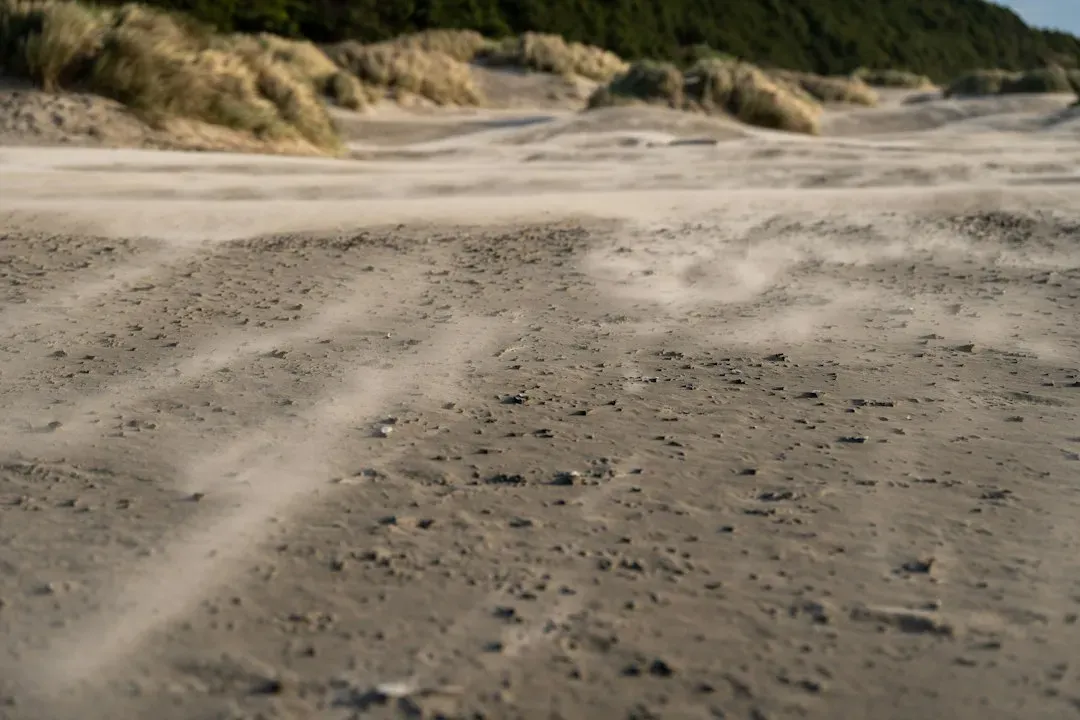
On the ground, thin veneers of sand or silt may be rearranged into ripples and miniature dunes. There is a simple rule here: the more organized the ripples, the more steady and sustained the wind direction was. Chaotic, crisscrossed patterns point to shifting winds or quick bursts from different angles. The size of the particles matters too: if you see larger grains and pebbles relocated, the storm likely produced some intense gusts capable of nudging heavier material.
Think of it like this: the storm briefly turned your street into a laboratory wind tunnel, and the dust and sand became its tracer dye. The patterns they leave behind are not pretty in the conventional sense, but once you notice them, you cannot unsee the way they reveal the structure of the wind.
#5: Puddles, Drainage Trails, and Wind-Driven Rain Marks
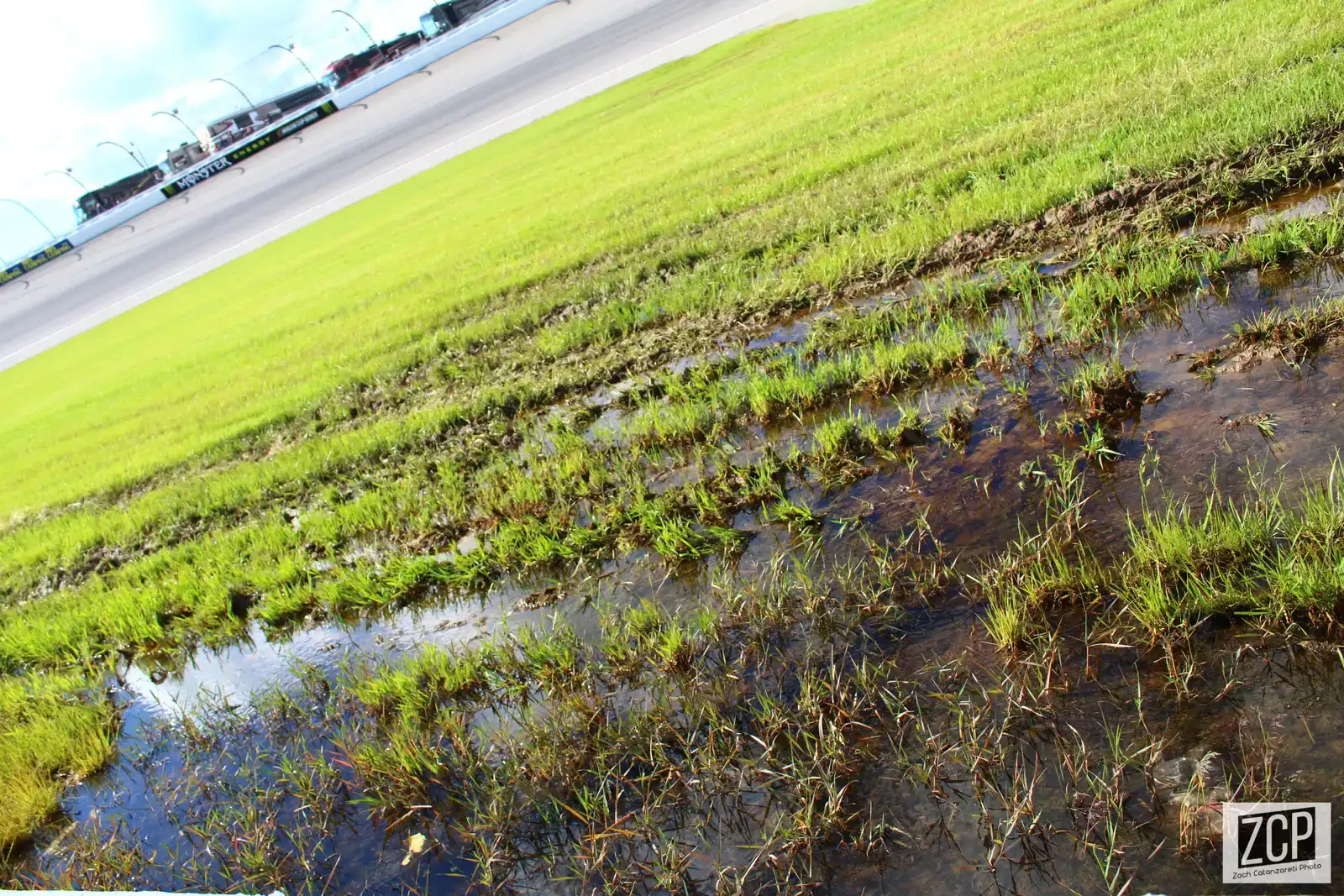
It might sound strange to say that water can explain wind, but the two are tightly linked in any storm. Take a look at puddles the next morning. If you see elongated puddles that stretch in a particular direction or have little “tails” pointing away from a curb, those shapes often line up with the dominant wind direction that pushed the rain as it fell and flowed.
Wind influences where rain actually lands. Strong gusts can slant rainfall so much that one side of a tree trunk is soaked while the other side remains fairly dry. When the storm is over, that “wet side, dry side” contrast lingers for a while, acting like a compass pointing back at the wind. The same goes for fences: one face may glisten and drip for hours, while the other is barely damp.
Drainage trails on sidewalks and driveways offer another subtle clue. Instead of water simply following gravity, wind-driven sheets of rain may have redirected which cracks and low spots filled first. You can sometimes trace fingerlike patterns of dried runoff that arch slightly in the wind’s direction, rather than falling straight downslope. It is a quiet reminder that wind constantly negotiates with gravity over where water is allowed to go.
To read the story in the water, ask yourself:
- Which sides of vertical surfaces stayed wet longest?
- Do puddles and dried runoff lines point in a consistent direction?
- Did some gutters or drains overflow only on one side of a roof or yard?
Each of those details whispers something about how the wind steered the rain.
#6: Power Lines, Flags, and Anything That Stayed Taut
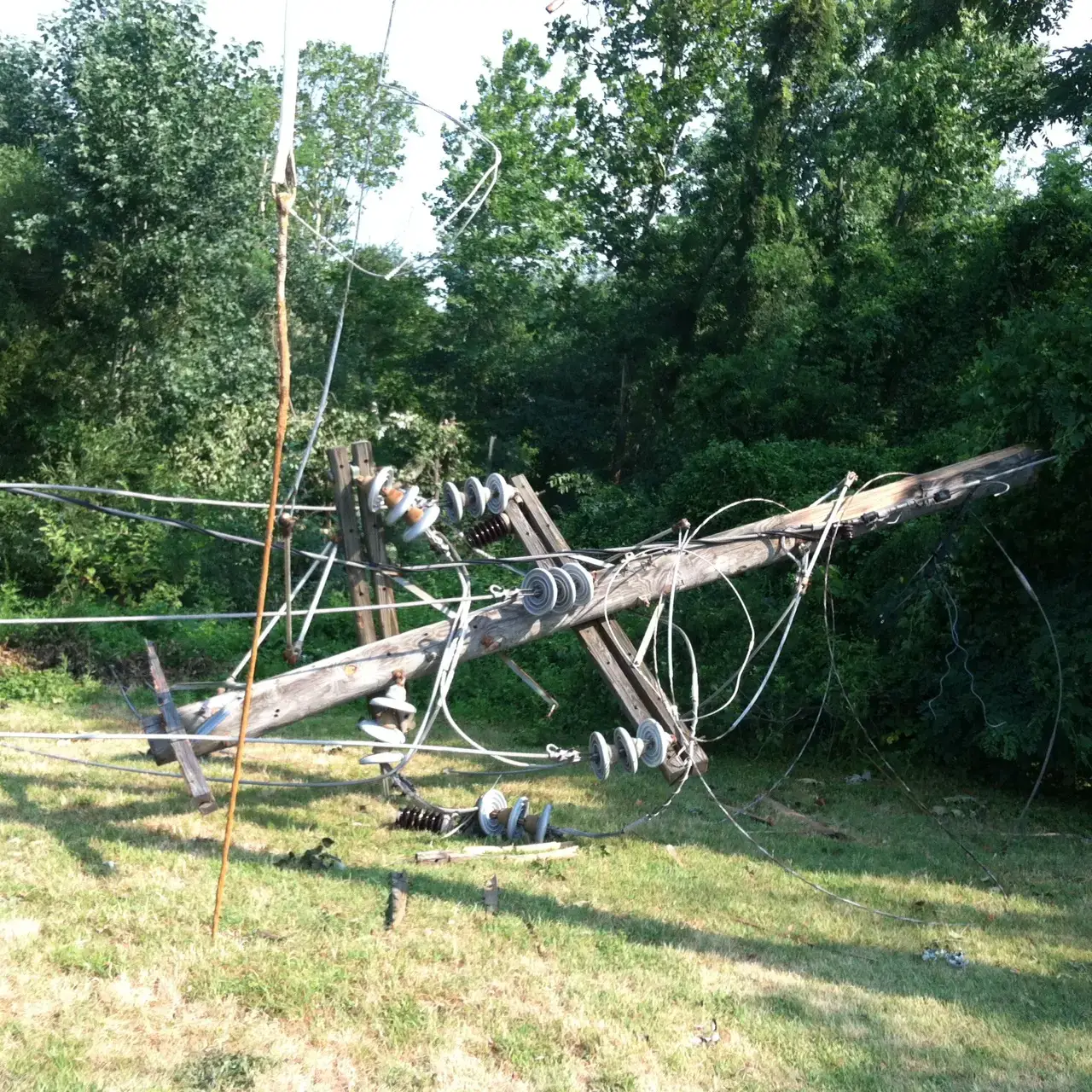
Not everything the storm touches ends up on the ground. Some of the best clues are the things that stayed put but show signs of a long wrestling match. Power lines that are still humming, flags that are frayed, and guy wires or clotheslines that are visibly twisted or pulled off true all tell you how the wind tugged at them.
Power lines, in particular, can reveal the rhythm of gusts. After a strong autumn blow, you may notice insulators rattled loose, spacers shifted, or lines that are still swaying long after the calmer air has returned. Those oscillations are not random; they are a leftover echo of how the wind excited the lines’ natural frequencies during the storm. In extreme cases, that same process can lead to galloping lines and outages, all initiated by a certain range of wind speeds and angles.
Flags and banners are more dramatic storytellers. A torn flag edge, frayed seams, or bent flagpoles all point to sustained, directional stress. If you walk through a town and see that every flag is frayed on the same side, you have just found a visual survey of the storm’s dominant wind direction without needing a single weather instrument. Even loose holiday decorations can leave clues; the side that kept getting blown against a wall or post will usually look more battered.
Personally, I have come to trust these “everyday anemometers” more than fancy gadgets on a roof. They are not precise, but they are honest. You do not need to know that the wind gusted to a specific number of miles per hour to understand it was strong enough to twist wires, shred fabric, and make everything that was loosely tethered wish it had been installed more securely.
#7: Shingles, Roof Damage, and “Lift” Patterns

Roof damage is one of the more expensive signatures of a strong autumn storm, but it is also rich with information about what the wind actually did up there. When shingles are peeled back or missing, start by noticing which slope of the roof took the biggest hit. The most damaged side usually faced into the prevailing wind, getting hammered by both direct pressure and wind-driven rain.
What many people do not realize is that wind over a roof behaves a lot like air over an airplane wing. As it flows up and over the peak, it speeds up on the far side, lowering the pressure and literally trying to lift the roofing materials. That is why you often see shingles ripped from near the edges and ridges instead of just the windward face. Those losses are the storm’s proof that air can create suction strong enough to overcome nails and adhesive when gusts are high enough.
The pattern of missing shingles can hint at gust structure. Neat, straight strips of damage often show where a particular gust line or burst of higher wind passed over, almost like a fingerprint. More scattered, patchy losses can suggest a mix of wind directions or turbulent flow as the storm evolved. If you compare a few roofs on the same block, differences in damage also show how small changes in orientation and height change the way wind hits each structure.
There is an uncomfortable truth hiding here: roofs are a quiet laboratory in structural aerodynamics, and every storm is a fresh experiment. When the wind wins, the missing shingles are its victory marks, and if you read them carefully, they explain just how aggressively air can pull upward, not only push sideways.
#8: Litter Trails, Bins, and the Journey of the Lightest Objects
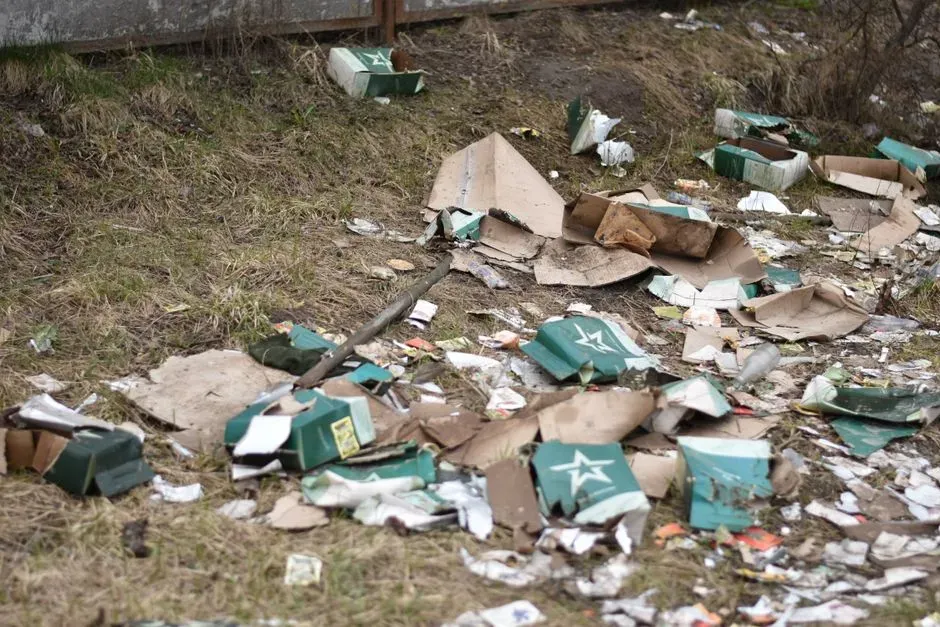
If you really want to see what the wind was doing at human scale, forget the trees for a moment and follow the trash. Autumn storms love to turn recycling bins into accidental weather stations. Lightweight items like cardboard, plastic bottles, and grocery bags are some of the first to move and the last to settle, which means they trace long, detailed paths through the neighborhood.
Look for where litter clusters: against chain-link fences, behind hedges, and in corners of parking lots. These are low-pressure pockets where swirling air slows down and drops what it is carrying. When you see repeated lines of trash traveling down the same alley or along the same curb, it suggests that the wind found a reliable “corridor” there, maybe guided by building walls or subtle slopes in the land.
Another clue is what remains in the bins. If heavy glass jars stayed put but light plastic bottles vanished, you know the gusts were strong enough to pluck the lighter items out and give them a fairly long ride. If entire bins were overturned and rolled, you are clearly dealing with an even more energetic event. From a physics standpoint, it is all about drag and inertia; from a practical standpoint, it means you can read wind intensity and direction from the worst part of the post-storm cleanup.
In my own neighborhood, I have basically learned the storm “highways” by where the trash ends up. One street consistently becomes the final resting place for everyone else’s cardboard on windy nights. That is not random; it is the wind revealing the shape of our streets and the way air flows between them.
#9: Broken Windows, Cracked Glass, and Pressure Clues

No one wants to deal with broken windows after a storm, but when they do appear, they are among the starkest signatures of the wind’s power. The first question to ask is whether the glass failed because of direct impact, such as flying branches or debris, or because of pressure and flexing. Impact leaves localized, often circular or spiderweb cracks around a clear strike point. Pressure-related failures can create more uniform bowing and cracking across the pane.
The side of the house where windows break tells you a lot. Windward windows (the ones facing straight into the wind) can fail due to both impact and the intense pressure of air piling up against them. Leeward windows (facing away from the wind) experience the opposite: pressure outside drops as air flows past, while indoor pressure may stay higher, pressing outward on the glass. In rare but dramatic cases, that inside-out push can crack or blow out windows without any direct object strike.
Even unbroken windows can keep subtle records of the storm. Tiny leaks around frames may leave water streaks inside where wind-driven rain was forced through gaps. Condensation patterns can also show where colder, wind-chilled glass met warm indoor air during the height of the storm, particularly along edges where drafts were strongest. It is like the window briefly became a living graph of temperature and pressure differences.
From a scientific perspective, this is all aerodynamics and fluid mechanics. From a homeowner’s perspective, it is a harsh reminder that wind is not just a sideways push, but a three-dimensional pressure field. The cracks in the glass are simply one of the rare times we can literally see that invisible push and pull made solid.
#10: Soundscapes and How the Silence Changes Afterward

This one is less tangible, but just as real: the way a place sounds before, during, and after an autumn storm reveals a lot about the wind. Beforehand, you might hear leaves rustling or a low, distant roar as the storm approaches. During the peak, everything escalates: whistling around windows, gutters rattling, tree canopies roaring like ocean surf. The exact pitch and rhythm of those sounds depend on wind speed, direction, and what it is flowing past.
The morning after, the change in sound can be startling. Sometimes the world feels oddly quiet, not only because the storm has passed, but because the wind has rearranged or removed the things that used to make noise. A loose sign that clattered in every breeze may now be torn down. Tree branches that once rubbed together and squeaked may have snapped off. The soundscape has been edited by the storm, and the edits are clues.
If you pay attention over several seasons, you start to recognize certain “notes” that only appear in particular wind directions or strengths. A metal vent humming on the north side of the house, a telephone wire singing in a southerly gale, a specific whistle around a window only when gusts hit a certain speed – these are all acoustic fingerprints of wind interacting with structures. After a strong storm, some of those fingerprints vanish and others appear.
We tend to dismiss sound as too subjective to count as evidence. But in practice, sound is just vibrating air, stirred by wind. The noises a storm leaves behind or silences it creates are another way the wind has written itself into the environment, not just in things you can see, but in what you hear – or suddenly stop hearing.
#11: Temperature, Smell, and the “Feel” of the Air

Not every trace of wind is visible or audible. Some of the clearest hints are in how the air itself feels and smells once the storm has moved on. Autumn storms often drag down cooler, drier air from higher latitudes or altitudes, replacing milder, humid air that sat over your area before. That sudden crispness you feel when you open the door is a direct result of air masses the wind has shuffled around.
Smell is another underappreciated clue. After a strong blow, the air might carry the sharp scent of broken leaves, wet soil, pine resin, or even distant smoke or sea salt, depending on your region. Those smells travel because wind acts like a giant mixer, blending pockets of air that normally stay put. When you notice the scent of the ocean far inland, or the earthy smell of fields stronger than usual in town, the wind is the courier.
There is a science term here – advection – which simply means horizontal transport. Autumn storms excel at it. They advect warmth, cold, moisture, and pollutants across long distances. The leftovers we sense with our skin and nose are proof that wind is more than just a local breeze; it is part of a wider conveyor belt connecting regions. You can feel that connection quite literally when the air on your porch suddenly feels like it belongs to a different place a few hundred miles away.
For many people, this is the most personal part of the storm’s legacy. It is not about broken things or scattered debris. It is about stepping outside and thinking, this does not feel like yesterday. In that subtle, physical memory, your body is quietly reading what the wind has done.
#12: The Sky It Leaves Behind – Cloud Streets and Clear Edges

The final and maybe most poetic thing an autumn storm leaves behind is written in the sky itself. As the main body of clouds moves on, sharp edges can develop along the back side of the system. You might see a crisp line where dark, layered cloud suddenly gives way to blue sky. That edge is a boundary between different air masses, shaped and sharpened by the wind at higher levels of the atmosphere.
Sometimes, in the hours after the storm, you will see long, parallel lines of clouds stretching across the sky like lanes on a highway. These are often called cloud streets. They form when steady winds blow over a cooler surface, such as autumn-cooled land or water, creating rolling tubes of rising and sinking air. Clouds condense in the rising parts and vanish in the sinking parts, literally drawing the wind’s internal rolls for everyone to see.
Even the direction clouds move in after the storm can be different from the surface wind you feel on your face. That tells you the wind is layered: one direction down low, another above. The leftovers of a storm expose that layering when you see high cirrus clouds sliding one way and lower cumulus drifting another. That vertical stack of directions helps explain why some storms twist and shear, and why forecasting them is so tricky.
So when you step out after an autumn blow and look up, you are not just enjoying the “clearing.” You are watching the atmosphere’s own handwriting fade slowly off the page. For a short time, the sky openly displays the pathways along which the wind has just been roaring.
Conclusion: Reading the Mess the Wind Leaves Behind
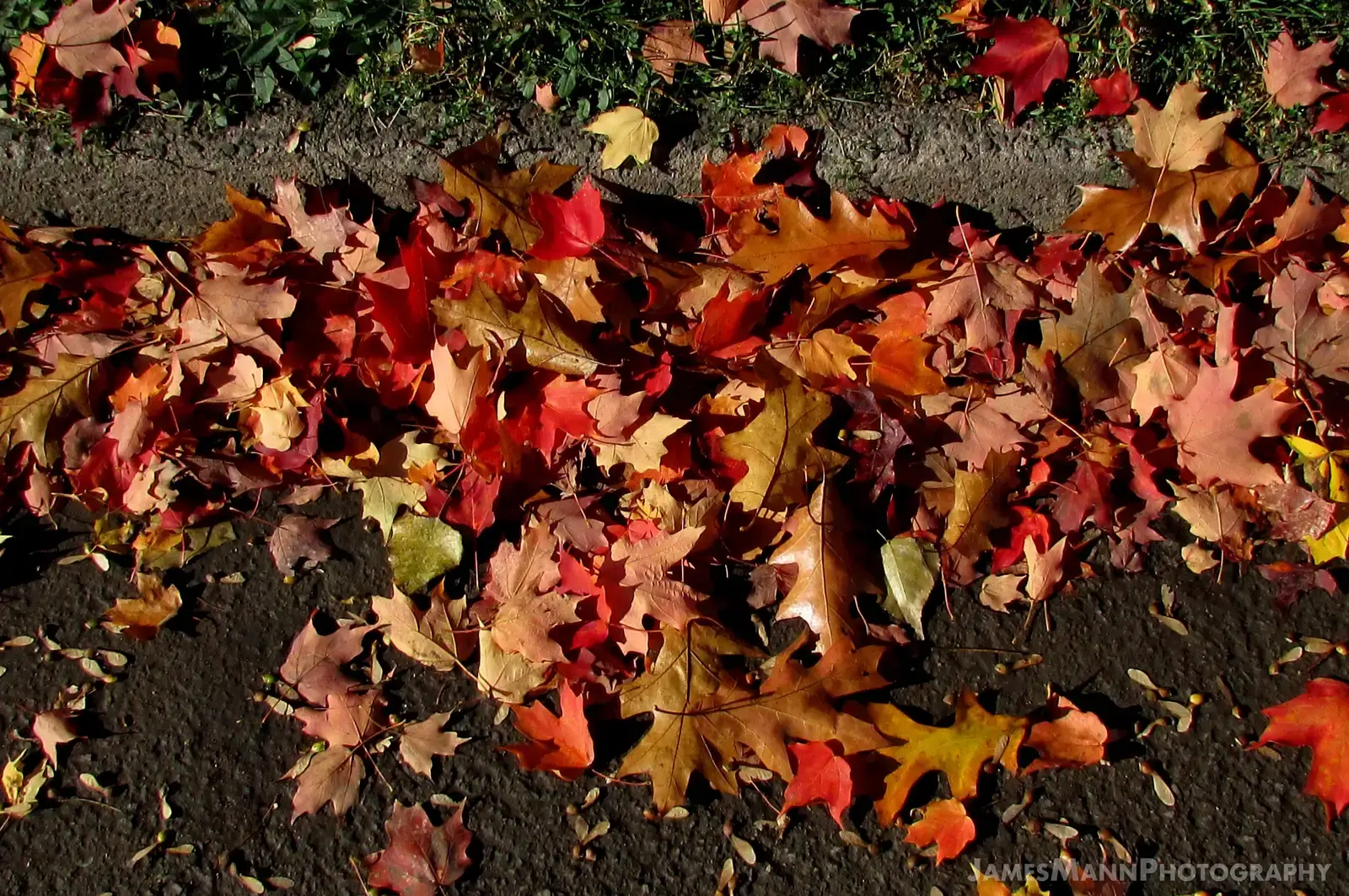
Autumn storms can feel brutally random when you are dealing with a fallen tree in your yard, a leaky roof, or a neighborhood coated in damp leaves. But if you pause once the urgent cleanup is done, the chaos starts to look strangely organized. Leaf carpets, snapped branches, sand streaks, trash trails, battered roofs, broken windows, shifted sounds, and sharpened skies are not just aftermath; they are records.
My own opinion, after years of paying attention to these little details, is that we underestimate the power of simply looking closely after a storm. You do not need a degree in meteorology to read the basics of what the wind did. A child can point out which way the leaves are piled or which side of the house is soaked. In a world obsessed with smartphone radar loops and model graphics, it is almost rebellious to walk outside and let your senses explain the weather.
There is also something grounding, even comforting, in recognizing patterns in what at first looks like pure wreckage. When you realize that a bent gutter, a line of knocked-over bins, or a strip of missing shingles is part of a larger, understandable story about air in motion, the storm feels a little less like an arbitrary attack and more like a force you can learn from. You still respect it, maybe even fear it a little, but that fear is anchored in understanding rather than mystery.
Next time an autumn storm barrels through and the world looks shredded the morning after, try reading the scene instead of just sweeping it away. The wind may be gone, but it has already written its memoir across your street, your trees, your roof, and your sky. The only real question is: will you take the time to learn its language?