

Imagine standing in a cave, holding a tiny, weathered seashell that clearly came from a coastline hundreds of kilometres away – and realizing the person who brought it there lived more than one hundred thousand years ago. That single object suddenly feels less like a trinket and more like a message from deep time: we were already connected, already moving ideas and symbols across vast landscapes when glaciers still dominated the horizon. It quietly shatters the stereotype of prehistoric people as isolated bands surviving day to day with no bigger picture.
Anthropologists now see these early traded shells as evidence of something far more profound than a simple swap of pretty objects. They hint at social ties, shared meanings, and fragile but real networks stretching over distances a person would need days or even weeks to walk. When I first read about these finds, it felt strangely familiar – like scrolling through social media and seeing a post from a friend of a friend on the other side of the world. Different technology, different pace, but the same deep human impulse: to reach beyond our immediate circle and say, in some symbolic way, “We belong together.”
How a tiny shell rewrites our sense of “prehistory”

The idea that long-distance trade existed more than one hundred thousand years ago can sound almost absurd at first. We tend to picture early Homo sapiens as small, scattered groups barely scraping by, staying close to familiar hunting grounds and water sources. In that mental picture, social life is local, practical, and narrow, with little room for anything that looks like organized exchange across great distances.
But then archaeologists start finding marine shells in places that are anything but coastal – inland caves, rock shelters, and sites far from the nearest sea, sometimes more than three hundred kilometres away from where those species naturally occur. These shells are not just random beach debris either; they are often modified, worn, or pierced in ways that suggest personal ornamentation rather than purely practical use. That quiet contrast between our old assumptions and the physical evidence is what forces a rethink: maybe “prehistory” was already a lot more connected, symbolic, and social than we once believed.
Why shells, of all things, became prehistoric social media

It might seem strange that shells, not stone tools or chunks of meat, became one of the clearest fingerprints of the earliest long-distance trade. Yet shells are small, durable, eye-catching, and symbolically rich, making them perfect for carrying meaning across space. A particular type of shell, when recognized over a region, can act almost like a shared badge or token, signaling group membership or status to anyone who understands the code. In that sense, a shell necklace could function a bit like a modern logo hoodie: wearable proof you’re part of a wider scene.
At some prehistoric sites, the shells show signs of repeated handling and sometimes deliberate modification, like perforations and polishing. That suggests they were not just curious finds but valued objects that people took the trouble to prepare, wear, and display. When the same species and styles of ornament turn up at sites far from the coast and far from each other, it hints at a shared symbolic language. You could think of those shells as early “posts” traveling through a slow-motion network, each one silently broadcasting who someone was, who they were connected to, and what they valued.
Walking 300 kilometres: what it tells us about cooperation
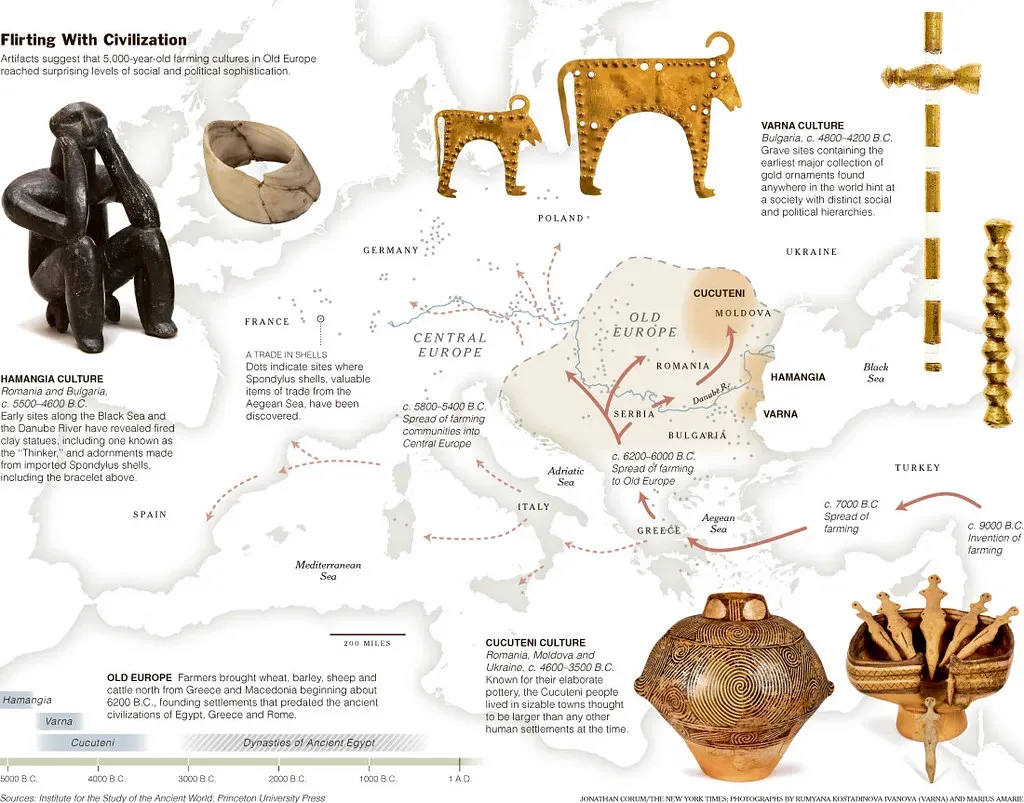
Moving any object more than three hundred kilometres on foot requires more than simple curiosity; it demands planning, persistence, and, crucially, cooperation. Even if no one person walked the entire distance, the shell would have to pass through multiple hands, each transfer resting on some kind of trust or mutual benefit. These are not the hallmarks of purely opportunistic, short-term interactions; they point to repeated contacts, shared expectations, and social rules strong enough to hold over time and space.
We can imagine chains of groups, each with their own territories, meeting intermittently at seasonal camps or resource-rich areas. During these encounters, shells might be exchanged alongside meat, stone, stories, or potential mating partners. The remarkable part is not just the distance, but the implied stability of those links: for a distinctive shell to spread, the social “roads” between groups had to stay open longer than a single lucky journey. That is what long-distance trade really signals in deep time – not just movement of objects, but a durable web of collaboration.
The hidden map of prehistoric social networks
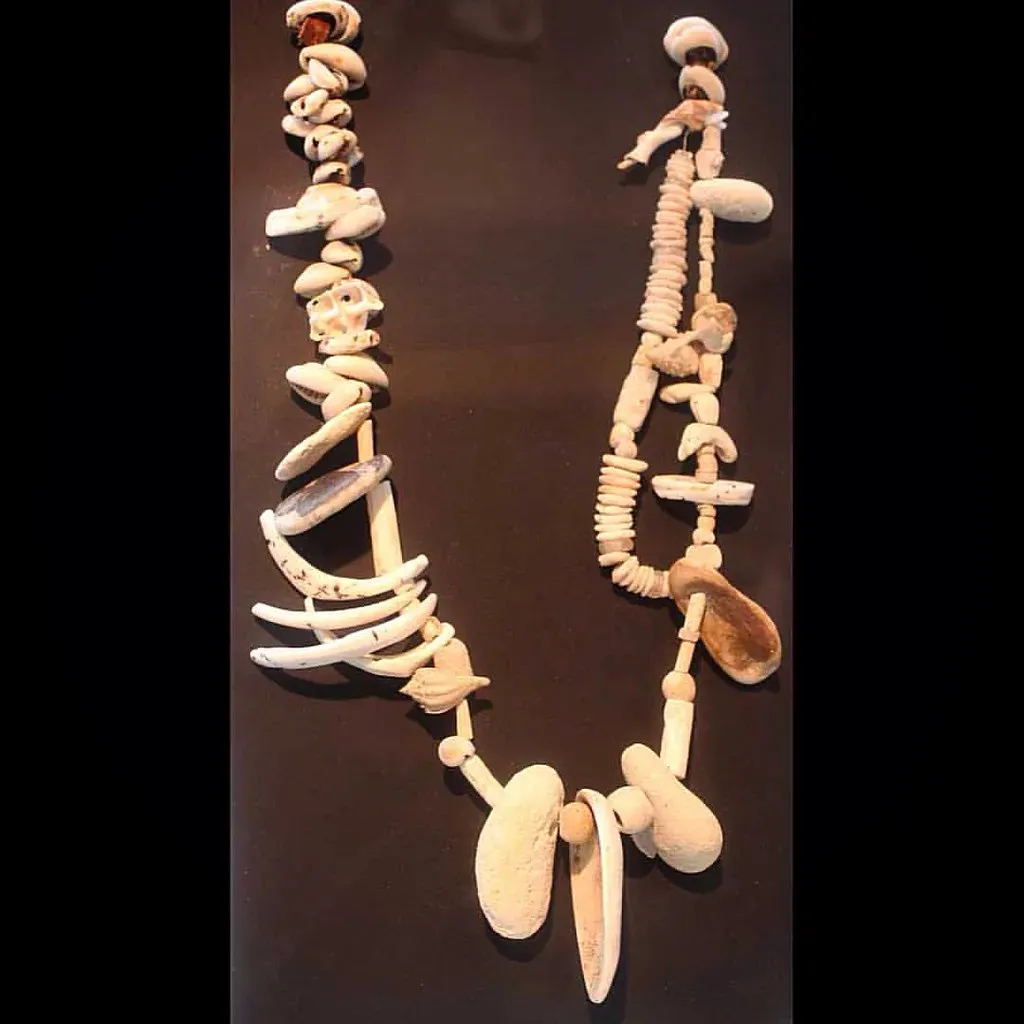
Modern social networks are easy to visualize thanks to graphs, apps, and endless data, but prehistoric social networks leave only scattered clues. Those shells are like pins on an ancient map, marking where ideas and objects traveled, even when we have no written records of the paths they took. When archaeologists find the same types of ornaments, materials, or styles distributed across wide areas, they can sketch out rough “network diagrams” showing who might have been in contact with whom.
What makes the shell evidence so striking is that it suggests networks spanning regions, not just neighboring bands. Rather than isolated islands of humanity surrounded by empty wilderness, we start to see overlapping spheres of interaction. People were likely sharing knowledge about landscapes, animals, plants, and even invisible dangers like disease or conflict. In a way, these early networks worked like a slow relay system, passing information and materials along long before roads, writing, or wheels existed. The shells are just the visible tip of a much larger, mostly invisible social iceberg.
Identity, symbolism, and the human urge to “belong”

Long-distance trade in shells is not only about economics; it is also about identity and belonging. When someone wears an imported shell, especially in a place where such objects are rare, they are not just displaying wealth or luck. They may be signaling connections to distant people, access to particular routes, or membership in a broader cultural tradition. This blends the practical with the emotional in a way that feels surprisingly modern: part status update, part story, part subtle emotional armor.
There is a good chance people attached stories and meanings to these objects, maybe tying them to ancestors, spirits, or memorable journeys. Even without knowing the exact narratives, the repeated effort to move, modify, and display shells implies that they mattered on more than a material level. When I think about it, it is hard not to see a parallel with the way we attach meaning to small objects today – a festival wristband, a gifted bracelet, a concert ticket tucked into a wallet. The objects themselves are simple, but the emotions and memories they carry travel much farther than their physical size suggests.
Risk, resilience, and why distant allies mattered

Life one hundred thousand years ago was not a gentle setting; climate swings, dangerous animals, and resource shortages could quickly turn fatal. In such an environment, having reliable contacts beyond your immediate group was like having an insurance policy. Long-distance trade, even in seemingly symbolic items like shells, often points to deeper relationships that could be activated in times of need. If you have exchanged valued objects with a distant group, you are not just strangers anymore; you have a shared history, however fragile.
Anthropologists studying more recent hunter-gatherer societies consistently find that wide social networks help people buffer against local crises. Sharing information about rainfall, migrations, or safe routes can be the difference between survival and catastrophe. It is reasonable to think something similar was already playing out when those ancient shells were on the move. The shell may be what survived in the ground, but behind it likely stood a network of obligations, favors, and expectations – a quiet safety net stretched across the prehistoric landscape.
What this ancient trade says about us today

When you zoom out, the discovery of long-distance shell trade more than one hundred thousand years ago feels like a mirror held up to our hyper-connected world. We tend to think the impulse to build far-reaching networks is a modern reaction to technology, but the roots clearly run much deeper. Our ancestors were already stitching together distant communities with fragile threads of exchanged objects and shared symbols. That makes our current global web of connections feel less like an invention and more like an escalation of an old habit.
There is also a sobering side to this story: networks make us powerful, but also interdependent. Just as those early groups relied on distant contacts and shared understandings, we rely on invisible global systems and relationships every day. My own opinion is that these shells are a quiet rebuke to the fantasy of complete self-reliance. Humans have been leaning on one another across distance for a very long time, and whenever we pretend otherwise, we are ignoring what has literally been true since the deep Ice Age. The shells remind us that connection is not a luxury or a trend; it is one of the oldest survival strategies our species ever invented.
Conclusion: a small object, a very big story

For me, the most remarkable thing about the oldest known long-distance trade is how modest it looks on the surface: a tiny shell, a few hundred kilometres of travel, a faint trace in the archaeological record. Yet behind that small object stands an entire world of relationships, obligations, shared meanings, and hard-won trust. It is a powerful correction to the idea that our distant ancestors lived in isolated bubbles, caring only about the next hunt or nearby river. They were already building social bridges we can still detect, if we look closely enough.
I am convinced this evidence should change how we talk about “primitive” societies altogether. If people were trading symbolic objects across great distances more than one hundred thousand years ago, then complex social thinking and long-range cooperation are not late add-ons to human nature; they are core features. That realization feels both humbling and oddly comforting. The urge to connect, trade, and belong has been with us for longer than almost any story we tell about ourselves today. When you picture that ancient shell in someone’s hand, are you really seeing a stranger – or an early version of us?