
Most people assume the “ultimate survivor” in nature is whatever’s biggest, fastest, or fiercest. Paleontologists will tell you the opposite is true. The creatures that actually outlasted everything around them were usually small, slow, and boringly unspecialized.
While T. rex got all the movie deals, a handful of unremarkable-looking animals were quietly grinding through five separate mass extinctions, watching entire kingdoms of life rise and vanish around them. These twelve species didn’t just survive their era. They buried every single creature they evolved alongside, and what’s coming up gets stranger the further down the list you go.
#1 – Horseshoe Crabs: The Ones That Outlived Trilobites, Dinosaurs, and Almost Everything Else
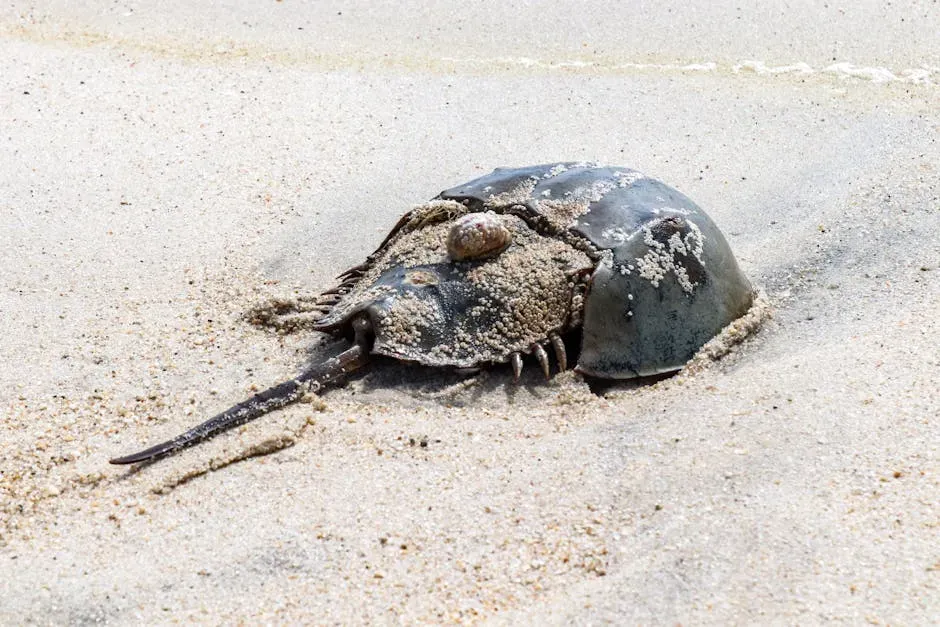
Horseshoe crabs aren’t crabs at all, and they’ve been quietly scavenging ocean floors since before most rock formations on Earth existed today.
Fossil evidence puts their lineage at roughly 450 million years old. Researchers have even found ancestral fossils in 445-million-year-old Ordovician rocks in Manitoba, Canada, about 100 million years older than any previously known horseshoe crab form. That’s older than trees, older than flowers, and vastly older than the dinosaurs everyone assumes were the ancient ones.
The truly wild part is who didn’t make it. Only four horseshoe crab species exist worldwide today, and many scientists consider the extinct trilobites their close relatives – a group so successful it produced over 20,000 known species. Twenty thousand species of a close relative, gone. Meanwhile, four humble horseshoe crab species just kept scavenging the same shallow coastlines they’d always used. Their design was so functional that evolution essentially gave up trying to improve it.
Fast Facts
- Lineage age: roughly 450 million years, older than trees and flowering plants
- Oldest confirmed ancestor fossil: 445 million years old, discovered in Manitoba
- Living species today: just 4, compared to over 20,000 trilobite relatives that vanished
- Their blue, copper-based blood is still used today to screen vaccines and medical devices for contamination
#2 – Coelacanths: The Fish That Fooled Science for 70 Million Years
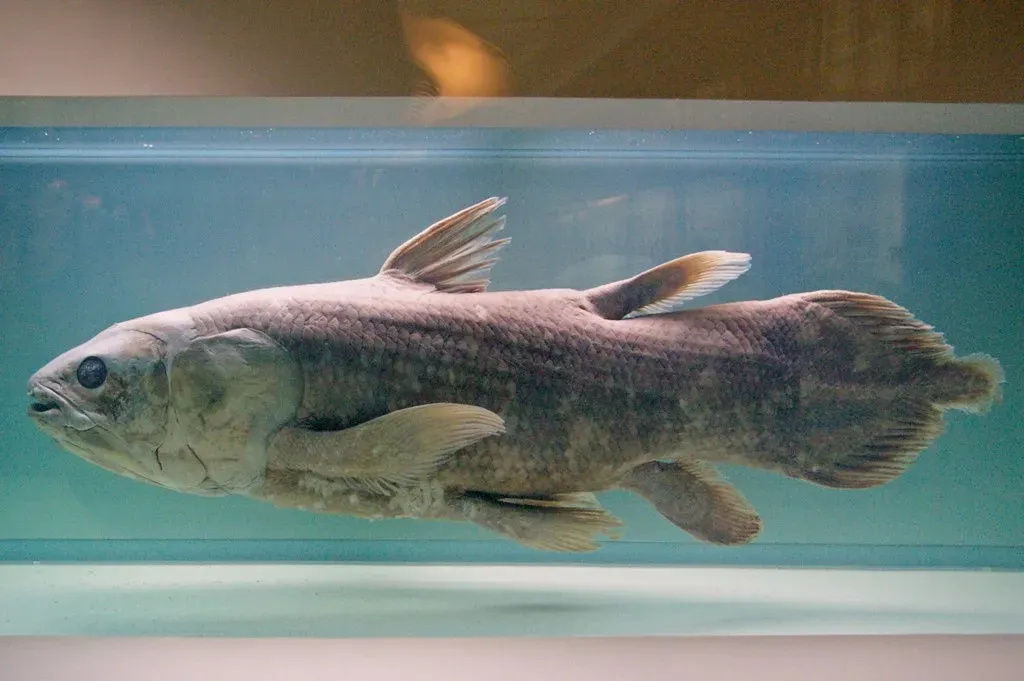
Every scientist on Earth was certain this fish had been extinct since the age of dinosaurs, until one showed up in a fishing net.
The coelacanth was thought to have died out roughly 70 million years earlier. But this one was very much alive, caught off South Africa in December 1938, and the discovery was treated as roughly equivalent to finding a living dinosaur. Coelacanths first appeared around 400 million years ago during the Devonian Period, meaning this fish had been quietly swimming around since before most of the animal kingdom had figured out how to live on land.
Here’s the part that should unsettle you: scientists studied its fossils for decades and never once suspected it was still alive. Today there are two known living species, found off the Comoros Islands and near Sulawesi, Indonesia. Every other lobe-finned fish family from that era vanished entirely, swallowed by whatever extinction event took out their neighbors. The coelacanth just kept doing its slow, deep-water thing, undisturbed, while entire evolutionary branches around it collapsed.
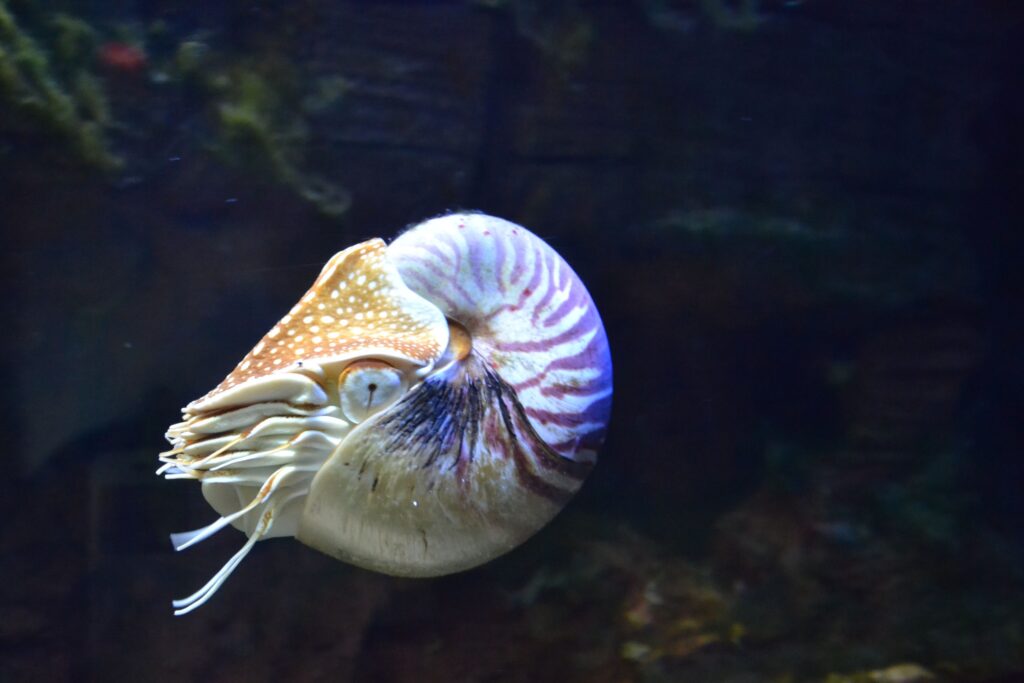
#3 – The Nautilus: The Cephalopod That Watched Its Whole Family Die Out
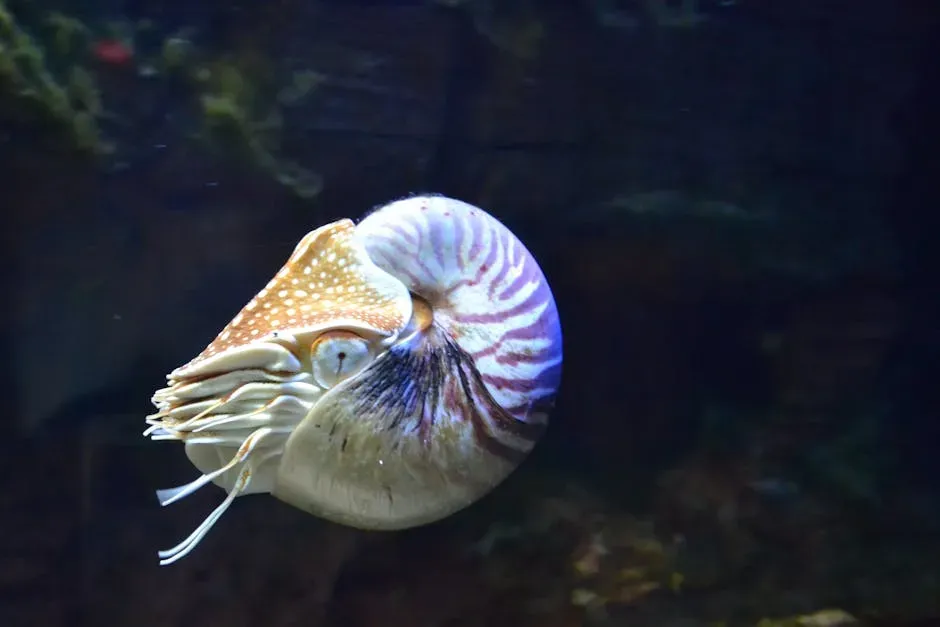
While ammonites ruled the ancient oceans in the thousands, one unglamorous cousin sat quietly in the deep and simply refused to disappear.
Ammonites mostly died out 66 million years ago, but other cephalopods, like the nautilus, survived. Ammonites were the flashy, diverse superstars of prehistoric seas, with dozens of species thriving in shallow Jurassic waters alone. The nautilus, by comparison, was the boring roommate who never went anywhere near the surface. That turned out to be the winning strategy.
Its deep-sea habitat and low-energy metabolism shielded it from surface-level environmental collapses, since these cephalopods reside at depths ranging from 300 to 600 meters, far beneath the chaotic waters where most life forms suffered. Recent research even suggests egg-laying strategy played a huge role. Nautiloids hatch a small number of large, protected eggs on the seafloor, while ammonites released clouds of tiny eggs into the water column, right where a catastrophe would hit hardest. One strategy meant extinction. The other meant 500 million years of survival.
#4 – Tuatara: The Last Reptile of a Lineage That Predates Most Dinosaurs
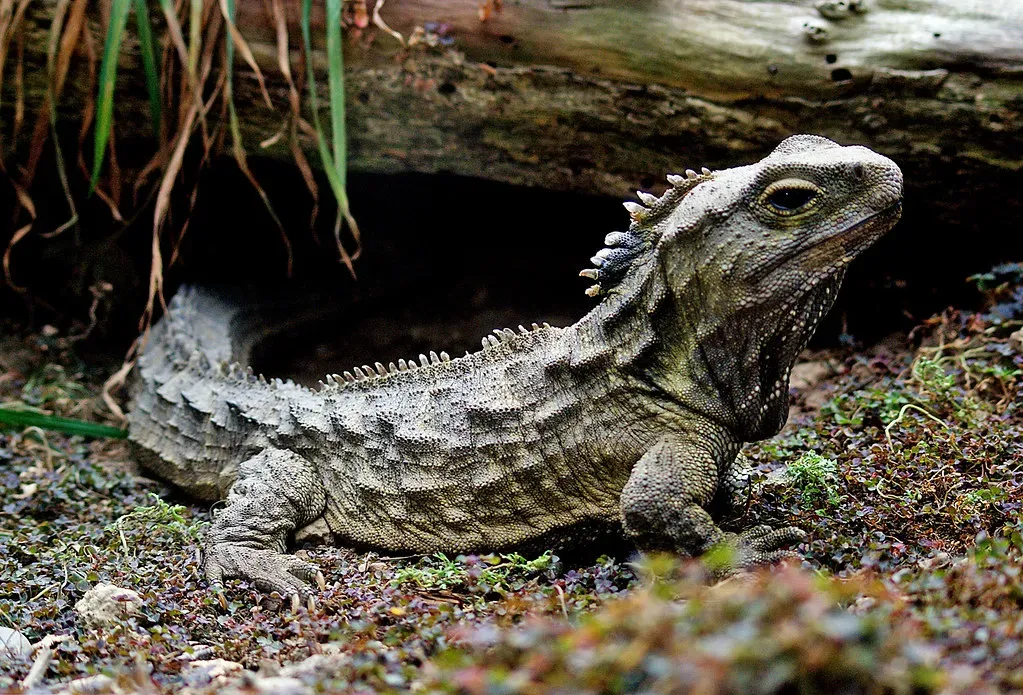
New Zealand’s tuatara looks exactly like a lizard, which is precisely the mistake that fools almost everyone, including, for a long time, scientists.
Rhynchocephalia is an order of reptiles that first appeared in the Triassic Period, approximately 250 million years ago. Today only one species, the tuatara, survives. This isn’t a lizard with old genes. It’s the sole living branch of an entire reptilian order that once dominated the globe, living alongside the dinosaurs before the rest of the Rhynchocephalia crew declined and vanished about 60 million years ago.
Its genome is almost 5 billion base pairs, one of the largest ever sequenced in a vertebrate, and researchers have found its evolution moved unusually slowly compared to other reptiles. The tuatara can live over 100 years, which is part of why it’s often called a “living fossil.” Every single one of its relatives, dozens of genera spanning 190 million years, went extinct. One species made it through.
Worth Knowing
- Order Rhynchocephalia dates back roughly 250 million years, to the Triassic Period
- Only one species, the tuatara, remains out of dozens of ancient genera
- Genome size: nearly 5 billion base pairs, among the largest ever sequenced in a vertebrate
- Individuals can live well over 100 years
- Found only in New Zealand, now mostly confined to protected offshore islands
#5 – Lungfish: The Fish That Watched Land Animals Evolve Out of Their Own Cousins
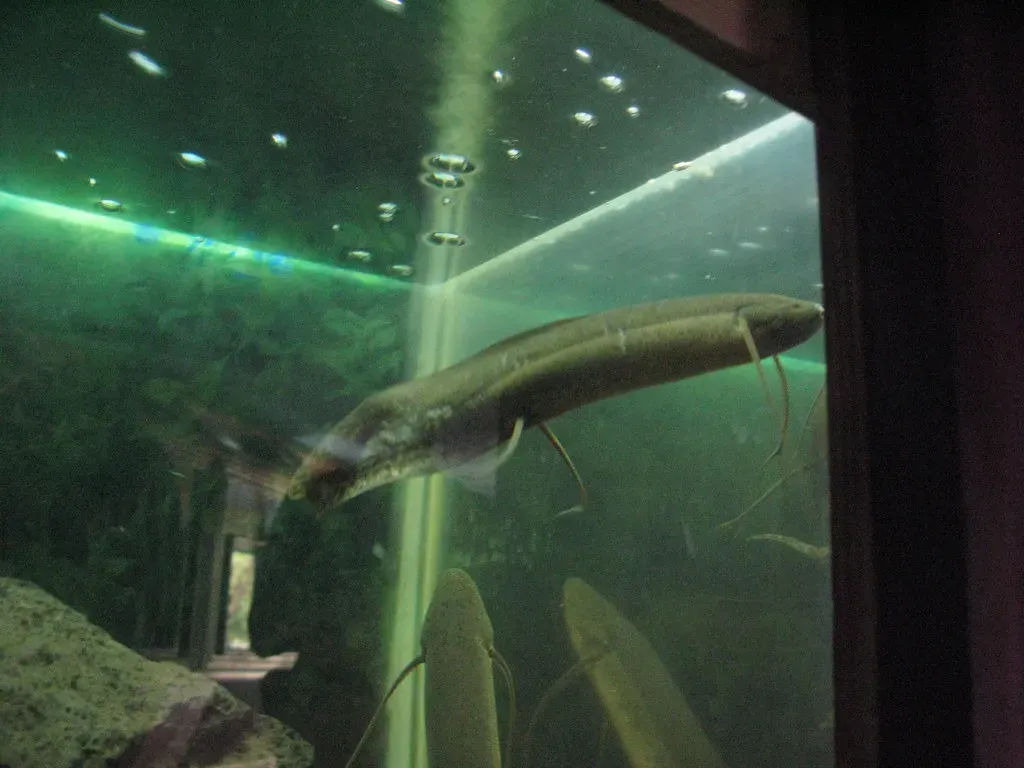
Lungfish have been breathing air on the side, just in case, for roughly 400 million years, long enough to watch their closest evolutionary relatives crawl onto land and become every land vertebrate alive today.
Paleontologists consider lungfish the closest living relatives of tetrapods, the four-limbed lineage that eventually produced amphibians, reptiles, birds, and mammals, including us. Somewhere in the deep past, one branch of the lungfish family tree decided to leave the water entirely, while another branch just didn’t. The branch that stayed put is still alive today, basically unchanged.
What makes lungfish especially strange is their survival toolkit. Some species can burrow into mud and breathe air directly through primitive lungs when their pond dries up completely, sometimes for months at a stretch. That single adaptation let them shrug off droughts and environmental swings that repeatedly wiped out more specialized fish. While their tetrapod cousins conquered the planet, lungfish just kept doing the same unglamorous thing in shrinking ponds, generation after generation, for longer than most animal phyla have existed.
#6 – Lampreys: The Jawless Fish That Predate Jaws Themselves
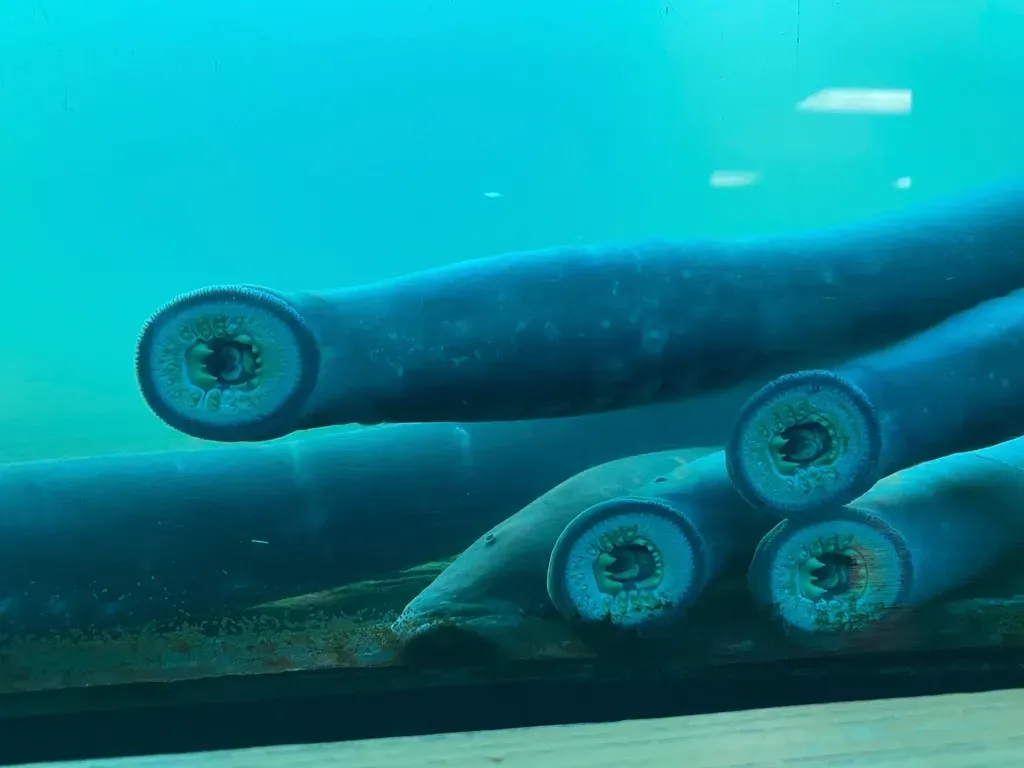
Before any creature on Earth had a jaw, lampreys were already here, which means every shark, every bony fish, every reptile, bird, and mammal evolved its face after this thing already existed.
Lampreys belong to a group of jawless fish whose lineage stretches back roughly 450 million years, older than almost every vertebrate body plan we recognize today. They feed using a circular mouth ringed with teeth instead of jaws, a design so ancient it predates the entire evolutionary invention of biting. While jawed fish diversified explosively into everything from tuna to tigers, lampreys just kept using the same jawless template their ancestors had.
The part paleontologists love arguing about: lampreys arguably represent an evolutionary dead-end that got lucky rather than a triumph of adaptation. Their body plan barely changed while the entire vertebrate world reorganized itself around jaws, limbs, and lungs. Most fish lineages from their era are known only from fossils. Lampreys are still out there, in rivers and coastlines worldwide, doing the exact same thing their 450-million-year-old ancestors did.
#7 – Hagfish: The “Living Fossil” Nobody Wants to Admit Is Fascinating
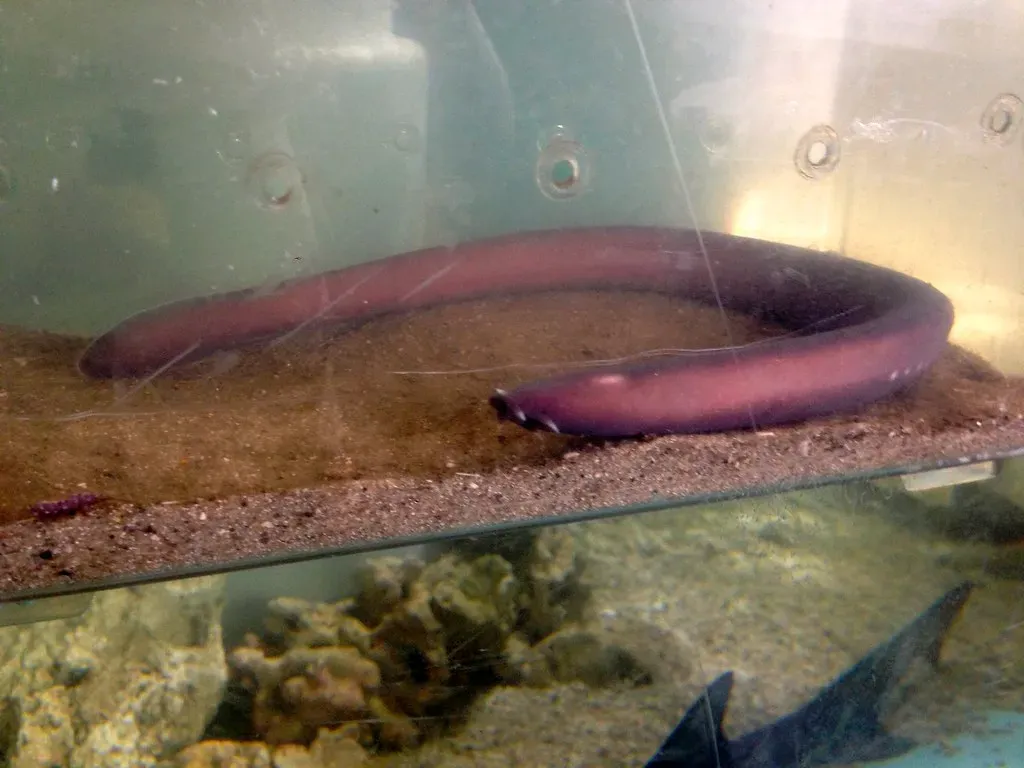
Hagfish get almost no respect, mostly because they’re famous for producing enormous quantities of slime, but their evolutionary resume puts almost every other vertebrate to shame.
Like lampreys, hagfish diverged from the rest of the vertebrate family tree before jaws ever evolved, placing their lineage among the oldest surviving vertebrate body plans on the planet. They don’t have a true backbone, true eyes, or a jaw, relying instead on a primitive skull and notochord that predates the skeletal innovations every other modern vertebrate takes for granted.
What’s genuinely remarkable is how little pressure evolution has put on them to change. Hagfish still scavenge ocean floors essentially the same way their ancient ancestors did, using rasping mouths to burrow into carcasses. While the rest of vertebrate evolution busied itself inventing jaws, limbs, lungs, and eventually warm blood, hagfish just kept perfecting slime production and carcass scavenging in the same cold, dark waters. It’s not a glamorous survival story, but it’s an undeniably successful one.
Quick Compare
- Hagfish & lampreys: jawless, diverged over 450 million years ago, body plan barely changed since
- Early jawed fish: appeared later, jaws allowed powerful biting, sparked explosive diversification
- Modern vertebrates: sharks, mammals, and birds all descend from the jawed branch
- End result: hagfish still scavenging the old way, while the jawed branch became almost everything alive today
#8 – Velvet Worms: The Terrestrial Invertebrates That Outlasted Ancient Ocean Giants
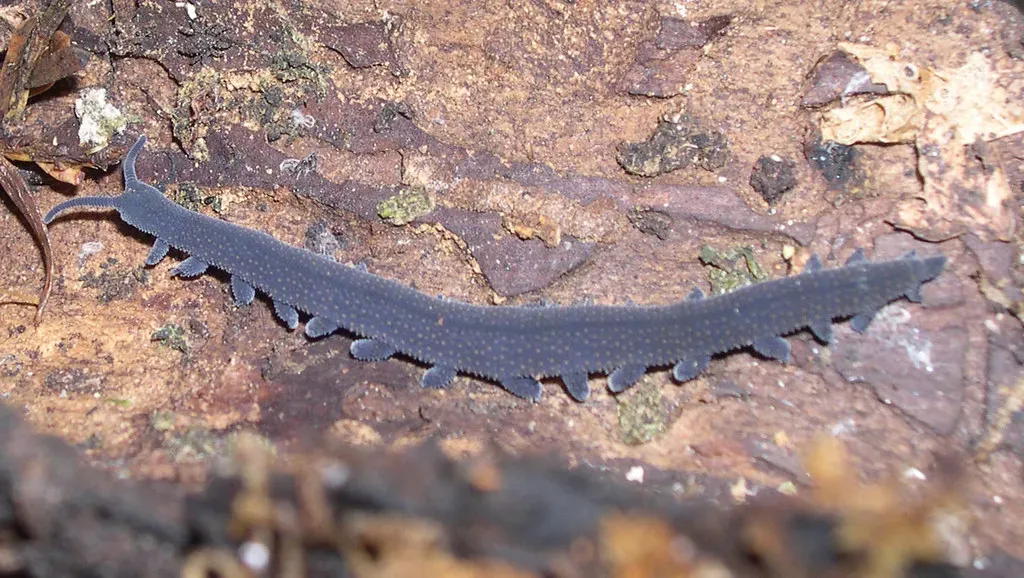
Long before insects existed, before spiders spun a single web, velvet worms were already crawling through ancient forests using a hunting technique that hasn’t meaningfully changed since.
These caterpillar-like invertebrates trace their lineage back to the Cambrian period, placing their origins alongside some of the very first complex animals on the planet. They hunt by shooting sticky slime from glands near their mouths, immobilizing prey in a strategy essentially unchanged for hundreds of millions of years, while entire phyla of ocean-dwelling giants around them rose and disappeared.
Velvet worms are so evolutionarily conservative that biologists use them as a kind of missing-link model to understand how arthropods, the group containing insects, spiders, and crustaceans, might have originated. Nearly every complex animal group that existed alongside their ancient ancestors underwent radical transformation or extinction. Velvet worms just kept quietly hunting in leaf litter and rotting logs, largely ignoring hundreds of millions of years of evolutionary upheaval happening around them.
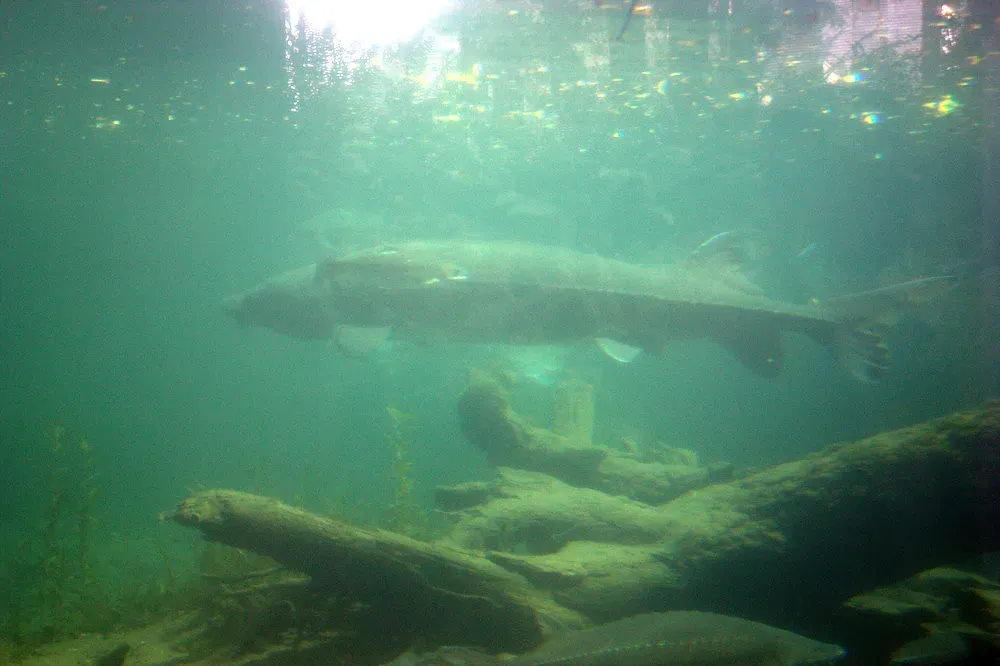
#9 – Sturgeon: The Armor-Plated Fish That Outlived the Age of Reptiles
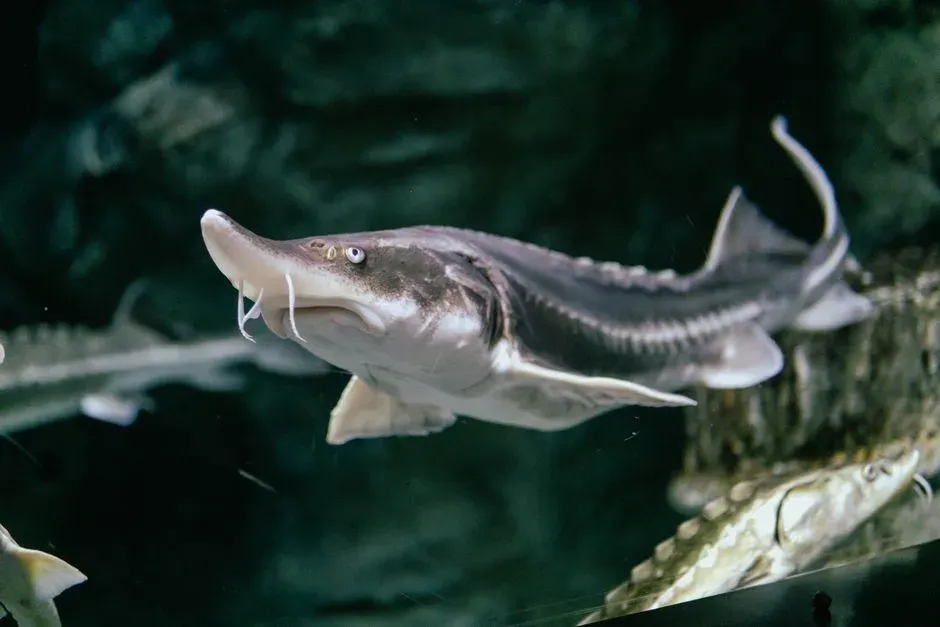
Sturgeon look like they were assembled from spare dinosaur parts, and in a very real sense, they were built during that same era and simply never stopped being built that way.
Fossil evidence places sturgeon-like fish appearing during the age of dinosaurs, with body plans that have changed remarkably little since. Their bony armor plates, called scutes, are essentially the same defensive design their Mesozoic ancestors used, a strategy so effective that predators from that era never forced a redesign.
What’s striking is what sturgeon watched disappear around them. Entire marine reptile groups, ammonite superfamilies, and countless fish lineages from their era are known exclusively through fossils. Sturgeon, meanwhile, kept cruising river systems and coastlines essentially unbothered, slow-growing and long-lived, with some individuals reportedly living over a century. Their conservative, armored body plan turned out to be a far better long-term bet than most of the flashier, faster-evolving fish sharing their waters.
#10 – The Platypus: A Mammal Lineage Older Than Most Mammal Groups Combined
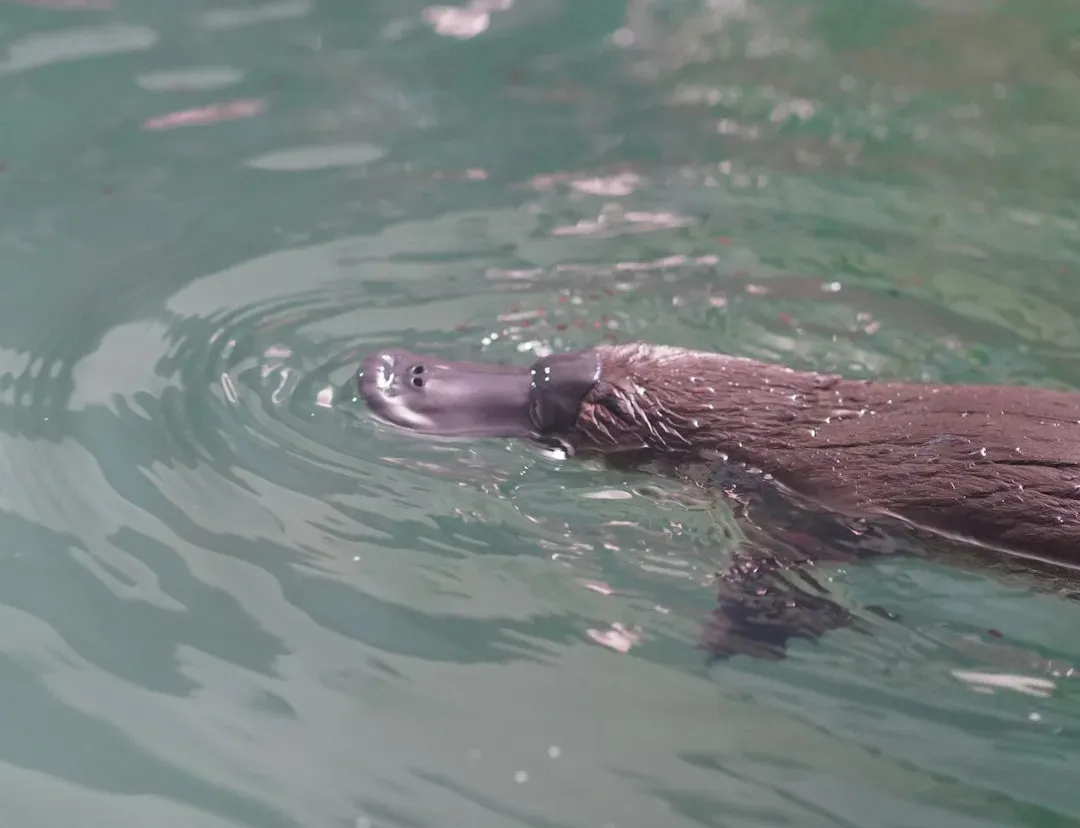
The platypus is so evolutionarily strange that when specimens were first sent to European scientists, many assumed it was a hoax stitched together from other animals.
Monotremes, the group containing the platypus and echidnas, represent an ancient branch of the mammal family tree that split off long before the ancestors of virtually every other mammal alive today, including humans, whales, and elephants. They lay eggs instead of giving live birth, a reproductive strategy inherited from their reptilian ancestors that every other mammal group eventually abandoned.
While placental mammals and marsupials diversified explosively into thousands of species over the last hundred million years, monotremes stayed a tiny, strange, isolated group. The platypus also detects prey using electroreception through sensors in its bill, a sensory system almost no other mammal on Earth ever evolved. Nearly every early mammal lineage from the platypus’s era went extinct or transformed dramatically. The platypus just kept laying eggs, hunting by electric field, and largely ignoring more than 100 million years of mammalian evolutionary trends happening everywhere else.
At a Glance
- Monotremes split from other mammal lineages over 100 million years ago
- Only two monotreme groups remain today: the platypus and echidnas
- Lays eggs instead of live young, a trait inherited from reptilian ancestors
- Uses electroreception in its bill to hunt underwater, a rare trait among mammals
#11 – Cockroaches: The Insects That Outlasted Giant Dragonflies and Entire Forests
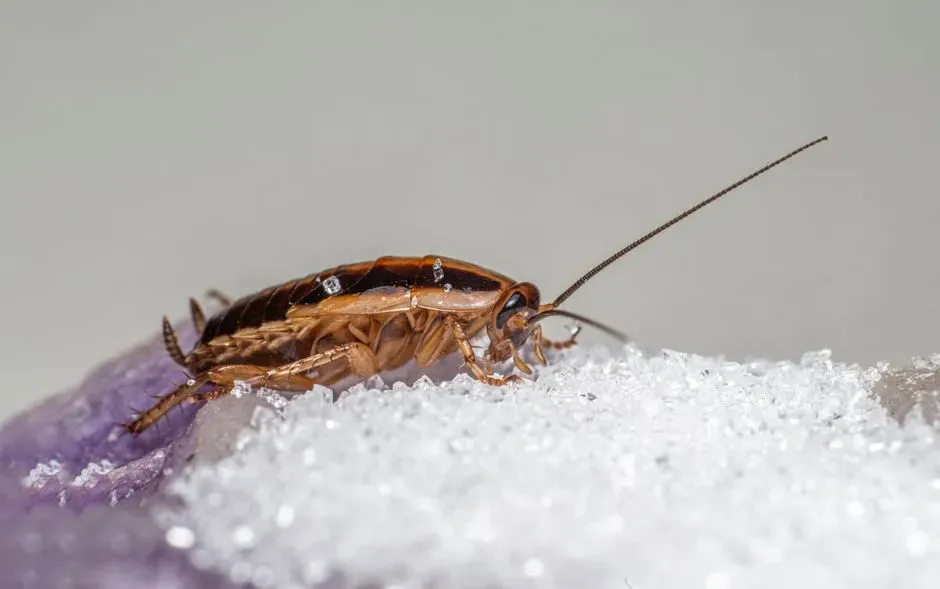
Cockroaches get mocked as pests, but fossil evidence shows their basic body plan has survived roughly 300 million years of catastrophic planetary upheaval essentially unchanged.
Cockroach-like insects appear in the fossil record from the Carboniferous period, an era when insects like Meganeura, dragonfly relatives with wingspans over two feet, dominated ancient skies. Those giant insects are long extinct, wiped out as oxygen levels and forest ecosystems shifted dramatically. Cockroaches, by contrast, just adapted their diet and kept scuttling through leaf litter.
Entomologists frequently cite cockroaches as near-perfect survival machines because of their extreme dietary and environmental flexibility. They’ll eat almost anything organic and tolerate conditions that kill more specialized insects outright. While spectacular giant insects vanished as atmospheric conditions changed, and countless specialized Carboniferous species disappeared entirely, the unglamorous, generalist cockroach lineage persisted through repeated global catastrophes. Being boring and adaptable, it turns out, beats being impressive and specialized almost every single time.
#12 – Tardigrades: The Microscopic Survivors That Outlasted Nearly Everything on This List
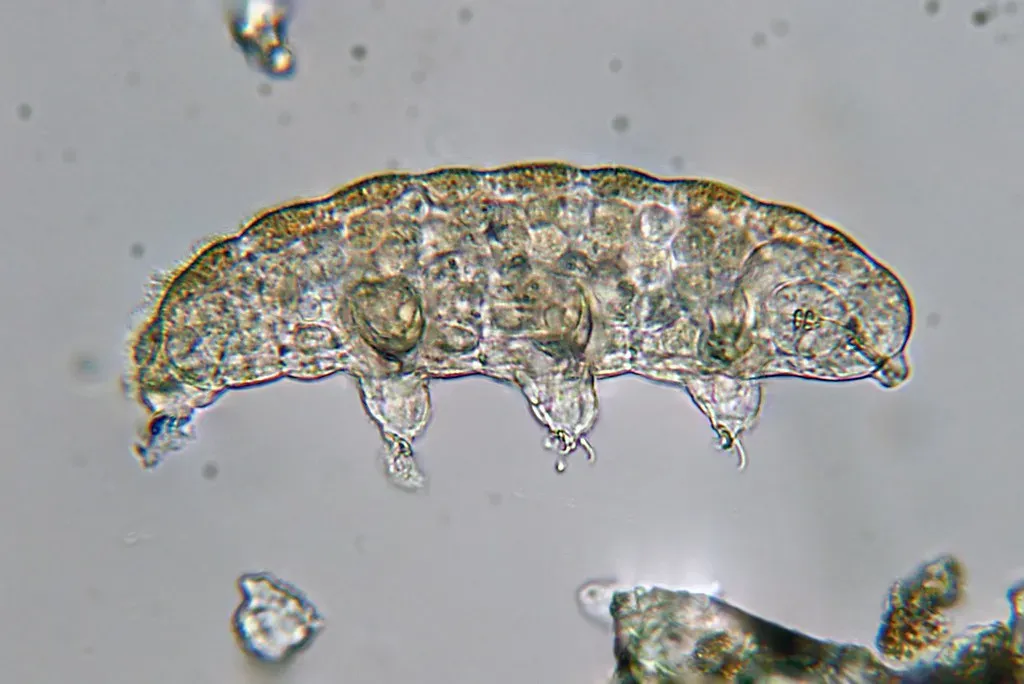
Tardigrades are almost impossible to kill, and their fossil lineage may stretch back further than nearly every other creature on this list, possibly to the Cambrian explosion itself.
These microscopic “water bears” can survive being frozen to near absolute zero, boiled, dehydrated completely for years, and even exposed to the vacuum of outer space, entering a suspended state called cryptobiosis where their metabolism essentially pauses. Researchers have documented tardigrades reviving after being dried out for years, then simply resuming life once rehydrated, an ability almost no other animal on the planet possesses.
While dinosaurs, giant insects, ammonites, and entire marine ecosystems rose and were annihilated repeatedly across five mass extinction events, cryptobiosis essentially let tardigrades opt out of catastrophe altogether. Rather than adapting to disaster, they simply shut down until it passed. It’s arguably the single most extreme survival strategy on this entire list, and it’s also the reason many biologists consider tardigrades among the most likely animals to still be alive on Earth’s final day, whenever that eventually comes.
The Bottom Line
The pattern across all twelve of these creatures is impossible to ignore: being flashy, fast, or dominant was never the winning evolutionary strategy. Being quiet, adaptable, and slightly boring was. Horseshoe crabs, tuatara, coelacanths, and tardigrades didn’t out-compete their extinct neighbors. They simply avoided the specific vulnerabilities that wiped everyone else out, whether that meant living deeper, breathing air on the side, or shutting down entirely until disaster passed.
It’s a genuinely uncomfortable lesson for a culture obsessed with disruption and specialization. Sometimes survival isn’t about being the best. It’s about being the last one standing when everyone impressive around you disappears. Which of these ancient survivors surprised you the most? Drop your pick in the comments.