
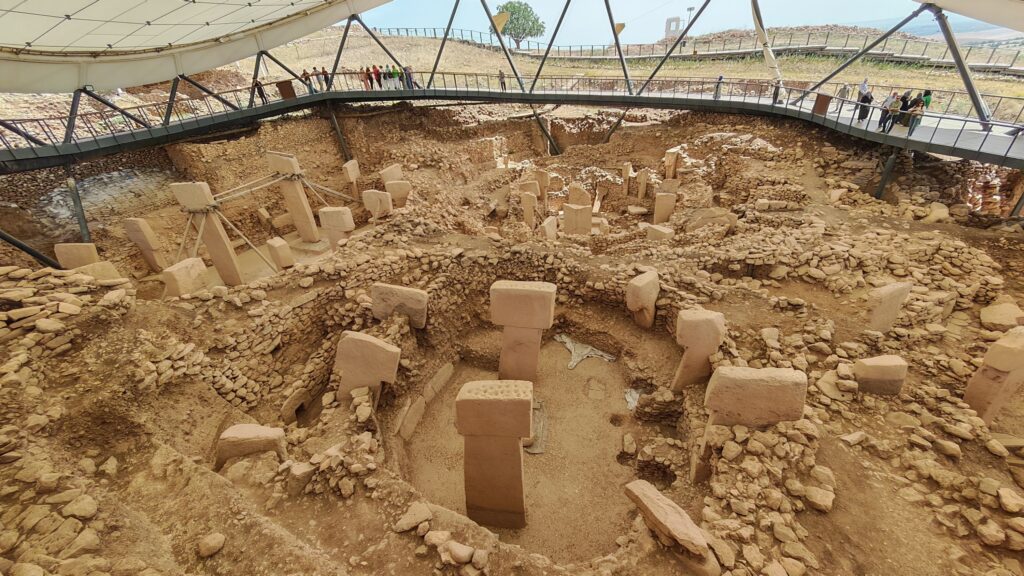
You know that feeling when something is so ancient it almost stops feeling real? That’s Göbekli Tepe. Perched on a windswept ridge in southeastern Turkey, this prehistoric complex is so old, so deliberate, and so beautifully engineered that it has punched a hole straight through the neat story we used to tell about how civilisation began. We thought we had the sequence figured out: first farming, then villages, then temples and cities. Göbekli Tepe calmly stands there, twelve thousand years old, and says: actually, you might have that backwards. I still remember the first time I saw a photograph of its T‑shaped stone pillars, towering over a sunken circular enclosure, covered in animal carvings that looked strangely modern and graphic. It was like looking at a spoiler for human history. If hunter‑gatherers could already organise teams, plan architecture, and carve multi‑ton stones with such precision, then the line between “simple” foragers and “complex” civilisations isn’t a line at all. It is a blur, and Göbekli Tepe sits right in the middle of that blur, forcing archaeologists, historians, and honestly anyone who cares about our origins to rethink what we mean by civilisation in the first place.
A temple older than history’s “ancients” by thousands of years
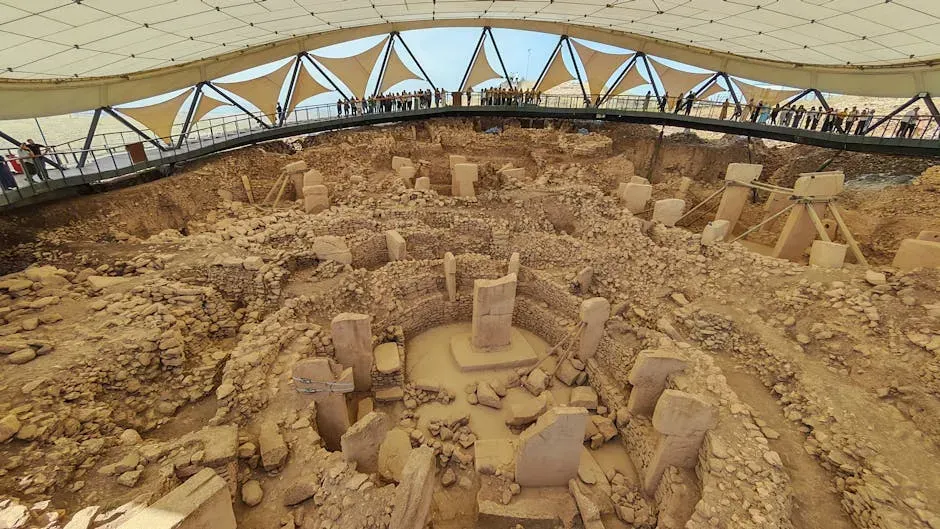
Imagine lining up the big names of ancient architecture: Stonehenge, the pyramids of Giza, the ziggurats of Mesopotamia. Now move your finger backwards in time, not by a few centuries, but by six or seven thousand years. That is where Göbekli Tepe lives. Radiocarbon dates place its main monumental phases roughly between 9600 and 8200 BCE, right at the end of the last Ice Age, long before pottery, writing, or metalworking appear in the region. To put that in perspective, more time separates Göbekli Tepe from ancient Egypt than separates ancient Egypt from us. We are closer in time to Cleopatra than Cleopatra was to the builders of this hilltop sanctuary. That scale is honestly hard to digest; it is like discovering that someone was building cathedrals while mammoths were still lingering in a few cold corners of the world. Yet the stones are there, the dates check out, and the site keeps telling the same story: monumental architecture began far earlier than anyone expected.
Monumental circles carved by supposed “simple” hunter‑gatherers
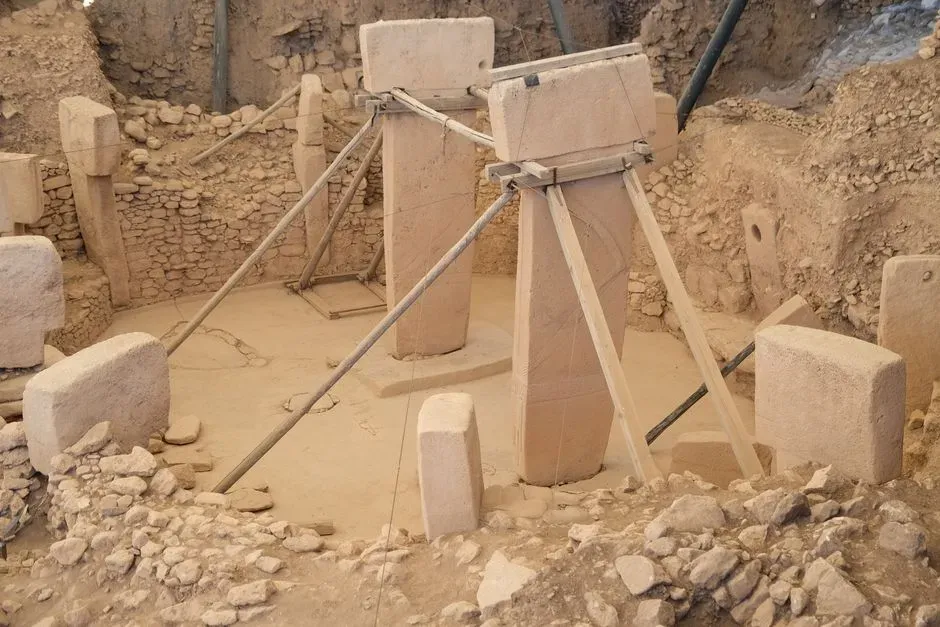
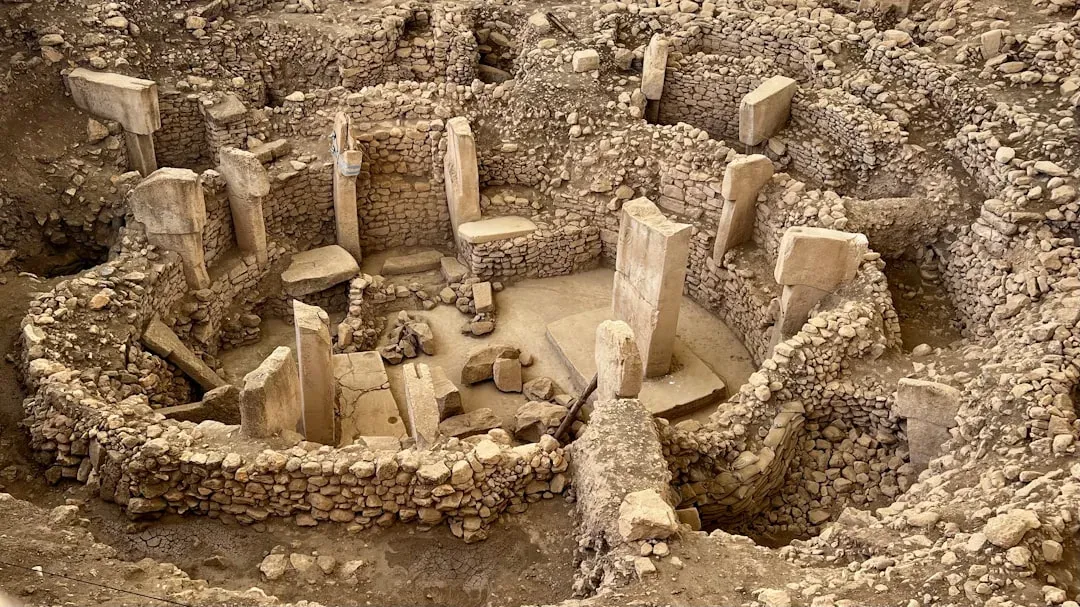
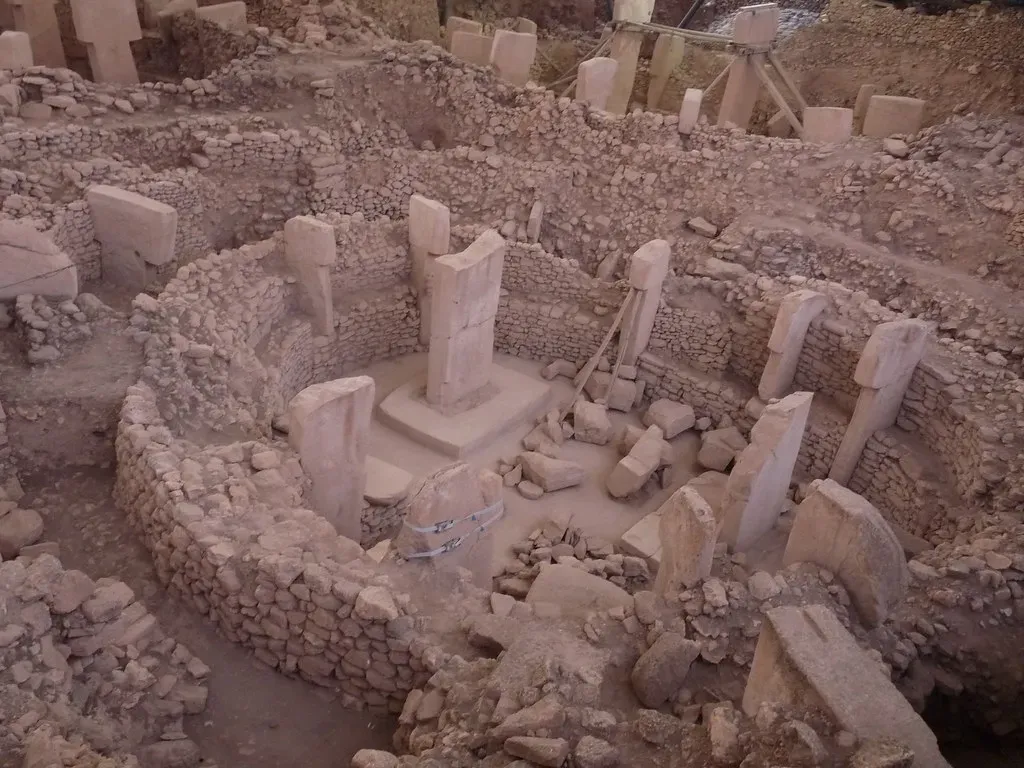
The drama of Göbekli Tepe is not just its age; it is the audacity of its design. On the surface, the hill looks unremarkable, but excavations have revealed a series of circular and oval enclosures, some up to twenty metres across, sunk into the bedrock. Inside each circle stand massive T‑shaped limestone pillars, some rising more than five metres, arranged like a stone forest. Two taller central pillars often dominate each enclosure, facing each other like silent, stylised figures. What makes this jaw‑dropping is who built it. The people around 9600 BCE in this region were still foragers: no domesticated animals, no fully developed cereal agriculture, no cities. Yet they quarried, transported, and erected stones weighing several tons, then cut fine reliefs of foxes, snakes, birds, aurochs, and abstract symbols into their surfaces. This combination of heavy engineering and delicate artistry shows careful planning, division of labour, and shared symbolic language – traits we normally associate with much later “civilised” societies.
When ritual comes first and farming follows
For most of the twentieth century, the standard story went like this: people domesticate plants and animals, farming creates food surpluses, surpluses allow larger settlements, and only then do complex rituals, organised religion, and big communal buildings show up. Göbekli Tepe scrambles that tidy progression. Here, large ritual spaces clearly existed before clear evidence of full agricultural economies in the same region, or at least before they were dominant. That has led some researchers to flip the causal arrow. Instead of religion and ceremony being luxuries made possible by farming, Göbekli Tepe suggests that the desire to gather, perform rituals, and create shared sacred spaces might have pushed people toward more stable food sources. If you are hosting large gatherings on a hilltop every season, suddenly it makes sense to experiment with tending wild cereals nearby or managing herds more closely. In that view, temples and communal enclosures are not the end result of civilisation; they are one of the engines that helped create it.
Architecture without cities: what the stones actually reveal
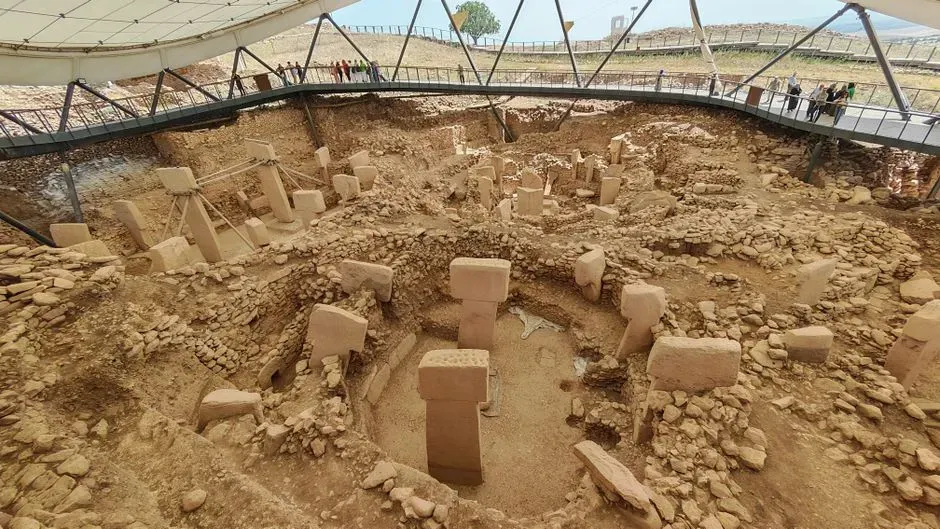
Walking through the reconstructions and site plans, what strikes me is how intentionally architectural Göbekli Tepe is. These are not random stone heaps or rough shelters. The enclosures have carefully prepared floors, low stone benches along the walls, and pillars set into sockets carved in the bedrock. The layout suggests choreography: people entering, circling, sitting or standing in specific places, all under the looming presence of the central pillars. Yet there is no evidence that people lived permanently inside these structures. No hearths for everyday cooking, no thick layers of domestic rubbish, no dense clusters of houses hugging the enclosures. It feels more like a pilgrimage centre or ceremonial hub, visited seasonally by groups who lived in smaller settlements scattered around the region. That combination – purpose‑built monumental architecture without an attached city – does not fit the classic pattern. It forces us to admit that sophisticated design, social coordination, and symbolic complexity do not require urban life in the way we once assumed.
Animals, headless figures, and a symbolic world we barely understand
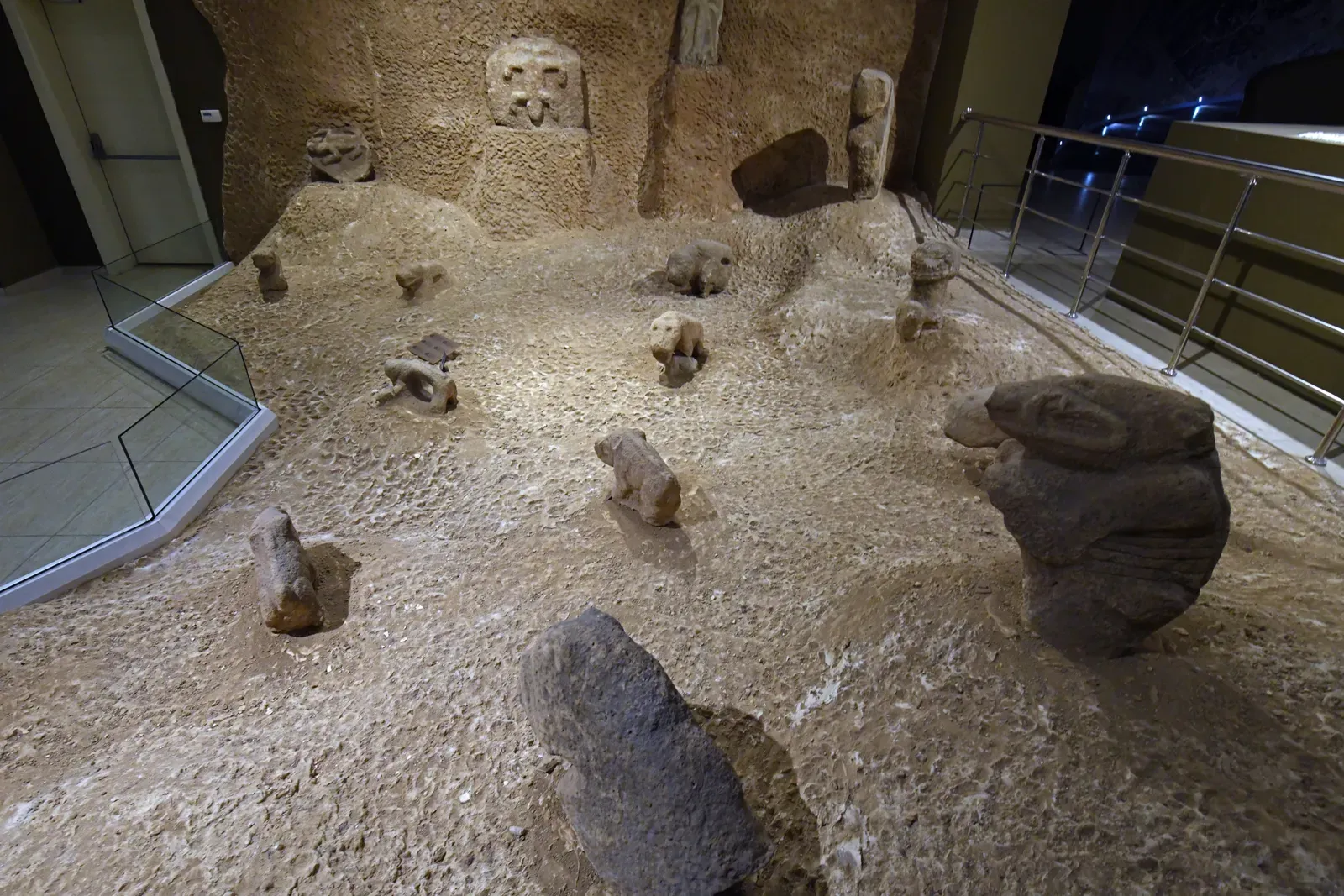
If the architecture of Göbekli Tepe is startling, the imagery on its stones is even more provocative. Many pillars are decorated with reliefs of wild animals: prowling felines, cranes, vultures, boars, scorpions, snakes. Some show belts, hands, and loincloths, revealing that the T‑shaped pillars are stylised human or human‑like figures. A few scenes are frankly unsettling: headless bodies, aggressive creatures, and tightly packed animal processions that seem to thrum with meaning. We do not yet have a firm key to this symbolic language, and that uncertainty invites both careful interpretation and wild speculation. Some scholars see hints of early mythologies about death and the afterlife, with vultures and headless figures connected to excarnation rituals known from later Near Eastern sites. Others prefer more cautious readings, seeing a world where humans are still deeply entangled with dangerous wild animals and trying to negotiate that relationship through ritual. Either way, the sheer richness of the imagery shows that these hunter‑gatherers were not only surviving; they were thinking in mythic, abstract, and artistic terms that feel remarkably close to us.
Why Göbekli Tepe fuels “lost civilisation” debates – and what the evidence really says
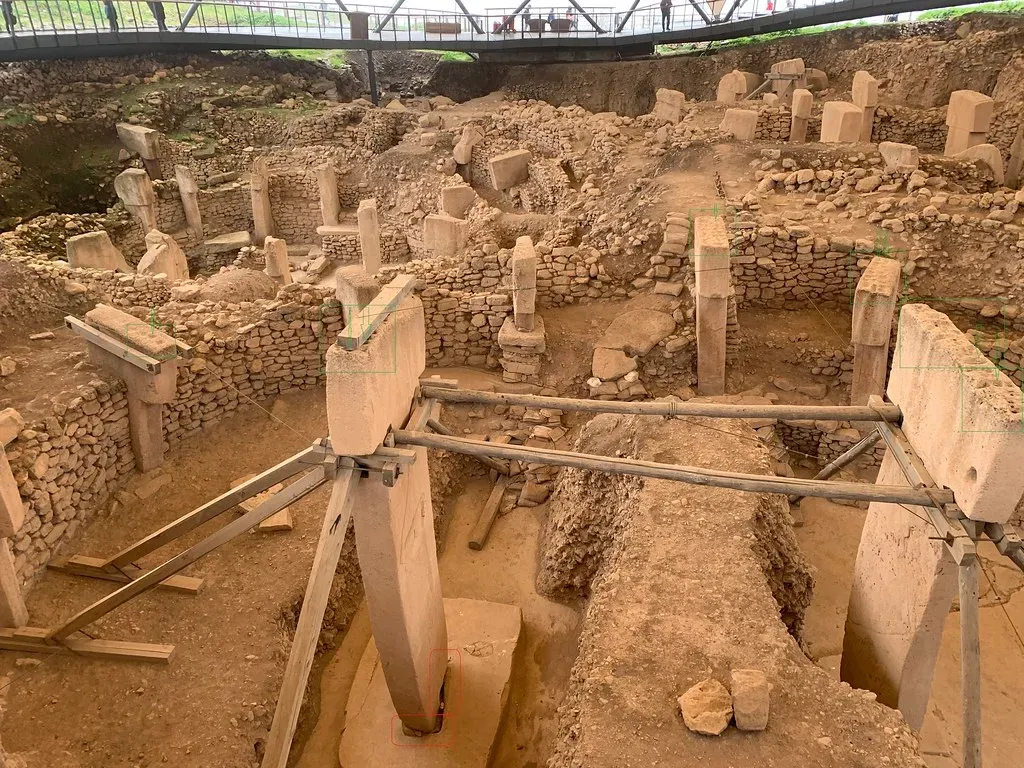
A site this old and this sophisticated was always going to attract dramatic theories. You’ll find plenty of voices online claiming Göbekli Tepe as proof of a forgotten Ice Age super‑civilisation, wandering master builders, or some vanished high‑tech culture. I get the emotional pull of that idea; standing in front of twelve‑thousand‑year‑old masonry, your gut reaction is often that someone “advanced” must have helped. But the evidence on the ground stubbornly points in another direction: skilled, organised hunter‑gatherers whose abilities we have consistently underestimated. Archaeological layers at Göbekli Tepe and surrounding sites show stone tools, early experiments with plant use, and local continuity rather than sudden alien technology dropping in from nowhere. The pillars are impressive, but they are carved with stone tools out of local limestone; the techniques are clever yet understandable, not mysterious. To me, the truly radical story here is not that some lost civilisation built this place, but that ordinary prehistoric people, with no metal, no wheels, and no writing, could cooperate on such a staggering scale. It does not downgrade the mystery; it makes our own species more impressive.
Rethinking what we even mean by “civilisation”
Göbekli Tepe has forced historians and archaeologists into an uncomfortable but healthy conversation about definitions. If you insist that civilisation begins only when you see big cities, writing systems, and fully developed agriculture, then Göbekli Tepe sits just outside the gate, annoyingly sophisticated but technically “pre‑civilised.” But that narrow definition ignores what is so confronting about the site: large‑scale cooperation, shared beliefs, long‑term architectural planning, and a symbolic universe rich enough to justify enormous communal effort. I think the more honest response is to loosen our grip on the old linear model. Instead of a straight ladder from “primitive” to “civilised,” the past looks more like a branching river delta, with experiments in social complexity happening earlier and in more diverse ways than we assumed. Göbekli Tepe is one of those experiments: a world where ritual and shared story seem to be the glue that pulls people together. It suggests that civilisation is less about checklists – cities, writing, bureaucracy – and more about how humans organise meaning and cooperation at scale.
From a buried hill in Turkey to the story we tell about ourselves
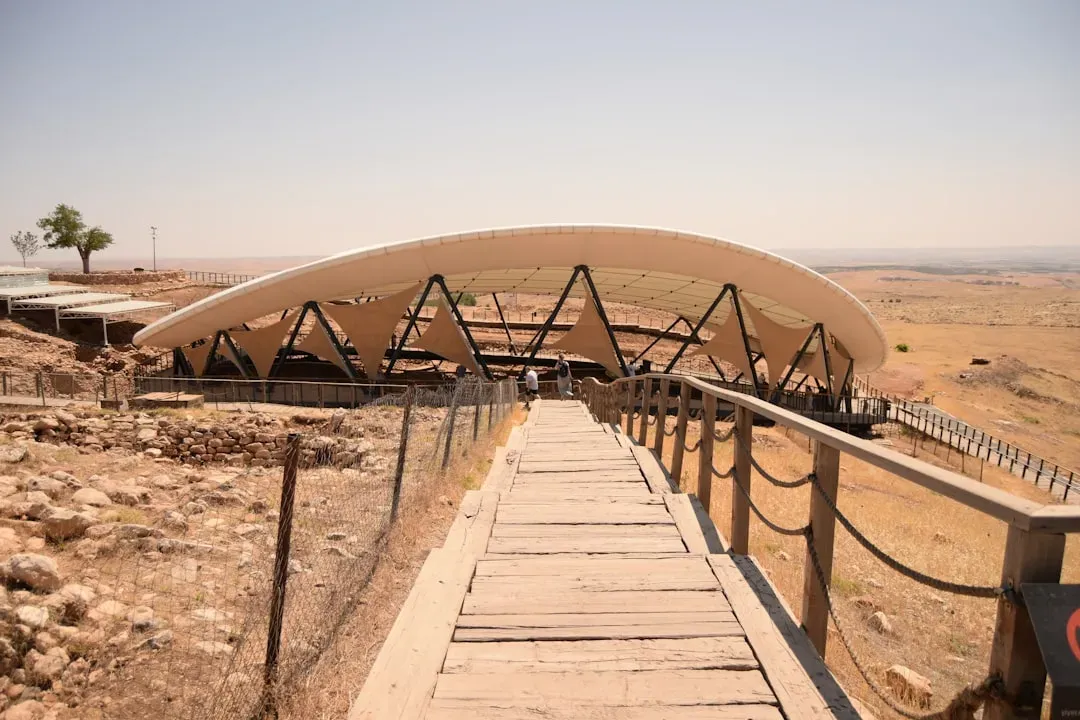
There is one last twist to Göbekli Tepe that I find strangely moving: it was deliberately buried. Over centuries, its builders not only used the enclosures but also filled them in with rubble, almost as if retiring each sacred space and folding it back into the hill. That act of burial accidentally preserved the site for us, like a time capsule of early human imagination. In the 1990s, when systematic excavations began, it was as if the Neolithic world had quietly left us a message and we finally learned how to read the first lines. So what do we do with that message now, in 2026, scrolling past photos of those pillars on our phones? To me, Göbekli Tepe is a humbling reminder that the people we casually call “primitive” were already building monuments that outlast empires, already debating their place in a dangerous world through stone and symbol. It argues, quite loudly, that the spark of civilisation is older, messier, and more spiritual than our old textbooks admitted. And it leaves us with an uncomfortable but exhilarating question: if hunter‑gatherers on a Turkish hillside could do all this, how much else might be buried out there, still waiting to rewrite the story we tell about when we truly began?