
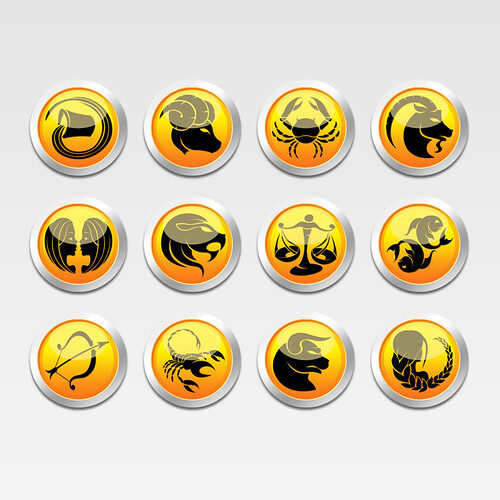
If you dropped every sign of the zodiac into a harsh new world and hit fast‑forward on evolution, not everyone would adapt in the same way. Some of us would grow sharper claws, some thicker skin, some eerily accurate intuition, and a few would probably just refuse to die out of pure stubbornness. It sounds like sci‑fi, but it actually fits neatly with what astrology has always claimed: each sign has a different default strategy for coping with stress and staying alive, socially and emotionally.
Modern psychology talks about fight, flight, freeze, and fawn responses. Evolutionary biology explains how species fine‑tune traits that help them survive and reproduce. Astrology, for all its mystical reputation, is basically a poetic map of our personal survival style. When you blend those lenses, you get a surprisingly revealing question: if your life depended on it, which adaptation would your sign evolve first?
Aries: Combat Reflexes and Extreme Pain Tolerance
Aries would be the first to evolve a warrior’s body. This sign is ruled by Mars, associated with raw drive, aggression, and the instinct to move first and think later. In a survival scenario, that boldness becomes a superpower. An Aries‑type organism would likely evolve faster reflexes, stronger fast‑twitch muscles, and a nervous system that can handle intense bursts of pain without shutting down. Think of an animal that can keep charging even after taking a hit; that is pure Aries energy in biological form.
In real life, Aries people already adapt by toughening up mentally, treating challenges almost like a competitive sport. Over time, that mindset would favor an evolutionary path where individuals with higher pain thresholds and more explosive strength do better. Psychologically, their survival adaptation is to push harder and hit back faster. Physically, if nature joined in, you’d see a creature that recovers quickly, scars well, and is always just a little bit too fast for whatever is hunting it.
Taurus: Reinforced Body and Energy Storage
Taurus is built for endurance, not drama. This sign is linked with stability, the physical body, and the ability to withstand discomfort over long periods. In evolutionary terms, a Taurus‑type species would probably excel at resource management and bodily resilience. You’d expect thicker skin, stronger bones, and an insanely efficient way of storing energy, so that even during long famines or stressful winters, they keep going while more delicate types burn out.
On a psychological level, Taurus people already cope with life’s chaos by slowing down, grounding themselves, and building comfort and security wherever they can. Translate that into survival adaptations and you get a creature that needs fewer resources, conserves energy, and heals steadily rather than quickly burning out. Their version of “superpower” is not glamorous, but in nature, the organism that wastes the least and holds steady often outlives the flashy fighters by decades.
Gemini: Hyper‑Processing Brain and Social Intelligence Radar
Gemini survives through curiosity, information, and flexibility. This sign is all about rapid communication and mental agility. In a survival‑of‑the‑fittest world, a Gemini‑type life form would likely evolve an expanded neural network tuned for pattern recognition and social information. Think sharper hearing for subtle sounds, faster reaction to changes in group dynamics, and a brain that can run multiple “what if” simulations at once before acting.
Humans with heavy Gemini influence already adapt by talking, networking, and constantly scanning for new data. Their first instinct when something goes wrong is not to fight or hide, but to ask: what is actually happening and who knows something I don’t? Over evolutionary timescales, that style favors individuals who can read micro‑expressions, pick up on danger in conversation, and adjust their behavior instantly. Their survival adaptation would not be fangs or claws, but a brain that quietly stays three moves ahead of threats and never stops learning from others.
Cancer: Emotional Shielding and Clan‑Protective Instincts
Cancer’s survival style is all about attachment and protection. This sign is deeply connected with home, family, and emotional safety. A Cancer‑type species in an evolutionary arms race would probably develop exceptional parental instincts, advanced caregiving behaviors, and almost unbreakable social bonds. You might see biological traits like strong nesting habits, cooperative child‑rearing, and acute sensitivity to shifts in emotional tone, which signal danger before any physical threat appears.
Psychologically, Cancerians adapt by pulling loved ones closer and pulling threats farther away. Their emotional sensitivity is not weakness; it is early‑warning radar. Over time, the individuals who sense subtle tension, detect interpersonal danger, and respond by reorganizing the group’s defenses would keep their line alive. The survival adaptation here is partly internal: thicker emotional armor when needed, and a stronger instinct to create safe havens. In a harsh environment, the creature that can keep its young alive and its community intact is the one that quietly wins the long game.
Leo: Status Signaling and Confidence‑Driven Resilience
Leo survives by standing out, not blending in. At first, that sounds dangerous in nature, where being too visible can get you eaten. But many species use bold displays to deter predators and attract allies, and Leo embodies that strategy. A Leo‑type organism would likely evolve bright visual signals, powerful vocalizations, or impressive physical features that communicate strength. The point is not decoration; it is advertising that attacking them is more trouble than it is worth.
In human terms, Leos adapt to stress by doubling down on self‑expression and leadership. They naturally step into visible roles, and that visibility can become a protective shield because others start to rely on them. Evolutionarily, individuals who can rally a group, boost morale, and project confidence during a crisis help their entire social unit survive. Their primary adaptation would be psychological charisma paired with a robust nervous system that recovers from social blows and rejection. In a world where fear spreads fast, Leo’s unshakable presence becomes a kind of emotional armor.
Virgo: Precision, Health Optimization, and Micro‑Awareness
Virgo is the sign of refinement, analysis, and small‑scale detail. From an evolutionary angle, a Virgo‑type line would adapt by getting very, very good at fine‑tuning itself to the environment. You’d expect heightened sensitivity to subtle changes in food quality, hygiene, or climate, and perhaps immune systems that excel at distinguishing threats from harmless stimuli. This is the creature that notices which plants make it slightly sluggish and quietly stops eating them long before others figure it out.
Virgo people already survive through correction and careful adjustment. Under stress, they plan, refine, troubleshoot, and obsess over tiny signals other people ignore. Over time, that kind of strategy rewards beings who can optimize diet, routines, and tools in a way that reduces risks. Their survival adaptation might not look dramatic from the outside: a stronger gut, sharper sense of contamination, calmer reaction to small irregularities. But the species that avoids chronic small harms consistently tends to outlast the ones that only react once the problem becomes huge.
Libra: Conflict Diffusion and Alliance Engineering
Libra’s survival mechanism is relational. This sign is oriented toward balance, fairness, and cooperation, and those are not just “nice” traits; they are massively important in social species. A Libra‑type organism in the wild would likely evolve advanced social cognition, the ability to read group hierarchies, and a knack for maintaining alliances that provide protection. Instead of claws, it would grow strategies: mediating conflicts, arranging mutual support, and making itself too socially valuable to sacrifice.
Humans with strong Libra energy usually adapt to difficult situations by smoothing edges and building bridges. When things get tense, they instinctively look for win‑win outcomes instead of zero‑sum battles. In survival terms, this can be as powerful as physical strength, because a well‑connected individual with many allies is rarely left behind. The adaptation here is essentially a social shield. Libra would evolve the emotional intelligence to sense when harmony is cracking and the diplomatic instincts to repair it before the group destroys itself from within.
Scorpio: Psychological X‑Ray Vision and Regeneration
Scorpio is wired for intensity, depth, and transformation, and that spills directly into survival territory. In nature, a Scorpio‑type organism would likely evolve extreme resourcefulness and maybe even forms of regeneration or resistance to toxins. Many of the animals symbolically associated with Scorpio, like scorpions and resilient creatures, already embody survival in harsh conditions. Evolution would favor individuals that can go underground, endure long periods of scarcity, and come back stronger after trauma.
On the human side, Scorpios adapt by looking beneath the surface, sensing hidden motives, and facing darkness others avoid. That psychological toughness could translate, over time, into traits like stronger stress resilience and a nervous system that can handle intense emotional experiences without fragmenting. Their main adaptation would be a mix of psychic and physical: the ability to sense danger behind a smile, cut ties with what is poisonous, and transform wounds into fuel. They do not just survive; they molt and become something new.
Sagittarius: Risk‑Mapping, Navigation, and Optimism Bias
Sagittarius is the explorer of the zodiac, drawn toward wide horizons and big questions. An evolutionary Sagittarius‑type species would almost certainly adapt through movement and mental mapping. You might see excellent spatial memory, strong long‑distance travel capacity, and an instinct to leave failing habitats before others notice. This is the animal that wanders farther, discovers new resources, and spreads its genes across multiple regions instead of staying boxed into one fragile niche.
Psychologically, Sagittarians already survive through hope and perspective. Under pressure, they zoom out, crack a joke, or look for the hidden opportunity in a crisis. That so‑called optimism bias, often discussed in psychology, can be a survival edge when it keeps you moving and exploring instead of curling up in defeat. Their adaptation would be a mixture of mental courage and real‑world escape routes. In a shifting environment, the species that keeps trying new paths and refuses to accept that the story is over has a serious evolutionary advantage.
Capricorn: Structural Toughness and Long‑Game Strategy
Capricorn plays the long game better than any other sign. It is associated with discipline, responsibility, and realistic assessment of limits. A Capricorn‑type organism in evolution mode would be built for harsh conditions and slow rewards. Imagine denser bones, efficient cold tolerance, and a metabolism that can handle scarcity and still function at a high level. It would not be the quickest to adapt superficially, but it would be the most unshakable once adapted.
In human life, Capricorns survive by planning ahead, accepting hard truths, and doing the “boring” maintenance that keeps everything working. Under stress, they become more controlled, not more chaotic. Over generations, that mindset favors individuals who delay gratification, invest in future stability, and build structures others end up relying on. Their primary survival adaptation is a kind of inner and outer infrastructure: tough habits, solid boundaries, and a nearly indestructible capacity for persistence when others are already collapsing on the trail.
Aquarius: Networked Intelligence and Adaptive Rewiring
Aquarius represents innovation, systems thinking, and the collective. In evolutionary terms, an Aquarius‑type species would adapt less by changing one individual’s body and more by changing how the whole group functions. You’d expect cooperative problem‑solving, flexible roles within the community, and maybe even behaviors that look like cultural evolution: passing down new techniques, tools, or strategies that dramatically accelerate survival beyond what biology alone could manage.
On the psychological side, Aquarians already adapt by questioning the rules and trying experimental solutions. They survive in part by refusing to be locked into one identity or one expected path. Over time, that sort of mindset would reward lines that can “rewire” quickly, both mentally and socially. The main adaptation here is meta‑level: the ability to redesign systems instead of just coping with them. In a constantly changing environment, the species that can update its own patterns fastest becomes the one writing the next chapter of the ecosystem.
Pisces: Intuitive Camouflage and Emotional Osmosis
Pisces, the last sign, blends sensitivity, imagination, and a kind of spiritual radar. In a survival landscape, a Pisces‑type organism would thrive by blending in, sensing currents, and avoiding danger through attunement rather than confrontation. Think of shapeshifting in the metaphorical sense: flexible behavior, excellent camouflage, and a tendency to slip away before trouble fully arrives. Their nervous system would be tuned to subtle environmental cues, much like prey animals that sense a predator long before it appears in sight.
Human Pisceans usually adapt through intuition and emotional merging. They read rooms without trying, feel undercurrents in relationships, and often know something is off before any obvious evidence appears. Over evolutionary time, that can favor individuals who avoid toxic environments, leave harmful groups, and move toward safer waters sooner. Their first adaptation is an almost uncanny inner compass that says “not here, not now” or “this is safe” without needing a long debate. In a world where you cannot fight every battle, the ability to disappear at the right moment is its own kind of invincibility.
Conclusion: Your Survival Superpower Is Already Showing
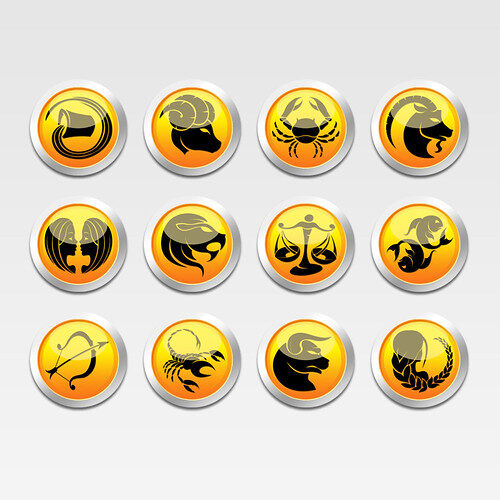
If you strip astrology of the glitter and look at it through an evolutionary lens, each sign describes a built‑in survival bias: Aries fights, Taurus endures, Gemini learns, Cancer protects, Leo leads, Virgo refines, Libra allies, Scorpio transforms, Sagittarius explores, Capricorn persists, Aquarius rewires, and Pisces senses. None of these is objectively superior, and that is the point. In real ecosystems, diversity of strategies is exactly what keeps life resilient when conditions flip without warning. I honestly think that is why certain traits feel so “instinctive” to us; they are the mental versions of ancient adaptations we keep replaying in new worlds, like offices, group chats, and dating apps.
Looking at your sign this way is less about predicting the future and more about recognizing the survival strategy you already favor, then choosing whether to double down on it or balance it with others. The cosmos is not handing out superpowers in some literal sci‑fi way, but your temperament shapes what you notice, what you avoid, and how you bounce back, and that absolutely affects your odds of thriving. So if evolution suddenly sped up tomorrow, would you grow tougher skin, sharper insight, deeper alliances, or the courage to walk away and start over somewhere new – what do you honestly suspect your first adaptation would be?