
If you had to survive in a vast, ancient ocean with no land in sight, what role would you naturally slip into? The stealthy hunter gliding in the depths, the navigator reading the stars, the reef-builder creating safe harbors for others? Long before personality tests and social media archetypes, humans watched the tides and the sky together, and the zodiac emerged from that same blend of water, light, fear, and wonder.
Of course, there is no hard scientific proof that your star sign literally dictated how your ancestors survived at sea. But when you look at modern personality research, evolutionary psychology, and traditional zodiac symbolism, you do see patterns in how different temperaments approach risk, cooperation, leadership, and exploration. Framing those patterns as “ancient ocean survival strategies” is a playful way to understand your strengths and blind spots – almost like running a mythical disaster drill for your inner self.
Aries: The Spear-Throwing Hunter in Rough Seas
Imagine an open canoe rocking hard in a choppy, moonlit sea, and someone at the very front leaning out, refusing to sit still – that’s Aries energy in its pure form. In an ancient ocean world, Aries would be the one who grabs the harpoon first, charges toward the storm, and tests the new fishing ground before anyone else dares. The Aries temperament is naturally wired for fast decisions, direct action, and bold risk-taking, a psychological profile that would be invaluable when hesitation meant going hungry.
Modern research into personality traits shows that some people lean heavily toward novelty-seeking and high-energy behavior, and that maps neatly onto the classic image of Aries. In a survival-at-sea environment, this could be both blessing and curse: Aries might secure food and open up new routes, but could also overextend or ignore warnings. The real “ocean wisdom” for Aries is learning when to throw the spear and when to anchor down, channeling that fearless charge into strategic, not just impulsive, moves.
Taurus: The Reef-Builder Who Protects the Provisions
If an ancient sea tribe survived a long winter voyage, it was partly because someone insisted on rationing food properly, protecting tools, and not burning energy on pointless detours – that is Taurus territory. Taurus represents stability, patience, and a deep insistence on security, which in ocean terms looks like building and defending a safe reef-like base, even if that “reef” is just a well-organized ship or coastal camp. While others chase the next horizon, Taurus makes sure there will still be dried fish and spare rope tomorrow.
From a psychological point of view, Taurus aligns with lower impulsivity and higher conscientiousness, traits linked to long-term survival and resource management. In the ancient ocean scenario, the Taurus survival strategy is simple but powerful: conserve, fortify, and move only when the odds are in your favor. The lesson for modern Taureans is that their stubbornness can be a shield or a prison; learning when to release control is as important as knowing when to hold the line on what truly keeps everyone afloat.
Gemini: The Signal-Caller and Information Networker
Modern personality science would describe this as cognitive flexibility and verbal fluency, traits associated with rapid problem-solving and social coordination. On the high seas, communication is life: a misunderstood signal can mean wrecked boats and lost lives. Gemini’s ancient survival strategy is to be the radio of the fleet, constantly translating chaos into actionable updates. The challenge is not to drown in options or become paralyzed by overthinking; when the storm hits, Gemini has to choose one signal to send and send it clearly.
Cancer: The Shell-Guardian and Safe-Haven Maker
In a harsh marine world, survival does not only belong to the strongest hunter; it also belongs to the one who can create and maintain a safe shell. Cancer is that shell. Imagine an ocean camp where someone checks everyone’s wounds, makes sure children are kept warm, and fiercely defends the sleeping area from threats – that emotional fortress is Cancer’s true survival strategy. This sign’s instinct for nurturing can look soft on the surface, but in evolutionary terms, caregiving is one of the most powerful survival adaptations of all.
Psychologically, Cancer lines up with high emotional sensitivity and strong attachment bonds, the same traits that encourage people to protect their group and keep vulnerable members alive. At sea, this might look like prioritizing safe harbors, repairing the boat before it breaks, and refusing to abandon the injured. The risk is clinging too tightly to the known shore and avoiding necessary change. Cancer’s growth edge lies in trusting that leaving one bay does not mean losing the concept of home; it means learning to carry that home within the crew itself.
Leo: The Beacon on the Horizon and Morale Keeper
Picture a long night crossing, waves high and food low, when the only thing keeping a crew from giving up is the voice of one person who refuses to let the fire die – that’s Leo. In an ancient ocean landscape, Leo’s survival strategy is to act as the symbolic sun on deck, the one who restores courage when everyone else stares at the black water and imagines the worst. Leadership in such conditions is not just about orders; it is about storytelling, ceremony, and emotional warmth, all classic Leo gifts.
Psychology studies on group survival show that morale and perceived hope can heavily influence persistence, and that charismatic individuals can shift a group’s endurance level. Leo’s flair for drama and visibility becomes a survival tool when it is used to rally people instead of merely seeking applause. The trap, of course, is ego: if the “captain” image matters more than the crew’s welfare, the ship sinks. Leo’s evolutionary sweet spot is recognizing that real royalty keeps everyone alive, not just the self on center stage.
Virgo: The Navigator of Details and Invisible Risks
Before there were GPS devices, the difference between a safe passage and a deadly reef often came down to tiny details: the angle of a star, the thickness of a cloud bank, the pattern in the waves. Virgo embodies the kind of mind that naturally tracks these subtleties. In an ancient ocean world, Virgo would be the one who notices the rope fraying before it snaps, the change in bird flight before a storm, the small infection before it becomes life-threatening.
Psychologically, this matches with higher levels of conscientiousness and analytical thinking, traits that support systematic problem-solving and error detection. Virgo’s ocean survival strategy is preventative medicine: fix the small thing today so it never becomes a catastrophe tomorrow. The downside is anxiety and perfectionism, the feeling that nothing is ever good enough or safe enough. Virgo’s growth lies in trusting that making things “good enough to sail” is sometimes more important than obsessing until the tide has already turned.
Libra: The Treaty-Maker Between Tribes and Tides
On a crowded, resource-limited coastline, battles over fishing grounds or trade routes could easily wipe out entire groups. Libra’s ancient survival strategy is to avoid that disaster using diplomacy instead of dominance. Imagine two rival sea clans facing off on a narrow beach, and one calm mediator stepping forward to propose a shared schedule, mutual defense pact, or marriage alliance – that is Libra’s natural arena. When conflict is constant, those who can negotiate tend to live longer than those who only know how to fight.
From a psychological lens, Libra lines up with strong social intelligence and a preference for fairness, traits seen in people who naturally manage group dynamics. In an ancient ocean context, this would translate into brokering resource-sharing agreements, choosing neutral meeting coves, and smoothing tensions within a crew before mutiny brews. The risk for Libra is indecision or people-pleasing at the expense of truth. Their evolutionary edge is learning when to drop the scales and say, very clearly, what must change for everyone to stay afloat.
Scorpio: The Deep-Diver Into Hidden Currents and Threats

Every ocean hides sharp-toothed dangers and invisible undercurrents, and every community needs someone who is not afraid to stare into the dark water. Scorpio’s survival strategy is to specialize in the things other people avoid: power struggles, hidden motives, taboo knowledge, and the psychology of fear itself. In an ancient maritime world, Scorpio might be the one who understands which coves are pirate-infested, which alliances are unstable, and how to move through danger without waking it.
Modern psychology links this style to high intensity, emotional depth, and a talent for reading subtext, which can be extremely adaptive in risky social environments. On the sea, handling secrets, strategies, and worst-case scenarios can be the difference between ambush and safe passage. The shadow side is paranoia, control, or self-sabotage when trust feels impossible. Scorpio’s wisdom path is learning to use their insight to transform and heal the crew rather than manipulate it, turning deep awareness into deep protection.
Sagittarius: The Star-Chasing Explorer of New Routes
Someone had to be first to sail beyond the known islands and believe there was something more than endless water, and that archetype belongs to Sagittarius. In an ancient ocean world, Sagittarius would be the one who volunteers to test new currents, chart unknown stars, and follow migrating whales just to see where they lead. Risk-taking here is not just adrenaline; it is a philosophical belief that expansion brings opportunity, and that staying in the same lagoon forever is its own kind of death.
Psychologically, Sagittarius maps onto traits like curiosity, optimism, and tolerance for uncertainty, all linked with exploratory behavior in evolution. For sea-based communities, discovering new fishing grounds, trade partners, or safer routes could radically improve survival odds. The potential failure point is restlessness and overconfidence – sailing too far with too few supplies, or dismissing valid concerns as negativity. Sagittarius grows when it learns to combine bold voyages with realistic planning, treating adventure as a long game rather than a constant escape.
Capricorn: The Shipwright and Long-Haul Strategist
Nothing on the ocean matters if your boat cannot actually withstand the waves. Capricorn’s survival strategy is structural: build it right, test it hard, lead with discipline. In an ancient seafaring society, Capricorn would be the master builder, the strict captain, or the elder who insists on rules for maintenance and training. They may not be the loudest on deck, but their work shows up every time the hull does not crack against rocks.
Personality-wise, Capricorn aligns with persistence, planning, and a strong sense of duty, all traits deeply tied to long-term project success. On the ocean, that translates into schedules, hierarchies, repair routines, and decisions that prioritize endurance over immediate gratification. The cost can be rigidity and emotional distance, especially if control becomes more important than connection. Capricorn’s evolution is to remember that the best-built ship still needs a crew that feels valued, not just managed, so that discipline and loyalty reinforce each other instead of clashing.
Aquarius: The Innovator of Unconventional Sea Tech and Tactics
Imagine the first person who thought to strap air-filled animal skins under a raft to make it more buoyant, or who experimented with wind angles until they had a sail design no one had seen before – that spirit is Aquarius. In the ancient ocean, Aquarius survives by refusing to accept that the current way is the only way. They tinker, they test, they imagine networks between distant islands and new ways of organizing crews that break old hierarchies.
Modern research sometimes associates this style with openness to experience and nonconformist thinking, traits that drive innovation but can also destabilize tradition. At sea, innovative tools and strategies can completely change survival odds, from better storage methods to smarter navigation techniques. The risk is detachment: focusing so much on ideas or ideals that the actual emotional needs of the crew get ignored. Aquarius thrives most when it remembers that technology and social experiments are ultimately about helping real people stay alive, not just about proving the old guard wrong.
Pisces: The Current-Reader and Intuitive Tide Whisperer
Before formal oceanography, people survived by paying close attention to subtle patterns: the feel of the water, animal behavior, the emotional rhythm of the group. Pisces represents that intuitive, almost mystical approach to survival. In an ancient marine setting, Pisces might be the one who senses when to leave a bay before a storm appears, reads omens from the sky and sea, or calms panicked crew members with stories and music that keep them from mentally collapsing.
Psychologically, Pisces connects to empathy, imagination, and a rich inner world, all of which can help interpret complex, ambiguous situations. On the ocean, logic and data do not always provide complete clarity; sometimes you have to act on a gut sense pulled from many small, unconscious cues. The danger for Pisces is escapism or passivity, drifting with the tide instead of choosing a direction. Their growth lies in trusting their sensitivity enough to act on it, turning soft impressions into firm decisions that guide the crew to safer waters.
Conclusion: Your Inner Ocean Role in a Very Real World
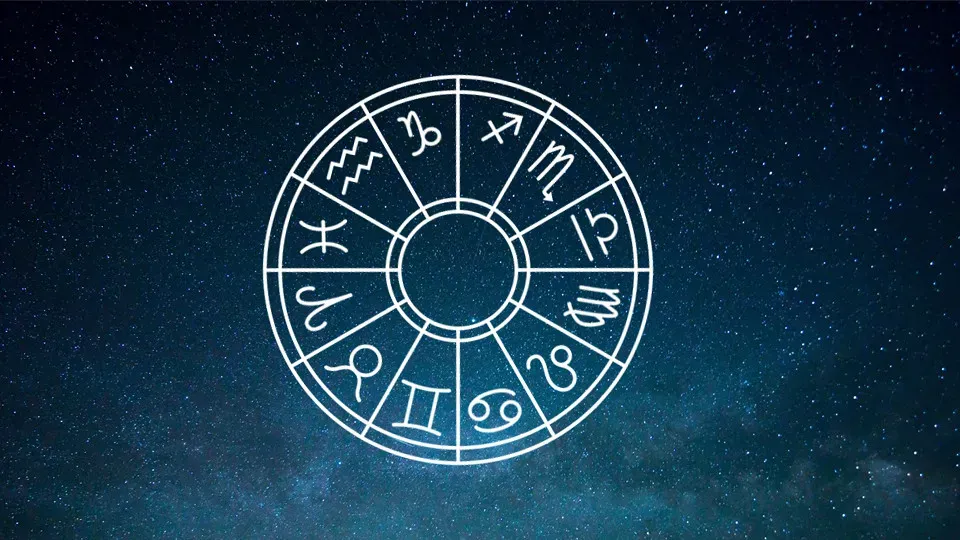
Thinking of your zodiac sign as an is obviously symbolic, not literal, but symbols can reveal things that strict data sometimes misses. Whether you are a spear-throwing Aries, a reef-building Taurus, a detail-driven Virgo, or a deep-diving Scorpio, this lens highlights how different temperaments specialize in different forms of protection: some guard resources, some guard morale, some guard information, and some guard the unseen. To me, that diversity feels less like mysticism and more like an intuitive, story-based way our ancestors might have tried to understand why certain people thrived in certain roles.
In my own life, noticing these patterns has helped me appreciate the “ocean roles” of people around me instead of expecting everyone to act the same under stress. The most practical takeaway is not that the stars control your fate, but that your natural style of handling risk, emotion, and change has deep roots – roots you can consciously refine. So next time life feels like a storm at sea, ask yourself: am I leaning into my survival strategy in a wise way, or is it time to borrow a page from another sign’s playbook and try a new way of staying afloat?