
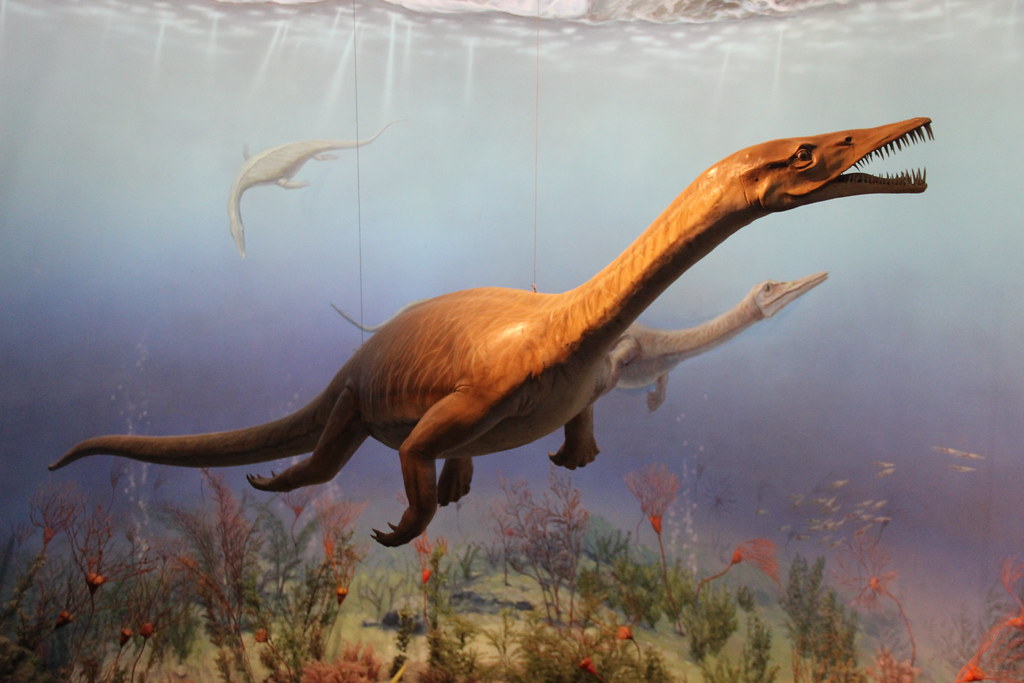
When people think of ancient sea monsters, they usually picture huge sharks or maybe a cartoonish kraken yanking ships under the waves. But the real prehistoric oceans were far stranger, packed with giants that make even today’s whales look almost modest. Lurking in those long-vanished seas were predators with crocodile heads and flippered bodies, reef-smashers with beaks like industrial tools, and filter-feeders so big they turned entire coastlines into feeding grounds.
What makes this even cooler is that most of these creatures never make it into documentaries or pop culture posters. They are overshadowed by celebrities like megalodon or mosasaurs, even though many were just as terrifying, majestic, or downright bizarre. Let’s dive into ten ancient ocean giants that quietly ruled their worlds while barely getting any modern fame.
Leedsichthys – The Giant Filter-Feeding Fish That Outgrew Whales
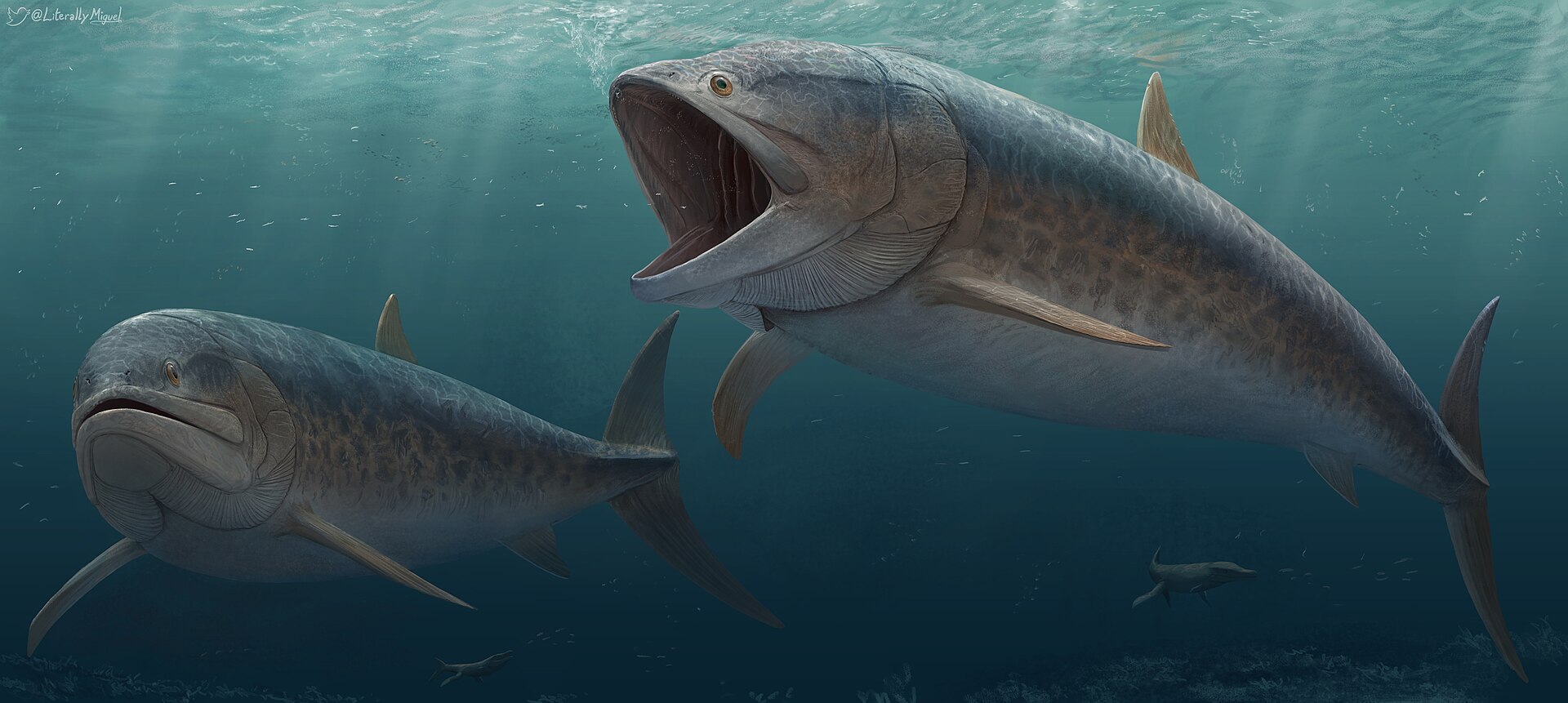
Imagine a fish the size of a modern blue whale, cruising through Jurassic seas with its mouth wide open like a living trawler net. That is Leedsichthys, a massive bony fish that may have stretched well over fifteen meters in length, possibly even more according to some estimates. Instead of slicing prey, it likely filtered tiny plankton and small organisms from the water, turning the microscopic into the fuel for a gigantic body.
What I love about Leedsichthys is how it breaks our cartoon image of “big equals fierce.” This giant was probably gentle by temperament, spending its life sweeping up clouds of plankton rather than chasing other giants in high-speed combat. In many ways it was the Jurassic world’s answer to today’s whale sharks and baleen whales, proof that once oceans become rich enough, evolution repeatedly invents enormous filter-feeders to cash in on all that drifting food.
Shonisaurus – The Oversized Ichthyosaur With a Torpedo Body
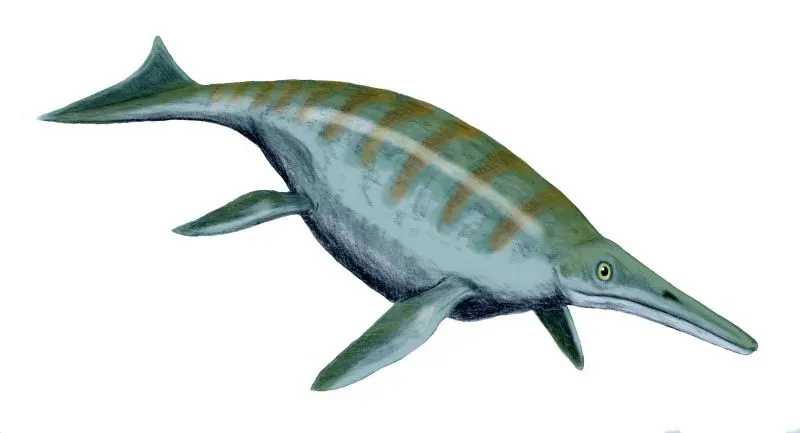
Shonisaurus looked like something a sci‑fi artist would sketch on a napkin: a gigantic, streamlined reptile built like a torpedo with paddled flippers and a long, narrow snout. Living during the Late Triassic, some species may have reached lengths comparable to, or even exceeding, many large whales today. These were not slow, lumbering beasts; with that hydrodynamic shape, they were likely powerful long-distance swimmers able to roam wide stretches of open ocean.
Unlike the famous later ichthyosaur “super predators,” Shonisaurus seems to have leaned more toward a squid-and-fish diet, possibly gulping down soft-bodied prey in huge quantities. To me, that makes them feel like a bridge between fast, predatory reptiles and the more gentle giants that came later in Earth’s history. If you picture a dolphin stretched to absurd proportions and given a reptilian face, you are not far off from the eerie elegance of Shonisaurus.
Thalattoarchon – The Reptilian Orca of the Triassic Seas
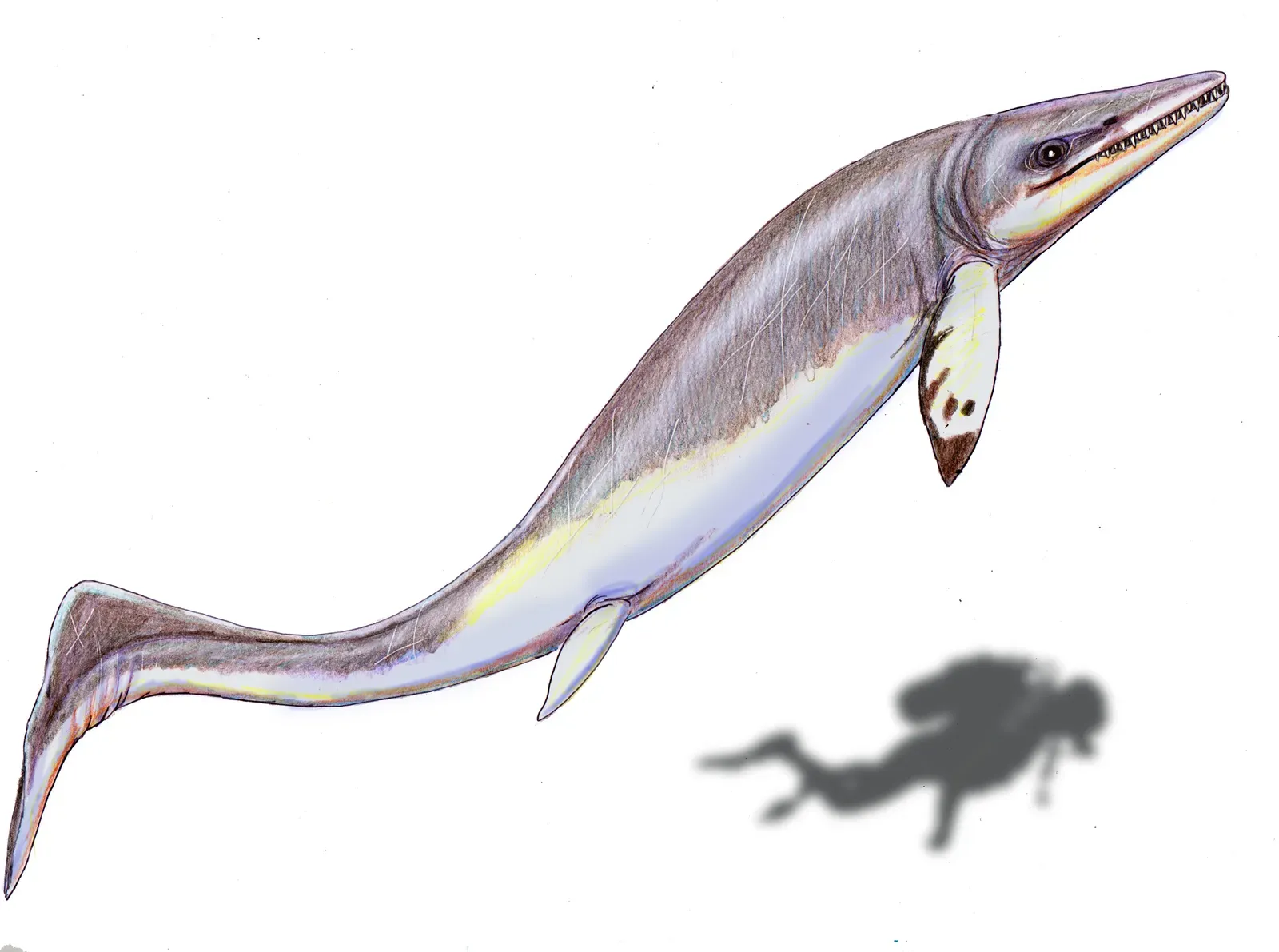
While Shonisaurus played the roaming giant, Thalattoarchon was the hitman of the early Triassic oceans. Its name literally suggests “ruler of the seas,” and the fossils back up that attitude: this ichthyosaur had huge, blade-like teeth capable of cutting through large, fleshy prey. It was not just eating squid or small fish; it was powerful enough to attack other big marine reptiles, essentially becoming one of the first truly apex marine predators after Earth’s worst mass extinction.
I find Thalattoarchon fascinating because it appears quite early in the recovery of marine ecosystems after that catastrophe. While life was still scrambling to rebuild food webs, this thing had already evolved to sit at the very top. In modern oceans, orcas fill a similar role as intelligent, versatile predators that can take on animals nearly their own size. Thalattoarchon feels like a much older, reptilian answer to that same ecological question: “Who is bold enough to eat the other giants?”
Rhamphosuchus – The Crocodile Giant That Blurred Land and Sea
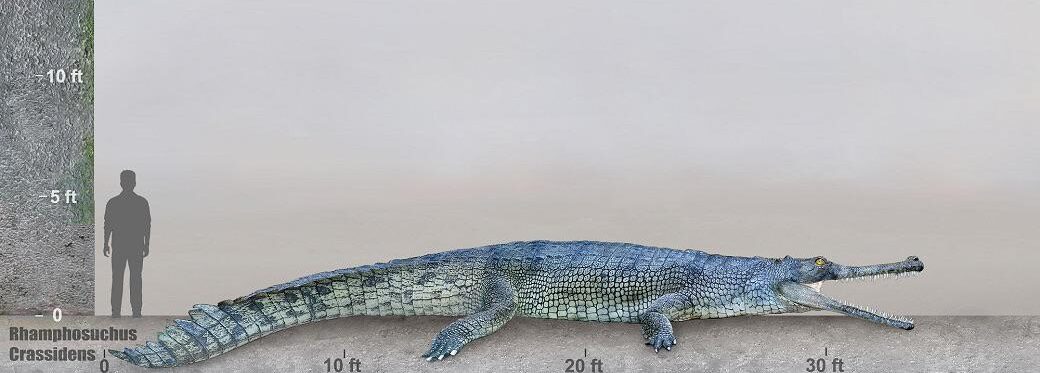
Rhamphosuchus is often portrayed as a colossal crocodile-like reptile from prehistoric South Asia, and while its exact size has been debated, it was undeniably a giant among its kind. It likely belonged to a group that could handle both rivers and coastal environments, patrolling estuaries where freshwater and seawater mingled. Picture something that could lurk near shorelines, waiting for anything careless enough to enter its killing zone: fish, turtles, maybe even land mammals that came too close to the water’s edge.
What makes Rhamphosuchus especially intriguing is how it highlights that ocean “giants” are not always fully marine. Many of the most dangerous coastal predators in Earth’s history have been ambush specialists living right at that blurry border between land and sea. In a way, it reminds me of modern saltwater crocodiles that can surprise you far out at sea or right off a quiet beach. The ancient world had its own versions of these coastal nightmares, and Rhamphosuchus appears to have been one of the biggest.
Stygiomedusa gigantea – The Ghostly Deep-Sea Jelly With an Ancient Lineage
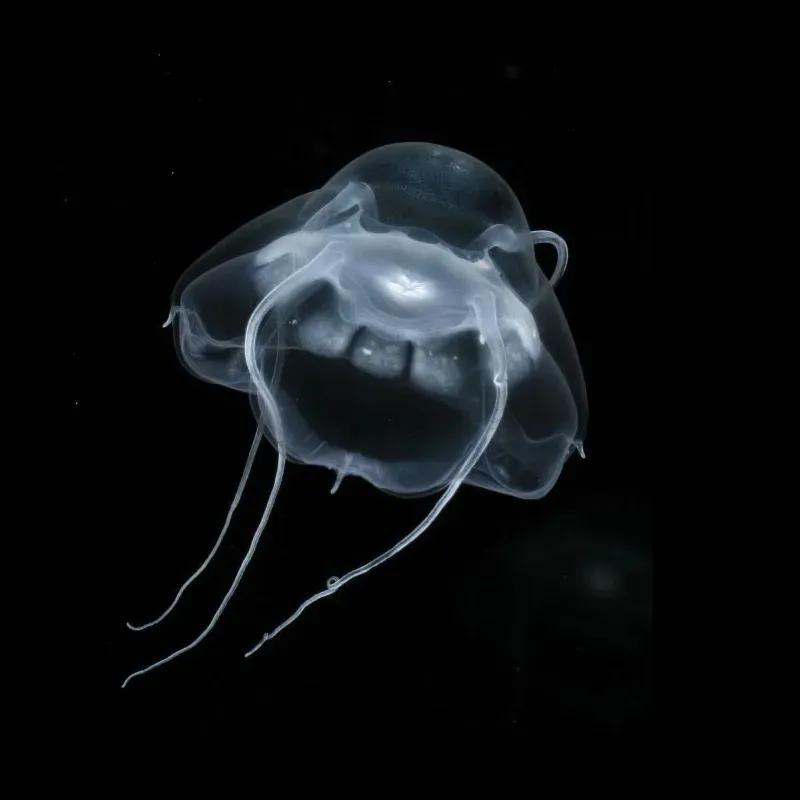
Stygiomedusa gigantea still drifts in our oceans today, but its lineage reaches so far back that it practically counts as a living fossil of the deep. This huge jellyfish, with a bell that can stretch several meters across and long curtain-like arms, looks more like a drifting cloak than an animal. It lives in dark, deep waters where sunlight never reaches, a realm that has changed surprisingly little over vast spans of geologic time.
I’m including it here because it reminds us that “ancient ocean giants” are not only locked in rock; some are quietly alive around us, hidden from casual view. While we do not have a perfectly preserved fossil record for soft-bodied jellies, genetic and ecological evidence suggests that groups like this have been haunting deep oceans for incredibly long periods. In a strange way, watching footage of Stygiomedusa today might be the closest thing we have to glimpsing the ghostly giants of past abyssal worlds.
Umoonasaurus – The Small-Headed Plesiosaur With a Surprisingly Large Presence
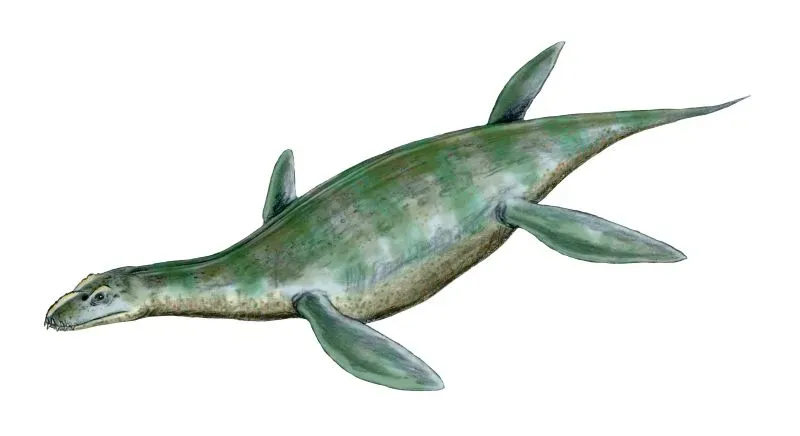
Umoonasaurus was not the longest plesiosaur ever, but it earns a spot here because of the ecosystem it dominated and the strange, icy waters it called home. Living in what is now Australia during polar conditions in the Cretaceous, it swam in seas that experienced long periods of winter darkness. It had a relatively small head on a long neck, with a compact but powerful body powered by four flippers, giving it an almost supernatural grace in the water.
What grips me about Umoonasaurus is the mental image of these reptiles gliding through dim, cold, maybe even seasonally ice-choked seas, hunting fish and squid in twilight gloom. We tend to imagine dinosaurs and their relatives in hot, tropical settings, but this animal blows that stereotype apart. It shows that ancient marine reptiles could adapt to environments that feel more like modern polar oceans than a Jurassic theme park, quietly becoming giants in places we rarely picture them.
Hibbertopterus – The Armored Sea Scorpion That Trudged the Shallows
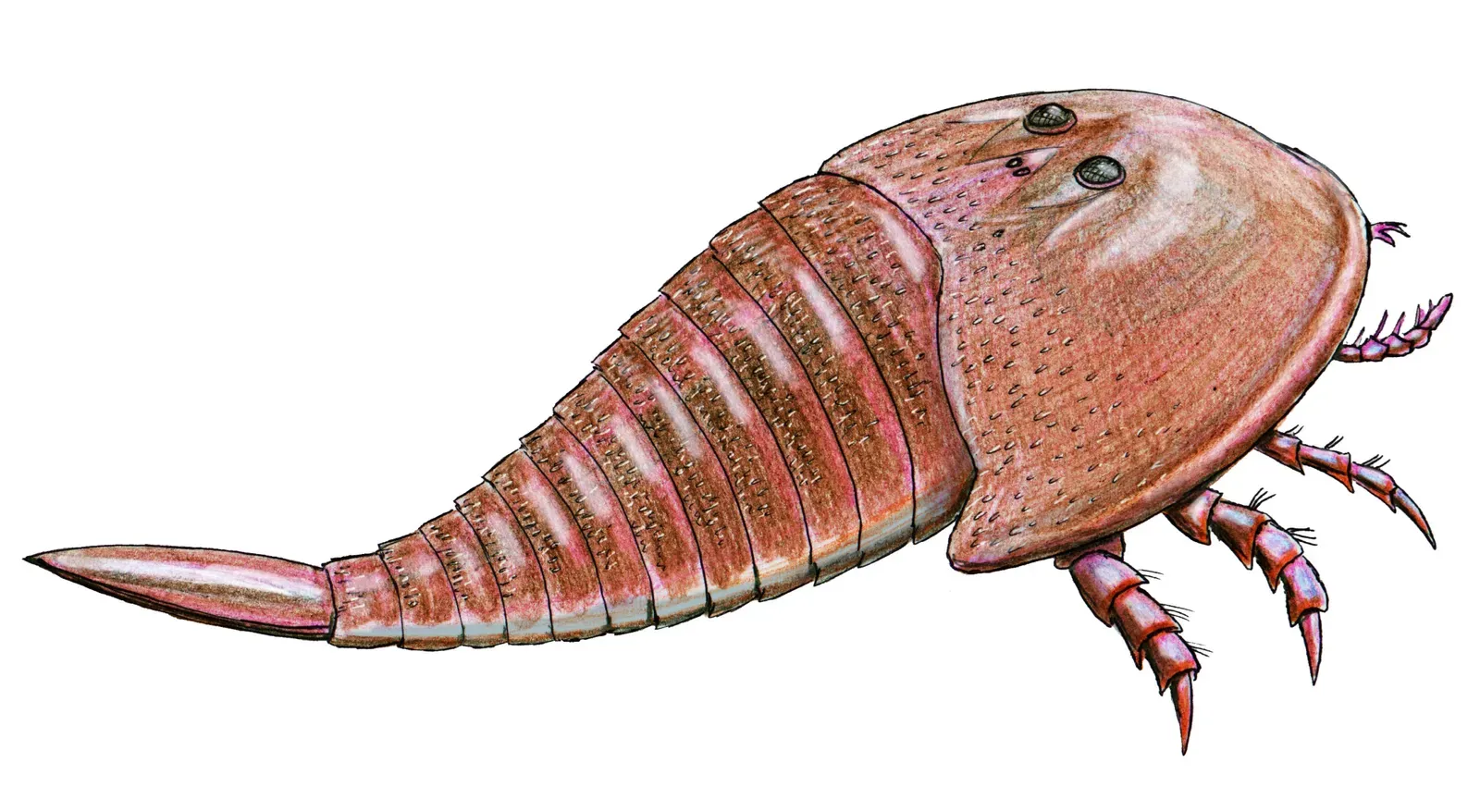
Hibbertopterus belonged to the eurypterids, the so‑called sea scorpions, and some individuals may have reached lengths similar to an adult human. While not a blue-whale‑scale giant, for an arthropod it was absolutely enormous, covered in armor plates and equipped with spiny appendages for raking through sediment. It likely inhabited brackish and shallow marine environments, plodding along the bottom rather than slicing through open water.
I find these creatures unsettling in the best way, like the world briefly tried out giant armored insects as nearshore rulers. Imagine wading through a warm, ancient tidal flat and seeing a suitcase-sized scorpion-thing trundling past your legs, stirring up mud and hunting for whatever it could trap. Hibbertopterus and its kin remind us that “giant” depends on context; if you are a small fish or an early tetrapod in knee-deep water, this thing is absolutely the monster under the bed.
Hainosaurus – The Lesser-Known Mosasaur Titan
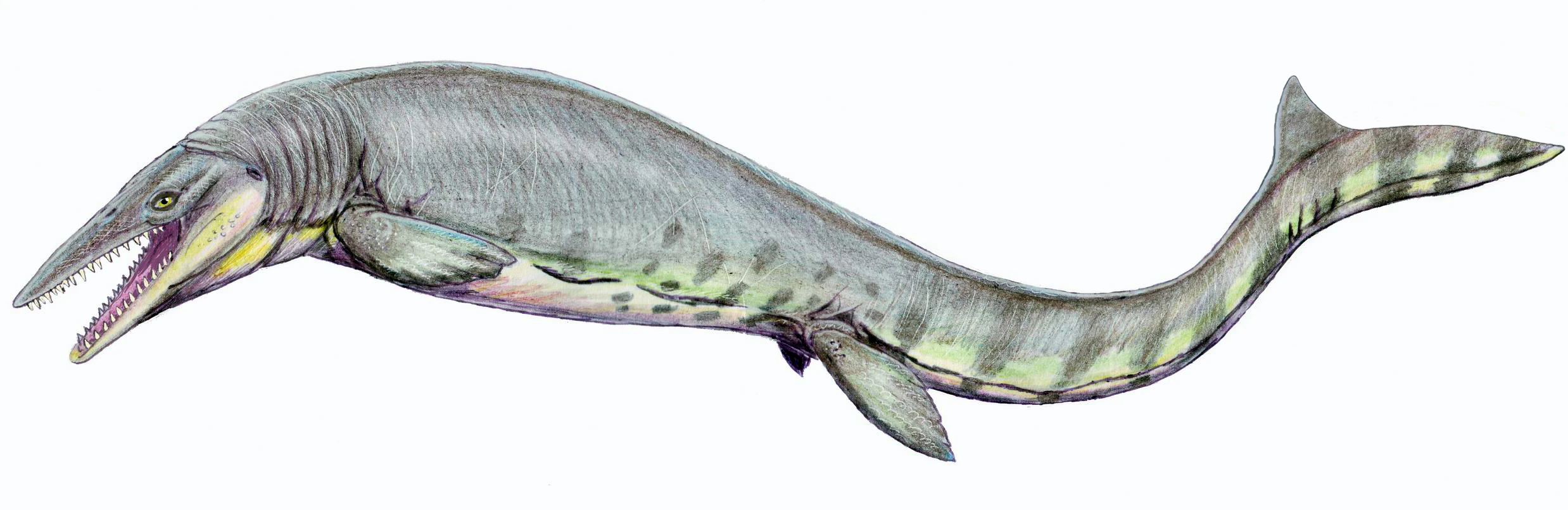
Mosasaurus usually hogs the spotlight, but Hainosaurus was another leviathan in the same family that deserves much more attention. This marine reptile grew to impressive lengths, with a robust body, paddle-like limbs, and a powerful tail adapted for sweeping side-to-side propulsion. Its skull carried conical, gripping teeth suited for seizing slippery prey like fish and other marine reptiles, cementing its place high on the Cretaceous food chain.
To me, Hainosaurus represents how incomplete our pop culture view of prehistory really is. There were whole lineups of giant mosasaurs patrolling different ancient seas, like competing brands of apex predator, and we fixate on just one or two. If you could time-travel to a Late Cretaceous coastline, the odds are decent that the hulking shadow beneath your boat was something like Hainosaurus rather than the poster-child species you see on movie screens.
Archelon – The Mega Turtle That Ruled the Western Interior Seaway
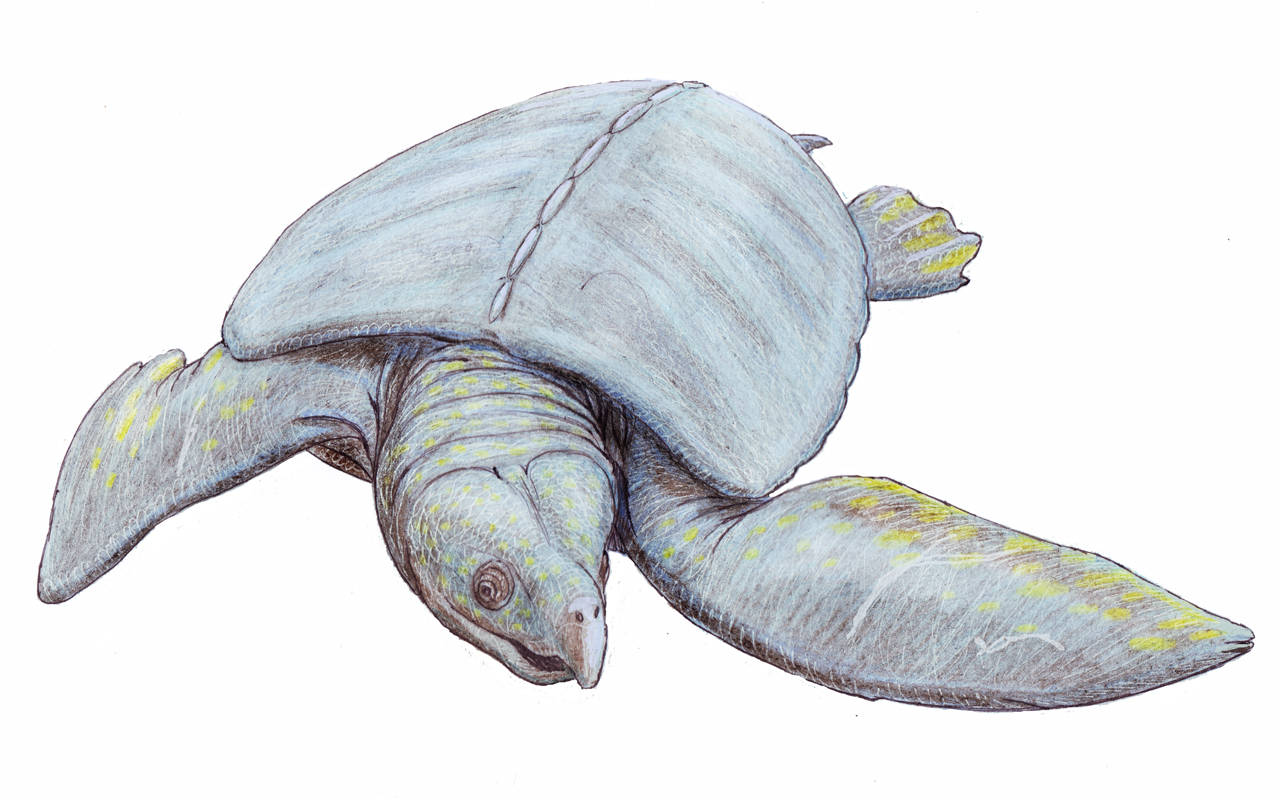
Archelon looked like a sea turtle that somebody dragged into a fantasy game and scaled up until it felt absurd. With a shell-like framework over four meters long and extended flippers, it cruised the warm inland sea that once split North America in two. Its skull was armed with a strong, hooked beak that could crush shells or tackle sizable prey, making it more than just a gentle, drifting grazer.
What strikes me about Archelon is how it overturns our cozy image of turtles as harmless slowpokes. This was a muscular, wide-ranging giant that may have lived for many decades, navigating long migrations and dangerous waters full of mosasaurs and sharks. I like to imagine it as a kind of armored battleship of the seaway: not invincible, but so solid and imposing that only the boldest predators would risk taking a bite.
Livyatan – The Sperm Whale With Killer Whale Teeth
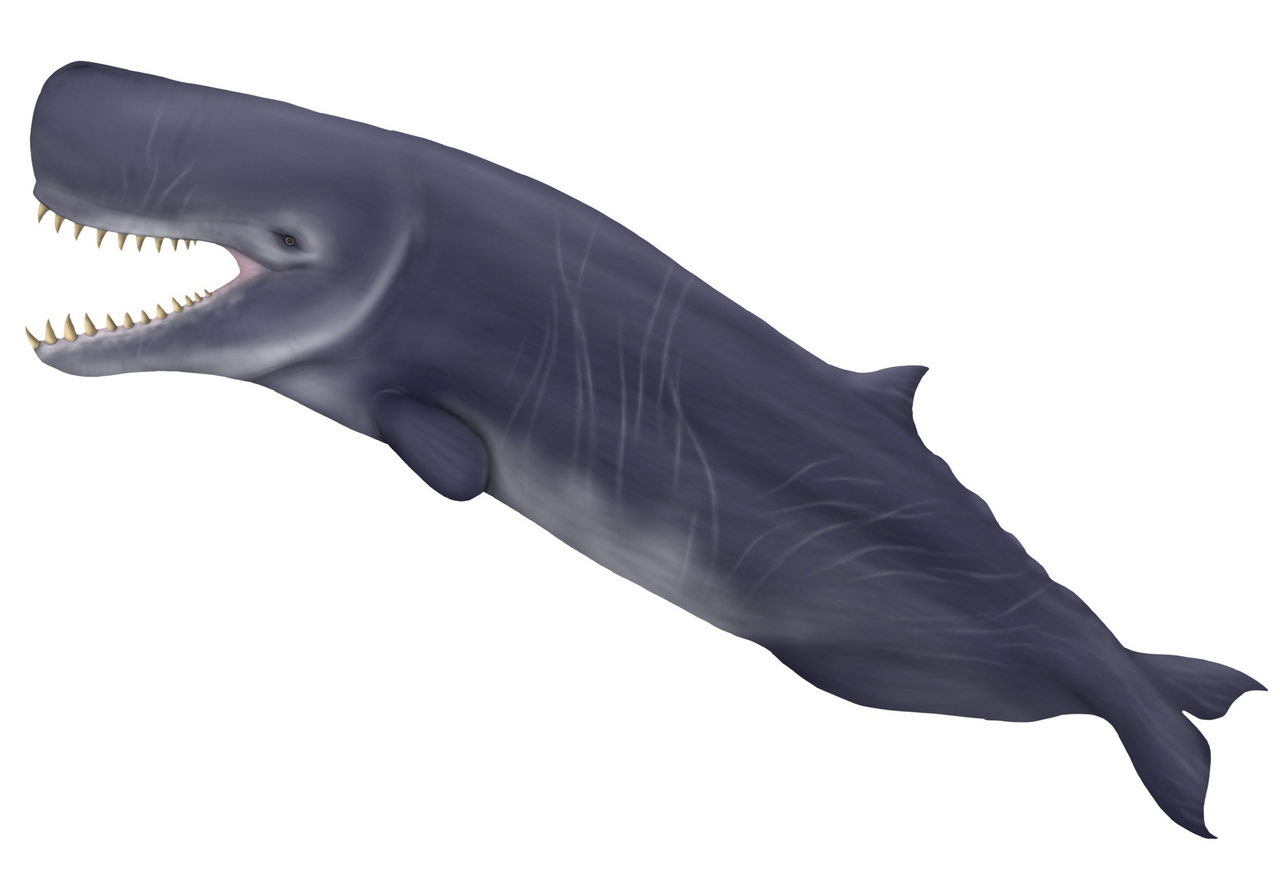
Livyatan, often mentioned in the same breath as megalodon, was a Miocene sperm whale that took the concept of “toothed whale” to brutal extremes. Unlike modern sperm whales, which mostly eat squid with relatively modest lower teeth, Livyatan had massive, functional teeth in both jaws, some longer than a grown person’s forearm. Its skull suggests powerful jaw muscles capable of biting into large marine mammals, possibly even other whales.
This animal fascinates me because it shows that the arms race in the oceans did not end with the extinction of marine reptiles. Millions of years later, mammals reinvented the super-predator niche on an almost ridiculous scale. In a sense, Livyatan feels like nature’s way of saying it was not done with giant, bone-crunching hunters. If you were a medium-sized whale in those Miocene seas, you had to worry not just about colossal sharks from below but also this torpedo-shaped battering ram coming straight at you.
Conclusion – The Ocean Never Stopped Making Monsters
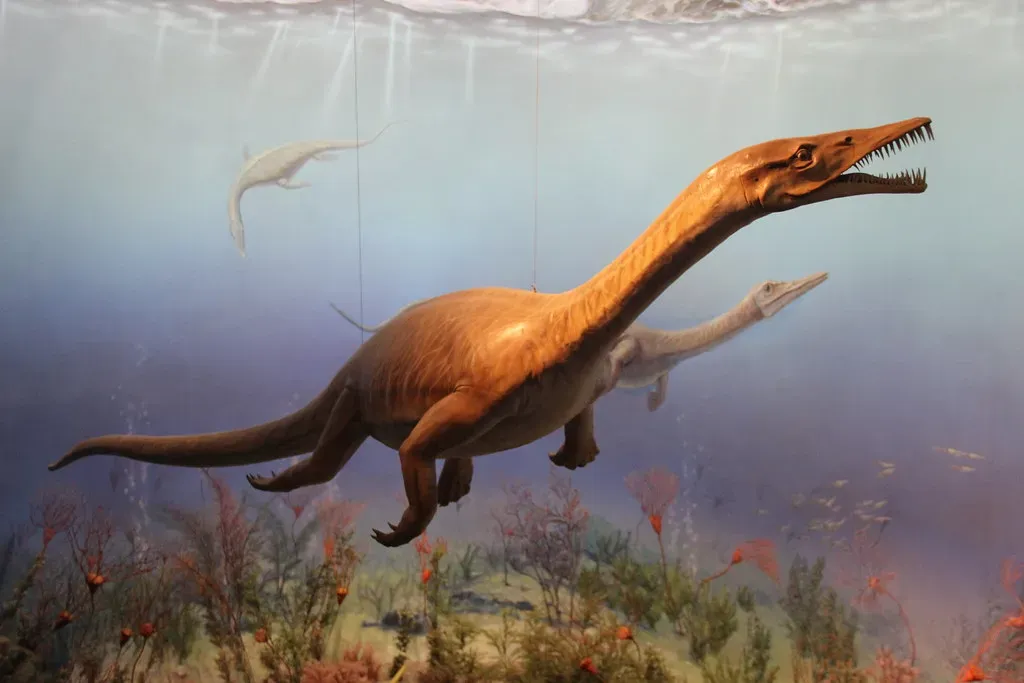
Looking across this lineup, what jumps out at me is how the ocean keeps recycling the same big ideas with new bodies. Giant filter-feeders like Leedsichthys, long-distance predators like Shonisaurus and Livyatan, armored bruisers like Archelon or Hibbertopterus, ghostly drifters like Stygiomedusa – the cast changes, but the roles stay weirdly familiar. The sea seems to love extremes, and whenever life gets the chance, it stretches to fill every possible giant niche.
My own opinion is that we are still living in a golden age of ocean monsters; we are just too used to them to notice. Blue whales, giant squid, and deep-sea jellies are not the leftovers of a more exciting past – they are the latest chapter in a very long, very strange story. The real question that sticks with me is not whether ancient oceans were wilder, but which modern giants we are still completely missing in the dark. If we missed so many in the fossil record, how many living “unknowns” are gliding under the waves right now?