There is something almost magical about the moment a paleontologist’s brush sweeps away a few million years of sediment and reveals, in stunning silence, a creature that no living human has ever seen. Fossils are not just old bones. They are messages sent from unimaginably deep time, and occasionally, they say something so surprising it forces the entire scientific community to stop, argue, and ultimately rethink everything.
Some of these discoveries were made by seasoned professionals with grant money and GPS. Others were stumbled upon by curious amateurs, museum curators noticing something odd in a drawer, or geologists searching for coal. What they all share is a jaw-dropping capacity to overturn what we thought we knew. Here are ten of the most astounding fossil discoveries that did exactly that. Be prepared to be surprised.
1. Archaeopteryx: The Fossil That Ignited a Revolution
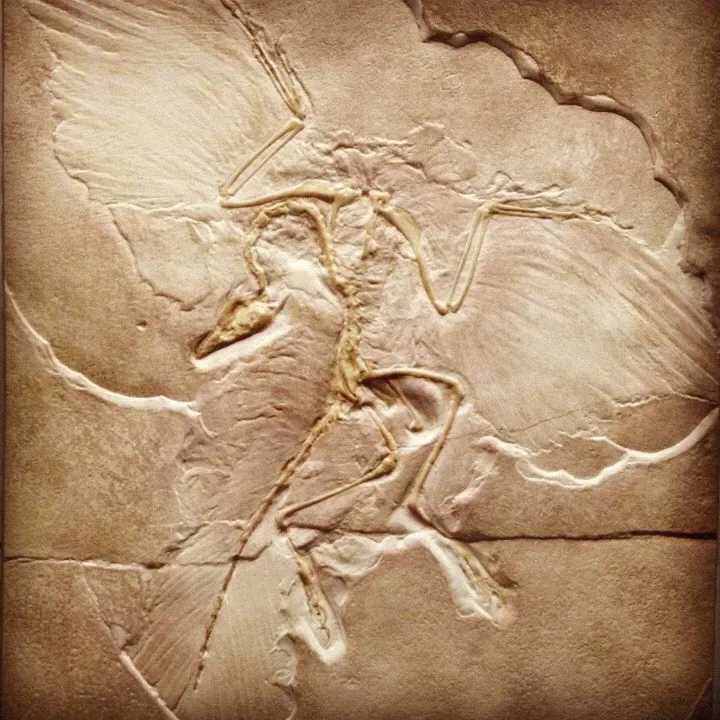
In 1861, in limestone quarries in Bavaria, Germany, workers uncovered a fossil that would ignite one of the most important scientific debates of the 19th century. The fossil, later named Archaeopteryx lithographica, looked like something caught between worlds. Picture a crow-sized creature with the soul of a reptile and the wardrobe of a bird. It had feathers, clear and unmistakable feathers, preserved in stunning detail. Yet it also had teeth, a long bony tail, and clawed fingers on its wings. These were reptilian features, not avian.
Archaeopteryx demonstrated that birds evolved from theropod dinosaurs. Over the following decades, additional fossil discoveries confirmed this evolutionary connection, revealing feathered dinosaurs in China and elsewhere. Honestly, it is hard to overstate how seismic this was. It helped validate evolutionary theory itself, showing that dramatic transformations in anatomy could unfold gradually over millions of years, leaving behind traces in stone. The image of a feathered dinosaur no longer shocks anyone today, but in the 19th century, it shook the very foundations of biology.
2. Lucy: Three Million Years of Human History in a Few Hundred Bones
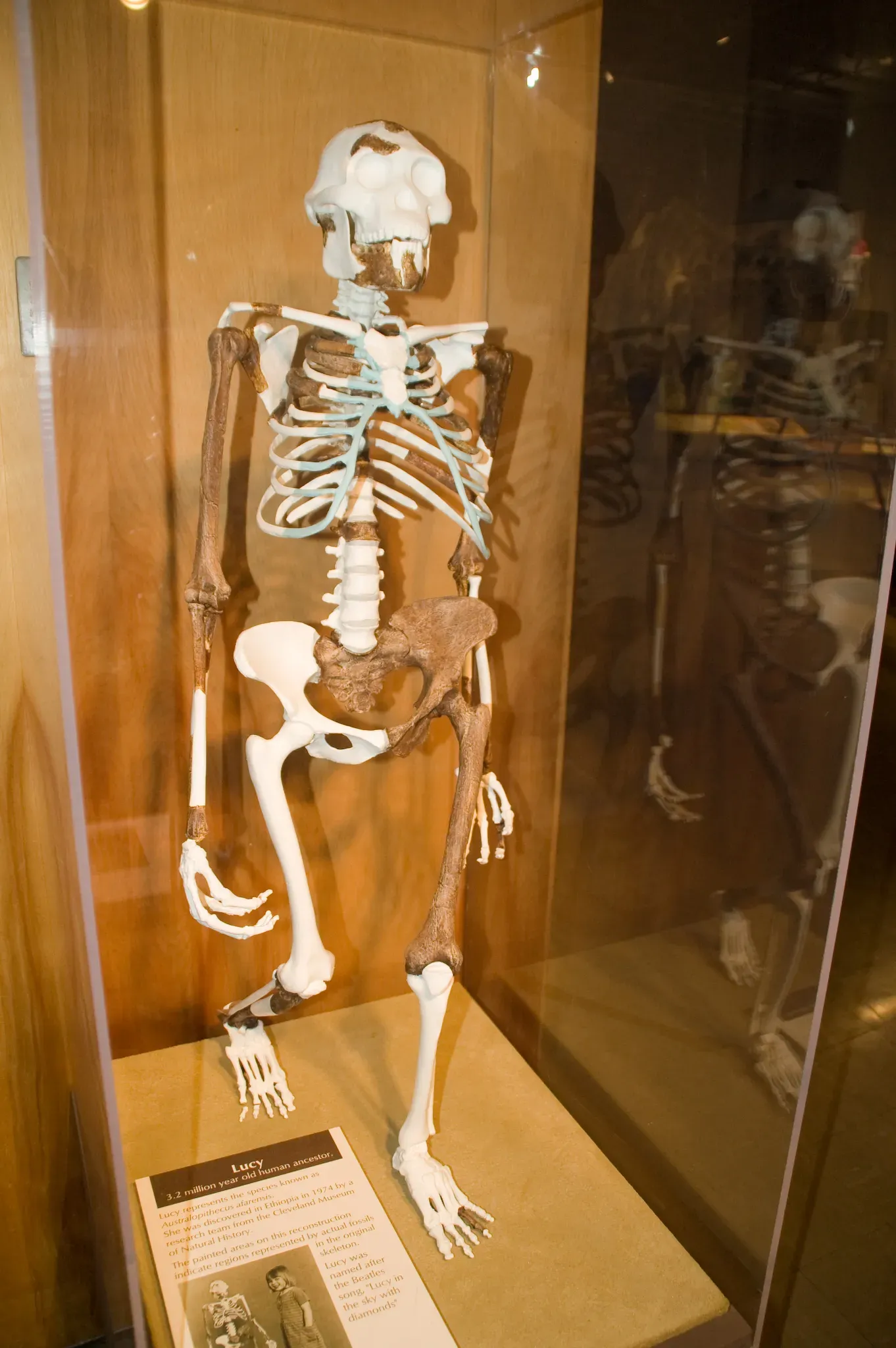
On November 24, 1974, paleoanthropologist Donald Johanson was exploring the ravines and valleys of the Hadar River in the Afar region of northeastern Ethiopia when he spotted an arm bone fragment poking out of a slope. Johanson later recounted that his pulse quickened as he realised it belonged not to a monkey but a hominin. As the team found more and more fragments, they began to appreciate that they were uncovering an extraordinary skeleton. Astoundingly, the team found about 40% of Lucy’s skeleton and later determined her fossils to be approximately 3.2 million years old, making Lucy both the oldest and most complete early human ancestor or relative ever found at the time.
The skeleton presents a small skull akin to that of non-hominin apes, plus evidence of a walking-gait that was bipedal and upright, akin to that of humans, and this combination supports the view of human evolution that bipedalism preceded increase in brain size. That single insight rewrote the textbook assumption that big brains came first. Australopithecus afarensis discoveries in the 1970s, including Lucy and the Laetoli footprints, confirmed that our ancient relatives were bipedal, walking upright on two legs, before big brains evolved. Your entire understanding of what makes us human had to be reconsidered after this one small skeleton was pulled from the Ethiopian dirt.
3. The Laetoli Footprints: Walking Into History
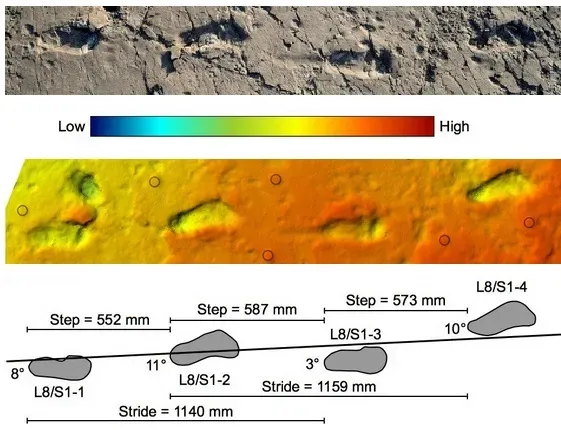
Some 3.6 million years ago in Laetoli, Tanzania, three early humans walked through wet volcanic ash. When the nearby volcano erupted again, subsequent layers of ash covered and preserved the oldest known footprints of early humans. Think about that for a moment. A random afternoon stroll, preserved forever, simply because a volcano had bad timing. Team members led by paleontologist Mary Leakey stumbled upon animal tracks cemented in the volcanic ash in 1976, but it wasn’t until 1978 that Paul Abell joined Leakey’s team and found the 88-foot footprint trail, which includes about 70 early human footprints.
The Laetoli footprints show two individuals walking upright across damp ash. The impressions reveal a human-like gait, with a heel strike and toe push-off similar to modern humans. The Laetoli tracks provided direct evidence that early hominins were fully bipedal long before large brains evolved. Unlike bones, footprints capture a moment of behavior, not just anatomy. Analysis of the footprints and skeletal structure showed clear evidence that bipedalism preceded enlarged brains in hominins. It is, without question, one of the most emotionally resonant finds in the entire history of human paleontology.
4. The Burgess Shale: Life’s Wildest Experiment
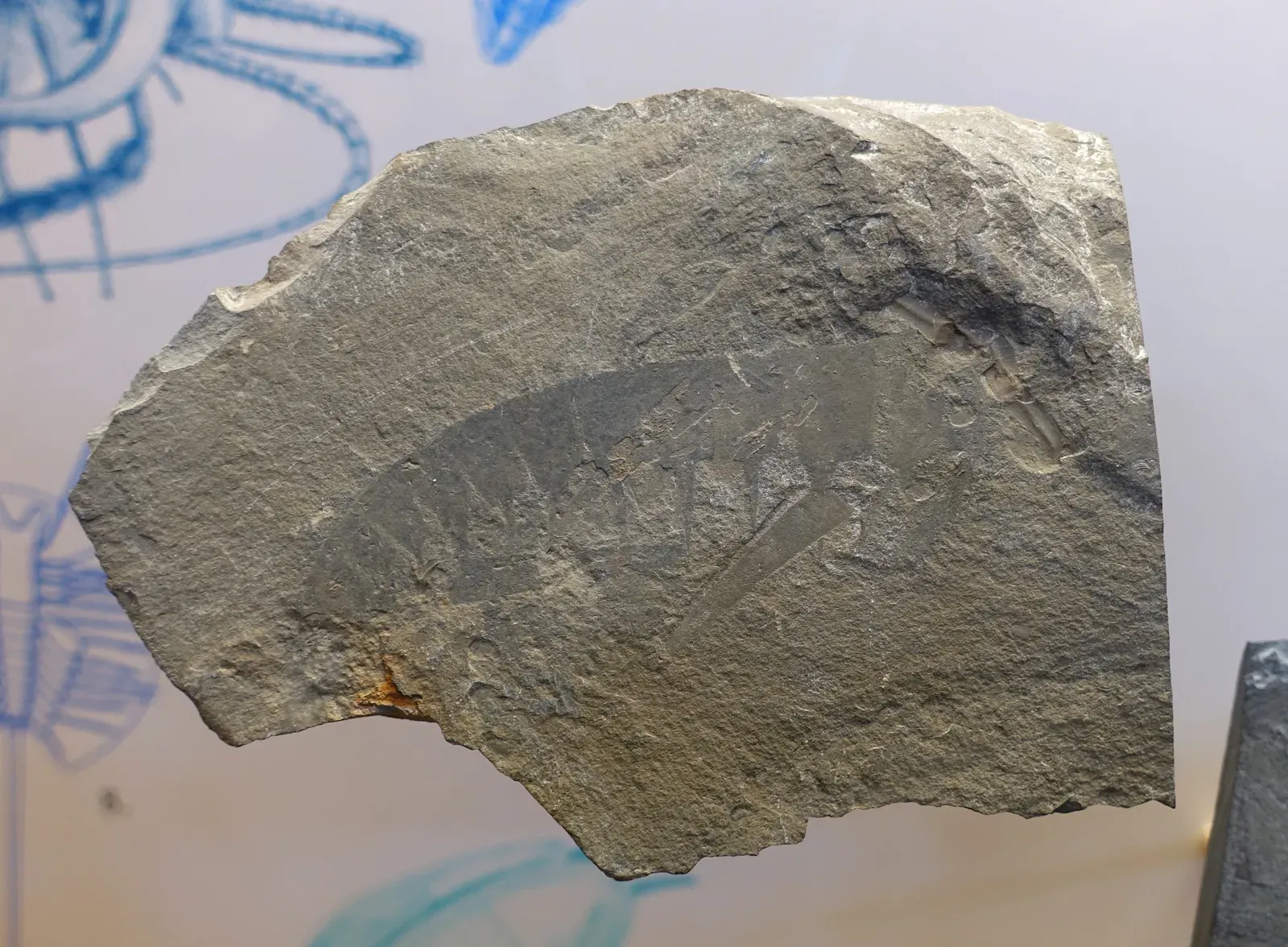
In 1909, paleontologist Charles Doolittle Walcott uncovered exquisitely preserved fossils in the Canadian Rockies dating back more than 500 million years to the Cambrian period. Unlike typical fossil sites that preserve only hard parts such as shells and bones, the Burgess Shale preserved soft-bodied organisms in astonishing detail. Creatures like Anomalocaris canadensis and Hallucigenia sparsa seemed almost alien in their anatomy. If you showed these organisms to a child and asked them to guess which planet they came from, you wouldn’t blame them for saying “not ours.”
Decades later, when the Cambridge geologist Harry Whittington and his colleagues took another look, they realized that the Burgess Shale contained not just unique species, but entire phyla, the broadest classification of animals, new to science. The proliferation of wildly different body plans and the apparently random process by which some thrived while others went defunct brought to mind a lottery, in which the lineage leading to human beings just happened to have held a winning ticket. These little creatures, entombed in rock for half a billion years, are a reminder that we are so very lucky to be here.
5. Tiktaalik: The Fish That Learned to Lean on Land
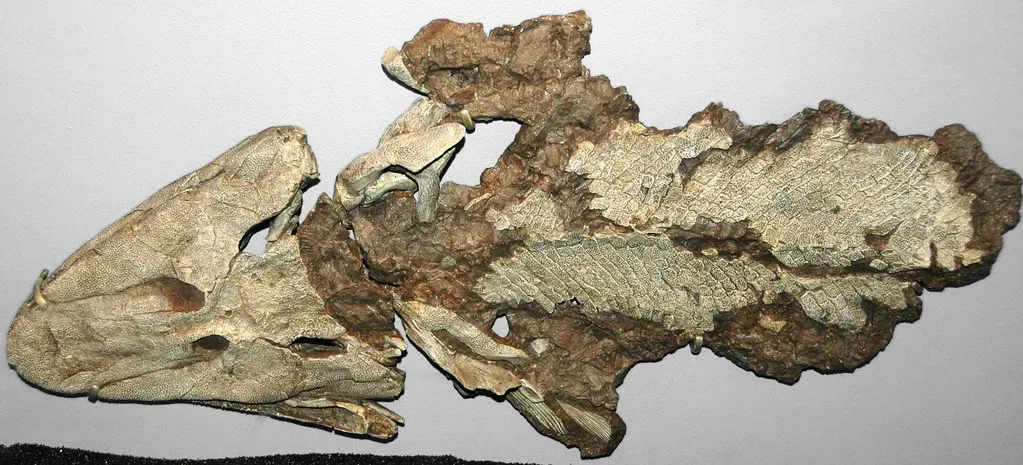
Tiktaalik, discovered in 2004 on Canada’s Ellesmere Island, is a fascinating fossil bridging the evolutionary gap between fish and early tetrapods. Dating back 375 million years, this “fishapod” possessed features like robust fins with wrist-like bones, gills, and lungs. Its adaptations suggest it was capable of both swimming in water and supporting itself on land. It is essentially the moment in Earth’s story where a vertebrate first looked at the shore and thought, “You know what, I could live there.” The discovery of Tiktaalik validated predictions made by paleontologists about where such transitional fossils might be found, and it represents a critical moment in the history of life, showcasing how vertebrates began their colonization of terrestrial environments.
The discovery of Tiktaalik provided strong evidence to support the idea that tetrapods evolved from fish that began to venture onto land in search of food or to escape predators. It also provided insights into the evolutionary changes required for fish to make the transition to life on land, such as the development of lungs and changes in the structure and function of fins. Every time you take a walk, you can thank Tiktaalik’s distant relatives for taking the first step. Tiktaalik remains one of the most famous and significant fossil discoveries in recent history, and has helped shed light on the evolutionary history of life on Earth.
6. The Chicxulub Fossil Evidence: How a Cosmic Disaster Shaped Our World
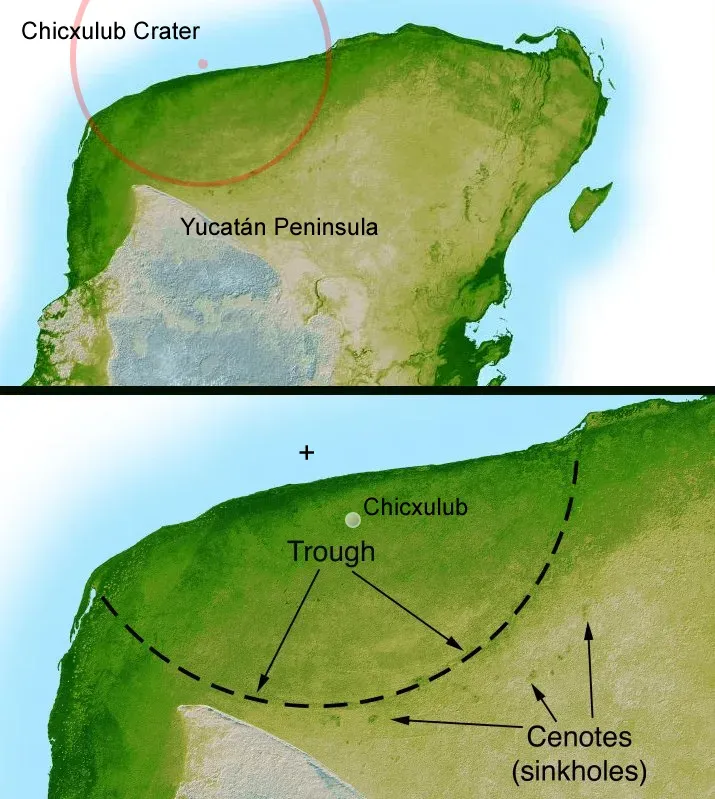
Original: http://photojournal.jpl.nasa.gov/catalog/PIA03379, Public domain)
Subsequent discoveries identified a vast impact crater beneath the Yucatán Peninsula, known as the Chicxulub crater. Fossil evidence showed a sudden and dramatic loss of species at this boundary, approximately 66 million years ago. The impact would have triggered massive wildfires, tsunamis, and a global “impact winter” caused by dust blocking sunlight. For a long time, scientists argued about whether dinosaurs died gradually or all at once. The fossil record near this boundary settled that debate in the most dramatic way possible.
This discovery fundamentally changed our understanding of extinction. Instead of gradual decline alone, a catastrophic event played a central role in wiping out dominant species, including dinosaurs. The extinction opened ecological niches that allowed mammals to diversify and eventually gave rise to primates, and ultimately humans. Let that sink in. In a sense, our own existence is linked to that ancient impact. The Chicxulub evidence demonstrated that Earth’s biological history is influenced not only by internal processes but also by cosmic events. The universe, it turns out, has been a co-author of life’s story all along.
7. The Dueling Dinosaurs: Nanotyrannus Was Real After All
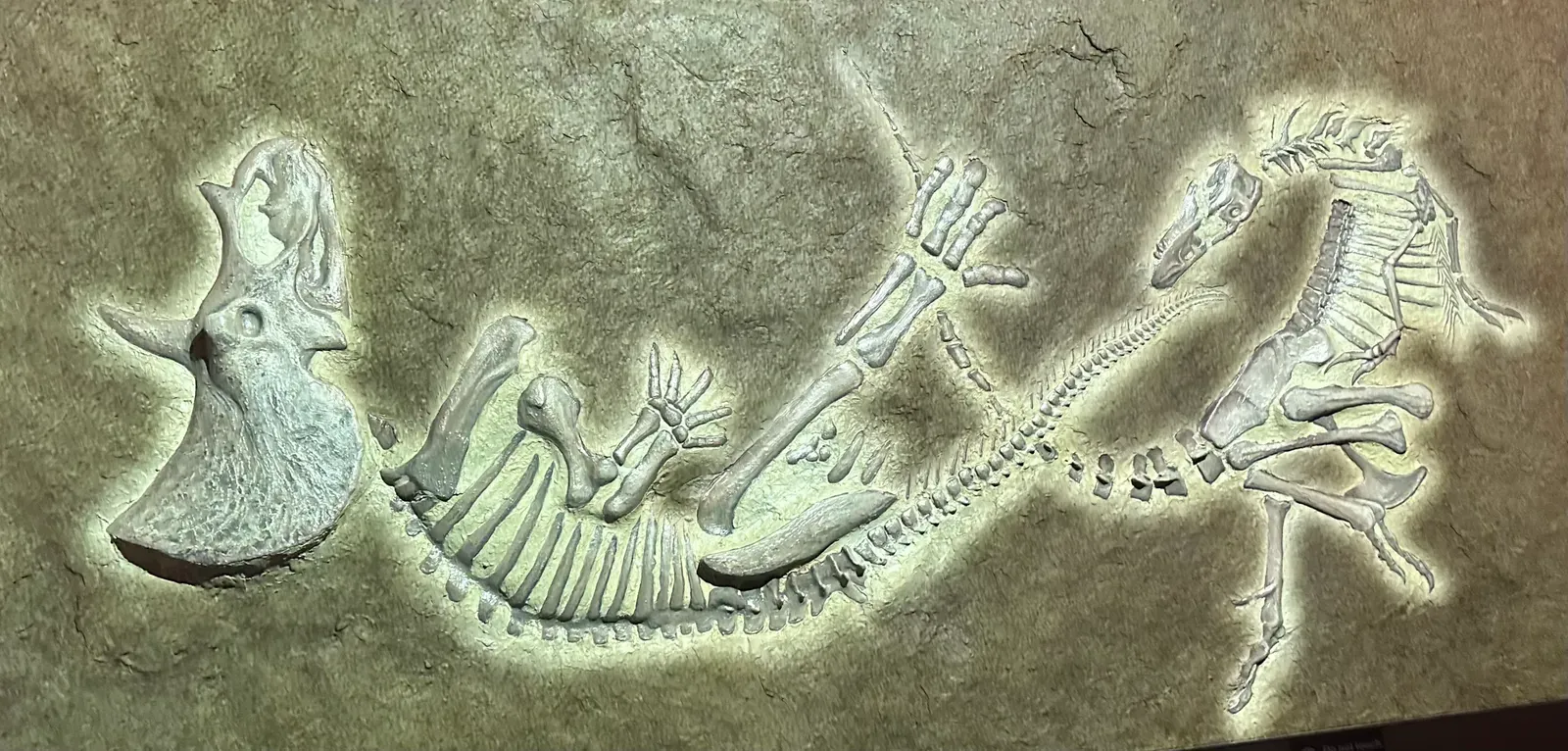
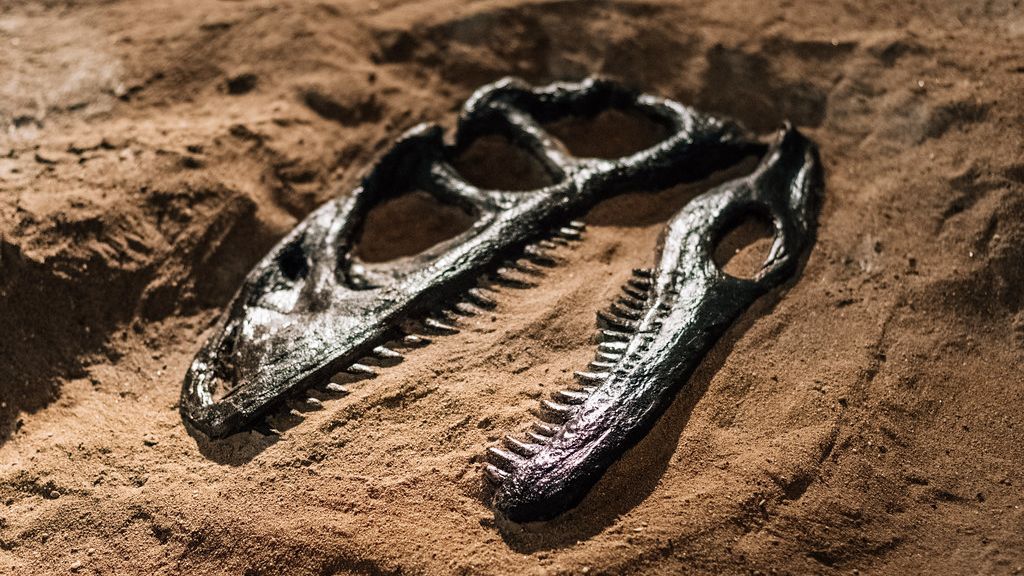
A complete tyrannosaur skeleton ended one of paleontology’s longest-running debates about whether Nanotyrannus is a distinct species or just a teenage version of Tyrannosaurus rex. The fossil, part of the legendary “Dueling Dinosaurs” specimen unearthed in Montana, contains two dinosaurs locked in prehistoric combat: a Triceratops and a small-bodied tyrannosaur. That tyrannosaur is now confirmed to be a fully grown Nanotyrannus lancensis, not a teenage T. rex, as many scientists once believed. The scene preserved in that rock is almost cinematic, two ancient giants caught in their final battle, frozen mid-struggle for millions of years.
The skeleton’s fusing spinal sutures and growth rings show it was fully grown when it died at around 20 years of age. Its anatomy reveals traits that form early in development and don’t change with age, including fewer tail vertebrae, more teeth, larger hands, and different skull nerve and sinus patterns. Confirmation of the validity of Nanotyrannus means that predator diversity in the last million years of the Cretaceous was much higher than previously thought, and hints that other small-bodied dinosaur species might also be victims of mistaken identity. It’s hard to say for sure what else might be hiding in plain sight in museum collections around the world, but this find makes you wonder.
8. The Coelacanth: A Living Fossil Hidden in Plain Sight
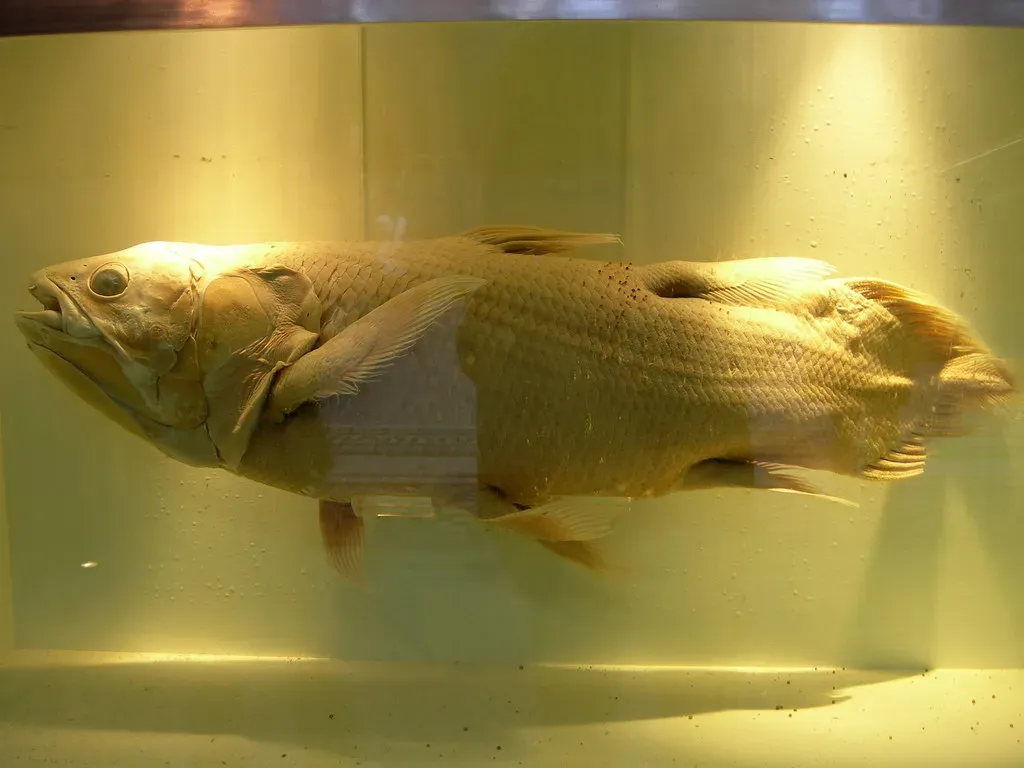
Once believed to have gone extinct 66 million years ago, the coelacanth was rediscovered alive in 1938 off the coast of South Africa. Marjorie Courtenay-Latimer, a museum curator, recognized the coelacanth’s importance when a local fisherman brought it to her. This is the kind of discovery that makes scientists quietly question what else might still be swimming in the dark depths of the ocean, or burrowing somewhere we’ve never thought to dig. Known only from fossils approximately 65 million years old, the coelacanth’s existence provided a unique opportunity to study a direct descendant of an ancient lineage, offering a “living fossil” window into the distant past.
This living fossil, with its lobe-finned structure, closely resembles its ancient relatives preserved in the fossil record. Its rediscovery was a groundbreaking moment in paleontology, proving that some ancient lineages persisted in hidden corners of the world. Its anatomy, including limb-like fins, offered insights into the evolutionary transition from sea to land. The coelacanth continues to inspire research, symbolizing the enduring mysteries of life on Earth. The ocean is not just the world’s biggest habitat. It is, apparently, its best hiding place.
9. The Jiangchuan Biota: Rewriting the Dawn of Complex Life
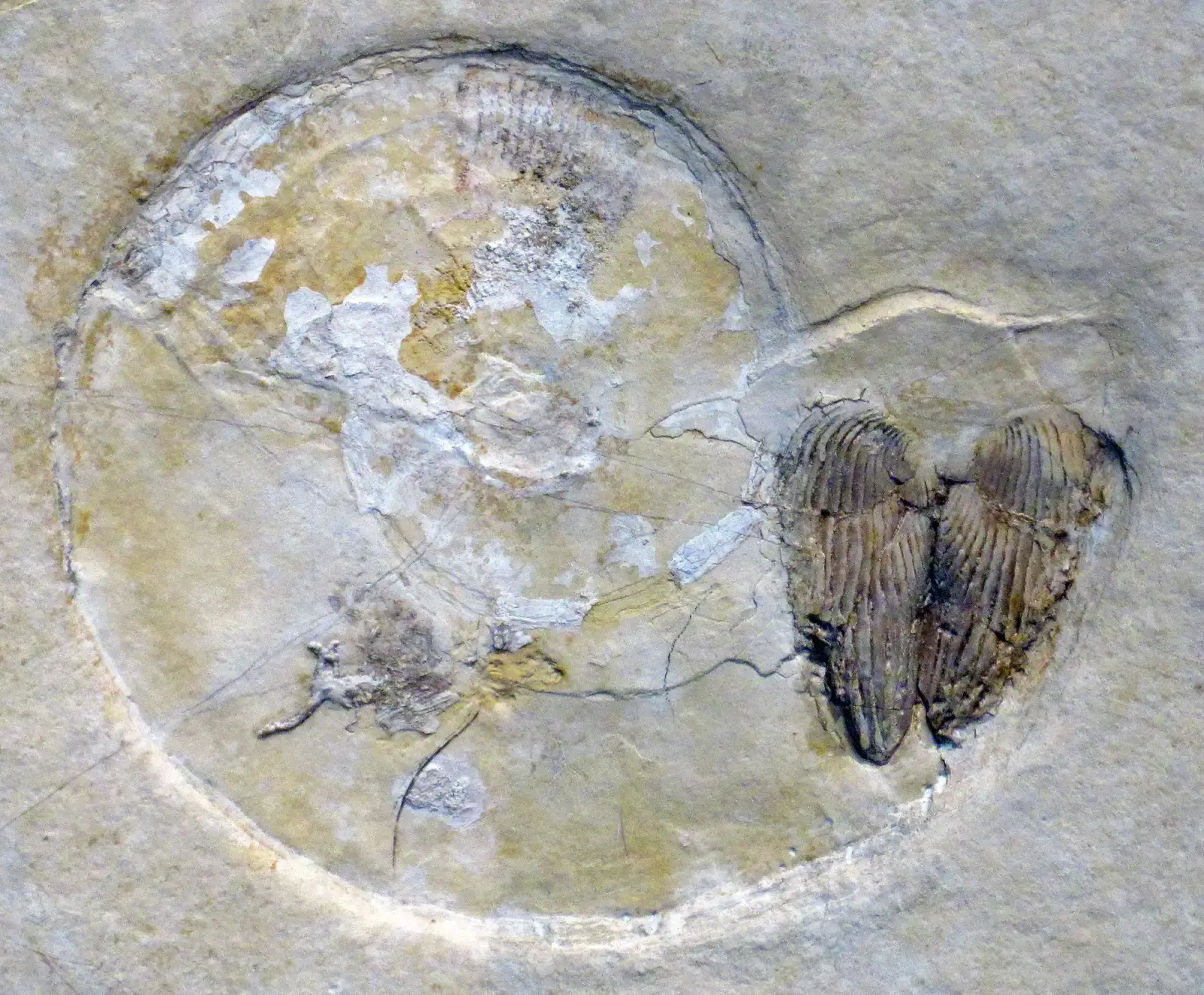
A newly identified fossil site in southwest China is reshaping scientists’ understanding of how complex animal life first emerged on Earth. The discovery shows that many major animal groups had already evolved before the Cambrian Period began. For decades, scientists believed that the rapid rise in animal diversity and complexity, known as the Cambrian explosion, began around 535 million years ago. This event marked a turning point when simple organisms gave way to more complex forms. However, the new findings push that timeline back by at least 4 million years, placing the emergence of many complex animals in the late Ediacaran period.
Among the specimens are early relatives of starfish and their close kin, the acorn worms. These creatures had U-shaped bodies and were anchored to the seafloor by a stalk. They used tentacles near their heads to capture food. Published in April 2026, this find is genuinely brand new, and it is already shaking up the field. The discovery of ambulacrarian fossils in the Jiangchuan biota also means that the chordates, animals with a backbone, must also have existed at this time. In other words, the animals that eventually led to you showed up earlier than anyone suspected. The story of life keeps getting pushed back, and that is extraordinarily exciting.
10. Megachelicerax Cousteaui: The Tiny Claw That Rewrote Spider Origins
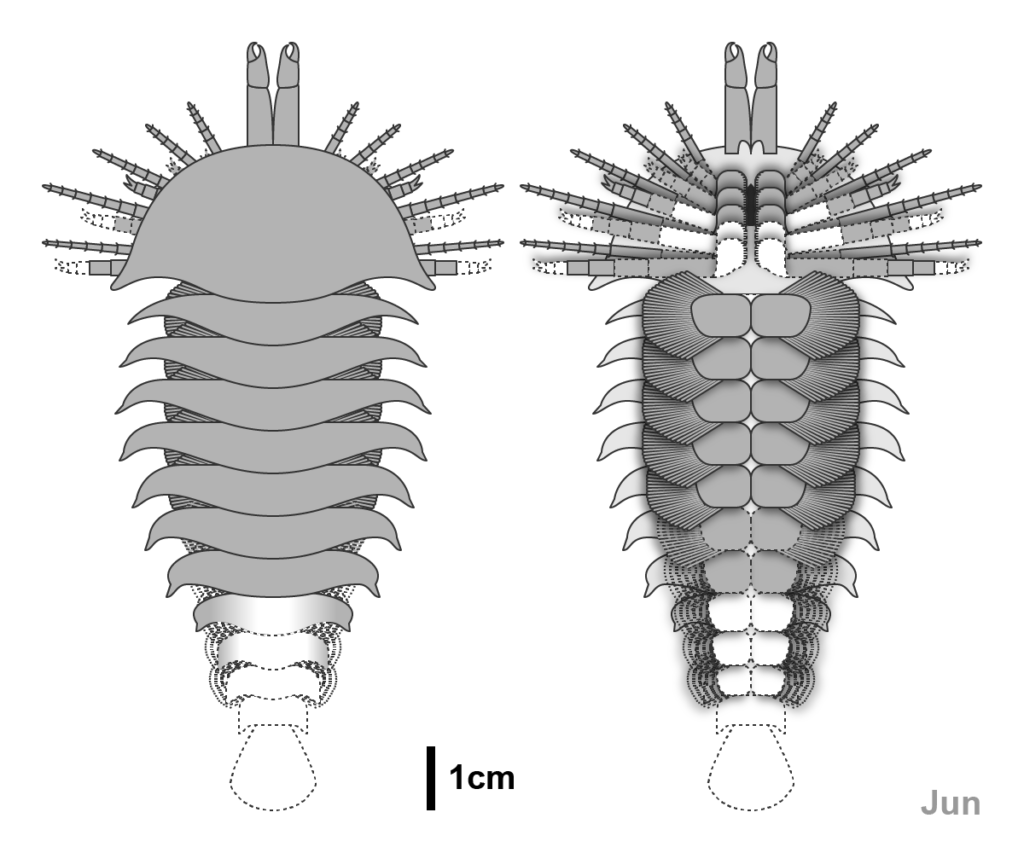
What started as routine fossil cleaning turned into a major scientific surprise when researchers uncovered a tiny claw in a 500-million-year-old specimen where no claw should exist. That detail revealed Megachelicerax cousteaui, the oldest known relative of spiders, pushing the origins of this group back by 20 million years. The fossil shows that key features of modern spiders and horseshoe crabs were already emerging during the Cambrian Explosion. The discovery came from Utah’s West Desert, published in Nature in April 2026, which makes it one of the freshest bombshells in contemporary paleontology.
In a study published in Nature, researchers describe Megachelicerax cousteaui, a 500-million-year-old marine predator discovered in Utah’s West Desert. It is now recognized as the earliest known chelicerate, a group that includes spiders, scorpions, horseshoe crabs, and sea spiders. This finding extends the known history of chelicerates by about 20 million years. The researchers also emphasized the importance of scientific collections. Institutions such as the University of Kansas Biodiversity Institute and Natural History Museum preserve specimens for decades, allowing new insights to emerge as scientific understanding evolves. So the next time you see a spider in the corner of your bathroom, remember that its ancient blueprint was already being drawn half a billion years ago.
Conclusion: The Earth Is Still Speaking
What is truly staggering about all ten of these discoveries is that none of them were expected. Every single one arrived as a surprise, some as gentle revisions, others as full-scale upheavals of the scientific consensus. Together they remind you that the story of life on Earth is not finished being told.
Some fossils, on the day they are found, change the direction of science entirely. The acceptance of evolutionary theory, the understanding of humanity’s place in the animal kingdom, the emergence of life onto land, the origin of birds, the reality of mass extinctions, none of these are assumptions. All became clear thanks to certain fossils. And the extraordinary thing is that most paleontologists will quietly tell you the same thing: the greatest discoveries are almost certainly still out there, buried under deserts, ocean floors, and cliffs you’ve never heard of.
The earth has been patient for hundreds of millions of years. It can afford to wait a little longer. The question is whether you’re paying attention when the next discovery lands. What do you think the next groundbreaking fossil revelation will be? Drop your thoughts in the comments below.