You think modern are wild? Wait until you hear about what lurked beneath the waves hundreds of millions of years ago. These ancient predators looked like they were designed by someone with a seriously twisted imagination. Some had jaws shaped like circular saws, others sported anvils on their backs, and a few seemed to challenge the very definition of what a shark should look like.
The ocean has always belonged to , but the versions that cruised prehistoric seas were infinitely stranger than anything swimming today. Let’s dive deep into a world where evolution went absolutely bonkers and created some of the most bizarre marine predators to ever exist.
Helicoprion: The Buzzsaw Beast
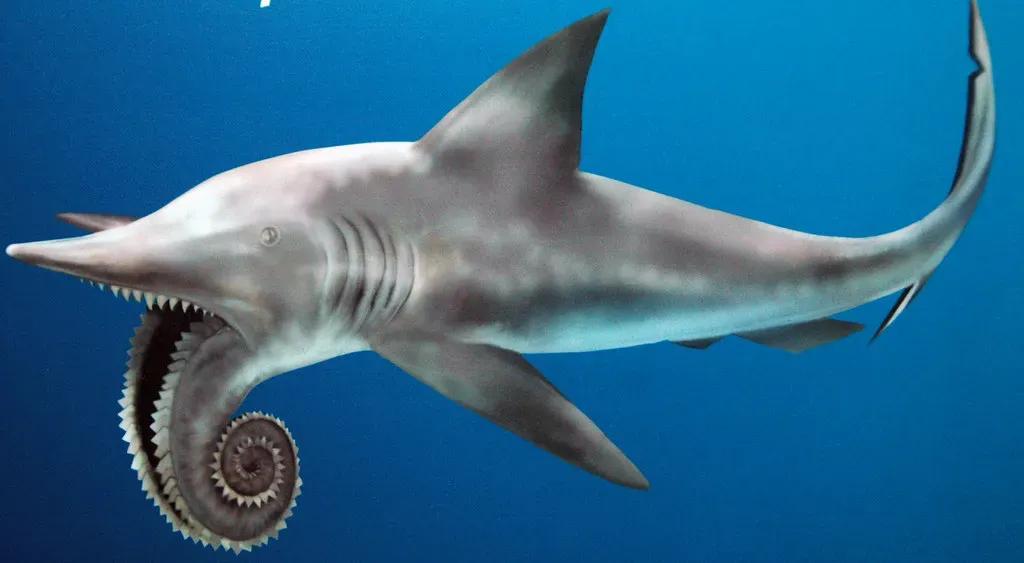
Imagine a creature growing to around 30 feet in length with a coiled row of teeth that were razor sharp, serrated like steak knives, and grew continuously out the lower jaw in a circular whorl. That’s Helicoprion for you, and honestly, scientists had no idea what they were looking at when they first discovered its fossils. Initially, archeologists thought they had found ammonite. Turns out, this bizarre spiral was actually teeth arranged in one of nature’s most peculiar dental configurations.
Living from 290 to 250 million years ago, Helicoprion was lucky to have survived the Great Permian Extinction, the worst mass extinction event in Earth’s history. These sharks were the first to regrow their teeth after losing them, making them formidable predators, especially as no shark previous to them could regrow their own teeth. The tooth whorl worked like a conveyor belt of death, constantly adding new teeth while the old ones pushed outward. Each tooth had a different function depending on its position in the tooth-whorl: anterior teeth hooked and dragged prey into its mouth.
Stethacanthus: The Ironing Board Shark
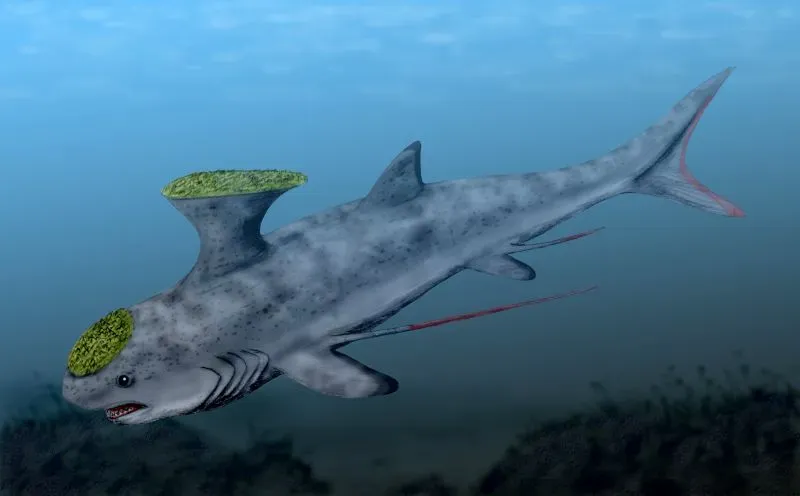
Its unusually shaped dorsal fin resembled an anvil or ironing board, with small spikes covering this crest and the shark’s head as well. If you ever wondered what evolutionary experimentation looks like, Stethacanthus is your answer. This extinct genus lived from the Late Devonian to Late Carboniferous epoch, dying out around 298.9 million years ago. The male sharks displayed this flat topped dorsal fin covered with enlarged denticles, and scientists are still scratching their heads about why.
The most popular theory? The fin has something to do with the mating between Stethacanthus, as only males seemed to have the anvil. Some researchers think it could’ve mimicked a giant mouth when viewed from above, serving as a threat display to deter predators. Stethacanthus was probably a slow-moving shark, and their teeth were also on the small side relative to other small Paleozoic sharks, suggesting that Stethacanthus may have been a bottom-dweller.
Megalodon: The Undisputed King
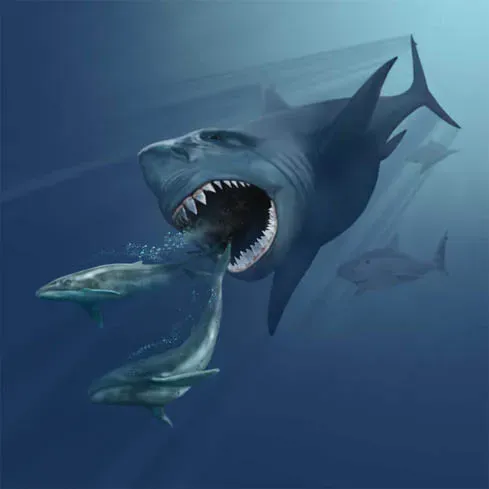
Let’s be real, no list of would be complete without this absolute monster. Megalodon is one of the biggest sharks ever to have lived, with a 2025 study finding that megalodon may have reached up to 24.3 metres long, making it larger than today’s whale sharks. Picture a shark the size of a school bus with teeth longer than your hand. Scientists calculate that a bite from a megalodon jaw could generate force of up to 40,000 pounds, which would make it the strongest bite in the entire animal kingdom.
Megalodon lived 23 to 2.6 million years ago, and its fossils have been found on every continent except Antarctica, able to hunt the largest turtles, seals and whales. Megalodon may have been the reason that modern whales migrate into cold waters seasonally, as these are the only waters megalodon could not survive in, and this adaptation of whales may have been what drove the colossal Megalodon to extinction, along with the evolution of a new alpha-predator: orcas. Despite what some folks want to believe, this beast is definitely extinct.
Edestus: The Scissor-Toothed Slasher
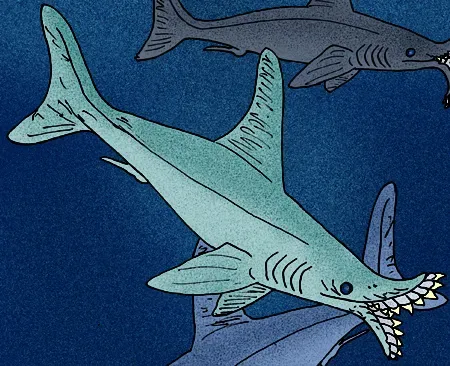
Having lived about 300 million to 320 million years ago, the Edestus had curved jaws that resulted in its teeth sticking out at odd angles. Picture a pair of pinking shears, but make them lethal and attach them to a shark’s face. That’s essentially what we’re dealing with here. The teeth grew in curved brackets from both upper and lower jaws, creating this nightmarish scissor effect that’s unlike anything swimming today.
Here’s where it gets really interesting. Instead of crushing its prey with its tooth whorls in scissor-like motions, Edestus used its outwardly projecting teeth in a vertical thrashing manner, slashing and traumatizing its prey in mere split-seconds and then ingesting it wholesale. Their serrated teeth grew in long, curved brackets, and the biggest members of this family were up to twenty feet long, the size of a Great White. That thrashing hunting method? Absolutely brutal and completely unique among sharks.
Xenacanthus: The Freshwater Eel Shark
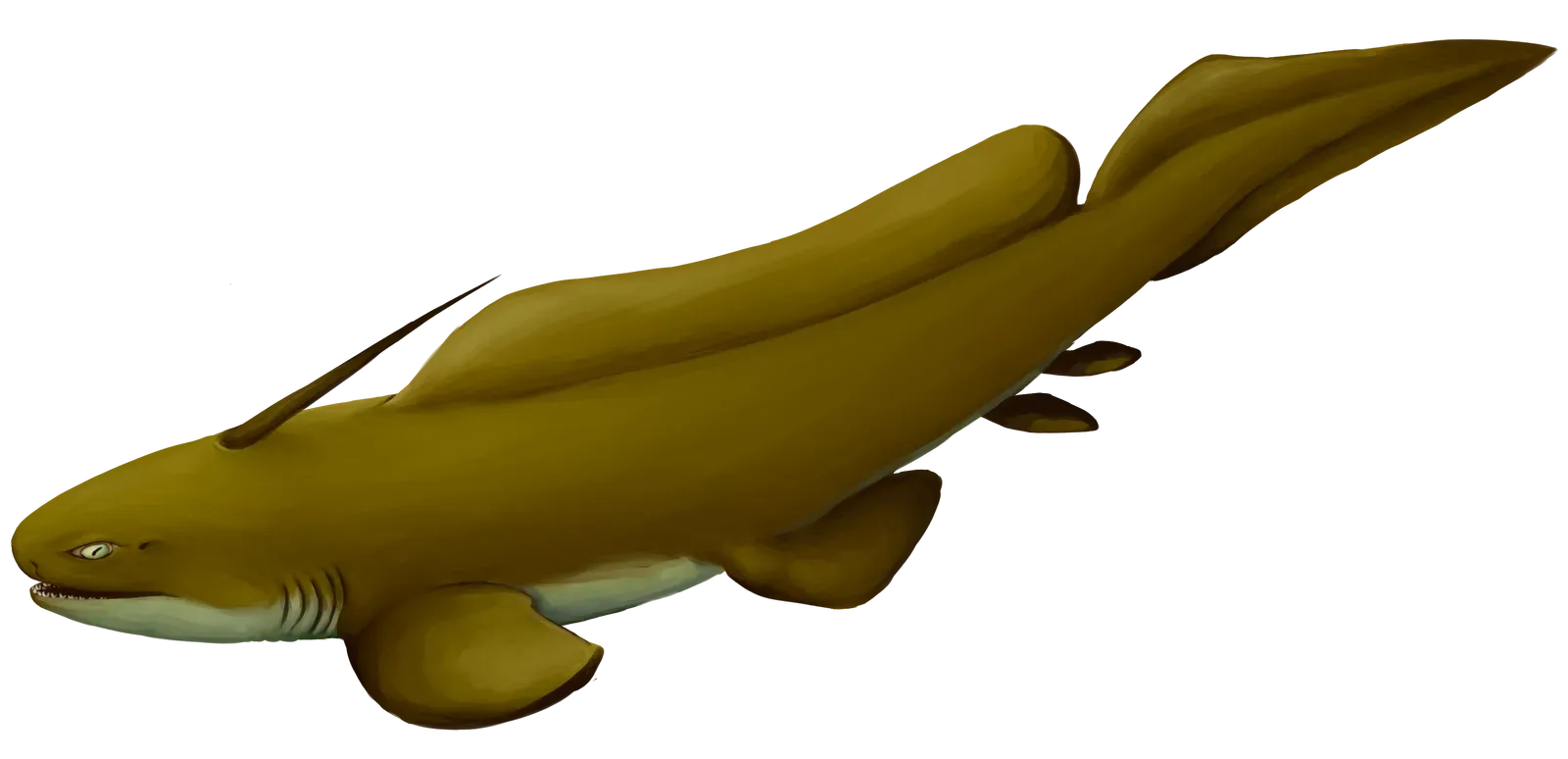
Often called an eel shark, the Xenacanthus became extinct about 202 million years ago, and while it is a shark, it definitely doesn’t look like one, plus this shark was a freshwater shark! Most sharks stick to saltwater, but Xenacanthus said “nah” and took up residence in rivers and swamps instead. Because this shark was a freshwater shark, the Xenacanthus possibly thrived in waters such as swamps, allowing its eel-like body to beneficially help it navigate around.
The Xenacanthus had a sharp spine that possibly contained venom, making the shark act almost like a stingray can, and this spine is thought to have been the main form of protection against predators that often were much bigger than the Xenacanthus. So basically, it looked like an eel, lived in freshwater, and carried a venomous spine for protection. Evolution really threw every weird feature into the mixing pot with this one.
Ptychodus: The Shell-Crushing Giant
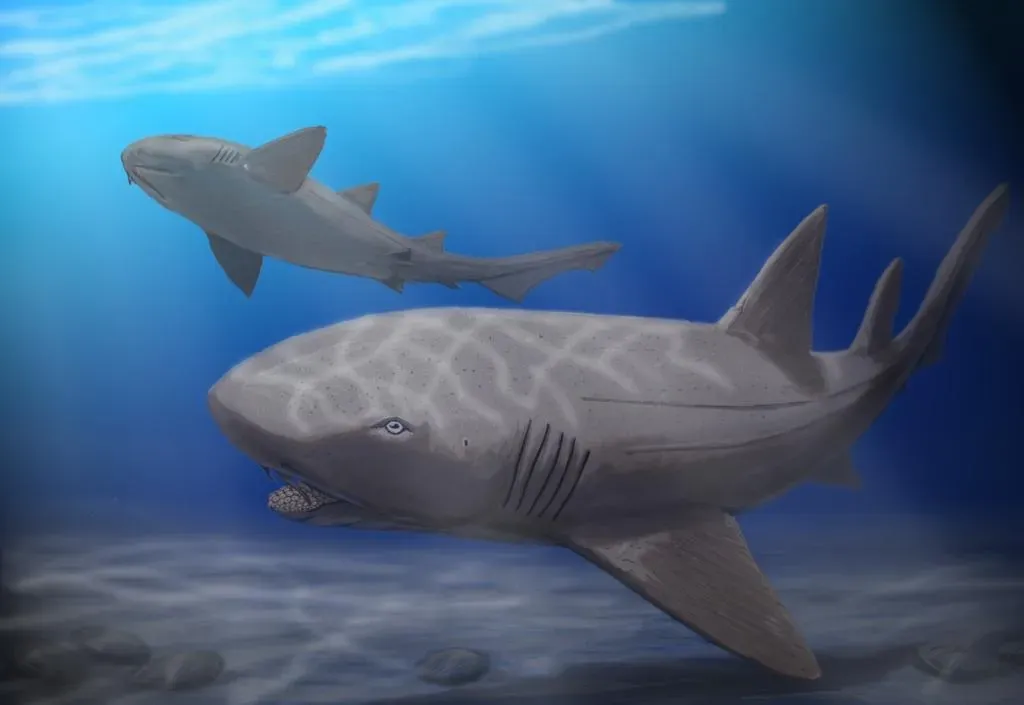
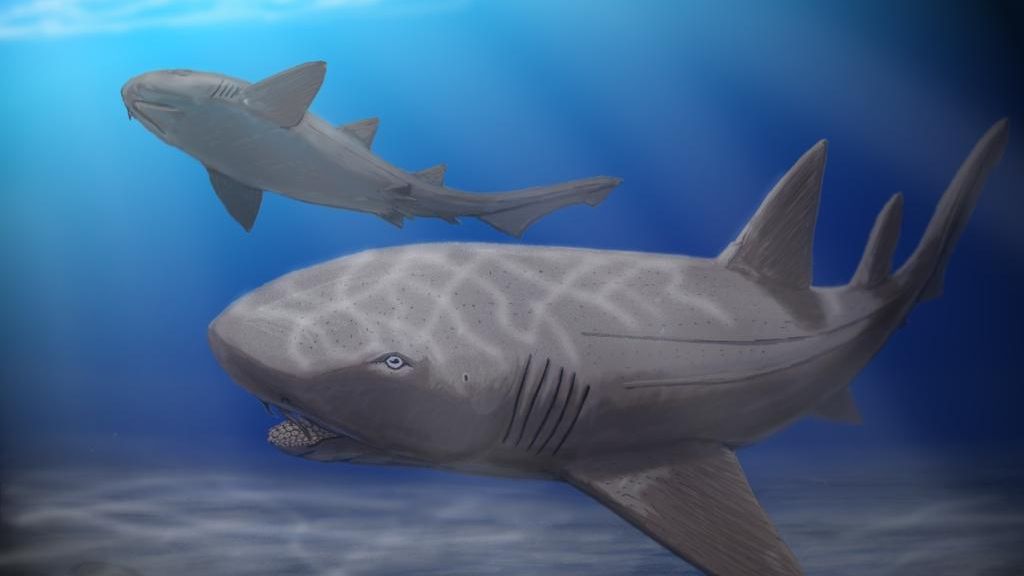
Ptychodus was one of the largest , with some estimates placing its size up to 33 feet in length, and like today’s whale sharks it had a mouth full of teeth that were used to crush up its food, but Ptychodus had larger molars that would crush large shellfish. While other sharks were out there tearing flesh with razor-sharp teeth, Ptychodus was basically the ocean’s nutcracker. Its rounded, ridged teeth were perfectly designed for breaking open hard shells.
Ptychodus was probably more of a benthic predator of shellfish and crustaceans which it could easily eat with its specialised teeth, and it might seem strange that a shark could grow so large upon a diet of shellfish, but back in the Cretaceous waters there were giant inoceramid bivalves such as the almost two meter wide Inoceramus. Ptychodus went extinct around 85 million years ago. That specialized diet kept it out of direct competition with the flesh-rippers of its time.
Cretoxyrhina: The Ginsu Shark
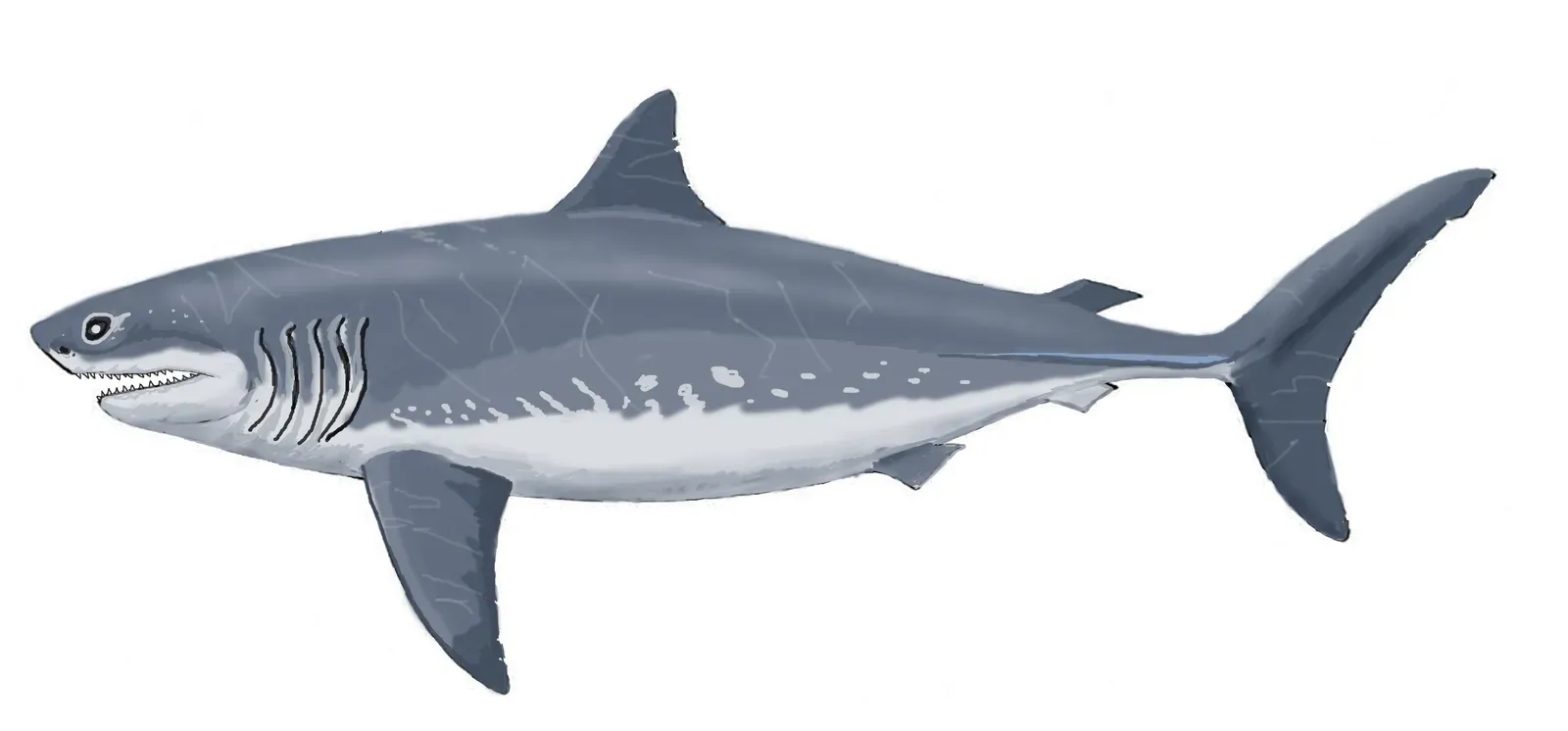
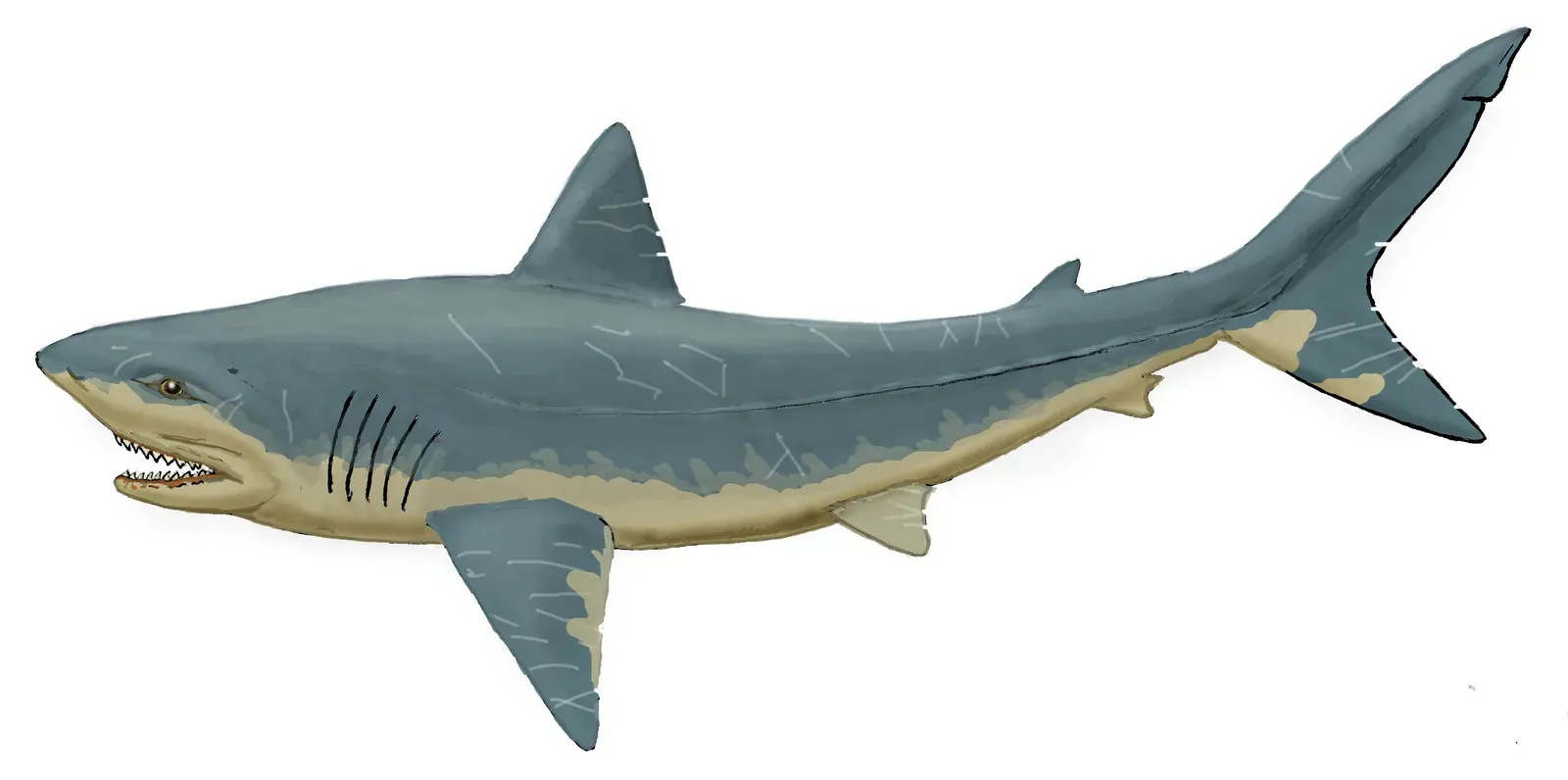
More commonly referred to as the Ginsu shark, first popularized in reference to the Ginsu knife, as its theoretical feeding mechanism is often compared with the “slicing and dicing” when one uses the knife. Measuring up to 8 m in length and weighing around 5,000 kg, Cretoxyrhina was one of the largest sharks of its time, having a similar appearance and build to the modern great white shark. It was an apex predator that didn’t mess around.
Its teeth, up to 8 cm long, were razor-like and had thick enamel built for stabbing and slicing prey. Evidence suggests Cretoxyrhina fed on mosasaurs, plesiosaurs, and even the giant bony fish Xiphactinus, a fierce predator itself. Think about that for a second. This shark hunted other apex predators. Cretoxyrhina was also among the fastest-swimming sharks, with hydrodynamic calculations suggesting burst speeds of up to 70 km/h. Speed, power, and those knife-like teeth made it a nightmare for anything swimming during the Cretaceous.
Cladoselache: The First True Shark
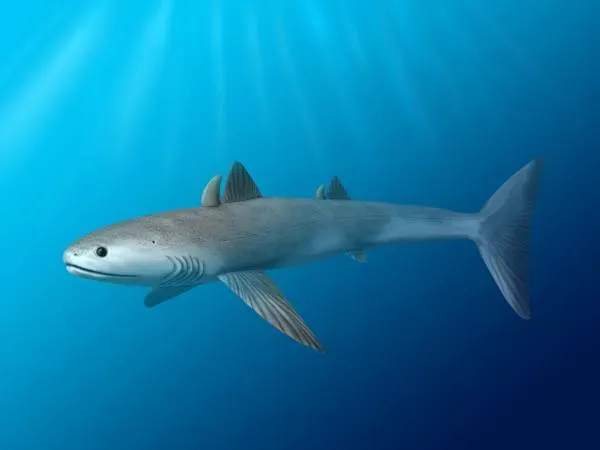
Cladoselache is regarded as the first “true shark,” lived 380 million years ago, and it still retained a few characteristics of its fishy ancestors, having a fish-like head, seven gills instead of five like most sharks, and its body was longer and less muscular than the sharks we see today. This ancient predator represents a crucial stepping stone in shark evolution. It wasn’t quite the sleek killing machine we think of when we picture sharks, but it was definitely heading in that direction.
Its most obvious unique feature was that Cladoselache had no scales or denticle armour plates, just thin, fragile skin. Much smaller and less muscular than sharks, Cladoselache had a longer and slimmer body that is more akin to what large fishes look like, and also didn’t have scales or any type of armor plates on its body. It was basically swimming around naked by shark standards, which seems risky but apparently worked well enough for millions of years.
Hybodus: The Long-Distance Champion
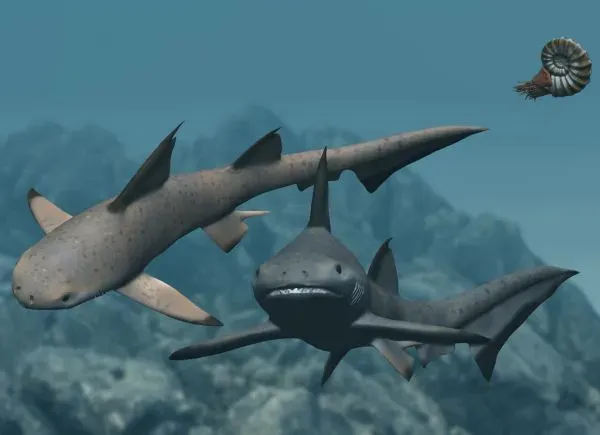
Hybodus lived about 303.4 million to 66 million years ago and is possibly one of the longest-living of all time, definitely the longest-living one on this list! That’s an absolutely staggering survival record spanning over 200 million years. Most species barely make it a few million years before either evolving into something else or going extinct entirely.
The Hybodus looked quite similar to modern-day sharks, which can’t be said about the other sharks here, though it did have large spikes that protruded from its dorsal fins. Those spikes likely served as defense mechanisms against larger predators. The fact that Hybodus survived for so incredibly long suggests it had a winning formula, proving that sometimes sticking close to a successful body plan beats radical experimentation.
Bandringa: The Baby with the Giant Schnozz
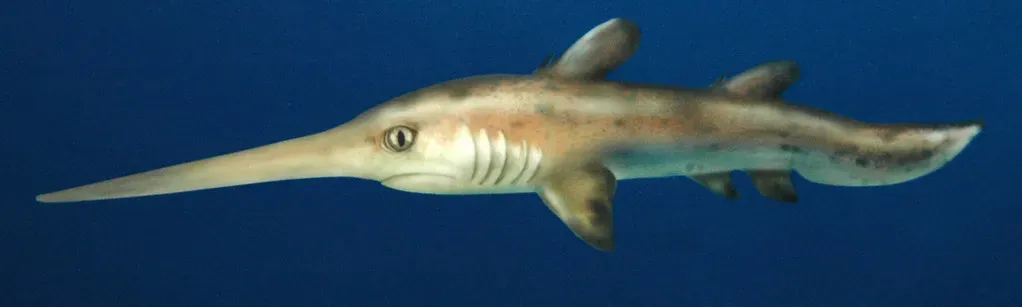
For a long time, scientists assumed that this shark, called a Bandringa, was a tiny adult, but as it turns out, this sweet little four-inch sharklet would have grown up to be ten feet long, and this little shark with a giant schnozz is just a baby. Three hundred and seven million years ago, the area near modern-day Chicago was the swampy coastline of a shallow, tropical sea, and it was a popular destination for river-dwelling sharks to lay their eggs.
The discovery of baby Bandringa fossils revealed something fascinating about ancient shark behavior. They had nurseries, safe breeding grounds where juvenile sharks could grow without facing the dangers of the open ocean. That elongated snout on the babies is adorable in a prehistoric monster kind of way, and it’s wild to think that what looked like a fully formed miniature shark was actually just getting started on its growth journey.
Conclusion
These prove that evolution has always had a flair for the dramatic. From spiral-toothed buzzsaw mouths to ironing board fins, these ancient predators pushed the boundaries of what’s possible in shark design. They survived mass extinctions, dominated their ecosystems, and developed hunting strategies that make modern sharks look almost boring by comparison.
The craziest part? We’re still discovering new species and learning more about these ancient beasts every year. Who knows what other bizarre sharks are waiting to be unearthed from prehistoric rock formations. What do you think was the wildest adaptation? Drop your thoughts in the comments.