The prehistoric world was populated by creatures that often seemed to defy logic with their physical features. Dinosaurs, in particular, developed some truly bizarre cranial ornaments during their 165-million-year reign. These structures—from elaborate crests to imposing horns and peculiar headgear—have puzzled paleontologists for generations. While some served clear purposes like species recognition, mate attraction, or thermoregulation, others remain evolutionary enigmas that challenge our understanding of adaptation. Let’s explore ten remarkable dinosaurs whose head ornaments push the boundaries of evolutionary practicality and showcase nature’s penchant for extravagance.
Parasaurolophus: The Living Trombone
Perhaps no dinosaur headgear is more instantly recognizable than the extraordinary hollow crest of Parasaurolophus. This hadrosaur sported a backward-curving tubular crest that extended up to six feet behind its skull, creating an awkward backward weight distribution that seemingly defies practical design. Scientists initially struggled to explain such an unwieldy structure, proposing everything from a snorkel for underwater breathing to a weapon. Modern research indicates the crest contained elongated nasal passages that likely produced resonant sounds for communication. However, the sheer size and extreme backward projection still raise questions about the evolutionary trade-offs between communication benefits and the potential hindrances to mobility and predator evasion that such an ungainly appendage would create.
Dilophosaurus: Hollywood’s Frilled Spitter with a Fragile Frame

While “Jurassic Park” popularized Dilophosaurus as a venom-spitting dinosaur with an expandable neck frill, the real creature’s headgear was no less puzzling. The actual Dilophosaurus possessed two thin, parallel crests atop its skull that resembled delicate fins more than robust horns. These crests were remarkably fragile—too weak to serve as weapons and potentially liable to break during even mild head movements. Paleontologists believe these peculiar adornments functioned purely as display structures for mate attraction or species recognition. The evolutionary investment in such fragile, non-functional structures exemplifies how sexual selection can sometimes override practical adaptations, resulting in features that appear counterintuitive from a survival perspective but may have been crucial for reproductive success.
Tsintaosaurus: The Unicorn That Wasn’t

Few dinosaur reconstructions have undergone more dramatic revisions than Tsintaosaurus, a hadrosaur initially depicted with a single, unicorn-like spike projecting forward from its forehead. This bizarre interpretation persisted in scientific literature for decades, making Tsintaosaurus seem like a prehistoric unicorn wandering ancient China about 70 million years ago. More recent fossil discoveries revealed that the “spike” was part of a larger, hatchet-shaped crest that sat atop the dinosaur’s head rather than projecting from its nose. Even with this correction, the crest’s strange forward-leaning angle and unusual shape remain perplexing, offering limited surface area for display while creating potential balance issues. The corrected crest still represents one of the oddest headgear configurations among the duck-billed dinosaur family, highlighting how even revised interpretations can leave us with evolutionary puzzles.
Stygimoloch: The Demon-Headed Headbutter
Stygimoloch, whose name appropriately means “demon from the river Styx,” sported one of the most intimidating and peculiar skull arrangements of any dinosaur. Its skull featured a thick, domed forehead surrounded by several long, backward-pointing spikes up to four inches long. For years, paleontologists hypothesized that these pachycephalosaurs used their reinforced skulls as battering rams during male-to-male combat. However, recent studies suggest that such high-energy head impacts would have caused serious brain damage despite the thickened skull. The spikes themselves present another puzzle—their backward orientation would have been largely ineffective during head-butting contests, and their arrangement created potential weak points in the skull structure. Some researchers now propose that these elaborate structures may have been primarily for display rather than physical combat, making their extreme development seem evolutionarily excessive.
Kosmoceratops: The Dinosaur with Cranial Overkill
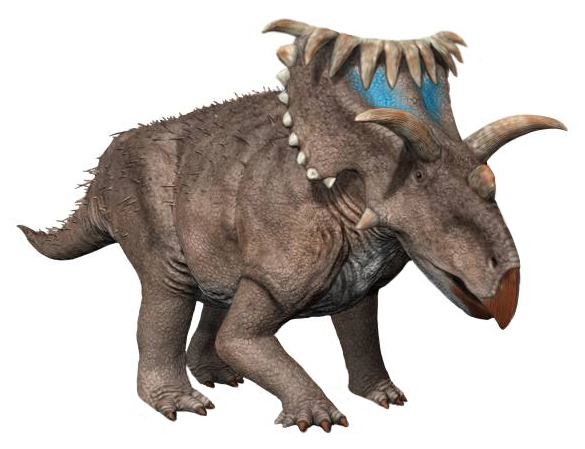
When it comes to excessive headgear, Kosmoceratops richardsoni takes the evolutionary cake with the most elaborate array of horns and frills ever discovered on a dinosaur. This ceratopsian dinosaur possessed a remarkable fifteen horns and horn-like features decorating its skull, including a horn over each eye, one atop its nose, ten hook-like projections around its shield-like frill, and two cheek horns pointing downward. This ornate arrangement created an unmistakable silhouette but raises questions about evolutionary efficiency. The placement of many of these horns offered limited defensive value, and the metabolic cost of growing and maintaining such elaborate structures would have been substantial. Paleontologists believe this extreme case of cranial ornamentation resulted from sexual selection running rampant on the isolated landmass of Laramidia (now western North America), where Kosmoceratops evolved—a prehistoric example of evolutionary extravagance prioritizing reproductive display over practical function.
Amargasaurus: The Spiny-Necked Enigma
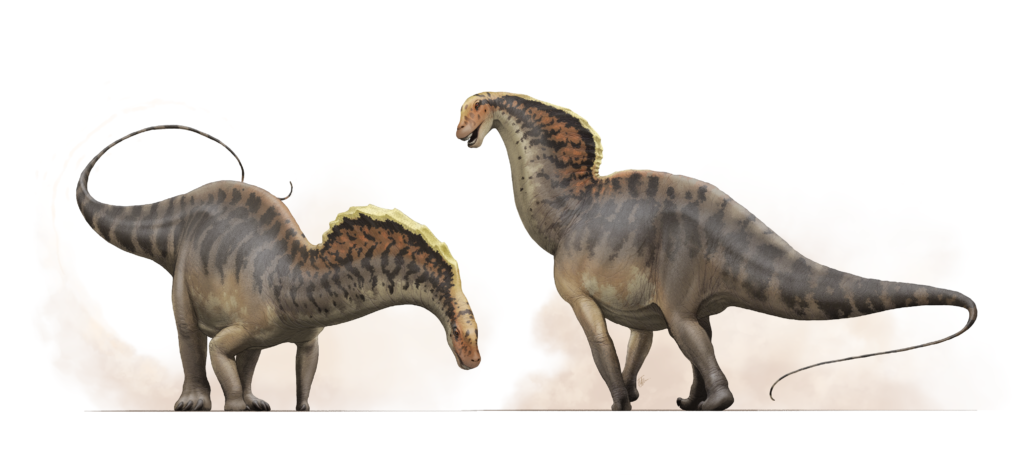
While not strictly cranial headgear, Amargasaurus deserves mention for having perhaps the most peculiar neck ornamentation of any dinosaur. This sauropod bore two parallel rows of elongated neural spines extending along its neck and back, potentially creating a sail-like structure or supporting a series of spikes that could have protruded up to two feet from its body. These bizarre spines were connected to the vertebrae, effectively creating a permanent “crown” that would have significantly affected the dinosaur’s profile and mobility. The function of these spines remains hotly debated—theories range from display structures to thermoregulatory devices to defensive weaponry. The most puzzling aspect is how a sauropod, already massive in size and presumably less vulnerable to predation as an adult, would benefit from such an unwieldy feature that potentially limited neck flexibility and added considerable weight to an already enormous body.
Einiosaurus: The Dinosaur with a Forward-Curving Horn
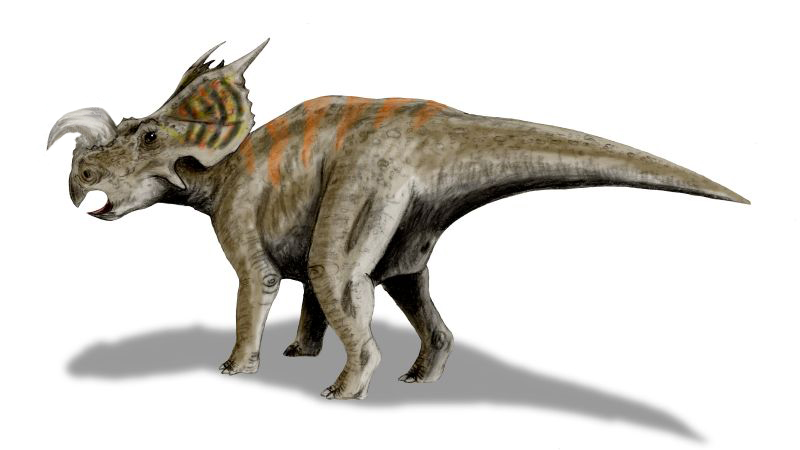
Einiosaurus procurvicornis presents one of the most puzzling horn configurations among ceratopsian dinosaurs. Unlike its relatives with forward-pointing or upward-curving horns, Einiosaurus developed a peculiar nose horn that curled forward and downward, resembling a bottle opener or a can opener. This forward-curving nasal projection would have been ineffective for defense against predators and potentially problematic for the dinosaur’s daily activities. The horn’s downward curve could have interfered with feeding by limiting how close the animal could get to ground vegetation. Some paleontologists speculate this unusual feature might have been used for social displays or for pulling down higher vegetation, but these hypotheses remain speculative at best. The horn’s extreme curvature represents an evolutionary specialization that seems to defy practical utility while requiring significant biological resources to develop and maintain.
Dracorex: The Dragon King That Never Was

When Dracorex hogwartsia was first described in 2006, its distinctive knobby, spiky skull immediately captured public imagination with its dragon-like appearance—hence its name meaning “dragon king.” The skull featured numerous small horns, knobs, and a large, flat frilled section adorned with spikes. However, this unique cranial configuration has become the center of a scientific controversy. Many paleontologists now believe Dracorex wasn’t a distinct genus at all, but rather a juvenile form of Pachycephalosaurus that had not yet developed the characteristic dome-shaped skull. This developmental hypothesis suggests these elaborate spiky features would have been absorbed and remodeled as the animal matured, leaving us with the question of why a juvenile dinosaur would temporarily develop such complex ornaments only to lose them in adulthood. If confirmed, this would represent one of the most dramatic ontogenetic transformations known in dinosaurs, challenging our understanding of how and why such elaborate temporary structures would evolve.
Oviraptor: The Falsely Accused “Egg Thief” with a Cassowary Crest

Oviraptor has suffered one of paleontology’s greatest misunderstandings, initially named as an “egg thief” when discovered near a nest it was protecting. Beyond this historical injustice, its cranial ornamentation remains enigmatic. Newer reconstructions show Oviraptor had a cassowary-like crest atop its parrot-like skull, creating a visual contradiction that paleontologists struggle to explain functionally. Unlike most dinosaur crests that were either bony or supported by bone, evidence suggests Oviraptor’s crest may have been predominantly keratinous (made of the same material as bird beaks and human fingernails). This soft-tissue structure would have provided limited protective value while requiring significant energy investment to maintain. Additionally, the presence of both a specialized beak and the crest created a curious evolutionary combination that seems to serve conflicting purposes. The crest’s positioning directly atop the skull, rather than further back like many other crested dinosaurs, raises questions about its role in courtship displays or species recognition.
Ankylosaurus: Armored Tank with Questionable Headgear
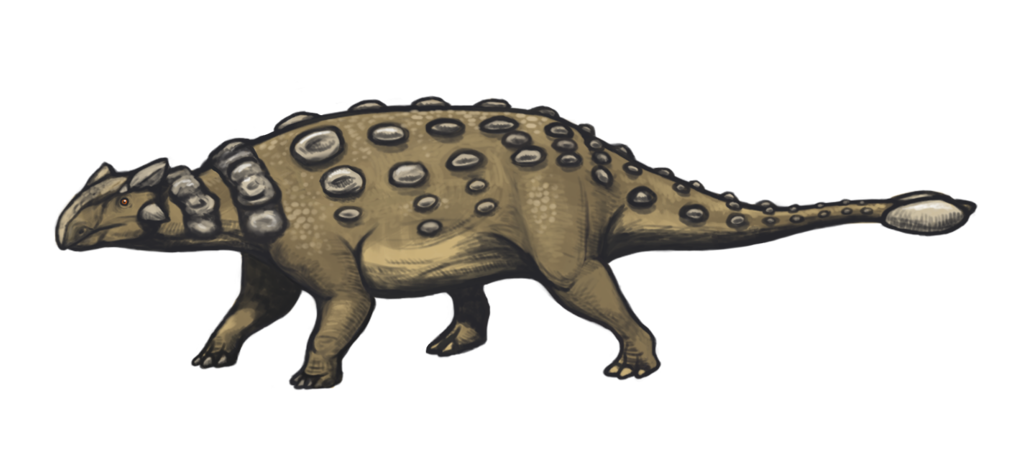
Ankylosaurus is renowned for its heavily armored body and club-like tail weapon, but less attention is paid to its peculiar cranial armor that raises evolutionary questions. This dinosaur’s head was covered with thick, fused pieces of bone embedded in its skin, including distinctive hornlets that jutted out from the back corners of its skull. While such protection seems logical for a heavily armored animal, the specific pattern of Ankylosaurus’s cranial armor created potential weaknesses. The complex arrangement of different-sized armor pieces with sutures between them potentially created structural vulnerability points. Additionally, the backward-projecting hornlets did little to protect the dinosaur’s eyes and face from frontal attacks. For a dinosaur that invested so heavily in defensive adaptations, these seemingly inefficient aspects of its cranial armor present a puzzle. Some paleontologists suggest the arrangement may have served a thermoregulatory function alongside protection, allowing blood vessels near the surface to help cool the animal’s brain while maintaining defensive capability.
Lambeosaurus: The Hatchet-Headed Hadrosaur
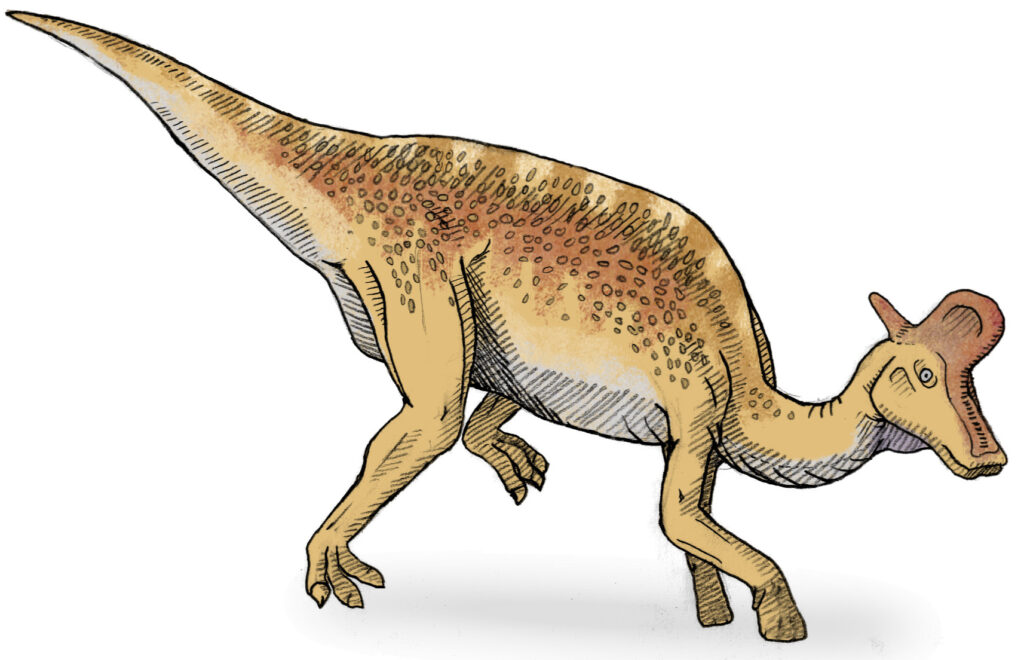
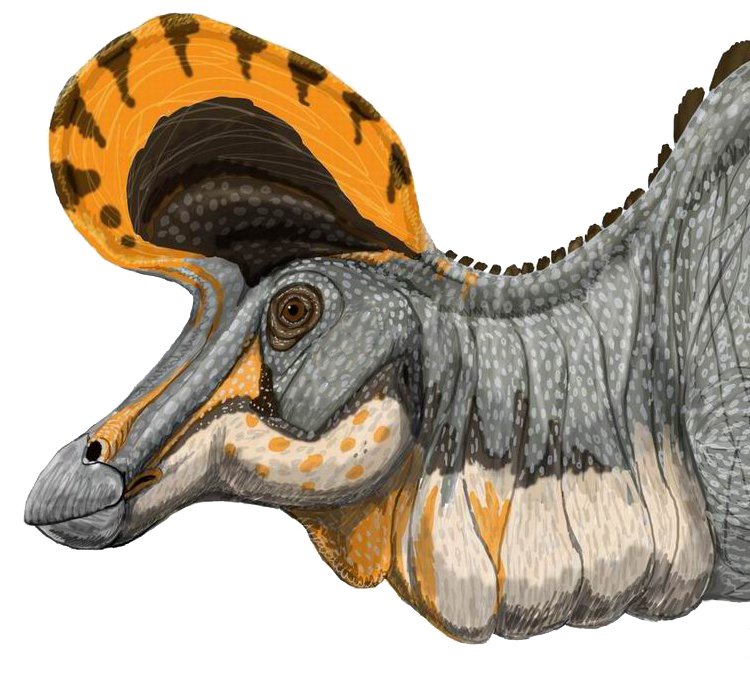
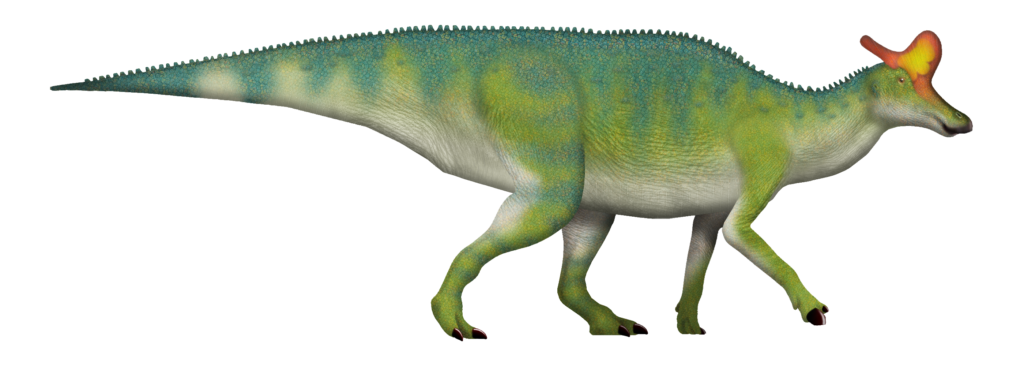
Lambeosaurus stands out among crested dinosaurs for its hollow, hatchet-shaped crest that combined a forward-pointing section with a backward-extending blade. This peculiar configuration created an ungainly profile and weight distribution that seems impractical for a fast-moving herbivore that relied on agility to escape predators. The crest contained convoluted nasal passages, suggesting it served as a resonating chamber for producing sounds. However, the extreme size and shape of Lambeosaurus’s crest, particularly in males, go far beyond what would be necessary for simple vocalization. Interestingly, juvenile Lambeosaurus lacked this elaborate headgear entirely, only developing it as they approached sexual maturity. This developmental pattern strongly suggests sexual selection drove the evolution of this bizarre structure to extravagant proportions, potentially at the expense of practical considerations like aerodynamics and weight balance. The extreme sexual dimorphism in crest size further supports that mate attraction, rather than functional advantage, shaped this unusual cranial feature.
The Evolutionary Puzzles of Dinosaur Headgear
When examining these ten bizarre examples of dinosaur cranial ornamentation, clear patterns emerge that help explain these seemingly nonsensical structures. Sexual selection, rather than natural selection for survival advantages, appears to have driven many of these features to extremes. The principle of “honest signaling”—where elaborate structures advertise an individual’s genetic fitness through their ability to survive despite carrying such impractical features—likely played a central role. Species recognition represents another crucial function, as dinosaurs evolved increasingly elaborate ways to identify potential mates from the same species in diverse ecosystems. Modern studies of these structures using biomechanical analysis, CT scanning, and comparative anatomy with living animals continue to refine our understanding. While some headgear features initially appeared maladaptive, recent research reveals hidden functions in thermoregulation, communication, and social dynamics. These elaborate cranial ornaments remind us that evolution doesn’t always follow the most straightforward path to survival but is influenced by complex interplays between natural selection, sexual selection, and the unique ecological contexts in which these remarkable creatures lived.
Why Dinosaur Headgear Still Baffles Scientists and Fascinates Us
The bizarre headgear of dinosaurs continues to fascinate both scientists and the public precisely because these features challenge our understanding of evolutionary adaptation. What initially appears as evolutionary excess often reveals itself, upon closer examination, to serve complex biological and social functions we’re still working to fully comprehend. As paleontological techniques advance, we may yet uncover more concrete explanations for these seemingly impractical cranial ornaments, further illuminating the remarkable evolutionary journey of dinosaurs and their extraordinary anatomical innovations.