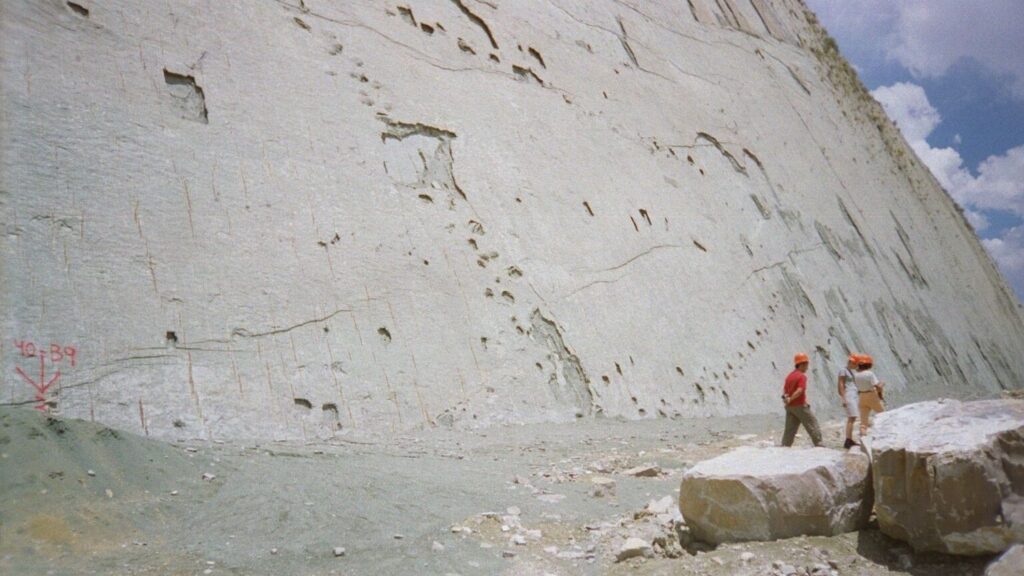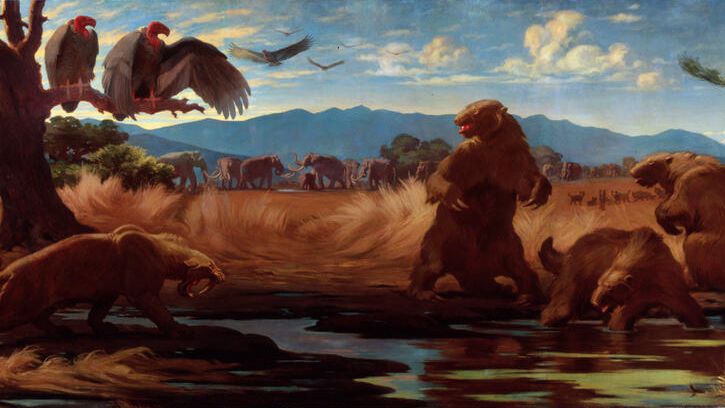
Picture the land you walk on every day, the parks, highways, plains, and forests, and now imagine it teeming with gigantic beasts unlike anything alive today. Sabre-toothed predators prowling through California. Armored giants lumbering across Texas. Flying reptiles soaring over what is now Kansas. It sounds like science fiction, but it was all very much real.
Long before the United States existed as a nation, the land that would become America was home to an astonishing array of prehistoric creatures. From massive marine reptiles that patrolled ancient seas to dinosaurs that roamed verdant landscapes and mammals that survived the last ice age, America’s fossil record tells a story of evolution and extinction spanning hundreds of millions of years. Honestly, the sheer variety of life that once existed here is enough to make your head spin. Let’s dive in.
1. The Woolly Mammoth: A Gentle Giant of the Ice Age
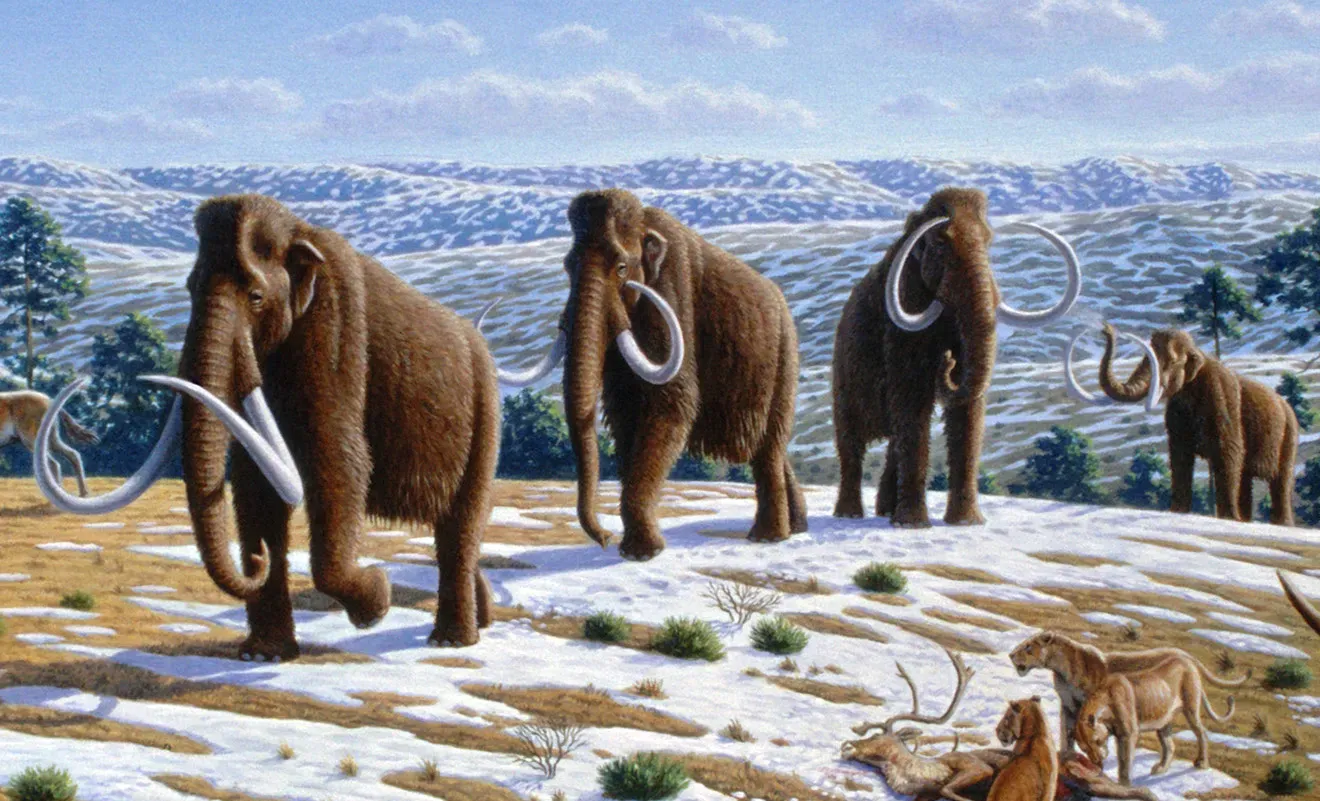
You’ve probably seen a woolly mammoth in a museum, maybe even a movie, but knowing that these creatures actually walked across what is now the continental United States makes it feel completely different. The woolly mammoth, known scientifically as Mammuthus primigenius, was one of the most iconic ice age mammals. Its hair-covered, elephantine body helped it endure the frigid conditions of prehistoric North America, and standing up to 13 feet tall and weighing around six tons, these giants were herbivorous, grazing on the tundra’s grasses and shrubs.
The woolly mammoth is one of the most famous extinct ice age megafauna, standing 12 feet tall at the shoulders and weighing six to eight tons, grazing the northern steppes of Ice Age North America using its colossal, 15-foot curved tusks. Particularly rich fossil sites include the La Brea Tar Pits in Los Angeles, where dozens of mammoth skeletons have been recovered. Perhaps most fascinating is that mammoths survived long enough to encounter humans, who hunted these impressive beasts using spears tipped with distinctive fluted points.
2. The Saber-Toothed Cat (Smilodon): Nature’s Most Terrifying Predator
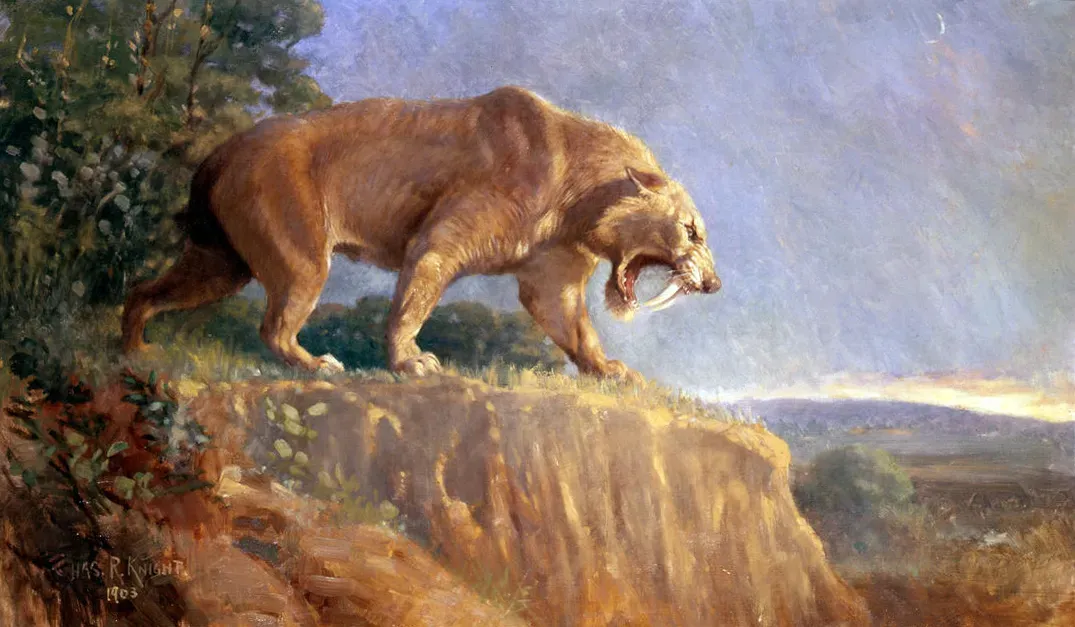
Here’s the thing about Smilodon: calling it a “saber-toothed tiger” is actually a bit misleading. Smilodon is a genus of extinct felids, one of the best-known saber-toothed predators and prehistoric mammals. Although commonly known as the saber-toothed tiger, it was not closely related to the tiger or other modern cats, belonging to the extinct subfamily Machairodontinae, with an estimated date of divergence from the ancestor of living cats around 20 million years ago. Think of it more like a deadly evolutionary experiment that nature ran for millions of years.
The saber-toothed tiger, Smilodon fatalis, is one of the most iconic animals of Ice Age North America. Saber-tooth skeletons pulled from sites like the La Brea tar pits in Los Angeles were armed with upper canines averaging seven inches long and a jaw that could open an astonishing 130 degrees. More than 3,000 fossilized cats have been pulled from the acrid ooze of the La Brea tar pits in California, and analyses of hundreds of teeth are painting a picture of this prehistoric terror, which could weigh up to 600 pounds and sported seven-inch-long canine teeth.
3. The Columbian Mammoth: Even Bigger Than You’d Think
![3. The Columbian Mammoth: Even Bigger Than You'd Think (Osborn, H. F. (1942). Percy, M. R., ed. Proboscidea: A monograph of the discovery, evolution, migration and extinction of the mastodonts and elephants of the world 2. New York: J. Pierpont Morgan Fund. Frontispiece and [1], Public domain)](https://nvmwebsites-budwg5g9avh3epea.z03.azurefd.net/dinoworld/e425940364806c9c0255a096c49936ce.webp)
You might assume a woolly mammoth is as big as a mammoth can get. You’d be wrong. The vast grasslands and tundra of North America were home to several species of mammoths during the Pleistocene epoch, which lasted from 2.6 million to 11,700 years ago. The most iconic, the Columbian mammoth (Mammuthus columbi), stood nearly 14 feet tall at the shoulder and weighed up to 10 tons, making it even larger than modern African elephants. Its enormous curved tusks could reach lengths of 16 feet.
Unlike its relative the woolly mammoth, which inhabited more northern regions, the Columbian mammoth ranged widely across the continental United States, from the Pacific to the Atlantic and from Canada to Mexico. Unlike their woolly relatives, Columbian mammoths had less hair, as they lived in warmer climates, grazing on a variety of plants, including grasses, leaves, and fruits. The decline of Columbian mammoths is often attributed to climate changes and human hunting, similar to other megafauna of the time. Imagine something the size of two African elephants stacked in terms of weight, roaming the valleys of what we now call California or Texas.
4. The Dire Wolf: The Real Wolf You Never Knew Existed
![4. The Dire Wolf: The Real Wolf You Never Knew Existed ([1], Public domain)](https://nvmwebsites-budwg5g9avh3epea.z03.azurefd.net/dinoworld/b592709321272401b5369ab51bd90728.webp)
Long before Game of Thrones made the dire wolf famous in pop culture, these real predators were very much alive and hunting across the entire North American continent. The dire wolf, Canis dirus, was a formidable predator during the Pleistocene era. Larger and more robust than modern wolves, dire wolves preyed on megafauna such as horses and bison across North America, and with a powerful build, they likely relied on pack hunting to bring down large prey.
Dire wolves roamed every inch of North America, from the frozen Canadian north down through Mexico, and thrived in every imaginable ecosystem, from boreal forests to grassland plains to tropical wetlands. Like gray wolves, dire wolves hunted in packs of 30 or more and fed on large prey like mammoths, giant sloths, and Ice Age horses. Although dire wolves went extinct about 13,000 years ago, their bones are abundant in California’s La Brea Tar Pits and Wyoming’s Natural Trap Cave. About 5.7 million years ago, dire wolves split from wolves, making them distant relatives of today’s wolves on the canid family tree.
5. The American Mastodon: Cousin to the Mammoth but Entirely Its Own Beast
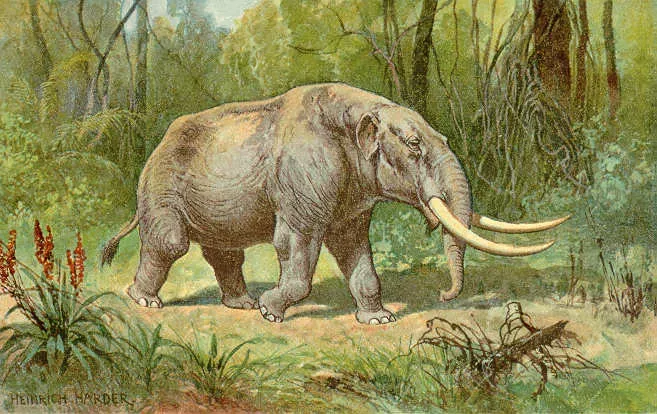
A lot of people mix up mastodons and mammoths, and honestly, it’s an understandable mistake. They’re both enormous, both distantly related to elephants, and both once roamed the same landscapes. Mastodons were smaller than mammoths, but similar in size to modern-day elephants, with a height of 7 feet for females and 10 feet for males. Adult mastodons weighed as much as 6 tons, and American mastodons had low-domed heads, unlike the higher-domed heads found in mammoths and modern-day Indian elephants.
The American mastodon was a large land mammal that roamed North America throughout the Ice Age until as recently as 13,000 years ago. Mastodons lived in pine forests and boggy areas covered by larch and spruce, feeding on twigs, leaves, and water plants. Adapted for life at the water’s edge, they had broad feet and stubby, wide-splayed toe bones, which allowed them to walk on the soft, waterlogged ground beside ponds and lakes. The bones of at least 140 mastodons and 18 mammoths have been found in New York state alone, which tells you just how common and widespread these creatures were.
6. The Giant Short-Faced Bear: The Fastest and Fiercest Bear to Ever Live
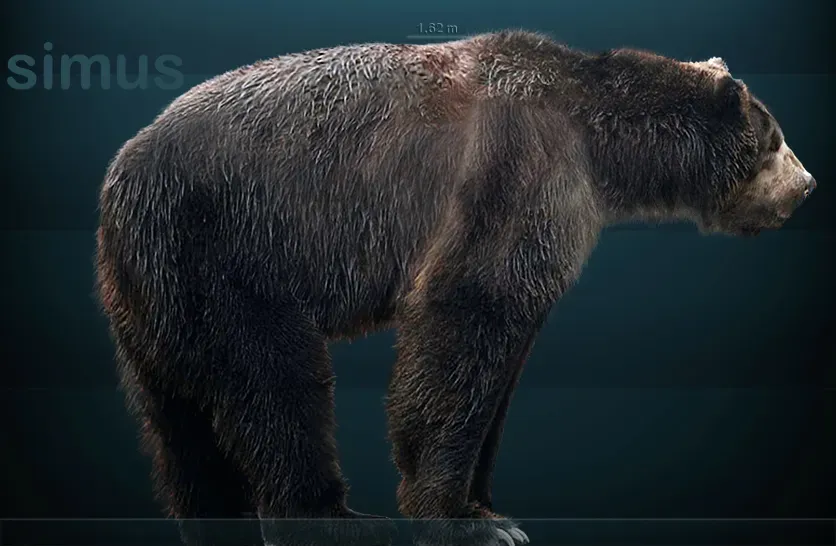
I think most people imagine prehistoric bears as just bigger, fluffier versions of today’s grizzlies. The short-faced bear was nothing like that. The giant short-faced bear (Arctodus simus) was the largest carnivorous mammal to ever roam North America. Standing on its hind legs, an adult giant short-faced bear boasted a vertical reach of more than 14 feet. The most striking difference between modern North American bears and the giant short-faced bear were its long, lean, and muscular legs.
By examining skeletal remains, paleontologists calculate that the short-faced bear could reach speeds topping 40 miles per hour, making it the fastest bear to ever live. Combined with large nasal cavities, it’s likely that the short-faced bear used its powerful sense of smell to detect nearby carcasses, and its speed and size to chase off competition. Giant short-faced bears are not related to any living species of bear in North America. Its closest living relative, although distant, is the diminutive spectacled bear, the only bear species native to South America. A bear that runs faster than most horses and stands as tall as a basketball hoop. Let that sink in.
7. The Glyptodon: The Armored Tank of Prehistoric America
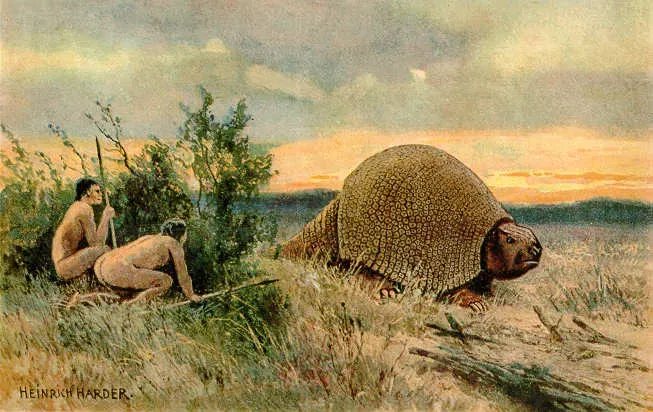
If you’ve ever seen a photo of a Volkswagen Beetle sitting in a museum, you have a rough sense of how big a Glyptodon was. Glyptodon was a massive, armored mammal comparable in size to a Volkswagen Beetle. Related to modern armadillos, Glyptodon sported a heavy, protective shell composed of bony plates. It roamed the Americas during the Pleistocene epoch, foraging on grasses and plants.
From South America, the armored, one-ton creature probably traveled across the Isthmus of Panama to North America. Glyptodon flourished in what is now coastal Texas and Florida about 2 million years ago. However, the herbivore has been an extinct North American mammal for about 10,000 years now. Think of it as nature’s own battle tank, slow-moving but essentially impenetrable to most predators of its era. Its remains have been discovered throughout the southern United States, presenting a fascinating case of convergent evolution in mammals.
8. The Giant Beaver: A Rodent the Size of a Black Bear
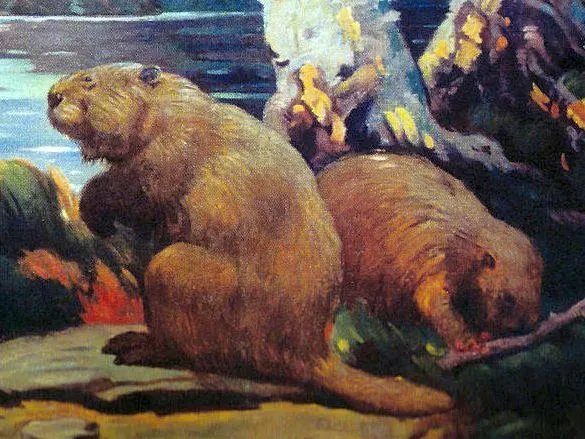
This one genuinely surprises people. Most folks picture beavers as charming, industrious little animals. Now multiply that by about ten in terms of size and you get something far more unsettling. The giant beaver of Ice Age North America was the largest rodent to ever live. It measured up to seven feet long, weighed more than 250 pounds, and its two front teeth were as long as bananas. Although similar in appearance to modern beavers, the giant beaver is more closely related to the capybara of South America.
The incisors and molars of the giant beaver were rounded and blunt, lacking the power and precision to fell large trees. Their brains were relatively smooth, a sign that they weren’t intelligent enough to construct dams. So despite having enormous teeth and a vague resemblance to today’s beavers, these creatures were essentially very large, semi-aquatic grazers. In size, the giant beaver was comparable to a black bear, and as an aquatic plant-eating animal, it lived in lakes and ponds. Nobody has ever found evidence of a giant beaver dam, which honestly makes the whole situation even more fascinating.
9. The American Cheetah: A Big Cat Built for Speed in the American West
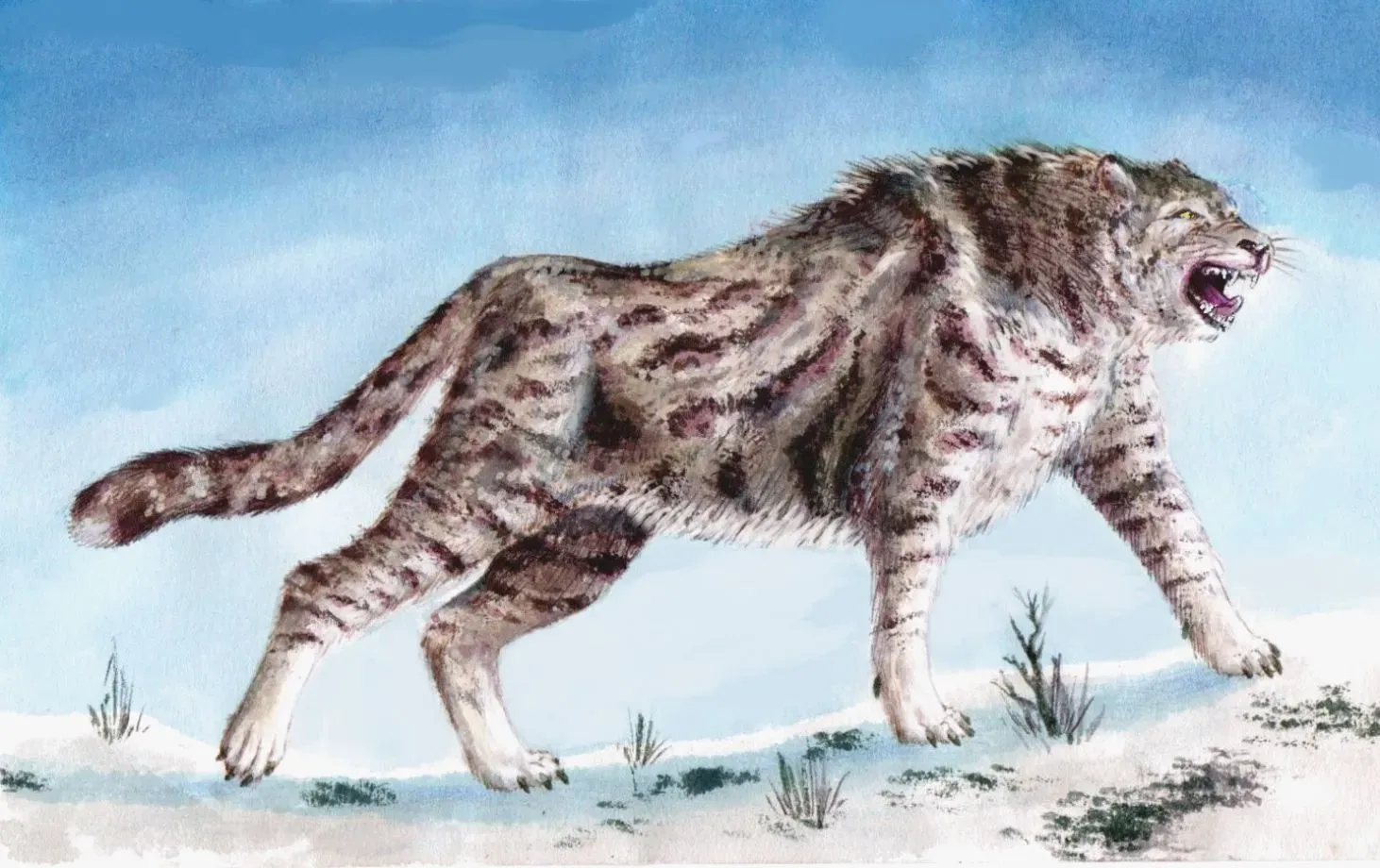
Most people assume cheetahs are strictly African animals. The truth is, North America once had its own version, and it was hunting across landscapes that now include places like Arizona, Wyoming, and West Virginia. The American cheetah lived in North America before the last Ice Age. Its bones have been discovered from West Virginia to Arizona and even Wyoming. Thousands of years ago, snow leopard-like cheetahs hunted mountain goats across tricky terrain in America, according to fossilized remains. This big cat was known as the American cheetah (Miracinonyx trumani), but it is no longer alive today.
American cheetahs were fast and agile predators, similar in appearance to today’s African cheetahs. These swift sprinters inhabited the open plains, hunting small to medium-sized prey such as pronghorns. Their long legs and slender bodies allowed them to reach impressive speeds, making them highly effective hunters. It’s hard to say for sure whether they were as fast as modern African cheetahs, but paleontologists believe they filled a very similar ecological role. The pronghorn antelope alive in America today is thought by many scientists to have evolved its extraordinary speed specifically in response to this now-vanished predator.
10. Megalodon: The Ocean Terror That Patrolled American Coastlines
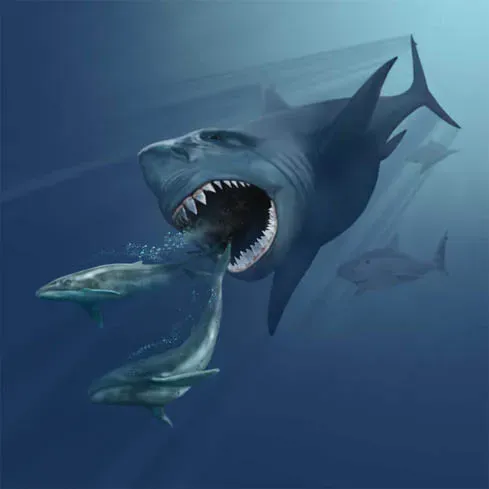
You might think of Megalodon as the stuff of thriller movies and internet conspiracy theories, but this enormous shark was very real, and it once dominated the waters just offshore of what is now the United States. Otodus megalodon, commonly known as megalodon, is an extinct species of giant mackerel shark that lived approximately 23 to 3.6 million years ago, from the Early Miocene to the Early Pliocene epochs. While regarded as one of the largest and most powerful predators to have ever lived, megalodon is only known from fragmentary remains, and its appearance and maximum size are uncertain.
Megalodon likely preyed on large marine mammals including early whales, seals, and sea lions along America’s prehistoric coastlines. Its extinction around 3.6 million years ago may have been caused by cooling oceans during the onset of ice ages, competition from newly evolved killer whales, or the disappearance of its large whale prey. Today, beachcombers along American coasts can still find the distinctive triangular teeth of this impressive predator washed up on shore. There is something almost poetic about that, walking along a Florida or South Carolina beach and casually picking up the tooth of an animal that once ruled the ocean with terrifying authority.
Conclusion: The Ancient America Hiding Beneath Our Feet
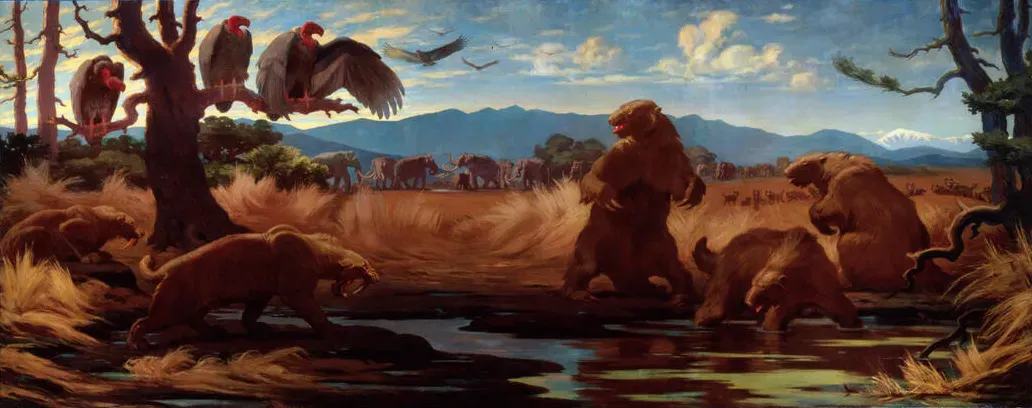
The United States we know today looks almost nothing like what it was for most of Earth’s history. When the glaciers receded in the late Pleistocene, North America was home to dozens of thriving species of extra-large mammals known as megafauna. Around 10,000 years ago, nearly all of those giant creatures were wiped out. The reasons remain fiercely debated. The disappearance of North America’s megafauna at the close of the Pleistocene epoch remains a subject of scientific debate, and multiple hypotheses suggest it was a complex interplay of factors rather than a single cause.
Every time you walk across a field in Texas, a wetland in Florida, or a mountain trail in Wyoming, you are walking where these extraordinary creatures once moved, hunted, grazed, and lived. The continental United States has some of the richest and most diverse fossil deposits in the world, giving paleontologists remarkable insights into creatures that once called this land home. The ancient world is not as far away as it seems. It is literally just under the surface.
Which of these ten prehistoric creatures surprised you the most? Drop your thoughts in the comments below. We’d love to know which one you never saw coming.