Most of us grew up hearing about T. rex, triceratops, and the occasional woolly mammoth. Those names roll off the tongue easily, almost comfortably, like old friends. Yet the prehistoric world was so unimaginably vast, so wildly diverse, that focusing only on the famous ones is a little like visiting New York City and only seeing Times Square.
The truth is, Earth’s ancient past was home to creatures so bizarre, so alien-looking, and so genuinely astonishing that even seasoned paleontologists have occasionally burst out laughing upon first encountering them. From armored ocean giants with scissor-like jaws to five-eyed sea creatures that looked like fever dreams, the prehistoric world had no shortage of mind-bending biodiversity. Buckle up, because things are about to get very, very strange.
1. Hallucigenia: The Creature That Stumped Everyone
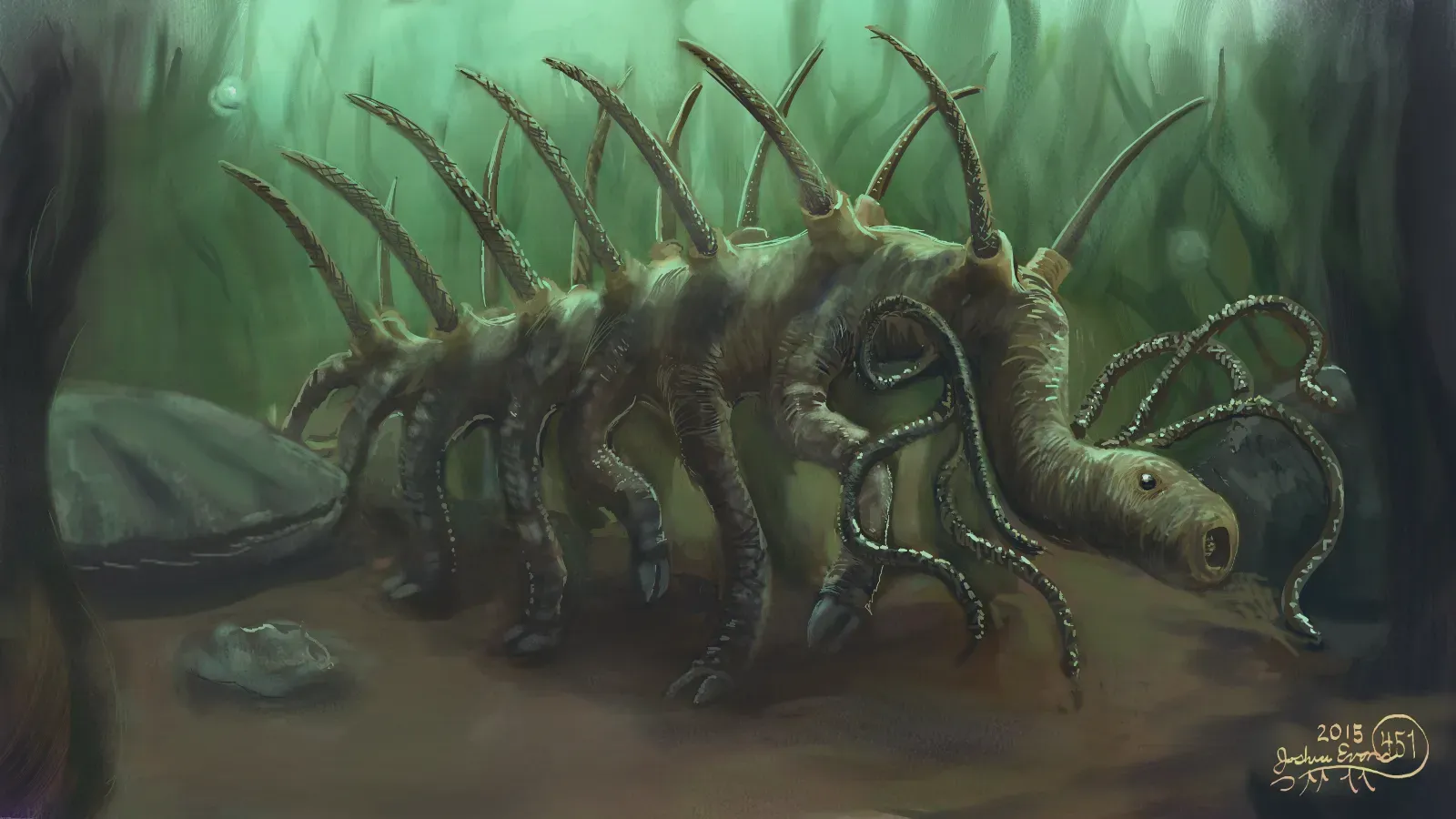
Here’s the thing about Hallucigenia: it confused scientists so thoroughly that when they first built models of it, they had it completely upside down and back-to-front. By far one of the strangest prehistoric creatures ever discovered, this tiny organism was originally reconstructed the wrong way around when scientists first created models of it. That’s not a minor mistake. That’s getting everything wrong at once.
An ancestor to either arthropods or worms, Hallucigenia had seven or eight pairs of legs with rigid spines coming out of the top of its body. Imagine a creature that looks like a hallucination someone drew after a very long night. Even after scientists corrected the orientation, Hallucigenia still looks like something no sober mind could have invented. Its very name is the fossil record’s way of admitting defeat.
2. Opabinia: Five Eyes and a Vacuum Hose for a Face
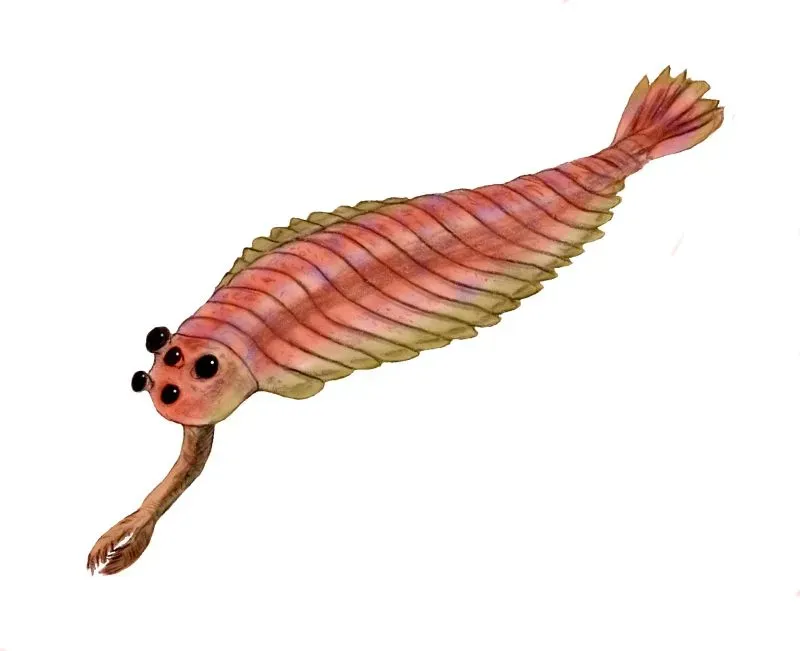
Opabinia lived about 505 million years ago and was about three inches long. That might sound small and harmless. Don’t let it fool you. This species had a head with five eyes and a mouth that was backward, a detail that coincides with the fact that it had a proboscis that was most likely used to pass food to the mouth. Five eyes. A backward mouth. A hose-like arm to deliver food to itself. You genuinely could not make this up.
The bizarre-looking Opabinia is a distant relative of insects and crustaceans. When it was first revealed to paleontologists at a scientific conference, the audience literally burst out laughing. Honestly, that reaction seems completely reasonable. Opabinia is one of the rarest fossils found in today’s world, with fewer than twenty quality specimens discovered, most of them in the Burgess Shale of British Columbia. Scientists are still hoping to find more.
3. Arthropleura: The Giant Millipede of Your Nightmares
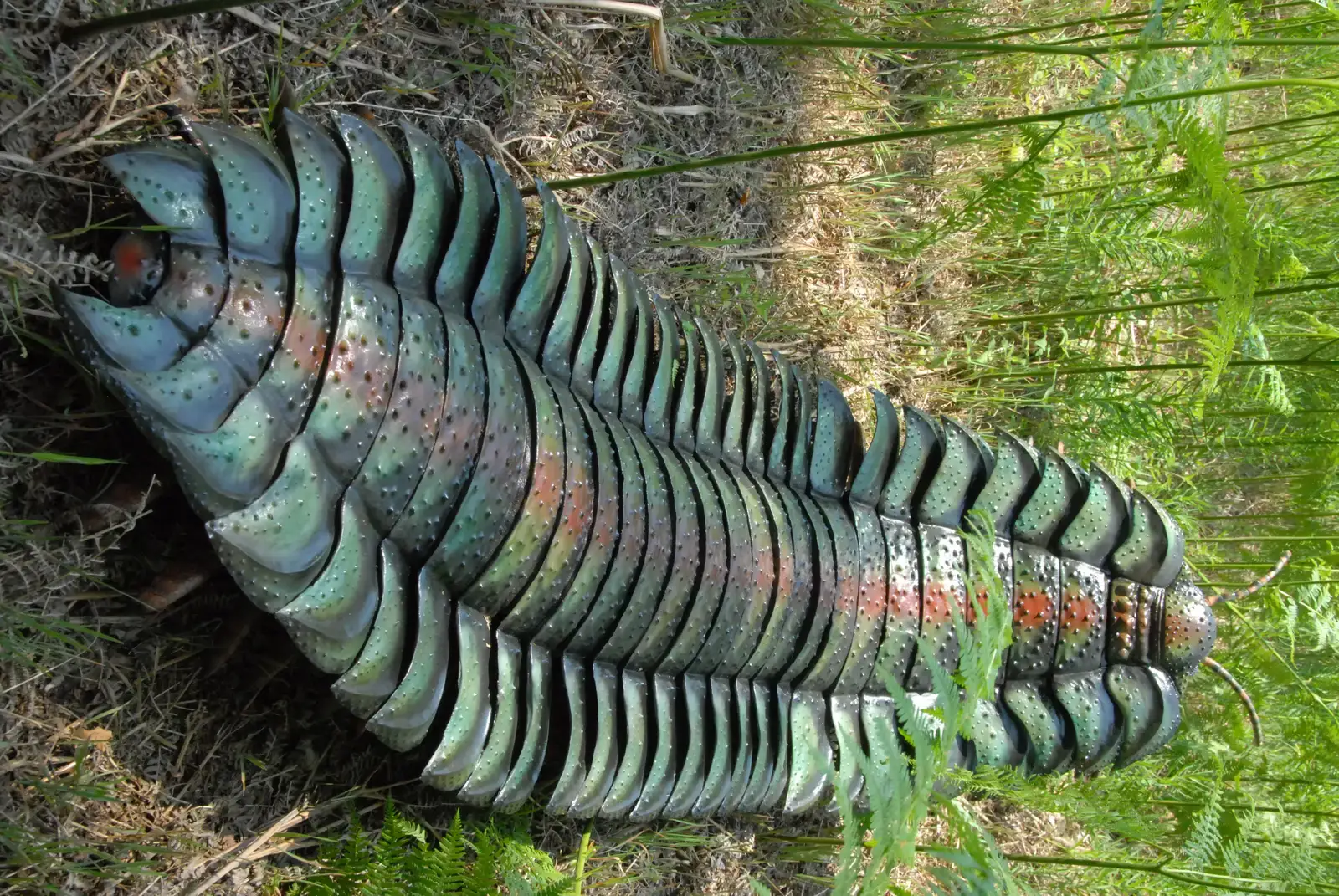
The Arthropleura is a genus of creatures straight from the darkest imaginations. They were six to eight-foot-long millipede-like creatures and the biggest arthropods ever to exist. Think about that for a moment. A millipede the length of a car, scuttling through ancient forests. If you think house centipedes are unsettling now, consider yourself lucky you weren’t born in the Carboniferous era.
Bugs grew to enormous sizes in the Paleozoic period, and scientists aren’t completely sure why, but theorize their size was due to higher oxygen levels in the atmosphere and the presence of few predators. The most probable theory is that they scuttled around woodland floors eating decomposing wood and carrion, meaning they were more like oversized cleanup crew members than active hunters. Terrifying in appearance, but maybe not so murderous in reality. Small comfort.
4. Dunkleosteus: The Fish With a Bite That Could Crush Steel
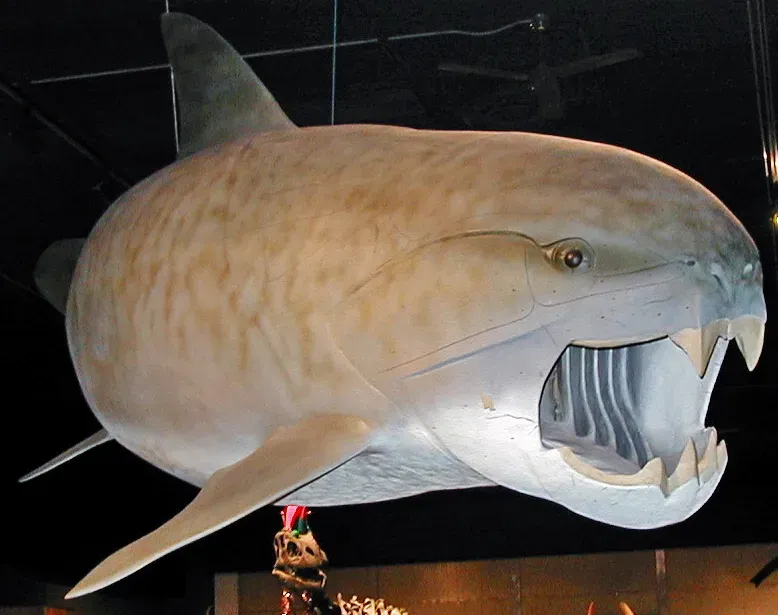
Imagine a great white shark with a staple remover for a mouth and you have some idea of what Dunkleosteus looked like. During its heyday, about 420 million years ago, this armored fish was among the biggest and fiercest meat-eaters in the seas. This is the sort of creature that makes you grateful the oceans of today are relatively tame by comparison.
Instead of chomping with teeth like sharks, this predator sliced through other armored fish with immense jaws made of sharpened bony plates. Based on calculations of the animal’s bite, Dunkleosteus could have exerted over 1,100 pounds of force. One of the scariest creatures ever to live in the ocean, this Devonian fish could grow up to 33 feet long and likely had one of the strongest bites in history. To put that into perspective, a lion bites with roughly 650 pounds of force. Dunkleosteus nearly doubles it.
5. Entelodon: The “Hell Pig” That Ate Everything
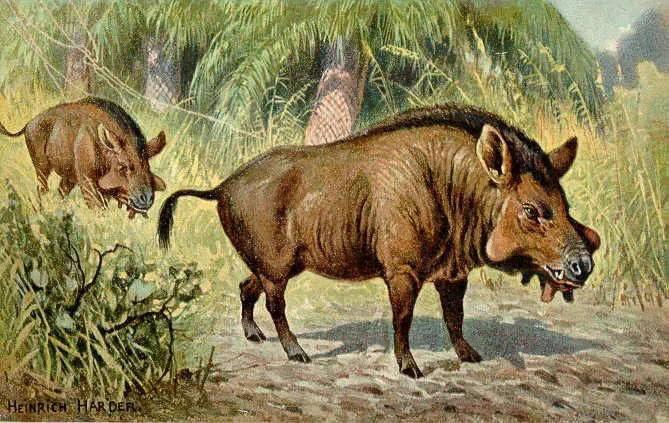
The Entelodon, a prehistoric pig relative, was a full-time carnivore and possibly one of the most monstrous-looking mammals ever to exist. Standing on all fours, this beast was as tall as a man and had an immense head armed with powerful jaws and sharp teeth. Your average wild boar today might seem unpleasant in a dark forest. The Entelodon would have been genuinely terrifying in broad daylight.
Scientists believe it was able to hunt live prey but also scared other predators away from their kills. Bite marks found on fossils suggest it fought viciously with its own kind, and it is even possible that Entelodonts were cannibalistic. Entelodons were quite successful beasts, existing for about nine million years. Nine million years of success as a cannibal bully. I think that qualifies as winning at prehistoric life.
6. Helicoprion: The Shark With a Spiral Saw for a Jaw
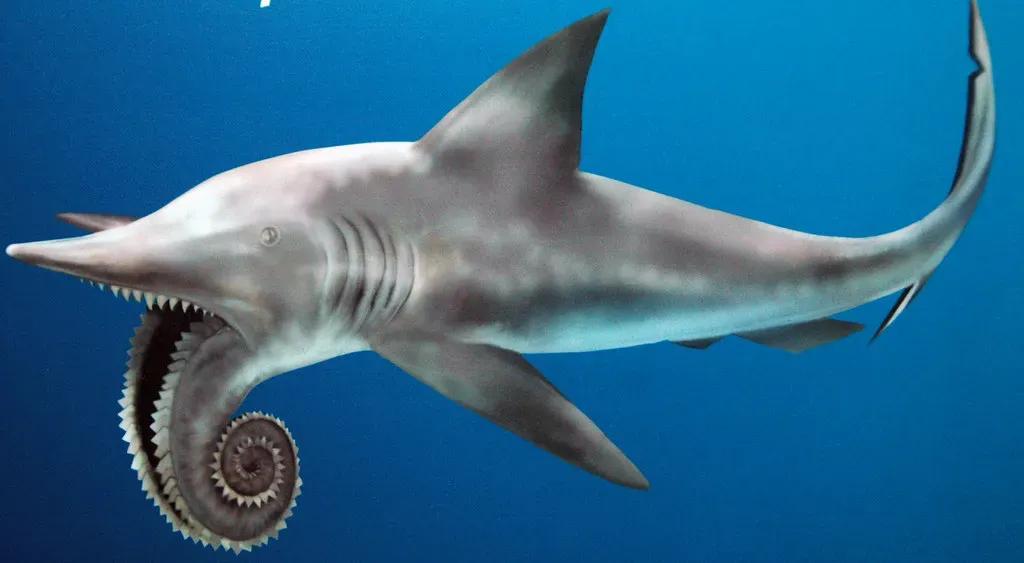
This bizarre fossil was originally thought to be an ammonite, as it looked like a spiraling, circular shell. However, after some examination, it was revealed that it wasn’t a shell at all, but a spiraling set of shark teeth, a so-called tooth whorl. A shark that grew its teeth in an ever-expanding spiral inside its own mouth. That detail alone should earn this creature far more attention than it gets at dinner parties.
Also known as “spiral saw,” this shark-like cartilaginous fish first arose in the oceans of the late Carboniferous era, and the only surviving evidence of its existence is a tightly coiled set of triangular teeth. This bizarre structure was attached to the bottom part of its jaw, though how it was used still remains a mystery today. Some speculations are that it was used to grind shells, while others believed the coil could be unfurled to spear prey. We still don’t know the full answer. Honestly, the mystery makes it even more fascinating.
7. Anomalocaris: The World’s First Apex Predator
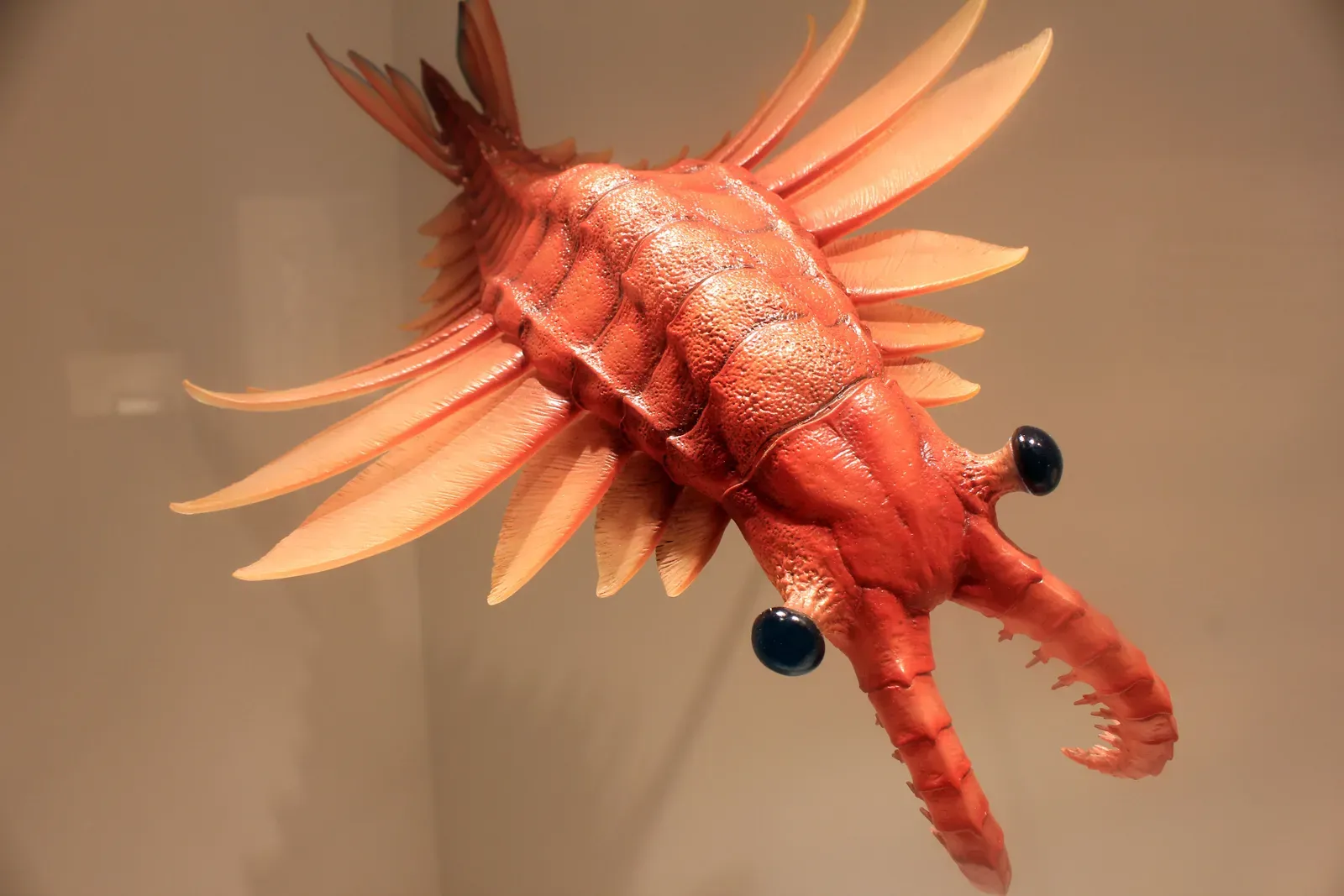
More than half a billion years ago, the world’s oceans were stalked by a soft-bodied predator that looked unlike anything alive today. This bizarre-looking animal was Anomalocaris, or “unusual shrimp,” and is widely regarded as the world’s first apex predator, essentially the killer whale of its day. Think about that lineage. Before sharks, before marine reptiles, before anything we’d recognize, Anomalocaris was already running the show.
Anomalocaris was the largest hunter of the Cambrian period, measuring up to a metre in length from its grasping, frontal appendages to the tips of its tail fans. The appendages are thought to have been used to catch and crush prey. For a long time, hard-shelled trilobites were assumed to have been its favourite snack, but new research has suggested this predator may have been incapable of cracking tough trilobite armour. So the “world’s first top predator” might have had some embarrassing limitations. Even apex predators have off days, I suppose.
8. Meganeura: The Dragonfly the Size of a Hawk
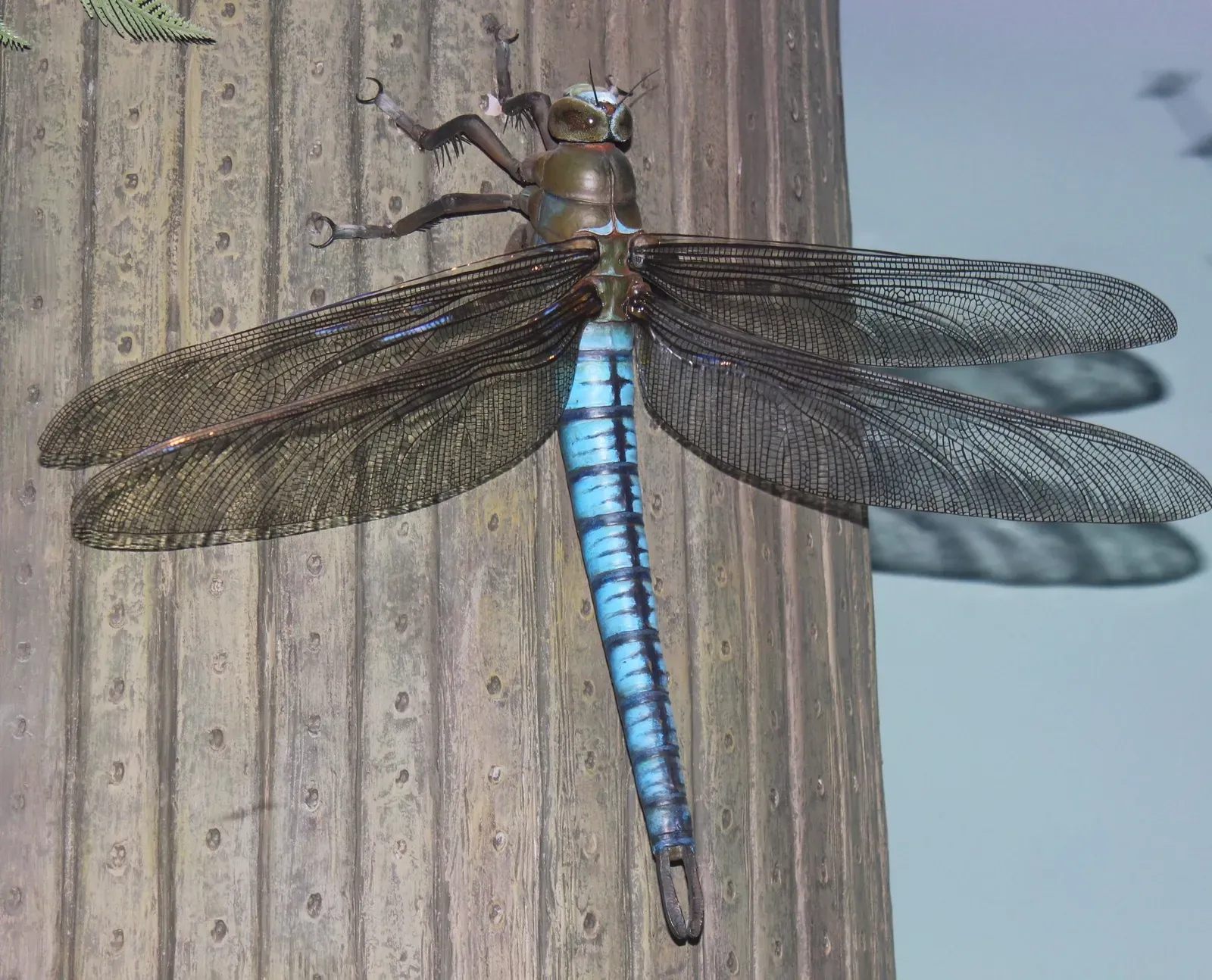
With a wingspan measuring more than 70 centimetres and six spindly, spiny legs, Meganeura was terrifying enough to scare even the most ardent insect-lover. This four-winged monster is widely regarded as the largest flying insect ever, dwarfing its extant dragonfly relatives. Picture a dragonfly roughly the size of a crow, buzzing over ancient swamps. The ancient world had no mercy.
Like many of today’s dragonfly species, Meganeura lived in open habitats close to ponds and slow-moving streams. It was likely the apex predator in these clearings, using the spines on its legs as a flying trap to ensnare prey ranging from other flying insects to amphibians and even lizard-like vertebrates. So not just enormous, it was also a skilled aerial hunter. Roughly the same ecological role as a hawk, except it had six legs and an exoskeleton. Sleep well.
9. Basilosaurus: The Ancient Whale That Was Terrifying
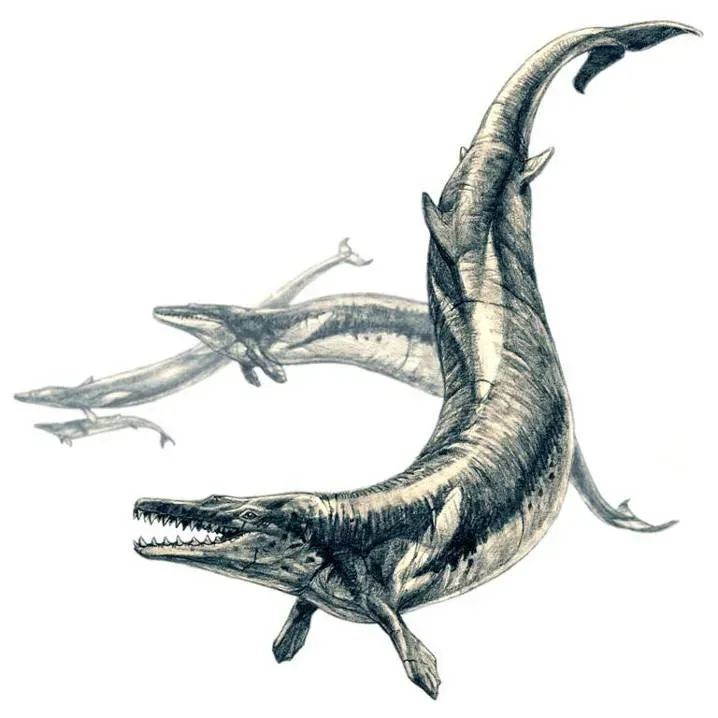
Known as “King Lizard” in ancient Greek, you’d think Basilosaurus was another monstrous marine reptile. In fact, this behemoth was a mammal and an early ancestor of today’s whales. Basilosaurus evolved from a land-dwelling animal that looked a lot like a goat. A goat. That eventually became a 20-metre ocean predator. Evolution is genuinely one of the most astonishing forces in the history of this planet.
About 40 million years ago, in the late Eocene era, whale ancestors lived on land. Some genera moved to the oceans, and Basilosaurus became an apex predator that ate fish and sharks. Basilosaurus still had tiny hind limbs about 35 centimetres long that would have been of little use in water. Its modern descendants, blue whales, orcas, and dolphins, also possess these evolutionary leftovers, though theirs are now fully internalised and vestigial. Basically, the whale you know today still carries ghostly traces of its ancient walking ancestor. That’s breathtaking.
10. Megatherium: The Giant Ground Sloth That Could Kill
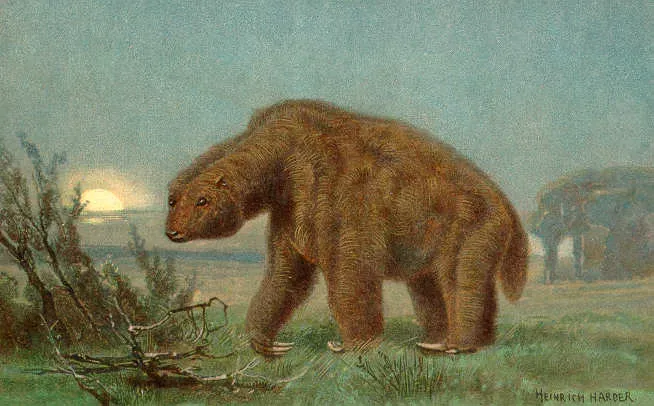
As the name implies, this was a pretty large mammal. It was actually a giant ground sloth related to modern sloths. An inhabitant of South America during the Quaternary period, an adult standing on its hind legs could reach a height of 20 feet. To be clear, that’s roughly the height of a two-storey house. Modern sloths hang from branches and eat leaves peacefully. Their ancestor was essentially a furry skyscraper.
Megatherium was previously regarded as a slow tree ripper, a gentle giant that pulled apart vegetation. But recent studies show that its great claws might have been used for stabbing and killing. So what looked like a lumbering herbivore may have actually been capable of genuine predatory behavior. It’s a good reminder that prehistoric creatures rarely fit the neat little boxes we try to put them in. The ancient world was full of surprises. Honestly, it still is.
Conclusion: The Past Was Weirder Than You Think
There’s something deeply humbling about looking at creatures like Opabinia or Hallucigenia and realizing that life on this planet has taken forms we could never have imagined on our own. These ten animals represent just a tiny, strange corner of a vast prehistoric world that stretched across hundreds of millions of years.
Every year, paleontologists uncover new fossils, rewrite old theories, and challenge everything we thought we knew about life before humans. The prehistoric record is still being written, and creatures stranger than any on this list are almost certainly waiting to be discovered.
The next time someone says history is boring, introduce them to a five-eyed, backward-mouthed sea creature from 505 million years ago. That tends to change the conversation pretty quickly. Which of these creatures surprised you the most? Drop your answer in the comments below.