Few mysteries in all of human history have captured our collective imagination quite like the fall of the dinosaurs. These extraordinary creatures dominated nearly every corner of the Earth for over 150 million years, only to vanish with a finality that still sends scientists into fierce debate. And here’s the thing – even in 2026, with all our technological firepower and decades of dedicated research, there is no single, universally agreed-upon answer.
You might think you already know the story. Giant asteroid. Big boom. End of the dinosaurs. But the real picture is far messier, far more dramatic, and honestly, far more fascinating than that. From exploding stars to poisonous volcanoes to a creeping collapse of the food chain, the theories surrounding dinosaur extinction are as varied as the creatures themselves. So let’s dive in.
1. The Asteroid Impact: The Theory That Started a War
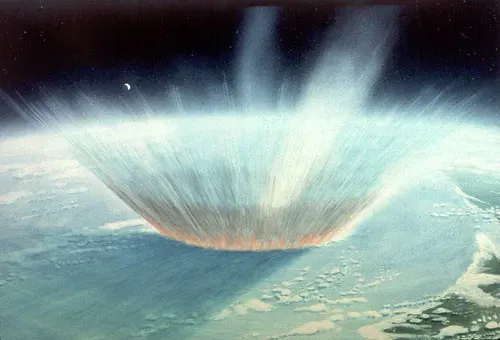
Here’s a fact that never stops being jaw-dropping: a rock roughly the size of a city effectively ended the reign of the most successful land animals the world had ever seen. The Alvarez hypothesis posits that the mass extinction of the non-avian dinosaurs and many other living things during the Cretaceous-Paleogene extinction event was caused by the impact of a large asteroid on the Earth. The hypothesis is named after the father-and-son team of scientists Luis and Walter Alvarez, who first suggested it in 1980.
Their key piece of evidence is an oddly high amount of the metal iridium in what is known as the Cretaceous-Paleogene, or K-Pg, layer – the geologic boundary zone that seems to cap any known rock layers containing dinosaur fossils. The crater itself was formed slightly over 66 million years ago when an asteroid about ten kilometers in diameter struck Earth, leaving a scar estimated to be 200 kilometers in diameter, now buried about one kilometer beneath younger sedimentary rocks. That is roughly the distance from New York City to Philadelphia – as a crater. You can take a moment with that.
2. The Volcanic Inferno: Earth’s Own Wrath
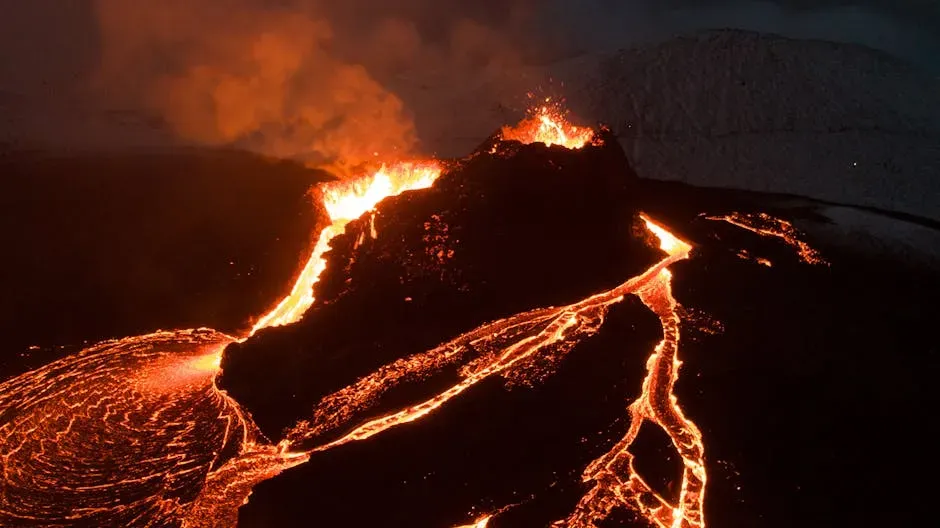
Not everyone was convinced it was a rock from space. Some of the most heated arguments in paleontology have centered on what was happening right here on Earth at the same time. Western India is home to the Deccan Traps, a huge rugged plateau that formed when molten lava solidified and turned to rock, dating back to around 66 million years ago. In some parts of the Deccan Traps, the volcanic layers are more than two kilometers thick, making this the second-largest volcanic eruption ever on land.
Based on analysis of those rocks, researchers determined that the eruption began 250,000 years before the asteroid strike and continued for 500,000 years after the giant impact, spewing a total of 1.5 million square kilometers of lava. Sulfurous gases can cool the atmosphere in the short term, while carbon dioxide warms it in the long term. When volcanoes release enormous volumes of both, “these can lead to climate swings between warm and cold periods that make it really hard for life on Earth.” Honestly, that sounds less like an extinction event and more like living inside a broken thermostat for hundreds of thousands of years.
3. The One-Two Punch: When the Asteroid and the Volcano Teamed Up
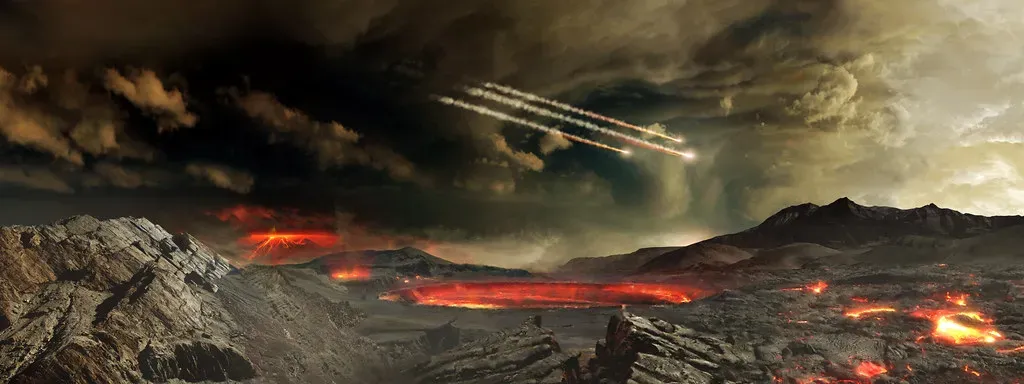
What if neither the asteroid nor the volcanoes acted alone? A growing number of scientists today think the most accurate explanation isn’t either/or – it is both. Increasingly, scientists trying to unravel this prehistoric mystery are seeing room for a combination of these ideas. It is possible the dinosaurs were the unlucky recipients of a geologic one-two punch, with volcanism weakening ecosystems enough to make them vulnerable to an incoming meteor.
Particulate materials from volcanism cooled and dried areas of the globe, and then an impact event occurred, causing collapses in photosynthesis-based food chains, both in the already-stressed terrestrial food chains and in the marine food chains. Think of it like a person who is already sick – a flu that would barely affect a healthy individual becomes deadly. Research has summarized that “two events share the stage as main drivers of the Cretaceous-Paleogene mass extinction – Deccan Traps volcanism, and an asteroid impact recorded by the Chicxulub crater.”
4. The Impact Winter: When the Sun Went Out
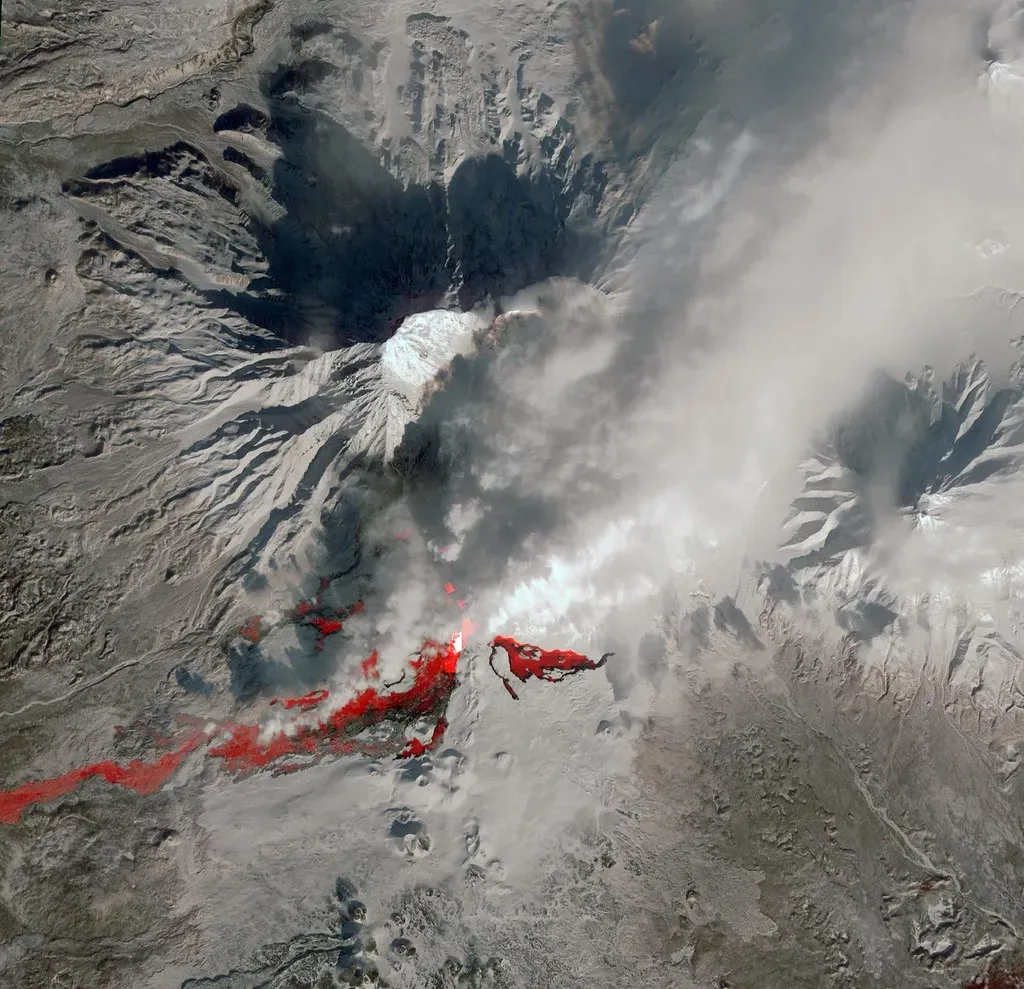
Even if you accept the asteroid theory, the actual mechanism of death is grimly fascinating. The rock itself did not kill most of the dinosaurs – what came next did. The impact would have injected massive amounts of dust, soot, and sulfate aerosols into the atmosphere. This material would have blocked sunlight, leading to a global “impact winter,” a period of prolonged darkness and cold that may have lasted for months or even years. Plants, the base of the food chain, would have been unable to photosynthesize, leading to widespread starvation.
Researchers estimate that the dust kicked up by the impact circulated in the atmosphere for no more than a couple of decades. As one researcher noted, “if you’re actually going to put a clock on extinction 66 million years ago, you could easily make an argument that it all happened within a couple of decades, which is basically how long it takes for everything to starve to death.” A couple of decades sounds almost manageable to us. For an ecosystem built over millions of years, it was total annihilation.
5. Gradual Climate Cooling: The Slow Burn Theory
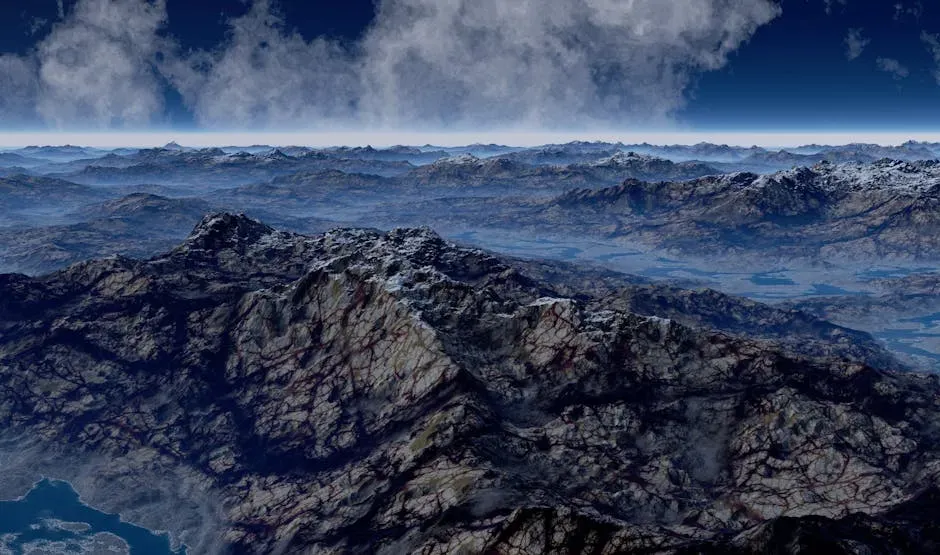
Here is where things get genuinely controversial – and I think it is one of the most underrated theories out there. Long before any asteroid arrived, the Earth’s temperature was already shifting. Research has found that the decline of dinosaurs was likely driven by global climate cooling and a drop in herbivorous diversity. Six major dinosaur families were already in decline in the preceding 10 million years, possibly due to global cooling and competition among herbivores.
Van Valen and Sloan suggest that shifting continents caused the world’s climate to change, with evidence from fossil plants suggesting it got about ten centigrade points colder in the Late Cretaceous. Researchers propose that a combination of global climate cooling, the diversity of herbivores, and age-dependent extinction had a negative impact on dinosaurs in the Late Cretaceous, and these factors impeded their recovery from the final catastrophic event. In other words, the asteroid may have simply delivered the killing blow to a patient that was already gravely ill.
6. Continental Drift and Sea Level Changes: The World Rearranging Itself
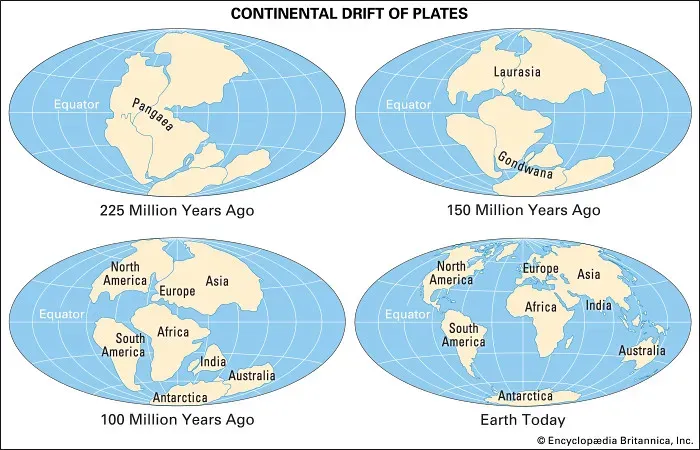
You do not usually think of slow geological movement as a mass killer. Yet the rearrangement of the continents themselves may have played a quiet but devastating role in the dinosaurs’ decline. Tectonic plate movements caused a major rearrangement of the world’s landmasses, particularly during the latter part of the Cretaceous. The climatic changes resulting from such continental drift could have caused a gradual deterioration of habitats favorable to the dinosaurs and other animal groups that suffered extinction.
Significant sea level fluctuations occurred during the Late Cretaceous, altering coastal habitats and potentially stressing dinosaur populations. Before the dinosaur extinction, North America experienced significant changes: sea levels fell, a large inland sea vanished, and mountain ranges rose. As a result of these geologic shifts, much of the sediment that could have preserved fossils from that time is no longer exposed. Imagine entire ecosystems, migration routes, and feeding grounds slowly disappearing over millions of years – like pulling a tablecloth out from under the entire living world.
7. The Supernova Theory: Death by Exploding Star
This one sounds like science fiction, but real scientists took it seriously enough to investigate. What if a dying star far away in the galaxy was responsible for the extinction of life here on Earth? In 1956, Soviet astronomer and astrophysicist Joseph Shklovsky linked the extinction of dinosaurs to cosmic rays coming from supernova explosions. Shklovsky theorized that a supernova could have released a huge amount of radiation killing all the dinosaurs.
American-Canadian geologist Dale Alan Russell and physicist Wallace Tucker proposed the flash of a nearby supernova, whose electromagnetic radiation and cosmic rays destroyed the dinosaurs, in 1971. In addition, it should have indiscriminately affected all life on Earth. That last point is actually the theory’s biggest flaw – it struggles to explain why some species survived. Like Shklovsky, Tucker and Russell also could not provide any direct evidence to back their theory. Hence, scientists started working on the asteroid impact hypothesis and several other theories to find a logical explanation. It remains one of those wild, imaginative ideas that science cannot fully kill off – because proving the absence of something 66 million years ago is nearly impossible.
8. The Disease Epidemic Theory: A Prehistoric Pandemic
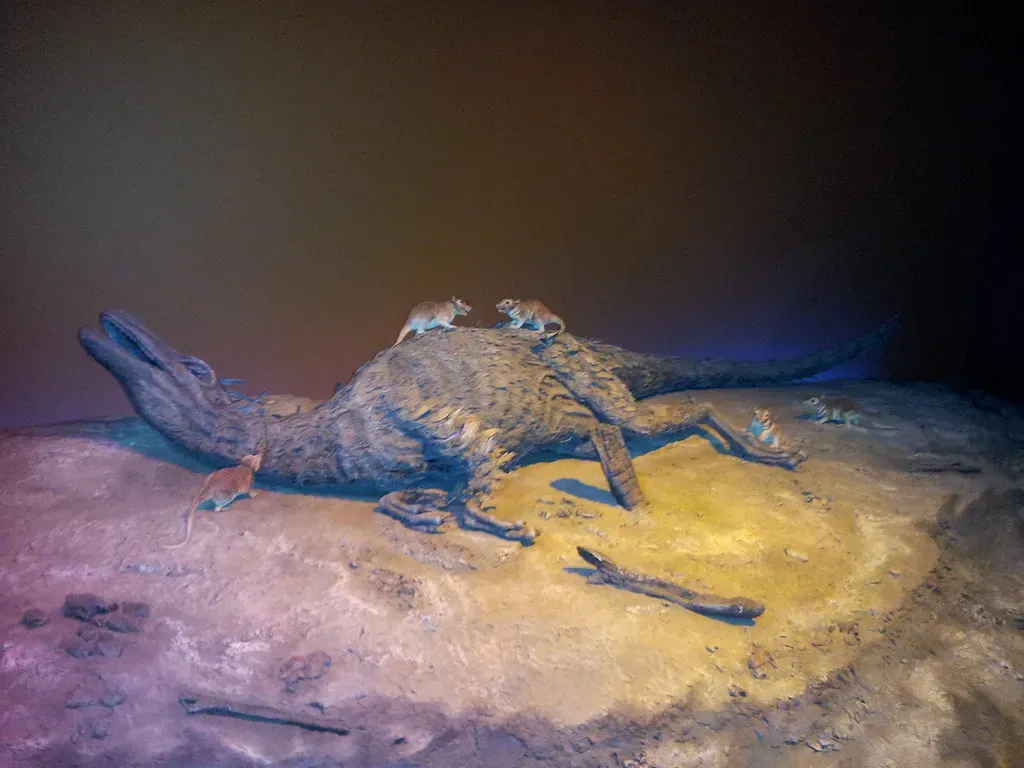
Long before the modern world encountered the concept of a global pandemic, scientists speculated that disease may have swept through dinosaur populations with devastating efficiency. American geologist and paleopathologist Roy Lee Moodie put this hypothesis forward in 1923, based on the findings of bones in a pathological state. He believed that arthritis, tooth decay, fractures, and infections contributed to the extinction of dinosaurs.
Proposed causes of the K-T extinction have included disease, heat waves and resulting sterility, freezing cold spells, the rise of egg-eating mammals, and X-rays from a nearby exploding supernova. The disease theory, though largely dismissed as the sole cause today, is not entirely without merit. As dinosaur populations became geographically stressed by shifting climates and reduced habitats, crowding and weakened immune systems could have left large animals especially vulnerable. It is hard to say for sure, but the idea that a prehistoric plague contributed to their vulnerability is not as far-fetched as it once seemed.
9. The Egg and Reproduction Failure Theory: The Silent Collapse

What if the dinosaurs did not die violently at all, but simply stopped reproducing successfully? It is one of the most hauntingly quiet of all the theories, and it deserves far more attention than it gets. Egg disorders also contributed to the extinction of dinosaurs, according to invertebrate fossil expert H.K. Erben. The analysis of fossilized dinosaur eggshell fragments showed two lethal disorders: pathologically thin and multiple shell layers.
Uncontrolled levels of carbon dioxide negatively affected dinosaur eggs, which did not receive enough oxygen, and the embryos suffocated. Layer that on top of the broader environmental chaos of the late Cretaceous – rising temperatures, shifting food sources, increasing competition – and you have a picture of reproductive failure at a species-wide scale. Think of it like a slow vanishing act: not an explosion, but a gradual fading. No eggs hatching means no next generation, and no next generation means the end of a lineage that had survived for tens of millions of years.
10. The Fossil Record Was Misleading Us All Along
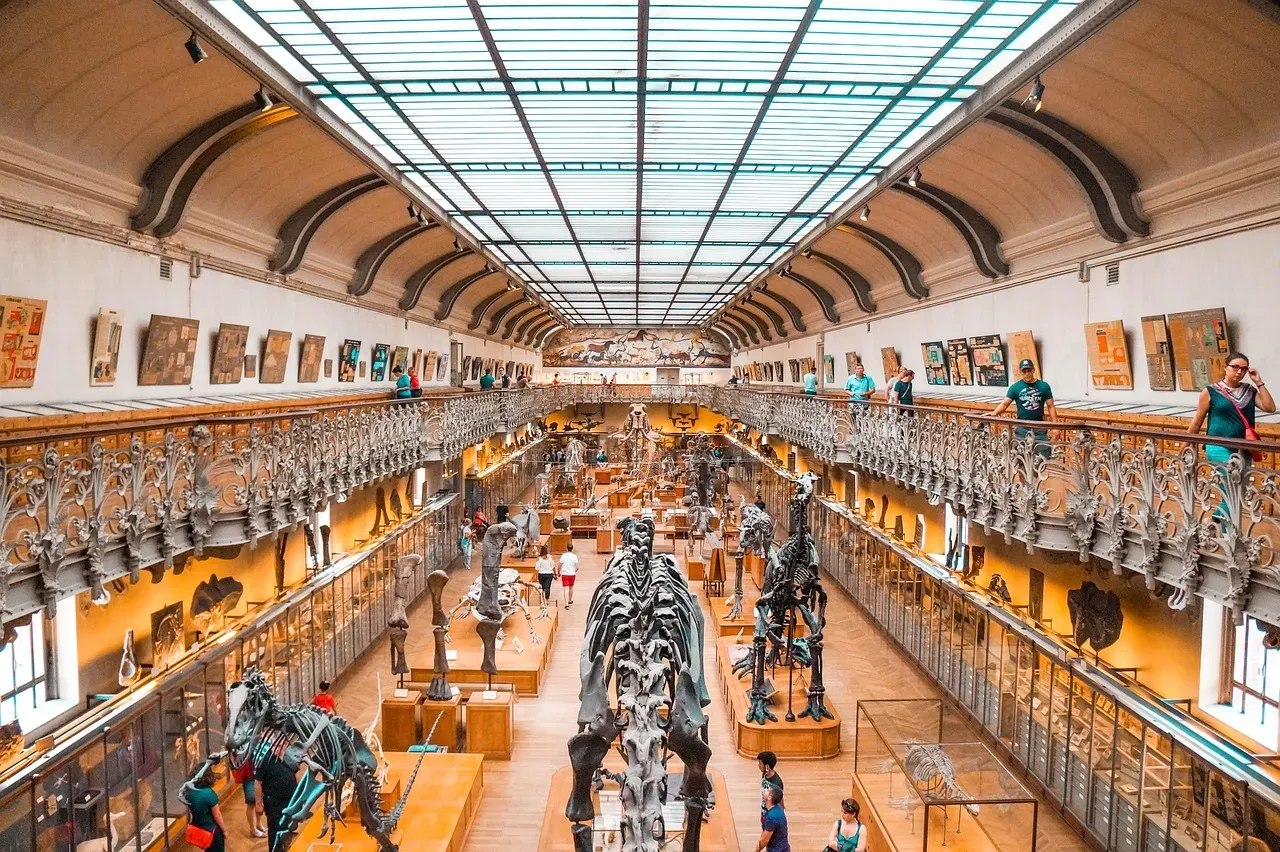
This is arguably the most mind-bending theory of recent years, and it comes not from some fringe scientist but from a rigorous 2025 study that turned a long-held assumption completely on its head. Dinosaurs might not have been on the verge of extinction before an asteroid wiped them out 66 million years ago. New research led by scientists at University College London challenges the idea that dinosaur species gradually declined. Instead of a real drop in biodiversity, the study suggests that gaps in the fossil record might better explain this lack of specimens.
The study, published in Current Biology, analyzed the fossil record of North America in the 18 million years up to the asteroid impact at the end of the Cretaceous period. Taken at face value, more than 8,000 fossils suggest the number of dinosaur species peaked about 75 million years ago and then declined, but the research team found this trend was due to fossils from that time being less likely to be discovered, primarily because of fewer locations with exposed and accessible rock from the very latest Cretaceous. The study found dinosaur habitat areas remained stable and the risk of extinction stayed low. Limited exposed rock from that time period may have created an illusion of declining dinosaur diversity. In other words, you have been reading a history book with missing pages, and mistaking those gaps for the end of the story.
Conclusion: The Mystery That Keeps on Giving
What is truly remarkable about the dinosaur extinction is not just the event itself – it is how fiercely smart people continue to argue about something that happened 66 million years ago. Controversy has surrounded the topic since 1980, and it has become difficult for the public and the scientific world at large to understand the issue due to the tangled assemblage of data which seems to point in many different directions. Luckily, the controversy has not harmed the study of mass extinction causation, but rather has made it a dynamic and interesting area.
The most honest answer science can give you right now is this: it was probably a combination of several of these theories acting together, with the asteroid delivering the final, catastrophic blow to a world already under immense strain. These factors alone likely would not have caused a mass extinction, but they could have weakened dinosaur populations, making them more vulnerable to the catastrophic effects of the asteroid impact. Every new fossil dig, every core sample from the ocean floor, every refined dating technique has the potential to rewrite what you think you know.
Perhaps the most humbling lesson here is that the story of the dinosaurs’ disappearance is really a mirror held up to our own world – a reminder of just how fragile even the most dominant life forms on Earth truly are. What do you think? Did any of these theories surprise you? Drop your thoughts in the comments.