When you think about ancient civilizations, images of togas and chariots probably come to mind. Maybe you picture philosophers pondering under olive trees or gladiators clashing in dusty arenas. Yet what if I told you those ancient societies possessed technology that would seem more at home in a science fiction novel than in the distant past? Some of their inventions were so advanced that we struggled for centuries to replicate them, while others remain mysteries even today.
You might be surprised to learn just how sophisticated these ancient minds really were. From computers that predicted celestial events to materials that modern engineers are still trying to recreate, the ancient world was far more technologically advanced than most people realize. Let’s explore ten incredible inventions that prove our ancestors were thinking way beyond their time.
The Antikythera Mechanism: An Ancient Analog Computer
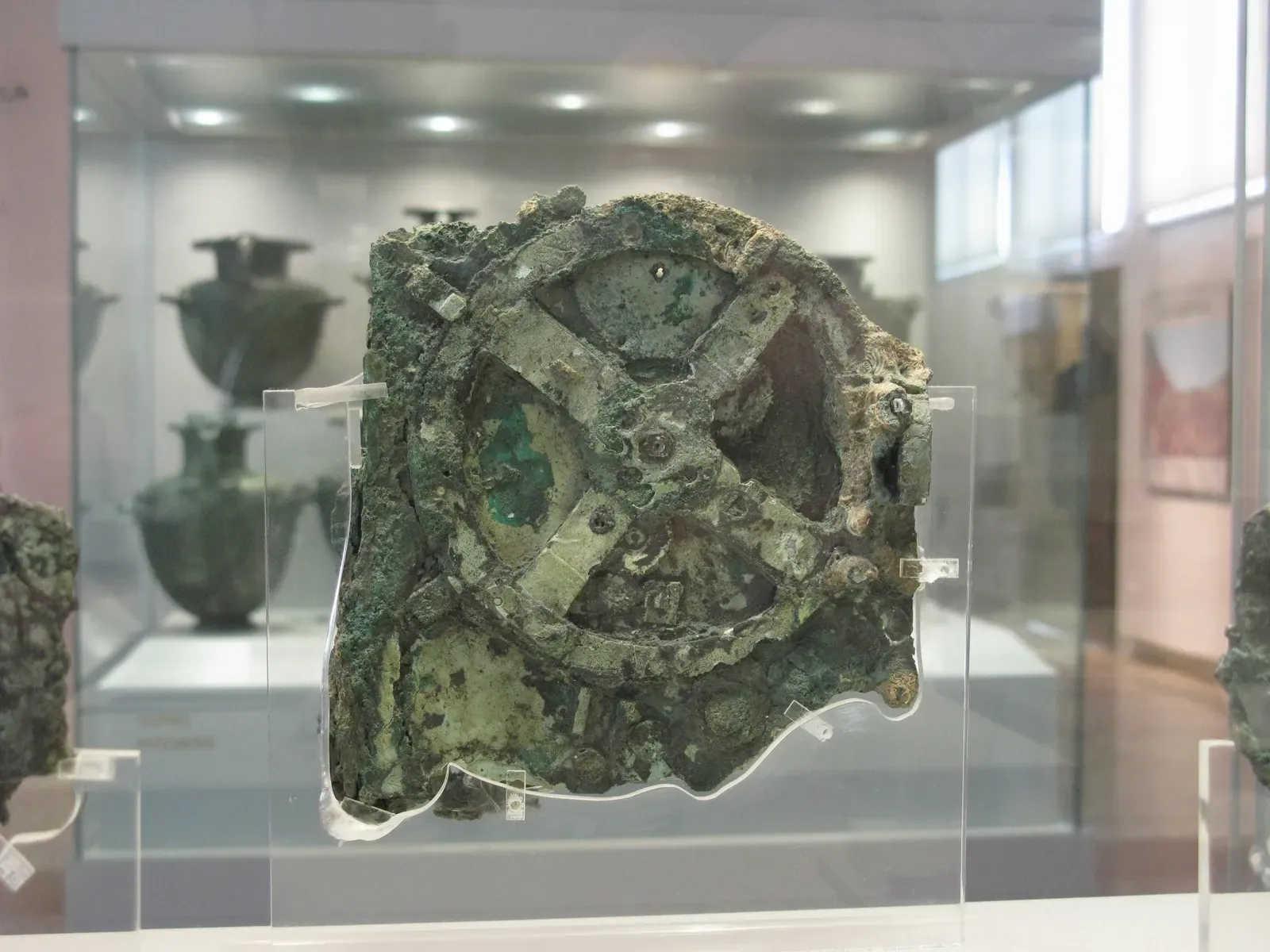
Picture yourself diving for sponges off a Greek island in 1901 when you stumble upon a corroded lump of bronze. That’s exactly what happened near Antikythera, leading to one of the most astonishing archaeological discoveries ever made. This ancient device, over 2,200 years old, was initially dismissed by some scholars who couldn’t believe it functioned as an ancient computer.
The Antikythera Mechanism was created in ancient Greece around 200 BCE, with an estimated 69 gears performing complex mathematical calculations to predict the location of the sun, moon, and planets. Think about that for a moment. While most of Europe was still figuring out basic agriculture, Greek engineers were building devices with interlocking bronze gears that could forecast eclipses and track astronomical cycles. The sophistication suggests its use might have been widespread, though no other devices like it appear in the historical record until the 14th century, meaning the technology was lost for nearly 1400 years.
Greek Fire: The Medieval Flamethrower That Burned on Water

Imagine being a sailor in the seventh century, watching in horror as your ship bursts into flames from a liquid that actually ignites when it touches seawater. First invented in 672 AD by the Eastern Roman Empire, Greek fire debuted when the Byzantines were attacked by a massive Muslim naval fleet that had never seen anything like it before, with the weapon burning ships, people, and even burning on top of the water.
The Byzantines were extremely secretive about the formula because they didn’t want it used against them, and when the Empire fell, so did the fire recipe, which was sticky and could burn on water, only able to be put out with vinegar, sand, and urine. The closest modern technology has come to creating Greek fire is Napalm, yet no one has come up with the ancient invention’s formula. Here’s the thing: we have all the scientific knowledge of the modern world, yet we still can’t crack a recipe that Byzantine engineers guarded over a millennium ago.
Roman Concrete: The Self-Healing Wonder Material

You’ve probably driven past crumbling concrete structures that were built just decades ago. Roman concrete doesn’t just survive the test of time, it actually gets stronger as centuries pass, which is the complete opposite of what modern concrete does, with our concrete crumbling after just 50 to 100 years while Roman structures like the Pantheon have stood firm for nearly 2,000 years.
What made this material so special? Romans mixed volcanic ash into their concrete, creating a chemical reaction that continues healing cracks over time, like a living material that repairs itself, something we’re still trying to replicate in our labs today. The harbor at Caesarea in Israel showcases this remarkably well. Built by Herod the Great, the breakwaters used in its harbor are still intact today, over 2,000 years since construction, with Pliny the Elder writing that Roman concrete “as soon as it comes into contact with the waves of the sea and is submerged, becomes a single stone mass, impregnable to the waves and every day stronger”. Let’s be real: if we could build roads with this stuff, we’d save billions in infrastructure costs.
Damascus Steel: Blades of Legendary Sharpness
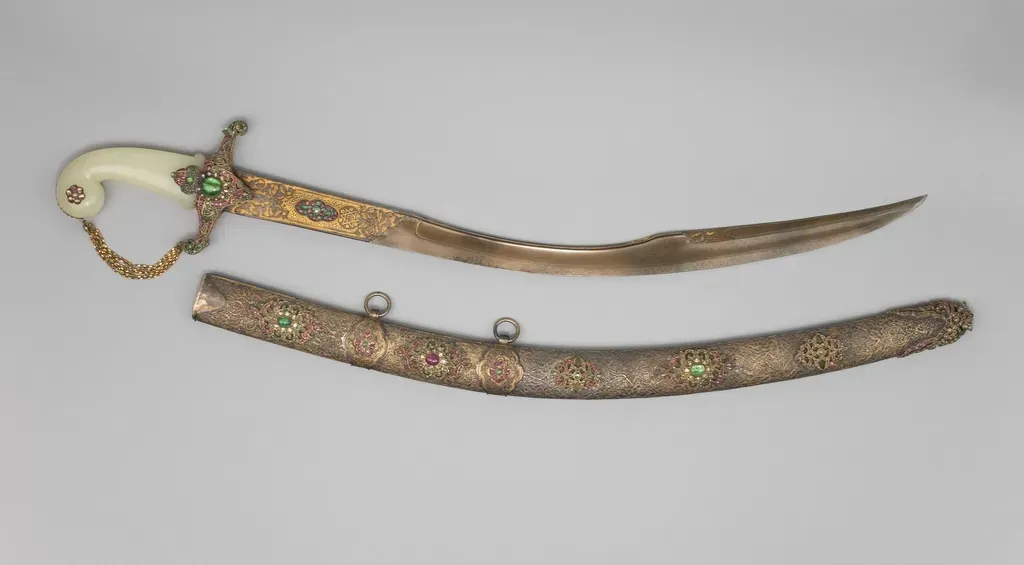
European crusaders returned from the Holy Land with terrifying tales of Muslim warriors wielding swords that seemed almost magical. They told stories of the Muslim warriors who had unbelievably powerful swords that could cut their softer swords straight in half. Damascus steel swords originated in the Middle East during the 9th century and were renowned for their appearance as well as their durability, being multiple times stronger and sharper than the Western swords used during the Crusades.
The secret lay in the forging process. Small ingots of wootz steel sourced from India, Sri Lanka, or Iran were melted with charcoal and cooled at an incredibly slow rate, and the demand for Damascus steel remained high for centuries, but gradually diminished as swords were replaced with firearms in armed conflicts, and by 1850, the secrets of its production process appeared lost. Damascus steel can never be recreated authentically as wootz steel is no longer available. It’s almost poetic, isn’t it? The very material that made these legendary blades possible has vanished from the earth.
The Baghdad Battery: Ancient Electricity or Religious Relic?
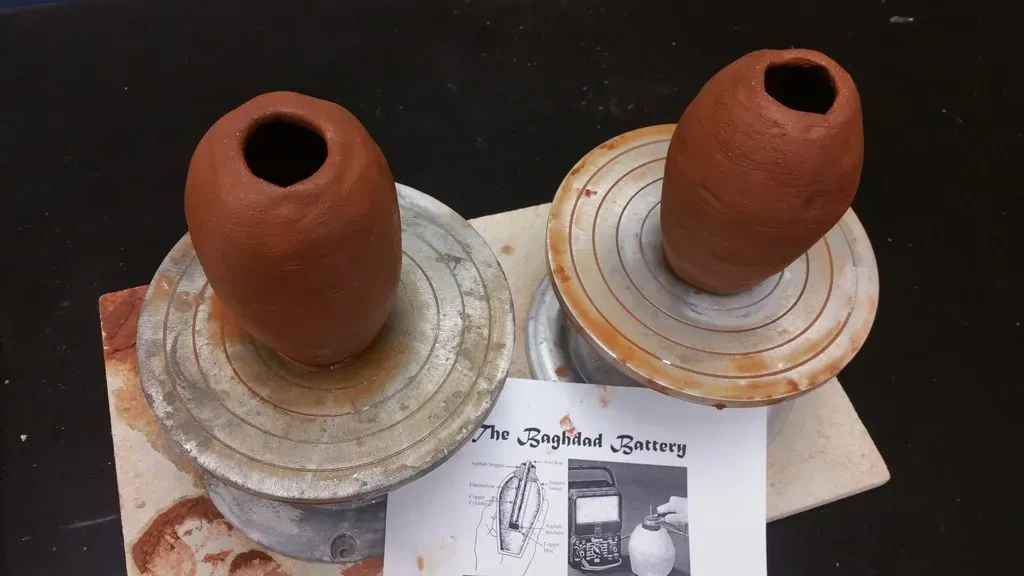
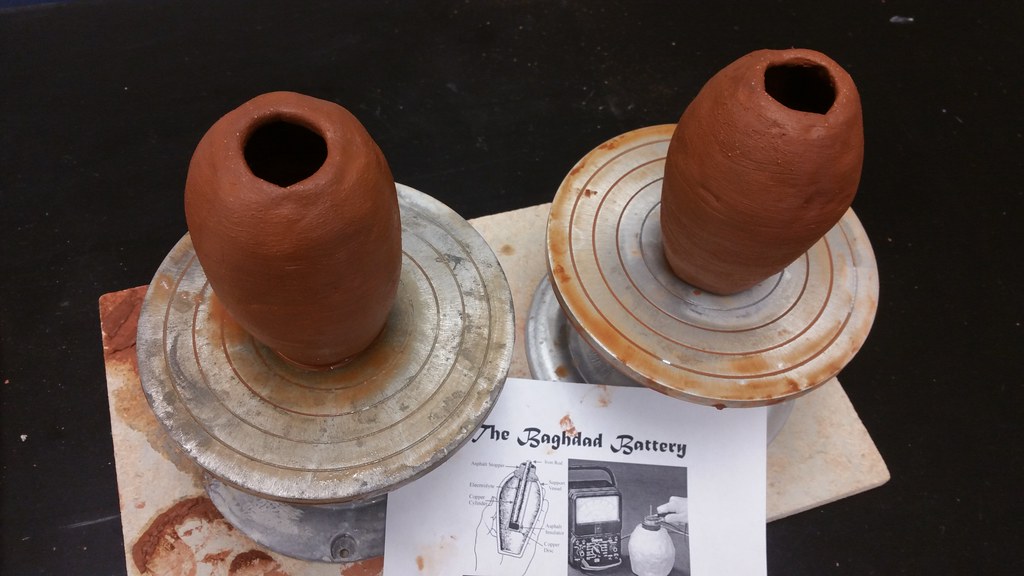
In 1936, archaeologists discovered clay jars in Iraq containing copper cylinders and iron rods that could theoretically generate electricity when filled with an acidic solution. This discovery sparked decades of debate and fascination. Were ancient civilizations harnessing electrical power nearly two thousand years before Benjamin Franklin’s famous kite experiment?
The Baghdad Battery was potentially used to electroplate items, placing a layer of one metal onto the surface of another, or the device might have been used in religious ceremonies to shock devotees into belief literally, though the Baghdad Batteries’ true purpose is still up for debate, with no valid explanation in sight. I think that’s what makes this invention so fascinating. We have the physical evidence right in front of us, we understand the basic electrochemical principles, yet we still can’t say with certainty what our ancestors were actually doing with these devices.
Zhang’s Seismoscope: Earthquake Detection Two Millennia Early

Created almost 2000 years ago, the Houfeng Didong Yi holds the honor of being the world’s first seismoscope, with its place of origin being China, a country that has been plagued by earthquakes for as long as its inhabitants can remember, and its creator was Zhang Heng, a distinguished astronomer, cartographer, mathematician, poet, painter, and inventor who lived under the Han Dynasty from 78 to 139 AD.
The seismoscope is respected as a milestone invention since it can indicate not only the occurrence of an earthquake but also the direction to its source, with researchers suggesting that vibrations caused a pendulum inside the pot to swing, causing a small ball to release through a dragon head and into the mouth of its corresponding toad, indicating the direction of an earthquake. One aspect that makes the seismoscope not prevalent in modern times is that it had little to no written evidence left from its past, with ancient texts only translated so far back, and reconstructing the design is also impossible, as the mechanisms used are not something current practitioners can replicate. Honestly, it’s hard to say for sure, but this level of precision in detecting seismic events seems almost impossible without modern sensors.
The Lycurgus Cup: Ancient Nanotechnology in Glass

The fourth-century Lycurgus cup would be amazing just for the ornate decorative glass cage surrounding it depicting King Lycurgus, but beyond surface-level beauty, the cup’s core composition is a genuine ancient wonder, with the cup’s glass being dichroic, appearing red when lit from behind and green when lit from the front, and there are very few other examples of this effect from the time period and none which are as large, complete, or striking.
Here’s where it gets wild. The dichroic effect requires the precise and measured manipulation of gold and silver nanoparticles, and nanotechnology was likely unknown to the Romans, as we only discovered it in the 1970s, so archaeologists are left with the unsatisfying assumption that the dichroism was likely formed accidentally. During the 1990s, researchers discovered the cup was made using an ancient form of nanotechnology, with craft workers having ground down gold particles until they were 50 nanometers across, less than one-thousandth of a grain of salt, and the precise work shows that the artisans were masters of nanotechnology. You got aesthetics as a byproduct that required manipulating matter at the atomic level.
Hero’s Aeolipile: The Steam Engine That Never Was
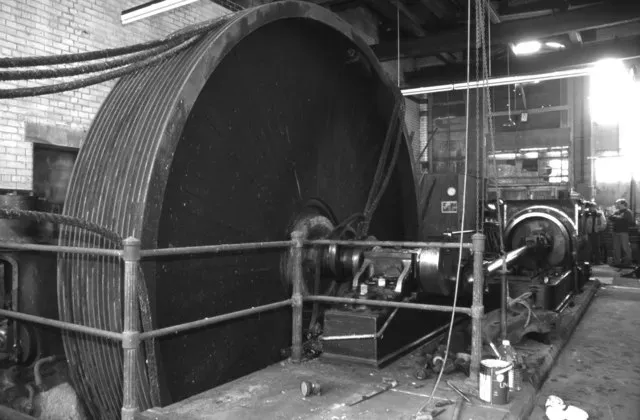
Dubbed the Aeolipile, the steam turbine was invented in the 1st century AD by the mathematician and engineer Heron of Alexandria and was even described in great detail in his Pneumatica, with the ancient invention being a hollow sphere mounted so that it could turn on a pair of hollow tubes that provided steam to the sphere from a cauldron, and the steam would then escape from hollow bent tubes placed on the square causing the device to revolve at high speeds.
While the first practical steam engines appeared in the 17th century, Hero of Alexandria had already envisioned steam-powered motion centuries earlier, and this early steam turbine consisted of a metal sphere with bent tubes that rotated as steam escaped under pressure, though too small and inefficient for practical use, Hero had already uncovered the basic principles of steam power over a thousand years before the Industrial Revolution. Think about it: if ancient societies had scaled up this technology, the Industrial Revolution could have happened more than a millennium earlier. The implications are staggering.
Automated Temple Doors: Ancient Greece’s Theatrical Engineering
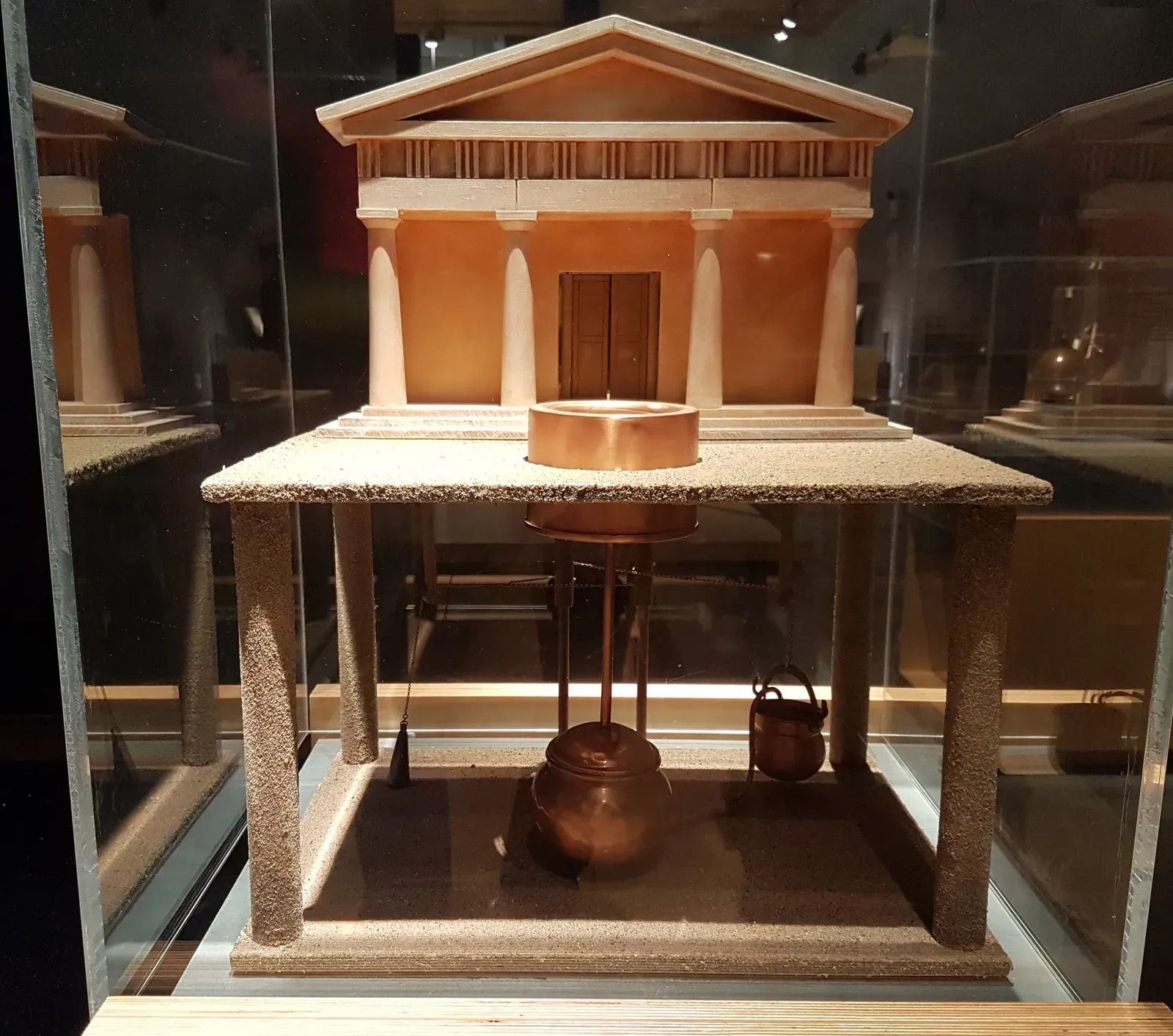
Automated door technology appeared in 1931 and was considered one of the signs of the modern age, yet the world had already seen this technology back in 1 AD. Greek inventor Hero of Alexandria strikes again with this ingenious system that must have seemed like pure magic to ancient worshippers.
If you wanted to open the door, a fire would need to be lit to generate heat, causing an atmospheric build-up in brass vessels, and this vessel would then pump water in holding containers, which would act as weights to open the door. The doors were not that practical and not as popular as modern doors, since the ancient doors took hours to open, and the process was hard to stop once it started, probably meaning that you only opened your doors once a day. Still, the engineering brilliance behind using heat, pressure, and hydraulics to create automated movement shows remarkable understanding of physics.
Flexible Glass: The Roman Innovation That Cost Its Inventor His Life

Vitrum Flexile was a flexible glass supposedly lost during Tiberius’ reign in Ancient Rome, where the inventor brought the glass to Tiberius as a drinking bowl and was put through experiments to break it, however, it only got dented instead of completely shattering, and the inventor repaired the bowl with a hammer.
The story goes that Emperor Tiberius asked the inventor if anyone else knew the secret of making this flexible glass. When the inventor said no, Tiberius had him executed on the spot. The emperor feared that if this unbreakable glass became widespread, it would devalue gold and silver. Whether this tale is entirely true remains debatable, yet it speaks to a fascinating possibility: that Roman craftsmen had discovered a form of glass we still cannot replicate today. What other innovations might have been deliberately suppressed throughout history simply because they threatened existing power structures?
Conclusion
These ten inventions challenge everything we think we know about the progression of human knowledge. Technology doesn’t always move forward in a straight line. Sometimes it leaps ahead, only to be lost when civilizations fall, knowledge gets hoarded, or recipes simply aren’t written down. These ancient technologies represent more than just impressive craftsmanship, they challenge our fundamental assumptions about human progress and the linear development of knowledge, with each mystery suggesting that innovation isn’t always cumulative, that knowledge can be lost as easily as it’s gained, and that our ancestors were far more sophisticated than we often give them credit for.
What strikes me most is the humility these discoveries should inspire in us. We live in an age of smartphones and space exploration, yet we can’t figure out how to make concrete that lasts as long as Roman structures or recreate the exact formula for Greek fire. Maybe that’s the real lesson here: respect for the ingenuity of those who came before us. What other secrets might be waiting beneath the sands, locked in corroded fragments, or hidden in texts we haven’t yet deciphered? Makes you wonder what future archaeologists might puzzle over from our own era, doesn’t it?