Every so often, the Earth gives up a secret it has been holding for tens of millions of years. A bone pokes out of a riverbank. A miner’s pickaxe strikes something unexpected. A farmer notices something strange in the ground. These moments, ordinary on the surface, have collectively rewritten entire chapters of natural history.
Dinosaurs have never been more fascinating than they are right now. We are living in what many scientists are calling a golden age of paleontology, and the finds keep coming, faster and more surprising than ever before. You might think we’ve already found everything worth finding. You’d be very wrong. Let’s dive in.
1. Nanotyrannus: The “Short King” Who Finally Got Vindicated
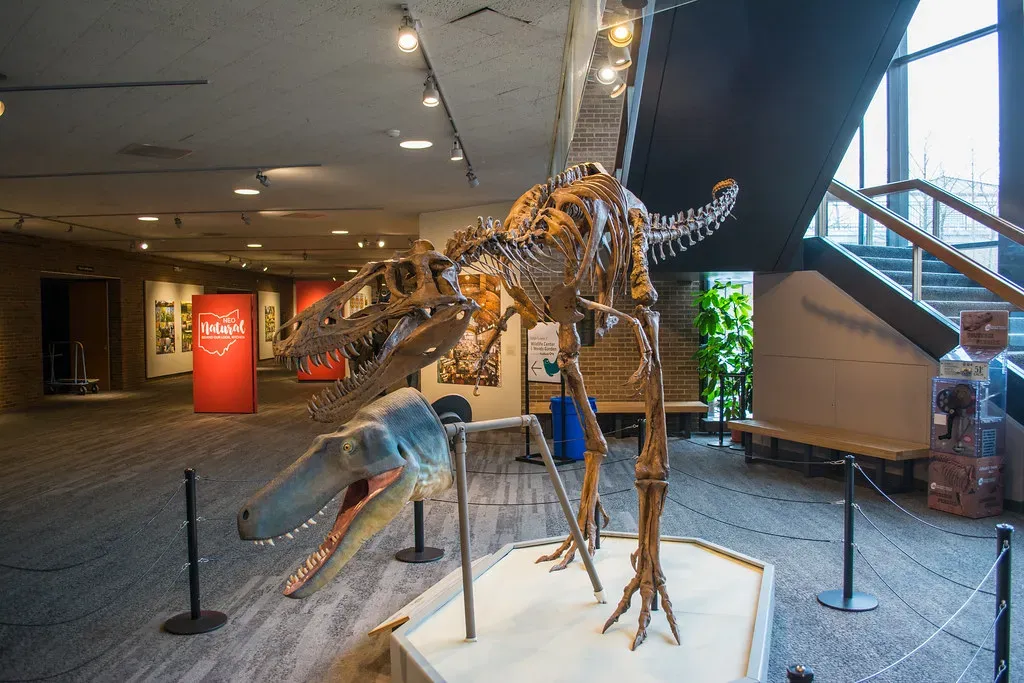
Here’s the thing about science: it loves a good comeback story. For decades, Nanotyrannus was the most controversial dinosaur in the game. Since the predatory creature was first named in 1988, paleontologists argued over whether medium-sized tyrannosaur fossils found in the same rocks as the iconic Tyrannosaurus rex were juvenile T. rex or a unique and distinct predator known as Nanotyrannus. That debate went on for over thirty years with no real resolution. Imagine spending your whole career fighting for a dinosaur’s right to exist as its own species.
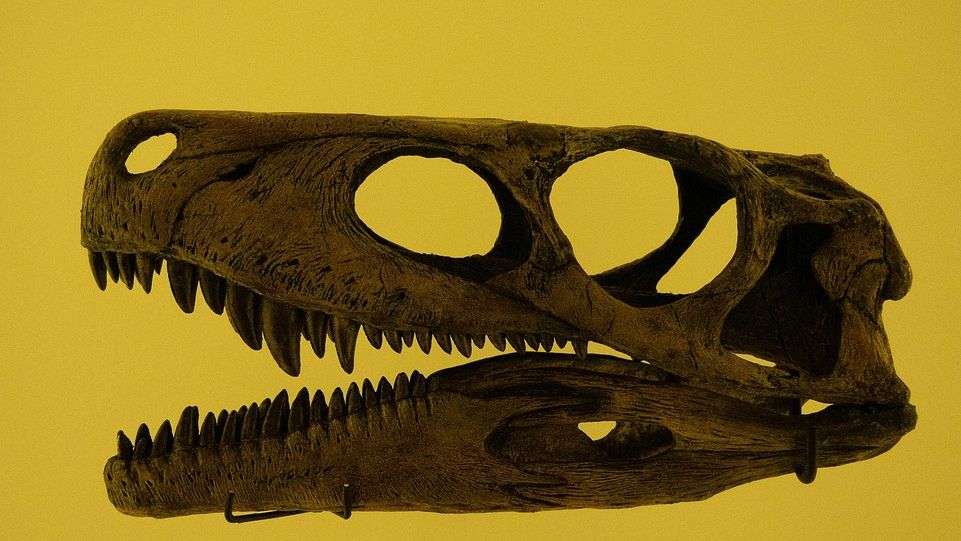
Then came 2025, and everything changed. An analysis in Nature of a specimen nicknamed “Bloody Mary,” one of two creatures in an assemblage known as the “Dueling Dinosaurs,” found enough anatomical evidence to support the case that Nanotyrannus is different from T. rex, including fewer tail vertebrae and more teeth than T. rex, as well as longer and stronger forearms. The find will cause paleontologists to reconsider how T. rex grew up and how both predatory species coexisted. It’s honestly one of the most dramatic reversals in paleontology history.
2. The Punk Rock Dinosaur: Spicomellus and Its Jaw-Dropping Armor
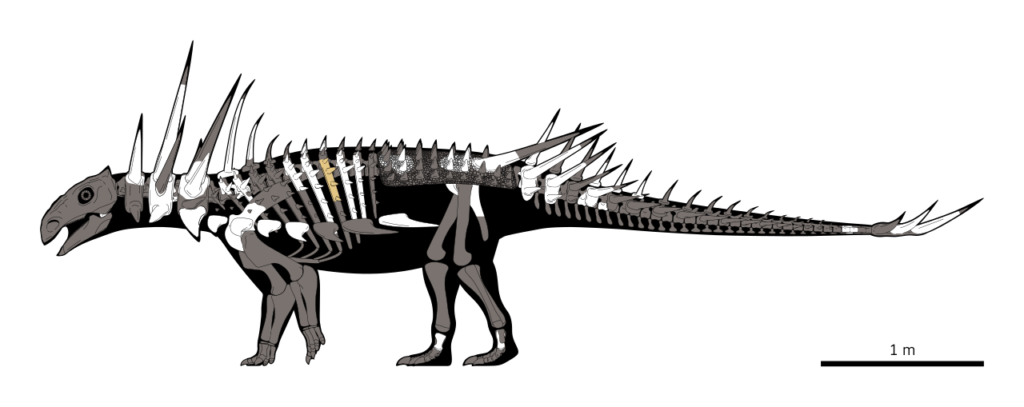
If you thought dinosaurs were either big scary meat-eaters or gentle giants, the Spicomellus is here to blow your mind wide open. Spicomellus was named in 2021 based on an incomplete rib from 165-million-year-old rocks in Morocco. It is a rib unlike that in any other animal, alive or extinct, with a series of long spines fused to its surface. Scientists knew something extraordinary was hiding in that single bone, but nobody could have predicted just how wild the full picture would turn out to be.
The new fossils show that Spicomellus is the oldest known member of the ankylosaurs, heavily armoured, low and squat plant-eaters. Spicomellus is characterised by its bizarre armour, bristling with long spines all over the body, including a bony collar around the neck with spines the length of golf clubs sticking out of it. The longest spikes on the Spicomellus afer are an incredible 34 inches long, extending along a bone collar that sits around its neck. Think less gentle plant-eater, more walking medieval fortress.
3. The 125-Million-Year-Old Dinosaur With Hollow Porcupine Spikes
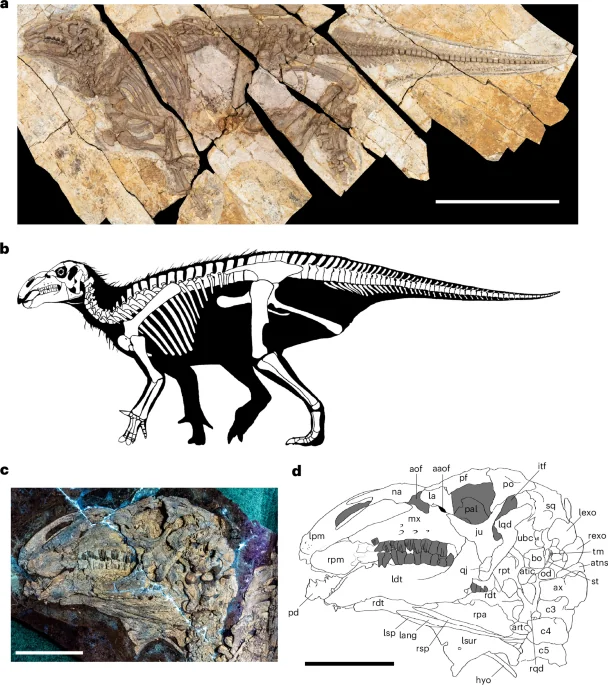
Just when you thought dinosaur anatomy had no more surprises left, science drops something extraordinary in early 2026. A 125-million-year-old dinosaur just rewrote what we thought we knew about prehistoric life. Scientists in China uncovered an exceptionally preserved juvenile iguanodontian with fossilized skin so detailed that individual cells are still visible. Even more astonishing, the plant-eating dinosaur was covered in hollow, porcupine-like spikes, structures never before documented in any dinosaur.
The findings, published in Nature Ecology and Evolution in February 2026, introduce an entirely new feature to the known diversity of dinosaur anatomy. This discovery not only adds a new species to the Iguanodontia group but also reveals that dinosaur skin and body coverings were more varied and innovative than previously understood. Until this fossil came to light, there was no evidence that dinosaurs possessed hollow skin-based spines of this kind. Because the specimen is a juvenile, scientists cannot yet confirm whether adult individuals of the species retained the same structures as they matured. Every answer here opens three new questions. That’s paleontology for you.
4. Colorful Sauropods: Diplodocus Was Not Gray

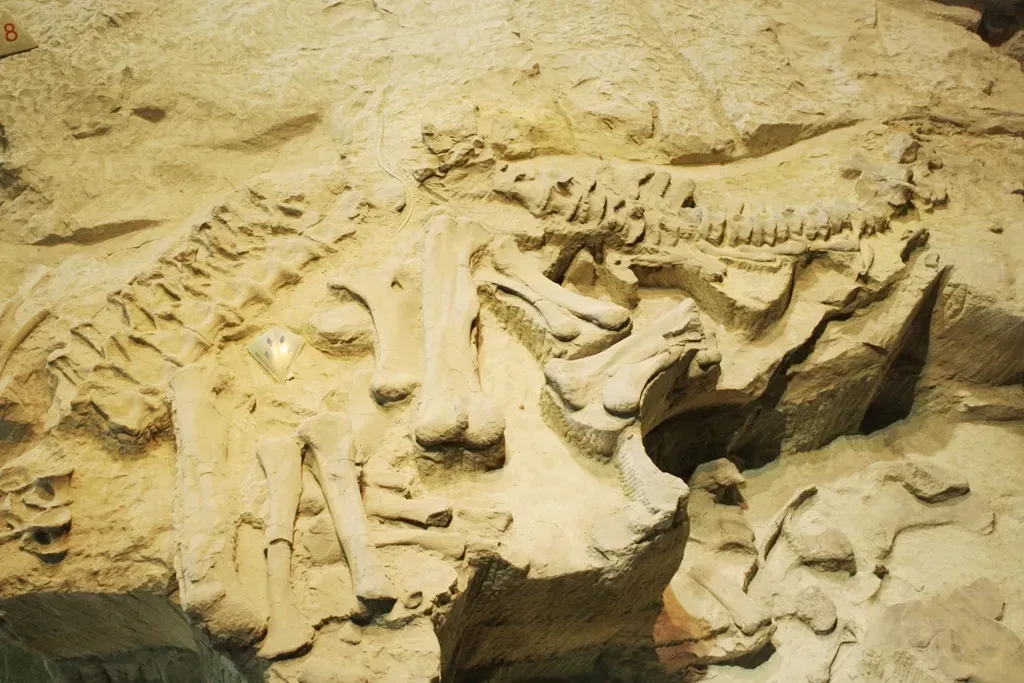
I know it sounds crazy, but the giant long-necked dinosaurs you’ve seen painted in dull gray or brown in museum murals were almost certainly far more colorful in real life. Beyond their familiar skeletons, the external appearance of sauropod dinosaurs is not well-known, as sauropod skin impressions and soft tissue fossils are very rare. From the Jurassic rocks of Montana’s Mother’s Day Quarry, however, paleontologists uncovered fossils of sauropod skin so delicately preserved that they include impressions of pigment-carrying structures called melanosomes.
Some other dinosaur fossils with melanosomes preserved in their scales or feathers have been reconstructed in color. While this team was reluctant to do that with the juvenile Diplodocus the skin came from, the researchers detected that the dinosaur would have had conspicuous patterns across its scales. The finding suggests sauropod dinosaurs were not uniformly gray or brown, but had complex color patterns like other dinosaurs, birds and reptiles. Think of it like discovering that elephants were secretly covered in polka dots all along. The world of prehistoric creatures just got a whole lot more vibrant.
5. Istiorachis: The Sail-Backed Island Dinosaur Nobody Expected
The Isle of Wight, off the south coast of England, is not exactly the place you’d picture when imagining rugged dinosaur discovery expeditions. Yet the rapidly eroding cliffs there have been producing incredible finds for nearly two centuries. Jeremy Lockwood, a retired doctor turned dinosaur expert, has since 2021 named three new species of large ornithopods, one of the most common groups of plant-eating dinosaurs. These new species are closely related to Iguanodon, a four-legged ornithopod from Belgium with a very distinctive thumb spike.
Lockwood’s latest discovery, the six-metre-long Istiorachis, is another herbivorous ornithopod with a striking sail-like structure running along its back. This sail may have been a display structure used to attract mates and to deter predators by making this 128-million-year-old animal look bigger. The idea of a plant-eater using a spectacular back sail to bluff its way out of danger is almost charming. Nature has always been creative with its survival tools, and Istiorachis is a beautiful reminder of that.
6. The Jurassic Highway: Hundreds of Dinosaur Footprints in England
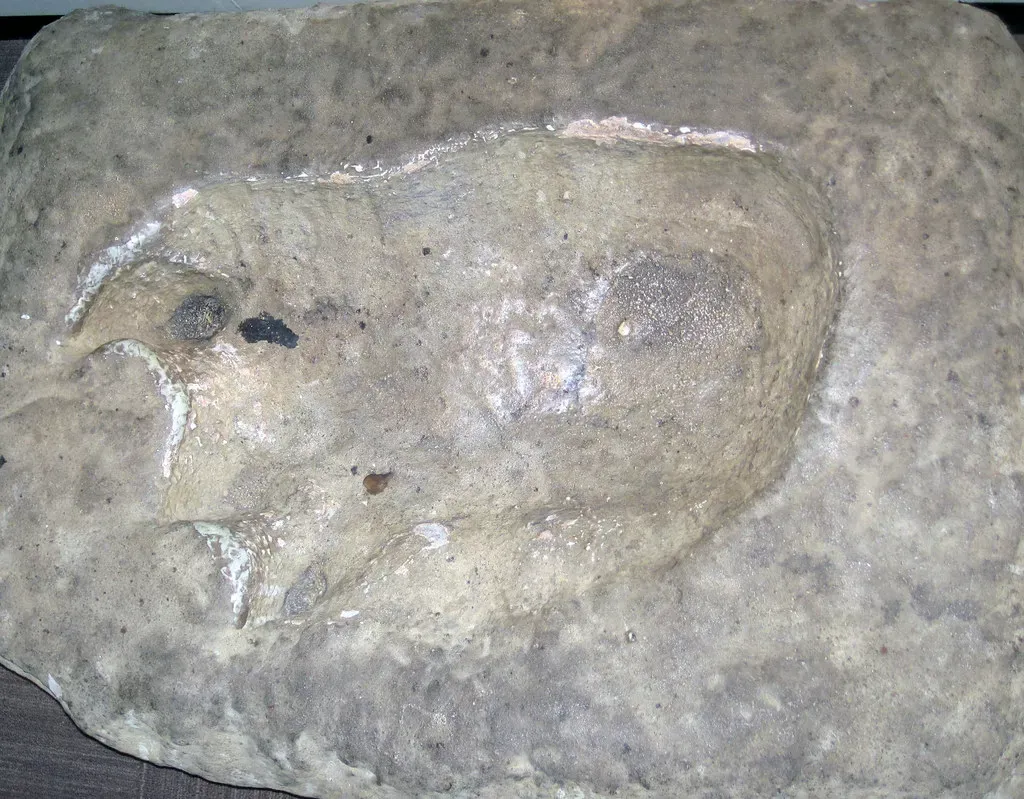
Sometimes the most stunning discoveries aren’t a single skeleton but an entire scene frozen in time. The year 2025 saw many new sauropod discoveries, including a Jurassic Highway of trackways announced from a quarry in Oxfordshire, UK. In the summer of 2025, researchers revealed hundreds more footprints in an enormous “dinosaur highway” first uncovered a year earlier in Oxfordshire. Walking through that quarry today, you are quite literally following in footsteps left 160 million years ago.
Gigantic, four-legged, long-necked, plant-eating sauropod dinosaurs of the Jurassic and Cretaceous periods, such as Brachiosaurus, were the largest animals to ever walk the Earth, weighing up to 70 tonnes, equivalent to twelve African elephants. To see the actual impressions these colossal animals left in the mud, preserved perfectly for tens of millions of years, is genuinely humbling. It puts the phrase “small footprint” in a whole new perspective.
7. Huayracursor: The Ancient Ancestor That Rewrites Sauropod Origins
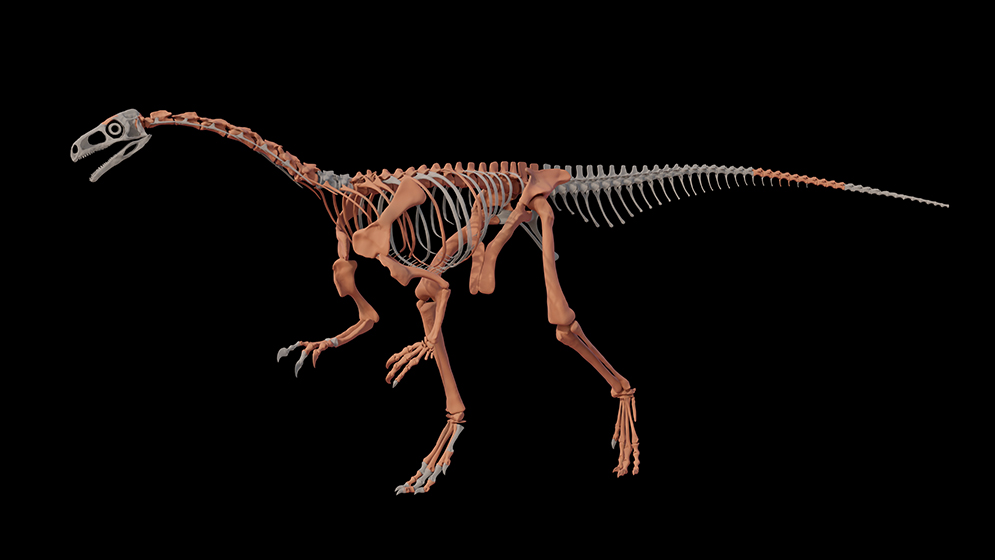
Want to understand how Brachiosaurus grew that impossibly long neck? Then you need to meet Huayracursor, a tiny early ancestor that was already experimenting with the idea millions of years before the giants showed up. The 2-meter-long Huayracursor was described from 228-million-year-old rocks in the Andes, making it one of the oldest known sauropod ancestors. It has a much longer neck than other species from the dawn of dinosaur evolution, revealing the earliest stages in the evolution of the extreme neck elongation seen in later sauropods.
This find is important not just for what it is, but for what it tells you about how evolution works. Neck elongation wasn’t a sudden leap. It was a slow, gradual experiment started by small, unassuming creatures long before anyone could imagine where it was heading. Important new information on sauropod origins came from the Triassic Period rocks of Argentina, long a key source of dinosaur discoveries. Argentina keeps delivering. Honestly, it’s the gift that keeps on giving for paleontologists worldwide.
8. Musankwa Sanyatiensis: Zimbabwe’s Long-Lost Dinosaur Resurfaces
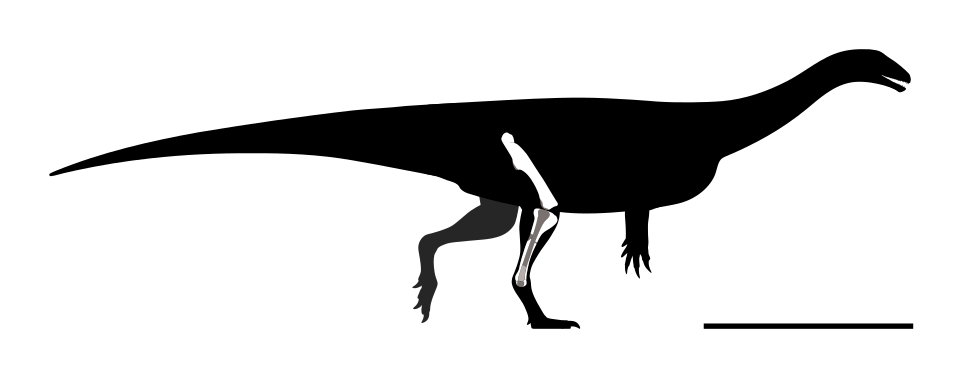
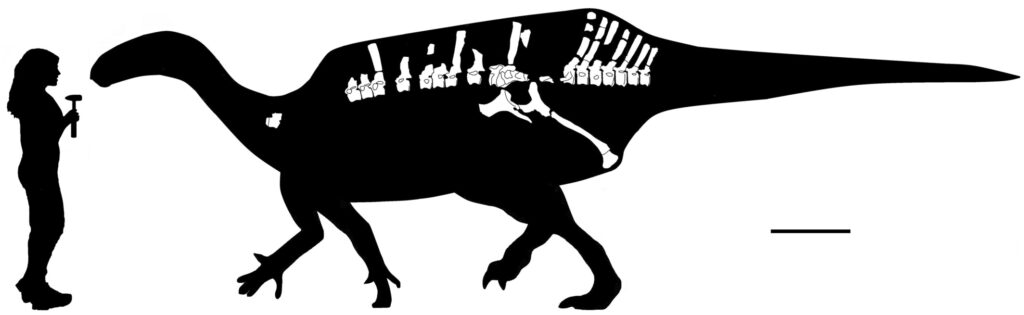
Africa is a continent still holding extraordinary prehistoric secrets, and Zimbabwe proved that in dramatic fashion. The discovery of Musankwa sanyatiensis is particularly significant as it is the first dinosaur to be named from the Mid-Zambezi Basin of northern Zimbabwe in more than 50 years. Musankwa sanyatiensis is represented by the remains of a single hind leg, including its thigh, shin and ankle bones. An evolutionary analysis reveals that Musankwa sanyatiensis was a member of the Sauropodomorpha, which were widespread during the Late Triassic.
Weighing in at around 390 kilograms, the plant-eating Musankwa sanyatiensis was one of the larger dinosaurs of its era. Scientists say the dinosaur dwelled mostly in swamp areas. The fossil was named Musankwa sanyatiensis after the houseboat “Musankwa,” which served as the research team’s home and mobile laboratory during two field expeditions to Lake Kariba in 2017 and 2018. There’s something wonderfully poetic about naming an ancient giant after the boat that carried you to its discovery.
9. Borealopelta: The Armored Dinosaur That Looks Like It Died Yesterday
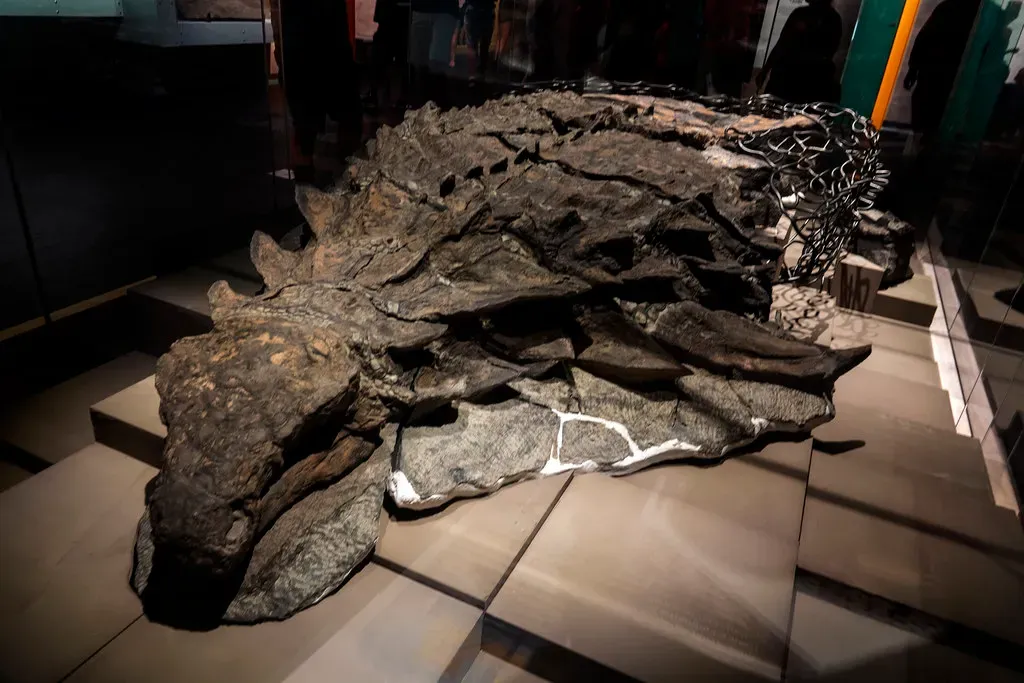
Most dinosaur fossils are fragments, scattered bones, or partial skeletons. Every few decades, though, the fossil record produces something so perfect it stops the scientific world cold. The first known fossil of Borealopelta is one of the most spectacular dinosaurs ever found. The fossil represents a large portion of an armored dinosaur, including the head, neck, and front portion of the body. The fossil is so well-preserved that every armor piece is in place, the keratin covering of the spiky armor preserved as well as the bone.
One of the most incredible dinosaur discoveries ever made is this armored dinosaur, though 112 million years old, whose impressive preservation gives the appearance that it is merely sleeping, offering one of the most realistic images of a dinosaur ever found. The armored dinosaur’s unique spiky exterior became fossilised in this three-dimensional manner after its body fell face-up onto the prehistoric seabed after its death. Looking at Borealopelta is as close as any human will ever get to seeing a living dinosaur. It is breathtaking, full stop.
10. The “Hell Heron” of the Sahara: A Brand New Spinosaurid Species

The Sahara Desert is scorching, remote, and one of the last places most people would think to look for groundbreaking science. Yet it keeps delivering. A paper published in Science describes expeditions to find Spinosaurus mirabilis, the first new spinosaurid species discovered in more than a century. A large, fish-eating predator, S. mirabilis adds important new fossil finds to the closing chapter of its genus’s evolution. The paper was published in Science in February 2026.
It took a return expedition, two more crests and a 3D digital skull assembly powered by solar panels in the middle of the desert in Niger before researchers realized they had unearthed the towering head crest of an entirely new species of dinosaur. The discovery began, of all things, from a single sentence in a 1950s monograph. The journey that culminated in this discovery started with a single sentence in a monograph from the 1950s, where a French geologist mentioned finding a single saber-shaped fossilized tooth in the Sahara. One obscure sentence, decades later, became a species. That is how science works at its most thrilling.
Conclusion: The Age of Discovery Is Far From Over
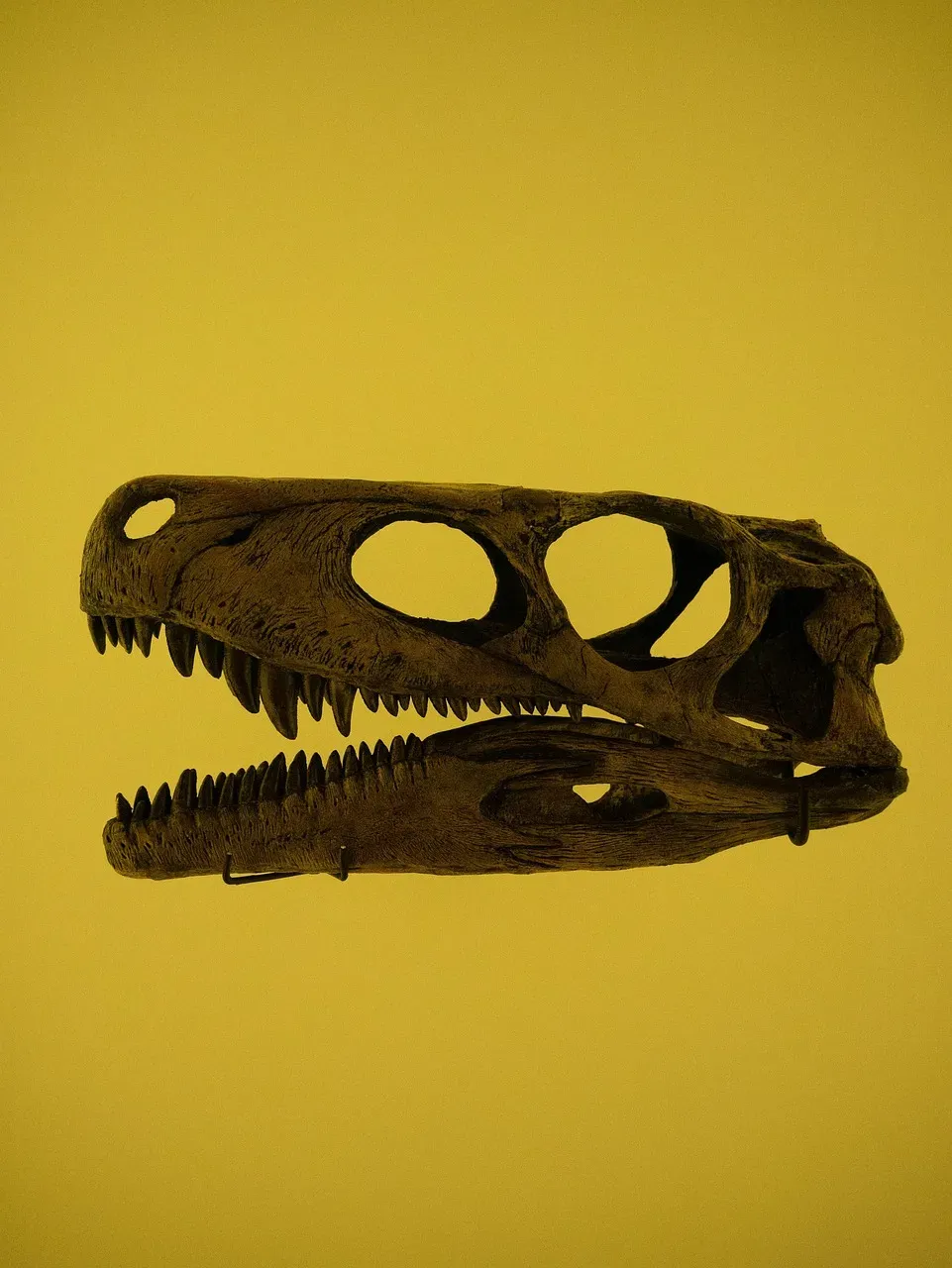
If these ten discoveries tell you anything, it’s that the prehistoric world still has enormous surprises waiting beneath the surface of the Earth. Around 1,400 dinosaur species are now known from more than 90 countries, with the rate of discovery accelerating in the last two decades. The year 2025 alone saw the discovery of 44 new dinosaur species, nearly one a week. That pace is staggering, and it shows no sign of slowing down.
Experts have continued to name new species and reveal previously unknown details of dinosaur lives at a rapid pace, allowing us to envision the Mesozoic world in ever more detail. Every shovel of soil, every eroded cliff, every quarry blast could be hiding the next Borealopelta or the next Nanotyrannus. Many new discoveries come from paleontological hotspots such as Argentina, China, Mongolia and the US, but dinosaur fossils are also being found in many other places, from a Serbian village to the rainswept coast of north-west Scotland. The truth is, the history of life on Earth is still being written, and we’re the lucky generation watching it unfold in real time.
Life, as it turns out, really does find a way. Even across 160 million years of silence, it speaks. What dinosaur discovery surprised you the most? Drop your thoughts in the comments!