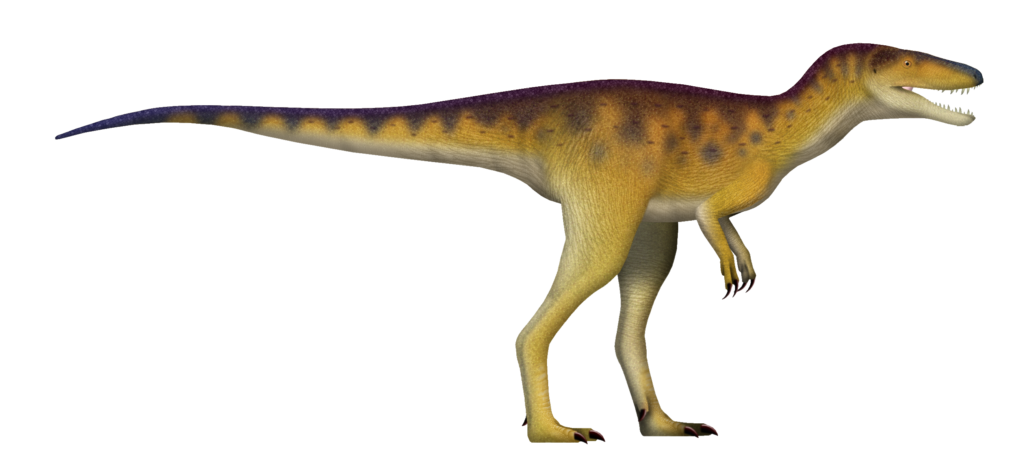
For most of human history, dinosaurs lived in our imagination as lumbering gray or muddy-brown beasts, coloring books and museum dioramas filling in what science simply could not answer. It was, honestly, a bit of a cheat. Nobody actually knew. Yet right now, in 2026, paleontologists have something jaw-dropping in their hands: actual, scientifically reconstructed color schemes from creatures that walked the Earth tens of millions of years ago.
For decades, scientists assumed that pigments hardly ever survived the fossilization process. That assumption turned out to be beautifully, spectacularly wrong, and the preservation of fossil pigments is now allowing scientists to reconstruct extinct organisms with unprecedented accuracy. What you’re about to read will make you see these ancient animals in a completely different light. Let’s dive in.
The Melanosome Breakthrough: How Fossil Pigments Were First Discovered
Uploaded by FunkMonk, CC BY-SA 2.0)
Here’s the thing – the entire revolution in dinosaur color science started with a tiny, almost accidental observation. Melanin is the same pigment found in hair, skin, feathers, and eyes. It can impart red, brown, gray, and black hues and create metallic sheens. Scientists began to wonder: if melanin could be found in fossils, perhaps they could reconstruct the coloring of extinct animals, including dinosaurs.
The biological key to solving the coloration puzzle came down to minuscule structures called melanosomes. These are tiny, blobby organelles that contain pigment, or melanin, and are present in soft tissues such as skin, scales, and feathers. While these details were often cast aside as fossil bacteria in decades past, renewed efforts in the 21st century have been able to find the relationship between these tiny structures and colors. It was like finding a decoder ring buried inside the rock itself.
Sinosauropteryx: The First Known Ginger Dinosaur
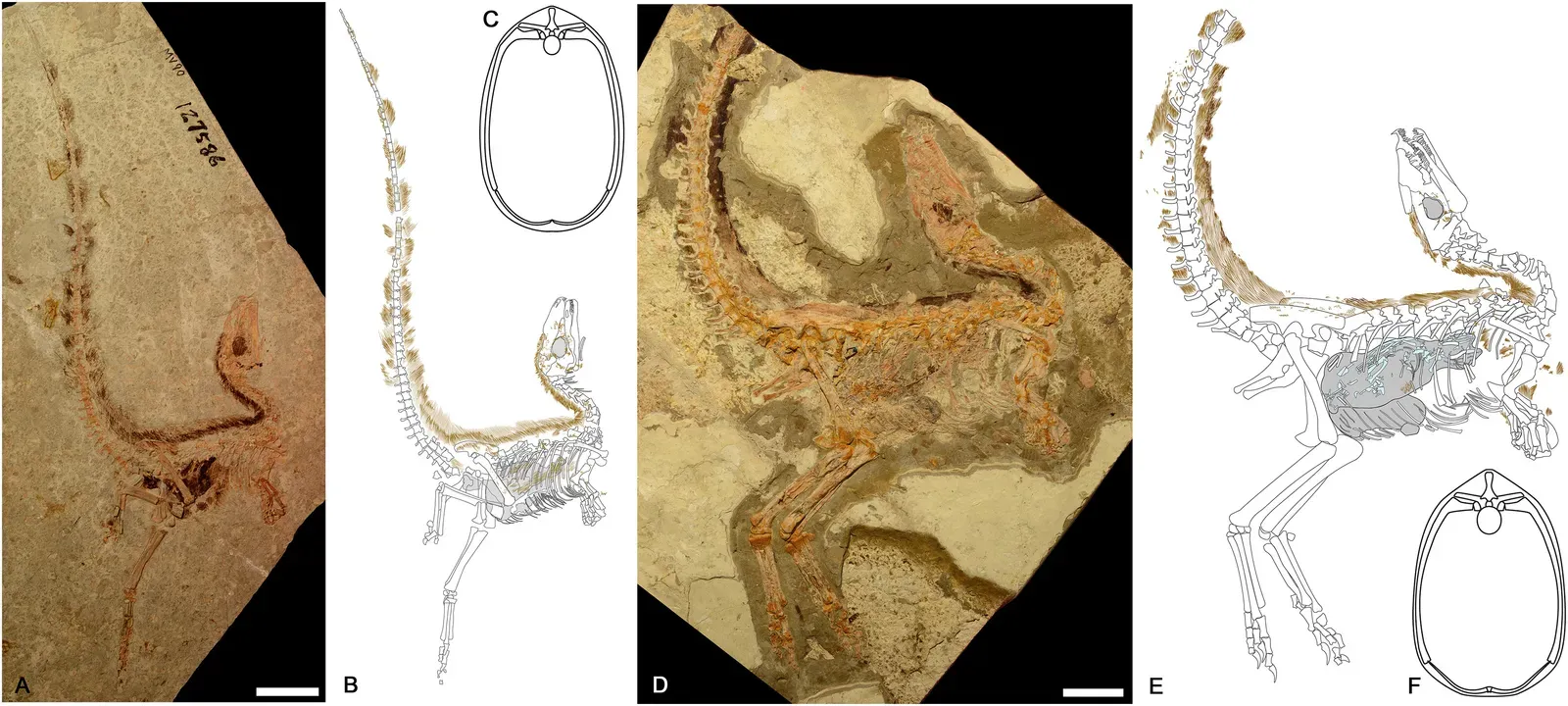
You might never have expected a feathered predator from 130 million years ago to be a redhead, but science is full of surprises. The pattern of meatball melanosomes in one fuzz-covered dinosaur, Sinosauropteryx, implied that it sported a reddish coat and a tiger-striped tail, making it the first known ginger dinosaur. That image, a small predatory dinosaur with vivid chestnut and white stripes running down its tail, was genuinely shocking to the paleontology world.
The candy-cane tail of Sinosauropteryx was likely a social signal, used by these dinosaurs to communicate with each other when they met. Think of it like a colorful flag being waved across the prehistoric landscape. The dark above, light below pattern and stripes of Sinosauropteryx might indicate a preference for more open habitats where blending in was critical to not being picked out by a larger carnivore. Color, it turns out, tells us not just how a dinosaur looked – it tells you how it lived.
Anchiornis: A Dinosaur Painted Feather by Feather
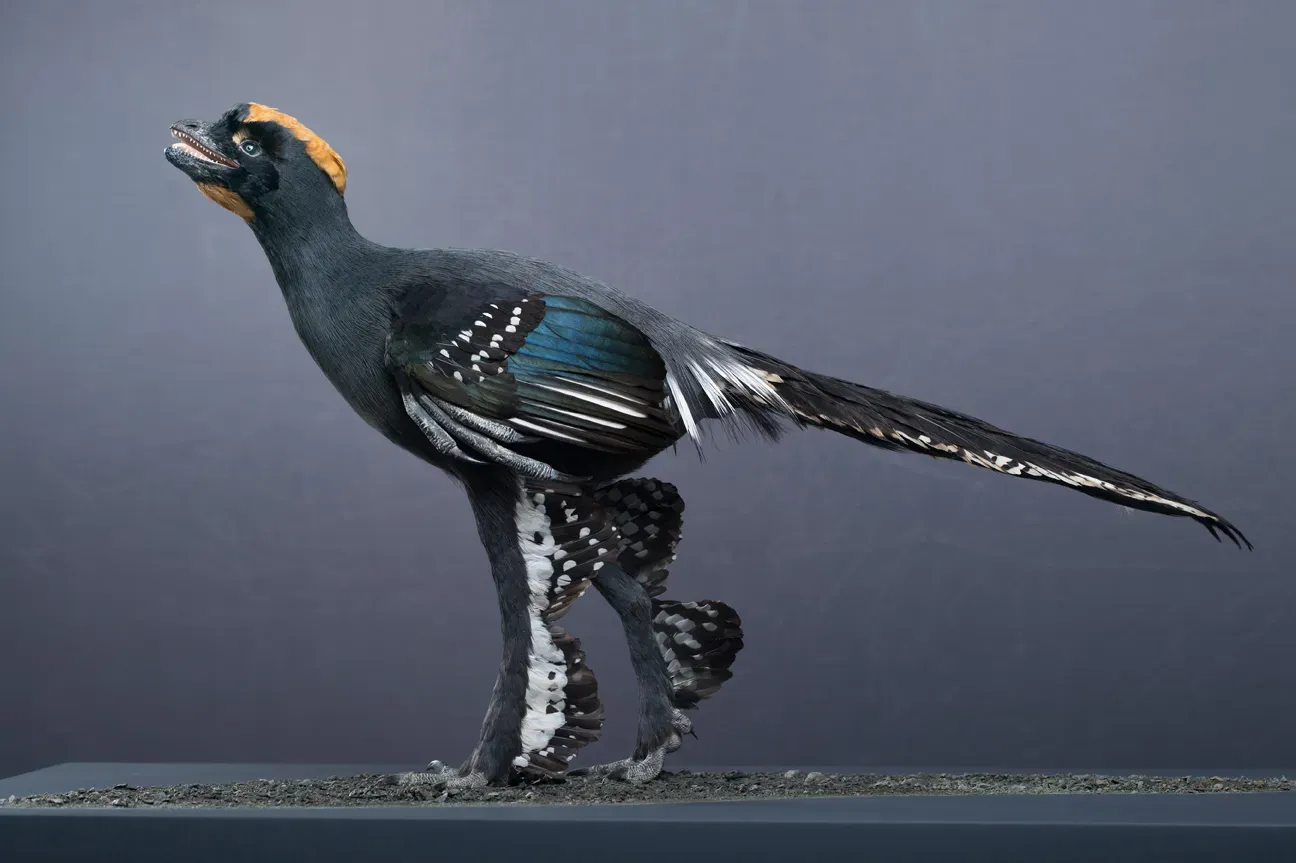
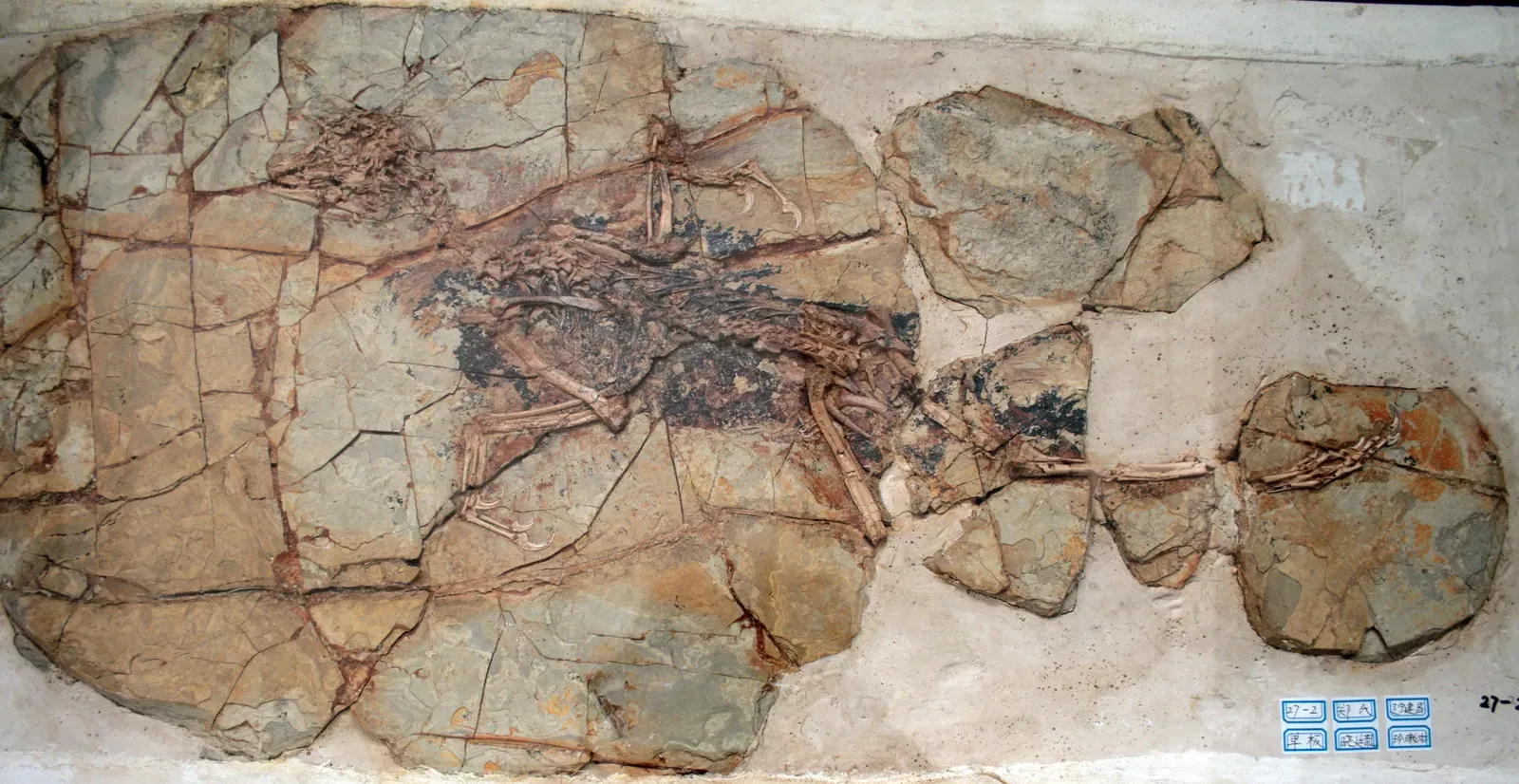
In 2009, a Yale team reconstructed the color pattern of Anchiornis huxleyi, a small, predatory, feathered dinosaur from China that lived around 155 million years ago. What they found was breathtaking in its detail. This tiny predator had a dark grey body and the limbs bore long, white feathers tipped with black spangles. Its head was mostly grey with reddish-orange and black specks, and an extravagant reddish-orange crown.
The statistical predictions indicated that the feathers covering much of the creature’s body were mostly gray. The long feathers on the animal’s arms and legs were unpigmented by melanosomes and thus white, except for the melanosome-laden tips, which were predicted to be black. I think what makes this discovery so emotionally stunning is the sheer specificity – you’re not just getting a broad idea of color, you’re seeing a real portrait emerge from a 155-million-year-old fossil. The bold coloring of Anchiornis probably helped to attract mates or served as some kind of display, as occurs in flashily dressed modern birds.
Microraptor: A Crow-Black Dinosaur With an Iridescent Sheen
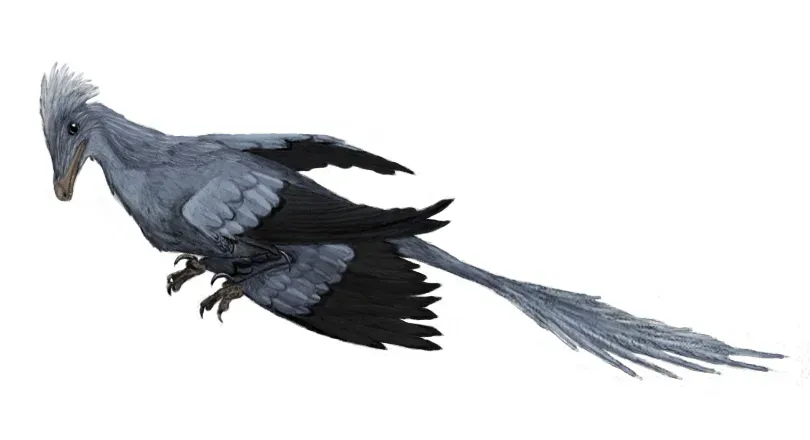
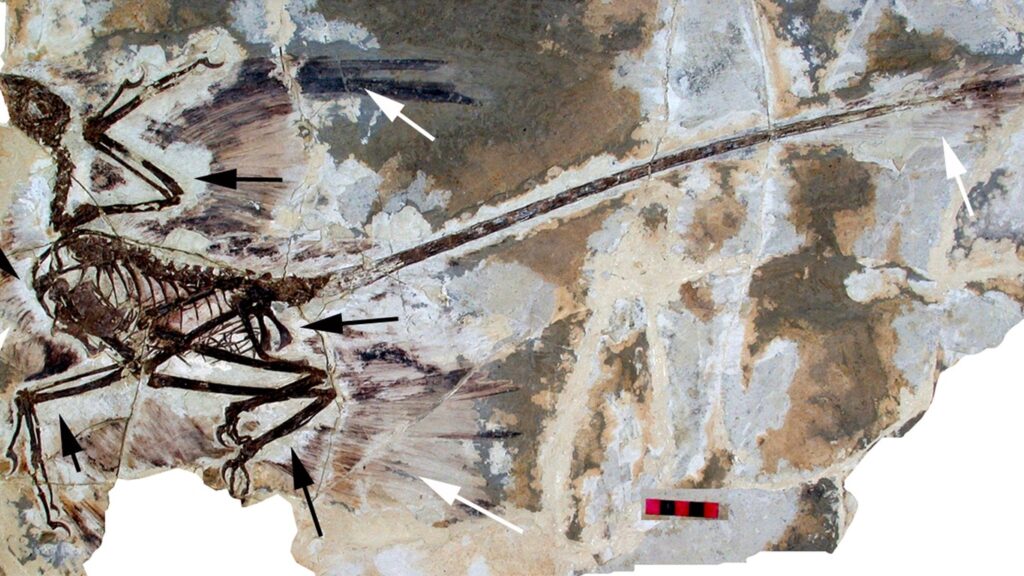
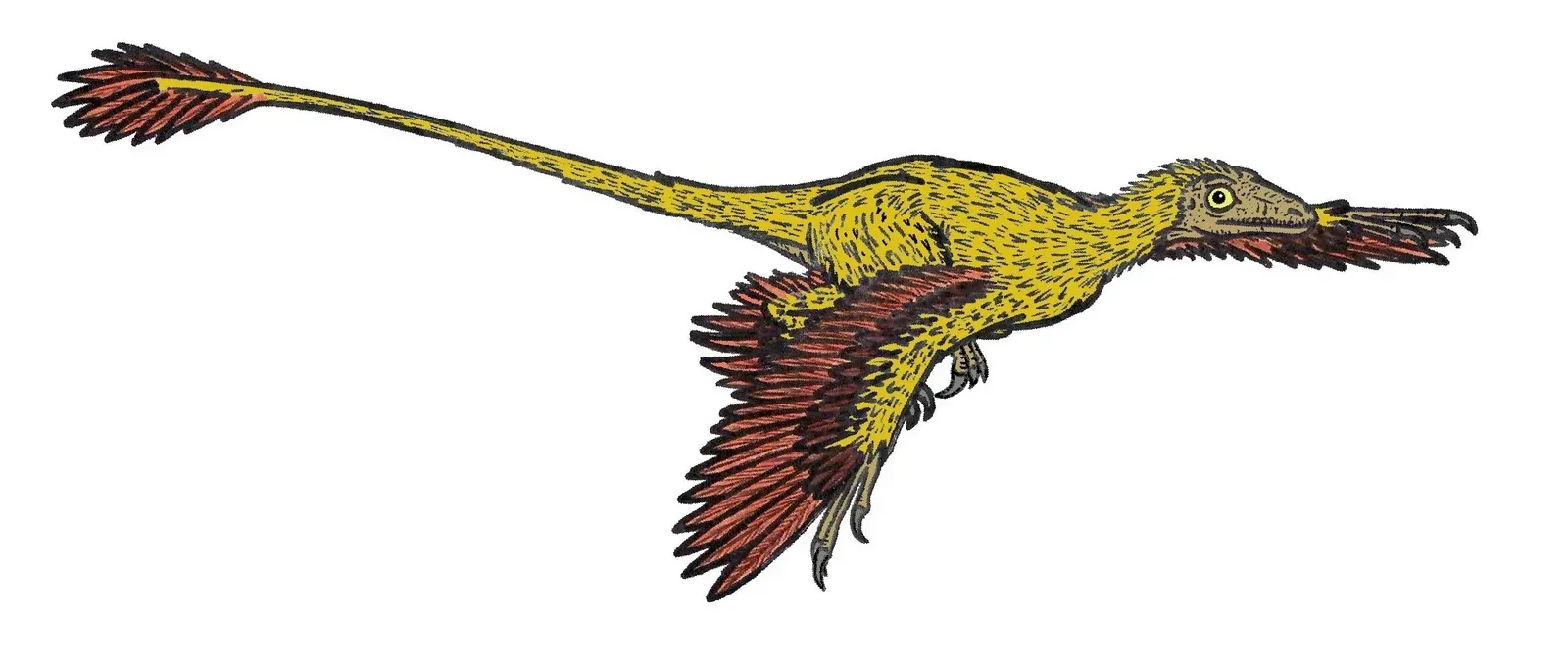
Honestly, when scientists confirmed that Microraptor had an iridescent, glossy black plumage, it felt almost too cool to be real. Microraptor was an exquisitely feathered dinosaur. The small, sickle-clawed predator, which lived about 120 million years ago, was covered in well-developed plumage, including long feathers on its arms and legs. In 2012, the stacked arrangement of melanosomes found in the feathers of four-winged dinosaur Microraptor was shown to create an iridescent sheen similar to that of a modern raven.
Experts had presumed that Microraptor was nocturnal, based on the large size of its eye sockets. The discovery that it possessed iridescent plumage suggested otherwise because in modern birds such coloration is typically found in species that are active in the daytime. So a single color discovery effectively overturned a behavioral assumption in one stroke. The finding and estimation of Microraptor feathering consistent with an ornamental function for the tail suggest a centrality for signaling in early evolution of plumage and feather color.
Psittacosaurus: The Forest Camouflage Artist
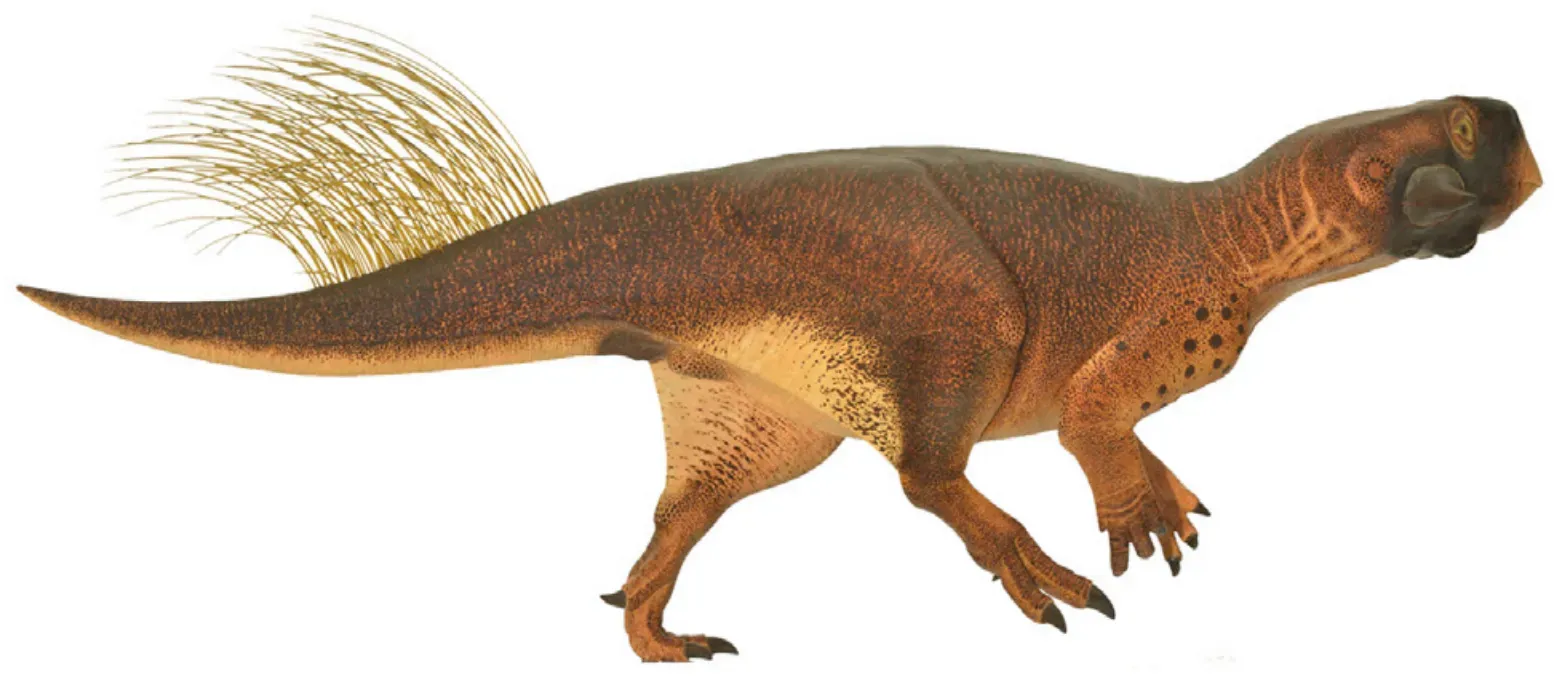
A University of Bristol-led international team of paleontologists produced an accurate reconstruction of an exceptionally well-preserved specimen of Psittacosaurus, a Cretaceous ornithischian dinosaur from China. The camouflage patterns on this fossil include countershading, which functions by counter-illuminating shadows on the body of an organism. Think of it like a modern deer or fawn – light belly, dark back – a pattern designed to fool the eye.
By comparing the reconstruction of the actual countershading pattern of Psittacosaurus with idealized countershading patterns, researchers determined that the animal’s coloring would have best camouflaged it in a habitat with diffuse light, such as that seen in a canopy forest. This is remarkable. You’re essentially using color patterns preserved in fossil skin to reconstruct an entire ancient ecosystem. This demonstrates that fossil color patterns can provide not only a better picture of what extinct animals looked like, but they can also give new clues about extinct ecologies and habitats.
Borealopelta: The Armored Tank That Still Needed to Hide
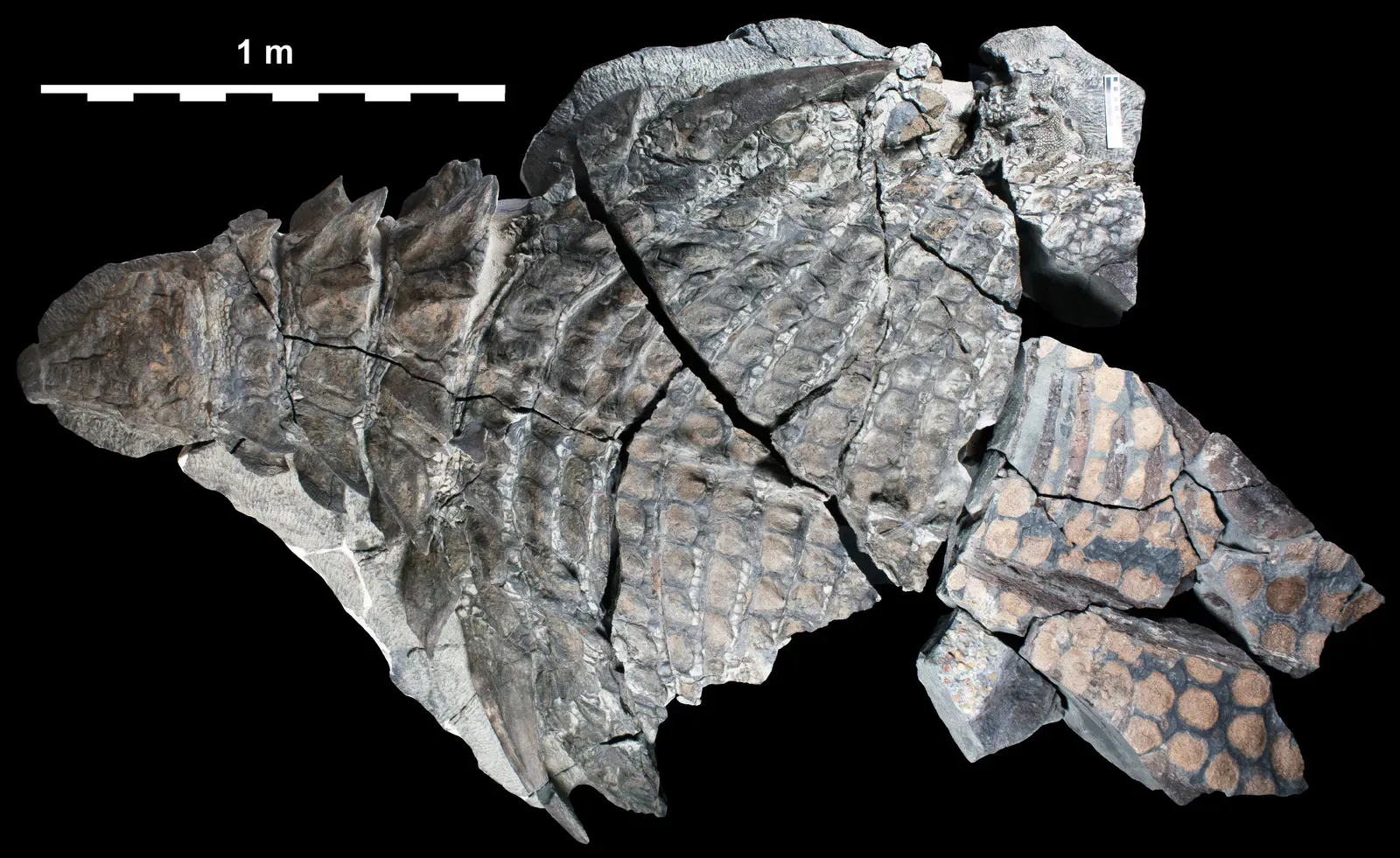
Let’s be real – nobody expected a creature the size of a small truck, covered in bony armor and shoulder spines, to rely on camouflage. Yet that’s exactly what science revealed. An analysis of the fossilized skin of Borealopelta markmitchelli, the most well-preserved of the armored dinosaurs ever unearthed, revealed that the ancient creature had a reddish-brown coloration and camouflage in the form of countershading, and that despite being the size of a tank, it was still hunted by carnivorous dinosaurs.
Using chemical analysis of organic compounds in the horns and skin to infer the dinosaur’s pigmentation pattern, the scientists found that the skin exhibited countershading, a common form of camouflage. The top part of the animal was colored a reddish-brown. The russet coloration contrasted with the lighter shaded, paler underbelly. Preserved evidence of countershading suggests that the predation pressure on Borealopelta, even at large adult size, was strong enough to select for camouflage from visual predators. Something out there in the Cretaceous was terrifying enough to make a walking fortress feel the need to hide.
Melanin Chemistry That Survived Millions of Years
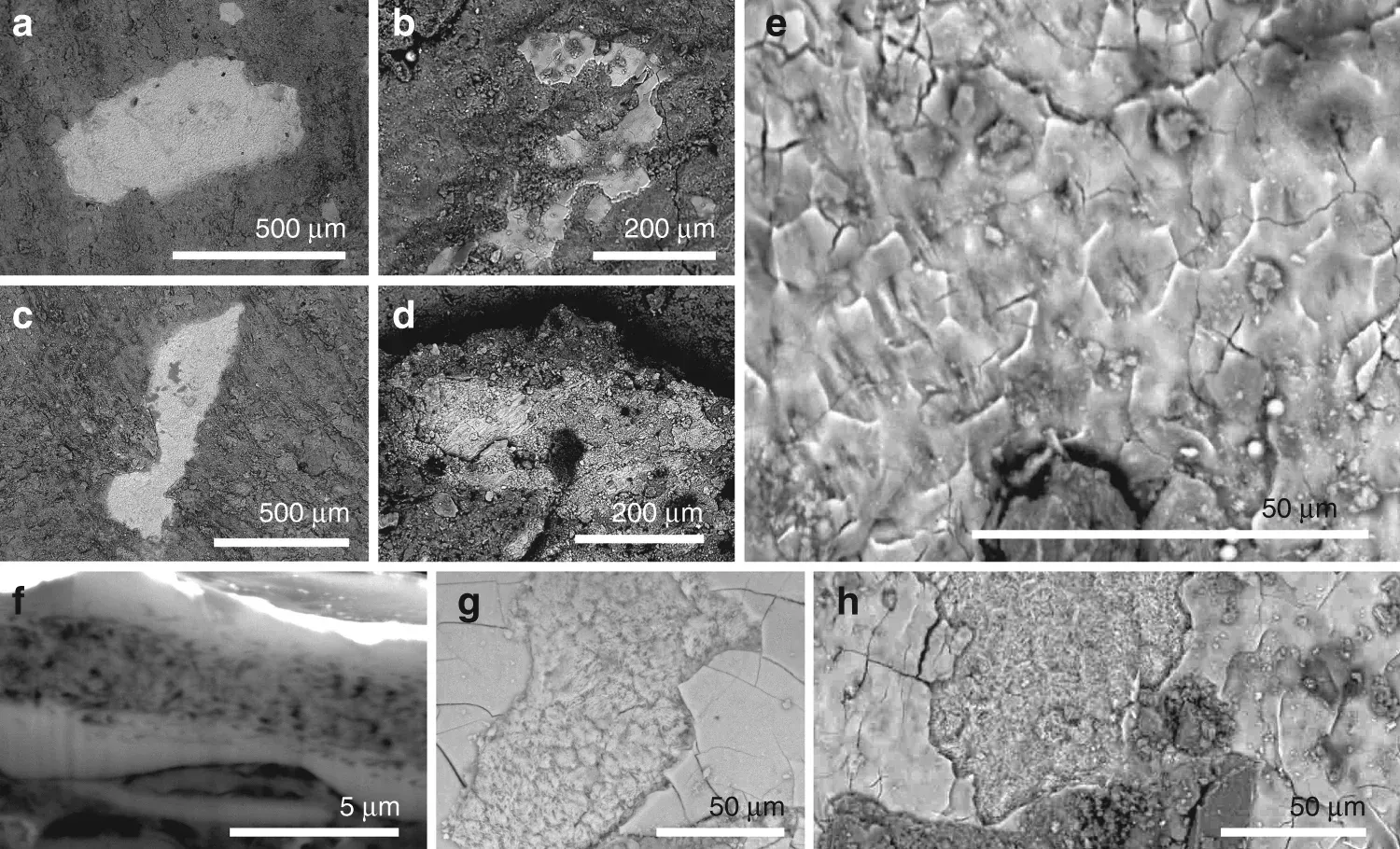
One of the most astonishing pillars of this entire field of research is the sheer durability of melanin as a molecule. Since the publication of melanosome discoveries in 2008, researchers have described melanosomes and other pigments from additional fossils and investigated the chemistry of fossil melanin, substantiating observations that melanin can survive for millions of years, almost chemically intact. That’s extraordinary – a biological molecule lasting longer than most mountains.
Research showed that the slight alterations evident in the fossil melanin are the result of sustained exposure to elevated pressure and heat in the ground. It’s a bit like a photograph left in a hot attic – slightly faded, but still clearly showing the original image. The two most common types of melanin found in modern birds are eumelanin, associated with black and grey feathers, and phaeomelanin, found in reddish brown to yellow feathers. Both types have been found preserved in fossil feathers and skin, giving scientists a remarkable window into the past.
Unlocking Ginger and Orange: The Quest to Detect Elusive Pigments
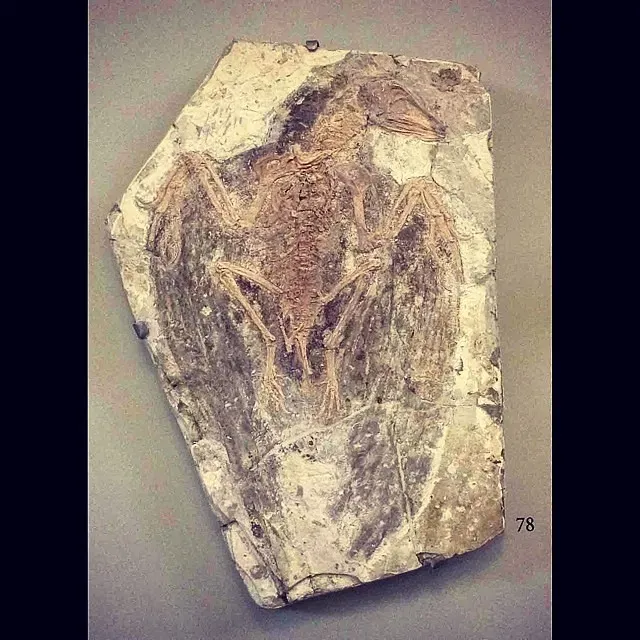
Not all colors were equally easy to find. Dark shades like black and brown yielded their secrets relatively early, but warmer tones proved far more elusive. Experts developed methods to reliably detect structures and pigments related to dark colors like the black and brown of feathered dinosaurs, but other shades – like the yellow and reddish-orange made by pigments called pheomelanins – were especially hard to pin down. A team of scientists filled in that missing chunk of the prehistoric palette by developing the first reliable test to detect these gingery colors in fossils.
Researchers created a test to distinguish between true chemical traces of ginger colors and those introduced by nonbiological sources. They heated various modern-day bird feathers in an oven to mimic the breakdown of biological compounds during the fossilization process. By inspecting the heated feathers under a microscope and using a chemical assay to identify different types of melanin, the team found that biological pigments do leave a distinct and identifiable signature in fossils. The prehistoric color palette just got a whole lot warmer.
Diplodocus Gets Color: Melanosomes Found in Sauropod Skin
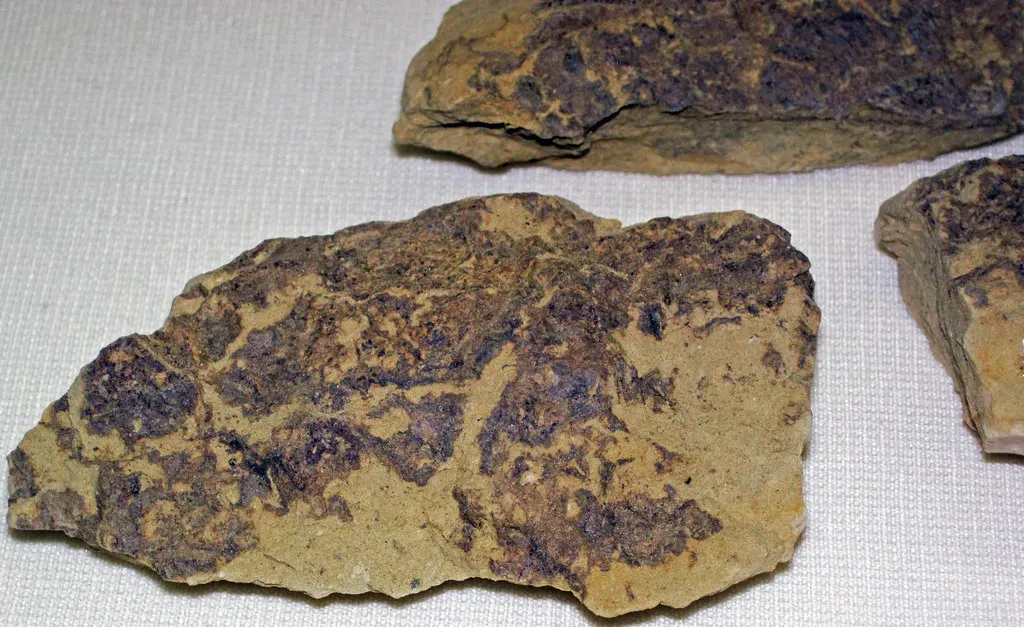
For a long time, the giant long-necked dinosaurs – the sauropods – were almost entirely left out of the color conversation. Their fossils almost never preserve skin, let alone the microscopic structures needed to study color. That finally changed. From the Jurassic rocks of Montana’s Mother’s Day Quarry, paleontologists uncovered fossils of sauropod skin so delicately preserved that they include impressions of pigment-carrying structures called melanosomes, and they described the discovery in December in Royal Society Open Science.
While researchers were reluctant to fully reconstruct the color of the juvenile Diplodocus the skin came from, they detected that the dinosaur would have had conspicuous patterns across its scales. The finding suggests sauropod dinosaurs were not uniformly gray or brown, but had complex color patterns like other dinosaurs, birds, and reptiles. The fossil skin preserved an outer layer that hid deeper melanosomes. Surface scans failed to detect pigment because melanosomes sat beneath mineral layers. Only by cutting cross sections of the skin did researchers reveal the hidden structures. Science hidden within science, layer by layer.
What Color Tells Us About Dinosaur Behavior and Ecology
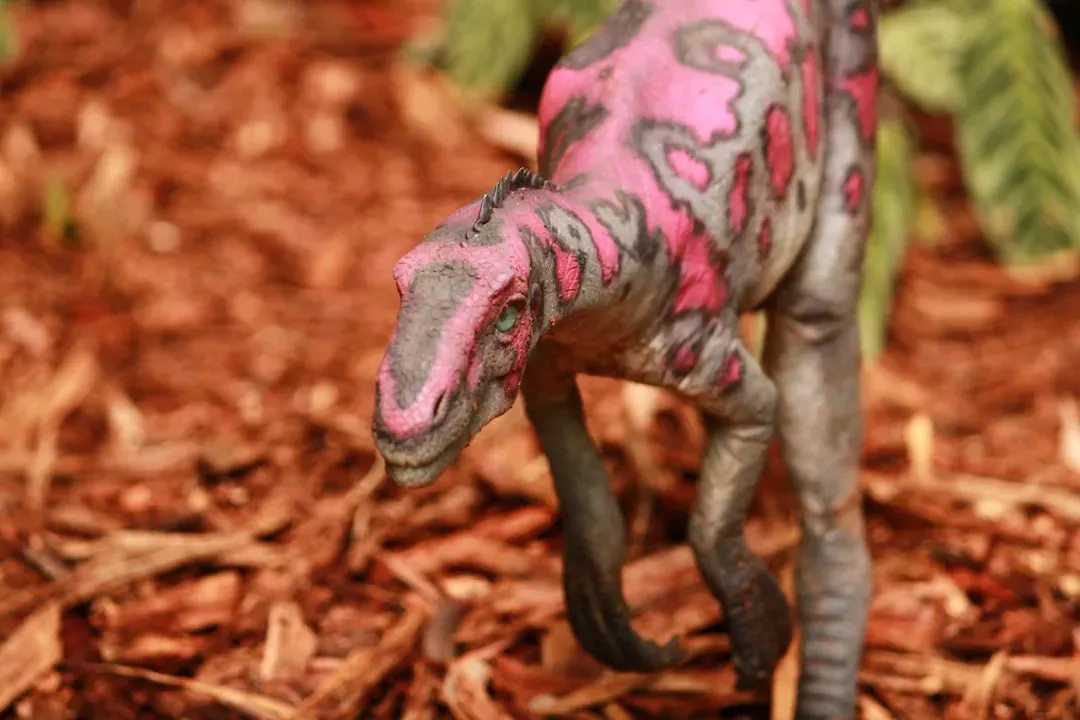
Perhaps the most profound takeaway from all these color discoveries isn’t the colors themselves – it’s everything the colors unlock about how these animals actually lived. Beyond allowing paleontologists and artists to reconstruct extinct organisms more accurately, fossil pigments are revealing previously unknown facets of the daily lives of both dinosaurs and other long-gone creatures. Color is essentially a behavioral fingerprint baked into the rock.
What started as a novelty of deciphering dinosaur colors has turned into a very serious field which is studying the origins of key pigment systems, how the evolution of colorful structures may have helped drive major evolutionary transitions like the origin of flight, and how color is related to ecology and sexual selection. Researchers openly acknowledge that we are just at the tip of the iceberg when it comes to fossil color research. Honestly, that thought alone is enough to send a chill down your spine – in the best way imaginable.
Conclusion
What started as one of paleontology’s most stubborn impossibilities has become one of its most thrilling frontiers. You now know that dinosaurs wore ginger stripes, iridescent black plumage, reddish-brown camouflage, and complex patterning on their scales – and that every one of these revelations came from careful, microscopic analysis of fossils that have been sitting in the Earth for millions of years.
Every new specimen brought in from the field is a potential treasure chest of color. New fossils, reanalyses of famous specimens, and the use of increasingly sophisticated tools have continued to upend what we thought we knew about how these animals lived, moved, fed, and evolved. The prehistoric world wasn’t a gray, lifeless place. It was vivid, complex, and astonishingly alive with color.
The next time you stand in front of a dinosaur skeleton in a museum, you might find yourself seeing something completely different. Not just bones. But feathers, patterns, hues, and behaviors. A living animal, painted by science back into existence. What color would you have guessed for your favorite dinosaur – and were you right?