Think about the last time you watched a bird take flight, or spotted a whale breaching the ocean surface. You were looking at the end result of a story that stretches back billions of years – a story filled with catastrophes, impossible transformations, and unlikely survivors. It’s honestly one of the greatest stories ever told, and most of us walk right past it every single day.
From a single-celled world drowning in ancient oceans to the staggeringly complex web of modern wildlife you see around you today, life on Earth has been shaped by a handful of breathtaking moments that changed everything. Some of them were explosions of diversity. Others were apocalyptic wipeouts. All of them left a permanent fingerprint on every creature alive right now. Let’s dive in.
1. The Great Oxidation Event: The Day Oxygen Changed Everything
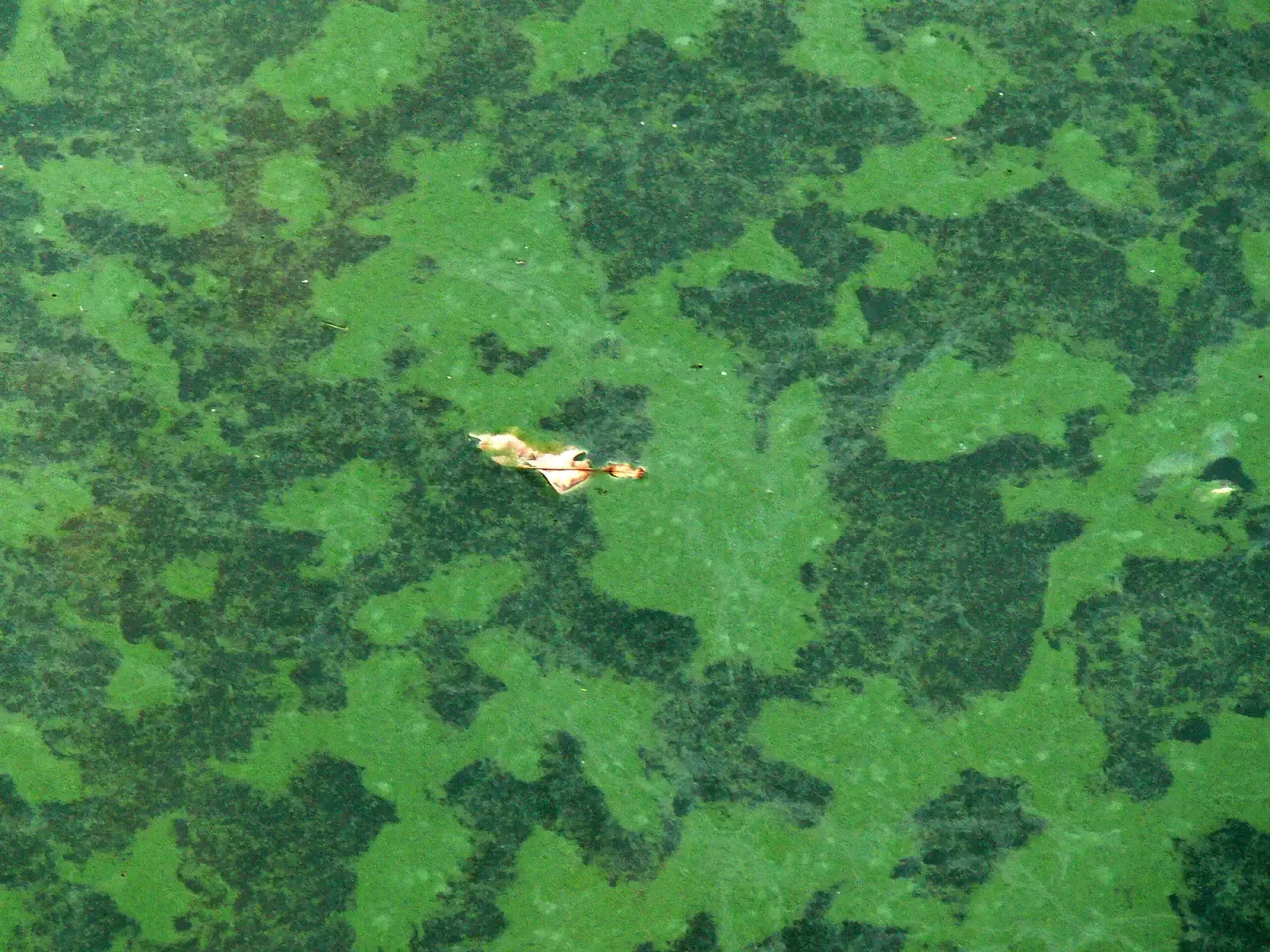
Roughly two and a half billion years ago, something happened that most people have never heard of, yet it quite literally set the stage for every living animal you have ever seen. Cyanobacteria began pumping oxygen into Earth’s atmosphere in enormous quantities, causing what scientists call the Great Oxidation Event. This was also the first known mass extinction, killing most of the planet’s obligate anaerobes – creatures that could not survive in oxygen-rich conditions.
Here’s the thing: what looks like a catastrophe on one hand was the greatest biological gift imaginable on the other. Oxygen enabled far more complex metabolic processes, laying the biochemical foundation for multicellular life. Without this atmospheric revolution, you wouldn’t exist. Neither would lions, dolphins, or hummingbirds. Every breath you take today is a direct inheritance from those ancient, microscopic oxygen factories.
2. The Origin of Multicellular Life: When Cells Decided to Cooperate
For an almost incomprehensible stretch of Earth’s history, all life was single-celled. Then something remarkable occurred. Scientists think that cells of some protist colonies became specialized for different jobs, and after a while the specialized cells came to need each other for survival, giving rise to the first multicellular animal. It sounds deceptively simple. It was anything but.
This shift is essentially why you have a heart, a brain, and eyes. The earliest animals evolved from colonial protists more than 600 million years ago, and many of the most important animal adaptations – including tissues and a brain – evolved first in invertebrates. Cooperation between cells is, in a very real sense, the founding principle of all complex life. You could think of it as the first team ever formed, and it won every championship that followed.
3. The Cambrian Explosion: Life’s Greatest Creative Burst
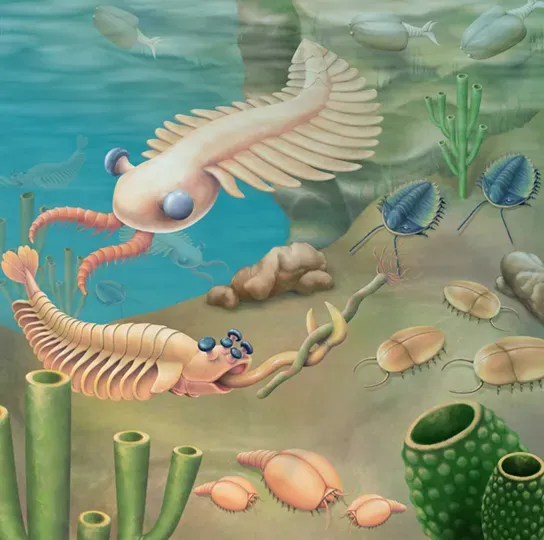
If you want a single moment that produced the blueprint for almost every animal body plan walking, swimming, or flying on Earth today, this is it. The Cambrian period, occurring between approximately 542 and 488 million years ago, marks the most rapid evolution of new animal phyla and animal diversity in Earth’s history. Most of the animal phyla in existence today had their origins during this time, and echinoderms, mollusks, worms, arthropods, and chordates all arose during this period.
What triggered this extraordinary burst of life? Scientists still debate it passionately. Environmental changes may have created a more suitable environment for animal life, including rising atmospheric oxygen levels and large increases in oceanic calcium concentrations. One of the most dominant species during this period was the trilobite, an arthropod that was among the first animals to exhibit a sense of vision. Vision itself, that ability you use to read these very words, has roots in this extraordinary explosion of creativity half a billion years ago.
4. Life Moves onto Land: The First Steps Out of the Water
http://nsf.gov/news/mmg/mmg_disp.cfm?med_id=58310
http://nsf.gov/news/news_summ.jsp?cntn_id=106807
https://flickr.com/photos/nsf_beta/3705198718, Public domain)
Imagine standing on a barren, silent shoreline with no insects buzzing, no birds calling, nothing but rock and wind. That was Earth before one of the most daring transitions in evolutionary history. Prior to the Devonian Period, which ran from 420 to 359 million years ago, the surface of the continents was predominantly rocky and bare. By around 425 million years ago, only bacteria, fungi, and simple invertebrates occupied the landscape. Yet by the end of the Devonian, forests covered much of the land and the evolutionary foundation had been laid for four-limbed, land-dwelling vertebrates such as amphibians and reptiles.
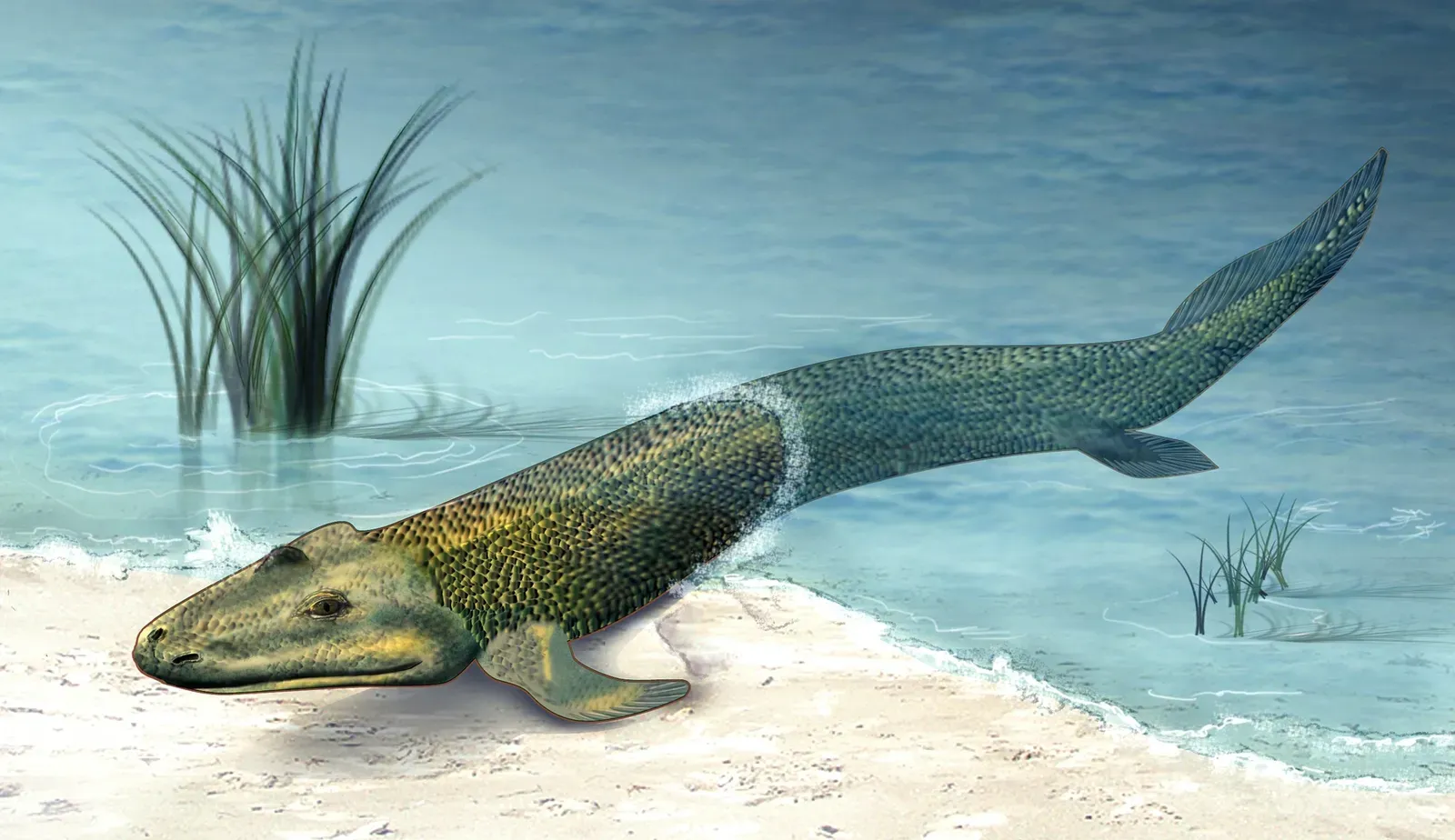
One of the world’s most important fossils related to this transition is Tiktaalik roseae, discovered in 2004 on Ellesmere Island in northern Canada. It is considered one of the world’s most important fossils related to the appearance of four-limbed animals. Tiktaalik roseae is a lobe-finned fish related to the modern lungfish and coelacanth that has structures in its fin bones indicating the capacity for limited movement on land. This creature was essentially caught mid-step, frozen in stone, bridging the ancient ocean world and the terrestrial one you inhabit today.
5. The Permian Extinction: The Near-Death of All Life
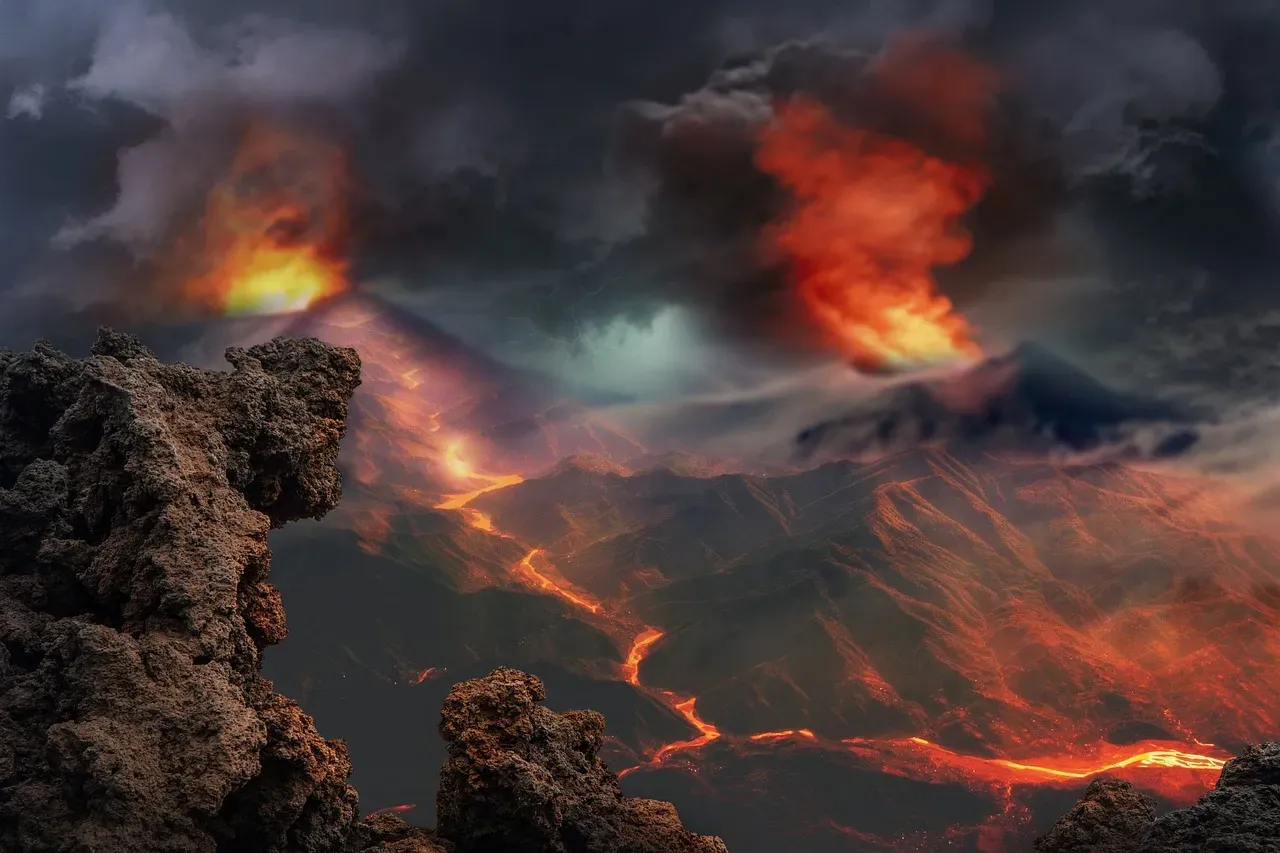
Of all the catastrophes in evolutionary history, this one dwarfs them all. The end of the Permian period marked the largest mass extinction event in Earth’s history, a loss of roughly 95 percent of all extant species at that time. Think about that for a moment. Nearly everything that existed was gone. The oceans went almost silent. The land was stripped bare of most of its inhabitants.
Cataclysmic events such as volcanic eruptions and meteor strikes can result in devastating losses of diversity, yet such periods of mass extinction have occurred repeatedly in the evolutionary record of life, erasing some genetic lines while creating room for others to evolve into the empty niches left behind. The survivors of the Permian extinction were the raw material from which all modern animal groups would eventually spring. Every reptile, bird, and mammal alive today descends from something that survived the worst night in Earth’s history.
6. The Rise of the Reptile Egg: Cracking the Code of Life on Land
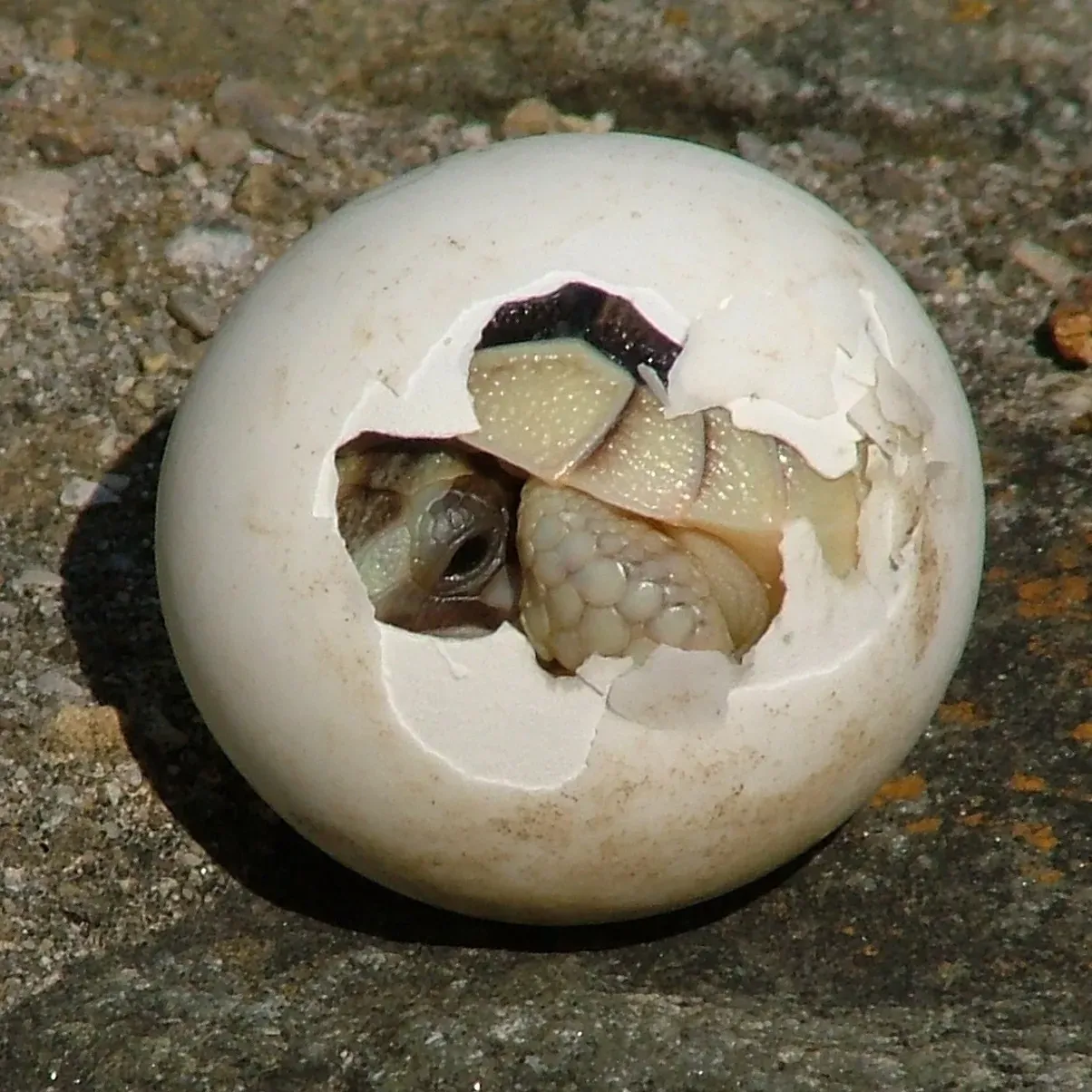
You might not immediately think of an egg as a revolutionary invention, but it genuinely was one of the most liberating developments in the history of vertebrate life. Reptiles lay eggs that can withstand dry external conditions, and they evolved from amphibians early in the Carboniferous. They were relatively subordinate at first, but during the drier Permian period they began a series of adaptive radiations that placed some groups back in the sea and others into the air.
The earliest amniotes evolved about 350 million years ago, and within a few million years two important amniote groups emerged: synapsids and sauropsids. Synapsids eventually evolved into mammals, while the sauropsids gave rise to reptiles, dinosaurs, and birds. The amniotic egg was, in essence, a self-contained life-support capsule. It freed vertebrates from their dependency on water for reproduction, opening up every dry habitat on Earth to colonization. Without it, you’d be looking at a very different world.
7. Dinosaurs Take Dominance: The Age of the Ruling Reptiles
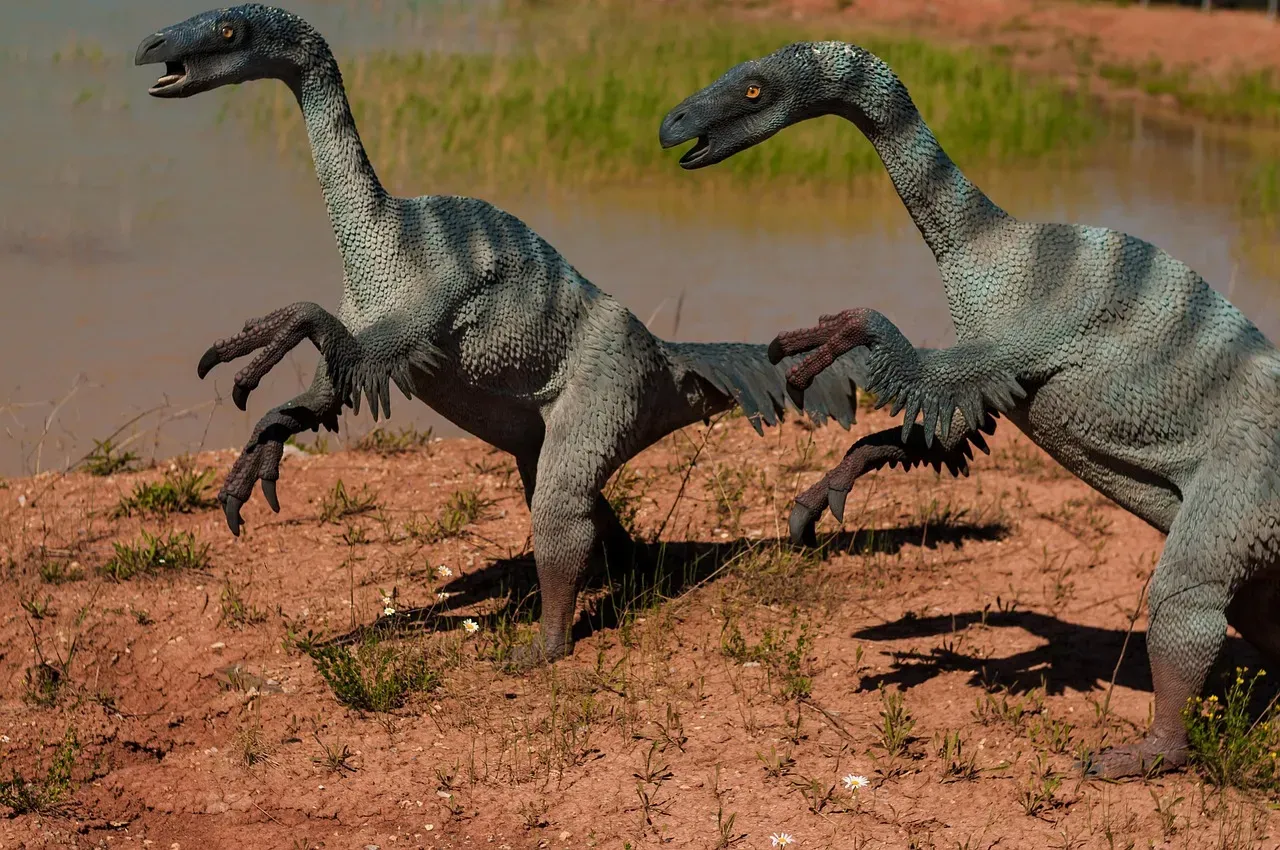
For well over 150 million years, dinosaurs dominated life on land in a way no other animal group has matched before or since. Dinosaurs arose in the Triassic and were eventually cut down about the end of the Cretaceous, as were many other groups. Their reign shaped ecosystems, food webs, and evolutionary pressures that still echo in the biology of modern wildlife today. I think it’s easy to dismiss dinosaurs as just ancient monsters, but they were extraordinarily successful, sophisticated animals.
Continual changes in temperature and moisture throughout the Paleozoic Era due to continental plate movements encouraged the development of new adaptations to terrestrial existence in animals, such as limbed appendages in amphibians and epidermal scales in reptiles. Changes in the environment often create new niches that contribute to rapid speciation and increased diversity. The ecological pressure of living alongside dinosaurs also pushed the early ancestors of mammals to become smarter, faster, and more adaptable – a pressure that would ultimately pay off in spectacular fashion.
8. When Dinosaurs Became Birds: The Most Astonishing Transformation
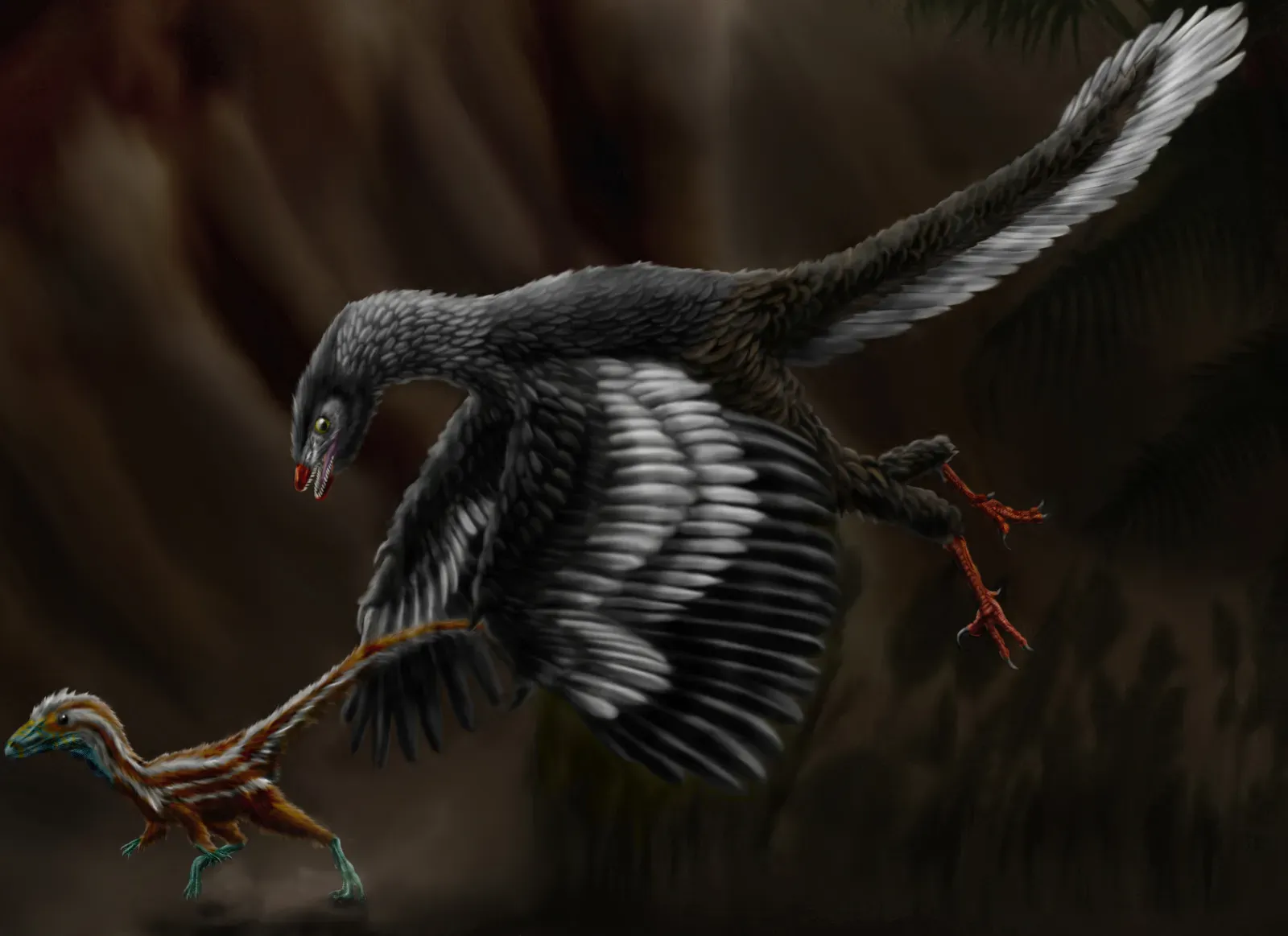
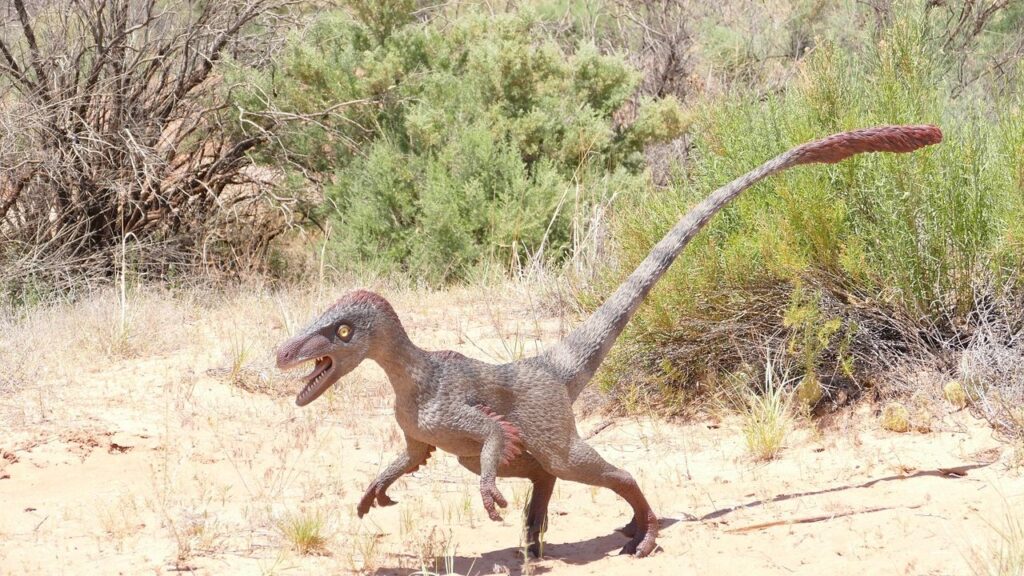
Honestly, if you told someone three centuries ago that the robin perched outside their window was technically a living dinosaur, they would have thought you were insane. Yet that is precisely what the evidence shows. The discovery that birds evolved from small carnivorous dinosaurs of the Late Jurassic was made possible by recently discovered fossils from China, South America, and other countries. The earliest known bird, Archaeopteryx, emerged during the Late Jurassic period around 150 million years ago, demonstrating both avian and dinosaur characteristics. This transitional species possessed feathers and the ability to fly, yet retained features like a toothed jaw and a long bony tail, linking it to its dinosaur ancestors.
The gradual evolutionary change from fast-running, ground-dwelling, bipedal theropods to small, winged, flying birds probably started about 160 million years ago, possibly due to a move by some small theropods into trees in search of either food or protection. Four distinct lineages of bird survived the Cretaceous–Paleogene extinction event 66 million years ago, giving rise to ostriches and relatives, waterfowl, ground-living fowl, and the broader group of modern birds. The skies you look up at today are crowded with the descendants of animals that once walked on two legs and hunted prey on the ground.
9. The Asteroid Impact and the Rise of Mammals: Catastrophe as Opportunity
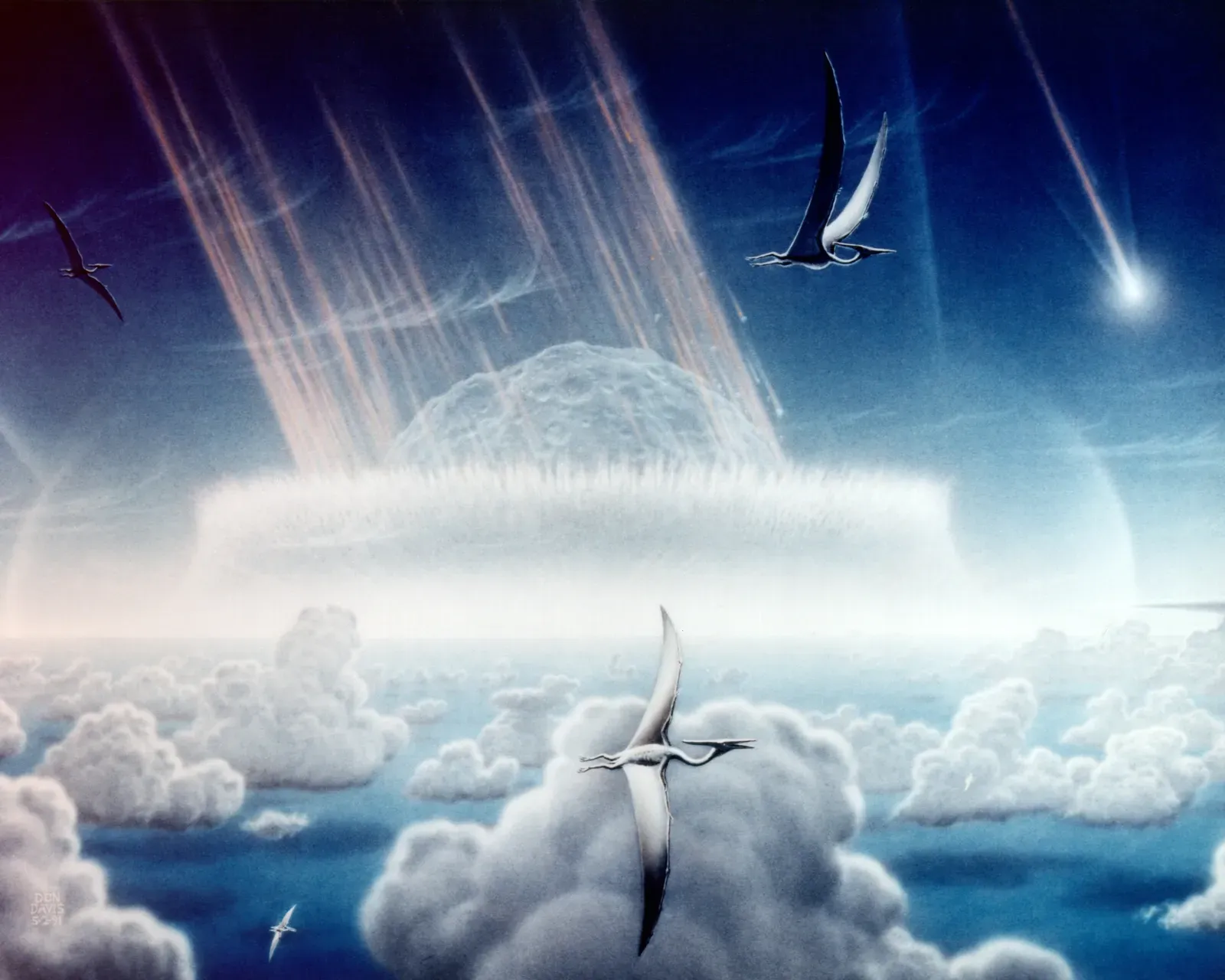
Sixty-six million years ago, a rock roughly ten kilometers wide slammed into what is now Mexico’s Yucatan Peninsula and rewrote the script of life on Earth in a geological instant. The Cretaceous–Paleogene extinction event was a major mass extinction of three-quarters of the plant and animal species on Earth, causing the extinction of all non-avian dinosaurs and most other tetrapods weighing more than about 25 kilograms. More than 70 million years ago, dinosaurs ruled the Earth and the furry ancestors of mammals were essentially lunch for the dominant species. This all changed dramatically when 66 million years ago an asteroid impacted Earth. The resulting climate change drove the large dinosaurs to extinction and created large ecological niches for mammals to rapidly evolve and take over.
In the wake of the mass extinction, many groups underwent remarkable adaptive radiation, suddenly and prolifically diverging into new forms and species within the disrupted and emptied ecological niches. Mammals in particular diversified in the following Paleogene Period, evolving new forms such as horses, whales, bats, and primates. During the Cenozoic, mammals proliferated from a few small, simple, generalised forms into a diverse collection of terrestrial, marine, and flying animals, giving this period its other name, the Age of Mammals. The wildlife you know and love today is almost entirely a product of that one, terrible, transformative day.
10. Whales Return to the Sea: Evolution’s Most Stunning Reversal
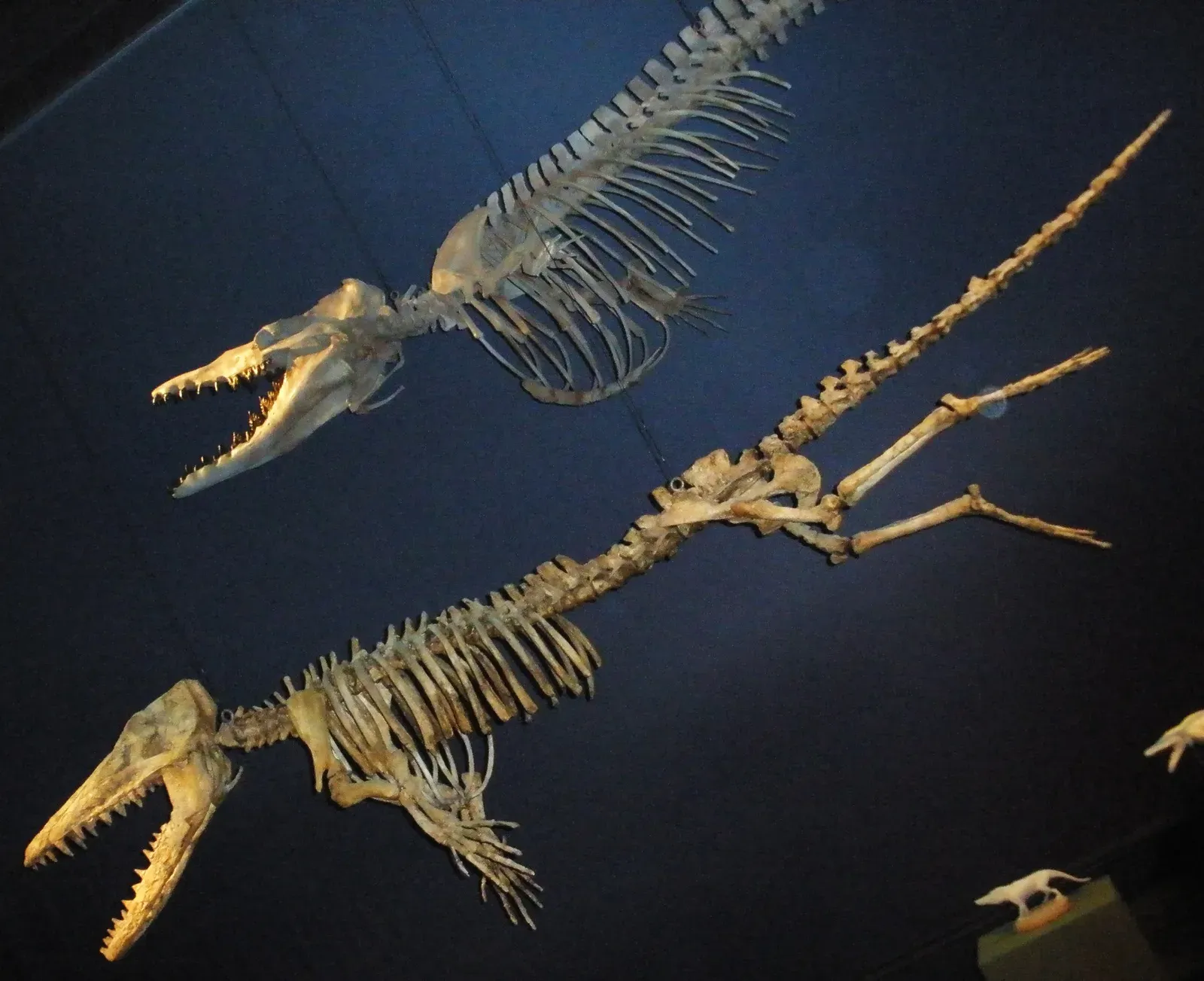
If you needed one single example to demonstrate just how radical and unexpected evolution can be, the origin of whales is it. These animals went from land to sea, trading four legs for fins and lungs for a life spent diving beneath the waves – and they did it in what counts, geologically speaking, as a blink of an eye. The fossil record shows that cetaceans evolved from a primitive group of hoofed mammals called Mesonychids. Some of these mammals crushed and ate turtles. This mammal group gave rise to a species with front forelimbs and powerful hind legs with large feet adapted for paddling, known as Ambulocetus, which could move between sea and land.
The fossilized vertebrae of Ambulocetus show that this animal could move its back in a strong up and down motion, which is the very method modern cetaceans use to swim and dive today. A later fossil in the series from Pakistan shows an animal with smaller functional hind limbs and even greater back flexibility. You’re looking at one of the most complete and extraordinary transformation sequences in the entire fossil record. The whale’s journey from shore to deep ocean is, in my view, the single most jaw-dropping chapter in the whole saga of evolution – and it’s a reminder that nothing in nature is ever truly permanent.
Conclusion: You Are the Product of Every One of These Moments
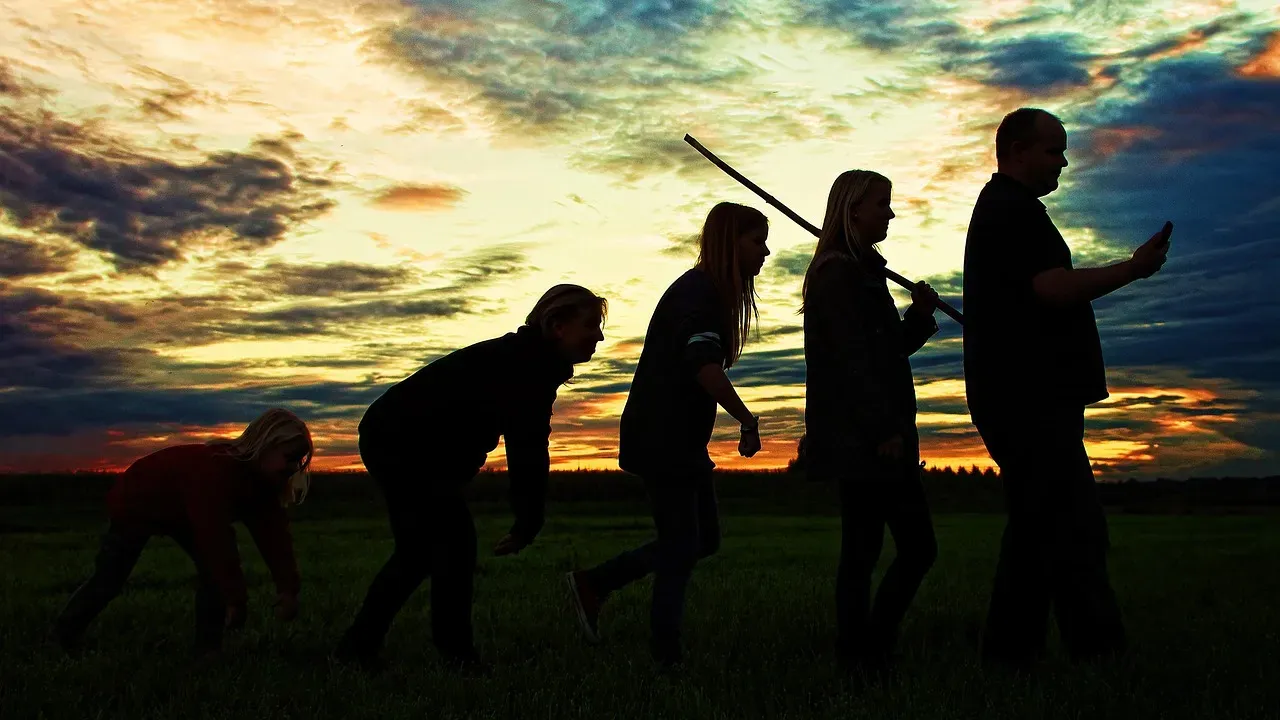
Every animal you’ve ever admired, feared, or simply shared a planet with carries the legacy of these ten turning points inside its DNA. The similarities between all present-day organisms imply a common ancestor from which all known species, living and extinct, have diverged. That fact alone should stop you in your tracks. The hawk overhead, the earthworm in your garden, the whale in the deep Atlantic – they are all your distant relatives.
More than 99 percent of all species that ever lived, estimated to number over five billion, are now extinct. The modern wildlife around you is not the default state of nature. It is the extraordinary, improbable result of billions of years of disasters survived, opportunities seized, and bodies reinvented from scratch. That makes every creature on Earth right now something of a miracle, honestly. So the next time you see a bird, look a little closer. You’re staring at the direct descendant of a dinosaur that somehow outlasted an asteroid.
What would you have guessed was the single most important moment in evolutionary history before reading this? Tell us in the comments.