Most people can name a T. rex, a Triceratops, and maybe a Velociraptor on a good day. But the prehistoric world was so absurdly rich and wild that those familiar names barely scratch the surface. Honestly, if you knew what was lurking in the shadows of paleontology textbooks, you’d never look at a museum exhibit the same way again.
Dinosaurs, the ancient rulers of our planet, continue to capture the imagination with their incredible diversity. Yet the spotlight often falls on the same iconic species, leaving an entire world of equally intriguing creatures buried in the footnotes. These ten are about to change that. Let’s dive in.
1. Nigersaurus: The Dinosaur That Vacuumed Its Food
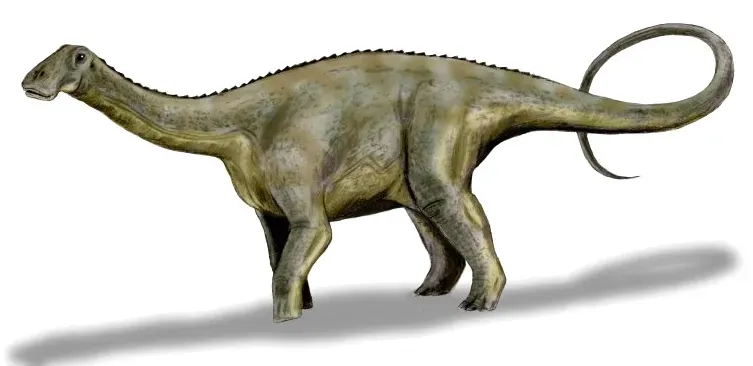
You’ve probably never heard of Nigersaurus, and that’s a shame, because this creature is arguably one of the strangest plant-eaters to ever walk the Earth. Known as the “Mesozoic cow,” it was a peculiar sauropod from the Middle Cretaceous in Niger. Here’s the thing though, its face looked nothing like any cow you’d recognize.
It was an unusually small sauropod with a unique head and jaw shape not seen in any other animal. All its 500 teeth were at the end of its jaw at the front of the mouth, making its head look like the attachment to a vacuum cleaner. Each mature tooth had nine replacement teeth stacked up behind it, ready to take over when it wore down. Nature, it turns out, is a deeply strange engineer.
2. Amargasaurus: The Punk Rocker of the Jurassic
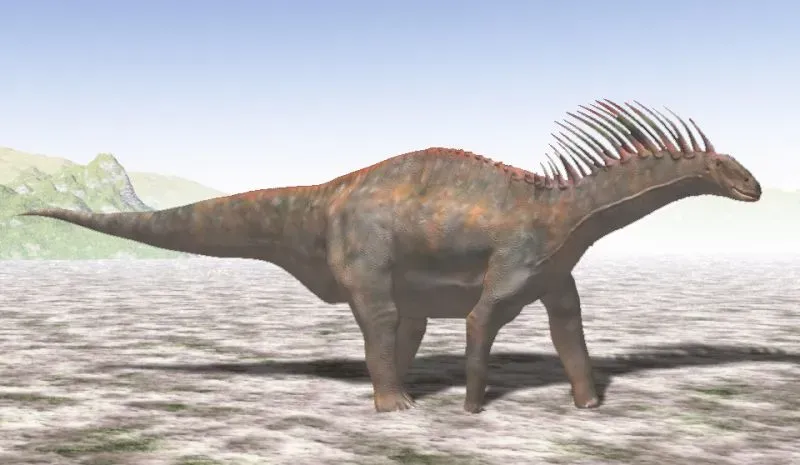
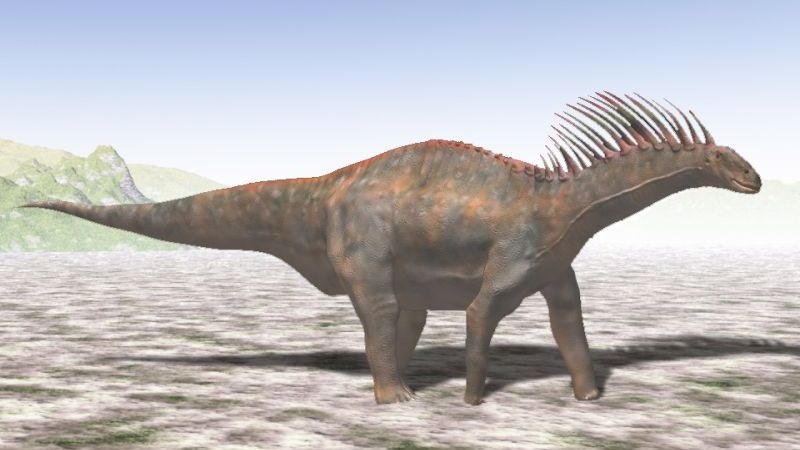
Discovered in 1991 in Argentina, Amargasaurus was a sauropod that walked on four legs, with a long neck and tail. It was smaller than more well-known sauropods like Brachiosaurus, maxing out at around 35 feet long. Modest by dinosaur standards, sure. But what it lacked in size, it more than made up for in sheer visual drama.
Amargasaurus possessed a bizarre double row of parallel spines along its neck and back, taller than any other sauropod. Their function remains mysterious. Were they for defense, like the horns of antelope, or did they support a skin sail? Some speculation even suggests they may have clacked together, making a sort of dinosaur drumbeat, possibly to attract a mate. I think that last theory is my personal favorite.
3. Deinocheirus: The Monster Nobody Saw Coming
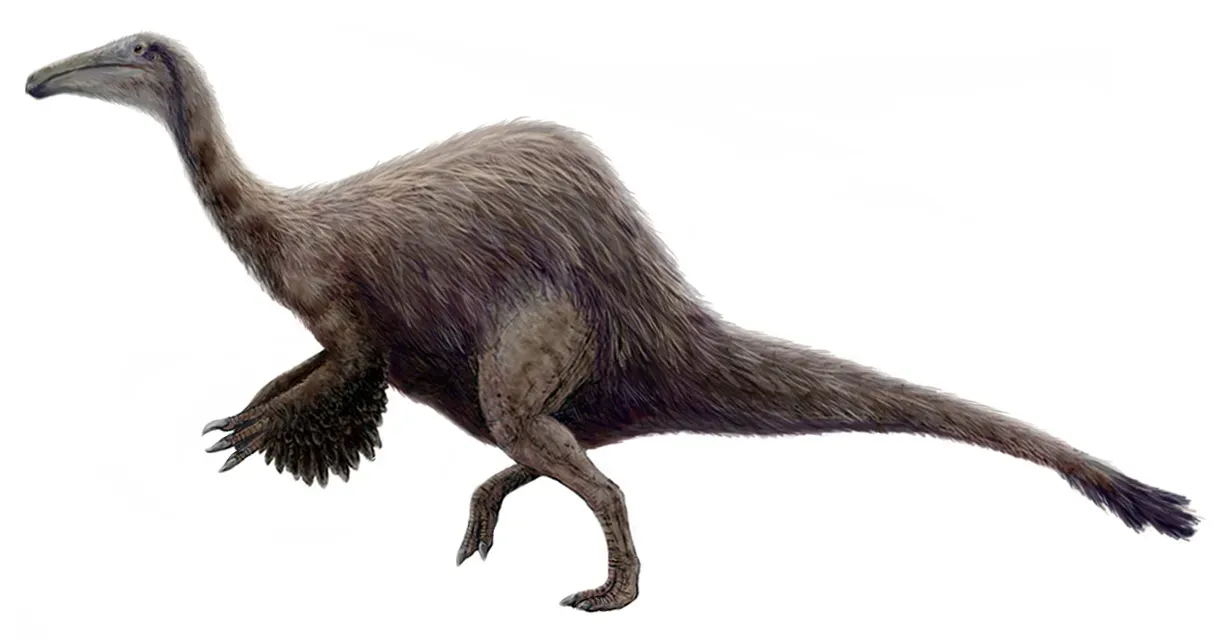
For decades, Deinocheirus was known only from a pair of massive arms over two meters long. When a complete specimen was finally found, the surprise was enormous: this dinosaur had a humped back, a duck-like bill, and long legs. Scientists thought they were dealing with a terrifying predator. They were wildly wrong.
Known as the “terrible hand” due to its large, clawed forelimbs, Deinocheirus was an ornithomimosaur that roamed Mongolia during the Late Cretaceous period, around 70 million years ago. It grew approximately 11 meters in length and exhibited a mix of features that puzzled paleontologists. With a humped back similar to a camel’s and a duck-like beak, Deinocheirus was built for a specialized lifestyle. Initially thought to be a carnivore, further findings suggested it was omnivorous, feeding on plants and possibly fish. Honestly, what even was this animal?
4. Carnotaurus: The Horned Sprinter With Useless Arms
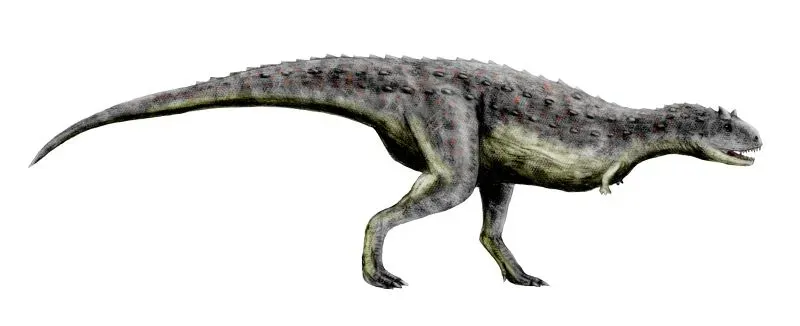
Carnotaurus was unique among the dinosaurs due to its set of demonic horns that cast a shadow over its equally horrifying reptilian eyes. Its horns were so prominent that its name means “meat-eating bull” in Latin. Think of it as the dinosaur equivalent of a very aggressive, very confused bull who decided to become a biped.
It also had tiny arms that would have made Tyrannosaurus rex look well-equipped by comparison. They were so small that some paleontologists have argued the arms served no purpose at all. Despite this, it’s now widely believed that Carnotaurus was even faster than the T. rex. Speed, apparently, was its real weapon, and those little arms were just along for the ride.
5. Microraptor: The Four-Winged Glider
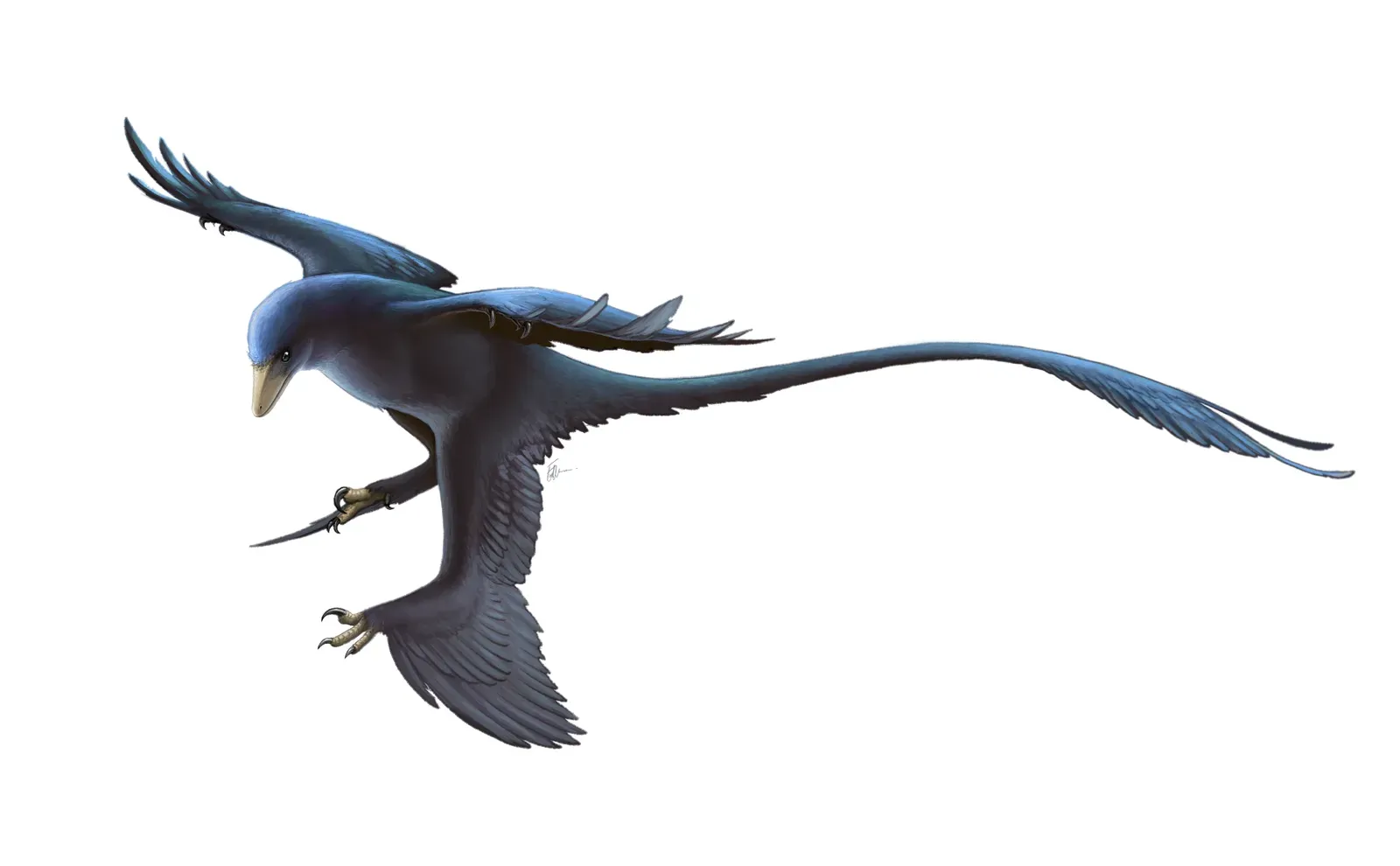
Microraptor was a crow-sized dinosaur from China with feathers on both its arms and legs, giving it four wings. It likely glided between trees, hunting small prey. Its unusual body plan makes it a key species for studying the evolution of flight in dinosaurs. Picture a crow crossed with a velociraptor and you’re somewhere in the right ballpark.
Discovered in China, the Microraptor sparked intense debates among scientists about whether dinosaurs evolved into birds. The small creature had four separate wings for flying, which led some scientists to argue about the origins of avian flight. It even had iridescent black feathers, much like a modern crow’s shimmering plumage. It’s hard not to feel a little amazed that something this small holds this many evolutionary secrets.
6. Therizinosaurus: The Giant With Nightmare Claws
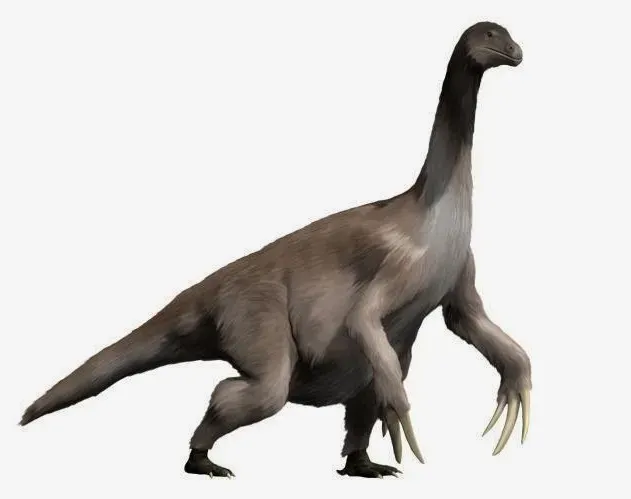
Therizinosaurus, known for its enormous claws, lived during the Late Cretaceous period. Its gigantic size and unique adaptations challenge traditional views of dinosaur morphology, showcasing the incredible diversity that existed within the dinosaur kingdom. When you first hear about it, you assume it must have been a savage predator. You’d be dead wrong.
With a long neck, robust body, and a pot-bellied abdomen, this dinosaur was primarily herbivorous, employing its 12-inch long curved claws to forage vegetation. The Therizinosaurus, with its distinctive claws used for unknown purposes, remains an enigmatic figure in the dinosaur world, prompting ongoing research into its behavior and evolutionary significance. In other words, the most terrifying claws in the Cretaceous belonged to a plant eater. Life truly has a sense of humor.
7. Oryctodromeus: The Dinosaur That Dug Its Own Home
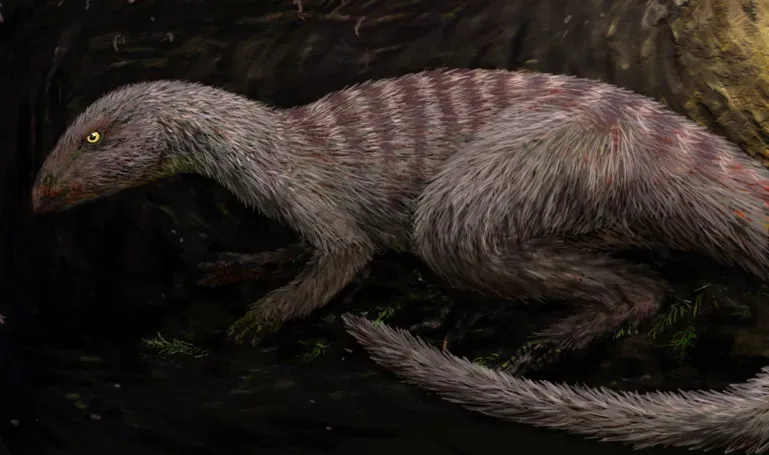
Oryctodromeus was a burrowing dinosaur that dug its own holes to live in. Fossils of three individuals were found at the bottom of a six and a half foot burrow, which means that not only did they dig, they actually lived in the homes they created, not just digging for food. A dinosaur with a den. Somehow that feels almost too cozy to believe.
Burrowing was a protective adaptive feature for Oryctodromeus. It burrowed into forest floors to avoid becoming prey to larger predators within its ecosystem. Think of it like a prehistoric badger with a tail and a two-legged swagger. It wasn’t the biggest, the fastest, or the most fearsome creature out there. It was just very, very good at hiding, and it made that into an art form.
8. Pegomastax: The Tiny Porcupine-Parrot You Never Expected
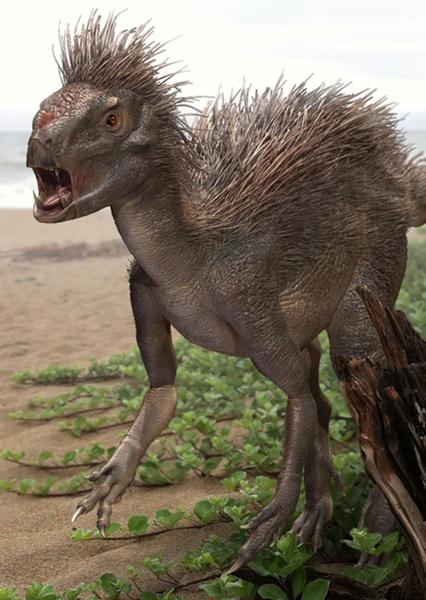
Pegomastax was a tiny dinosaur, less than a meter long, with sharp beak-like jaws and fang-like teeth. Despite its fierce-looking mouth, it ate plants and possibly seeds. Its quilled body covering and unusual dentition make it one of the oddest herbivores from the Jurassic. Let’s be real, this sounds like a creature someone invented for a fantasy novel.
Just 60cm long and covered in quills, it has been described as a cross between a parrot and a porcupine. It had a beak and teeth that sharpened themselves against each other. Its quills may have even been brightly colored to warn predators to stay away. Self-sharpening teeth and a warning color scheme on a creature smaller than most house cats. Pegomastax was, without question, punching well above its weight class.
9. Tsintaosaurus: The Dinosaur That Could Actually Communicate
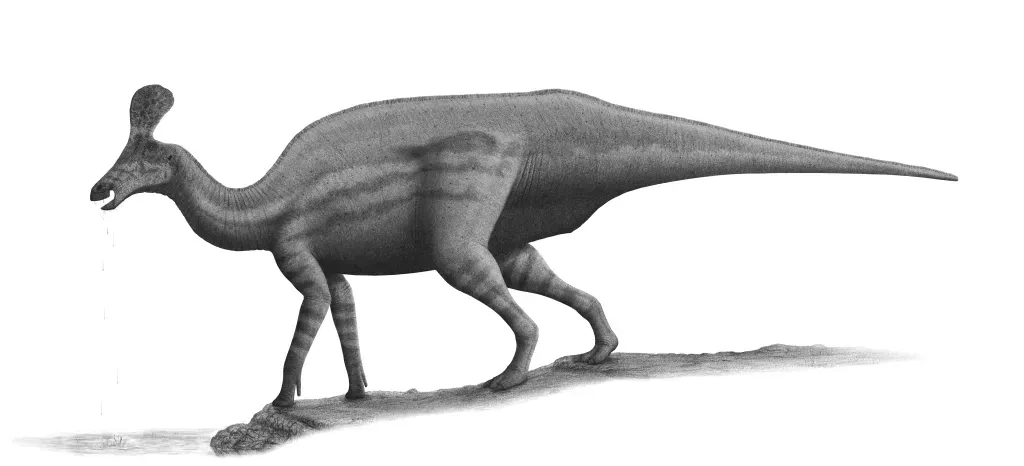
Among dinosaurs with crests, the Tsintaosaurus stands out with its long, protruding head-crest. A hadrosaur that roamed the vast expanses of prehistoric China, the Tsintaosaurus was a duck-billed dinosaur that loved chewing on plants and traveling in packs. It sounds almost serene. But there’s something remarkable lurking in that unusual crest.
Its head crest wasn’t just flashy ornamentation. Apparently, the crest contained nasal passages that gave the Tsintaosaurus the ability to make low-frequency noises and communicate with other members of the herd. Think of it like a built-in horn, tuned low enough that the vibrations could travel long distances across open prehistoric plains. Communication, cooperation, and a spectacular headpiece. Tsintaosaurus had, in a very real sense, figured out something most animals never did.
10. Haolong Dongi: The Hollow-Spiked Discovery That Shocked 2026
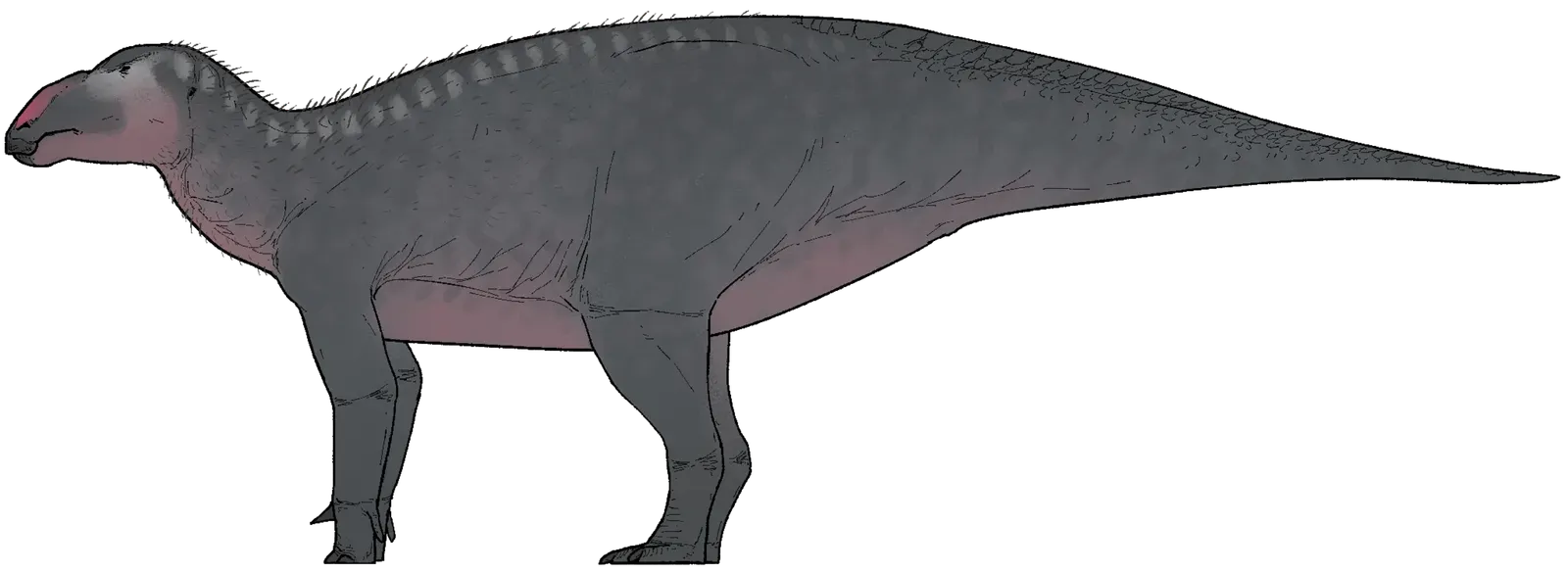
Researchers have identified a previously unknown species that carried a type of body covering never before documented in any dinosaur. Scientists from the CNRS and collaborating institutions made the discovery in China, where they uncovered the fossilized remains of a remarkably well-preserved young iguanodontian. What makes this specimen extraordinary is not just its skeleton, but its preserved skin. Soft tissues rarely survive for millions of years, yet in this case, even microscopic details endured.
The spikes, described as cutaneous because they originate in the skin, covered much of the dinosaur’s body. Unlike horns or bony plates, they were not solid extensions of bone. Instead, they were hollow structures, a feature that has never previously been observed in dinosaurs. The newly identified species has been named Haolong dongi. The hollow spikes may have served as a defensive adaptation, functioning in a way similar to the quills of a porcupine by discouraging predators from attacking. Fresh from a 2026 discovery, this one is a reminder that the prehistoric world still has jaw-dropping secrets left to share.
Conclusion: The Untold Stories Are the Best Ones
Here’s the thing about dinosaurs. The famous ones get the movies, the merchandise, and the museum centerpieces. Yet it’s the overlooked ones, the vacuum-faced Nigersaurus, the punk-rock Amargasaurus, the hollow-spiked Haolong dongi, that carry the most surprising stories. They remind you that evolution doesn’t follow a script.
The image of dinosaurs as drab, slow-witted reptilians is slowly being overturned thanks to exciting new fossil discoveries and advances in the technology used to analyze them. In fact, scientists find more than 45 new dinosaur species each year. Every dig site could be hiding the next creature that rewrites everything we thought we knew.
The next time someone tells you they know everything about dinosaurs, ask them about Pegomastax, or Oryctodromeus, or the burrowing families hiding beneath ancient forest floors. Watch their expression change. The prehistoric world is not a closed book. Not even close. What lesser-known dinosaur surprised you the most? Tell us in the comments!