You might think woolly mammoths and saber-toothed cats dominated the Ice Age landscape. They certainly did, no doubt about it. Still, you’d be surprised to learn that dozens of equally fascinating beasts roamed these frozen lands around ten to fifteen thousand years ago, creatures so strange they challenge everything you thought you knew about prehistoric life. While mammoths grab all the headlines, a whole menagerie of bizarre animals thrived across ancient North America, from massive armored tanks to lanky deer with antlers you wouldn’t believe.
Let’s be real, most of us learned about Ice Age animals from animated films. We’re about to introduce you to the oddballs, the outcasts, and the downright weird creatures that history seems to have forgotten. Be surprised by what actually walked, grazed, and hunted across this continent thousands of years ago.
Stag-Moose: The Hybrid That Never Was
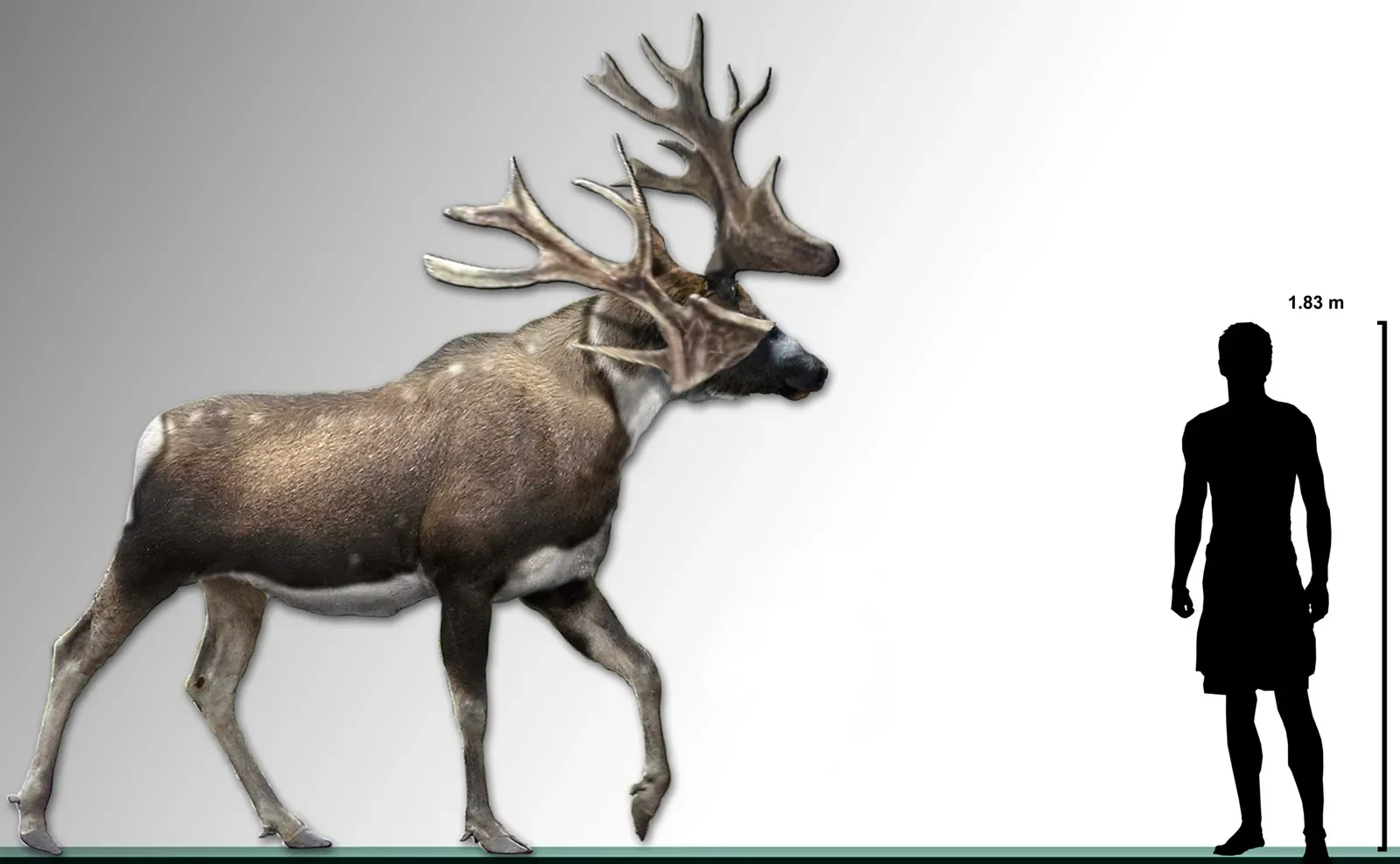
You’ve heard of moose and you’ve seen elk, but the stag-moose was something entirely different, an extinct species of large deer that lived in North America during the Late Pleistocene, and it’s the only known North American member of the genus Cervalces, with its closest living relative being the modern moose. Picture an animal as large as today’s moose but with an elk-like head, long legs, and palmate antlers that were more complex and heavily branching than those of modern moose, reaching lengths of about eight feet and weighing over 1,500 pounds.
This unusual creature probably lived in marshes, swamps and bogs, as well as spruce-taiga communities, with surroundings ranging from tundra-mixed coniferous forests to deciduous woodlands. The species became extinct approximately 11,500 years ago, toward the end of the most recent ice age, as part of a mass extinction. The antlers themselves were works of natural art, ending in numerous irregular tines pointing in all directions, making them instantly recognizable to anyone lucky enough to find their fossils today.
Giant Beaver: North America’s Aquatic Behemoth
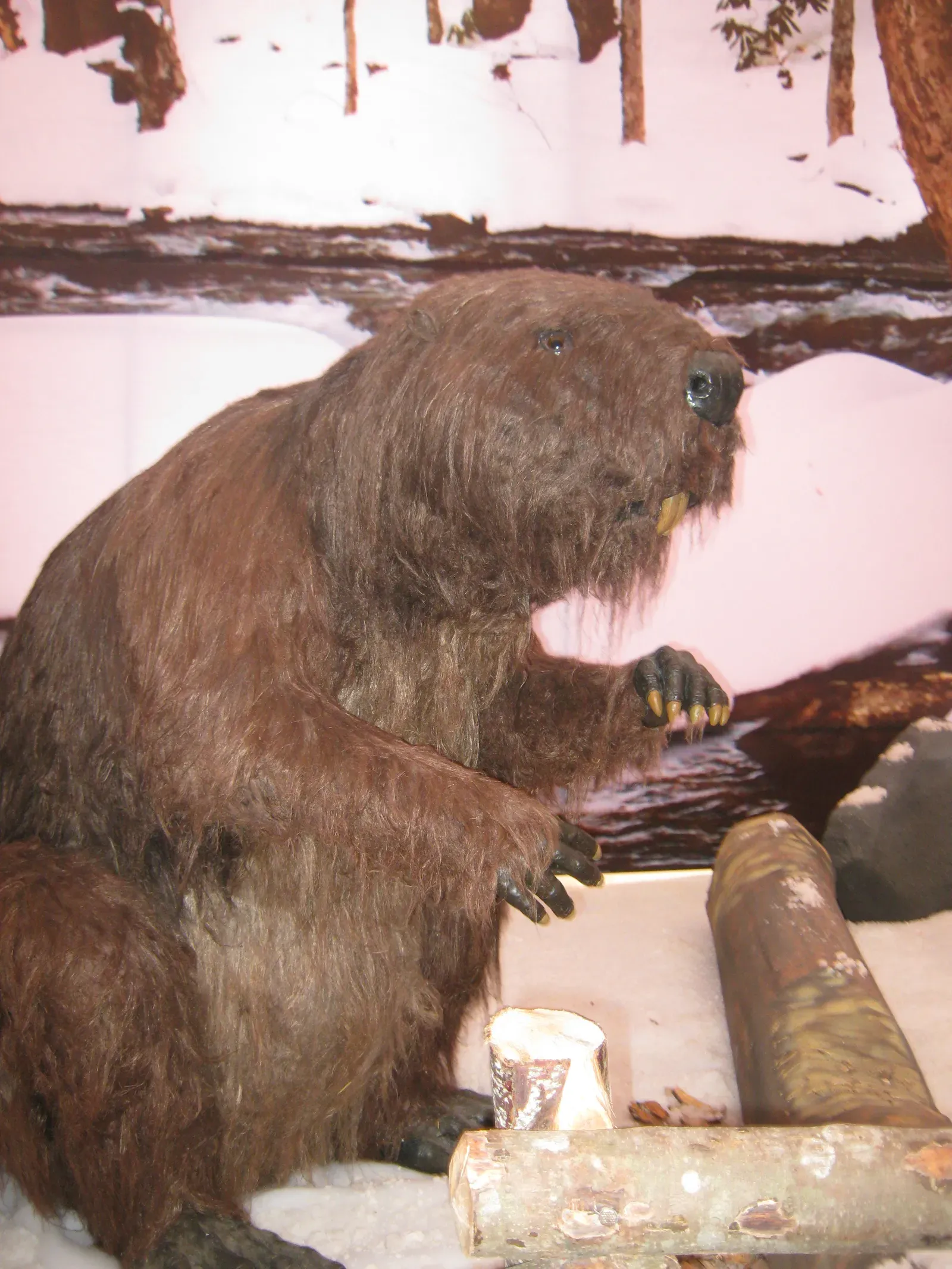
Weighing in around 100 kilograms and growing up to two metres long, the giant beaver is the largest rodent known from ice age North America. Think about that for a moment. This wasn’t some oversized rat. It was a creature comparable in size to a modern black bear, yet it was a rodent that spent its days paddling through ancient lakes and ponds.
Unlike their smaller modern cousins, giant beavers didn’t build dams or lodges. They were aquatic plant-eaters that preferred living in still waters where vegetation was abundant. Honestly, imagining a beaver the size of a bear is almost comical until you realize these animals were real, breathing creatures that coexisted with early humans. The giant beaver was the largest rodent ever found in North America and was an aquatic plant-eating animal that lived in lakes and ponds. Their massive size likely protected them from most predators, though short-faced bears and dire wolves might have posed threats.
American Cheetah: The Sprint Specialist Nobody Remembers
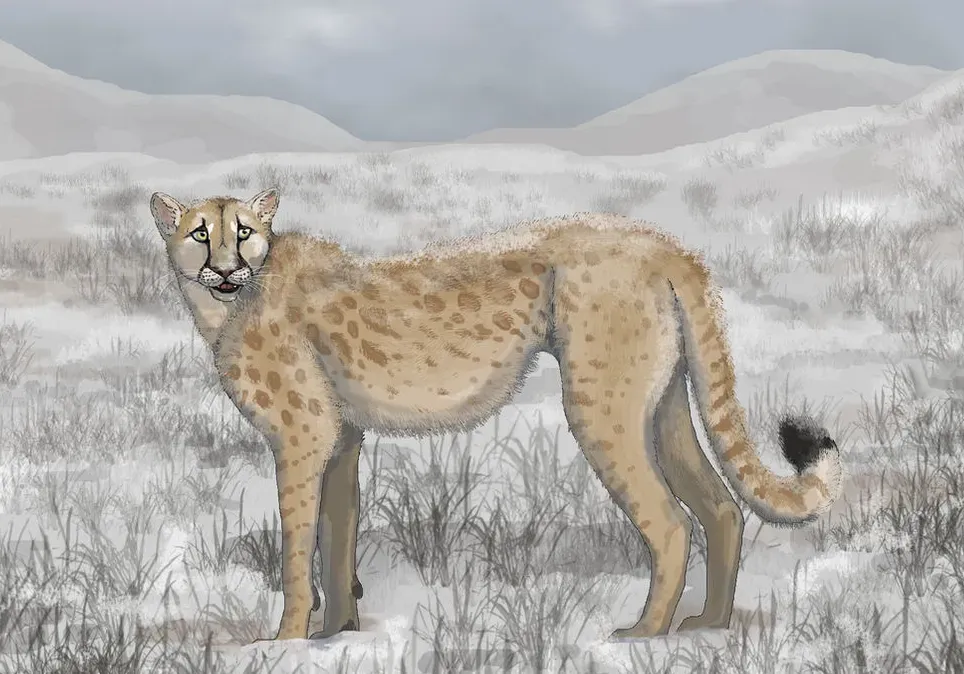
You probably know cheetahs as African animals. Yet North America once had its own version. The American cheetah wasn’t closely related to its African counterpart despite the similar name. Until the end of the last ice age, American cheetahs, enormous armadillo-like creatures and giant sloths called North America home.
These predators evolved to chase down the pronghorn antelope, which explains why modern pronghorns are ridiculously fast despite having no current predators capable of catching them. It’s hard to say for sure, but the pronghorn’s incredible speed is essentially an evolutionary ghost, a leftover defense mechanism from a predator that vanished millennia ago. The American cheetah hunted across grasslands and open plains, its body built for explosive speed rather than the ambush tactics favored by saber-toothed cats. Their extinction left a gap in the ecosystem that was never quite filled again.
Scimitar-Toothed Cat: The Shadow Predator
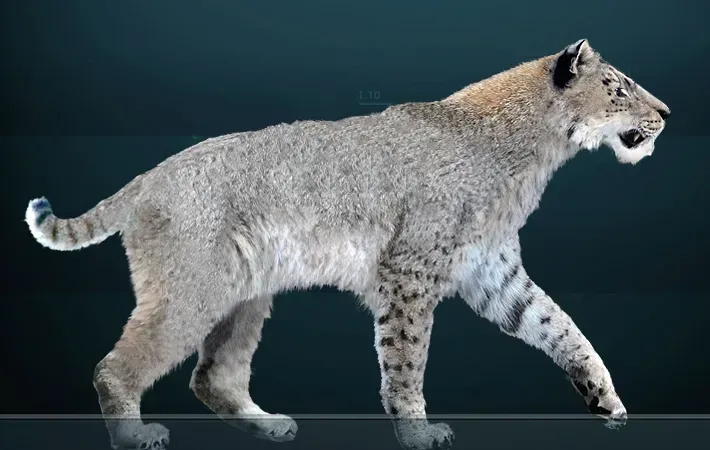
The scimitar-toothed cat had large canine teeth, powerful forelimbs, a sloping back and a large optic bulb, all of which made it a deadly predator during the Pleistocene. Weighing in around 200 kilograms, scimitar cats were formidable predators in ice age North America, with slender limbs, stocky bodies with powerful necks, and short tails. Unlike the famous saber-toothed cat with its massive, dagger-like fangs, the scimitar cat had slightly shorter, curved teeth better suited for slicing.
Fossils of the ancient cat have been found in Eurasia, but during the last ice age, the animal crossed the Bering Land Bridge and started living in North America. Scientists have discovered remains in Alaska, Idaho, Texas, and California, particularly in the La Brea tar pits. Recent research suggests these cats didn’t hunt massive prey on open plains as once thought. Instead, they likely targeted smaller forest-dwelling animals like tapirs and deer, using ambush tactics similar to modern big cats rather than running down prey in open country.
Glyptodon: The Walking Tank from the South
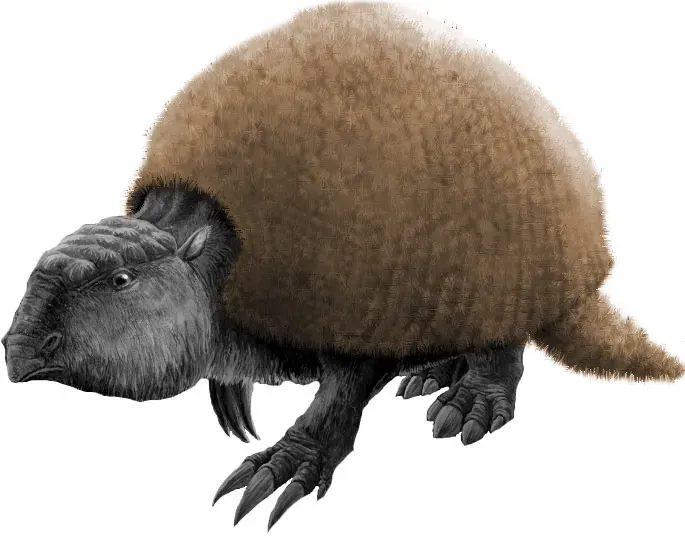
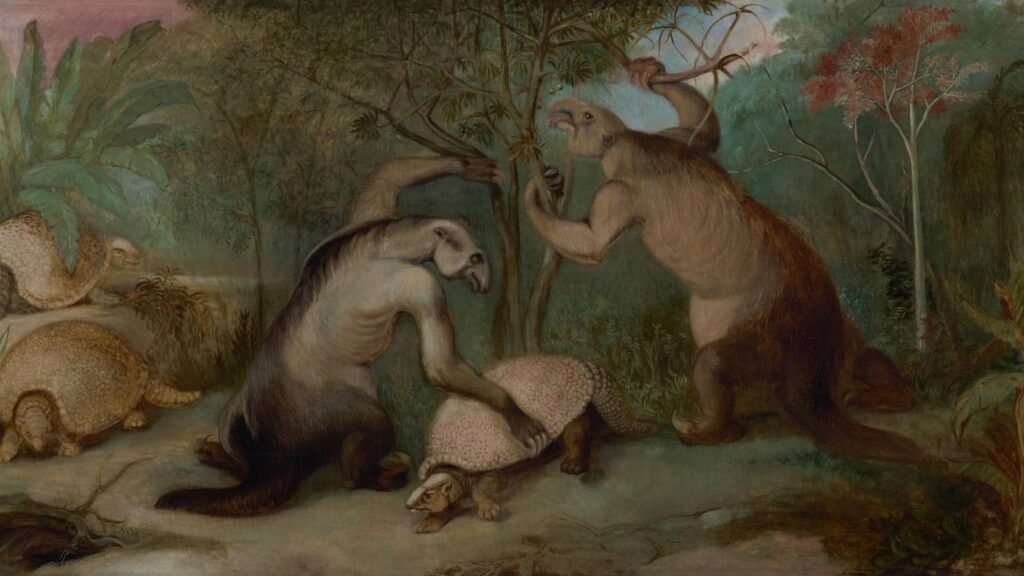
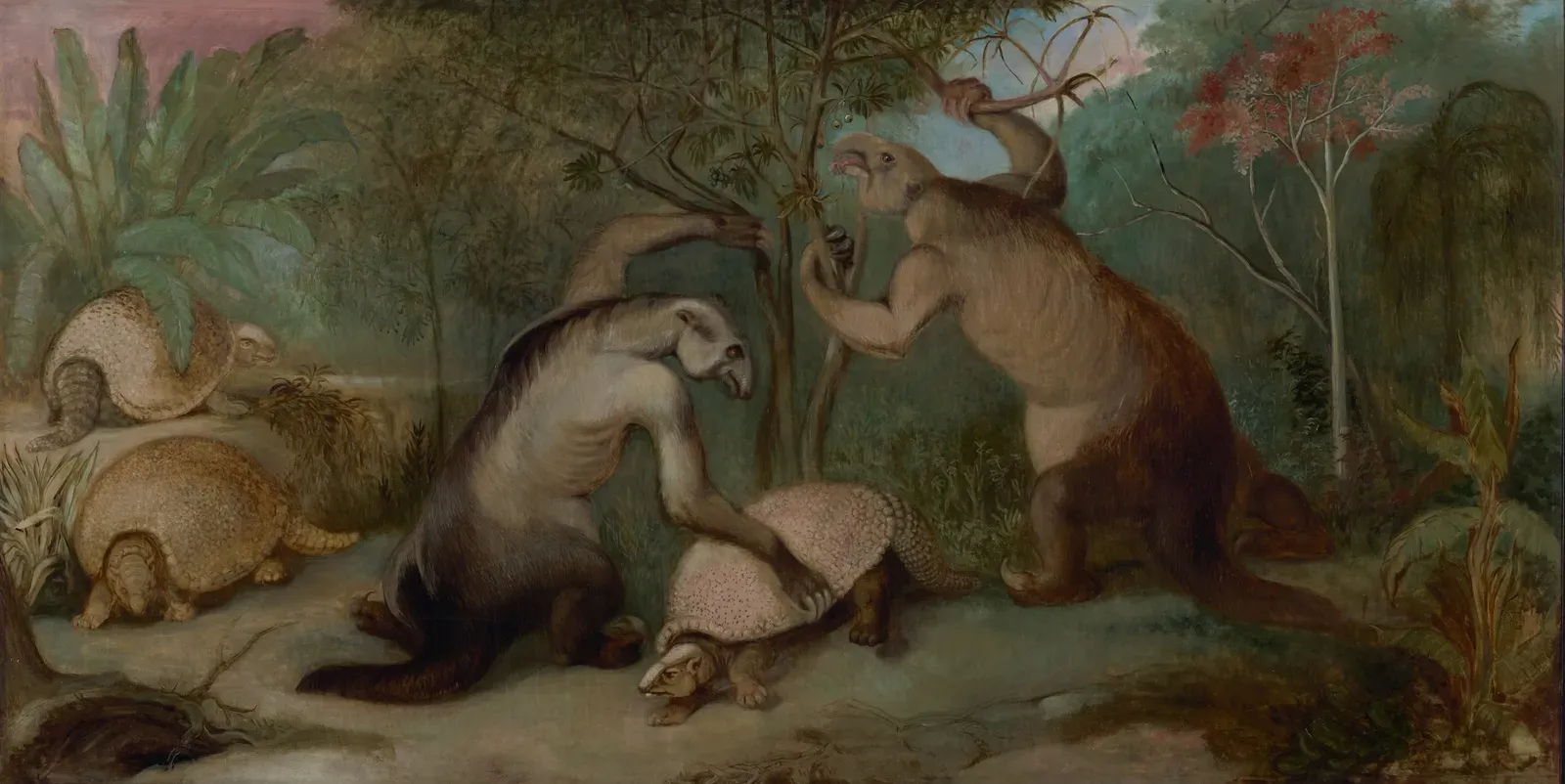
Glyptodon is a genus of glyptodont, an extinct group of large, herbivorous armadillos that lived from the Pliocene to the early Holocene in South America, and it is one of the best known genus of glyptodont. Glyptodon reached up to 2 meters long and 400 kilograms in weight, making it one of the largest glyptodontines known. Imagine an armadillo the size of a Volkswagen Beetle covered in a dome-shaped shell made of over a thousand hexagonal bony plates.
After the Isthmus of Panama formed about three million years ago, the genus Glyptotherium spread north as part of the Great American Interchange, as did pampatheres, armadillos and ground sloths. These creatures were built like tanks, with armor covering everything from their backs to their tails, and even their skulls had protective bony caps. Their only vulnerable spot was their soft underbelly. Glyptodonts abruptly became extinct approximately 12,000 years ago at the end of the Late Pleistocene, and evidence has been found suggesting that they were hunted by recently arrived Paleoindians. Some researchers believe early humans used the empty shells as shelters, which honestly sounds like something straight out of a fantasy novel.
Jefferson’s Ground Sloth: The Gentle Giant
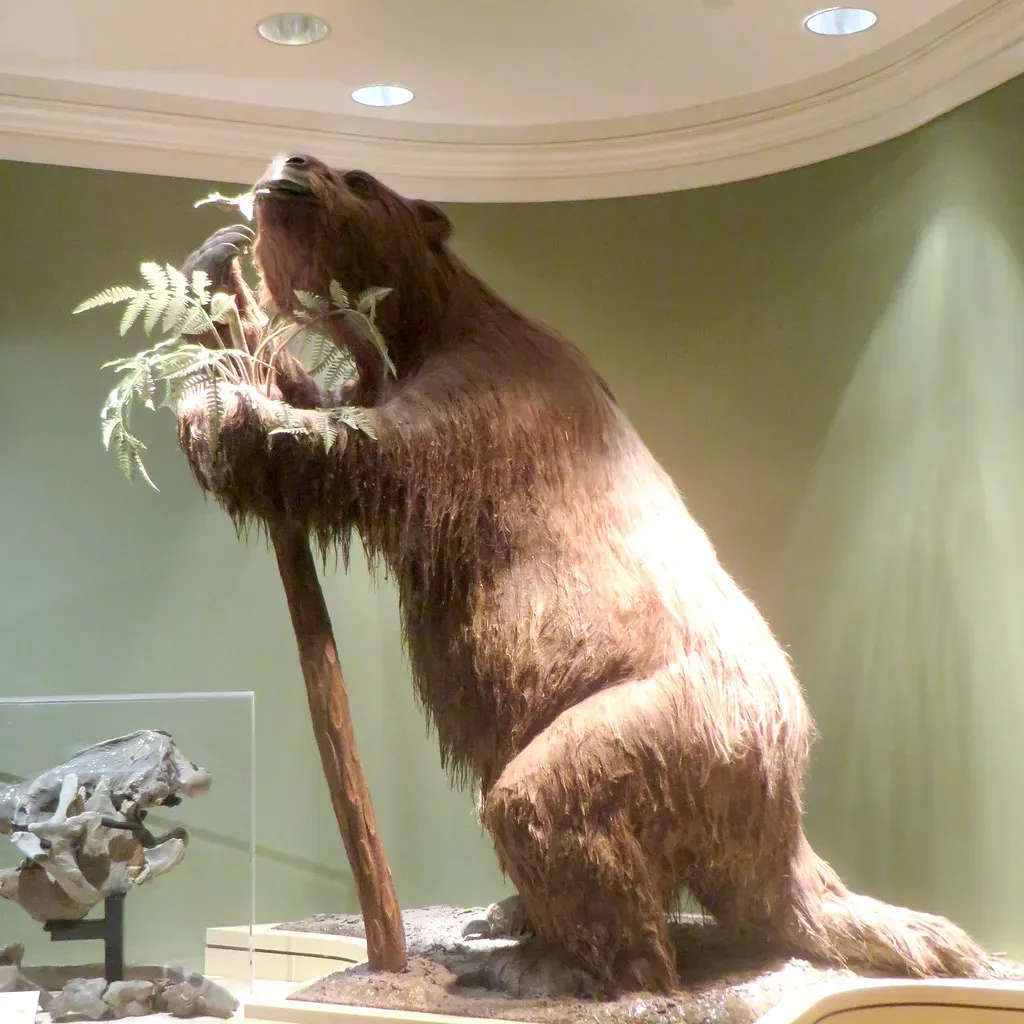
Full-grown Jefferson’s ground sloths could be up to 3 metres long, much bigger and heavier than a modern bear. The giant ground sloths of the late Pleistocene were bear-sized herbivores that stood 12 feet on their hind legs and weighed up to 3,000 pounds, with one species, the Jefferson ground sloth, named for Thomas Jefferson. These weren’t the cute, slow-moving tree sloths we know today. They were massive terrestrial creatures that towered over most predators.
Despite their fearsome size and enormous claws, Jefferson’s ground sloth was a peaceful herbivore. They used those impressive claws to strip leaves from trees and dig for roots, not to attack other animals. These giants were slow and awkward moving, and although these sloths looked fearsome, they fed on leaves and twigs of the northern forests and posed no threat to possible human newcomers. Still, their sheer bulk would have made them formidable if threatened. They lumbered through ancient forests on curled-in ankles, a bizarre gait that must have been something to witness.
American Mastodon: The Forest Elephant
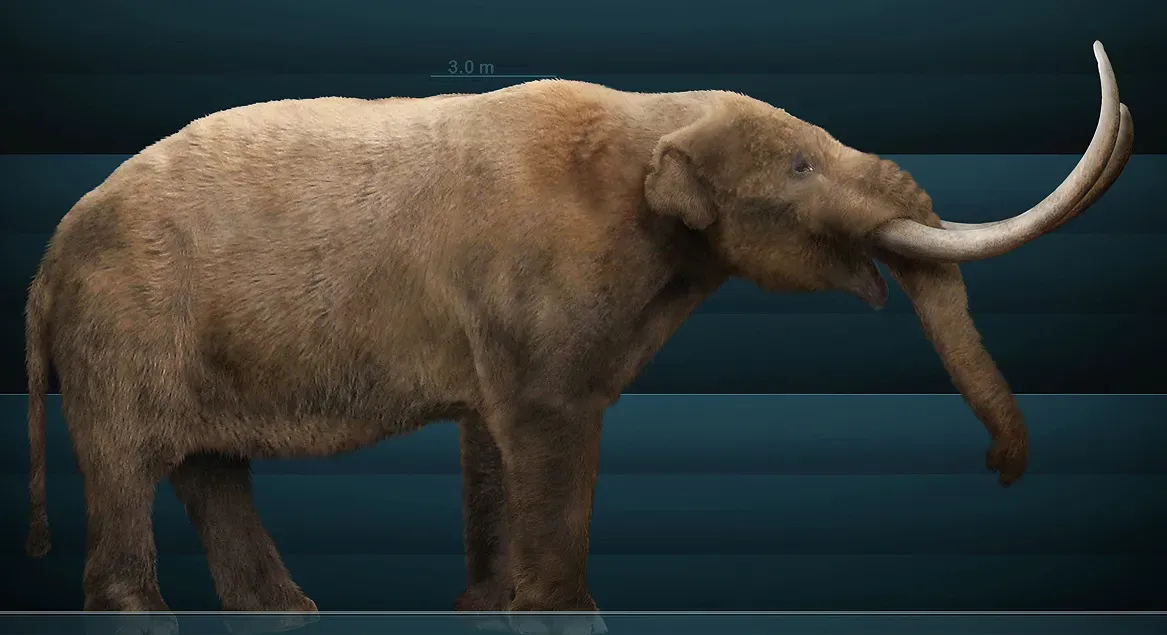
The American mastodon’s ancestors crossed the Bering Strait from Asia roughly 15 million years ago and evolved into the American mastodon 3.5 million years ago. The mastodon was shorter and stockier than the later mammoths, and the shape of its teeth indicate that mastodons didn’t graze on grass like mammoths, but ripped off leaves and entire tree branches for food.
These shaggy beasts weren’t just smaller versions of woolly mammoths. They were completely different animals with different lifestyles and diets. Mastodons were homegrown elephants that evolved in North America 3.5 million years ago and were true travellers, ranging from the Alaskan arctic all the way south to Honduras. Their straighter tusks and browsing habits meant they preferred wooded areas rather than open grasslands. Perfectly adapted to cold conditions, mastodons had short ears and tails to conserve heat, along with thick fur coats that rivaled those of their mammoth cousins.
Dire Wolf: The Real Game of Thrones Beast
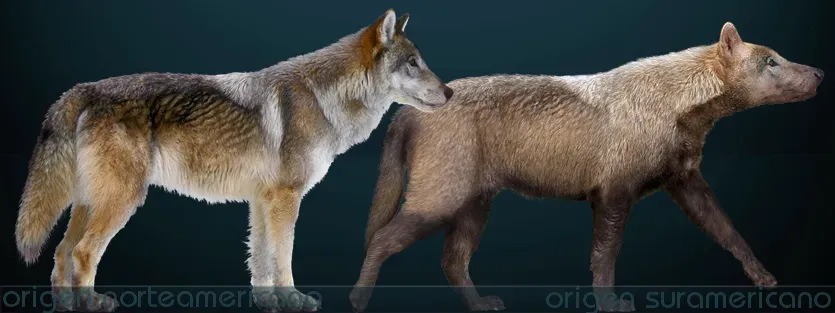
Dire wolves were a canine species that hunted the plains and forests, similar to modern grey wolves but heavier, with bigger heads, jaws and teeth giving them a strong bite. Dire wolves roamed every inch of North America from the frozen Canadian north down through Mexico, thriving in every ecosystem from boreal forests to grassland plains to tropical wetlands, and like gray wolves, they hunted in packs of 30 or more.
Here’s the thing: recent genetic analysis revealed something shocking. It’s thought that dire wolves evolved in South America and ventured north, while today’s grey wolves migrated from Asia, so the two species are not closely related. They weren’t just big wolves. They were an entirely separate lineage of canines that happened to look similar to modern wolves. Over 4,000 individual dire wolf specimens have been pulled from the La Brea tar pits alone, making them one of the most well-documented Ice Age predators. Their powerful jaws could crush bones, allowing them to tackle massive prey like camels, horses, and young mastodons.
Short-Faced Bear: The Nightmare Predator
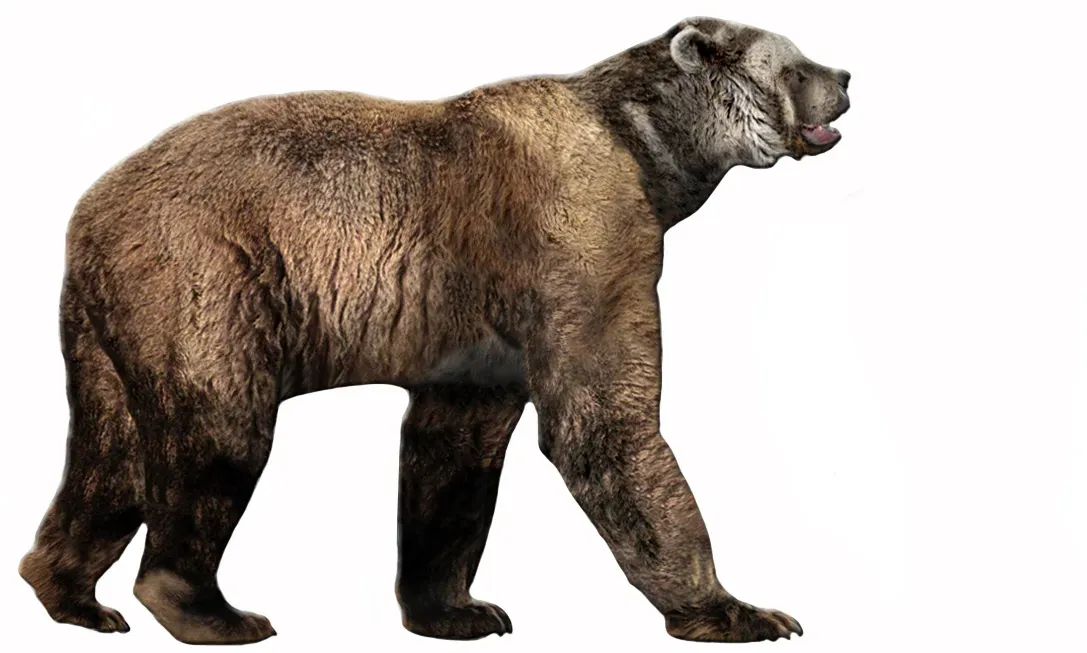
Giant short-faced bears were the largest carnivorous land mammal to ever live in North America and were roughly 1.5 times the size of today’s Kodiak grizzly bear. Let me put that in perspective for you. Modern Kodiak bears can weigh 1,500 pounds. Short-faced bears could reach over 2,000 pounds and stand over 11 feet tall on their hind legs.
Giant short-faced bears are not related to any living species of bear in North America, with its closest living relative being the diminutive spectacled bear of South America. These apex predators had long legs built for running, unlike the lumbering gait of modern bears. They needed to consume roughly 35 pounds of meat daily to survive, which meant they were constantly hunting or scavenging. With their powerful jaws and massive size, they could easily kill a stag-moose or drive other predators away from their kills. Honestly, encountering one of these bears would have been absolutely terrifying.
Ancient Horses: The Forgotten Natives
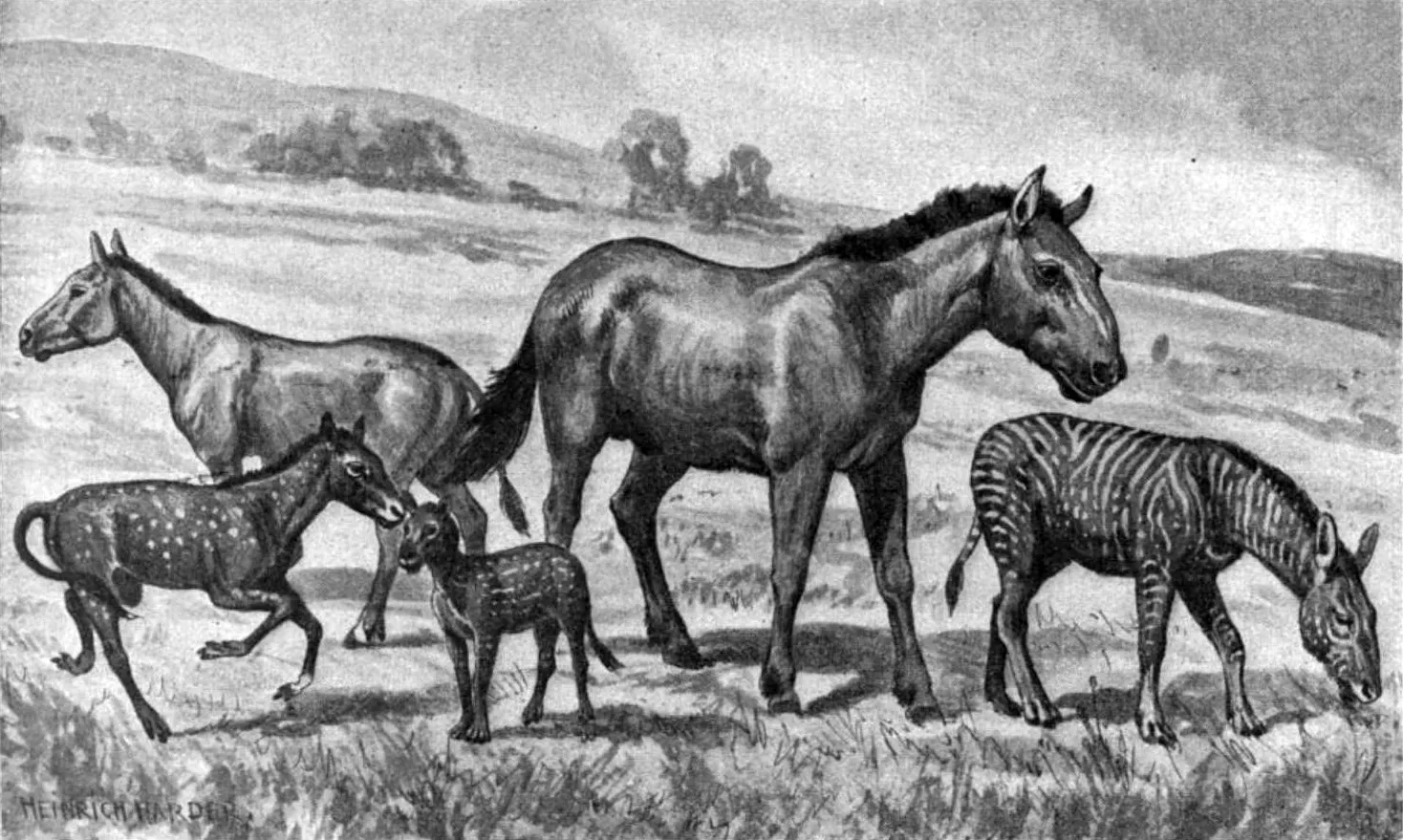
It was long believed that horses were first introduced to North America by Spanish settlers in the 16th century, but archeological evidence has rewritten that history, showing that indigenous horses roamed North America for 55 million years before going extinct along with other Ice Age megafauna roughly 10,000 years ago. One of the oldest and most widespread ancient horse species in North America was the American zebra, also known as the Hagerman horse, the oldest known member of the genus Equus, which stood around five feet tall with a stocky build and faint stripes along its neck and flank.
Multiple species of horses thundered across North America for millions of years. They evolved here, diversified here, and then mysteriously vanished when the Ice Age ended. Horses shared the prairie with camels too, both of which evolved in North America and crossed the ice bridge into Eurasia, before disappearing here. The populations that migrated to Asia eventually spread to Africa and Europe, becoming the horses we know today. Meanwhile, their North American cousins went extinct, leaving behind only fossils to prove they ever existed.
A Lost World Beneath Our Feet
Overall, during the Late Pleistocene about 65% of all megafaunal species worldwide became extinct, rising to 72% in North America, with all mammals over 1 tonne lost. The scale of this extinction event was staggering and unprecedented. These animals and other megafauna went extinct about 10,000 years ago, with rapid warming periods called interstadials and, to a lesser degree, ice-age people who hunted animals responsible for the disappearance.
Scientists continue debating what caused these extinctions. Was it climate change? Human hunting? Disease? Most likely, it was a combination of factors that varied by species and region. What’s clear is that we lost an incredible array of creatures that had survived multiple ice ages before. These weren’t just animals. They were entire ecosystems on legs, shaping the landscape through their feeding, migration, and interaction with other species. Their disappearance left ecological gaps that remain unfilled today. The pronghorn still runs as if chased by cheetahs that no longer exist. Forests grew differently without mastodons breaking branches and ground sloths clearing undergrowth.
Walking across North America today, you’re treading ground that was once home to these magnificent beasts. Every grassland, every forest, every river valley once echoed with sounds we’ll never hear again. What do you think it would have been like to witness these creatures in their prime? Would you have wanted to see a short-faced bear thundering across the plains, or watch a herd of ancient horses galloping beneath a glacier’s shadow?