Dinosaurs get all the glory. You’ve seen them on the big screen, in museums, on your kids’ lunch boxes. Yet Earth’s prehistoric past is packed with creatures so bizarre, so utterly mind-bending, that even the most creative science fiction writer might struggle to dream them up. We’re talking about animals that looked like evolutionary pranks, creatures assembled from mismatched parts, predators that defied every rule of biology you thought you knew.
The story of life on Earth is far weirder than most people realize. Millions of years before the first T. rex roared, and millions of years after the last one fell silent, evolution was busy cooking up some truly outrageous experiments. Buckle up, because what you’re about to discover will make you look at the natural world in a whole new way. Let’s dive in.
1. Opabinia: The Five-Eyed Creature That Made Scientists Laugh Out Loud
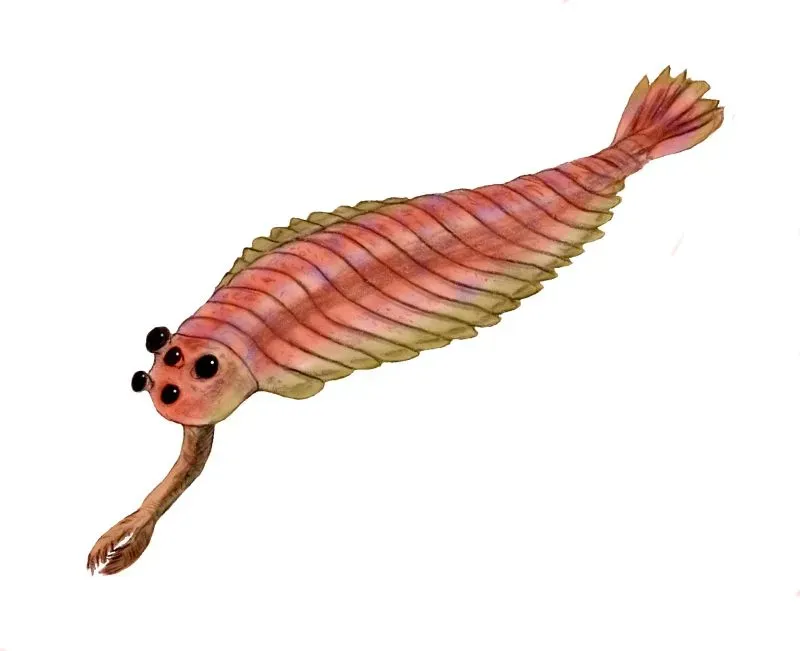
Honestly, the reaction that Opabinia got at its scientific debut says it all. When Opabinia was first revealed to paleontologists at a scientific conference, the audience burst out laughing. What other reaction could there be to a tiny creature with a segmented body of plates, five eyes on mushroom-like stalks, and a proboscis ending in a kind of claw? You can’t make this stuff up. Five eyes. On stalks. It sounds like a creature from a fever dream, not a real animal that once swam through ancient oceans.
This animal, an ancient and strange relative of today’s arthropods, was certainly one of the odder inhabitants of the 508 million-year-old Burgess Shale, and paleontologists still puzzle over how it lived. Its flexible, hose-like appendage was positioned in a way that suggested it used it to grab food and pass it back toward its mouth, which was located beneath its body. Picture something like an elephant using its trunk to pick up peanuts from the ground, except far, far stranger. If you ever thought modern nature was weird, Opabinia sets the bar at a whole different level.
2. Anomalocaris: The Ocean’s First True Apex Predator
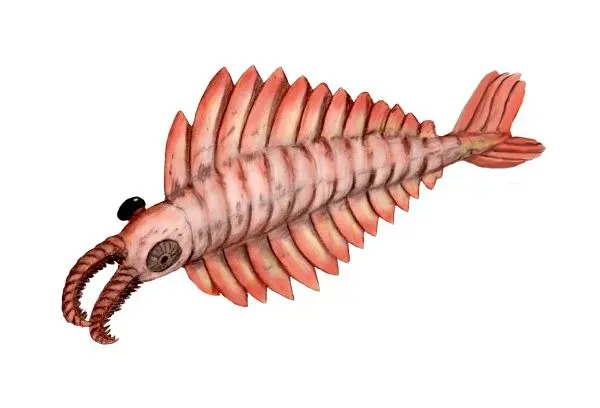
Here’s the thing about ancient oceans – they were not the calm, peaceful places you might imagine. More than half a billion years ago, the world’s oceans were stalked by a soft-bodied predator that looked unlike anything alive today. This bizarre-looking animal was Anomalocaris, or “unusual shrimp,” and is widely regarded as the world’s first apex predator, the killer whale of its day. Think about that for a moment. The very first creature to dominate an entire ecosystem looked like something stitched together from nightmares.
Anomalocaris was the largest hunter of the Cambrian period, measuring up to a metre in length from its grasping, frontal appendages to the tips of its tail fans. Its appendages are thought to have been used to catch and crush prey. In Cambrian terms, a metre-long predator was essentially a monster. Everything else in that ancient sea was microscopic by comparison. If you had been swimming in those waters over 500 million years ago, Anomalocaris would have been the last thing you ever saw.
3. Helicoprion: The Shark With a Buzzsaw for a Mouth
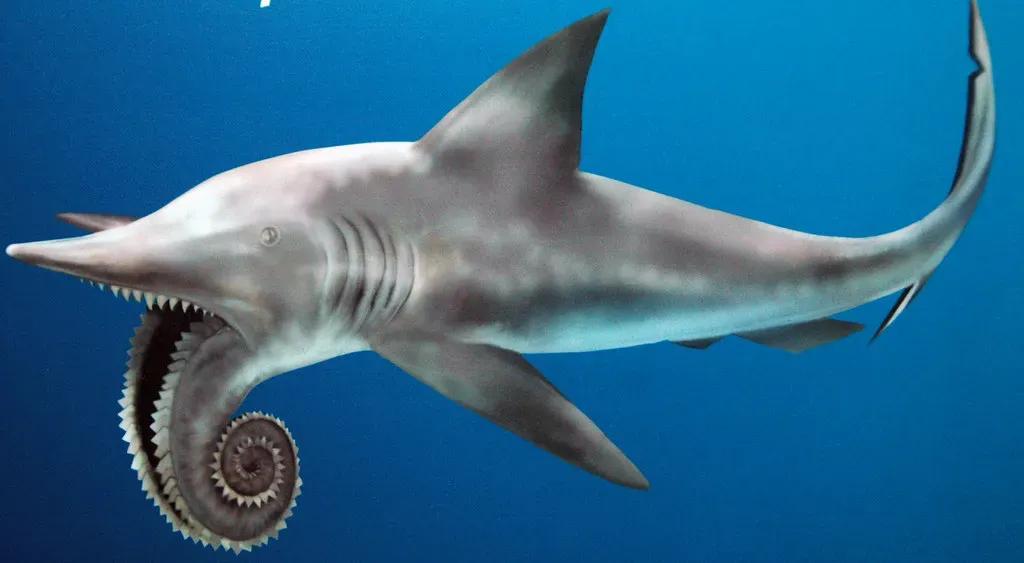
Helicoprion, nicknamed “buzz saw sharks,” was a group of shark-like fish with a spiral jaw that made their teeth resemble the edge of a buzz saw. Scientists were baffled for decades about where exactly those teeth were even located on the creature’s body. It sounds almost comedic, until you see an accurate reconstruction and your stomach drops. This was not a gentle filter feeder. This was a genuine nightmare machine cruising through prehistoric seas.
With the later discovery of some portions of a jaw, the location of its buzzsaw-like teeth were finally determined to fill the lower jaw. Strangely, there were no upper teeth, so this creature could disgustingly gum and bite you at the same time. The jaw would close, rotating the teeth backwards, much like a circular saw blade. The whorl of teeth was formed as they continuously grew outwards, creating a spiral as it aged, with the teeth at the beginning of the whorl being small and gradually increasing in size toward the end. Evolution, it seems, had a seriously twisted sense of humor when it designed this one.
4. Dunkleosteus: The Armored Fish With the Most Powerful Bite in History
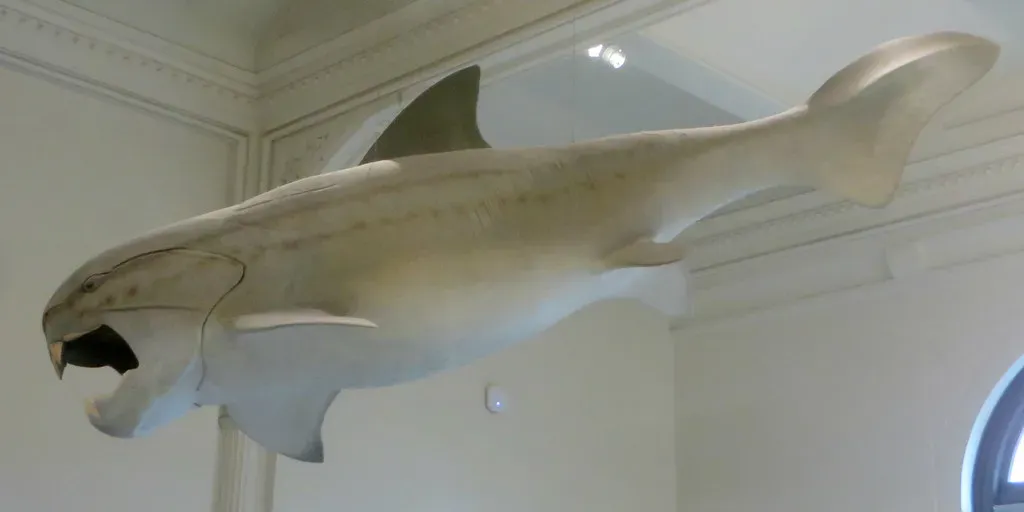
Imagine a great white shark, already one of the most terrifying things in any ocean. Now imagine that shark replaced by something ancient and armored, with bone blades instead of teeth. One of the scariest creatures ever to live in the ocean, this Devonian fish could grow up to 33 feet long, had an armored face, and likely had one of the strongest bites in history. It used a beak-like mouth instead of teeth to devour its prey. It was one of the largest of the Placoderms, a group of armored fish that are now extinct.
This 33-foot-long armored fish from the Devonian era lacked teeth, but its jaw contained razor sharp protrusions of bone that it could use to pierce and cut through its prey. These bones grew continuously, and as they did, the edges rubbed together with those of the opposing jaw, acting like self-sharpening shears. This would ensure the “fangs” were always ready to chomp into armored prey like arthropods, ammonites and other fish. This four-ton monster fish patrolled inshore waters and could snatch prey up by opening and closing its jaws within 50 to 60 milliseconds. Self-sharpening bone blades. Let that sink in.
5. Archaeotherium: The “Hell Pig” That Wasn’t Even a Pig
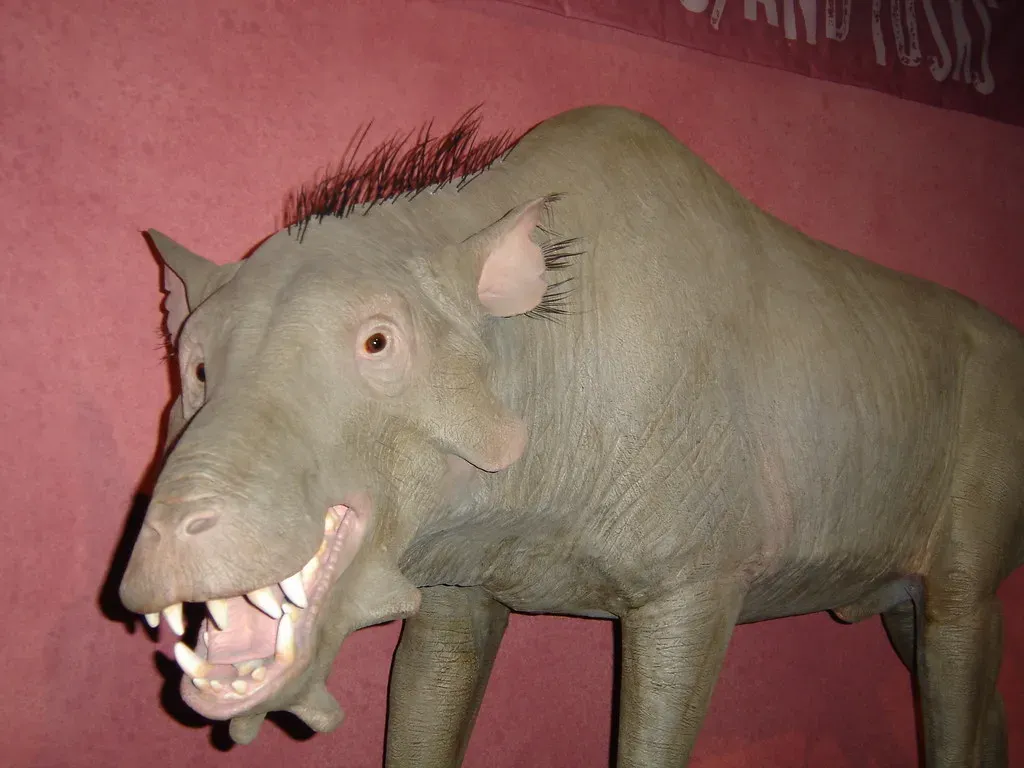
Let’s be real – naming something a “hell pig” is already a massive red flag. Take Archaeotherium. They’re sometimes referred to as hell pigs, and while the name fits their appearance, they’re not actually pigs – they’re more closely related to hippos and whales. Archaeotherium was a cow-sized predatory omnivore with huge jaws that it used to hunt animals including prehistoric rhinos. A creature related to hippos, hunting rhinos, while looking like a pig from your darkest nightmares. Prehistoric Earth truly did not play by any sensible rules.
Standing on all fours, this beast was as tall as a man, and had an immense head armed with powerful jaws and sharp teeth. Scientists believe that it was able to hunt live prey, but that it also scared other predators away from their kills. Its bite marks also suggest that it fought viciously with its own kind, and it is even possible that Entelodonts were cannibalistic. So not only was it a terrifying predator and a food thief, it may have also eaten its own. Some things, it turns out, never really change.
6. Diplocaulus: The Boomerang-Headed Amphibian of the Permian
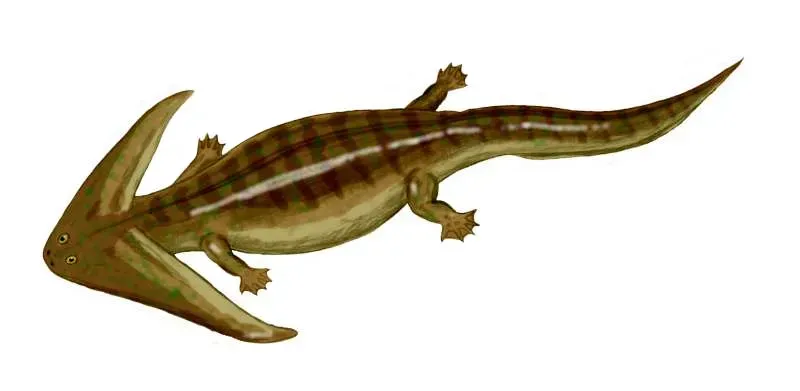
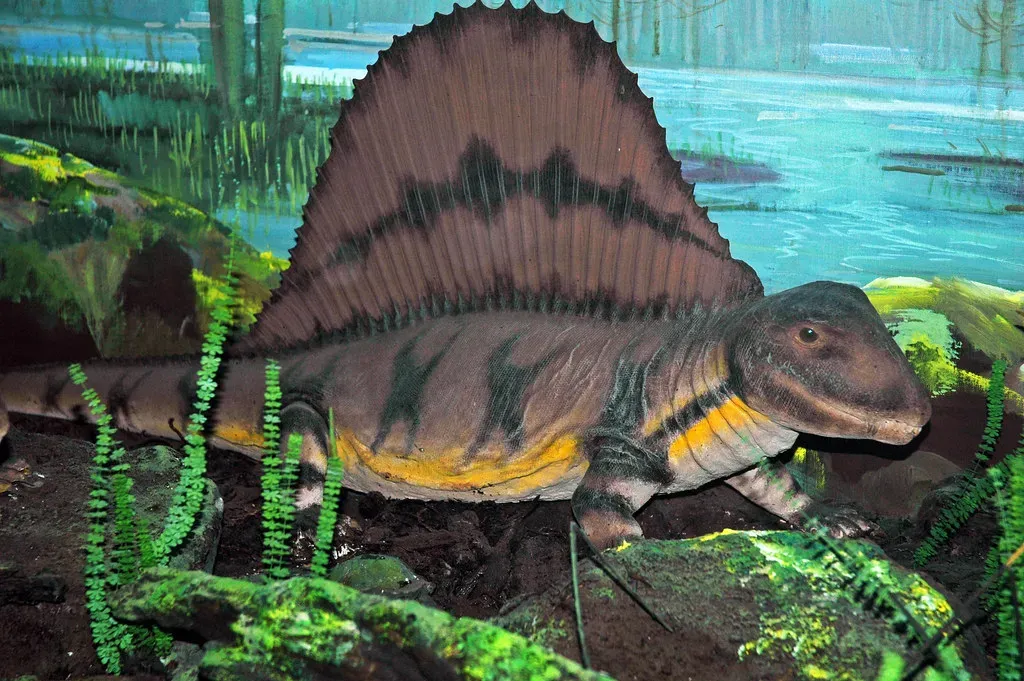
If you handed someone a description of Diplocaulus and told them to draw it, they’d probably hand it back and tell you they couldn’t make it work. Diplocaulus magnicornis stands out among even the strangest creatures of ancient aquatics because of its boomerang-shaped skull. Researchers aren’t sure why this amphibian evolved such a bizarre head, but it probably played a role in how the species swam. It lived about 275 million years ago, during the Permian period. A literal boomerang for a head. Attached to a fairly small, salamander-like body. The contrast is almost funny.
Scientists have debated for years whether those wide, sweeping “horns” on the skull helped Diplocaulus maneuver through water, made it harder for predators to swallow, or played a role in attracting mates. It’s hard to say for sure, but the leading theories suggest the wide skull acted like a hydrofoil, allowing the creature to use water currents to glide through rivers and lakes with minimal effort. Think of it as nature’s original stealth glider, built 275 million years before any human engineer thought to try. The sheer oddity of this animal deserves far more attention than it gets.
7. Megatherium: The Giant Sloth That May Have Been a Killer
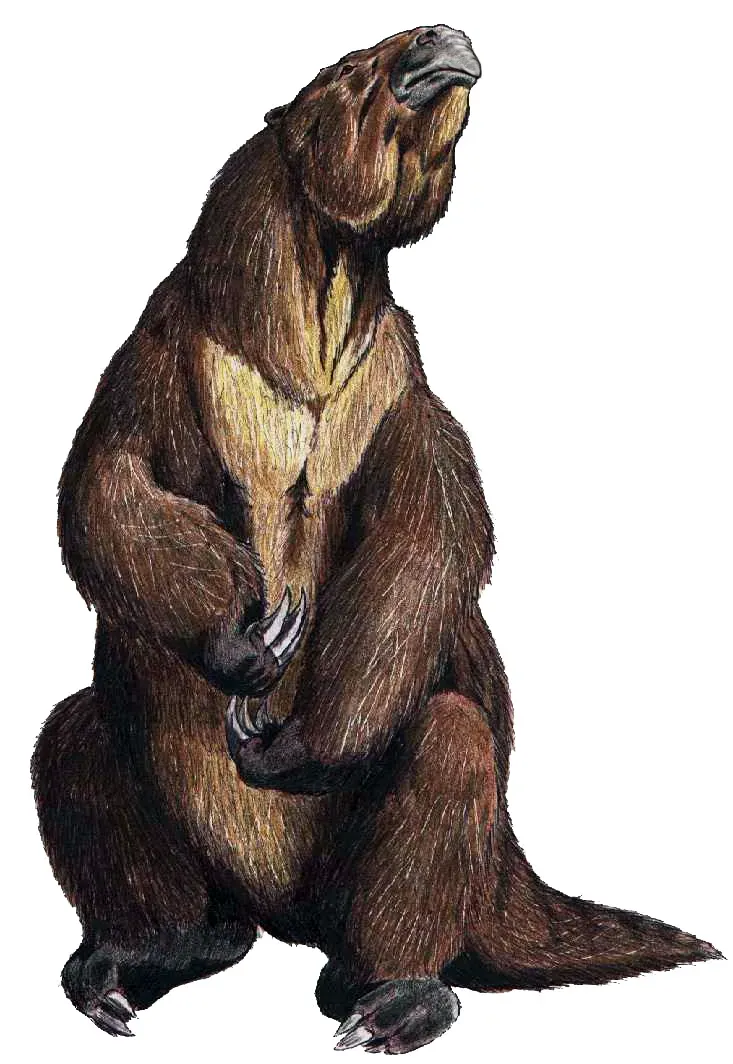
You probably think of sloths as adorably slow, perpetually sleepy creatures hanging upside down in trees. Megatherium would like a word with you. The biggest among the giant ground sloths was Megatherium, a tank-sized sloth that stood almost 3.5 metres tall on its hind legs and tipped the scales at 4,000 kilograms. For context, that’s heavier than most modern SUVs, and this thing walked around on legs rather than four wheels.
It was actually a giant ground sloth related to modern sloths. An inhabitant of South America during the Quaternary period, an adult standing on its hind legs could reach a height of 20 feet. Megatherium was previously regarded as a slow tree ripper. Recent studies show that its great claws might have been used for stabbing and killing. If this was the purpose of its claws, it would make the giant sloth the largest predator of the South American plains. The peaceful, slow-moving sloth image, it turns out, might be one of prehistory’s biggest misconceptions. Nature loves a plot twist.
8. Tanystropheus: The Reptile With a Neck Longer Than Its Entire Body
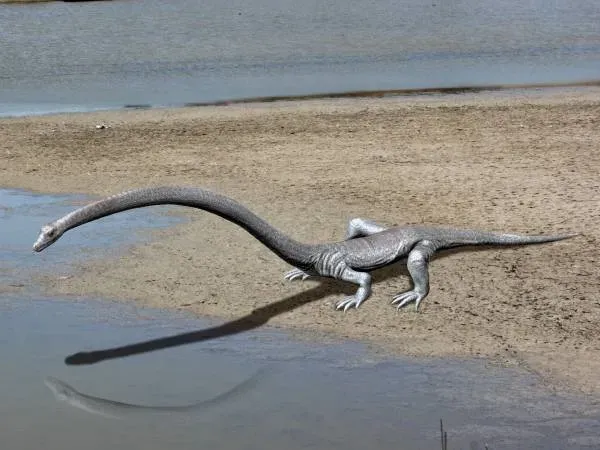
Tanystropheus is one of those animals where you look at a fossil reconstruction and genuinely wonder if paleontologists made a mistake. These ancient marine reptiles lived during the Triassic period around 242 million years ago. Researchers identified them from bizarre fossils located on what is now the border between Switzerland and Italy. They had weird, broomstick-like necks that stretched to 10 feet (3 metres) in length – three times the length of their torsos. A neck three times longer than the body it was attached to. Imagine a giraffe, then triple its neck. That’s still not quite Tanystropheus territory.
What makes this creature even more fascinating is that for a long time, scientists couldn’t agree on whether it lived on land or in the water. Recent research has suggested there may have actually been two distinct species, with one venturing into the sea for fish and another staying on land to hunt insects and small reptiles. So not only did evolution give this thing an absurdly impractical neck, it also produced two different versions just to keep scientists guessing. I think that’s either genius or chaos. Maybe both.
9. Andrewsarchus: The Largest Meat-Eating Mammal Known From Basically Nothing
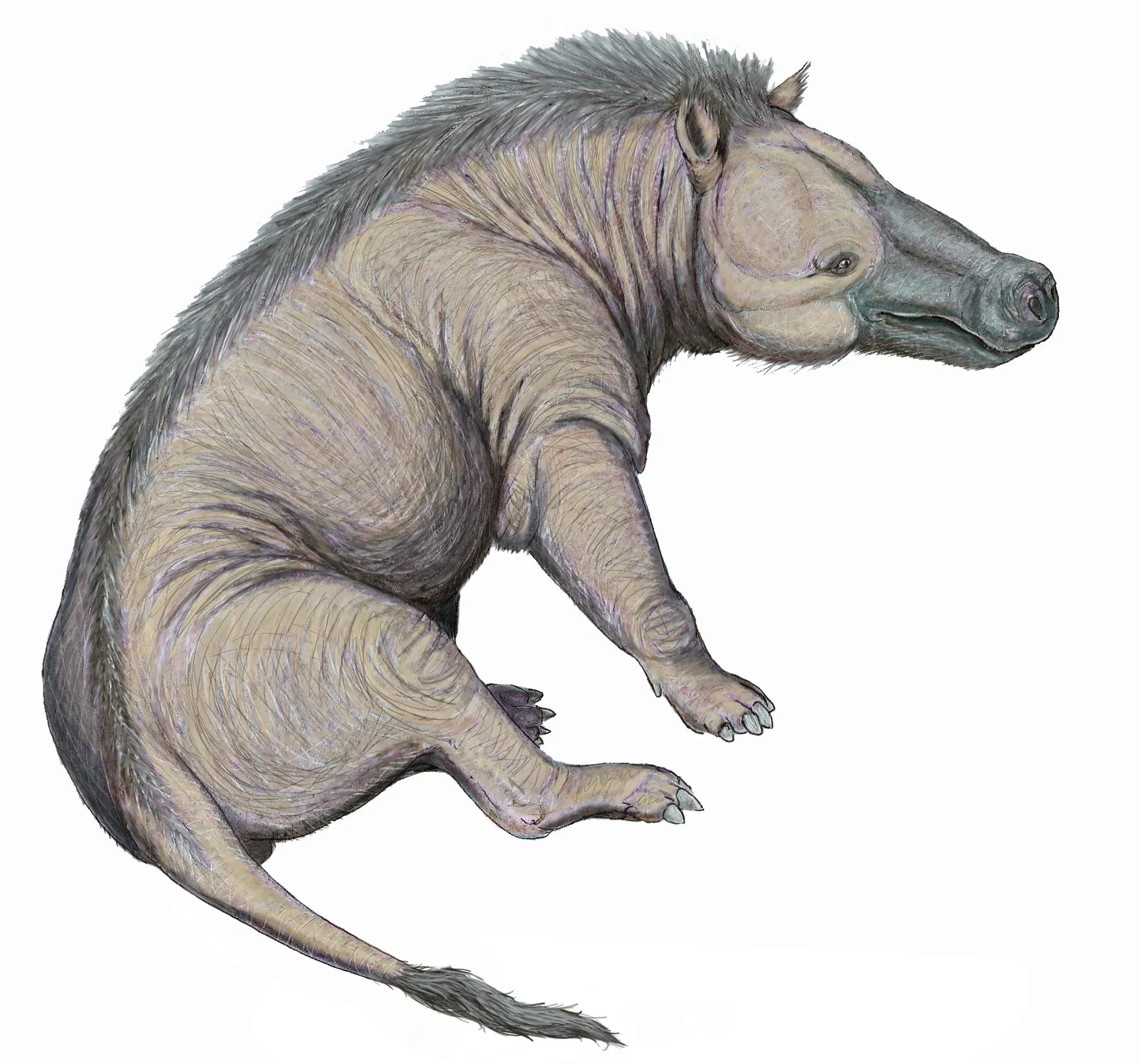
Here’s a creature that earns its place on this list not just for how terrifying it was, but for how mysterious it remains. Andrewsarchus, known from a single skull, may have been one of the largest meat-eating mammals. Among all the carnivorous mammals that have ever lived, Andrewsarchus may have been the largest. The trouble is that this meat-eating beast is only known from a skull and a foot, with no other fossils coming to light in nearly a century. A skull and a foot. That’s it. That’s all science has to work with for what might be the biggest land predator mammal ever.
Based on related animals, it seems that Andrewsarchus was about the size of a rhino and took down prey with massive jaws, acting more like an enormous wolf than a cat. The skull alone was over 80 centimetres long, which is staggeringly large for any land mammal. Scientists have estimated the full body length could have reached nearly 4 metres. To put that in perspective, picture the largest wolf you’ve ever seen, then triple its size and give it the jaw strength of something truly monstrous. The world lost something extraordinary when this animal vanished from the record – or maybe it’s hiding somewhere, waiting.
10. Deinotherium: The Elephant That Wore Its Tusks Upside Down
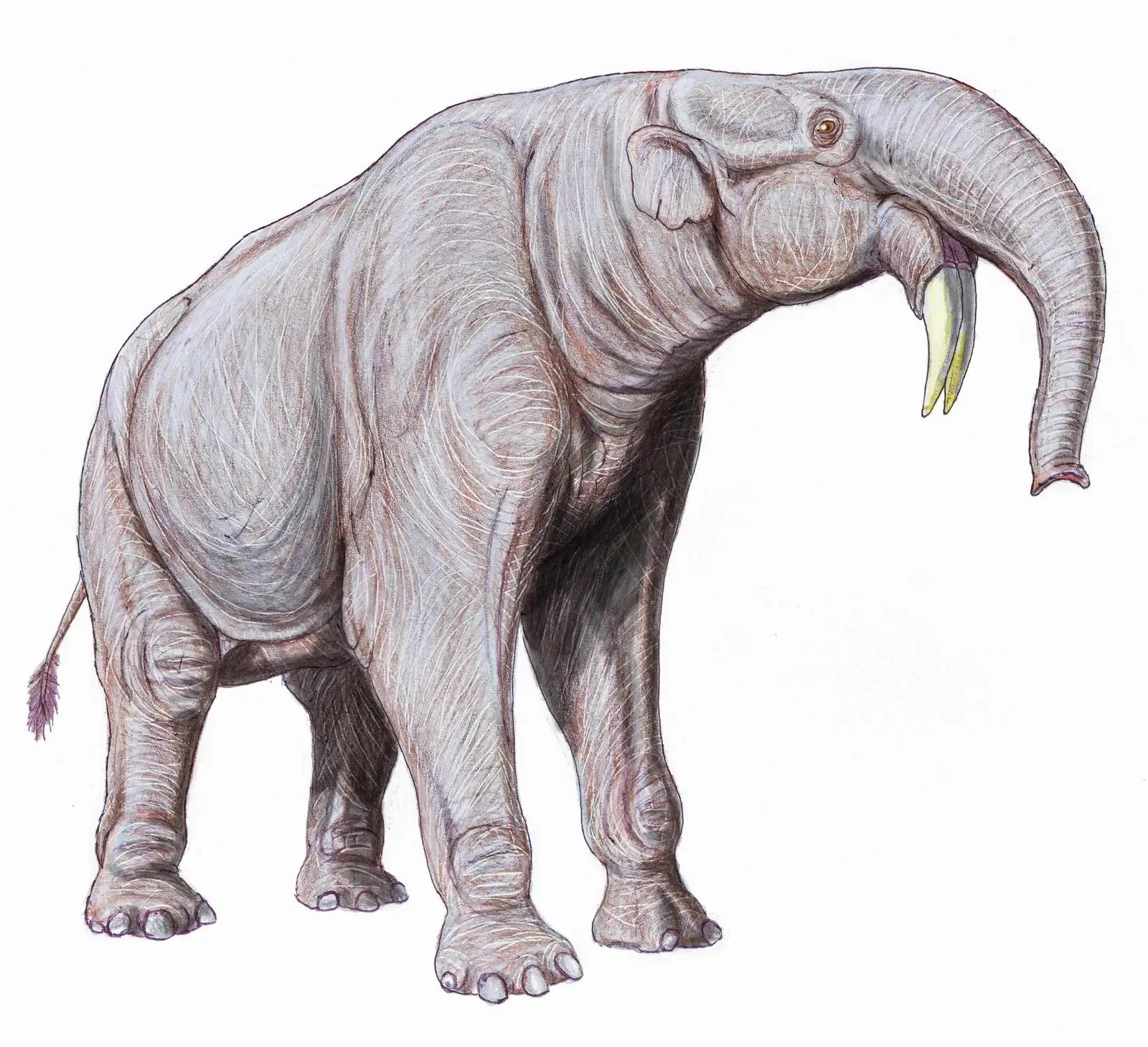
You’d think that after millions of years of elephant evolution, nature would have settled on a reasonably sensible tusk arrangement. Deinotherium disagreed entirely. Around 20 million years ago there lived a prehistoric pachyderm named Deinotherium with twin, curved tusks curving down from the jaw. Precisely what the elephant used these tusks for isn’t clear. One early and fanciful idea is that Deinotherium used them to anchor itself to riverbanks while sleeping. Sleeping anchors. Honestly, that explanation is bizarre enough to almost make sense.
What we do know is that Deinotherium was a genuine giant among already-large animals. This genus of elephant-like creatures had a pair of chin tusks that might have been used to dig up the soil to gain access to roots and vegetables. They also had a relatively short trunk compared to other Proboscideans. They ranged from 12 to 15 feet high, making them one of the largest mammals to ever walk on the earth. An elephant-like creature over 15 feet tall, with downward-curving tusks attached to its lower jaw. Prehistoric Earth was, without question, the most creative art project this planet has ever produced.
Conclusion: The Past Was Wilder Than You Ever Imagined
If there’s one thing this list hammers home, it’s that Earth’s prehistoric story is so much richer, stranger, and more spectacular than any Hollywood blockbuster could ever capture. These ten creatures represent just a sliver of the outrageous diversity that evolution cooked up across billions of years. From five-eyed ocean dwellers to buzzsaw-jawed sharks, from upside-down elephant tusks to boomerang skulls, the ancient world was a place where the rules simply did not apply.
The truly humbling part? Scientists are still discovering new species every year, each one more surprising than the last. There are almost certainly creatures out there in the fossil record that would make this entire list look ordinary by comparison. So the next time someone says prehistoric life was all about T. rex and Triceratops, you can smile and tell them they have absolutely no idea what they’re missing. Which of these ten wild prehistoric creatures surprised you the most? Drop your thoughts in the comments below – the answer might be more revealing than you expect.