Have you ever stopped to wonder what’s actually happening inside your head right now? That voice reading these words, that awareness of your own existence, that peculiar sensation of being you. It’s strange when you really think about it. You’re conscious, but what does that even mean? Scientists have been grappling with this mystery for centuries, and honestly, we’re still pretty clueless about the whole thing. Here’s the really wild part: in 2026, researchers are making breakthroughs that are completely upending what we thought we knew. Some of these discoveries might genuinely blow your mind. Let’s dive in.
Your Brain Can’t Be Reduced to Simple Code
You might think consciousness is just sophisticated programming running on biological hardware. That’s what a lot of people assume. Turns out, consciousness emerges from a special kind of computing matter, not from running the right program. Recent research from December 2025 reveals something fascinating.
Computation is inseparable from the brain’s physical structure, energy constraints, and continuous dynamics. Your awareness isn’t software that could theoretically run on any machine. It’s deeply tied to the messy, biological reality of neurons firing in your skull. Building synthetic minds may require new kinds of physical systems, not just smarter code. This changes everything about how we think artificial intelligence might one day achieve real awareness.
Consciousness Evolved in Stages, Starting With Pain

Consciousness appears to be an ancient and widespread feature of evolution, not some recent human invention. Think about that for a second. The ability to experience the world didn’t just pop up when our species arrived. Pain and pleasure evolved to keep organisms alive, attentive, and socially connected.
Here’s where it gets interesting. Scientists now identify three distinct forms: basic arousal, general alertness, and reflexive self-consciousness. General alertness allows an individual to focus on one important signal while filtering out others, like suddenly noticing smoke when someone is talking to you. Your brain evolved awareness layer by layer, each serving a different survival function.
Your Brain Might Tap Into a Quantum Field
This one sounds like science fiction, I know. Conscious states may arise from the brain’s capacity to resonate with the quantum vacuum – the zero-point field that permeates all of space. Researchers published this theory in late 2025, and it’s genuinely mind-bending.
Specific frequencies of the zero-point field can resonate with glutamate, the brain’s most abundant neurotransmitter, in microcolumns made up of about 100 neurons. If this proves correct, your awareness isn’t generated solely by electrochemical signals bouncing around your skull. Instead, your brain might be tuning into something fundamental in the fabric of reality itself. During periods of unconsciousness, the coupling of the brain to the zero-point field is disrupted.
Consciousness May Actually Be Fundamental to Reality
What if we’ve been looking at this backwards the entire time? A new theoretical model suggests consciousness is fundamental, and only thereafter do time, space and matter arise. This isn’t mysticism dressed up as science. It’s a peer-reviewed theory from a materials science professor at Uppsala University.
The framework views consciousness not as a byproduct of brain activity, but as a fundamental field underlying everything we experience – matter, space, time, and life itself. Let’s be real, this is a radical shift. Phenomena that are now perceived as mysterious – such as telepathy or near-death experiences – can be explained as natural consequences of a shared field of consciousness. Whether this theory holds up remains to be seen, yet it offers testable predictions that could revolutionize physics and neuroscience.
Two Major Theories Just Went Head-to-Head and Neither Won
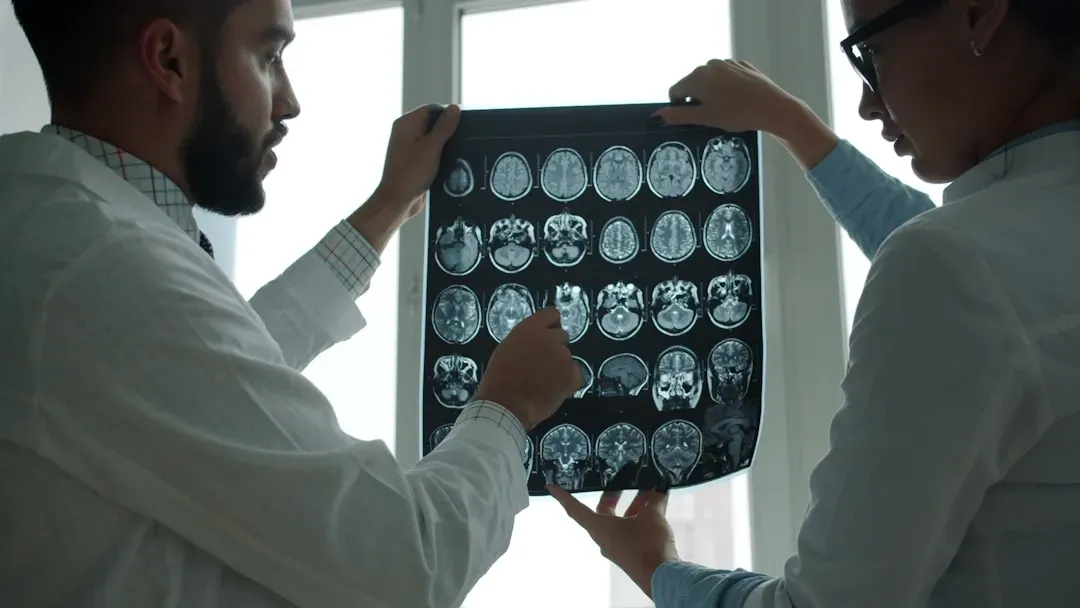
Scientists designed a massive experiment to finally settle which consciousness theory is correct. The experiment uncovered new insights into the nature of consciousness and challenges two prominent, competing scientific theories: Integrated Information Theory and Global Neuronal Workspace Theory. The study involved over 250 subjects and was published in Nature in 2025.
Here’s the kicker: The result was effectively a draw and raised far more questions than it answered, as neither theory’s predictions were fully borne out by the data. The findings de-emphasize the importance of the prefrontal cortex in consciousness, suggesting that while it’s important for reasoning and planning, consciousness itself may be linked with sensory processing and perception. Honestly, it’s both humbling and exciting that we still don’t have this figured out.
Psychedelics Rapidly Reorganize Your Brain Networks
Multiple studies in 2025 demonstrated that psychedelic compounds can rapidly reorganize brain networks, temporarily dissolving rigid patterns of thought associated with depression, trauma, and addiction. This isn’t about getting high. It’s about fundamentally altering how your consciousness operates.
Even more fascinating? Such states often produce a heightened sense of connection – to other people, to nature, and to perceived transcendent realities, with personal belief systems shaping the interpretation of these experiences. Researchers are also exploring breathwork techniques that might induce similar altered states without drugs. The implications for treating mental health conditions are enormous.
You’re Conscious Right Now, But Scientists Still Can’t Detect It Reliably

There’s no reliable way to know whether AI is conscious, and according to researchers, consciousness alone isn’t the ethical tipping point anyway; sentience, the capacity to feel good or bad, is what truly matters. If we can’t even figure out how to detect consciousness in machines, what does that say about our understanding?
There is no reliable way to tell whether a machine is aware, and that may not change anytime soon. Think about that. The safest stance for now is honest uncertainty. We can’t even develop a test to determine if something is conscious, which means the phenomenon remains deeply mysterious despite all our technological advances.
Your Brain Glows in the Dark
Here’s something genuinely weird. Living tissues emit light called biophotons as a by-product of consuming energy, and scientists recently detected biophotons emitted by the human brain from outside the skull for the first time. Your brain literally glows while you’re thinking.
The emission changed as people did different mental tasks, but whether these photons play a role in cognition at all remains to be seen. Could consciousness somehow involve these light emissions? Right now we don’t know, yet the discovery opens up entirely new avenues for research. Your thoughts might be generating detectable light patterns nobody suspected existed until very recently.
Consciousness May Not Even Reside in the Brain’s Front Areas
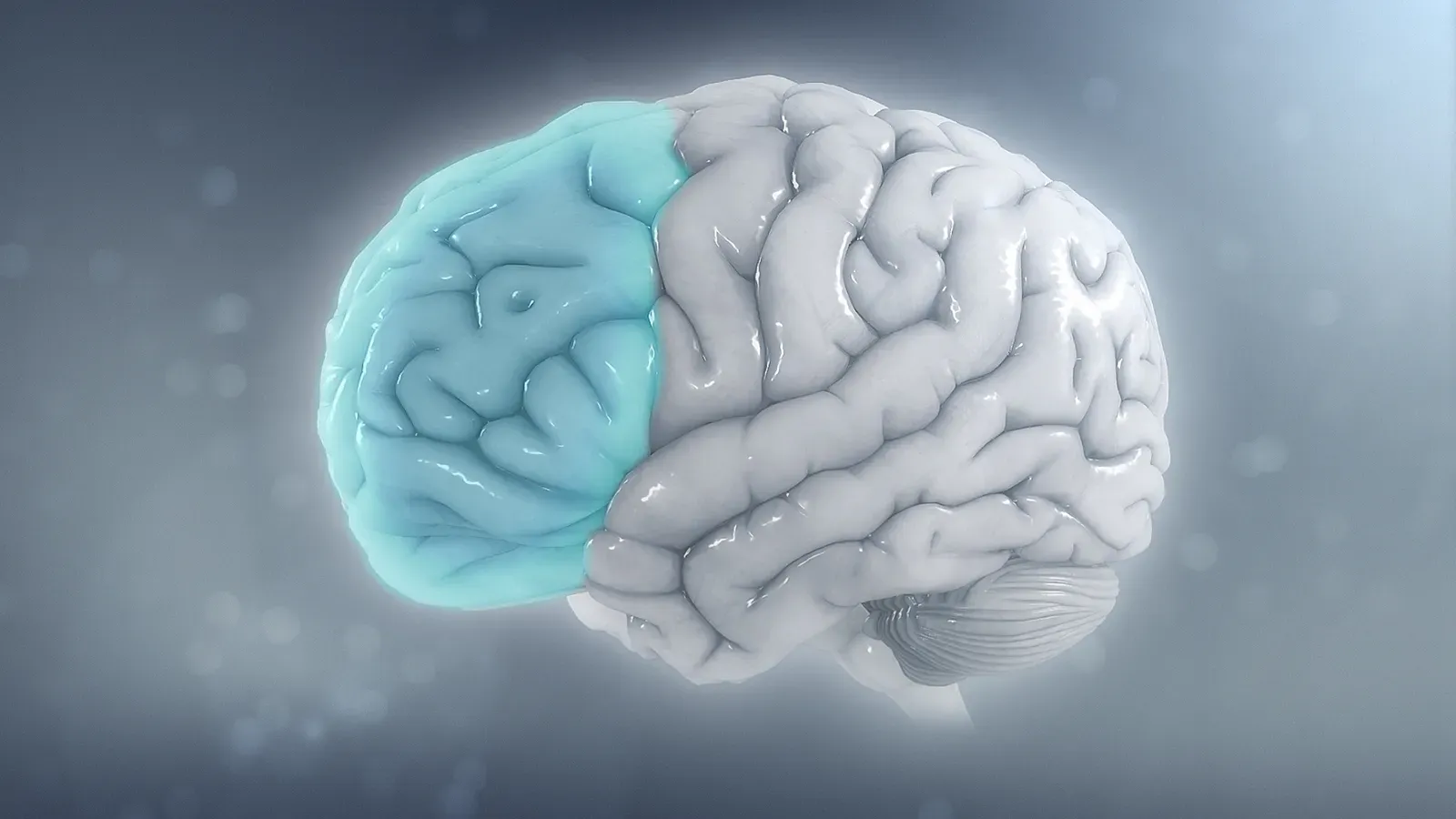
For years, neuroscientists assumed the prefrontal cortex was the seat of consciousness. While the prefrontal cortex is important for reasoning and planning, consciousness itself may be linked with sensory processing and perception, meaning intelligence is about doing while consciousness is about being.
The back of the brain seems crucial for holding the specific details of what you see, like orientation, while the front part is involved in identifying the general category of an object but might not be the main hub for all the visual specifics. This completely challenges assumptions about where your awareness actually happens. Your sense of self might be more distributed throughout your brain than anyone imagined.
We Still Don’t Know What Consciousness Actually Looks Like
We can alter consciousness through things like anesthesia or different drugs, so there must be something biological amongst the billions of brain cells, yet consciousness may simply be a collection of sensory inputs processed so quickly that our brain has to make a sort of thinking persona. It’s hard to say for sure, but this remains one of the biggest puzzles in all of science.
When it comes to understanding the mysteries of our own consciousness, we don’t really know. Nobody has even the slightest idea of how the brain produces consciousness, if, in fact, it even does. You’d think after all these years of neuroscience research we’d have at least a partial answer. Instead, consciousness remains as mysterious as ever, resisting our most sophisticated attempts to pin it down.
Conclusion
The more scientists discover about consciousness, the stranger and more complex it becomes. We’ve moved from thinking it’s simple brain activity to considering quantum fields, fundamental forces of nature, and distributed networks that don’t fit our tidy assumptions. What struck me most while researching these facts is how much genuine uncertainty still exists at the cutting edge of consciousness research.
These aren’t just academic questions. Understanding consciousness could revolutionize how we treat mental illness, design artificial intelligence, and even how we understand our place in the universe. The discoveries happening right now in 2026 are pushing boundaries that seemed untouchable just a decade ago. What do you think consciousness really is? Does it fascinate you as much as it does researchers who’ve devoted their entire careers to this mystery?