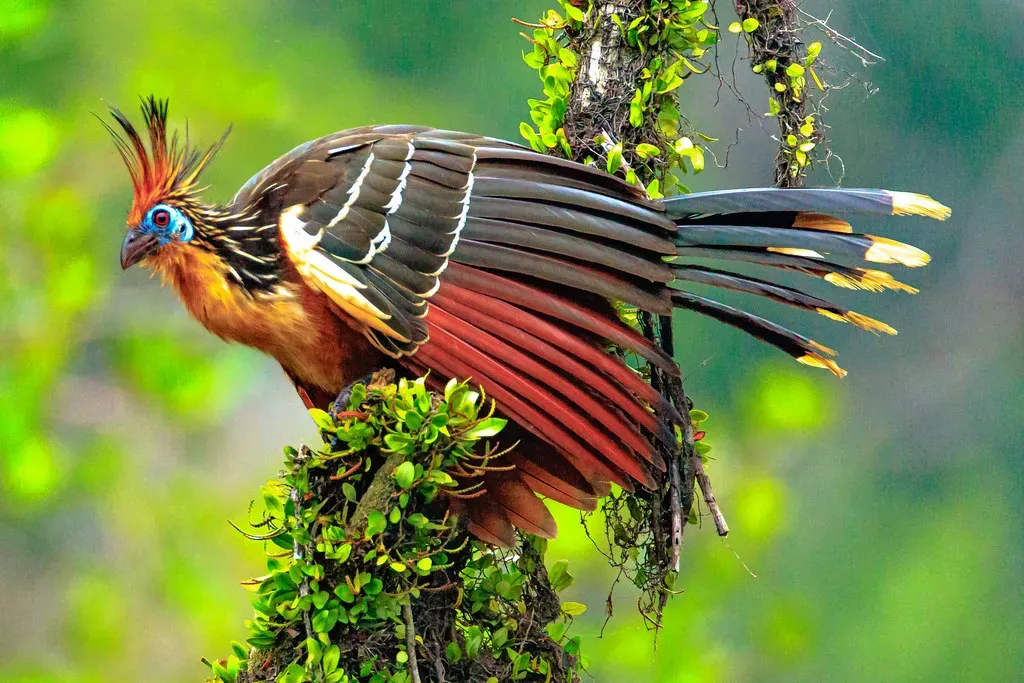
Picture this: you’re wandering through the steamy swamps of the Amazon, and you catch a whiff of something that smells distinctly like fresh manure. Then you spot an unusual bird with a wild mohawk crest and a vivid blue face perched nearby. Welcome to the world of the hoatzin, one of nature’s most bizarre creatures that looks like it escaped from a time machine. While most birds fit neatly into our understanding of avian evolution, the hoatzin seems to have written its own rulebook.
Here’s something that’ll grab your attention: their babies can actually swim underwater to escape predators and then climb back up trees using claws on their wings. I know it sounds crazy, but this is just the beginning of what makes these birds so utterly fascinating. Let’s dive into ten mind-blowing facts that reveal why scientists have been scratching their heads over this peculiar species for centuries.
They Smell Like A Walking Manure Factory
You’ll know when you’re near a hoatzin because they give off a distinctive smell often compared to fresh cow manure or rotting vegetation, earning them the unflattering nickname of “stinkbird.” Let’s be real, that’s not the kind of reputation most creatures would want. The odor comes from their unique digestive process that ferments leaves in an enlarged crop, similar to how cows digest grass. The fermented foliage produces methane, which the bird expels through burping.
This awful smell isn’t some clever defense mechanism that evolved on purpose. There’s really no known benefit to their scent, and it’s not meant to scare off predators or achieve any sort of goal. Still, if it happens to keep a few hunters away, that’s just a lucky side effect. The smell is so notorious that indigenous peoples in South America rarely hunt these birds for food, even in desperate times, because the meat tastes just as bad as the bird smells.
Baby Hoatzins Have Functional Claws On Their Wings
Hoatzin chicks have two claws on each wing. Think about that for a second – claws on wings! Immediately after hatching, they can use these claws and their oversized feet to scramble around tree branches without falling into the water. This isn’t just some vestigial leftover from ancient times; these claws serve a very real, modern purpose for survival.
As hoatzins mature, the wing claws become less prominent and are no longer functional, effectively disappearing as the wings develop. For the first three months of life, though, these chicks are essentially tiny climbing machines. With their wing claws, young hoatzin chicks can crawl by alternating movements of front and rear limbs on opposite sides of their body, just like common mammals, and no other living bird species has the ability to execute this crawling motion.
Chicks Dive Into Water To Escape Predators
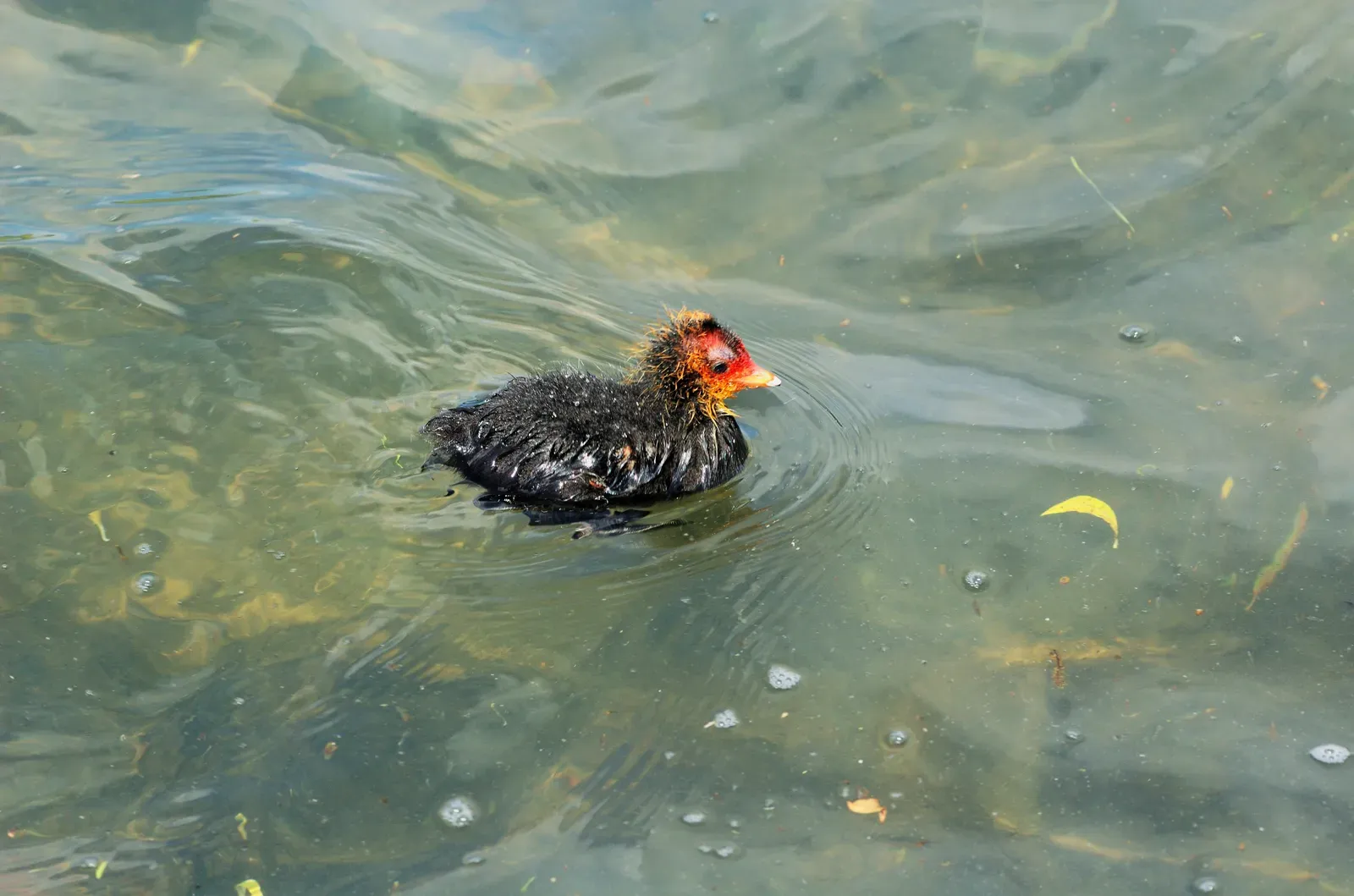
When predators such as the great black hawk attack a hoatzin nesting colony, the adults fly noisily about, trying to divert the predator’s attention, while the chicks move away from the nest and hide among the thickets. Here’s where things get wild. If discovered, however, they drop into the water and swim under the surface to escape, then later use their clawed wings to climb back to the safety of the nest.
Honestly, it’s hard not to be impressed by this survival strategy. These chicks, which are barely old enough to have proper feathers, will literally throw themselves from their nests into rivers below when danger approaches. The young, which are excellent swimmers, will plunge to safety, return to shore, and use their claws to climb back up to the nest. It’s like watching a mix between a bird, a lizard, and an aquatic mammal all rolled into one feathered package.
Scientists Once Thought They Were Related To Archaeopteryx
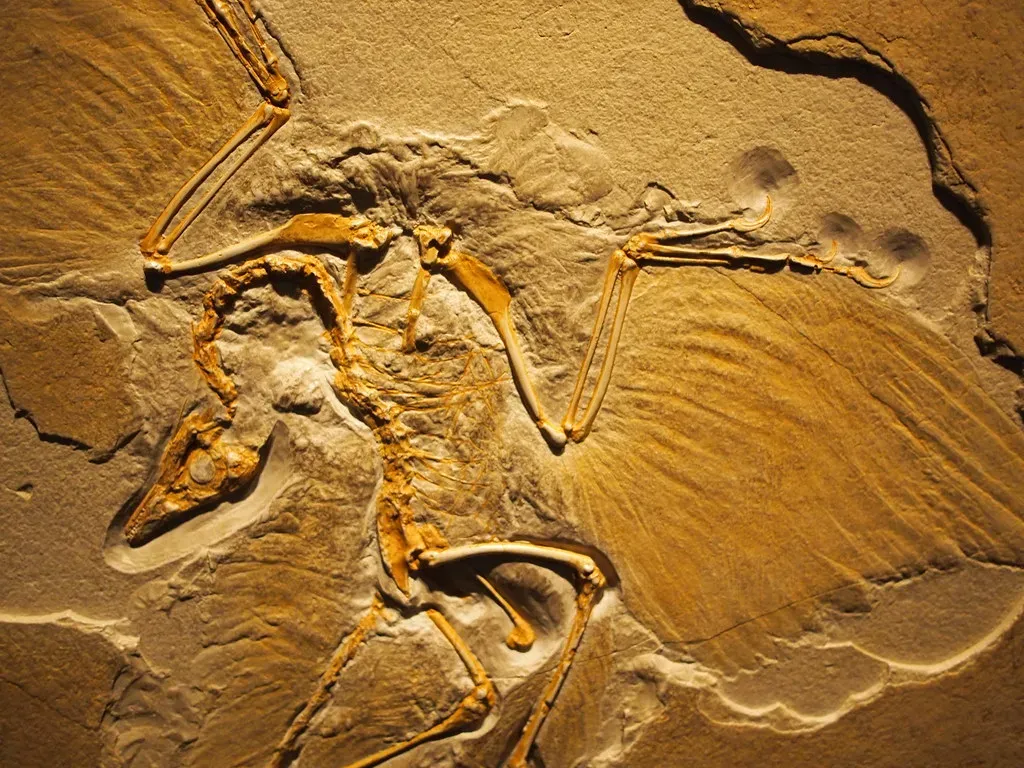
This has led to comparisons to the fossil bird Archaeopteryx, but the characteristic is rather an autapomorphy, possibly caused by an atavism toward the dinosaurian finger claws, whose developmental genetics are presumably still present in the avian genome. The similarities between hoatzin chicks and this famous prehistoric creature sparked intense scientific debate for years. Some early researchers genuinely believed they’d found a living link to dinosaur-era birds.
Since Archaeopteryx had three functional claws on each wing, some earlier systematists speculated that the hoatzin was descended from it, because nestling hoatzins have two functional claws on each wing. Modern researchers, however, hypothesize that the young hoatzin’s claws are of more recent origin, and may be a secondary adaptation from its frequent need to leave the nest and climb about in dense vines and trees well before it can fly. Turns out evolution can create similar solutions independently when the circumstances demand it.
They’re The Only Birds With A Cow-Like Digestive System
The hoatzin is the only bird with a digestive system that ferments vegetation as a cow does, which enables it to eat leaves and buds exclusively. This fact alone should blow your mind. While cows have a specialized stomach called a rumen, hoatzins have something equally impressive. The hoatzin has an unusually large crop that is folded into two chambers, with a large, multichambered lower esophagus.
The Hoatzin is the only bird in the world that uses these foregut compartments instead of a stomach to digest food. Inside this fermentation chamber live specialized bacteria that break down the tough cellulose in leaves. Some of the more than 1000 bacterial species found in Hoatzin crops are also found in mammalian ruminants, while other bacteria seem to be unique to these birds. The whole process takes roughly two days to complete, which is why you’ll often see these birds just lounging around doing absolutely nothing.
Their Digestive System Makes Them Terrible At Flying
The digestion process takes a really long time, up to 45 hours, which is why these birds spend about 80 per cent of their time lounging around; they often aren’t able to fly when their crops are engorged with fermenting leaves. Imagine being so full of fermenting salad that you literally can’t take off. That’s the daily reality for hoatzins. Their enlarged digestive system takes up so much room inside their bodies that there’s barely any space left for proper flight muscles.
Even on an empty stomach, the Hoatzin isn’t a strong flyer because its sternum and flight muscles are less developed than those of other flying birds. Hoatzins only have enough space left inside their bodies for a simple, reduced sternum and puny flight muscles, so small wonder then that they are such weak flyers. When they do attempt flight, it’s clumsy, labored, and often ends in comical crash landings among the branches.
They’re Evolutionary Orphans With No Close Living Relatives
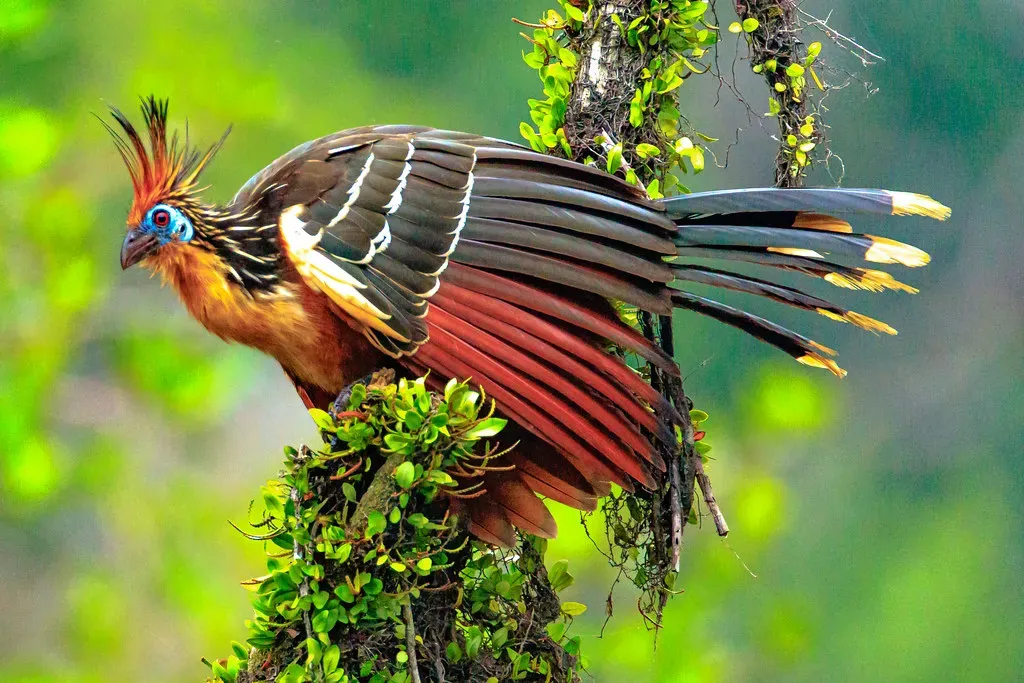
In 2015, genetic research indicated that the hoatzin is the last surviving member of a bird line that branched off in its own direction 64 million years ago, shortly after the extinction event that killed the nonavian dinosaurs. Let that sink in for a moment. This bird has been on its own evolutionary path for longer than most mammal lineages have existed. The Hoatzin has no close relatives that aren’t extinct.
Researchers added hoatzins to a category called “orphans” along with shorebirds and cranes, because it’s unclear where hoatzins sit within the avian family tree. Scientists have tried linking them to cuckoos, chickens, doves, cranes, and just about every other bird group imaginable, yet nothing quite fits. The hoatzin remains stubbornly unique, defying neat classification. It’s like nature’s way of reminding us that evolution doesn’t always follow predictable patterns.
They Live In South American Swamps And Wetlands
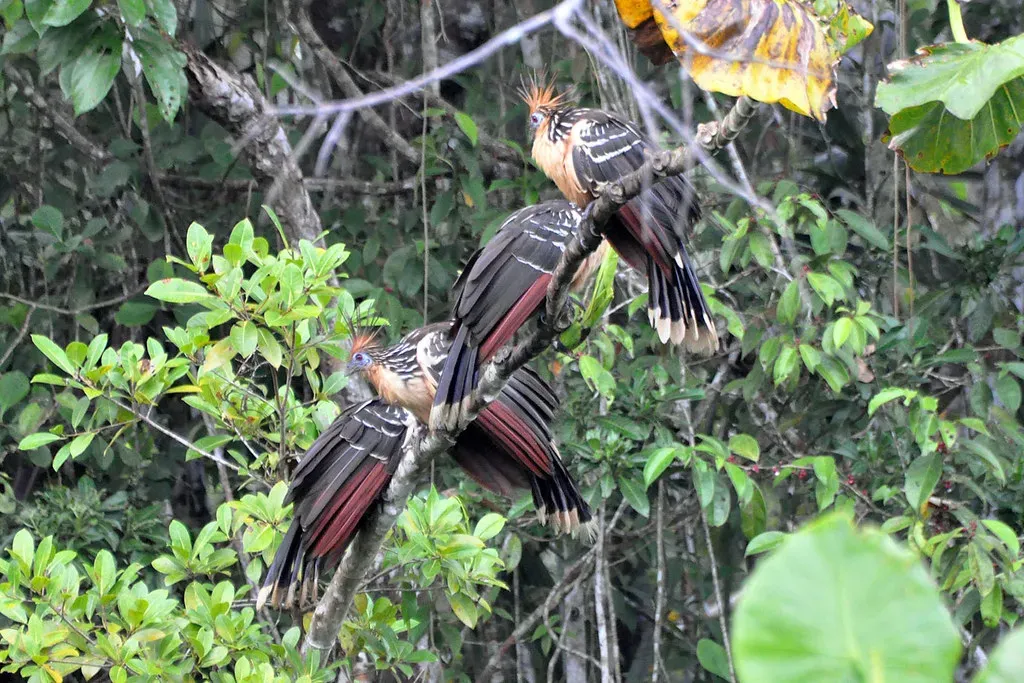
The hoatzin is a species of tropical bird found in swamps, riparian forests, and mangroves of the Amazon and Orinoco Basins in South America. You won’t find these birds in your backyard unless you happen to live along slow-moving rivers and oxbow lakes in countries like Brazil, Peru, Ecuador, Colombia, Venezuela, and Bolivia. They’re creatures of the humid lowlands, perfectly adapted to life in dense vegetation near water.
The habitat includes swamps, fresh water marshes, gallery forests, and the banks of rivers, lakes and streams. Hoatzins build their nests on branches that hang directly over water, which makes perfect sense given their chicks’ aquatic escape strategy. They’re highly social birds that live in small groups and are fairly easy to spot if you’re exploring their territory, partly because they’re too lazy and poorly adapted to fly away quickly when approached.
They Have A Bizarre Appearance That’s Hard To Forget
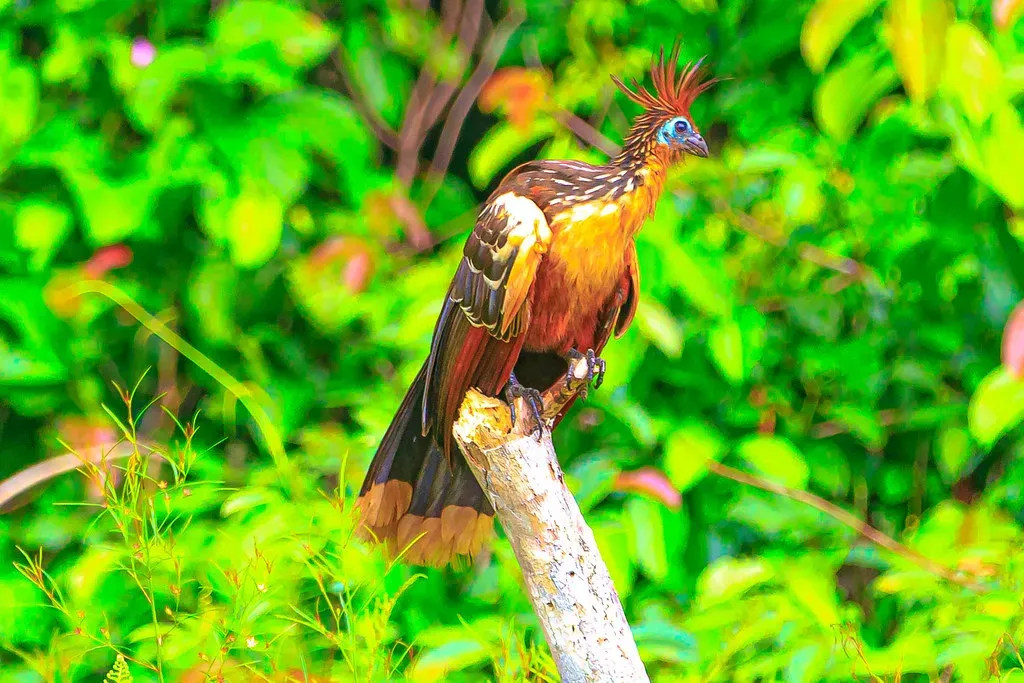
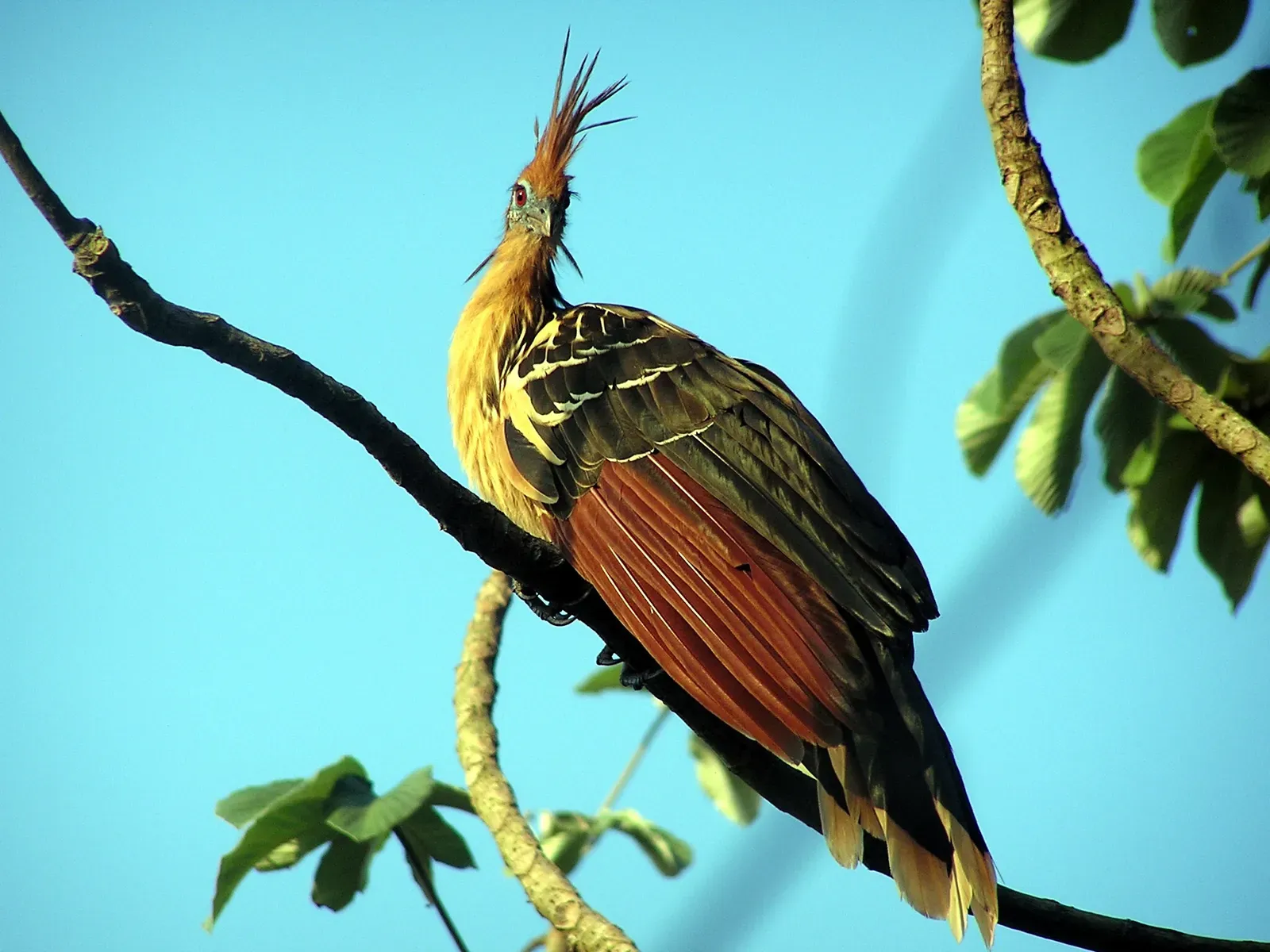
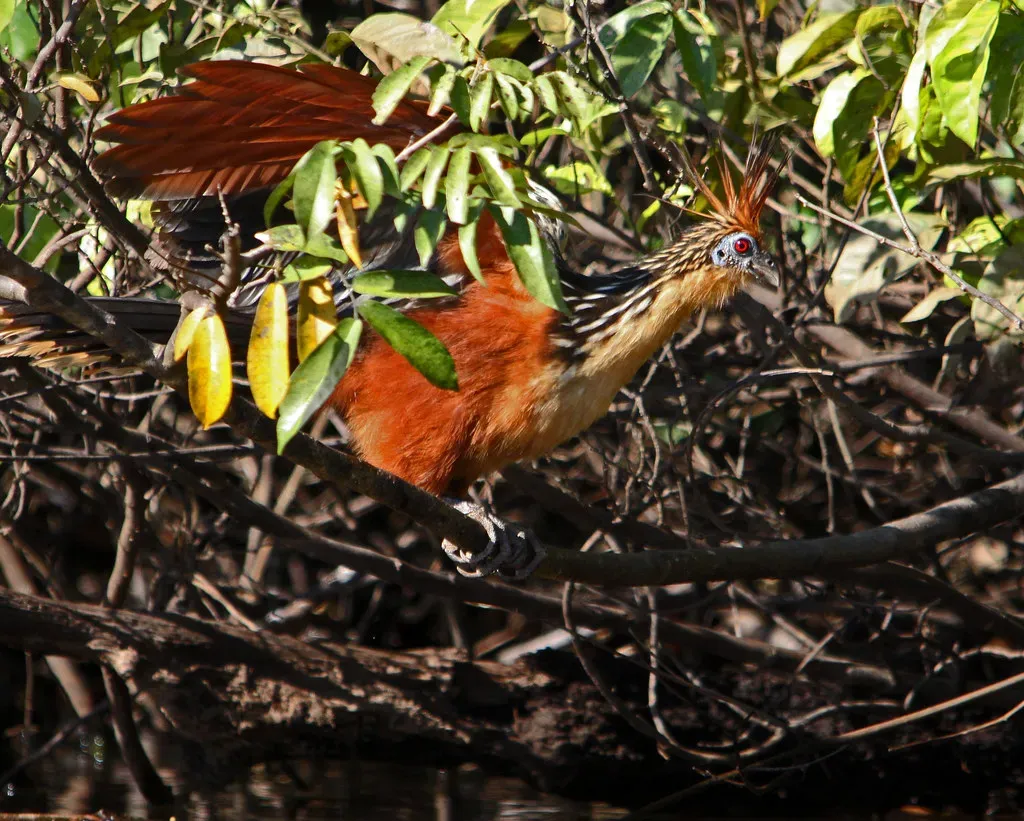
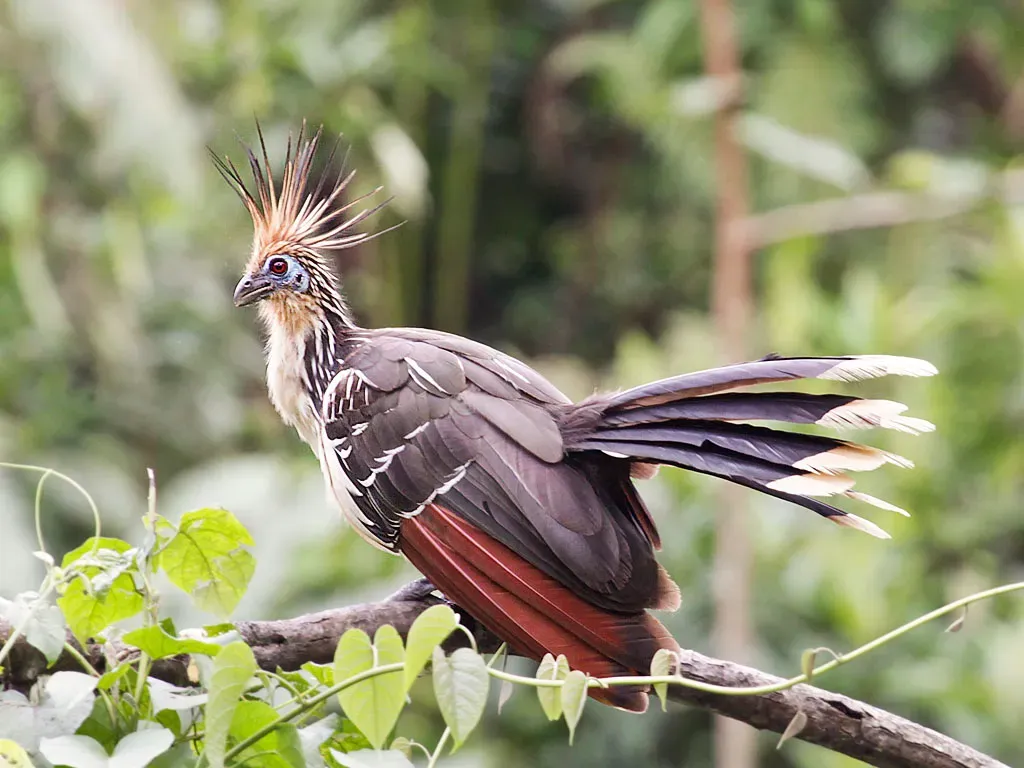
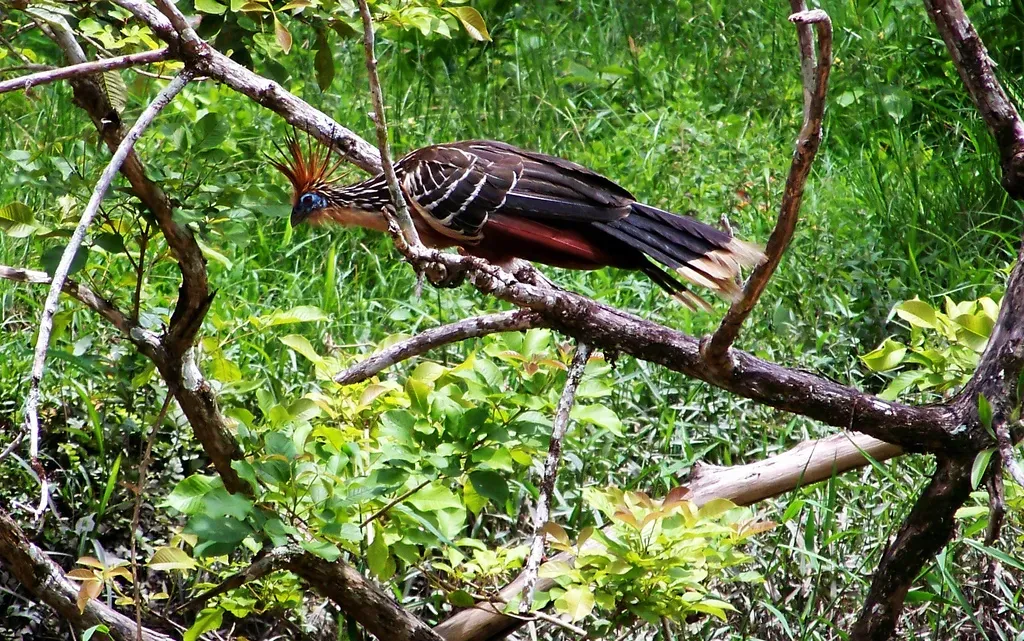
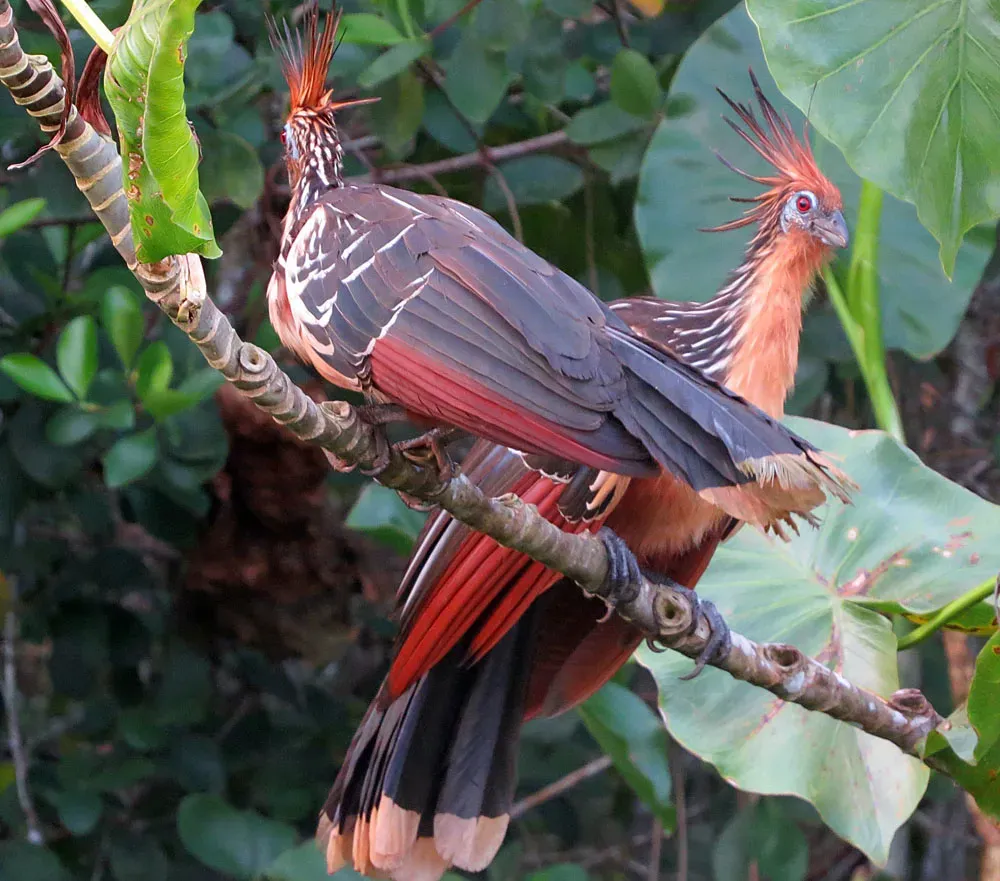
The hoatzin is pheasant-sized, with a total length of roughly 65 centimeters, and a long neck and small head, with an unfeathered, blue face with maroon eyes, and its head is topped by a spiky, rufous crest. Honestly, they look like someone designed a bird using random parts from a costume shop. The spiky crest gives them a perpetually disheveled appearance, like they just rolled out of bed after a rough night.
Hoatzin have some pretty weird traits, with mohican crests, blue facial skin, red eyes and large, fan-shaped tails, which they use to maintain balance while navigating dense vegetation. The hoatzin uses a leathery bump on the bottom of its crop to help balance its weight on the branches. This callous acts like a tripod, helping them prop themselves up when their enormous crop is full of fermenting leaves. They’re simultaneously ridiculous-looking and strangely majestic.
They’re The National Bird Of Guyana
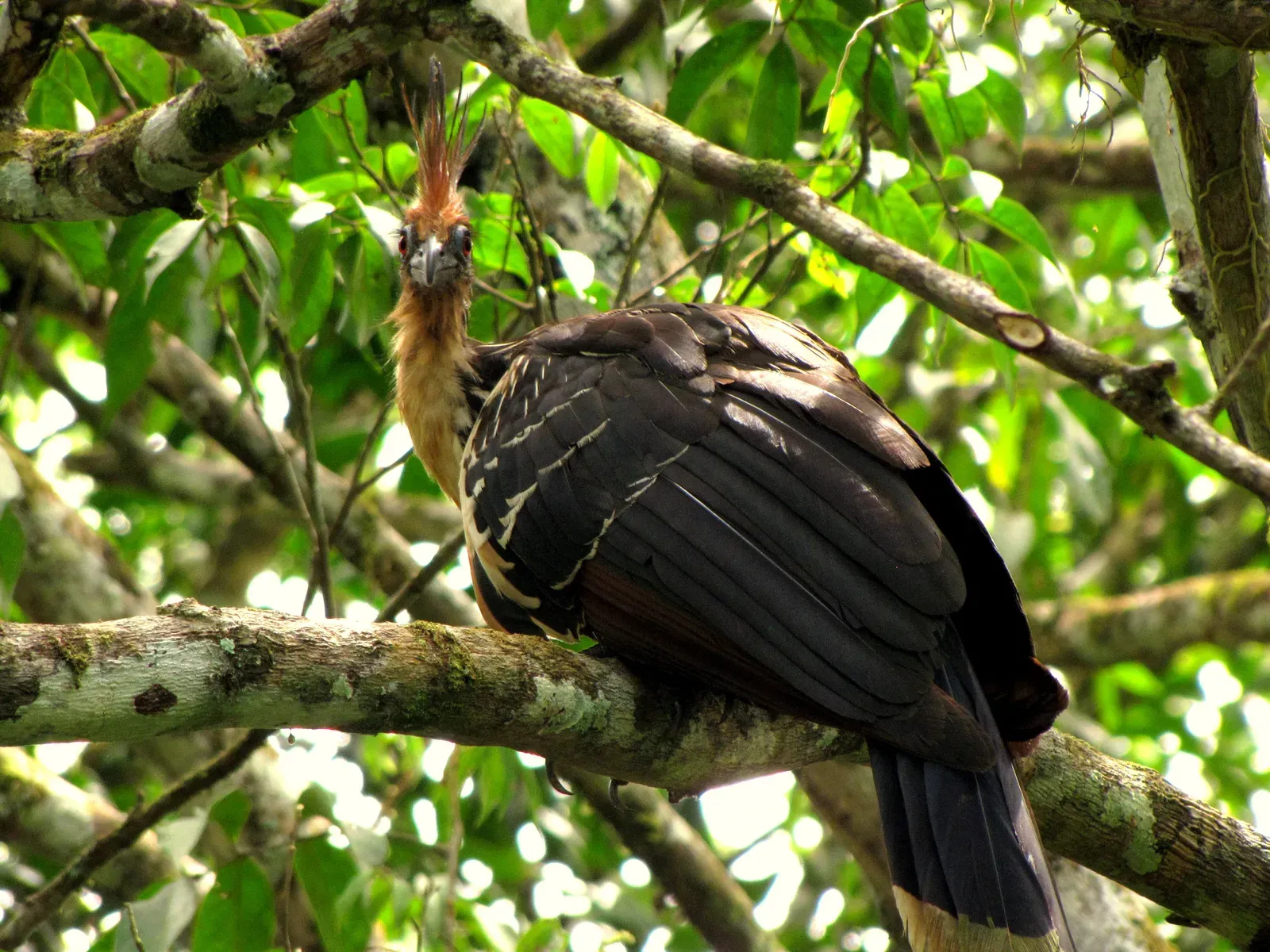
This bird is also the national bird of Guyana, where the local name for this bird is Canje pheasant. Despite their smell, awkward flying abilities, and generally odd nature, Guyana has proudly claimed the hoatzin as its national symbol. There’s something admirable about that choice, really. Instead of picking a majestic eagle or colorful parrot, they went with the weird, stinky bird that defies categorization.
The hoatzin represents something important about the unique biodiversity of South America’s wetlands and forests. Although the Hoatzin is not currently classified as an endangered species, it faces threats such as habitat loss due to deforestation and pollution of water bodies, and conservation of tropical forests and wetlands is crucial to ensuring the long-term survival of the Hoatzin and many other species that depend on these ecosystems. These strange birds remind us that nature’s most fascinating creatures often live in the places we need to protect most urgently.
Conclusion
The hoatzin is living proof that evolution creates solutions we’d never think possible. From babies with claws that dive into rivers, to a digestive system borrowed from cows, to an evolutionary history that stands alone for tens of millions of years, this bird challenges everything we think we know about how creatures should be. It’s easy to focus on the glamorous wildlife, the big cats and colorful parrots, but sometimes the smelly, awkward, prehistoric-looking bird hanging out in a swamp tells the more interesting story.
What strikes me most is how the hoatzin survives by being uniquely itself, not by fitting into established categories or following conventional rules. In a world where everything seems to need a neat label, the hoatzin just exists in its own weird, wonderful way. What do you think about this bizarre bird? Does it change how you view evolution and the diversity of life on our planet?