Picture a creature longer than a school bus, wading through an ancient river teeming with giant sawfish and prehistoric sharks, its massive sail slicing through the humid air of what is now the Sahara Desert. You wouldn’t call it a classic dinosaur. It looked nothing like what most of us grew up imagining. It was something far stranger, far more water-bound, and honestly, far more terrifying.
The Spinosaurus is a dinosaur that keeps rewriting its own story. Every decade or so, a new fossil discovery flips everything paleontologists thought they knew. It is equal parts mystery and monster, and if you think you already know its tale, just wait. There is so much more beneath the surface. Let’s dive in.
1. It Was the Longest Known Carnivorous Dinosaur That Ever Lived
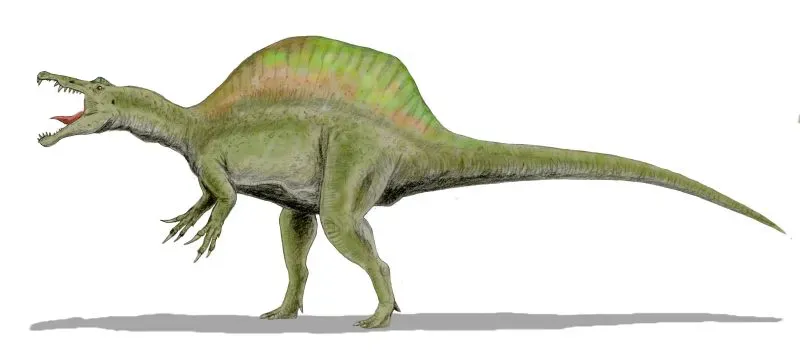
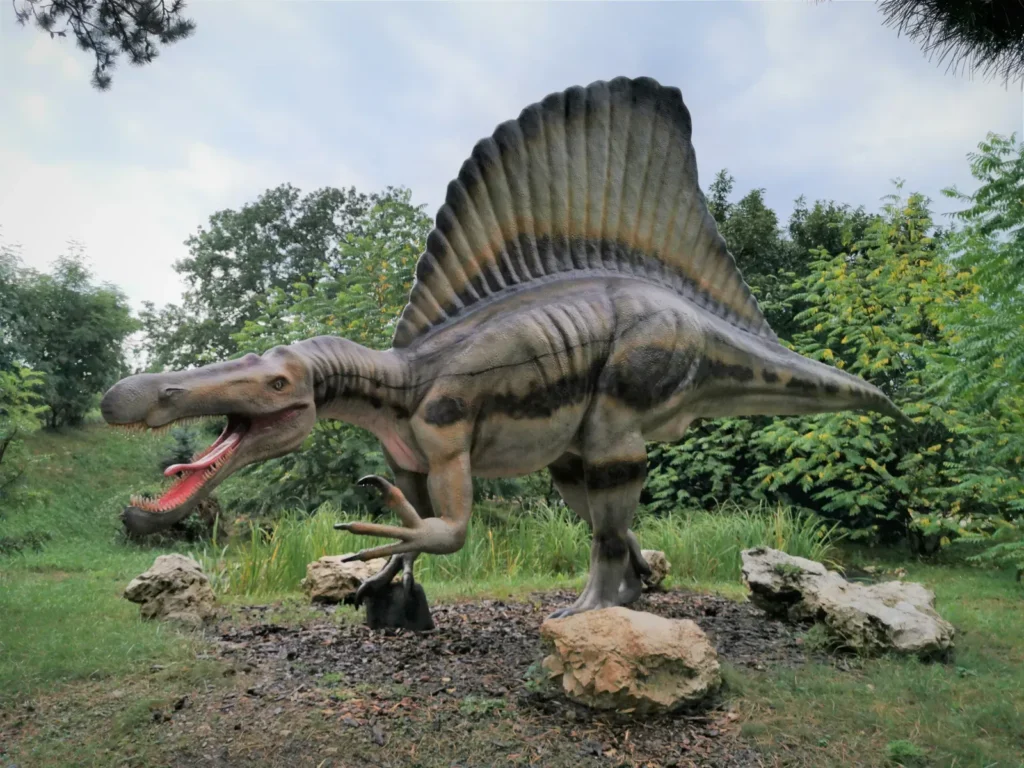
Spinosaurus_BW.jpg: ArthurWeasley, CC BY 2.5)
When you picture the world’s biggest predatory dinosaur, most people think of the T-Rex. Let’s be real, Hollywood made sure of that. Longer than any other known carnivorous dinosaur and taller than a giraffe when its sail is fully raised, Spinosaurus remains one of the most extraordinary animals ever discovered in the fossil record. That is a statement worth sitting with for a moment.
Spinosaurus is the longest theropod known at about 50 feet. This gap of over five feet over the next two biggest makes paleontologists comfortable giving it the title of largest with respect to length. That is not a marginal victory. That is a commanding lead, like comparing a freight train to a regular car.
2. It Lived in What Is Now the Sahara Desert – But the Landscape Was Completely Different
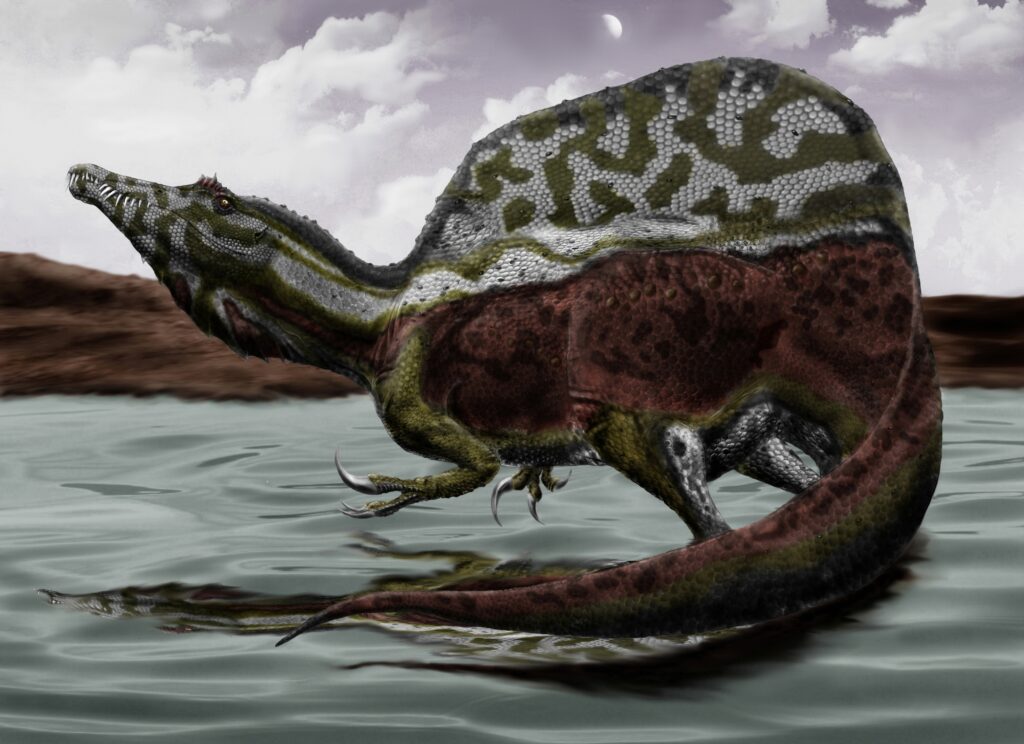
Named for its seven-foot-long spines, Spinosaurus lived about a hundred million years ago during the Cretaceous period. It inhabited what is now North Africa’s Sahara region, which at the time featured a large river system. Think about that. The driest, most hostile desert on Earth was once a lush, water-rich world crawling with life.
The Kem Kem Beds date to the Cenomanian stage of the Late Cretaceous, approximately 95 million years ago. At the time, this region was not the arid desert seen today, but a vast, low-lying river system draining into the Tethys Sea. Mangrove forests, tidal flats, massive rivers. Spinosaurus wasn’t some lone king of a barren land. It was the apex predator of an incredibly rich, almost jungle-like ecosystem.
3. It Is the Only Dinosaur Confirmed to Have Spent Much of Its Life in the Water
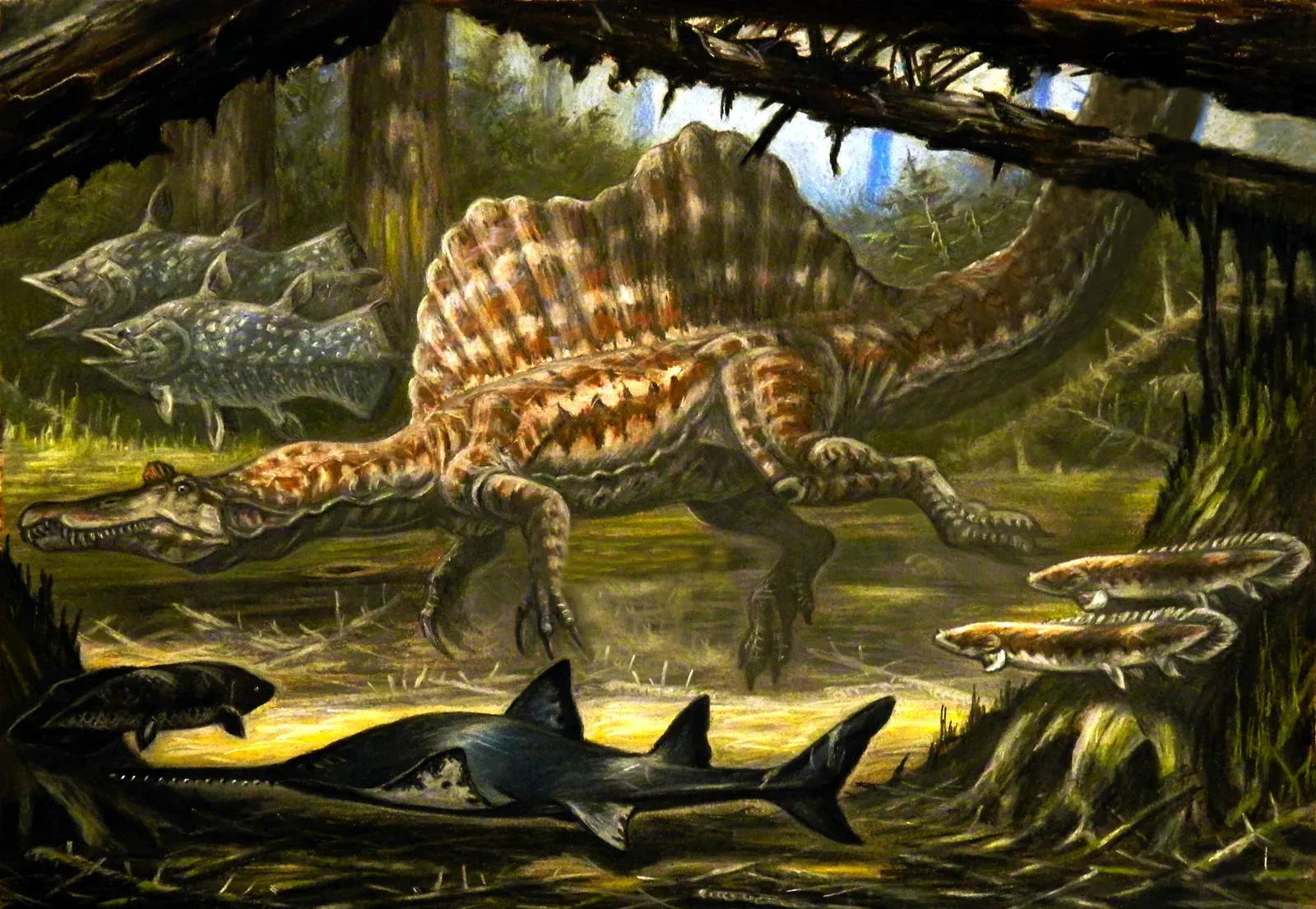
This is the fact that genuinely changes how you see the entire dinosaur family tree. Spinosaurus is the only known dino that is thought to have dwelled in water. Every other dinosaur is understood as fundamentally a land animal. Spinosaurus broke that rule in the most dramatic way possible.
Analysis found that Spinosaurus and its British cousin Baryonyx had highly dense bone walls like penguins do, suggesting they likely spent much of their time in the water and hunted down aquatic prey. The enigmatic predator and its cousin Baryonyx are the only known dinosaurs other than birds with this aquatic adaptation. Penguin-like bones on a fifty-foot apex predator. It’s hard to say anything but “wow” to that.
4. Its Fossil Was Discovered Twice – and Lost Once to World War II
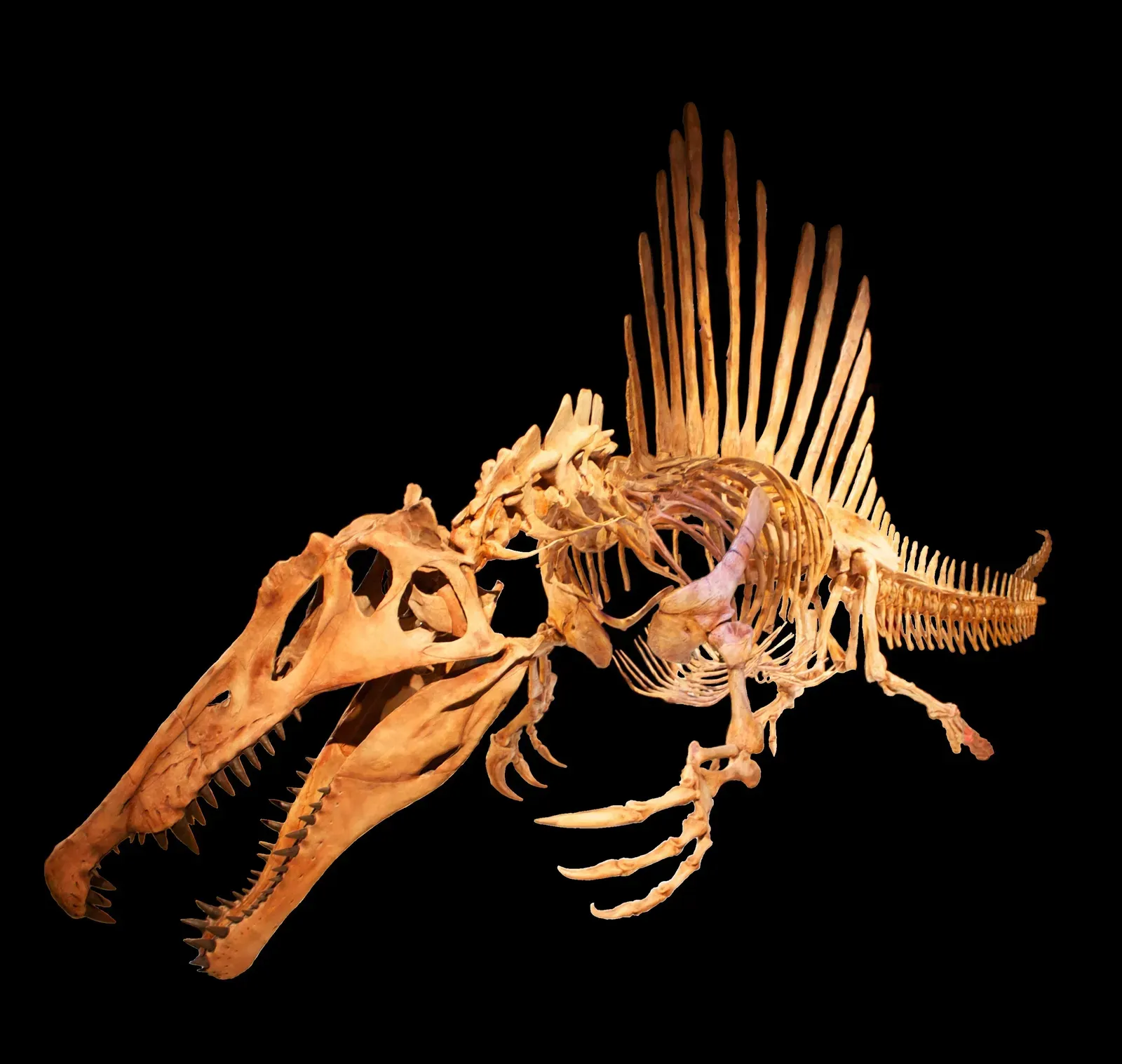
Here is where the story takes a genuinely heartbreaking turn. The first remains of Spinosaurus were discovered in 1912 by German paleontologist Ernst Stromer in Egypt’s Bahariya Formation. Stromer formally described the species in 1915, naming it Spinosaurus aegyptiacus. Unfortunately, the original fossils were destroyed during a 1944 Allied bombing raid on Munich. Science lost its most important specimen to the chaos of war.
The human story behind the loss is just as tragic. Stromer was openly critical of the Nazi party, and Karl Beurlen, head of the Bavarian museum that housed the Spinosaurus fossils, was an ardent Nazi supporter. Come World War II, Beurlen ignored Stromer’s pleas to move the collection from Munich to the safety of caves and salt mines due to politics, and the fossils were destroyed by the Allied forces in a 1944 bomb raid of the city. Politics literally erased a dinosaur from science for decades.
5. Its Tail Was a Purpose-Built Swimming Engine
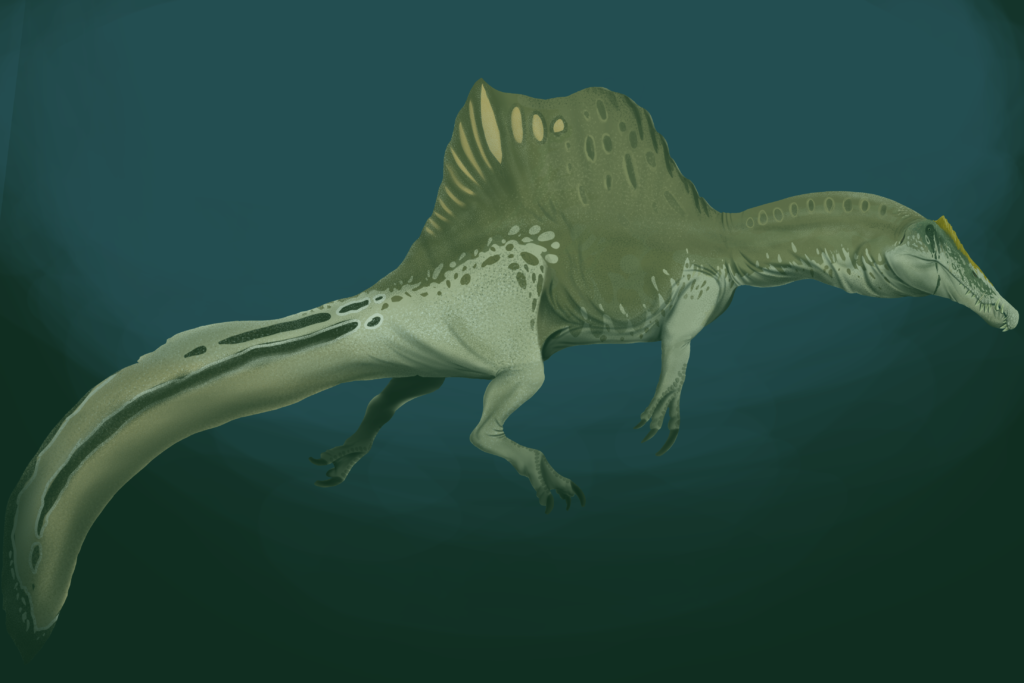
The fossils dug up revealed a tail unlike any other land dinosaur. Tall neural spines indicate that the tail was used in a propelling manner, just like other underwater creatures. Scientists weren’t even sure this was possible for a dinosaur before this discovery reshaped the entire conversation about how Spinosaurus moved through water.
Tests in a bio-robotics lab for fish at Harvard showed that the outline of Spinosaurus’s tail was more efficient at generating thrust in water than the tails of other related dinosaurs, though it was less efficient than modern crocodile tails. Think of it this way: the tail of a Spinosaurus worked somewhat like a boat’s propeller, not perfectly engineered, but absolutely functional. It made this dinosaur a real swimmer, not just a paddler.
6. Its Bones Were Dense Like a Penguin’s – Not Hollow Like Most Dinosaurs
Uploaded by FunkMonk, CC BY 2.0)
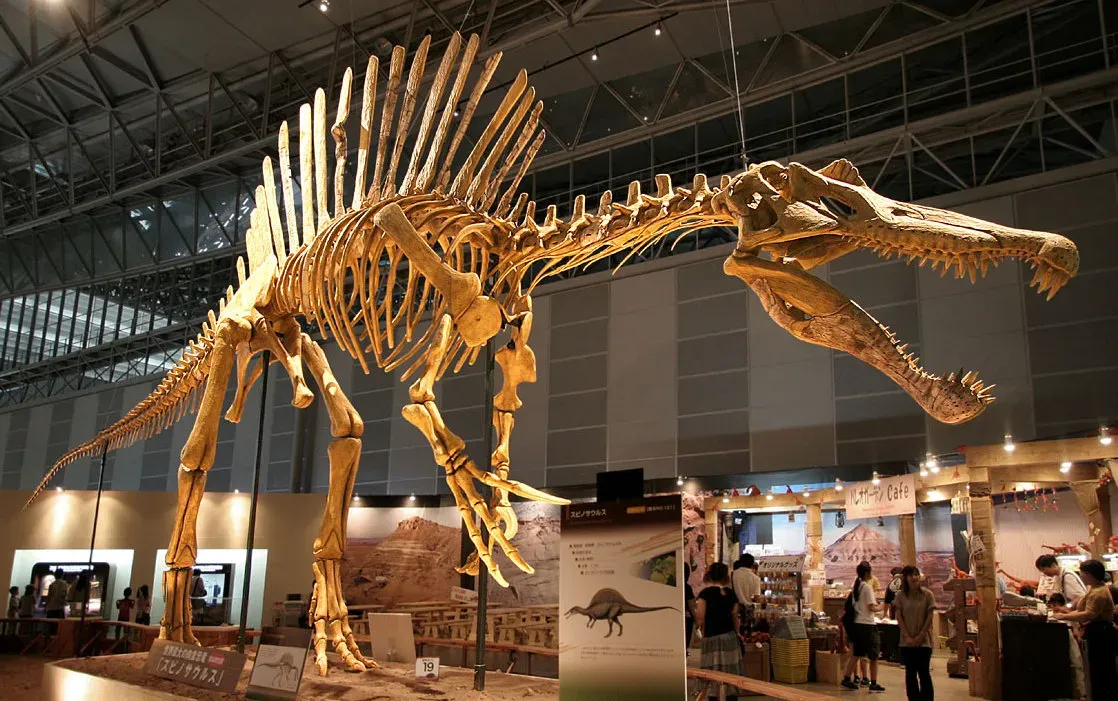
Most theropod dinosaurs, the large bipedal meat eaters, had hollow, air-filled bones that made them lighter and faster on land. Spinosaurus did things differently. Its bones were unusually dense, more like those of penguins or hippos than typical dinosaurs, helping counteract buoyancy in water. That is a remarkable evolutionary departure from everything else in its family.
In other land animal groups that made the evolutionary transition to the water, such as whales, increased bone density was one of the first traits to appear, with the bones acting as energy-saving ballast. So when you see those dense Spinosaurus bones, you are looking at the same evolutionary pressure that also pushed whales into the ocean. A dinosaur following the same biological pathway as a whale. Honestly, that blows my mind every single time.
7. The Iconic Sail on Its Back Remains One of Science’s Great Unsolved Mysteries
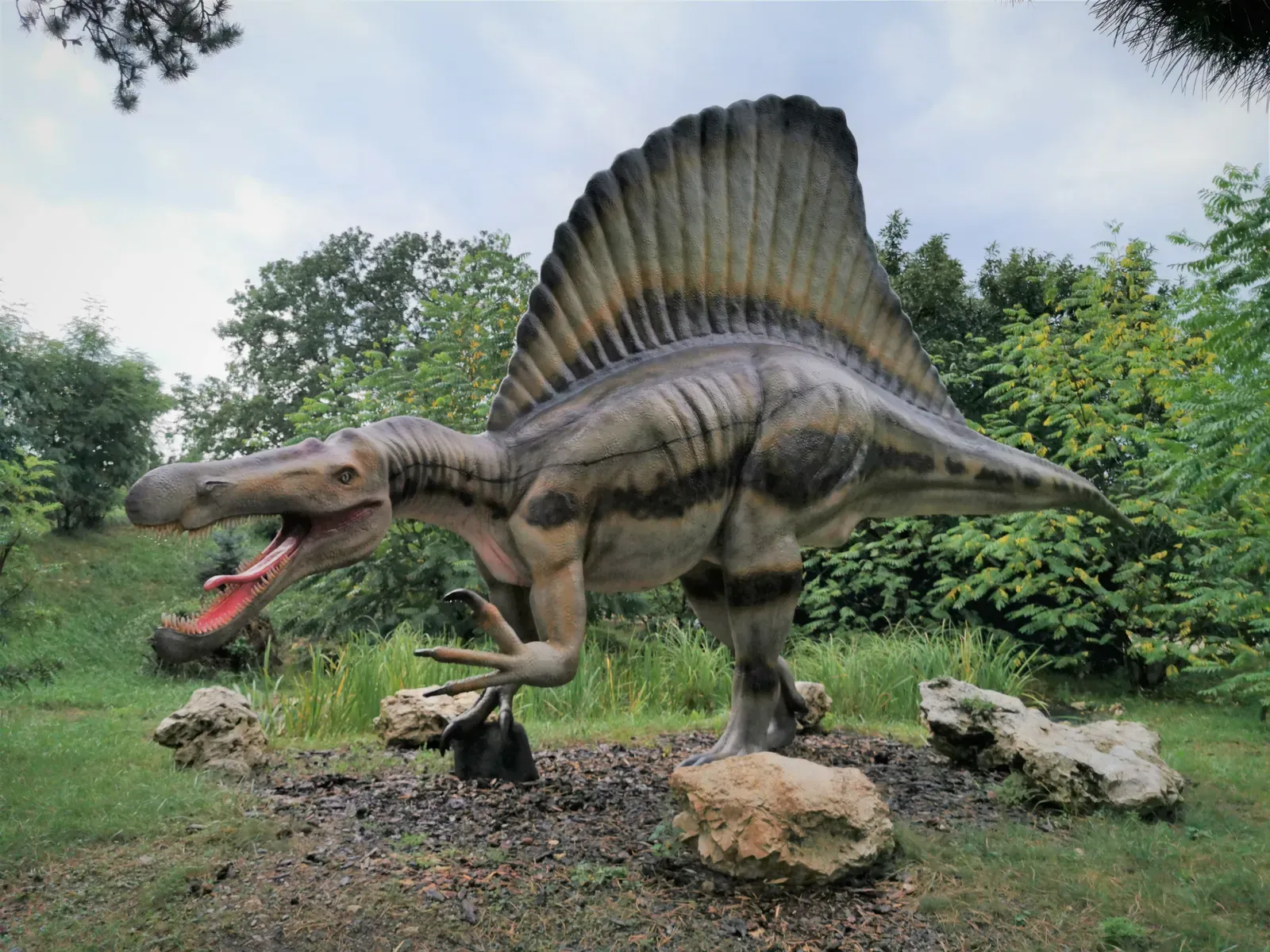
That enormous sail running down its back is the most recognizable feature Spinosaurus has. Everyone who has ever seen a picture of this animal remembers it. The function of Spinosaurus aegyptiacus’s dorsal sail has been widely debated for many years. The three most popular hypotheses are that it was used as a biological mechanism of thermoregulation, display, or hydrodynamics. In other words, scientists are still arguing about it.
Multiple functions have been put forward for the dorsal sail, including thermoregulation and display, either to intimidate rivals or attract mates. There is even a fourth theory suggesting the spines supported a fat-storing hump, more like a bison or a camel, rather than a sail at all. Based on existing research, we cannot conclude that there is a definitive primary function of Spinosaurus aegyptiacus’s dorsal sail. Some mysteries, it seems, don’t get tidy answers.
8. It Had a Crocodile-Like Skull Perfectly Designed for Catching Fish
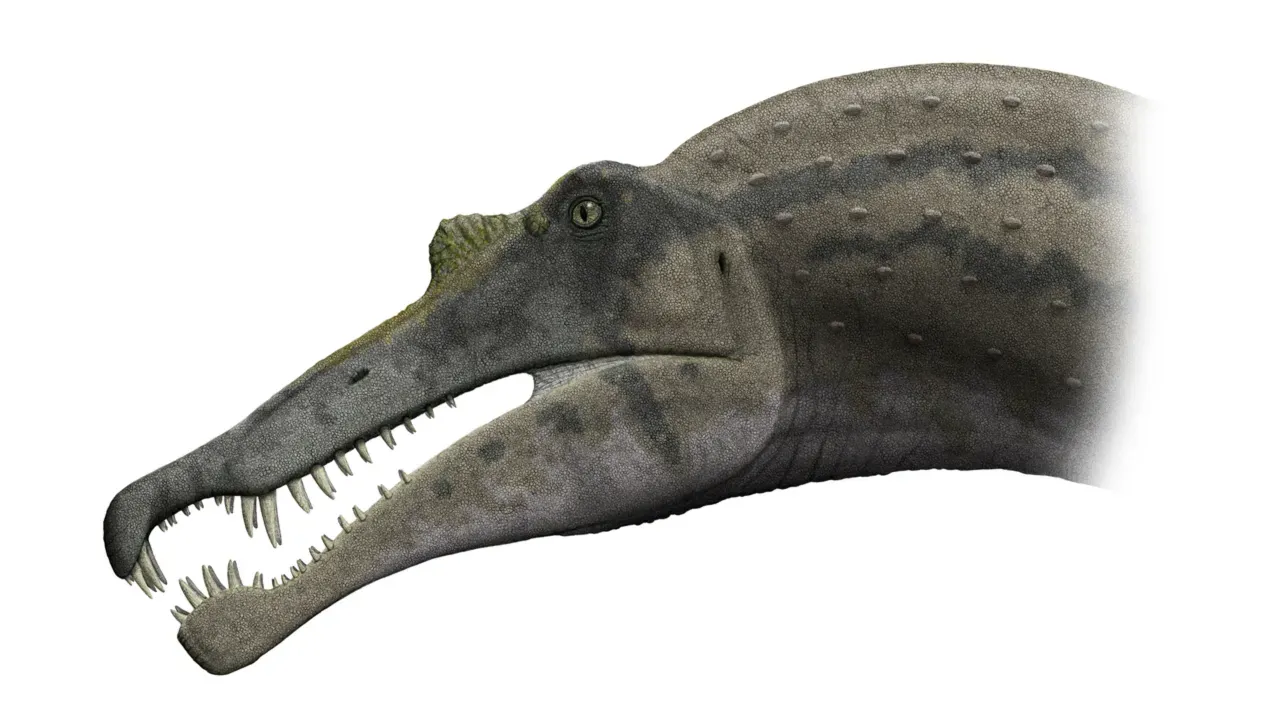
Forget the massive bone-crushing jaws of a T-Rex. Spinosaurus took a completely different approach to eating. Unlike most large theropods, Spinosaurus was not designed for bone-crushing bites or high-speed pursuit. Its jaws were long and narrow, packed with smooth, conical teeth ideal for gripping slippery prey. Its nostrils sat far back on the skull, allowing it to breathe while much of its snout was submerged.
In 2022, researchers estimated that Spinosaurus had a bite force suited to generating faster shutting speeds with less muscle input force, indicating that the animal likely killed its prey with fast-snapping jaws rather than slow-crushing bites, a trait commonly observed in animals which have a semi-aquatic feeding habit. Imagine a crocodile jaw on the largest predatory dinosaur ever known. That snapping speed in water, aimed at a fish the size of a car, would have been absolutely devastating.
9. Scientists Found Its Teeth Scattered Everywhere in Ancient River Sediments
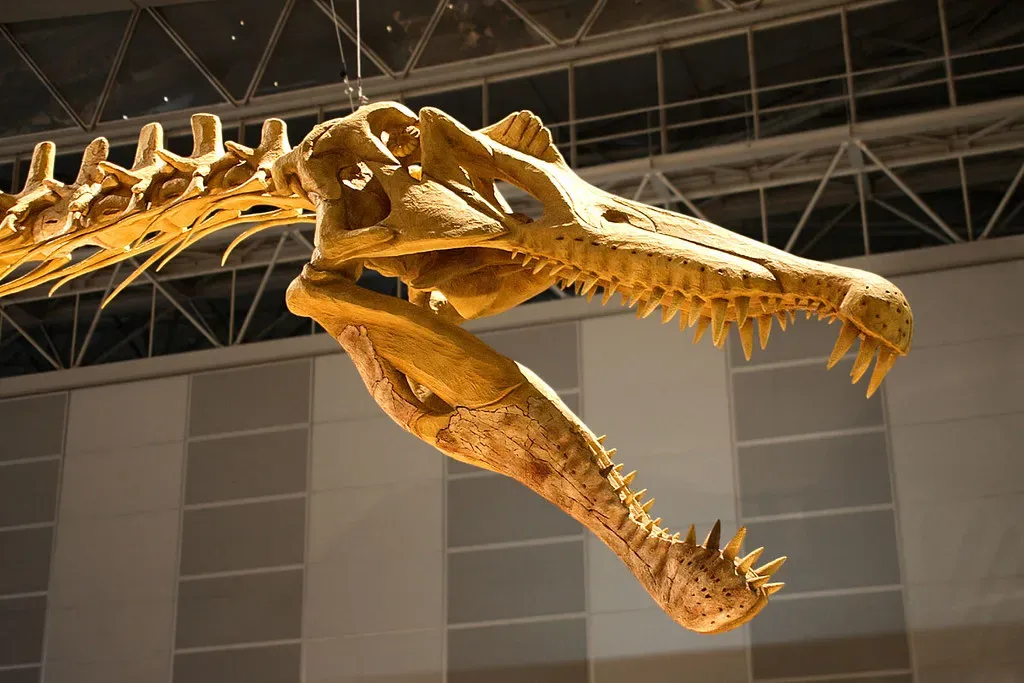
You might wonder: how do we know Spinosaurus was truly a river animal and not just an occasional swimmer? A separate study published in September found disproportionately large numbers of Spinosaurus teeth within Morocco’s ancient river sediments. This isn’t circumstantial. The sheer volume of teeth tells a story all by itself.
The enhanced abundance of Spinosaurus teeth relative to other dinosaurs is a reflection of their aquatic lifestyle. An animal living much of its life in water is much more likely to contribute teeth to the river deposit than those dinosaurs that perhaps only visited the river for drinking and feeding along its banks. It’s like finding coffee cups. Wherever the most cups are scattered, that’s where someone was spending the most time. The river was Spinosaurus’s home, not a pit stop.
10. Its Scientific Understanding Has Been Completely Rebuilt Multiple Times
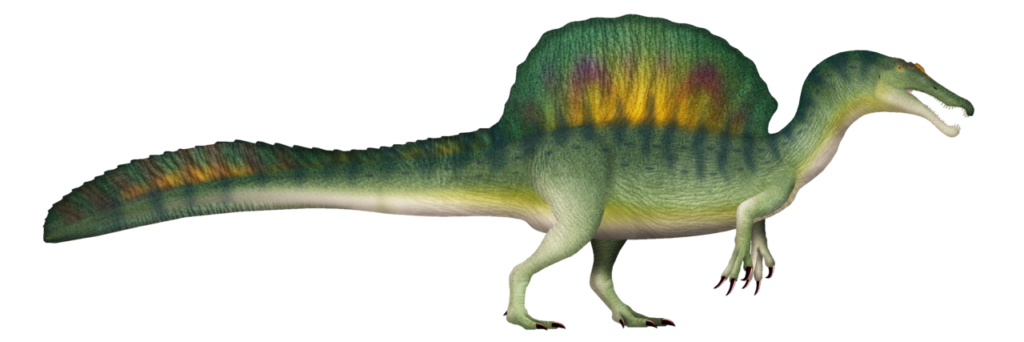
Few dinosaurs have had their identity rewritten as dramatically and as repeatedly as Spinosaurus. Early interpretations before 2010 portrayed it as a typical bipedal theropod with exaggerated dorsal spines interpreted primarily for display or thermoregulation. The 2014 to 2020 period proposed it as a fully aquatic, tail-propelled swimmer with quadrupedal locomotion on land. Reassessment from 2022 onward saw biomechanical modeling refute the deep-water swimming model. Current consensus now favors a semiaquatic wading predator, with adaptations for a mixed terrestrial-aquatic lifestyle but not full aquatic competence.
Our interpretation of Spinosaurus has quite rapidly changed in the past few decades. From an image of a croc-headed but otherwise typical theropod, to a stocky, squat-legged aquatic fish hunter, Spinosaurus shows us a lot about how interpretation of prehistoric life is always in flux, changing as new data gets unearthed and brought to light. There is something deeply fascinating about a creature that keeps surprising scientists, decade after decade. It is the dinosaur world’s most restless mystery.
Conclusion: The River Monster That Keeps Rewriting History
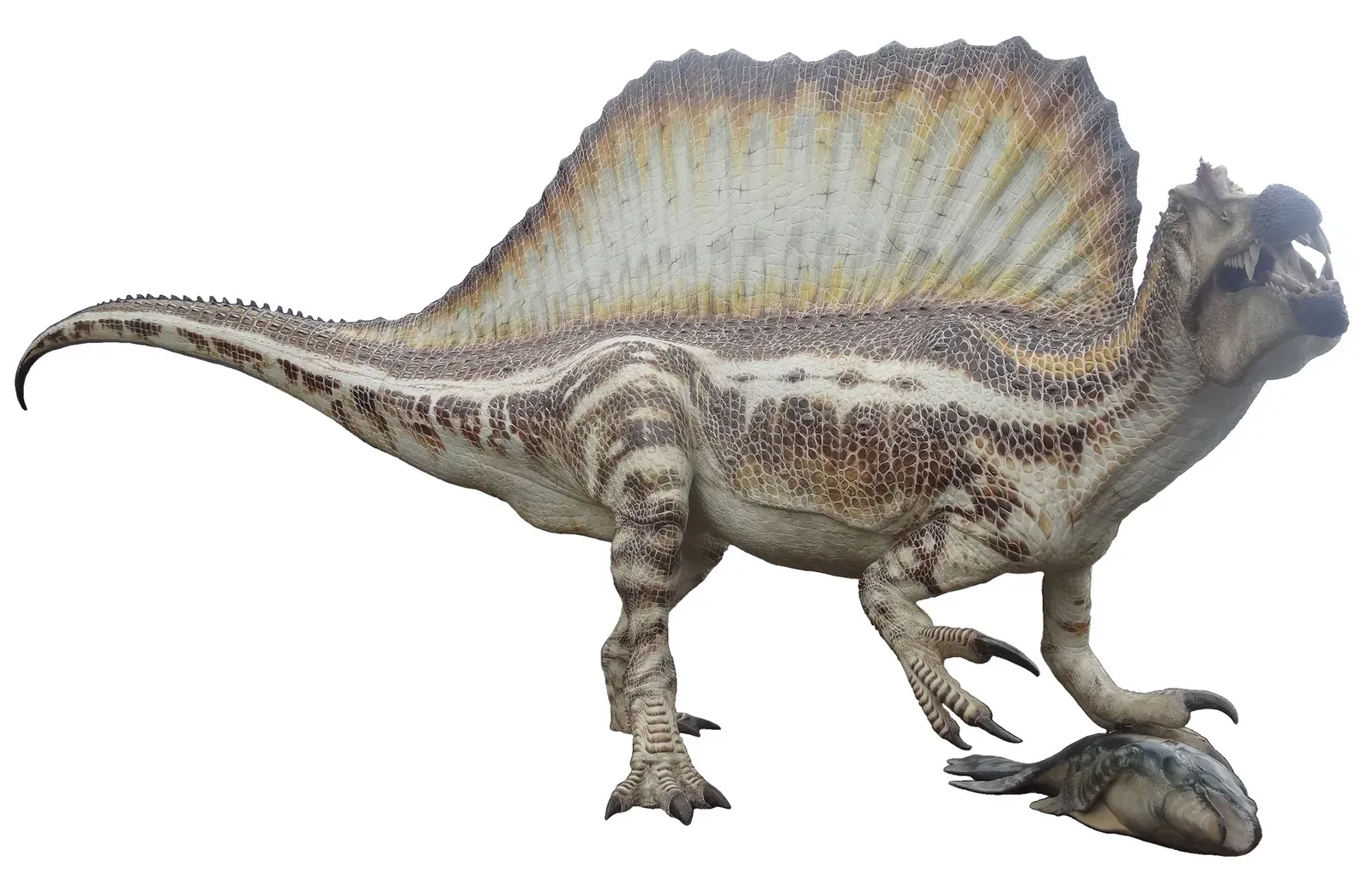
The Spinosaurus isn’t just a dinosaur. It is a living lesson in how much we still don’t know, how dramatically science can evolve, and how even the most confident theories can be overturned by a single bone found in a Moroccan desert. From its penguin-dense bones to its propeller tail, from its crocodile jaw to its still-mysterious sail, every part of this animal defies expectation.
What strikes me most, honestly, is the human story woven into the science. A paleontologist who stood up to Nazis, lost his life’s work in a bombing raid, watched his sons go to war, and died with his greatest discovery still shrouded in mystery. Stromer deserved better. So did his dinosaur. The good news is that the story is still being written, and new fossils keep surfacing to add more chapters. Spinosaurus is not finished surprising us yet.
What would you have guessed before reading this: did you ever imagine a dinosaur more closely related to a wading heron than a charging predator? Tell us in the comments.