Picture this: you are standing in front of a life-sized Stegosaurus skeleton, staring at those enormous diamond-shaped plates running down its back like a row of ancient sails. You think you know what they were for. Honestly, you probably don’t. Neither do the scientists. The purpose of dinosaur spikes and frills is one of the most passionately debated puzzles in all of paleontology, and the deeper you dig, the more surprising and strange the answers become.
These were not random accidents of evolution. Every ridge, spike, plate, and frill carried meaning in a world we can barely imagine. From temperature control to love signals, from prehistoric weaponry to primitive forms of communication, the theories around these structures are as spectacular as the creatures that bore them. So buckle up and let’s dive in.
Theory 1: Spikes and Plates as Thermal Radiators and Solar Panels
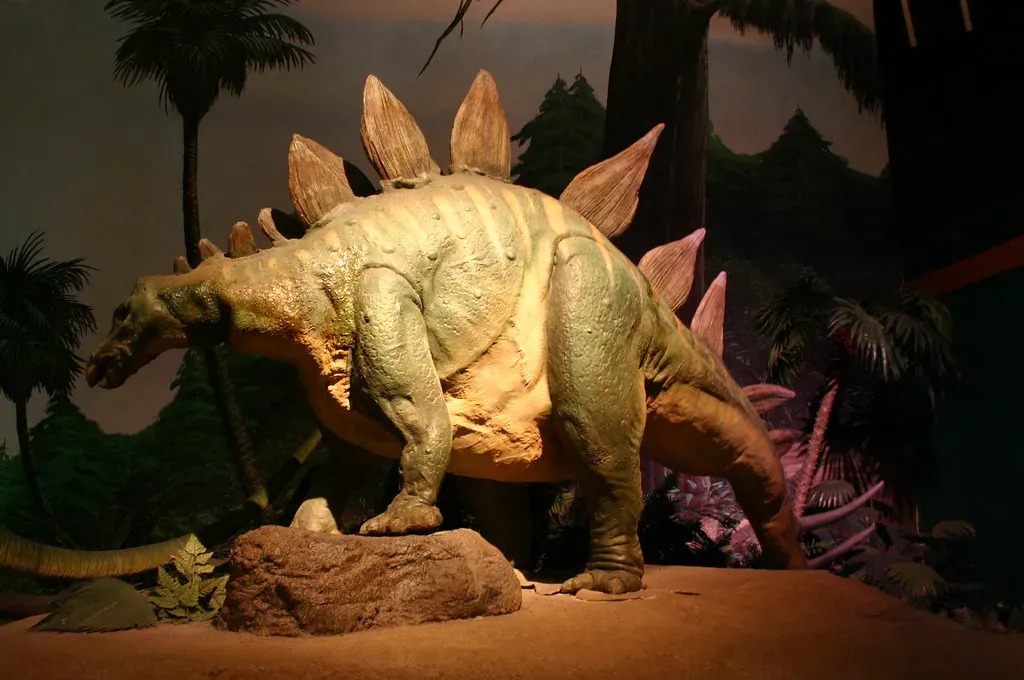
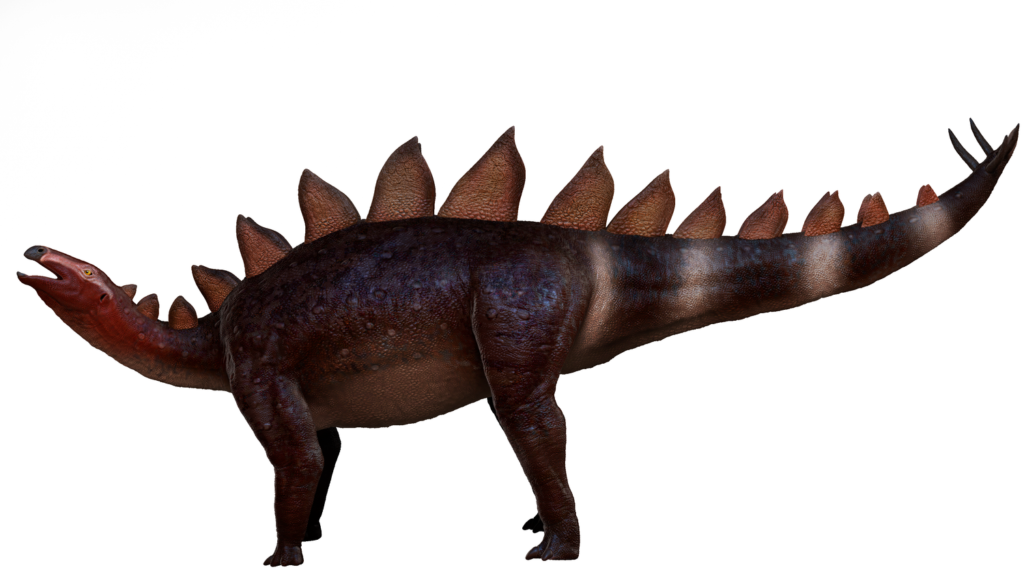
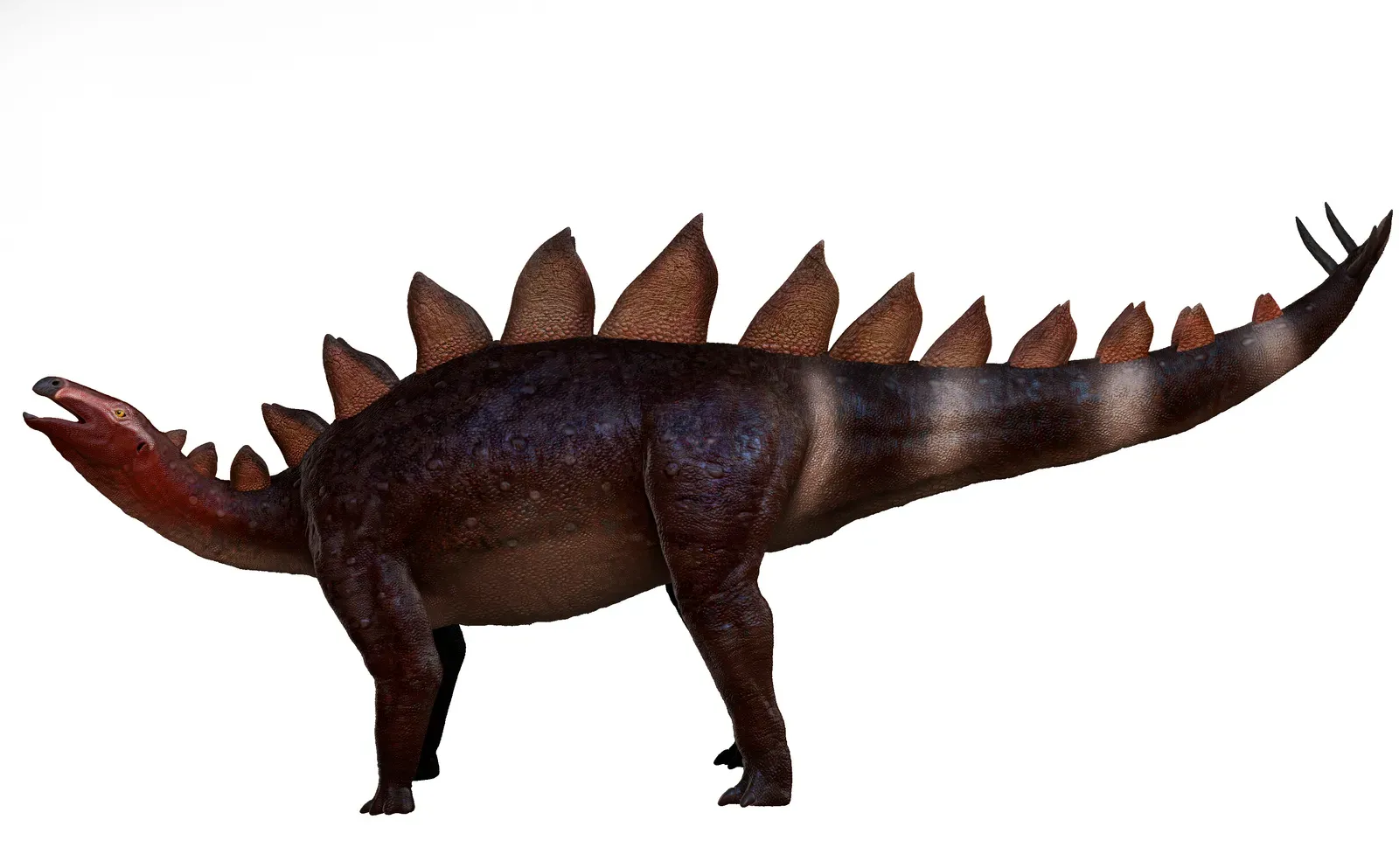
You might think of a dinosaur’s back plates as decoration, but some researchers suggest they were essentially a prehistoric heating and cooling system. One hypothesis proposes that the plates acted as radiators, releasing body heat to a cooler ambient environment. Conversely, the plates could also have collected heat by being faced toward the sun like living solar panels. Think of them the way you think about the fins on the back of a laptop, designed to push heat away from sensitive systems.
The plates had blood vessels running through grooves, and air flowing around the plates would have cooled the blood. Research found “extreme vascularization of the outer layer of bone,” which was seen as evidence that the plates “acted as thermoregulatory devices.” Modern CT scans reveal an intricate network of grooves and channels that once housed blood vessels, creating a vascular highway throughout each plate. Think of them like the radiator in your car, designed to maximize surface area for heat exchange.
Theory 2: The Sexual Selection Showoff
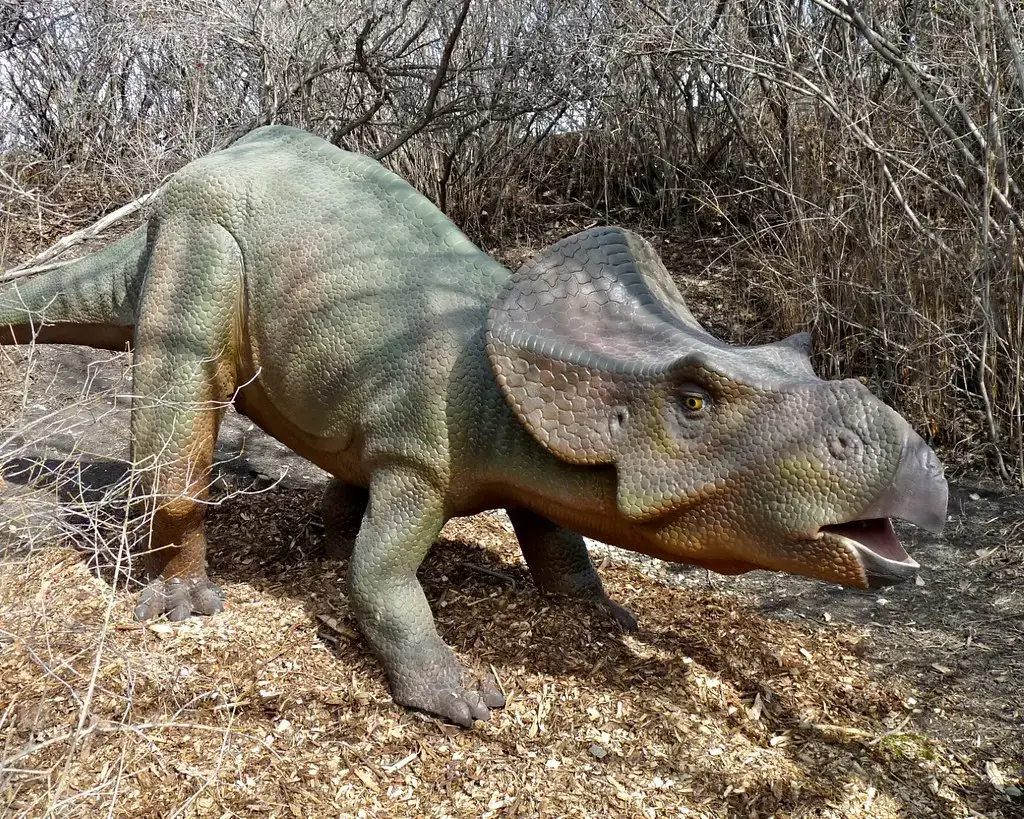
Here’s the thing – nature loves a dramatic entrance. Many researchers now believe that frills, crests, and elaborate spikes were essentially the Mesozoic equivalent of a peacock’s tail. A previous research paper found that the frill in one ceratopsian species, Protoceratops, may have evolved under sexual selection, and new findings appear to add evidence to this across the entire group. Researchers also found evidence that ornamental traits seemed to evolve at a much faster rate than other traits, and as these structures are costly to grow and maintain, this finding similarly points to a strong selective pressure on these traits.
In living creatures, certain features show a distinct pattern of growth known as allometry. When the allometry is positive, meaning they show a much greater rate of change in growth compared to other traits, it is almost always a sexually selected feature, such as the antlers of a deer. Positive allometry often evolves in these traits because it emphasizes body size, and bigger, more mature animals often have proportionally larger traits. In other words, a ceratopsian with a massive frill was essentially broadcasting to every potential mate in the area: “I am thriving, I am healthy, pick me.”
Theory 3: Predator Defense and Neck Protection
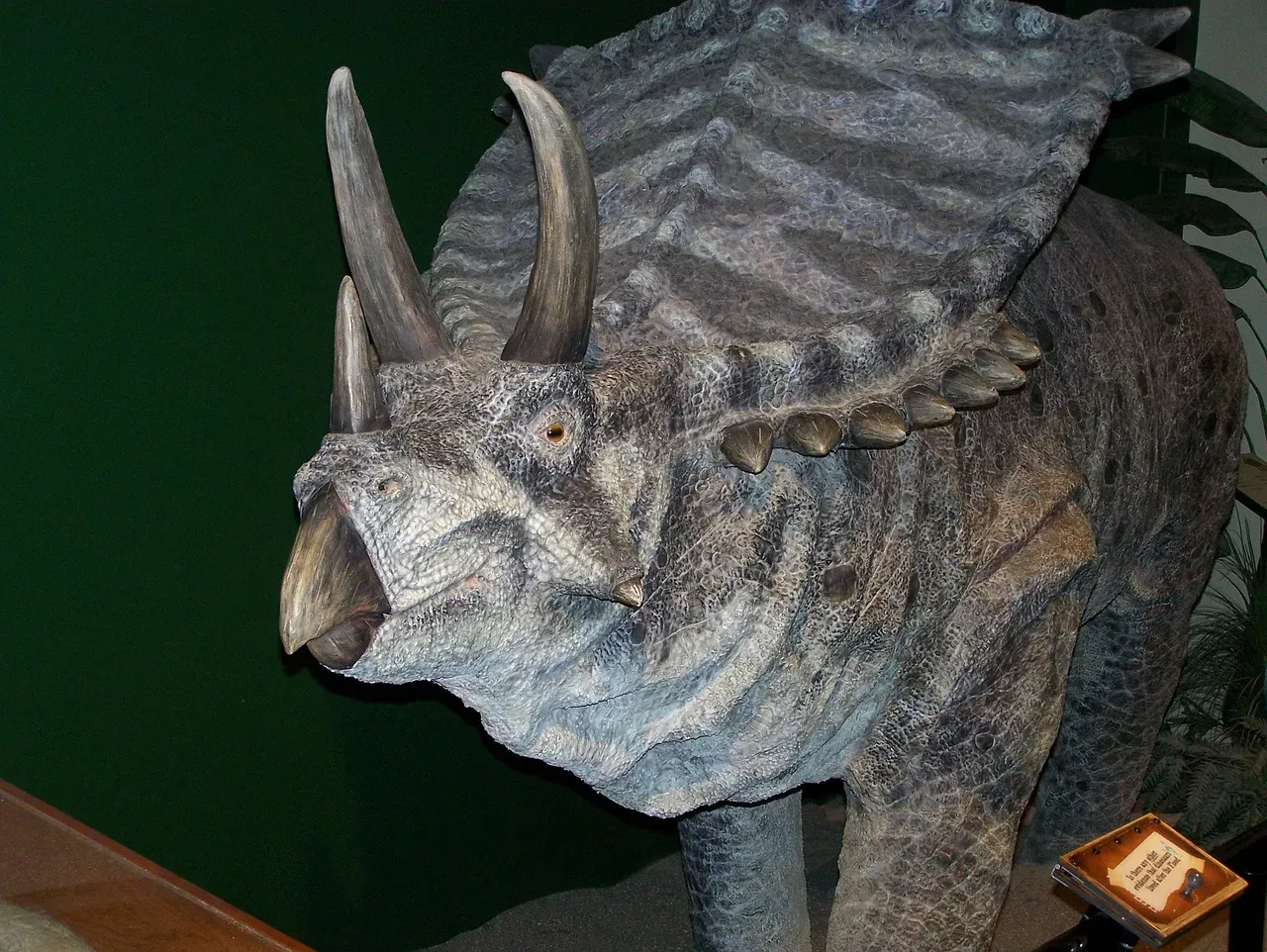
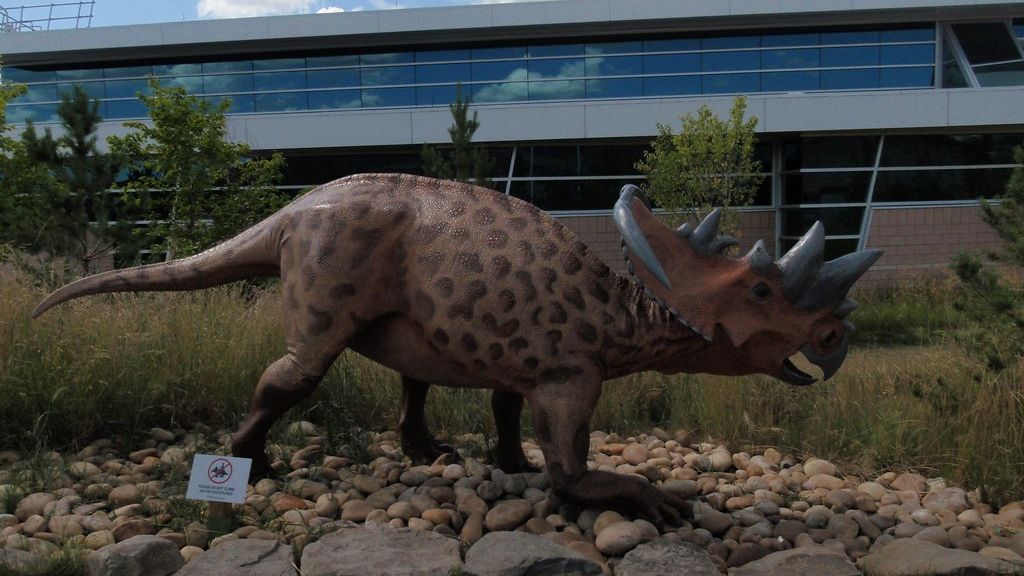
This one is about as straightforward as prehistoric life got. Many scientists believe that ceratopsians had large frills to help protect themselves from predators, as they covered the backs of their necks and shoulders. Many species, such as Triceratops, used their horns to fend off predators. Moreover, some ceratopsians also had thicker frills, which further protected their necks and key areas. It would take a stronger bite force for a predator to puncture through the frill to access major arteries in the neck.
The earliest and perhaps most intuitive explanation for the Triceratops frill was that it served as a protective shield against predators, particularly Tyrannosaurus rex, which shared its habitat in Late Cretaceous North America. Proponents of this theory point to the substantial coverage the frill provided for the neck, a vulnerable area in many animals. Still, not everyone agrees. Some scientists point out that certain frills were surprisingly thin and fragile, raising real doubts about whether they could have stopped a determined apex predator.
Theory 4: The Thagomizer as a Deadly Combat Weapon
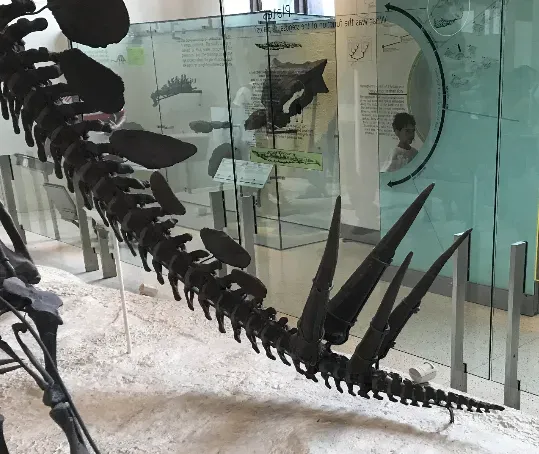
The tail spikes of Stegosaurus have one of the more colorful origin stories in paleontology. A thagomizer is the distinctive arrangement of spike-shaped osteoderms on the tails of some stegosaurian dinosaurs. These spikes are believed to have been a defensive measure against predators. The name itself is famously borrowed from a 1982 cartoon, later adopted by actual scientists. You cannot make that up.
In 2001, a study of thagomizers showed a high incidence of trauma-related damage. This too supports the theory that the principal function of the thagomizer was defense in combat. There is also evidence for a defense function in the form of an Allosaurus tail vertebra with a partially healed puncture wound that fits a Stegosaurus tail spike. That fossilized wound is perhaps the most thrilling piece of direct evidence anywhere in dinosaur science. A predator attacked. A Stegosaurus fought back. The bone preserved the moment forever.
Theory 5: Color-Changing Blood Flush for Intimidation and Communication
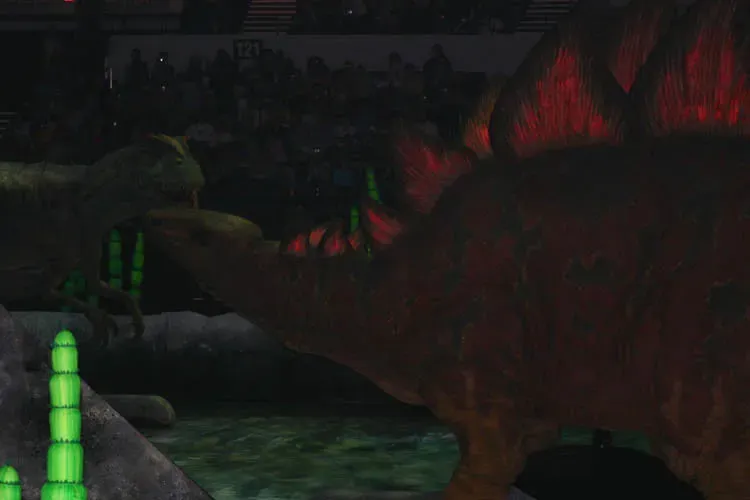
This theory is the one that makes most people do a double-take. Imagine a Stegosaurus that could “blush” its plates bright red on demand. The vascular system of the plates has been theorized to have played a role in threat displaying, as Stegosaurus could have pumped blood into them, causing them to “blush” and give a colorful, red warning. It sounds like science fiction, but the biology supports it entirely.
Modern paleontology increasingly favors the idea that Stegosaurus plates served multiple functions simultaneously. After all, evolution rarely creates single-purpose structures when multi-functional ones provide greater survival advantages. The plates’ rich blood supply could have supported both thermoregulation and display functions, changing color through blood vessel dilation while simultaneously managing body temperature. So those plates were not just static structures. They may have been dynamic, living signals, as expressive as a face.
Theory 6: Frills as Weapons in Intraspecific Combat
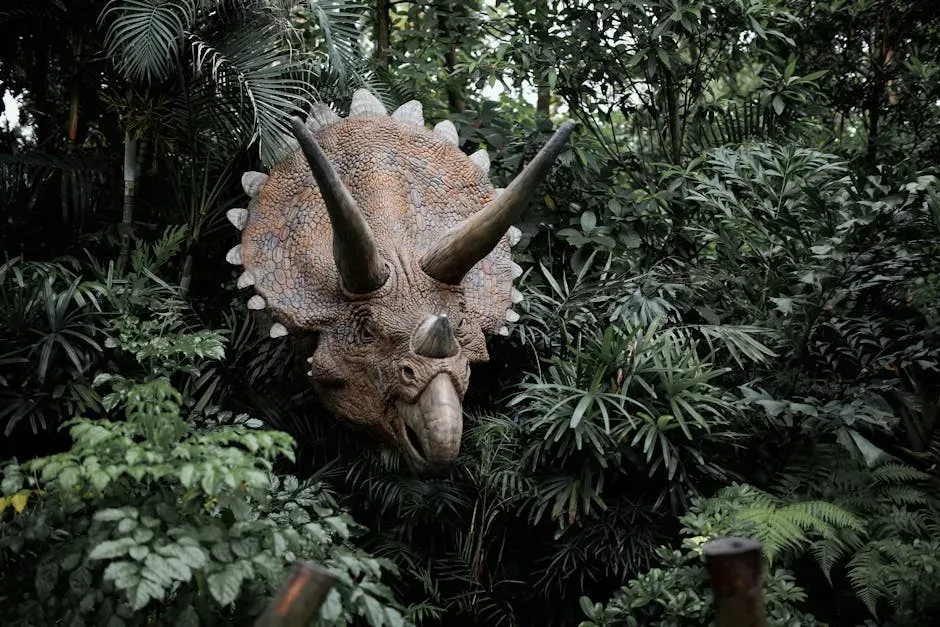
Let’s be real – some of the most vicious fights in nature happen between members of the same species. This “assessment” function would have allowed Triceratops to establish dominance hierarchies with reduced physical conflict, similar to how red deer use their antlers for both display and combat. Some ceratopsian fossils show evidence of healed injuries consistent with intraspecific combat, suggesting these dinosaurs engaged in competitive interactions.
The frill’s visibility from various angles would have made it particularly effective for side-by-side assessment displays, where rivals could compare their ornaments before deciding whether to escalate to a physical confrontation. By serving as an honest signal of condition and fighting ability, elaborate frills may have helped minimize dangerous physical confrontations while still ensuring that the fittest individuals gained reproductive advantages. It is honestly a brilliant biological system: show your frill first, fight only if you must.
Theory 7: Species Identification Badges
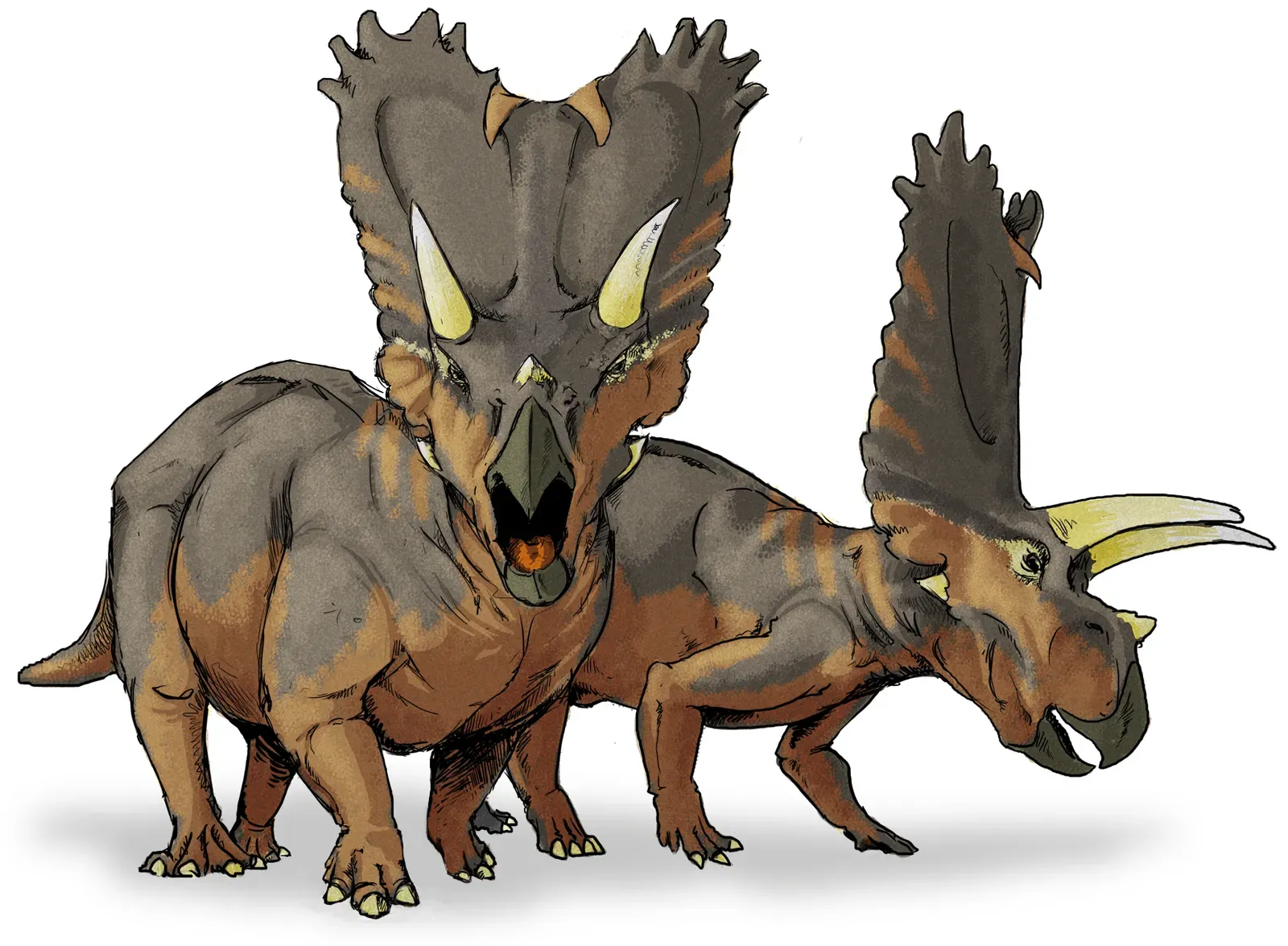
You might assume dinosaurs of the same species always recognized each other easily. That assumption turns out to be more complicated than it seems. One long-standing theory held that elaborate frills and horns served primarily as visual identity markers, like a uniform or flag that told every creature in the area: “I am one of you.” It has been suggested that different species that live in the same location may evolve features in order to distinguish one another to help avoid problems such as hybridization, where two individuals of different species produce infertile or unfit offspring. To test this hypothesis, researchers examined patterns of diversity in the ornamentation of 46 species of ceratopsians but found no difference between species that lived together and those that lived separately.
So the species recognition theory took a significant hit from that research. One major problem with the species recognition hypothesis is that crests and other exaggerated structures have yet to be shown to play a role in species recognition in any of the extant animals that have them. Species recognition does not appear to be an important function for the horns, frills, antlers and so on of chameleons, hornbills, cassowaries, rhinos, deer, and bovids. It’s hard to say for sure, but the comparative evidence from living animals is pretty damning for this theory.
Theory 8: The Ankylosaur Tail Club as Both Weapon and Dominance Signal
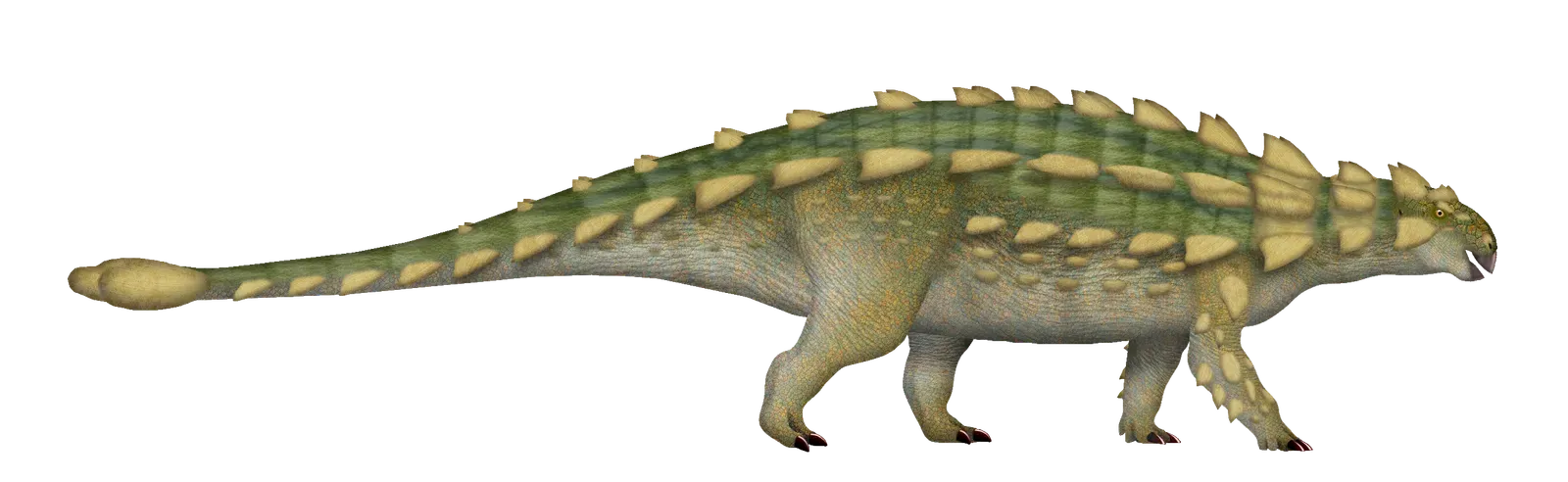
The ankylosaur tail club is one of nature’s most dramatic inventions. Ankylosaurid ankylosaurs were quadrupedal, herbivorous dinosaurs with abundant dermal ossifications. They are best known for their distinctive tail club composed of stiff, interlocking vertebrae and large, bulbous osteoderms, which may have been used as a weapon. Think of it as a medieval mace that grew directly out of the animal’s body.
One researcher put forward the theory that tail clubs in ankylosaurids evolved primarily as a result of sexual selection, rather than a defense against predation. This was the result of analyzing a well-preserved Zuul crurivastator fossil with preserved impact sites from tail clubs, along with evidence of healed osteoderms. The suggestion is that ankylosaurids may have hit each other with their tail clubs in a show of dominance similar to how giraffes fight each other using their necks. The idea that these armored giants were essentially engaged in prehistoric shoving matches is both hilarious and scientifically fascinating.
Theory 9: The Spinosaurus Sail as a Hydrodynamic and Display Structure
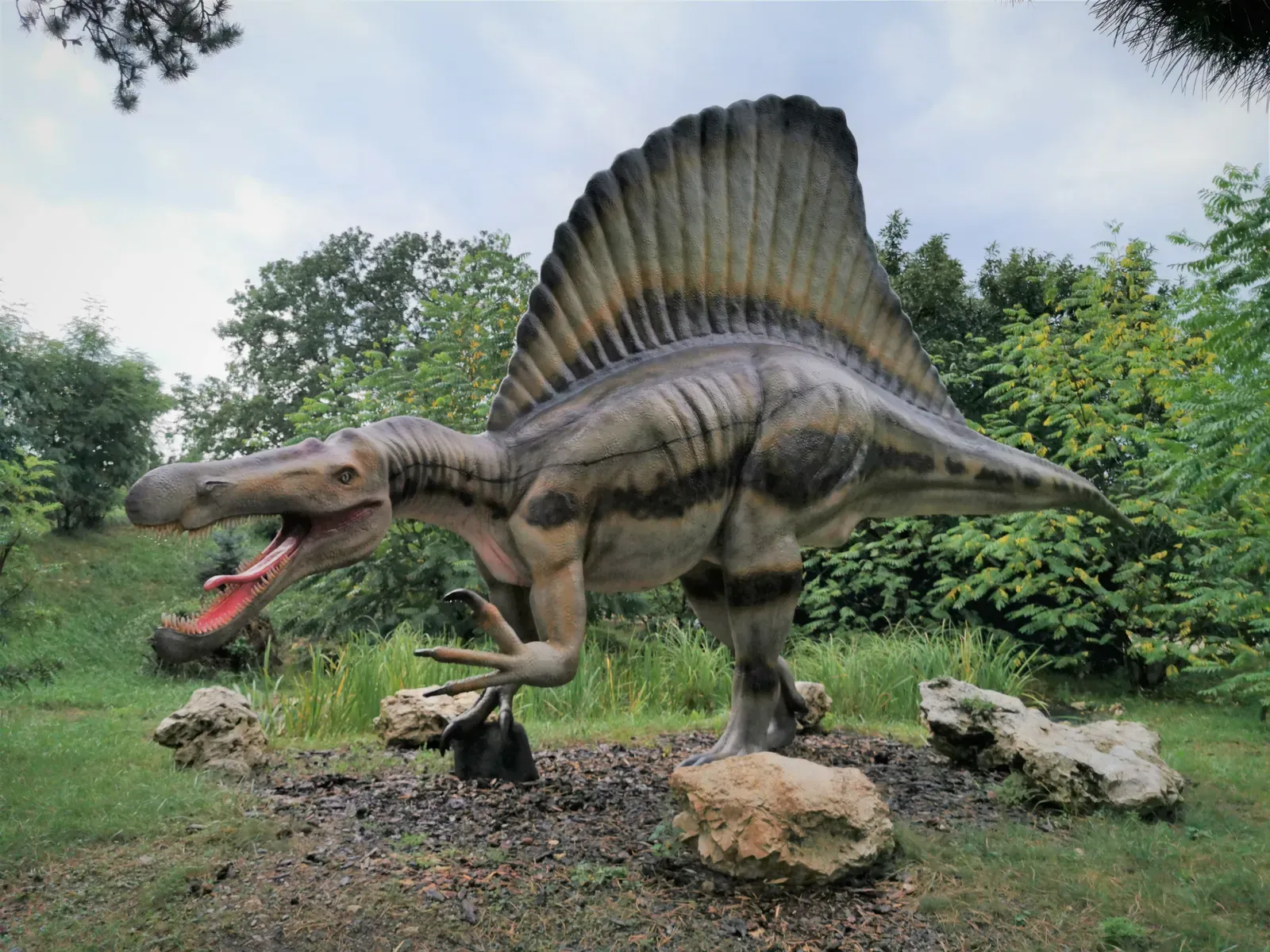
Spinosaurus carried a sail of neural spines stretching several feet above its back, and scientists have been arguing about it ever since. Multiple functions have been put forward for the dorsal sail, including thermoregulation and display, either to intimidate rivals or attract mates. But more recent thinking has pushed the conversation in a genuinely unexpected direction.
Spinosaurus also sported a neural spine sail, which researchers suggested in 2014 may have functioned as a display that could be seen above water, like a shark fin six feet tall. With the discovery of Spinosaurus’ fin-like tail, that dorsal sail may have played a more active secondary function, providing stability, like a keel. Living reptiles with similar spine-supported sails over trunk and tail are used for display rather than aquatic propulsion. The sail may have been doing several jobs at once, a multi-tool millions of years before the concept was invented.
Theory 10: Hollow Sensory Spikes and Unprecedented Structures in New Discoveries
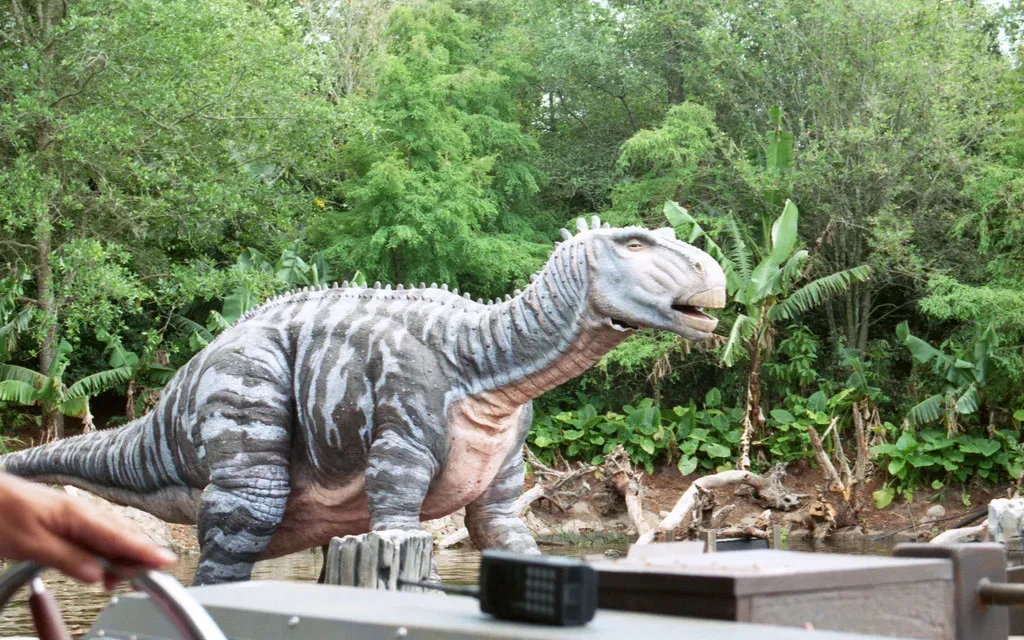
Just when you think paleontology has covered all the options, a discovery arrives that forces everyone to start over. Documented for 200 years, the Iguanodontia group is expanding with the discovery of a brand-new species, the first known to bear spikes with properties never before observed in dinosaurs. Scientists uncovered in China the fossilized skin of an exceptionally well-preserved juvenile iguanodon. This new iguanodontian dinosaur species was discovered with fossilized skin showing hollow, cutaneous spikes, a feature not previously observed in dinosaurs.
These spikes may have served for defense, thermoregulation, or sensory functions. The specimen is a juvenile, so it is unclear if adults also possessed these structures. Sensory spikes. That phrase alone opens up an entirely new category of possibility. If spikes could detect environmental stimuli, pressure changes, or even the vibrations of an approaching predator, then everything we thought we understood about their purpose may need a dramatic rethink. The armored dinosaur Spicomellus was more than 165 million years old and yet had large spikes and a tail club normally associated with ankylosaurs that lived tens of millions of years later. Its anatomy demonstrated that ankylosaurs evolved extremely spiky armor very early in their history, which apparently was lost or modified only to later converge on a similar array of armor in the Cretaceous.
Conclusion: The Spikes Know More Than We Do
You walked into this article probably thinking dinosaur spikes and frills were just about looking scary or fending off predators. You are walking out knowing they were far, far more than that. They were radiators, love letters, battle flags, weapons, status symbols, and possibly even sensory organs. Sometimes all at once.
What makes this topic so electric is how much is still genuinely unknown. Every new fossil, every new CT scan, every new computer model reopens arguments that researchers thought were settled. The deeper truth may be that these structures were never meant to do just one thing. Evolution is an opportunist, building on whatever works. A plate that started as heat regulation could become a canvas for color display. A defensive spike could double as a weapon in a mating competition. Nature never wastes a good structure.
The dinosaurs have been gone for roughly 66 million years, yet their bones still manage to surprise us every single decade. That is extraordinary. So next time you see a fossil of a frilled or spiked dinosaur, look a little longer. That structure was doing something remarkable in a world you can barely picture. What other secrets do you think are still locked inside those ancient bones?