
Have you ever wondered what truly separates someone who leads from someone who merely manages? Here’s the thing: leadership isn’t something invented in boardrooms or business schools. The roots run deeper, far deeper, stretching back tens of thousands of years. Think about it. Your ancestors survived because certain individuals stepped forward when it mattered most. They guided groups through uncertainty, resolved conflicts, and united people around common goals. Those same instincts, those ancient patterns, still live within you today. Maybe you’ve never thought of yourself as a leader, but the truth is, you might already be exhibiting behaviors that made our ancestors indispensable. So let’s dive in.
You Step Up When There’s No Clear Direction

In the earliest days of human existence, leadership in hunter-gatherer societies was fluid and determined by the immediate needs of the group. The person who took initiative wasn’t always the strongest or loudest. They simply acted when others hesitated.
If you’re the type who naturally fills a vacuum when confusion reigns, you’re tapping into something primal. Most anthropologists believe that hunter-gatherers do not have permanent leaders; instead, the person taking the initiative at any one time depends on the task being performed. This willingness to step forward, even temporarily, signals an instinct honed over millennia. You see a problem, and without being asked, you start solving it.
You Build Trust Through Actions, Not Words

Ancient leaders didn’t have mission statements or corporate slogans. They earned respect by demonstrating competence and reliability in real-world scenarios. When the hunt went wrong or resources ran scarce, people followed those who had proven themselves through consistent action.
Humans can gain status through the prestige route by being so skilled that others trust them, want to be around them, and learn from them. If you find that people naturally gravitate toward you during crises, it’s because you’ve shown them you’re dependable. Words are cheap. Your actions create the foundation of trust that ancient communities relied upon for survival. This isn’t about arrogance; it’s about demonstrating value through what you do, not what you say you’ll do.
You Read Social Dynamics Intuitively

Here’s something fascinating. Homo sapiens emerged on the Savannah Plain some 200,000 years ago, yet people today still seek those traits that made survival possible then: an instinct to fight furiously when threatened, and a drive to trade information and share secrets. Understanding group dynamics was essential for survival.
Do you walk into a room and immediately sense the mood, the tensions, the alliances? That’s not magic. Human universal patterns include cumulative cultural adaptation, social norms, language, and extensive help and cooperation beyond close kin. You’re reading subtle cues that helped our ancestors navigate complex tribal relationships. When someone’s upset but won’t say why, you somehow know. When two colleagues are at odds, you feel it before they openly clash. This radar for social undercurrents made the difference between thriving communities and fractured ones.
You Adapt Your Leadership Style to the Situation

In times of conflict, people instinctively select a physically strong and younger masculine individual not afraid to take risks. In peacetime, this is usually a more feminine person or older person with more social skills. Flexibility defined effective ancient leadership.
The best natural leaders don’t rely on one approach. Sometimes you’re decisive and firm; other times, you’re collaborative and nurturing. You intuitively understand that leading through a crisis demands different energy than building consensus during stable times. This chameleon quality isn’t weakness or inconsistency. It’s evolutionary intelligence recognizing that survival required different leadership modes for different challenges. You don’t force the same solution onto every problem.
You Prioritize the Group’s Wellbeing Over Personal Glory

Let’s be real about something. Before corporate hierarchies, military commands, and political structures, human tribes depended on leaders to secure resources, resolve conflicts, and guide their groups through uncertainty. Selfish leaders didn’t last long when survival was collective.
If you genuinely care about your team’s success more than your own spotlight, you’re channeling ancient leadership values. The concept of leadership as service, which began in early tribal societies, remains a foundational principle in leadership theory today. The idea that leaders exist to serve their communities, rather than to dominate them, is a theme that recurs throughout history. You celebrate others’ wins. You share credit. You make decisions that benefit the many, even when it costs you personally. That selflessness wasn’t just noble; it was strategically essential for group cohesion and survival.
You Resolve Conflicts Before They Escalate

Leaders in tribes do not have a means of coercing others or formal powers associated with their positions. Instead, they must persuade others to take actions they feel are needed. Conflict resolution was survival skill number one.
Can you spot brewing tension and address it before it explodes? Natural leaders possess an almost sixth sense for interpersonal friction. You intervene not with authority or threats, but through persuasion, empathy, and practical solutions. Ancient communities couldn’t afford prolonged conflicts; resources were too precious, and unity too critical. If you’re the person people approach when they’re at odds, or if you naturally mediate disputes, you’re carrying forward a behavioral trait that kept our ancestors alive. You see disagreement not as threat but as opportunity for understanding.
You Share Knowledge Freely

Some examples of human universals are abstract thought, planning, trade, cooperative labor, body decoration, and the control and use of fire. Along with these traits, humans possess much reliance on social learning. Teaching was leadership in ancient times.
Do you hoard information or spread it around? Natural leaders in prehistoric societies understood that knowledge sharing strengthened the entire group. If you taught someone to track game, you increased the tribe’s food security. If you explained where to find water, you improved everyone’s chances. Today, if you mentor colleagues, explain processes without being asked, or enjoy seeing others develop skills, you’re exhibiting this ancient leadership marker. You don’t fear that sharing knowledge diminishes your value. You recognize that collective intelligence benefits everyone, including you.
You Remain Calm Under Pressure

Imagine facing a charging predator or sudden food shortage. Panic spreads like wildfire in groups. Around 50,000 years ago, in a period known as the cognitive revolution, the size of cooperative groups suddenly grew from tens to hundreds, and then from hundreds to thousands. Managing larger groups required emotional regulation.
When crisis hits, are you the steady presence others look toward? Natural leaders possess emotional equilibrium that anchors groups during chaos. You don’t suppress fear or stress; you process it internally and project confidence externally. This isn’t about pretending everything’s fine. It’s about maintaining functionality when others freeze. Your ancestors who remained clearheaded during emergencies made better decisions, and their groups survived. That same quality shows up when deadlines loom or unexpected problems arise. People watch you to gauge how worried they should be.
You Create Connections Between People

The leader-follower traits that led to larger and more co-operative groups were rewarded over time through natural selection. Larger, more cooperative groups outcompeted those groups that cooperated less well. Building networks was evolutionary advantage.
Do you naturally introduce people who should know each other? Do you spot complementary skills in different individuals and bring them together? This connector quality is pure ancient leadership. You understand that relationships form the fabric of strong communities. You don’t just manage people; you weave them into networks where they support and elevate each other. When you create triadic relationships, connecting person A to both person B and person C, you’re building resilient social structures that can withstand stress. Our ancestors who fostered interconnection created tribes that thrived.
You Lead by Example Rather Than Command

A Yanomami headsman said that he would never issue an order unless he knew it would be obeyed. The headman exercised influence by example and by making suggestions and warning of consequences of taking or not taking an action. Authority came through demonstration, not declaration.
If you’re the first to roll up your sleeves, the first to take on the difficult task, or the first to model the behavior you want to see, you’re practicing ancient leadership. You don’t ask others to do what you wouldn’t do yourself. You don’t hide behind rank or title. The mechanisms of leadership that facilitated step changes in human cooperation are with us today. Potential followers still carry the hardwiring of their ancient predecessors and look for specific things from their leader at specific times. People follow your actions, not your speeches. This authenticity creates loyalty far stronger than any hierarchical power ever could.
You Feel Responsibility Without Being Assigned It

Leadership has been a powerful force in the biological and cultural evolution of human sociality. Humans have evolved a range of cognitive and behavioral mechanisms that facilitate leader-follower relations. Some people simply carry responsibility as innate orientation.
Do you feel accountable for outcomes even when nobody explicitly made you responsible? Do you lose sleep over team failures or celebrate collective victories as deeply personal? This sense of ownership doesn’t come from job descriptions. Evolutionary leadership theory argues that humans possess specialized psychological mechanisms for solving coordination problems through leadership and followership. If you’re wired this way, you’re experiencing what ancient leaders felt: a profound connection between personal wellbeing and group success. You can’t separate your fate from your tribe’s fate because, for most of human history, they were identical.
Conclusion
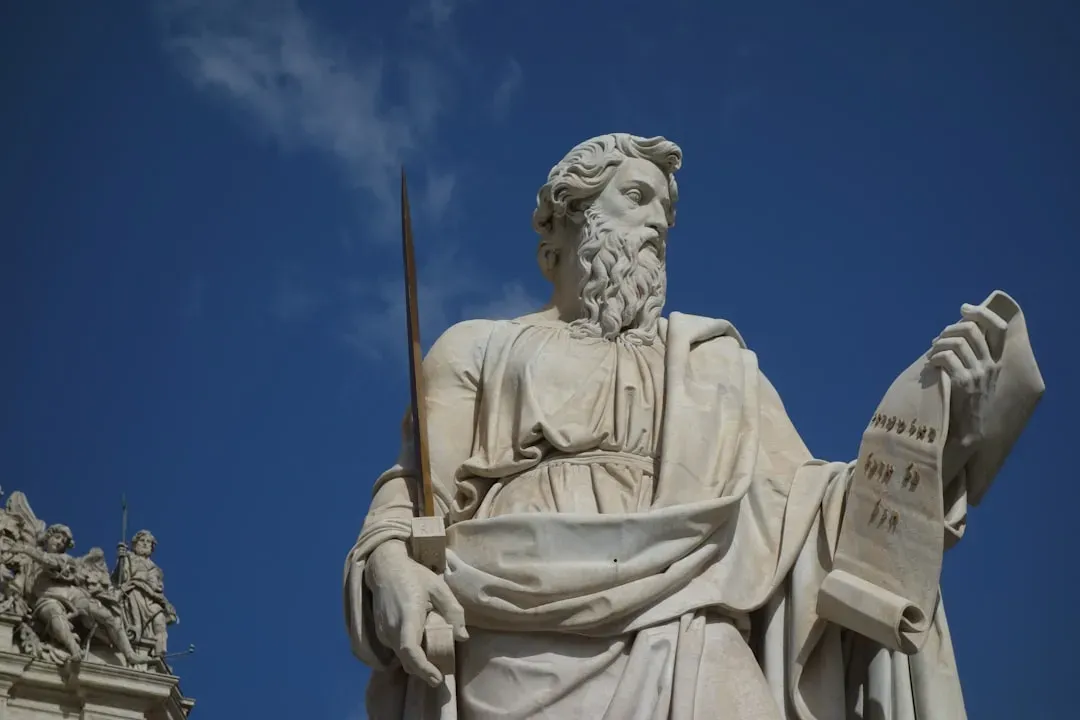
Leadership isn’t a modern invention taught in seminars and workshops. It’s encoded in your biology, shaped by hundreds of thousands of years of human evolution. The signs we’ve explored, from stepping up during uncertainty to building networks, from adapting your style to leading by example, all emerge from behaviors that kept our ancestors alive and helped their communities flourish.
The remarkable truth is this: Leadership isn’t an invention of modern business – it’s an ancient survival mechanism embedded in our biology. The instincts that shaped leadership in our evolutionary past still influence how we lead and follow today. If you recognize yourself in these patterns, you’re not discovering something new. You’re awakening something ancient. What do you think? Do you see these signs in yourself or others around you? Maybe it’s time to embrace that you’re carrying forward a legacy millions of years in the making.