Ever wondered why some people get restless sitting behind a desk all day while others are perfectly content? It’s not just personality, it might be something far more ancient. Your ancestors were wanderers, explorers who ventured into unknown territories with nothing but their wits and raw determination.
Think about it. While you’re scrolling through travel photos or daydreaming about that hiking trip, something deep inside you is stirring. It’s that same pull that made early humans leave familiar hunting grounds to discover what lay beyond the horizon. Let’s dive into whether you carry those same hardwired traits.
You Can’t Sit Still for Long
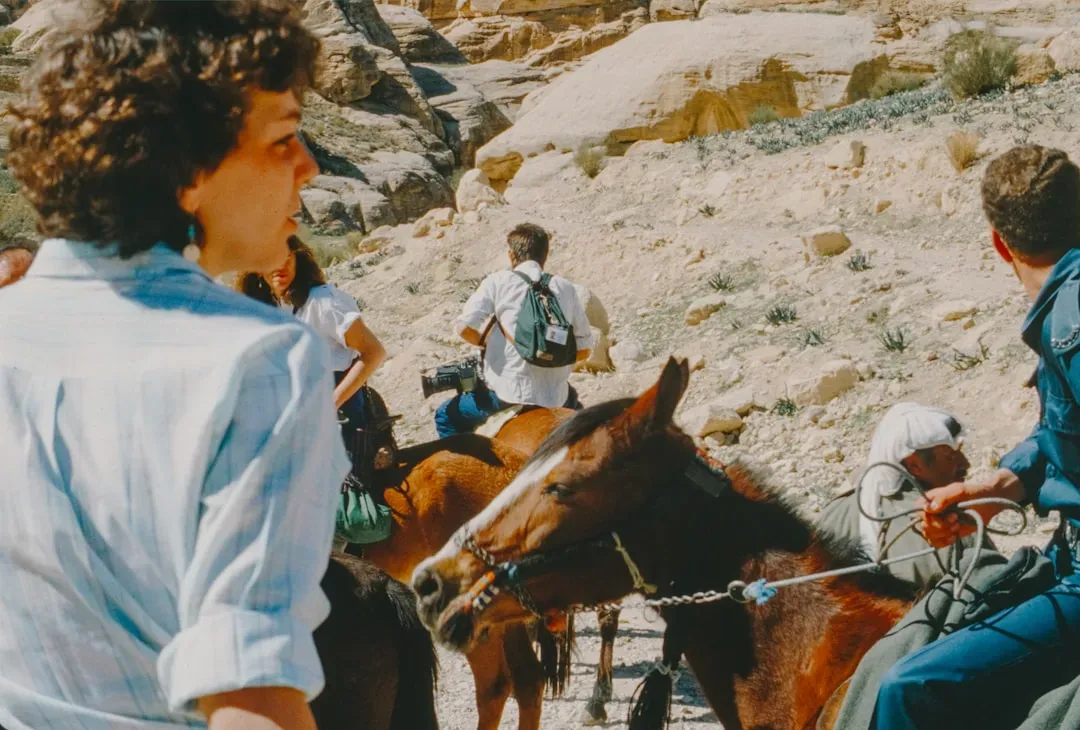
Your restless energy and curiosity would have thrived in prehistoric environments where constant movement was essential for finding food, water, and shelter in ever-changing landscapes. If you find yourself pacing during phone calls or needing to move around every hour, you’re channeling something primal.
In the Paleolithic era, nomadic groups roamed freely, constantly seeking new resources and experiences, and individuals with these restless traits may have retained their innate need for novelty and exploration even as societies transitioned to settled agriculture. Your inability to stay put isn’t a flaw. It’s an echo from a time when stillness could mean starvation.
Unknown Places Pull You Like a Magnet

You know that feeling when you see a trail disappearing into the woods and you just have to know where it goes? People with adventurous personalities exhibit high levels of curiosity and have an enduring desire to explore the unknown, whether it be new cultures, ideas, or physical environments.
Adventurous souls thrive on not knowing what’s around the corner, fueled by the unpredictability of new experiences, the mystery of foreign cultures, and the challenge of rugged trails. Your prehistoric counterparts were the ones who first ventured over that next ridge or crossed that river, discovering new hunting grounds that kept their clans alive.
Uncertainty Doesn’t Scare You, It Excites You

While most people crave predictability, you’re different. The drive for adventure has a strong psychological foundation rooted in the need for novelty and stimulation, with individuals having a lower threshold for boredom and seeking experiences that are unpredictable and exciting.
Let’s be real, life without a little chaos feels dull. This doesn’t mean you’re reckless or careless, far from it, because you understand the risks and do your due diligence. You’re simply wired to see uncertainty as opportunity rather than threat, exactly like those early explorers who couldn’t have survived without embracing the unknown.
Your Gut Reactions Are Lightning Fast

The fight-flight-freeze survival response is triggered by perceived threats, and in early human history, individuals who reacted quickly to danger were most likely to survive and reproduce, passing down this trait. Ever notice how you react before you think in certain situations?
Defensive strategies in the midbrain and hypothalamus are evoked during immediate threats, and this fast-acting reaction system resides in the oldest regions of the human central nervous system. That split-second decision making isn’t just reflex. It’s your ancient survival programming kicking in, the same circuitry that helped your ancestors dodge predators and seize fleeting opportunities.
Routine Feels Like a Cage

There’s something about doing the same thing day after day that makes your skin crawl. Some individuals are naturally drawn to novelty and change, becoming easily bored with routine and feeling a strong urge to break away from the ordinary in search of new and stimulating experiences.
Prehistoric food gathering societies moved from place to place in search of food and water, following the migration patterns of animals and the growth cycles of plants. Your need to shake things up isn’t restlessness in the negative sense. It’s that nomadic blueprint running through your veins, demanding variety the way your body demands oxygen.
You Read People and Environments Instinctively

During the Paleolithic era, attention to detail and a systematic approach to understanding the natural world would have been invaluable, with individuals excelling as keen observers of their environment, specializing in tracking animals, identifying edible plants, and creating tools with precision. Walk into a room and you immediately clock the exits, the mood, who’s comfortable and who’s not.
This hyperawareness isn’t paranoia. Immersed in a rich, biotic environment, it would have been imperative for our ancestors to monitor both humans and non-human animals, as predators and prey took many forms and changed often, so constant observation was critical. You’re simply tuned to the same frequency that kept early humans alive.
Physical Challenges Make You Feel Alive

Whether it’s climbing, running, or pushing your body to its limits, you crave that feeling of testing yourself. People with adventurous personalities exhibit traits of risk-takers who embrace uncertainty and are willing to step out of their comfort zones, frequently seeking new experiences and thriving in unpredictable situations with fearlessness and high tolerance for ambiguity.
A high tolerance for risk and uncertainty contributes to a sense of adventure, with people comfortable with the idea of taking calculated risks being more likely to engage in adventurous activities. Your prehistoric ancestors didn’t have gyms. Their entire existence was physical challenge, from hunting down food to building shelter, and that need to prove your physical capability is hardwired into your DNA.
You Trust Your Instincts Over Data
Sure, research matters, but when push comes to shove, you listen to that voice in your head. Modern humans are particularly reliant on flexible systems that make use of sophisticated prediction and learning strategies to avoid danger, with a great capacity to learn what is important in changing environments and optimize behaviors accordingly.
Sometimes you just know something without being able to explain why. Many behavioral traits acquired over hundreds of thousands of years still influence human behavior, with fear of the dark or caution in dark streets likely the result of prehistoric experiences when darkness could conceal a predator or other danger. That gut feeling is millions of years of evolutionary wisdom compressed into a single moment of clarity.
Comfort Zones Feel Like Death Traps

For some, the thrill of adventure comes from pushing personal boundaries and stepping out of comfort zones, which can lead to personal growth and a heightened sense of accomplishment. If you’re not growing, you’re dying, right? That’s not just a motivational poster slogan for you.
Adventurous individuals are comfortable with uncertainty and willing to take risks, which can lead to personal growth and self-discovery, and they are often resilient and able to bounce back from setbacks, using their experiences to learn and grow. Your ancestors couldn’t afford comfort zones. Every generation had to adapt, explore, and push boundaries just to survive, and that drive to constantly expand your limits is their legacy living through you.
You’re Drawn to Stories of Exploration and Survival

Books, films, documentaries about people pushing limits, you can’t get enough of them. Behavioral modernity includes capacities such as abstract and symbolic thought, planning depth, cumulative culture, and complex social learning. There’s something about hearing how others overcame impossible odds that resonates deep in your core.
Some examples of human universals are abstract thought, planning, trade, cooperative labor, body decoration, and the control and use of fire. These stories aren’t just entertainment for you. They’re validation of something you recognize in yourself, that same spirit that made early humans share tales around fires about the hunt, the journey, the discovery that changed everything.
Conclusion
If you recognized yourself in most of these signs, congratulations. You’re carrying forward a legacy that stretches back hundreds of thousands of years. Homo sapiens emerged on the Savannah Plain some 200,000 years ago, yet according to evolutionary psychology, people today still seek those traits that made survival possible then, including an instinct to fight furiously when threatened.
The modern world tries to domesticate these instincts, to smooth out the rough edges that once meant survival. Sometimes that feels suffocating. Your restlessness, your need to explore, your inability to settle aren’t flaws that need fixing. They’re features, ancient gifts that once pushed humanity forward into new territories and possibilities.
The question isn’t whether you’re hardwired for adventure. Clearly you are. The real question is what you’re going to do about it. Did any of these signs surprise you, or have you always known you were different?