
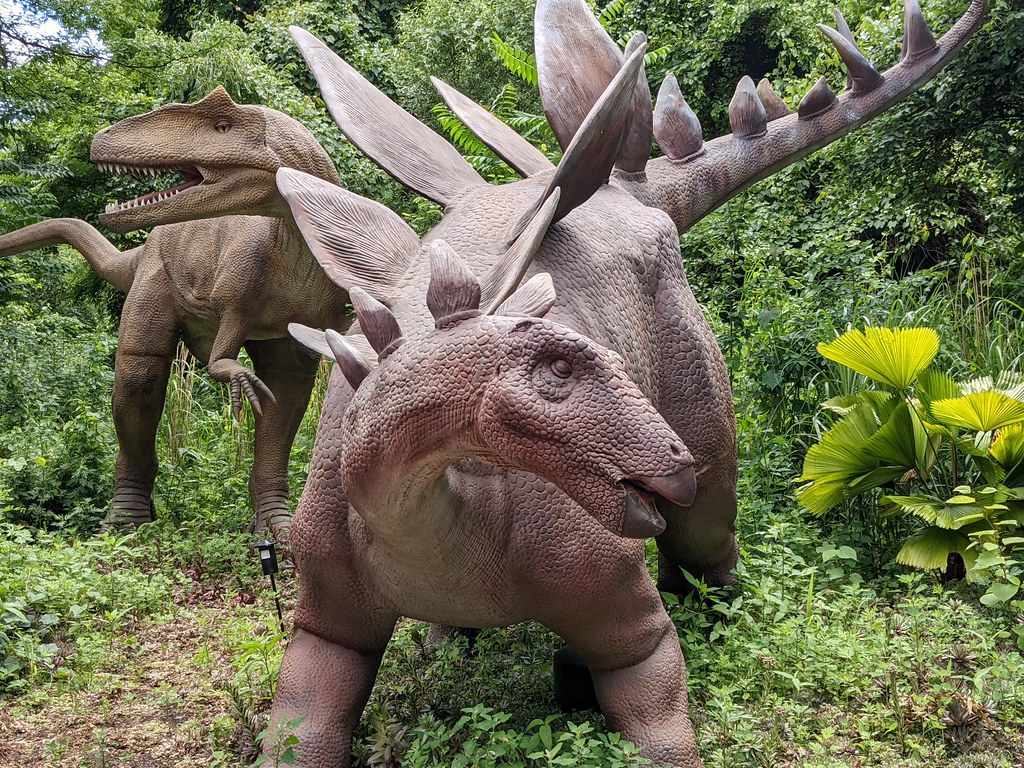
If your only image of dinosaur defense is a roaring T. rex and a few sharp claws, you’re missing the truly weird side of prehistoric survival. For more than a hundred million years, dinosaurs evolved wild, sometimes downright bizarre defensive tricks that make modern armor, camouflage, and intimidation look pretty tame.
From tail clubs that could smash bone to towering necks used more like radar towers than selfie sticks, dinosaur defense was anything but simple. Some relied on heavy armor, others on confusing patterns, and a few probably used bluff and bravado more than actual strength. Let’s dive into some of the strangest, science-backed tried to avoid becoming someone else’s lunch.
1. Living Tanks: Full-Body Armor Plates
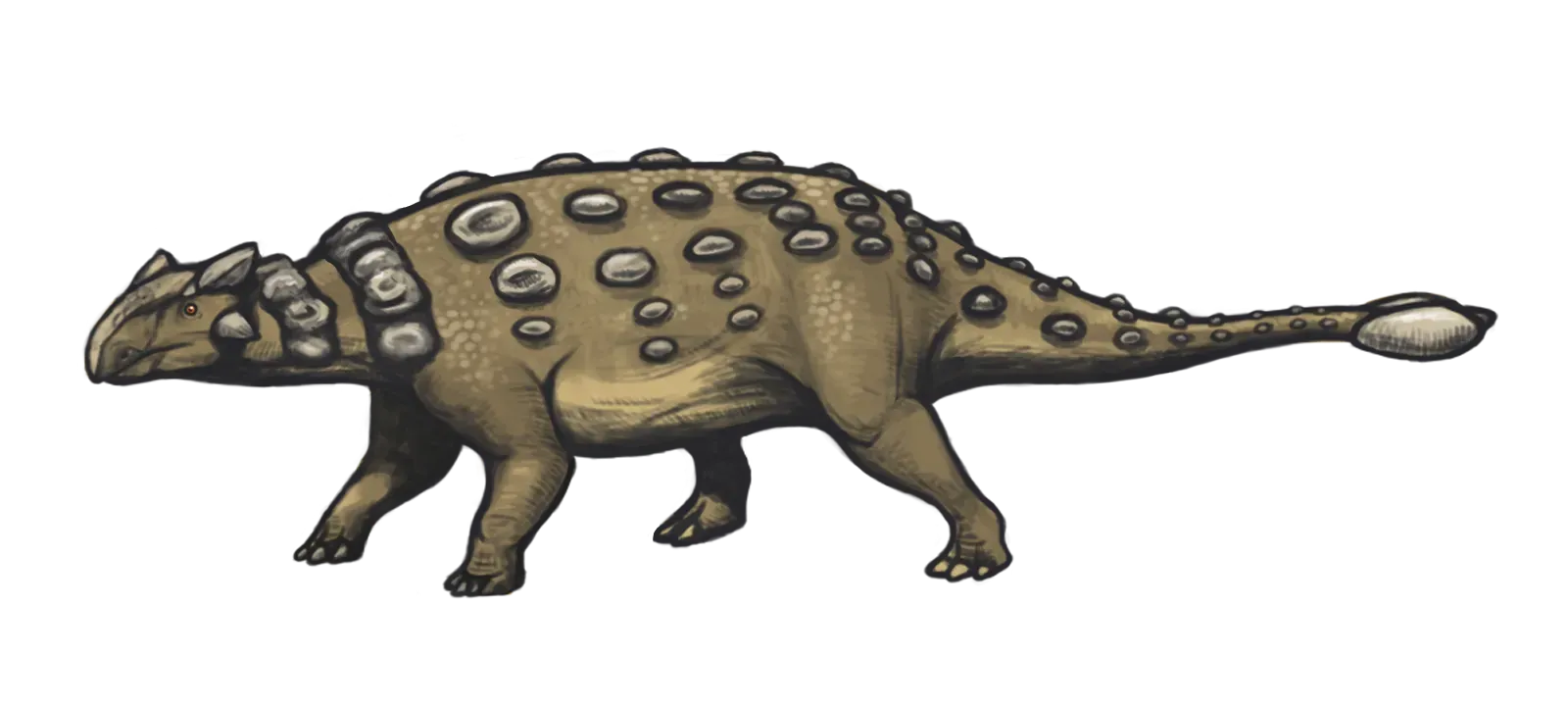
One of the most striking defenses in the dinosaur world was full-body armor, turning some species into walking tanks. Ankylosaurs, for example, were covered in heavy, bony plates embedded in the skin, a bit like a crocodile in overkill mode. These osteoderms formed a kind of natural body armor that protected the neck, back, and flanks from bites and claw swipes.
This armor came with trade-offs: it made these dinosaurs slower and likely more energy-hungry, so they had to win the “not getting eaten” game with brute durability. I sometimes think of them as the prehistoric equivalent of a medieval knight who decided to skip the horse and just be a moving fortress. Predators probably learned quickly that attacking an adult armored dinosaur was a terrible return on investment, and that alone may have been enough to keep many of them alive.
2. Tail Clubs That Could Shatter Bone
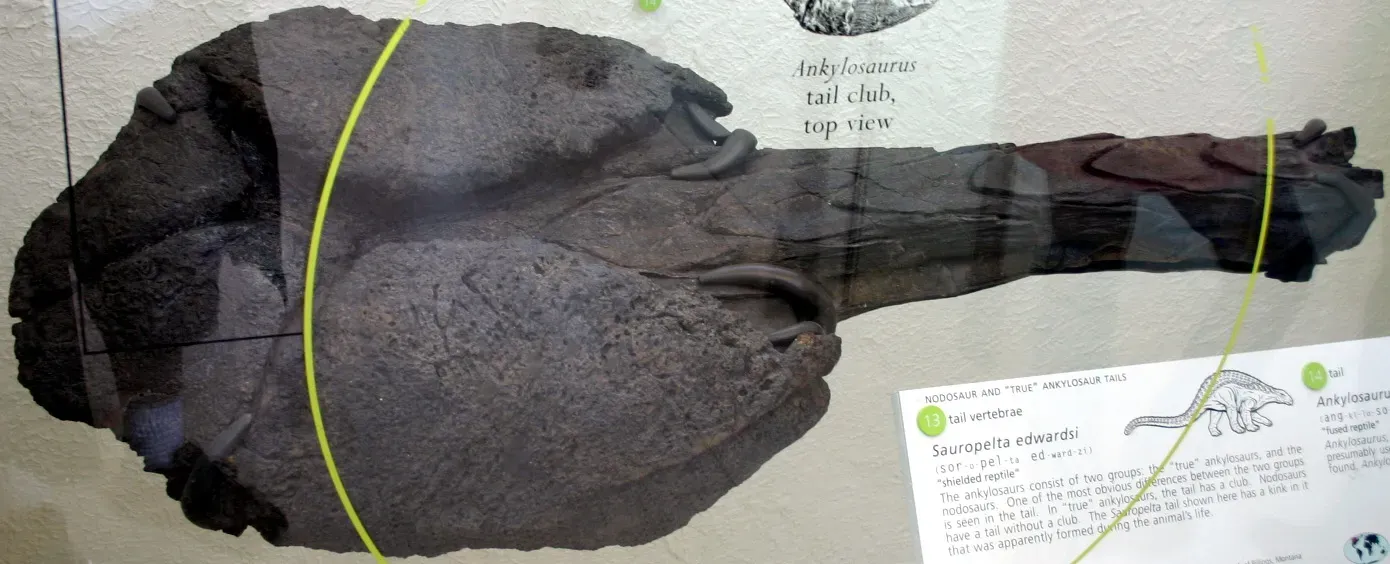
As if full-body armor wasn’t enough, some dinosaurs added a literal wrecking ball to the package. Certain ankylosaurs evolved massive bony clubs at the ends of their tails, supported by reinforced vertebrae and powerful muscles. These clubs were not decorative; fossil evidence shows they could deliver blows strong enough to break bone, possibly even the legs of large predators.
Imagine trying to sneak up on what looks like a slow, harmless grazer, only for it to swing around and smash your shin with the prehistoric equivalent of a baseball bat. That changes the risk calculation pretty fast. I actually think tail clubs were one of the most underappreciated dinosaur weapons: they were defensive, yes, but probably also used for contests within the species, a bit like rams but with a lot more collateral damage.
3. Horns and Frills as Intimidation Shields
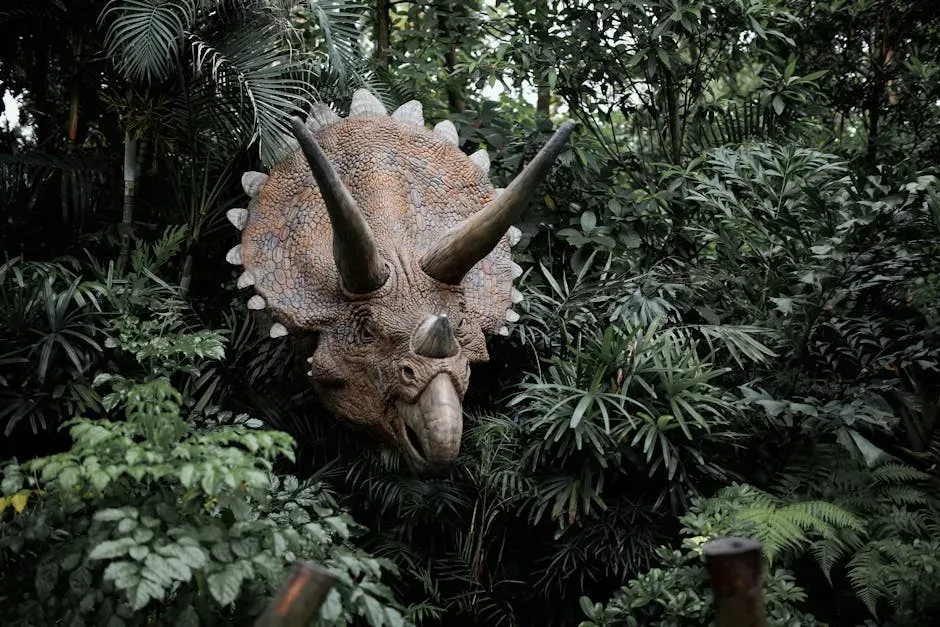
Ceratopsians, like Triceratops, are often drawn like living bulldozers, charging with their horns down. But their huge frills and multiple horns probably had a more complex mix of roles: defense, display, and intimidation. Horns could be used in close combat if a predator got too near, while the broad frill protected vulnerable neck muscles and may have helped deflect bites.
There’s also a good chance these features worked as psychological armor. A predator sizing up a big, horned, frilled dinosaur might think twice, in the same way most people would think twice before picking a fight with someone built like a linebacker wearing spikes. In my view, the strangest thing about ceratopsian defenses is how much they blurred the line between fashion and function: those dramatic head shields likely helped with species recognition and mating too, making them multi-purpose survival tools.
4. Spikes Everywhere: From Throat Guards to Tail Spears
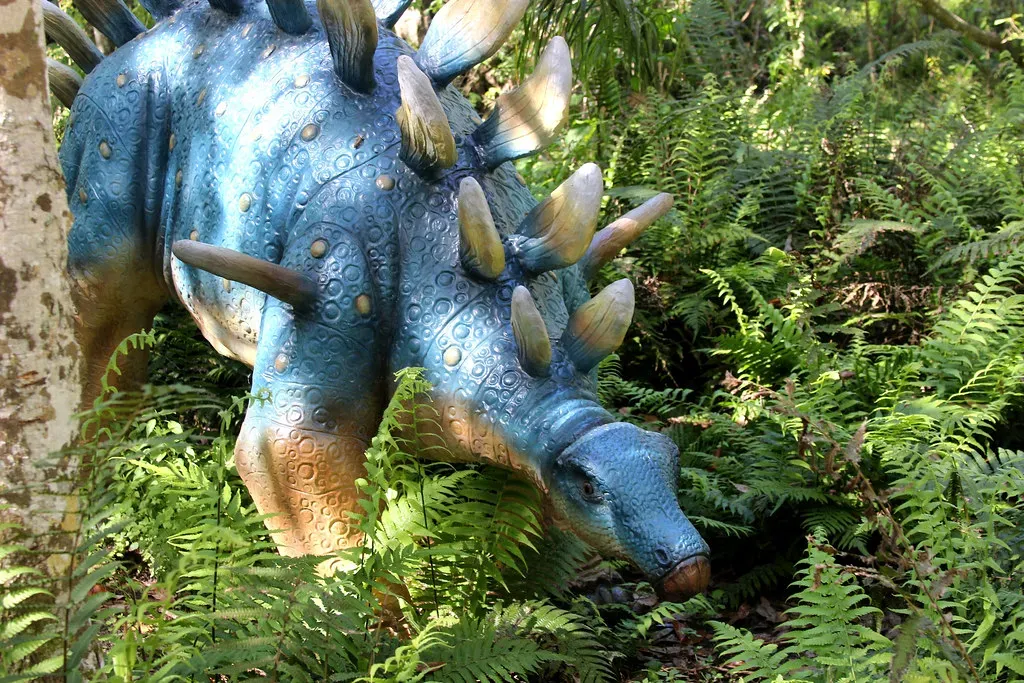
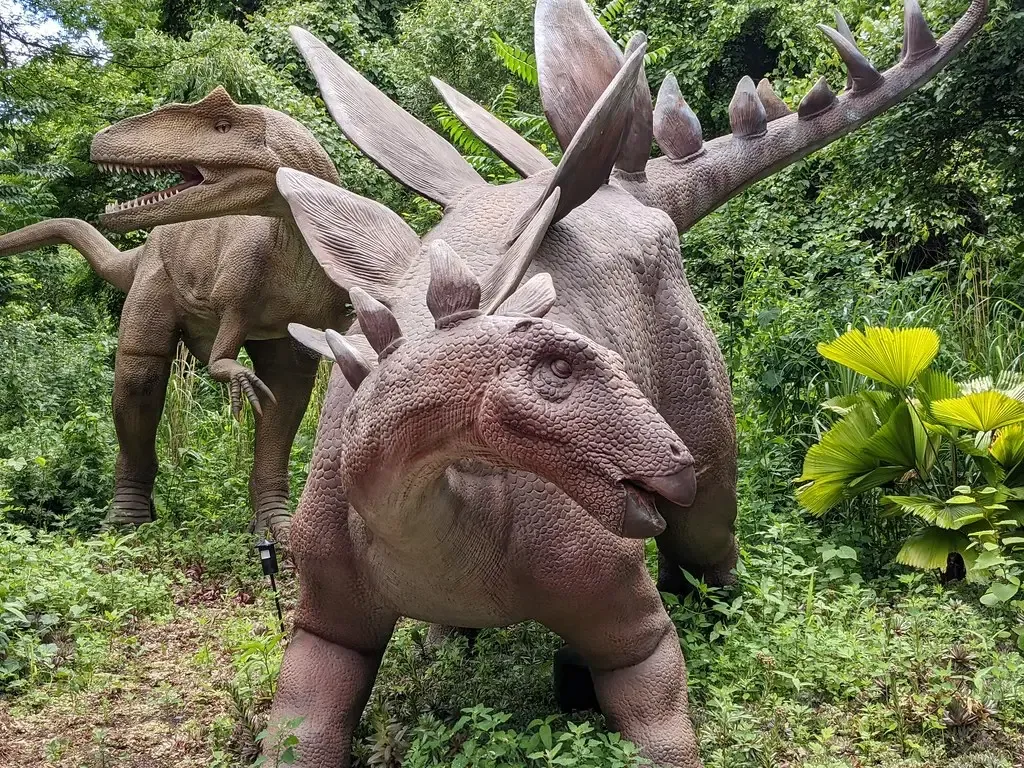
Some dinosaurs did not stop at a few plates or one club; they went all-in on spikes. Stegosaurs, for example, are famous for the spiked tail, often called a thagomizer, a set of long, sharp spikes that could be swung like a spear rack. Others had spikes along the neck or shoulders, creating a kind of “do not touch” barrier that made it risky for predators to bite in.
There is something almost over-the-top about these spike arrays, like nature decided to cosplay as a metal album cover. But functionally, they made a lot of sense: biting into a prey animal that can skewer your face is a terrible decision, and predators that tried likely paid for it. I suspect many spike-covered dinosaurs survived without ever actually stabbing anything, simply because their appearance screamed danger loudly enough.
5. Giant Size as a Passive Shield
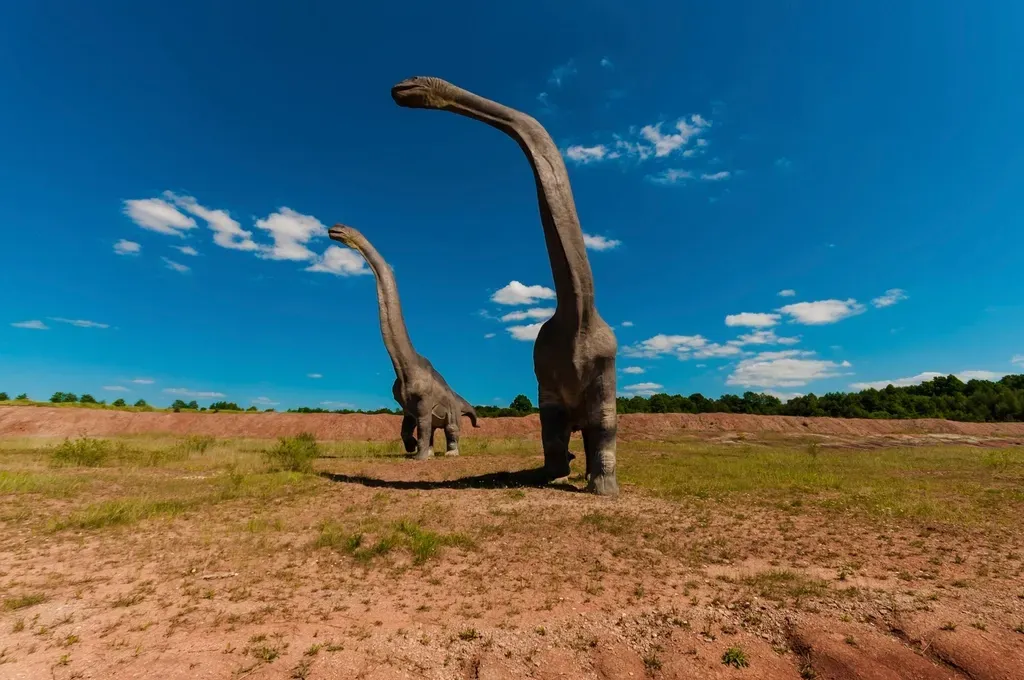
Sometimes the strangest defense is also the simplest: just grow so big that almost nothing can eat you. Many sauropods, the long-necked, long-tailed giants, reached sizes where adult individuals were effectively immune to most predators. A carnivore might attack juveniles or sick individuals, but a healthy, full-sized sauropod was more like a moving ecosystem than a typical animal.
Of course, giant size came with serious costs: they needed massive amounts of food, large home ranges, and sturdy limbs to support their bulk. Still, from a survival standpoint, it is a bold but effective strategy. I like to think of it as the prehistoric version of “security through excess”: if you are the biggest thing around, your main threat is the environment, not your neighbors.
6. Height and Long Necks as Early Warning Systems
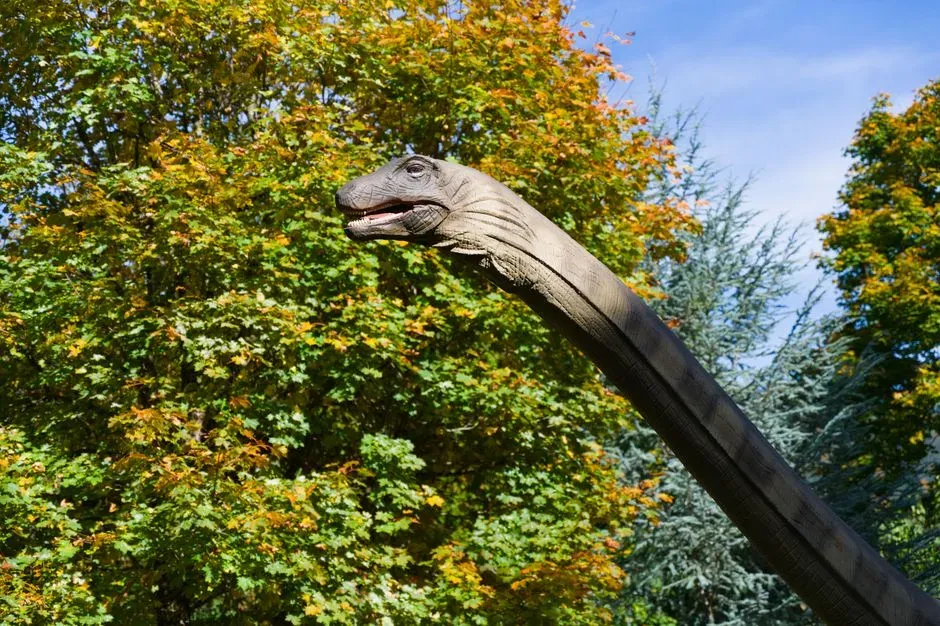
Long necks in dinosaurs are often explained as feeding tools, letting them reach tall vegetation or sweep wide areas of plants without moving much. But that same height would have been a powerful defensive asset. Being able to lift your head far above the ground means you can scan for predators at a distance, especially in open habitats or among low trees.
Think of a sauropod’s neck like a living surveillance tower, catching movement on the horizon before danger gets close. Once one individual noticed a threat, the entire herd could react, moving away or tightening formation around vulnerable young. In my opinion, this dual use of the neck for both feeding and vigilance is one of the cleverer examples of nature not wasting an adaptation when it can do two jobs at once.
7. Camouflage and Counter-Shading Color Patterns
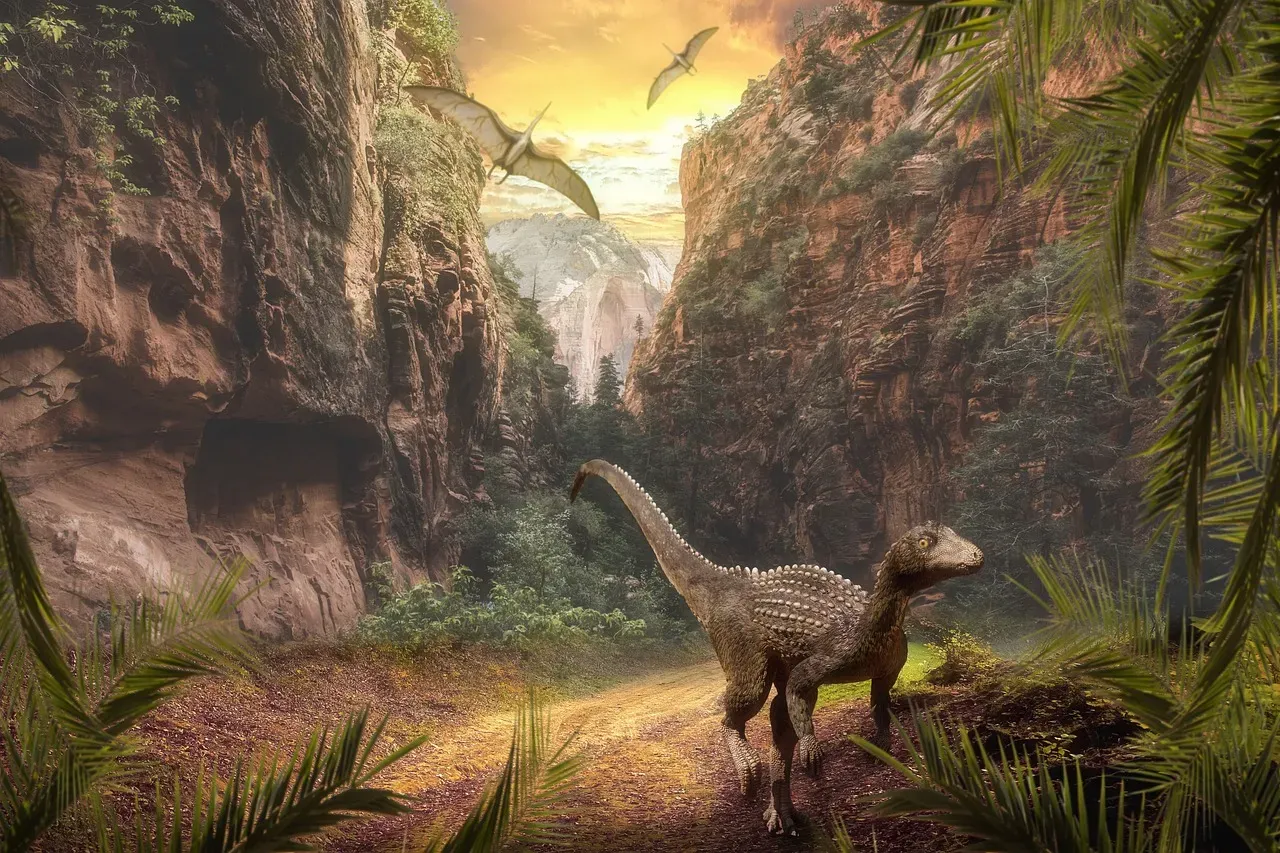
For a long time, dinosaur skin color was pure guesswork, but fossil discoveries have started to reveal actual pigment patterns in some species. Evidence of darker backs and lighter bellies, a pattern known as counter-shading, suggests some dinosaurs used camouflage much like modern deer or antelope. This kind of coloration breaks up the body’s outline and makes it harder to spot in dappled light or open terrain.
That may sound tame compared to spikes and clubs, but quietly not being seen is one of the most powerful defenses in nature. I find it fascinating that even animals we once imagined as bold, bright monsters might have been more subtle in real life, blending into forests or plains to avoid getting noticed. There is something strangely humbling about learning that some dinosaurs survived not by being flashy, but by disappearing into the background.
8. Herding, Circles, and Safety in Numbers
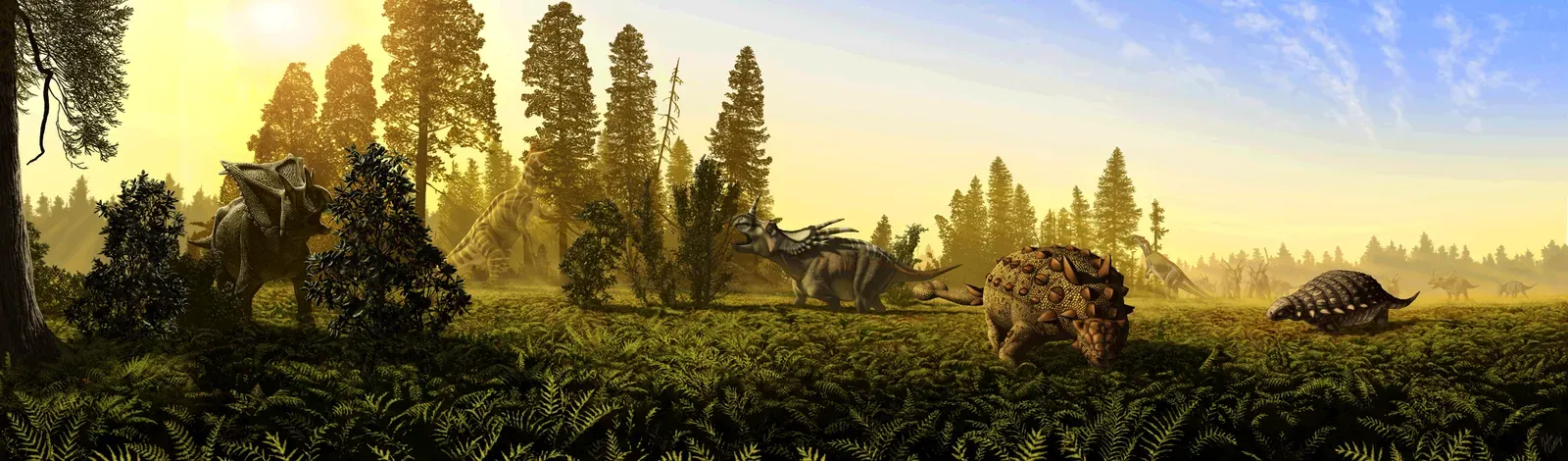
Fossil trackways and bonebeds suggest that many dinosaurs moved in groups, sometimes very large ones. Herding is a classic defense strategy that still works today: when you are surrounded by others, your individual risk of being caught drops, and many eyes can spot danger faster. Some paleontologists think certain herds may have formed circles or protective clusters around juveniles when threatened, similar to how modern musk oxen or elephants behave.
To me, the social side of dinosaur defense is one of the most relatable. Survival was not just about teeth and armor; it was about relationships and coordination. Moving, feeding, and maybe even nesting together turned a bunch of vulnerable individuals into a kind of living shield, and that might have mattered just as much as any physical weapon they carried on their bodies.
9. Speed, Agility, and Sudden Direction Changes
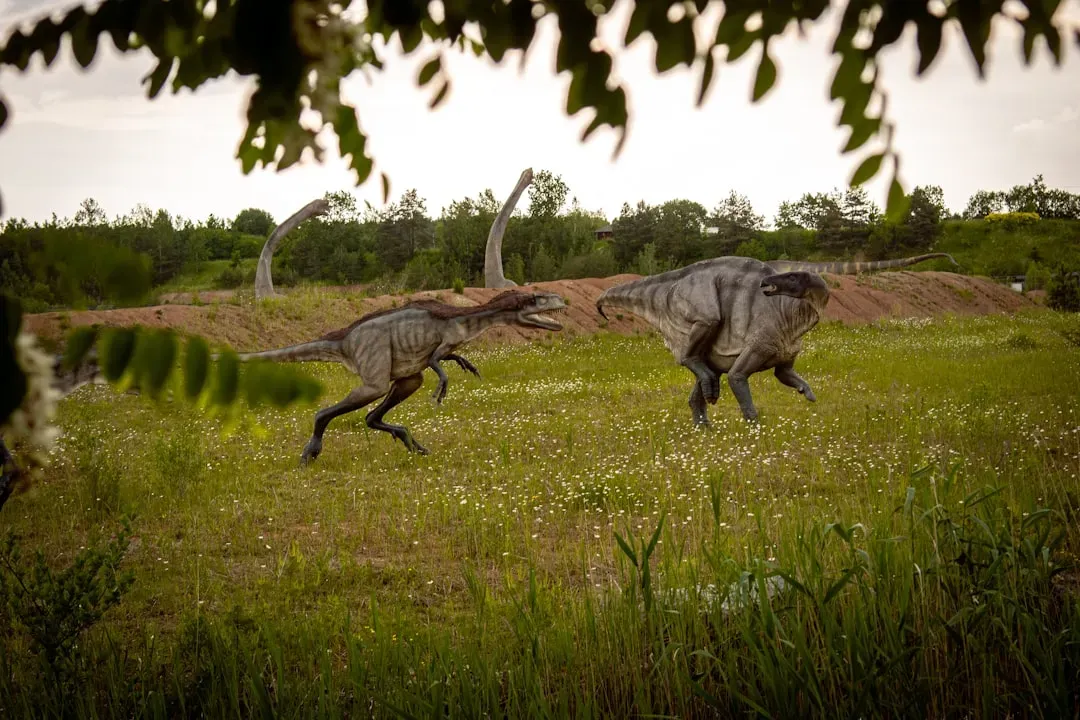
Not every dinosaur had armor or horns, and many small or medium-sized species relied mainly on speed and agility to stay alive. Light, bird-like theropods and quick-footed herbivores could outrun heavier predators or at least make it hard to get a clean strike. Long legs, balanced tails, and flexible spines likely helped them zigzag, dodge, and sprint away at the first sign of trouble.
I sometimes think of these dinosaurs as the parkour athletes of the Mesozoic, darting between obstacles and using terrain to their advantage. While it seems less dramatic than a horned face-off, the ability to simply not be where the predator expects you to be is an underrated superpower. Our own species tends to admire big, flashy weapons, but evolution often rewards the ones who can just run smarter, not fight harder.
10. Bluff, Display, and Psychological Warfare
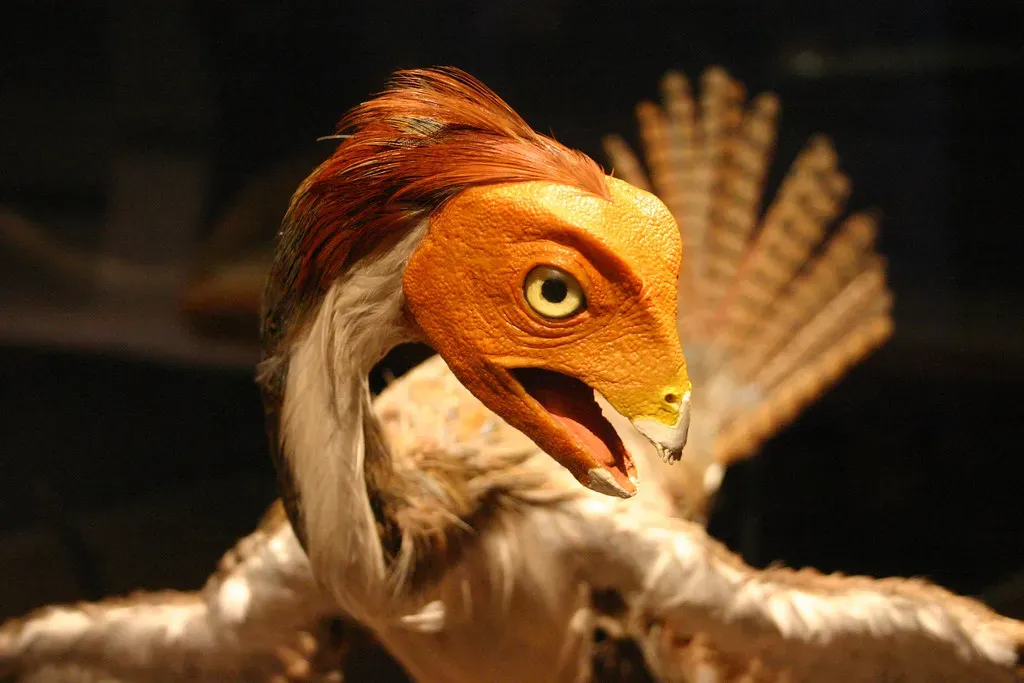
One of the strangest but most widespread defensive tactics in animals today is bluffing: making yourself look bigger, louder, or more dangerous than you really are. Many dinosaurs with crests, frills, or display feathers may have used them not only for mating displays, but to intimidate predators and rivals. Bright colors, sudden postures, and vocalizations could all have contributed to the impression that attacking was a bad idea.
In a way, this is mental armor rather than physical armor. If you can convince a hungry predator that you are more trouble than you are worth, you win without spending energy on a fight or risking injury. I am convinced that a lot of dinosaur defense came down to this kind of psychological game, a prehistoric version of talking your way out of a fight by looking like someone who absolutely should not be messed with.
Conclusion: Dinosaur Defense Was Messy, Creative, and Very Real
When you look across these ten strange defenses, a clear pattern emerges: dinosaurs were not just giant monsters; they were problem-solvers shaped by pressure and time. Armor, spikes, clubs, camouflage, herds, and bluffs were all different answers to the same brutal question: how do you avoid becoming a meal in a world full of teeth? Some answers were heavy and slow, others subtle and clever, but each one reflects a specific way of living and surviving.
Personally, I think the most surprising lesson is how familiar many of these strategies feel once you strip away the scales and deep time. We see versions of them today in antelope, armadillos, porcupines, and even in our social strategies as humans. Dinosaur defense was not magic or movie spectacle; it was a messy, creative, real-world arms race that never stopped until the world itself changed. The next time you picture a dinosaur, will you see just a predator or prey, or will you imagine the full toolkit it carried just to stay alive one more day?