

Most people assume a scientific theory either gets proven or gets thrown out. But there’s a strange third category nobody talks about: theories that simply become untestable, drifting in scientific limbo for decades while brilliant people still build entire careers on them. String theory, the multiverse, and even parts of inflationary cosmology now sit in this exact spot. They’re not disproven. They’re not confirmed. They’re just… stuck.
And the fight over what to do with them has split some of the most respected physicists and philosophers alive into two furious camps. Here’s what the data, the debates, and the scientists themselves actually say.
#1 – The Rule Everyone Quotes But Almost Nobody Applies Correctly

Karl Popper gave science its most famous rulebook, and almost every physicist still name-drops him. In the case of a theory, falsifiability requires that, given an initial condition, the theory must theoretically exclude some observations. The idea sounds simple: a real scientific claim has to be able to fail.
But here’s the part most people skip. Philosophers of science have long since moved past falsifiability as a simple solution to the demarcation problem. Yet many working scientists have seized on it with gusto, going so far as to argue that falsifiability is manifestly a central part of the definition of science. Philosopher Alex Broadbent has called it remarkable that Popper remains so popular among natural scientists despite almost universal agreement among philosophers that his central claims are false.
Fast Facts
- Falsifiability was introduced by philosopher Karl Popper back in the 1930s.
- Under Popper’s rule, a theory only counts as scientific if some possible observation could prove it false.
- Most philosophers of science moved past strict falsifiability as the full answer decades ago.
- Many working physicists still treat it as the default test for “real” science anyway.
That gap between what philosophers believe and what working scientists preach is the entire reason untestable theories cause so much drama. Physicists treat Popper like scripture. Philosophers treat him like a historical footnote. Nobody actually agrees on the rule being used to judge these theories in the first place – and that crack in the foundation is exactly where string theory, the multiverse, and inflation all eventually fall through.
#2 – The Single Bird That Wrecked a Thousand Years of Confidence

One tiny observation is technically enough to kill a theory that took centuries to build. “All swans are white” looked confirmed by millions of observations – until a single black swan showed up and ruined everything.
That’s the entire engine behind falsification. Popper proposed it as an alternative scientific method: many confirming instances can pile up for a theory, but it only takes one counter-observation to falsify it. Science, in this view, progresses when a theory is shown wrong and a better one replaces it.
It sounds clean in theory. In practice, it almost never works that cleanly. Real experiments involve dozens of assumptions stacked on top of each other, and when a prediction fails, scientists rarely know which assumption actually broke. That messy reality is exactly why some theories never get a clean black swan moment at all. Instead of dying, they just keep getting patched – which turns out to be a much stranger fate than simply being proven wrong.
#3 – The Patch Job That Keeps Dead Theories Walking

Here’s the secret about theories nobody wants to admit: they don’t usually die from one bad test. They get quietly rescued instead. A claim can be made unfalsifiable simply by adding auxiliary hypotheses, protecting it from falsification indefinitely. Popper called this the problem of immunization – wrapping a hypothesis in enough escape clauses to make it untestable in practice.
Popper himself worried about exactly this trap. Theories that are permanently immunized from falsification by untestable ad hoc hypotheses, he warned, can no longer really be classified as scientific.
But here’s the twist that turns this into a real controversy: sometimes the patch turns out to be correct. The line between “cheap rescue” and “brilliant discovery” is razor thin, and physicists have been arguing over which side of that line certain modern theories fall on for forty years straight.
#4 – Physics’ Most Famous Theory That Refuses to Make a Prediction
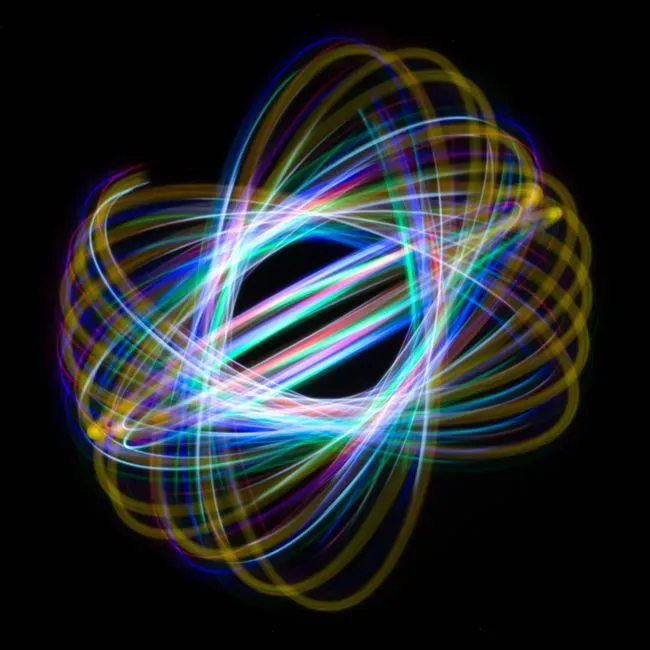
String theory is the biggest, best-funded, most argued-about untestable theory in modern physics. It’s dominant, but far from free of controversy. Critics, one of the most prominent being Lee Smolin of the Perimeter Institute, take the theory to task for not having produced a single new prediction that could actually be compared with experiment.
At a Glance
- String theory has been actively developed since the 1970s and 80s.
- It proposes tiny vibrating strings instead of point particles as the basic unit of matter.
- It requires extra spatial dimensions beyond the four we actually experience.
- Decades in, it still hasn’t produced a prediction testable with current technology.
The criticism goes deeper than just “no predictions yet.” Critics claim that the features of string theory that are at least potentially testable – things like supersymmetry and cosmic strings – aren’t even specific to string theory. Rival theories predict the same features, meaning a positive result in the lab wouldn’t prove string theory correct anyway.
Meanwhile defenders push back hard, insisting the theory does make predictions – just not ones we can test yet. Physicist Gabriele Veneziano points out that string theory makes definite predictions, like the existence of very heavy “string excitations.” The real question is whether any conceivable experiment, now or in the foreseeable future, will ever be able to test them. That distinction between “makes predictions” and “makes testable predictions” is where the entire argument actually lives.
#5 – The Multiverse Problem Nobody Wants to Solve

If string theory is controversial, the multiverse is where things get genuinely explosive. Critics argue it’s not just hard to test – it’s designed to be impossible to test, and that’s exactly the point of the complaint.
“The multiverse did it” is not just untestable, but an excuse for failure.
Peter Woit
That’s physicist Peter Woit’s brutal verdict, and it hasn’t softened with time. He says the problems of string theory have gotten more severe since he first raised them more than a decade ago, pointing to “the complexity, ugliness and lack of explanatory power of models designed to connect string theory with known phenomena.”
Here’s the controversial opinion worth sitting with: if a theory can explain literally any outcome by pointing to “another universe where things went differently,” it stops functioning as a scientific explanation at all. It becomes a philosophical safety net instead. Some physicists find that fascinating. Others find it embarrassing.
#6 – The Nobel Laureates Who Went to War Over Inflation

This isn’t some fringe internet argument – it’s a fight between actual Nobel Prize winners. Three prominent cosmologists argued in a February 2017 Scientific American piece that inflationary cosmology, the long-favored model for the early universe, has no data to support it and has been patched up so many times it’s now beyond testability – marching toward what they called a “non-empirical science.”
Quick Compare
- Critics say: inflation has become unfalsifiable, patched too many times, drifting into “non-empirical science.”
- Defenders say: inflation has genuine empirical successes, including matching features of the cosmic microwave background.
- Critics’ camp: three cosmologists writing in a February 2017 Scientific American piece.
- Defenders’ camp: Alan Guth plus 32 co-signers, including five Nobel laureates.
The response was immediate and furious. Alan Guth, one of inflation’s original inventors, joined thirty-two other signatories – including five Nobel laureates – in a strong rebuke, expressing “categorical disagreement” and insisting inflationary cosmology has achieved “impressive empirical success,” including confirmed features of the cosmic microwave background.
Both sides can’t be fully right. Some of the most decorated minds in physics looked at the exact same theory and reached opposite conclusions about whether it even counts as testable science anymore. That’s not a minor academic squabble – that’s a crisis at the very top of the field.
#7 – The Insult That Physicists Can’t Shake Off

There’s a phrase that has haunted string theory for two decades, and it’s brutal precisely because it’s so simple: “not even wrong.” Physicist Peter Woit wrote an entire book built around that exact phrase. Years later, when asked whether he still stood by it, his answer hadn’t changed at all: “Yes.”
The phrase means something specific and stinging. A theory that’s “not even wrong” isn’t just incorrect – it’s structured so it can never be checked, which means it can never even earn the dignity of being proven false. That’s a harsher insult in physics than being wrong outright.
Defenders of the field see this framing as unfair and outdated. Some argue the criticism ignores how many genuinely difficult mathematical problems string theory has solved along the way, even without direct experimental confirmation. That tension – mathematical progress without empirical progress – is the exact fight that defines this entire era of physics.
#8 – The Time an “Untestable” Rescue Turned Out to Be Genius

Not every patch-job is a scam. Sometimes the “cheat” ends up being one of the greatest discoveries in scientific history. Newtonian gravity made incorrect predictions for the orbit of Uranus. Instead of treating this as a refutation, physicists made the auxiliary assumption that Uranus’ motion was being tugged by the gravity of a new, unobserved planet. A few years later, that planet – Neptune – was actually discovered.
That single example wrecks the simple version of falsifiability that most people repeat online. Had the Newtonians adopted a strict testability view of science, one of the most powerful theories in physics history would never have gotten off the ground.
This is the uncomfortable truth buried inside every debate about untestable theories: sometimes an unfalsifiable-looking rescue is a lucky guess that gets confirmed decades later, and sometimes it’s a dead theory in a lab coat. There’s no reliable way to know which one you’re looking at until the evidence eventually arrives – if it ever does.
#9 – Why Scientists Keep Building Careers on Theories They Privately Doubt

Here’s the part nobody likes to admit out loud: careers, not just curiosity, keep untestable theories alive. Graduate students, postdocs, and untenured junior faculty working in speculative areas of mathematical physics are under tremendous pressure. Starting to work on an untested new idea that might fail looks a lot like a quick route to professional suicide.
That pressure produces a strange result. Some people who don’t actually believe in string theory work on it anyway – partly out of the natural desire to maintain a job, get grants, go to conferences, and have an intellectual community to belong to.
This is the controversial opinion worth discussing in the comments: when the safest career move is to keep working on a theory you personally doubt, is that still science – or is it just institutional momentum wearing a lab coat? The theory doesn’t need to be true to survive. It just needs enough people whose paychecks depend on it staying alive.
#10 – The Quiet War Between Philosophers and Physicists
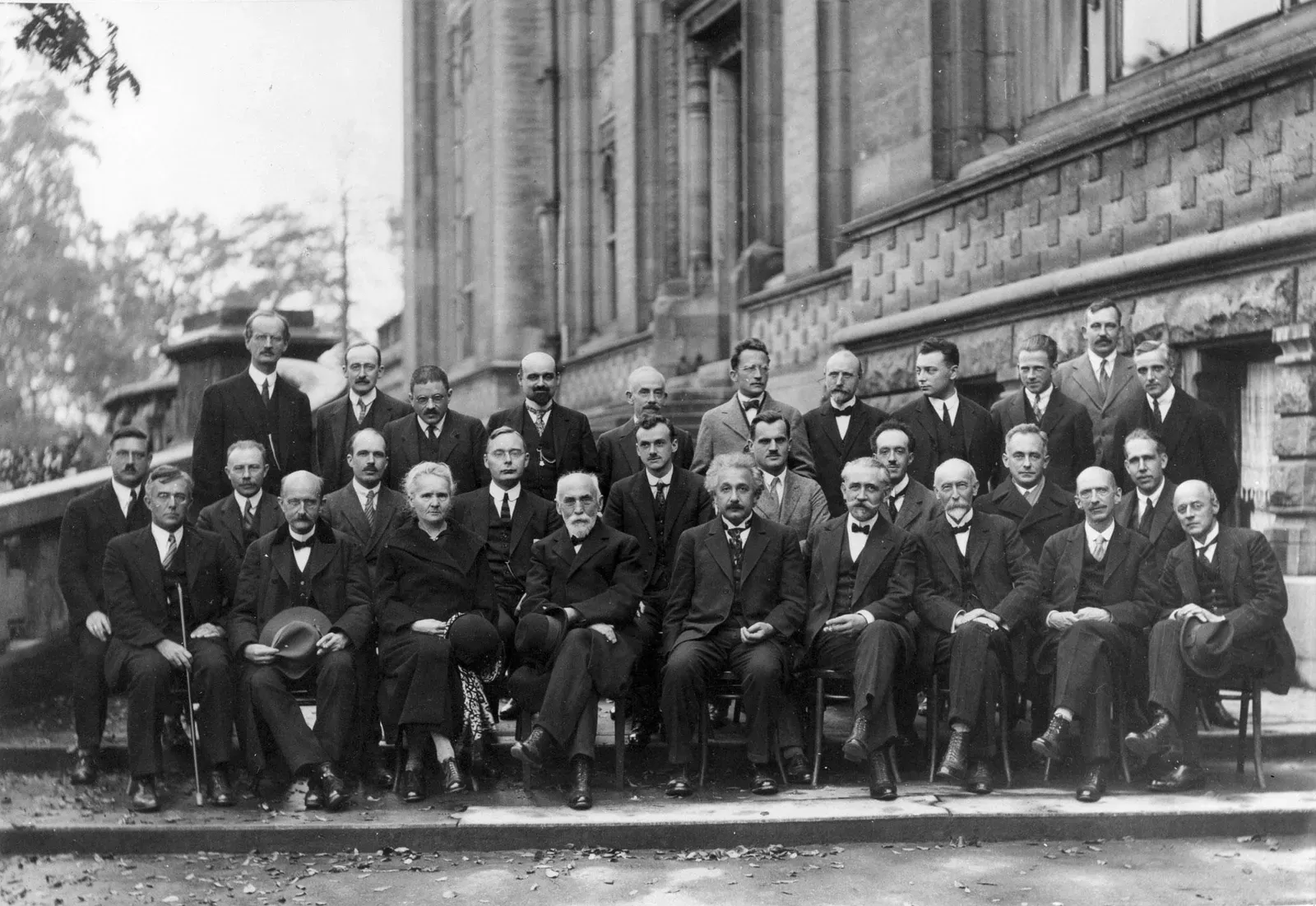
Most physicists think they’re following settled philosophy of science. They’re not even close. While philosophers moved past strict falsifiability decades ago as a simple solution to the demarcation problem, many working scientists have seized on it anyway, treating it as though it were still the central definition of science itself.
Philosophers point out that real experiments never test a single hypothesis in isolation – they test a hypothesis plus a pile of background assumptions all at once. When a prediction fails, it isn’t automatically clear which part of the system is wrong: the main hypothesis, or one of the auxiliary assumptions propping it up. In practice, falsification is nowhere near as clean or decisive as Popper’s criterion suggests.
That gap between physics classrooms and philosophy departments explains a huge amount of the confusion in these debates. Scientists keep citing a rule that the people who study rules for a living have already flagged as broken. Nobody updates the textbook fast enough to catch up.
#11 – The Original Targets Popper Was Actually Aiming At
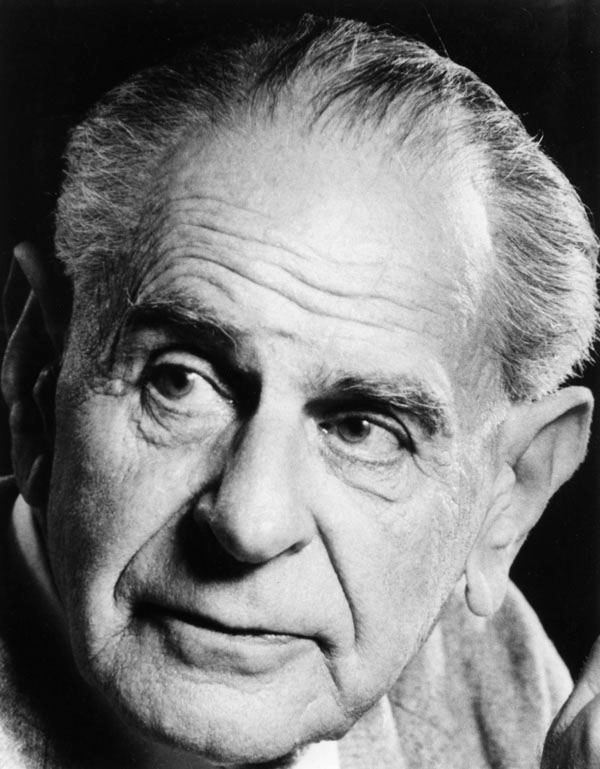
Popper wasn’t thinking about string theory or the multiverse when he built his rule. He was thinking about something much closer to home. Popper judged Freud’s, Adler’s, and Marx’s theories unscientific because no evidence could ever count against them – not because they were false.
Worth Knowing
- Popper originally built his falsifiability test to critique Freud, Adler, and Marx – not physics.
- He judged psychoanalysis unscientific because it could absorb and explain any human behavior after the fact.
- He believed Marxism started out scientific, then slowly became unfalsifiable as its predictions failed.
- Modern critics say some cosmological theories may be following that same slow drift.
That distinction is critical and constantly misunderstood. When writing this, Popper was less concerned with physics than with theories like Freudian psychology and Stalinist history. He argued these were unfalsifiable because they were vague or flexible enough to absorb absolutely any evidence thrown at them, making them immune to real testing.
Even Marxism, which Popper originally treated as scientific, changed status over time in his eyes. He came to believe it had started out scientific but had become unfalsifiable as its predictions repeatedly failed to come true and got explained away instead. That’s the exact fate some critics now claim is happening to modern cosmological theories – not born unscientific, but slowly drifting there.
#12 – The Simulation Hypothesis and Other Ideas Built to Dodge Testing

Some theories aren’t just hard to test – they seem almost engineered to be untestable from day one. The simulation hypothesis is the poster child for this category, and even skeptics of string theory don’t spare it criticism. When directly asked about Nick Bostrom’s proposal that we’re living inside a simulation, Peter Woit didn’t hold back his skepticism toward that entire family of “untestable by design” ideas.
What makes these theories tricky isn’t that they’re necessarily wrong. It’s that they’re structured so no observation, no matter how strange, could ever count against them. If literally any result “fits,” the theory has stopped functioning as a prediction machine and started functioning as an unfalsifiable worldview.
That’s precisely the immunization problem Popper warned about decades before anyone had heard the word “simulation” used this way. The simulation hypothesis, some multiverse models, and certain fringe cosmological ideas all share the same design flaw – built from the start to be unbeatable, which secretly makes them unprovable too.
#13 – What a Theory Actually Becomes Once Testing Stops

This is the final, uncomfortable answer to the whole question. When a theory can no longer be tested, it doesn’t vanish. It transforms into one of three things: pure mathematics, a research tradition kept alive by momentum, or – in the harshest framing – a kind of zombie science that shuffles forward on reputation alone.
Some defenders argue this transformation isn’t a failure at all. String phenomenologists see these problems as challenges and interesting questions to address, and they’ve made the field active and physically interesting for decades. It is, they’d say, standard practice in science to fully explore the physical implications of a given theory.
Critics see the exact same transformation as a red flag rather than a badge of honor. Theoretical high energy physics, some argue, is in crisis – richly illustrated by the heated exchanges, charged manifestos, and exclamations of despair now appearing in highly visible publications. The theory keeps existing, keeps getting funded, keeps producing papers – it just stops being falsifiable, and therefore, by Popper’s own definition, stops being fully scientific in the traditional sense, even while it keeps functioning as a career, a community, and a mathematical playground. That’s the real, unglamorous answer: untestable theories don’t die. They just change jobs.
The Bottom Line

Untestable theories don’t disappear – they mutate into something stranger: permanent research programs that run on math, funding, and reputation instead of confirmed evidence. String theory, the multiverse, and even inflation have all been accused by top physicists of crossing this exact line, while other giants defend them by pointing to genuine mathematical progress and historical examples like Neptune’s discovery.
Popper’s own rule, built to judge Freud and Marx, is now being weaponized by both camps in a fight over the future of physics itself. My honest take: a theory that can absorb any result without ever being at risk of dying isn’t a stronger theory – it’s a comfortable one, and comfort is not the same thing as truth. The uncomfortable reality is that nobody, not the physicists and not the philosophers, fully agrees on what to do once a theory crosses into untestable territory. So we’ll ask you directly: should physics keep funding theories that may never be testable, or is it time to pull the plug? Drop your take in the comments.