When most people picture dinosaurs, they imagine enormous, mindless predators crashing through prehistoric jungles with zero social grace. Scaled-up monsters in the swamp. Cold-blooded killing machines with nothing on their minds but the next meal. Honestly, that image is wildly off. The more science digs into the fossil record, the more you realize dinosaurs were doing things that would make your jaw drop.
From colorful feather displays to surprisingly devoted parenting, from complex herd structures to battles frozen in stone, discoveries in the last few years have rewritten the rulebook entirely. You’re about to find out just how wrong the old assumptions were. Let’s dive in.
1. Dinosaurs Lived in Complex Social Herds Far Earlier Than Thought
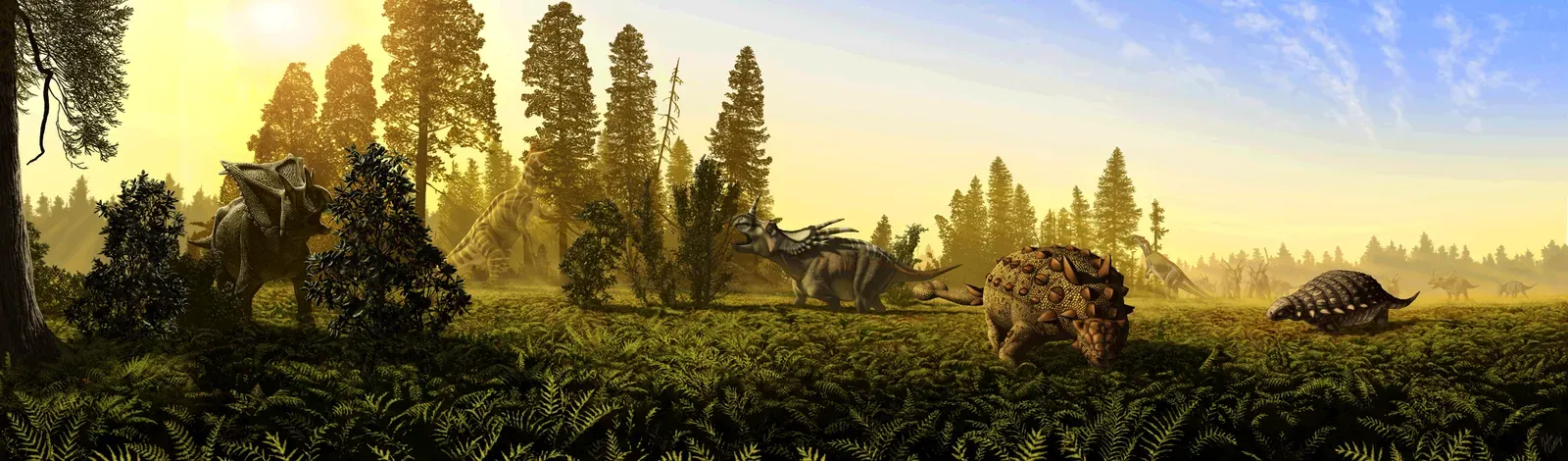
Here’s something that might genuinely surprise you: dinosaurs weren’t the solitary brutes they’re often portrayed as. Researchers from MIT, Argentina, and South Africa discovered an exceptionally well-preserved group of early dinosaurs that shows signs of complex herd behavior as early as 193 million years ago, roughly 40 million years earlier than any previous records of dinosaur herding. That’s not just herding. That’s organized, multi-generational community living way back at the dawn of the Jurassic.
The results show that Mussaurus and possibly other dinosaurs evolved to live in complex social herds as early as 193 million years ago, with evidence suggesting they optimized foraging through age-based social partitioning, where neonates, juveniles, and adults apparently foraged and perished in age-based groups. Think of it like a prehistoric version of a village. Young ones stuck with the young, adults formed their own circles, and everyone had a role to play. Pretty sophisticated for animals we once wrote off as evolutionary dead-ends.
2. Juveniles Formed Their Own Social Groups Before Joining Adult Herds
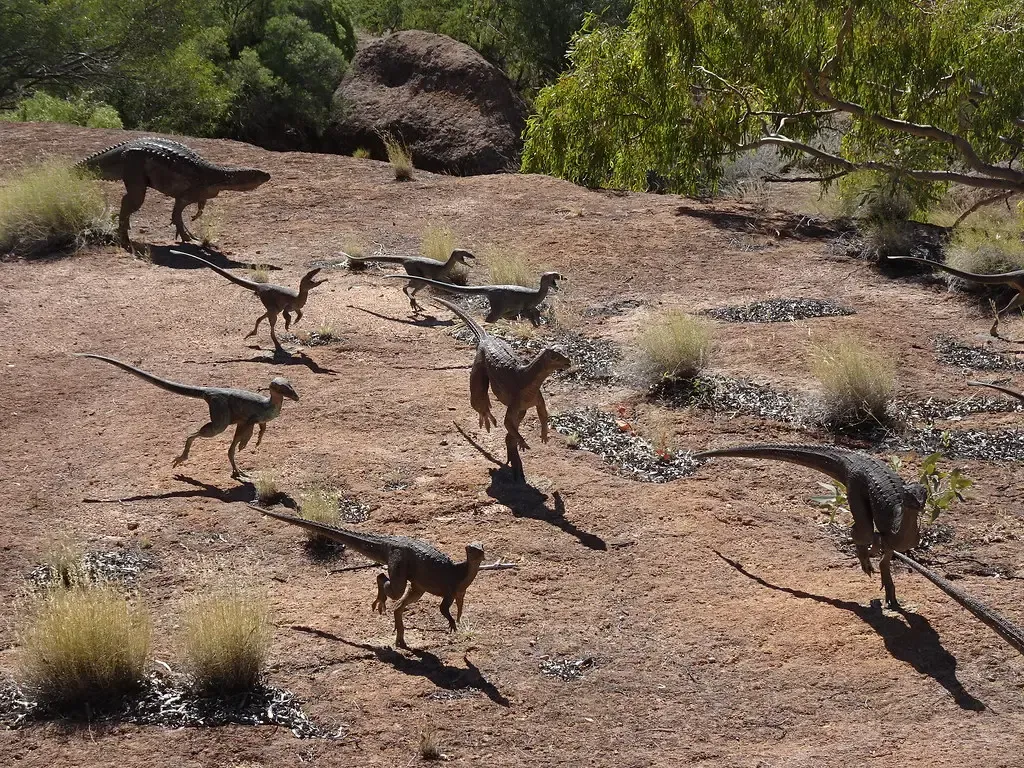
The social lives of young dinosaurs were more structured than anyone expected. A study published in Palaeogeography, Palaeoclimatology, Palaeoecology focused on Hypacrosaurus bonebeds in Montana and Alberta, and the age and distribution of the bones indicates that Hypacrosaurus stayed in juvenile herds until they were about 4 years old, at which time they joined multigenerational herds. That’s a recognizable life stage, almost like a dinosaur adolescence.
Paleontologists know that dinosaurs reached sexual maturity and began reproducing before they reached their full adult size, and so researchers propose that the 4-year-old Hypacrosaurus might have been joining the multigenerational herds as they began breeding. You can draw a vivid parallel here: it’s not unlike young wolves leaving the juvenile pack to join the main one as they reach breeding age. The social dynamics these creatures lived by were apparently far more layered than the old “every dinosaur for itself” narrative ever gave them credit for.
3. Feathers Were Originally for Display, Not for Flight
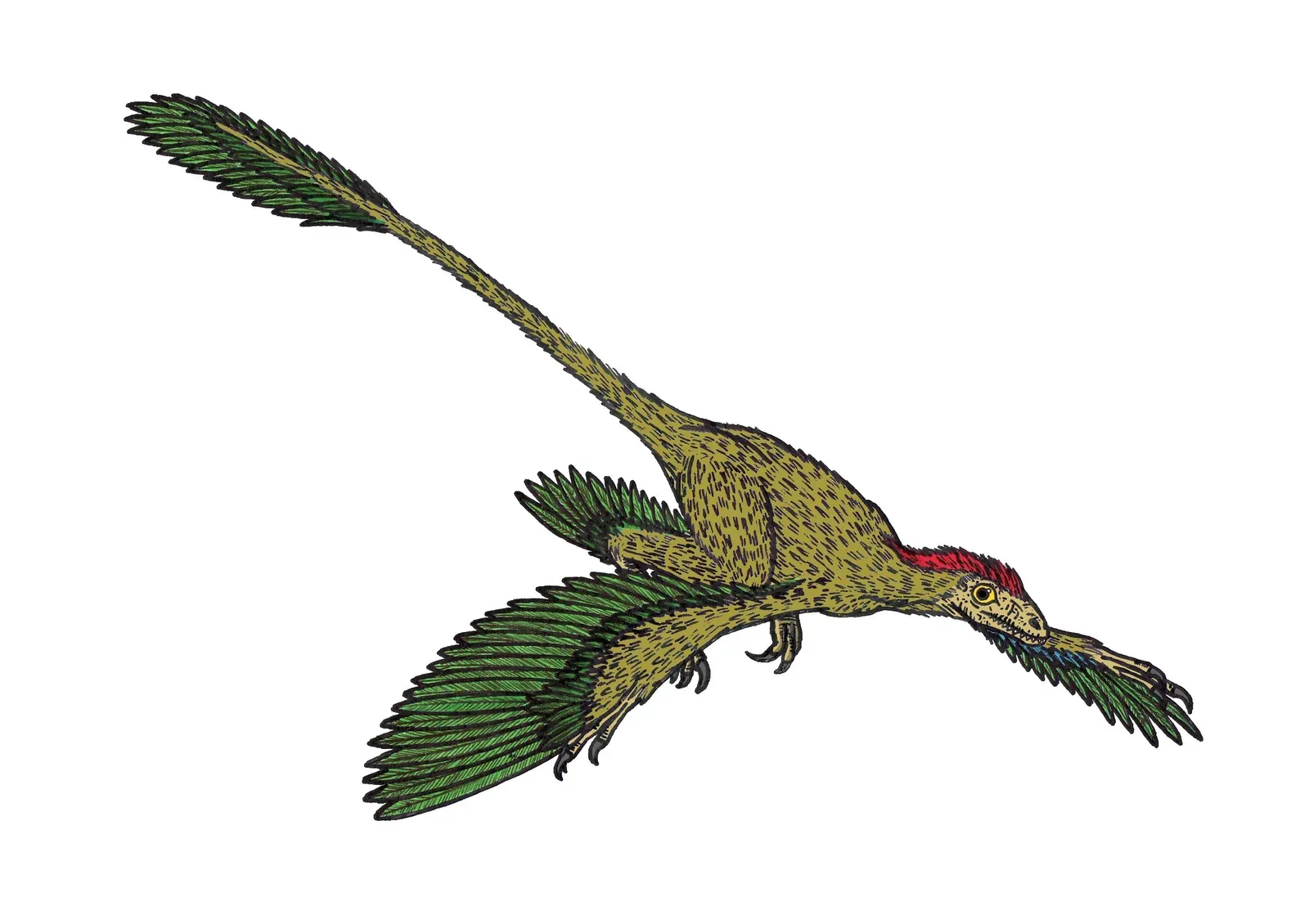
You might assume that dinosaur feathers were all about getting airborne. As it turns out, the truth is far more colorful. Literally. Researchers believe that tail feathering in early feathered dinosaurs may have been ornamental and probably evolved for courtship and other social interactions, not as an adaptation for flight. These weren’t wings in training. They were costumes designed to impress potential mates.
Analysis of Microraptor fossils reveals that this four-winged dinosaur had black, iridescent feathers similar to crows. A team of American and Chinese researchers revealed the color and detailed feather pattern of Microraptor, a pigeon-sized, four-winged dinosaur that lived about 130 million years ago, and the non-avian dinosaur’s fossilized plumage had hues of black and blue like a crow, making it the earliest record of iridescent feather color. Imagine a glossy, shimmering dinosaur strutting through a Cretaceous forest, dazzling rivals and potential mates with its feathered finery. I think that image deserves far more attention in popular culture than a grey scaly monster ever did.
4. Dinosaurs Were Surprisingly Devoted Parents
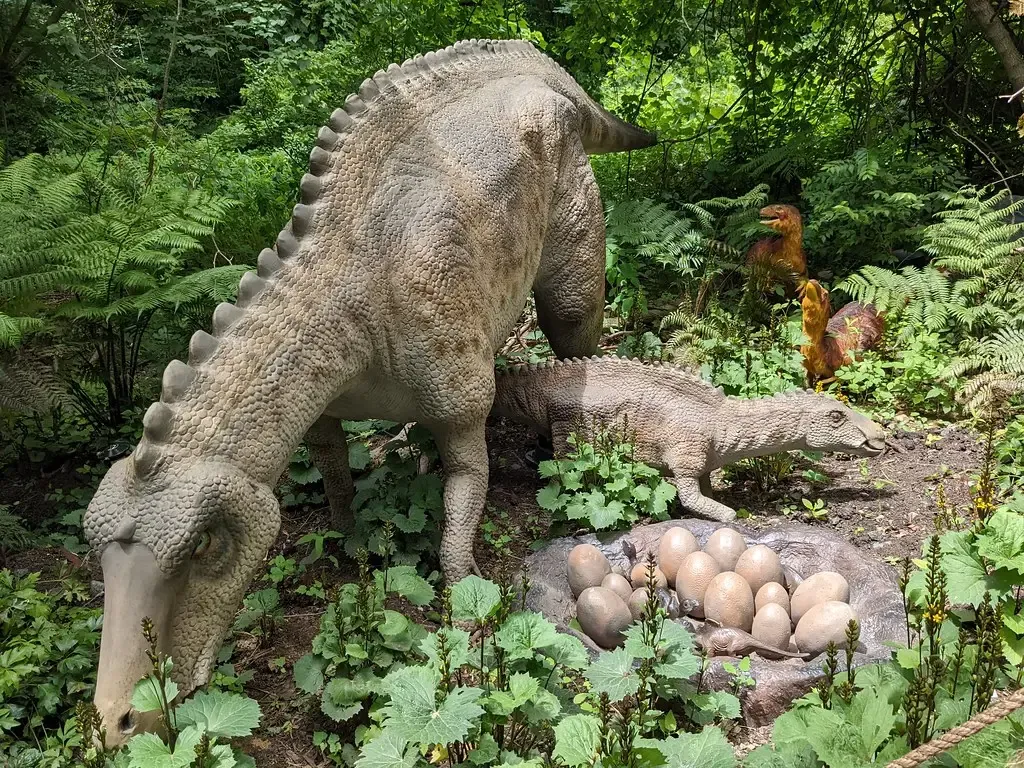
The idea of a dinosaur tenderly guarding its eggs might seem far-fetched. But the fossil evidence is hard to argue with. The duck-billed Maiasaura is believed to have nested in colonies and provided extensive food and protection for its hatchlings, while oviraptorids like the Citipati osmolskae, or “Big Mama,” have been found brooding on their nests, indicating clearly protective behavior. These were not animals dumping eggs and vanishing into the jungle.
Scientists know from previous finds that oviraptorids laid two eggs at a time in a clutch of 30 or more, which means the mother would have had to stay with or at least return to the nest, lay her pair of eggs, arrange them carefully in the circle, and bury them appropriately every day for two weeks to a month. Those eggs would have taken months to hatch, and while experts are still searching for definitive evidence, parent dinosaurs may have sat with these nests until the hatchling babies pushed their way out of the shells. That level of commitment is genuinely humbling. Some dinosaur parents were putting in more effort than many modern reptiles do.
5. Some Dinosaurs Were Wrongly Named for Stolen Eggs They Never Actually Stole
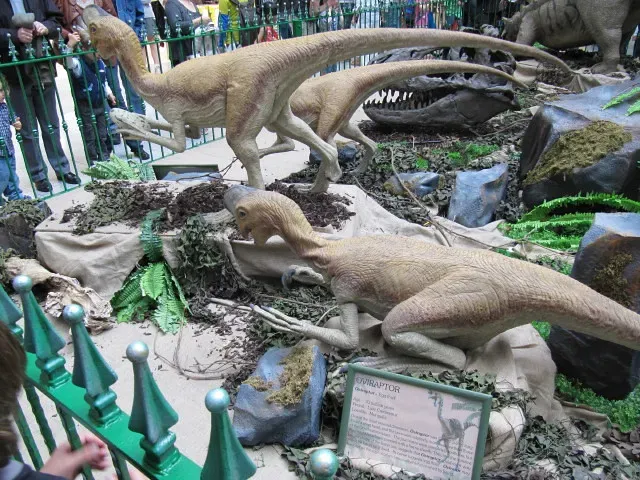
Here’s a case where science got it spectacularly wrong for decades. Oviraptor, whose name is derived from the Latin for “egg thieves,” was first discovered in the 1920s in association with eggs that were thought to be of the small ceratopsian dinosaur Protoceratops. Based on this find, scientists thought that Oviraptor may have stolen and eaten other dinosaurs’ eggs, but it has now been confirmed that the eggs actually belonged to Oviraptor, and in fact oviraptorids show substantial evidence of putting their lives on the line for their young.
It’s almost poetic in the cruelest way. This dinosaur was branded an egg thief for nearly a century, only for scientists to eventually discover it was actually a devoted parent sitting protectively over its own offspring. Paleontologists found powerful evidence that dinosaurs like Oviraptor protected their nests, including the skeleton of the carnivorous Oviraptor preserved with its arms stretched over its eggs. The name stuck anyway, which honestly feels like one of science’s great unfair labels. A reminder that first impressions, even in paleontology, can be catastrophically wrong.
6. A Raptor Was Literally Frozen in a Real Battle
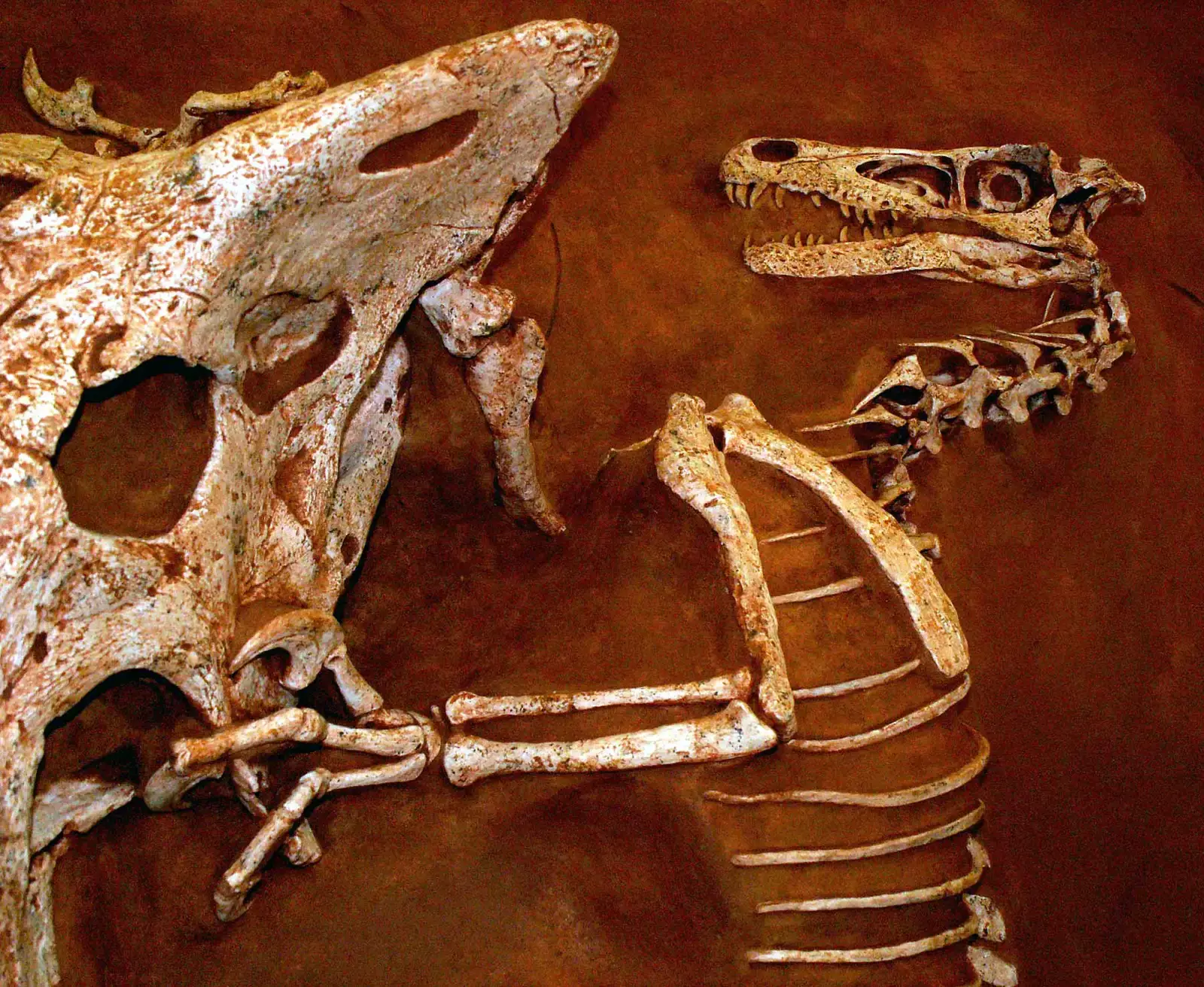
If you want undeniable proof that dinosaurs engaged in fierce, life-or-death combat, look no further than one of the most extraordinary fossils ever found. In 1971, paleontologists stumbled upon the remains of an 80-million-year-old battle in the sandstones of Mongolia’s Gobi Desert. Dubbed the “Fighting Dinosaurs,” the fossilized scene shows a carnivorous Velociraptor locked in a deadly embrace with an herbivorous Protoceratops. The turkey-sized predator had embedded its famed foot claw into its combatant’s neck, while the downed plant-eater had chomped onto and broken its attacker’s arm.
There is nothing yet found that comes close to depicting behavior like this fossil, which is why many consider it to be the greatest find ever. Think about that for a moment. A battle frozen in time, both animals dying mid-struggle, their final moment preserved for 80 million years. Head wounds from bites suggest that theropods, at least, engaged in active aggressive confrontations, and this fossil is the single most vivid confirmation of that. It doesn’t get more dramatic than this in the entire fossil record.
7. Raptors Were Flapping as They Ran, Not Just Pack-Hunting Like Wolves
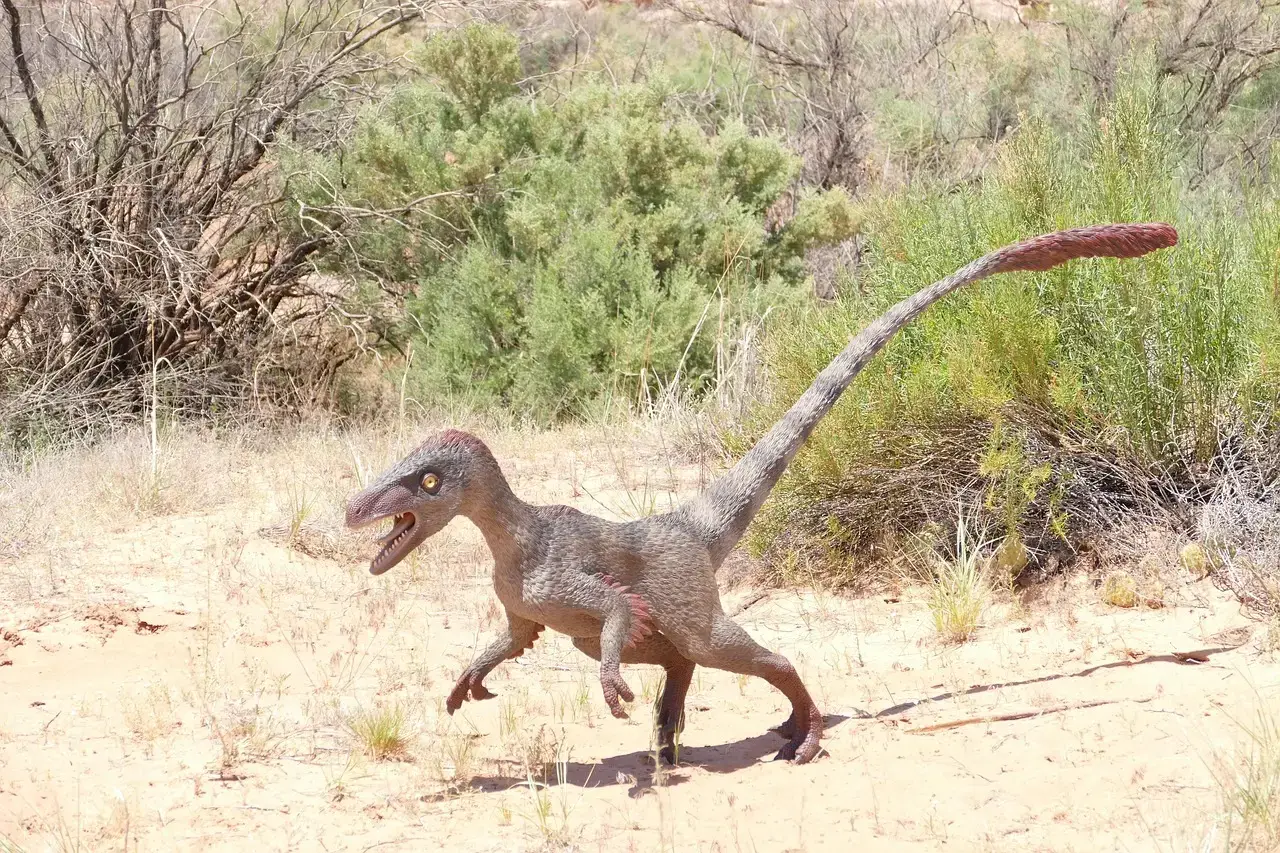
Pop culture handed you a very specific image of raptors: clever pack hunters moving in coordinated silence like wolves. The real story is both weirder and more fascinating. Paleontologists described a trackway made by a dinosaur that was flapping as it ran. The Cretaceous trackway was made by a two-toed dinosaur like Microraptor. The spacing between the tracks indicates the dinosaur was moving at high speed, but it seemed to be moving even faster than expected if the dinosaur was just propelling itself with its legs alone. The little raptor was likely flapping as it kicked with its feet, even though experts aren’t sure if the dinosaur was trying to take off, land, run up an incline, or something else.
The tracks indicate that flapping wings could be as important to running as long, strong legs. That’s a genuinely mind-bending behavioral insight. These creatures weren’t just runners with vestigial feathers. They were using their entire bodies, wings included, as locomotion tools in ways nobody predicted. It’s hard to say for sure exactly what that raptor was doing in that moment, but it’s safe to say it was far more dynamic and acrobatic than the flat-footed movie version ever suggested.
8. Pack Hunting in Dinosaurs Is Far More Complicated Than Movies Suggest
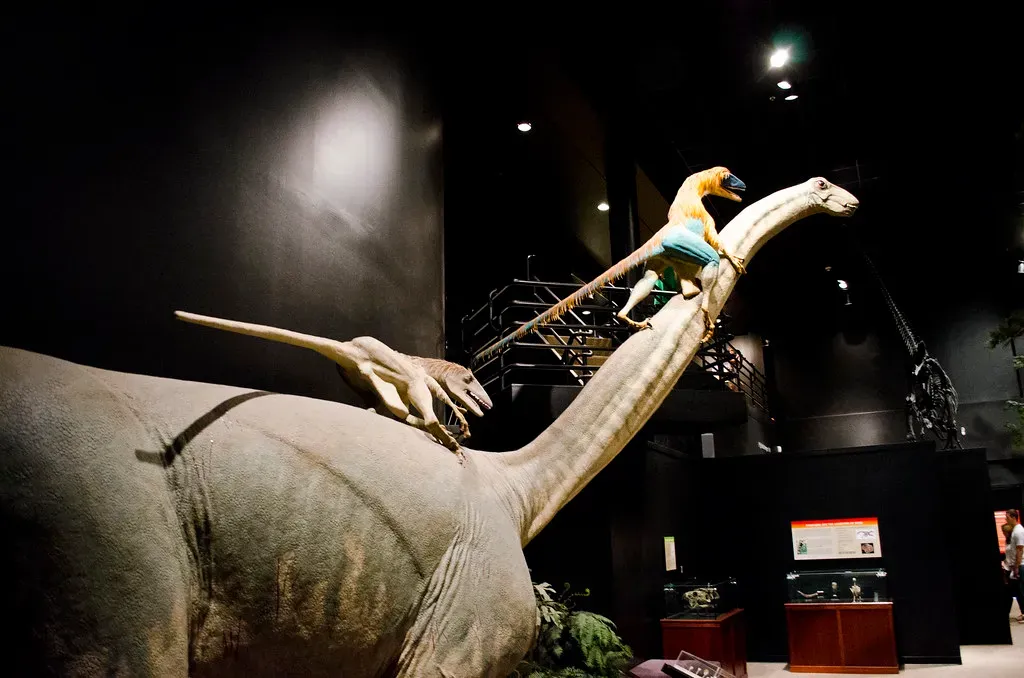
Let’s be real: the idea of raptors hunting in coordinated packs is one of the most thrilling things Hollywood ever borrowed from science. In the 1960s, scientists unearthed four partial Deinonychus skeletons surrounding a single unlucky herbivore known as Tenontosaurus, and researchers used this finding to propose that Deinonychus and most of its dromaeosaur relatives hunted cooperatively. This idea has “sunk into public consciousness,” becoming a common trope in popular media.
However, the actual evidence is murkier than a Jurassic swamp. Evidence for pack hunting in Deinonychus is “extremely limited.” For one, it’s possible the Tenontosaurus had been scavenged rather than killed. What’s more, most Tenontosaurus skeletons found near Deinonychus at other sites were half-grown, a more manageable snack for a lone predator. Through phylogenetic inference and character optimization, researchers conclude that the hypothesis of pack hunting is both unparsimonious and unlikely for these taxa, and that the null hypothesis should be that nonavian theropod dinosaurs were solitary hunters or, at most, foraged in loose associations. Science giveth the epic pack hunt, and science also complicateth it thoroughly.
9. Multiple Tyrannosaur Species Shared the Same Ecosystem
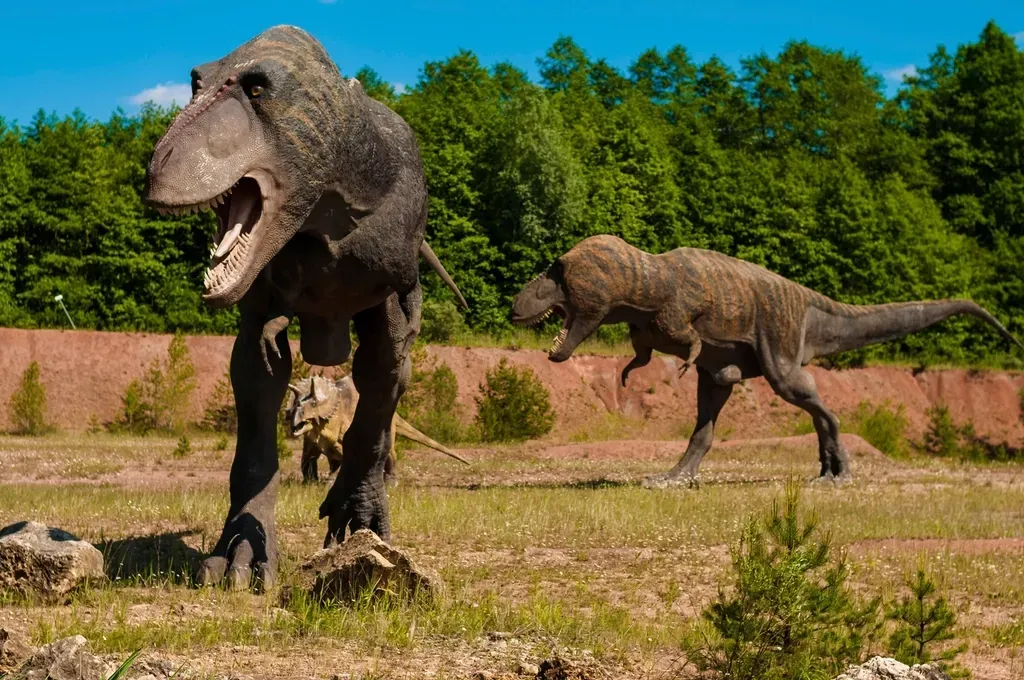
For a long time, T. rex was considered the undisputed lone king of the Cretaceous. The idea that another tyrannosaur might have shared the throne? Unthinkable. Then came Nanotyrannus. In 2025, paleontologists Lindsay Zanno and James Napoli published a description of a new Nanotyrannus fossil specimen, preserved as part of the Duelling Dinosaurs fossil alongside a herbivorous Triceratops. They showed that this Nanotyrannus was nearly an adult, and that it was different from T. rex in lots of ways that cannot be explained by growth, including a longer hand.
This discovery completely reframes the idea that T. rex was the lone predator of its time, challenging long-held assumptions about late Cretaceous ecosystem dynamics. We now know multiple tyrannosaur species coexisted in the last million years before the asteroid impact, suggesting a richer, more competitive ecosystem than previously imagined. Picture two different species of apex predators competing for the same territory and prey in the same landscape. The behavioral implications alone are staggering. These weren’t calm, unchallenged rulers. They were competitors in a far more crowded and deadly arena.
10. Sauropods Had Complex Color Patterns, Not Drab Gray Skin
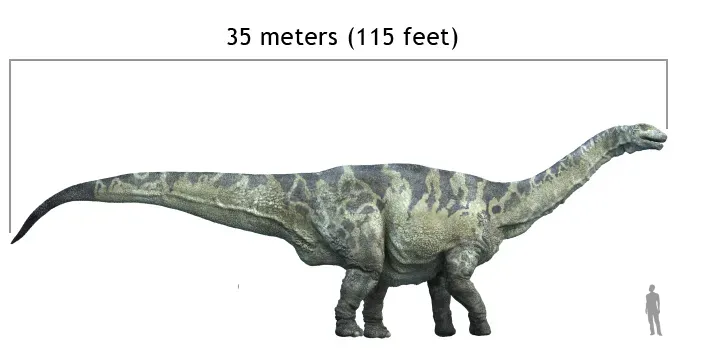
Here’s the thing. For generations, dinosaurs were painted as grey or brown in every book, film, and museum exhibit. Turns out, that was pure artistic guesswork. Microscopic clues found in fossil Diplodocus skin indicate these dinosaurs were colorful. While researchers were reluctant to do a full color reconstruction of the juvenile Diplodocus, they detected that the dinosaur would have had conspicuous patterns across its scales. The finding suggests sauropod dinosaurs were not uniformly gray or brown but had complex color patterns like other dinosaurs, birds, and reptiles.
Understanding dinosaur coloration provides insights into their behavior and ecology. Colors could have played a crucial role in communication, predator-prey interactions, and social structures. The behavioral implications of color in dinosaurs are enormous. If they had patterns, those patterns served a purpose: mate selection, species recognition, warning signals, camouflage. Researchers hypothesize that the evolution of feathers made dinosaurs more colorful, which in turn had a profoundly positive impact on communication, the selection of mates, and dinosaurs’ procreation. These were not grey shadows lumbering across a dull prehistoric world. They were vivid, visually communicating animals in a vibrant ecosystem.
Conclusion
If there’s one thing all of this research makes crystal clear, it’s that dinosaurs were extraordinary in ways we’re still only beginning to appreciate. They herded, they parented, they displayed, they competed, they communicated with color and sound. The old image of mindless, cold-blooded monsters is being replaced by something far richer and far more surprising at every turn.
Dinosaurs may be long extinct, but 2025 made it abundantly clear that they’re anything but settled science. Over the past year, new fossils, reanalyses of famous specimens, and the use of increasingly sophisticated tools have continued to upend what we thought we knew about how these animals lived, moved, fed, and evolved. Every dig site, every fossil, every new imaging technique has the potential to flip another long-held assumption on its head.
The real lesson here isn’t just about dinosaurs. It’s about how much we still don’t know about life on this planet, even from animals whose bones are sitting in museums around the world. What surprises you most about how complex dinosaur behavior actually turned out to be? Drop your thoughts in the comments below.