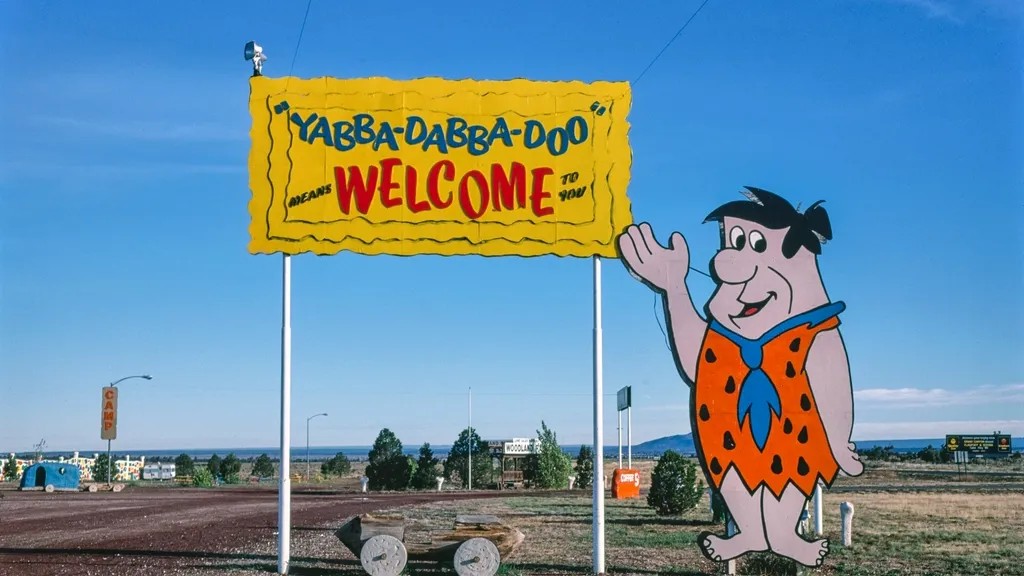
If you grew up watching The Flintstones, there’s a good chance your mental picture of “the Stone Age” involves foot-powered cars, cheerful talking dinosaurs, and a saber-toothed tiger doubling as a house pet. It was ridiculous, it was charming, and it had only the faintest connection to real prehistoric life. Yet somehow, that bizarre mashup of suburban 1960s America and caveman fantasy still lives rent-free in our heads decades later.
Looking back in 2026, what’s wild is just how confidently the show skated past actual science and went straight for fun. Humans and dinosaurs? Sure, why not. Stone-age record players and bowling leagues? Of course. But when you compare Bedrock to what we now know from paleontology and archaeology, the gaps are as big as a brontosaurus footprint. Let’s dive into ten of the funniest, most wrongheaded parts of The Flintstones’ world – and why, in spite of all that, we still adored every absurd second.
1. Humans and dinosaurs hanging out like neighbors
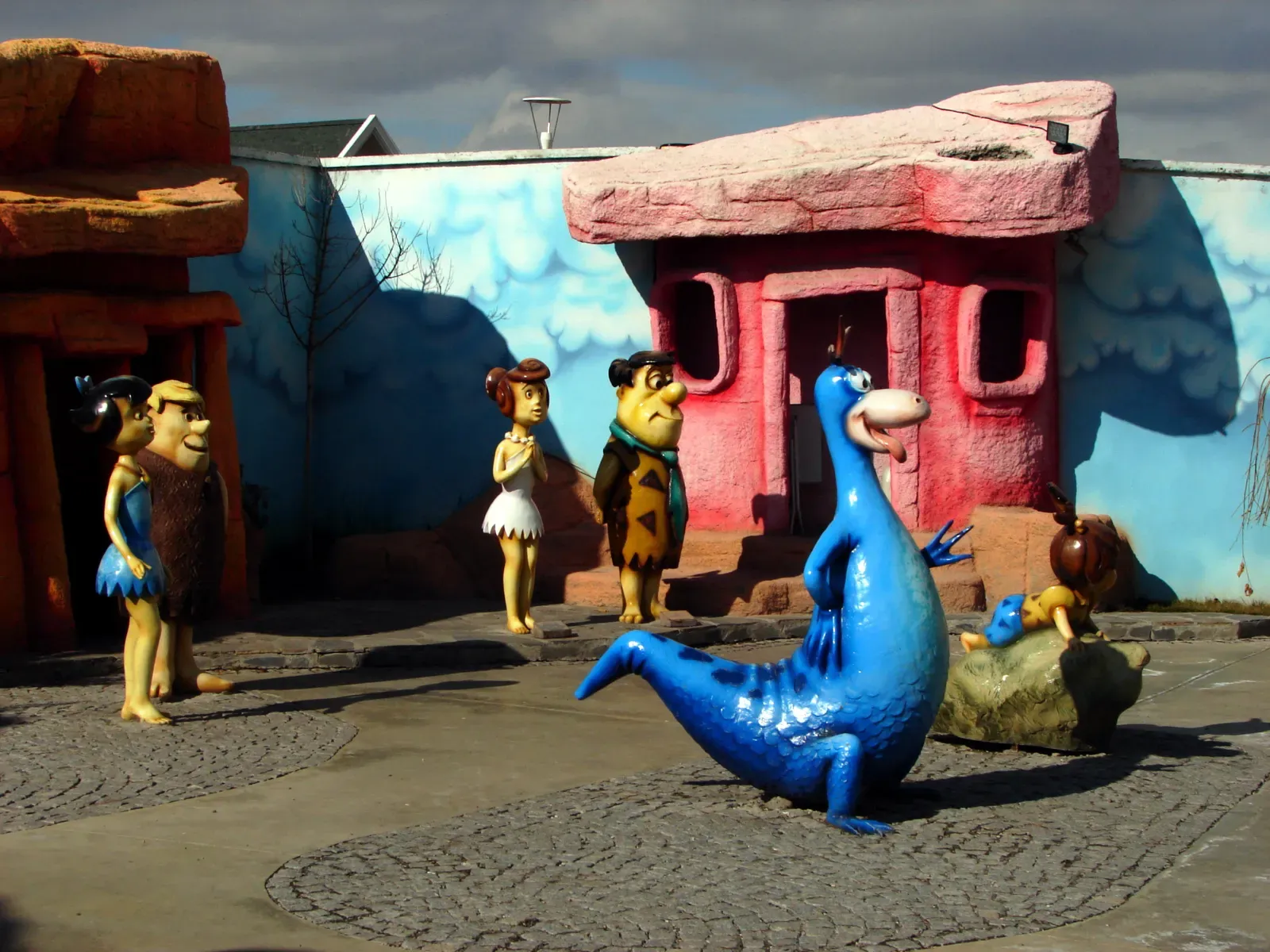
One of the most famously wrong ideas from The Flintstones is also the one everyone remembers with the most affection: humans and dinosaurs living side by side like grumpy neighbors in a cul-de-sac. In reality, non-avian dinosaurs died out about sixty-five million years before humans appeared, which is such an enormous stretch of time that it makes the entire existence of human civilization look like a blink. If Fred Flintstone had actually wandered outside his stone house, the only dinosaurs he’d find would be fossils buried deep underground.
But that impossible coexistence is exactly what made Bedrock feel so fun and alive. As a kid, I remember being almost disappointed when I first learned in school that no one ever rode a dinosaur to work, because the cartoon version felt so much more interesting than the actual fossil record. The show used that mismatch as a kind of visual shorthand – dinosaurs equaled “ancient,” cavemen equaled “ancient,” so just toss them in together and watch the chaos. It was completely wrong, scientifically, but perfect for creating a playful, instantly recognizable prehistoric world.
2. Foot-powered cars and traffic jams in the Stone Age
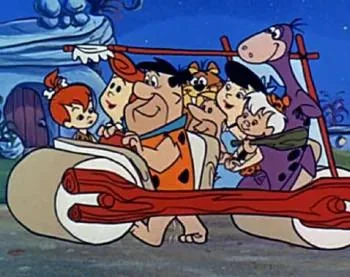
The idea of a car with no engine that you move by running inside it like a hamster on caffeine is objectively hilarious – and physically absurd. Prehistoric humans did not have wheeled vehicles for most of their existence, and early human societies certainly didn’t have paved roads, traffic lights, or morning commutes. For hunter-gatherer groups, transportation was basically legs, maybe some simple sleds or rafts much later, and travelers moved with the seasons rather than getting stuck in a “Bedrock rush hour.”
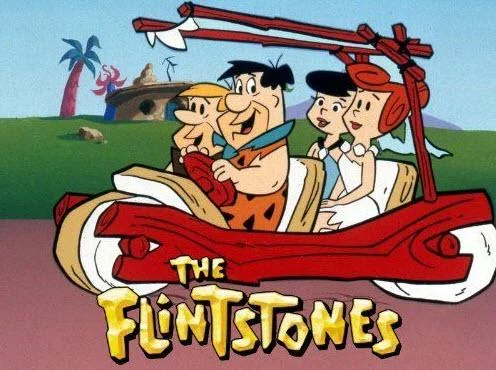
Yet The Flintstones turned the Stone Age into a parody of mid‑20th‑century car culture, with honking, tailgating, and parking hassles, just with more granite and fewer seatbelts. The gag works because it takes a familiar, modern annoyance and slams it into a prehistoric setting in the most literal possible way. You get this weird cognitive dissonance: your brain knows nobody in prehistory was carpooling to a stone quarry, but it also recognizes your own life in those scenes. That tension between reality and cartoon logic is a big part of why we still smile when we think of Fred yelling “Yabba-dabba-doo!” as he revs up with his own feet.
3. Suburban nuclear families in animal-skin suburbia
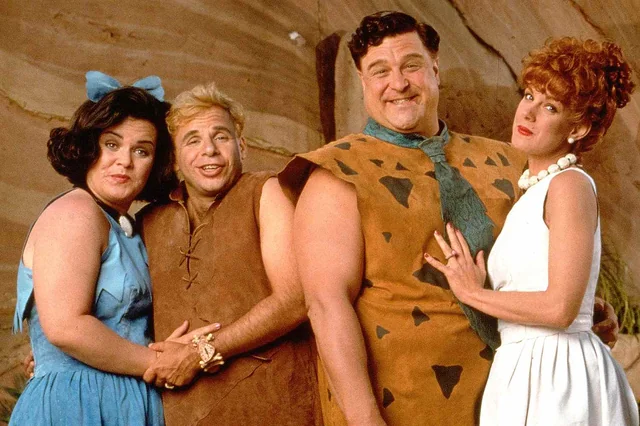
In Bedrock, prehistoric life looks suspiciously like a 1960s American suburb: dad goes to work, mom stays home, they have a baby, a pet, next-door neighbors, and a neat little house in a quiet stone cul-de-sac. Real prehistoric social structures were far messier and more varied than that domestic snapshot. Early human groups tended to live in bands or small communities where caregiving, hunting, gathering, and decision-making were shared more broadly, and the classic “dad in the office, mom in the kitchen” split simply did not exist in the way television loved to portray it.
But The Flintstones was never really about the Stone Age – it was about mid‑century American life dressed up in furs and rubble. The show used Bedrock as a way to poke gentle fun at the pressures of suburbia: office politics, money worries, noisy neighbors, and the constant balancing act of work and home. As wrong as it is anthropologically, that stone-age suburb struck a chord because it mirrored what many families were going through in real life. That familiar emotional core made the scientific inaccuracies feel almost beside the point.
4. Stone-age tech that behaves like modern appliances
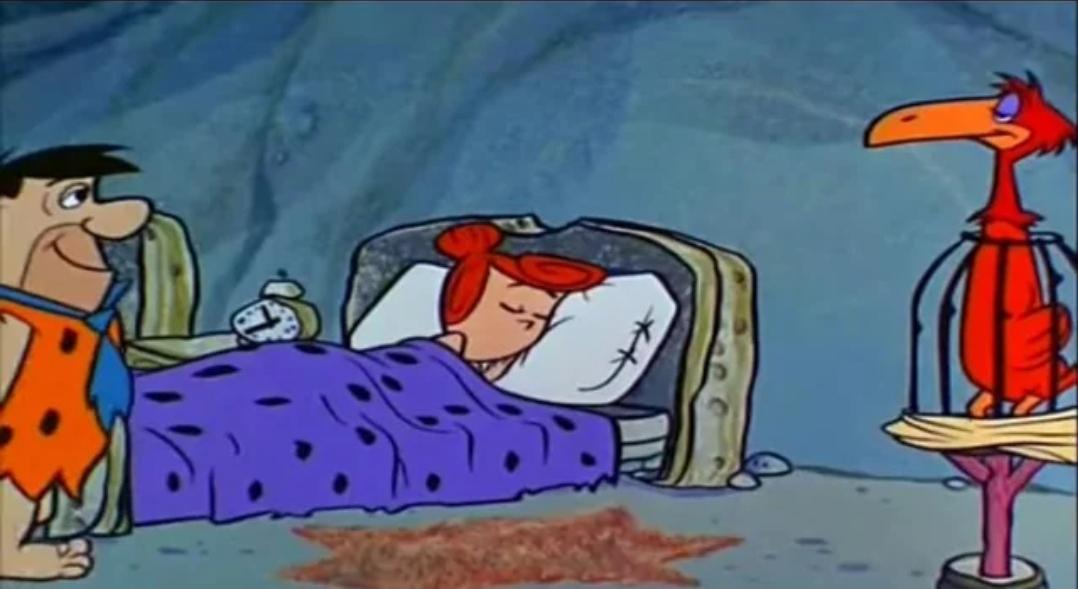
One of the show’s most charmingly absurd habits was turning animals and rocks into stand-ins for modern technology: a bird as a record player needle, a tiny dinosaur as a garbage disposal, a woolly mammoth as a vacuum or shower. In actual prehistory, early humans did develop clever tools – stone blades, fire, spears, later simple pottery and more refined implements – but they were nowhere near the complexity of domestic appliances. There were no prehistoric dishwashers, and certainly no little creatures complaining about their working conditions.
Still, the “It’s a living” gag tapped into something surprisingly modern about how we relate to our stuff. By giving every gadget in the house a personality, The Flintstones made technology feel less cold and more mischievous, almost like a set of roommates with jobs. It also let the writers sneak in commentary about labor and convenience: of course your sink is secretly a miserable little animal doing all the work while you relax. It was laughably inaccurate as a picture of ancient life, but eerily on point as a metaphor for how invisible labor props up modern comfort.
5. Fashionable outfits instead of rough, practical clothing

The wardrobes in Bedrock are simple, but they’re suspiciously tidy: Wilma in her one‑shoulder white dress and pearls, Fred in his orange tunic with a bright blue tie, everyone color‑coordinated like they just walked out of a cartoon runway show. Real prehistoric clothing would have been built for survival first: hides, furs, and plant fibers, often roughly cut and stitched, designed to protect against cold, heat, and rough terrain. Dyes, decoration, and jewelry did exist in various ancient cultures, but nothing like the consistent, TV-ready fashion we see in the show.
As silly as those outfits are, they also say a lot about how television smooths away the discomfort of real history. Actual prehistoric life was harsh: weather, injury, disease, and scarcity were constant threats, and clothing reflected that reality. The Flintstones, in contrast, wrapped its characters in clean, recognizable silhouettes so we could immediately read them as “dad,” “mom,” “boss,” or “neighbor” without thinking too hard about survival. It traded authenticity for relatability, and honestly, most of us were happy to accept the bargain if it meant a world where a stone-age mom could still rock a necklace.
6. Constant meat-heavy feasts and gigantic animal ribs
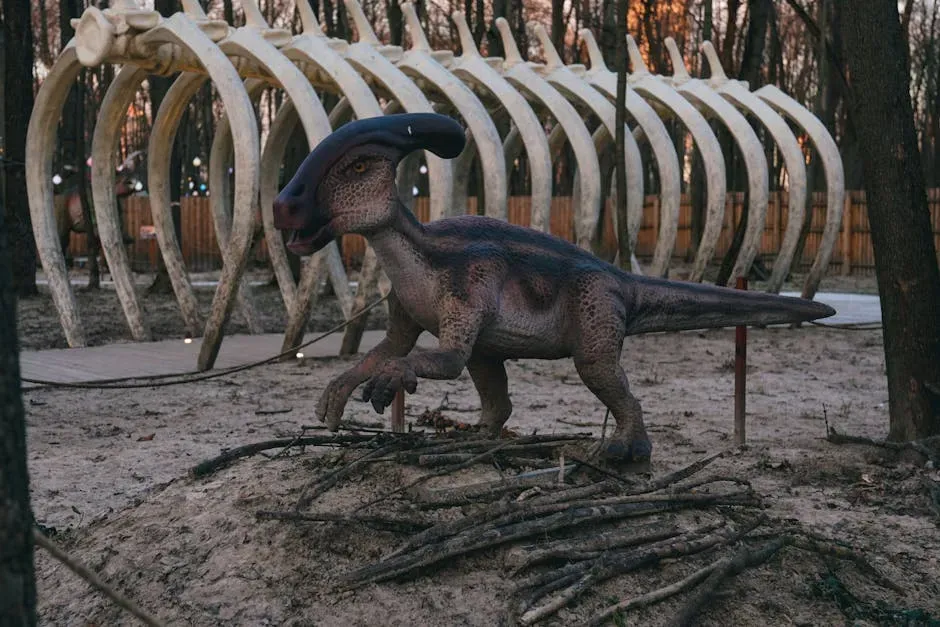
Few images from the series are as iconic as Fred ordering a rack of ribs so massive it tips over his car. That visual joke suggests a Stone Age diet of never-ending giant cuts of meat, like prehistoric people were basically at an all-you-can-eat barbecue every day. In reality, diets in prehistoric times varied by region and era, but for many early humans, plant foods, nuts, seeds, and small game made up a huge portion of their calories. Big game hunts happened, but they were risky, occasional events, not a dependable nightly dinner.
Why, then, the endless meat feasts in Bedrock? Part of it is simple comedy – oversized food is funny. Another part is wish fulfillment: for people watching in the 1960s, a huge slab of meat symbolized abundance and prosperity. When I first saw those cartoon ribs as a kid, I remember thinking they were almost magical, like something out of a festival rather than everyday life. The show erased the uncertainty and scarcity of real prehistoric diets and replaced them with a stone-age fantasy buffet, making the past look tastier and much more secure than it ever truly was.
7. Stone houses and permanent neighborhoods everywhere
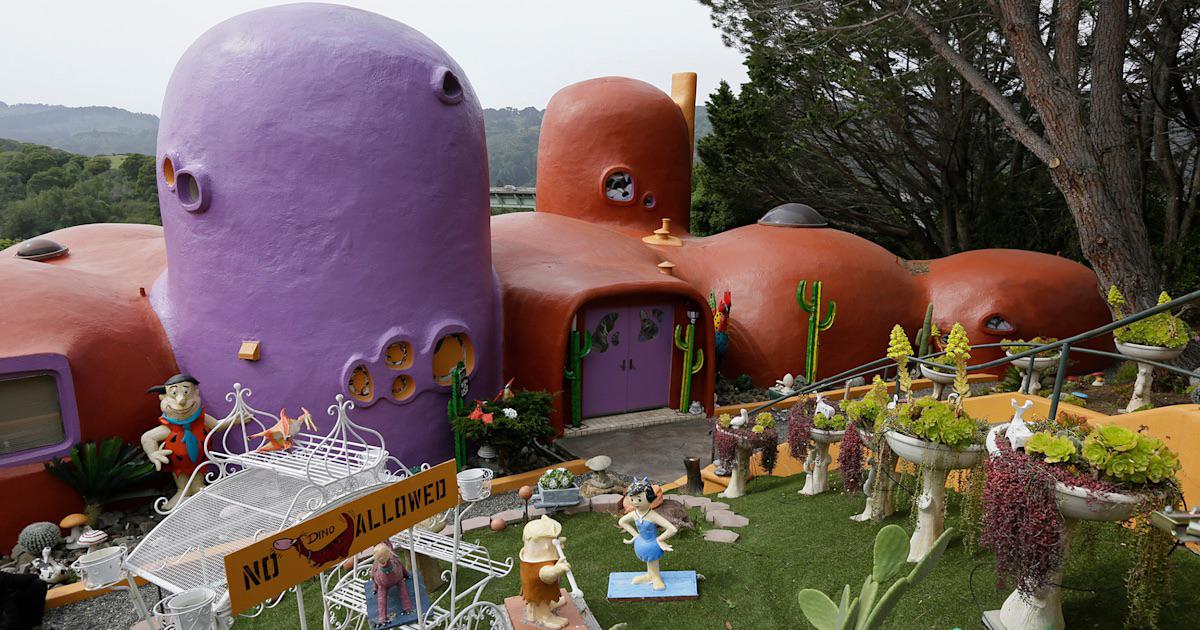
The idea of entire neighborhoods of stone houses lined up neatly in rows is pure Flintstones, and pure fantasy for most of human prehistory. For a huge stretch of early human existence, people lived in more mobile or temporary shelters, moving with herds and seasons rather than putting down permanent roots. Even where more permanent dwellings existed, they were not mass-produced suburban homes with driveways and decorative stone mailboxes; architecture was shaped by local materials, climate, and cultural traditions in ways much more complex than Bedrock’s cartoon uniformity.
But that uniform little stone suburb made the setting feel instantly understandable to viewers who grew up with cul-de-sacs and identical ranch houses. It took the anxiety of postwar suburban sprawl and projected it millions of years into the past, suggesting that the urge to own a home, have a yard, and complain about the neighbors is somehow timeless. In doing so, it flattened real archaeological diversity into a single, gag-ready aesthetic – but it also made Bedrock feel uncannily like our own neighborhoods, just with more rubble and pterodactyl mail service.
8. Office jobs and boss-employee drama in a quarry
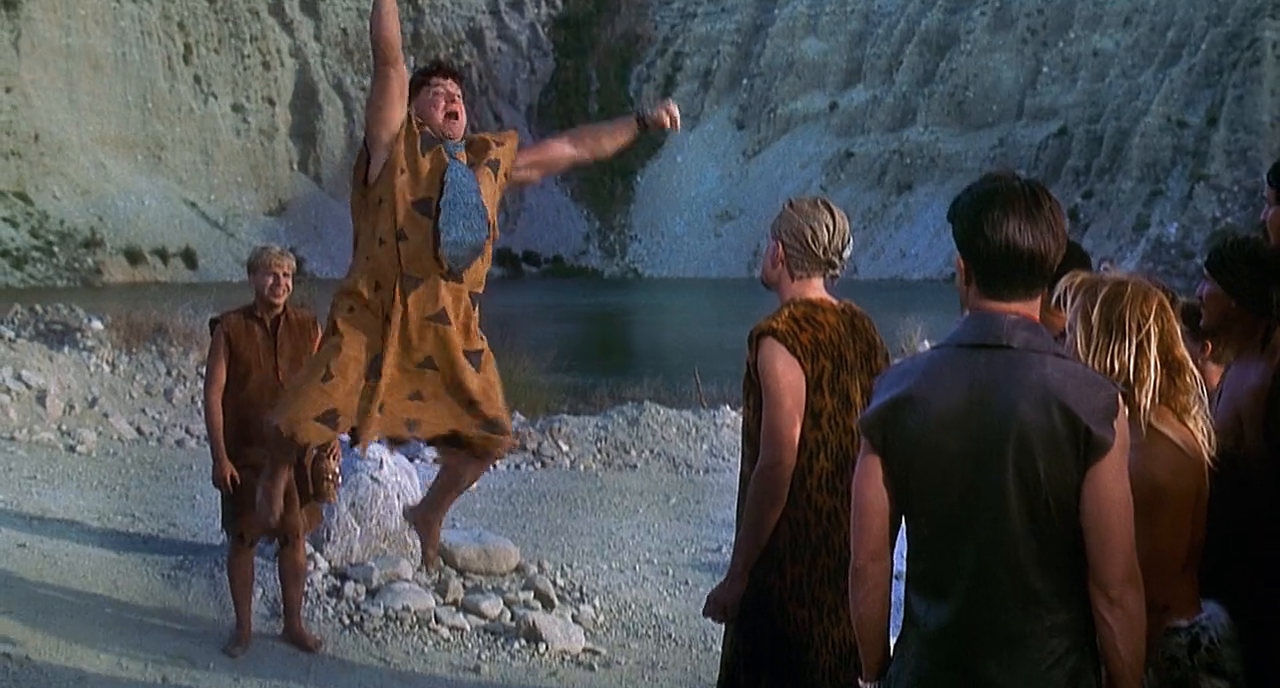
Fred going to work at the quarry every morning, dealing with a cranky boss and workplace politics, looks a lot more like a 1960s sitcom than anything that ever happened in the Stone Age. Prehistoric economies were not based on clock‑in, clock‑out jobs or salaried positions; they revolved around shared tasks like hunting, gathering, tool-making, and later, early agriculture and trade. The idea of a “company,” a “boss,” and a “workplace” as a distinct, centralized location is a relatively recent human invention.
Yet there’s something almost cathartic about watching a so‑called “caveman” navigate office drudgery, because it quietly mocks the idea that modern work is sophisticated and evolved. By putting Fred in a hardhat under a petty boss in an absurd stone quarry, the show suggested that our daily grind is not so different from banging rocks together. The science is wildly off, but the emotional truth – that work can feel primitive and repetitive even in a world of technology – lands uncomfortably well. In that sense, The Flintstones got prehistory wrong but modern frustration exactly right.
9. Perfectly modern language and social attitudes
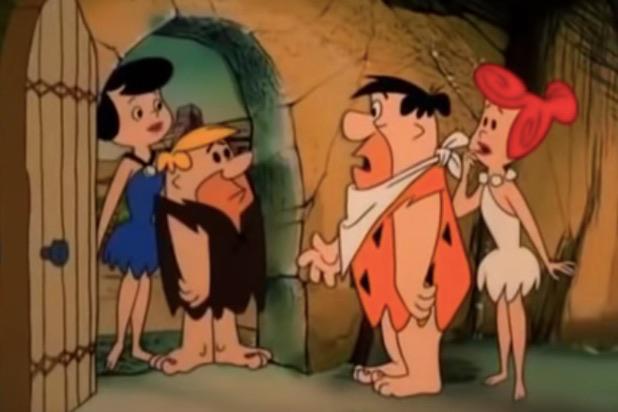
Everyone in Bedrock talks like mid‑century Americans, complete with snarky asides, sitcom timing, and slang that would make no sense outside its broadcast era. Real prehistoric humans, especially early Homo sapiens or their relatives, developed language over long periods in ways we still do not fully understand, and their social norms would have been utterly unlike a 1960s TV family. You would not have heard neat little punchlines or argument patterns lifted from contemporary domestic comedies around a real Paleolithic campfire.
But the show’s decision to transplant modern banter into the deep past is exactly what made its world feel alive and funny. By giving caveman characters the same petty arguments, parenting worries, and social gaffes as viewers at home, The Flintstones used language as a bridge between eras. When I watch it now, it feels almost like a time capsule of 1960s culture dressed in animal skins. Scientifically, it is nonsense, yet as social commentary, it is sharp: it reminds us that technology and time change quickly, but our basic human squabbles are stubbornly familiar.
10. A safe, sanitized version of a brutally hard world
Underneath all the gags, the biggest thing The Flintstones got wrong about prehistoric life is how gentle and safe it made everything feel. In the real prehistoric world, injuries, infections, predators, famine, and harsh weather could be life-threatening on a regular basis. Average lifespans were shorter, child mortality was high, and there was no guarantee of food, shelter, or safety from one season to the next. Bedrock, by contrast, is basically a slightly rough-edged suburb where the worst problem is a fight with the neighbor or a broken stone gadget.
Oddly enough, that soft focus is a major reason we loved the show. It let us dip our toes into the fantasy of a simpler past without confronting the real fear and danger that came with it. I remember being fascinated by the idea of living in a cave with dinosaurs nearby, but never once worrying about infection from a cut or running out of food, because the cartoon made survival look easy and silly. In doing so, The Flintstones turned an era of constant risk into a comforting playground, and maybe that is why the inaccuracies never really bothered us – most of us were secretly relieved that Bedrock was more sitcom than survival manual.
Conclusion: Wrong on the facts, right on the feeling
When you stack The Flintstones against what we now know from paleontology and archaeology, it reads almost like a checklist of scientific errors: humans and dinosaurs together, suburban homes, office jobs, modern family roles, and gadgets that would not exist for tens of thousands of years. On paper, it is a disaster of accuracy. Yet on screen, it somehow works, because the goal was never to teach prehistory; it was to mirror the hopes, frustrations, and absurdities of modern life in a stone-age costume. In that way, its biggest mistakes are also its greatest strengths.
Personally, I think that is why the show still lingers in our cultural memory in 2026, long after more accurate documentaries and lavish prehistoric dramas have come and gone. The Flintstones gave us permission to laugh at ourselves by pretending we were laughing at “cavemen.” It reminded us that no matter how fancy our technology gets, we are still just people trying to get through the workday, feed our families, and keep the neighbors from driving us crazy. Maybe the real question is not how wrong Bedrock was about the past, but how uncomfortably right it still is about us – did you expect that from a guy in an orange tunic and a stone-age car?