Picture a version of North America that looks almost nothing like the country you know today. No cities, no highways – just vast tundra plains, dense forests, and murky swamps teeming with creatures so massive they make today’s wildlife look almost modest by comparison. The land that would one day become the United States was, for millions of years, one of the most extraordinary ecosystems Earth has ever produced.
What roamed those ancient landscapes was genuinely mind-blowing. You’d have encountered woolly giants with tusks longer than a pickup truck, terrifying cats with fangs the size of steak knives, and armored beasts that looked like something straight out of science fiction. Get ready, because the prehistoric US was wilder than you ever imagined. Let’s dive in.
1. The Woolly Mammoth: King of the Ice Age Plains
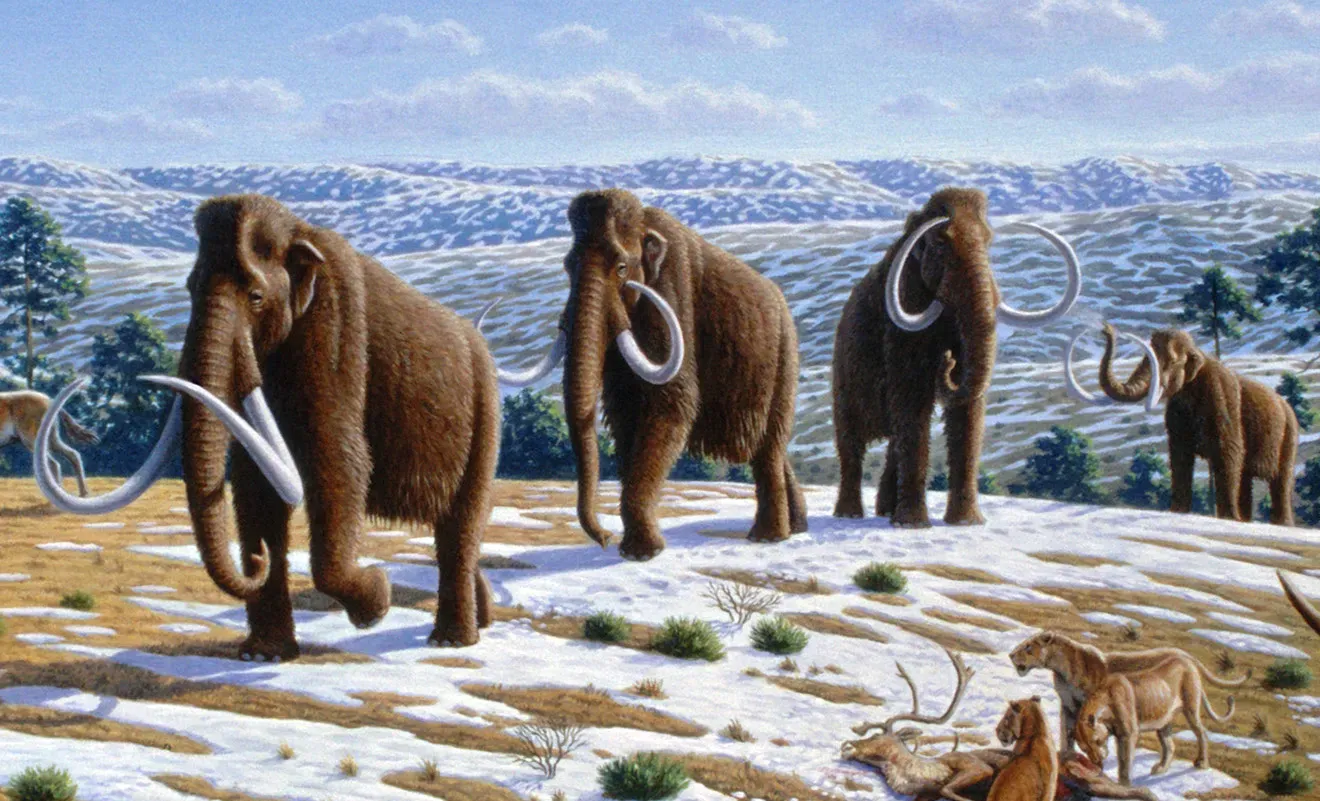
If you had wandered across what is now the Midwestern United States roughly 20,000 years ago, you would have encountered one of the most imposing creatures to ever walk on land. Woolly mammoths stood roughly 10 to 12 feet tall and weighed between about six and eight tons, making them as massive as any modern African elephant. The woolly mammoth was superbly adapted to cold environments, covered in fur with an outer covering of long guard hairs and a shorter undercoat.
Woolly mammoths entered North America about 100,000 years ago by crossing the Bering Strait. They shared the continent alongside another giant relative: the Columbian mammoth stood nearly 14 feet tall at the shoulder and weighed up to 10 tons, sporting enormous curved tusks that could reach lengths of 16 feet. Mammoths survived long enough to encounter humans, who hunted them using spears tipped with distinctive fluted points, and the cause of mammoth extinction around 10,000 years ago remains debated, with climate change and human hunting both likely playing roles.
2. The Saber-Toothed Cat (Smilodon): Nature’s Most Iconic Predator
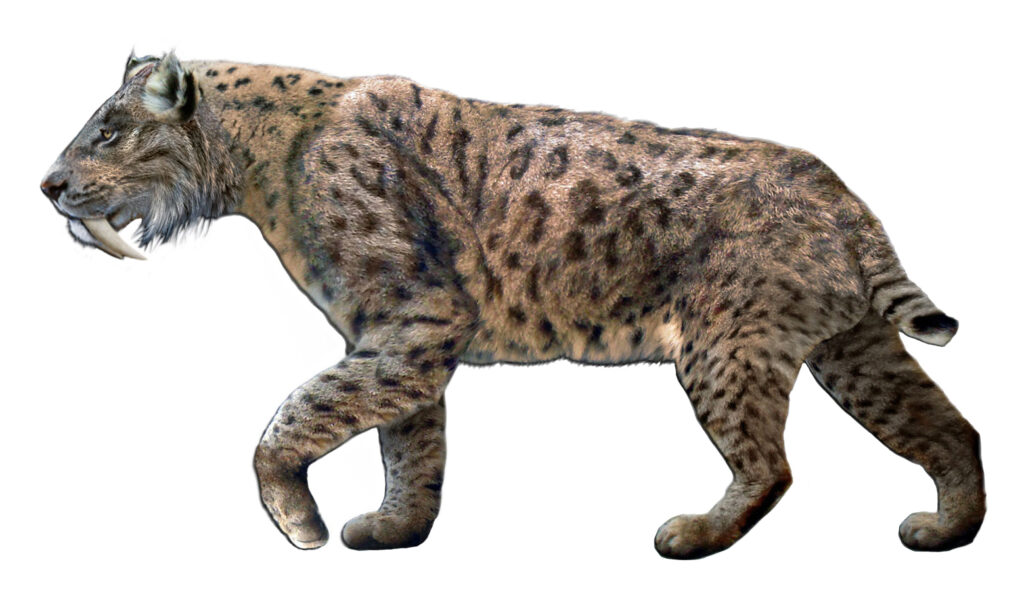
The saber-toothed cat (Smilodon fatalis) is one of the most iconic animals of Ice Age North America, and saber-tooth skeletons pulled from sites like the La Brea tar pits in Los Angeles were armed with upper canines averaging seven inches long, with a jaw that could open an astonishing 130 degrees. Honestly, it’s hard not to be a little terrified just reading that. Saber-toothed cats aren’t related to modern tigers or any living felines at all, and while they were a foot shorter than an adult lion, they were almost twice as heavy, over 600 pounds in some cases, built with short legs and a bobbed tail for ambush attacks rather than long sprints.
Smilodon was a top predator that probably specialized in hunting large mammals, and in North America it hunted animals such as bison, camels, giant ground sloths, and horses. Smilodon’s front legs were especially powerful and its body was adapted for springing onto prey, but it was not a very fast runner and could not chase after fast-running prey like deer. The La Brea Tar Pits have yielded thousands of Smilodon specimens, giving scientists an extraordinary window into how this creature lived and, eventually, perished.
3. The American Mastodon: The Forest-Dwelling Giant
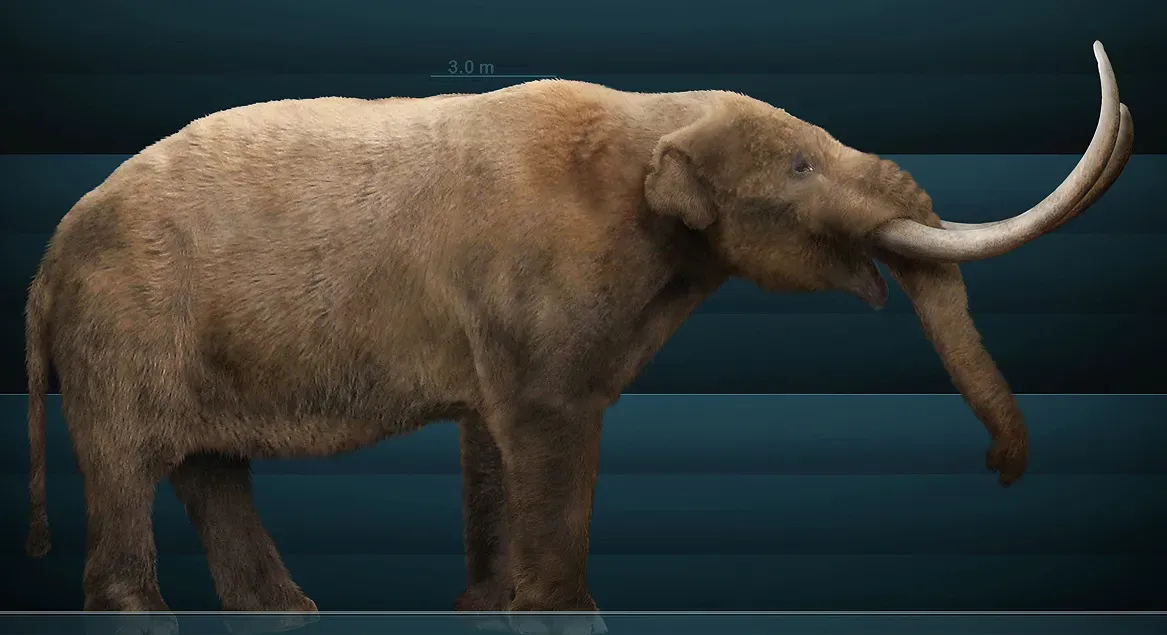
The American mastodon (Mammut americanum) is the most ancient of the North American elephants, with ancestors that crossed the Bering Strait from Asia roughly 15 million years ago, evolving into the American mastodon 3.5 million years ago. The mastodon was shorter and stockier than the later mammoths, and the shape of its teeth indicates that mastodons didn’t graze on grass like mammoths but ripped off leaves and entire tree branches for food. Think of them as the browsers of the prehistoric world, more like a forest elephant than a prairie grazer.
Mastodons were true travelers, ranging from the Alaskan Arctic all the way south to Honduras, feeding on branches, shrubs, and small trees. Perfectly adapted to cold conditions, they had short ears and tails to help conserve heat and a thick coat of fur, and were hardy and tough, built to withstand freezing temperatures and fend off Ice Age predators. American mastodons moved in small herds browsing on large shrubs and trees, and like their cousins and modern elephants, the herds were led by a matriarch.
4. The Short-Faced Bear: The Towering Terror
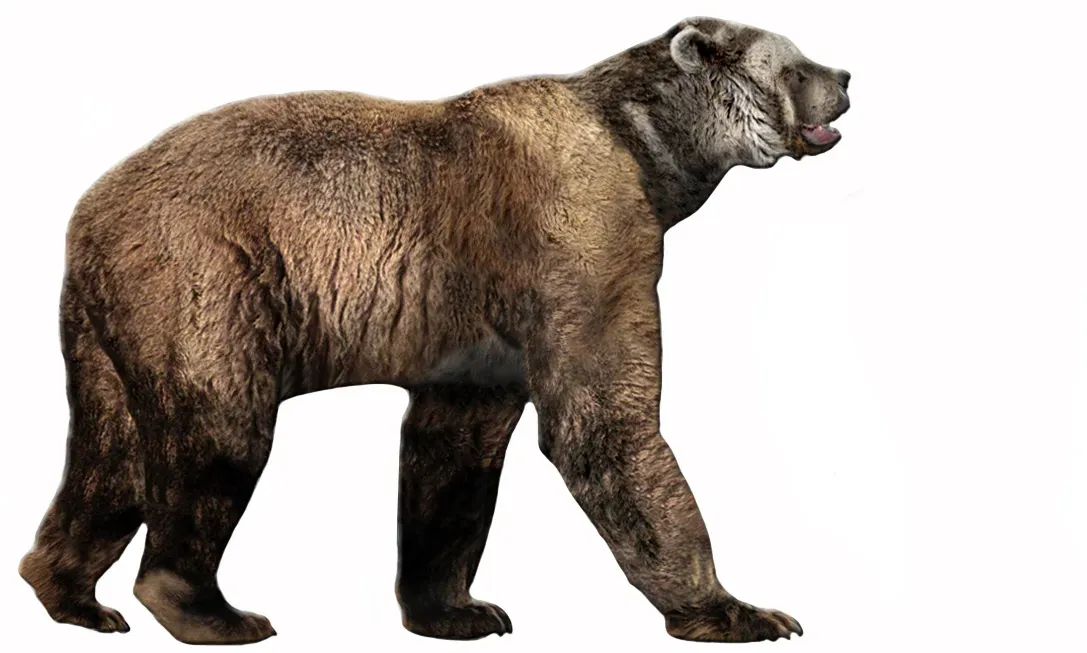
The illustration was originally uploaded by Dantheman9758 at http://dantheman9758.deviantart.com/art/Arctodus-simus-53736084, and later added to Wikimedia Commons by user: Ark., CC BY-SA 3.0)
In prehistoric North America, the short-faced bear (Arctodus simus) ruled the land and was one of the biggest and most powerful predators the world has seen, weighing an immense 900 kilograms and standing 2 metres at the shoulder. To put that in perspective, your average modern grizzly bear would look like a cub standing next to it. These bears had slender limbs compared to the heavily built bears we see today and stood tall, reaching 4 metres when reared up, more like a grizzly bear on stilts.
To survive, these bears would have had to consume approximately 35 pounds of meat each day. At the height of their existence, short-faced bears were the most common bear found in North America. Scientists still debate whether these bears were ferocious hunters chasing down prey or far-ranging scavengers that followed the faint scent of a carcass using their acute sense of smell. Nevertheless, the short-faced bear would have been a towering, frightening beast.
5. The Dire Wolf: The Original Pack Hunter
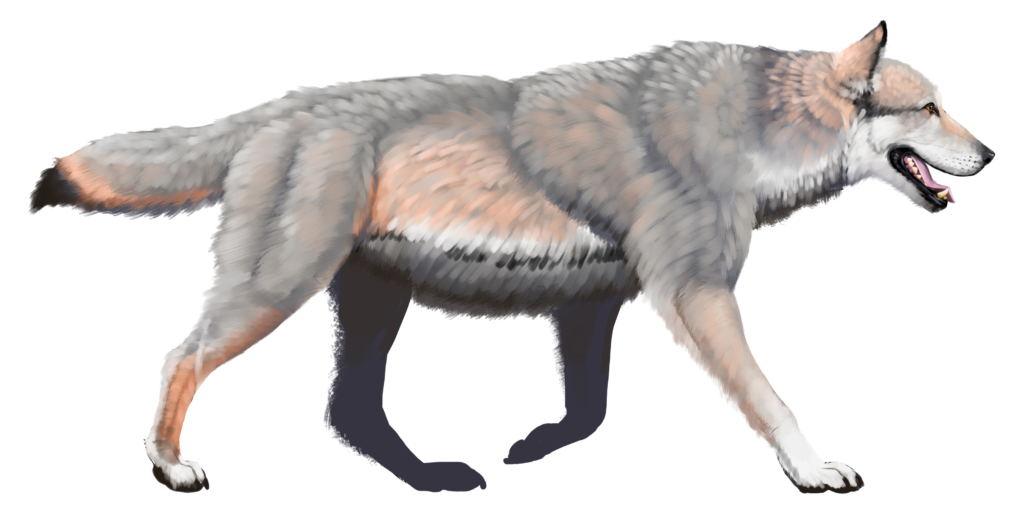
The dire wolf (Canis dirus) was a formidable predator during the Pleistocene era, larger and more robust than modern wolves, preying on megafauna such as horses and bison across North America, and with a powerful build they likely relied on pack hunting to bring down large prey. Game of Thrones may have made the dire wolf famous again, but these animals were very real. They were similar to modern grey wolves but heavier, with bigger heads, jaws, and teeth giving them a strong bite, ideal for killing large prey like camels, horses, and bison.
Although dire wolves went extinct about 13,000 years ago, their bones are abundant in California’s La Brea Tar Pits and Wyoming’s Natural Trap Cave. About 5.7 million years ago, dire wolves split from wolves, making them distant relatives of today’s wolves on the canid family tree. Scientists think that dire wolves evolved in South America and ventured north, while today’s grey wolves migrated from Asia, so the two species are not closely related. Unfortunately, the shifting climate at the end of the Ice Age, combined with competition with humans for food, led to the demise of the dire wolf about 10,000 to 20,000 years ago.
6. The Giant Ground Sloth: A Gentle Giant You Wouldn’t Want to Anger
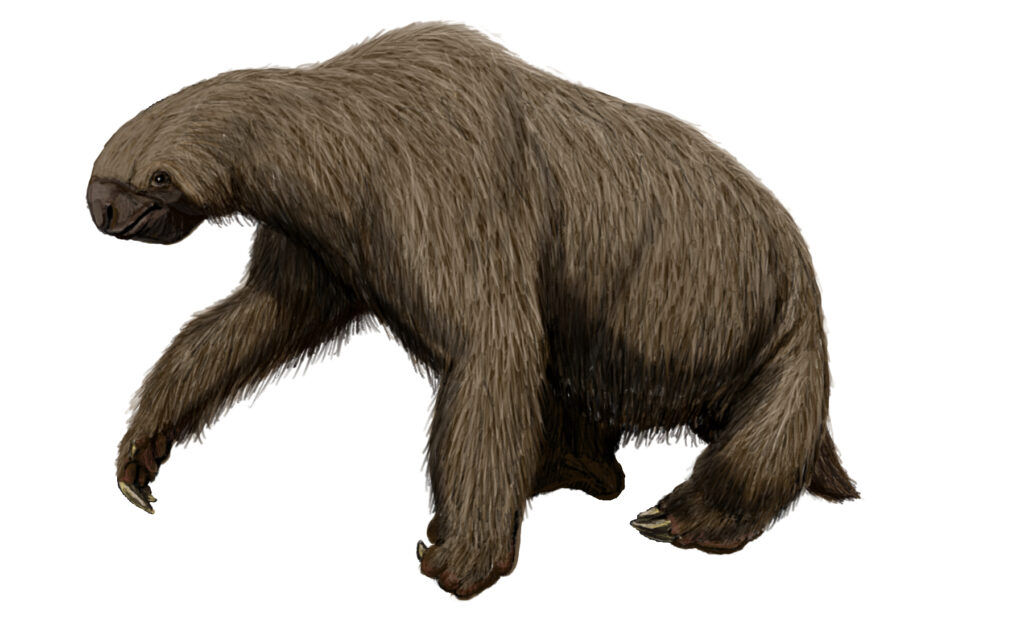
The giant ground sloths lived during the Ice Age in the Americas, and the giant ground sloth evolved in South America around 35 million years ago, migrating into North America around 8 million years ago. Don’t let the word “sloth” fool you into imagining something cute and slow-moving dangling from a tree. These sloths weighed as much or more than the short-faced bear at one tonne and stood 3 metres tall, growing to the size of an ox. They were slow and awkward moving but although they looked fearsome, they fed on leaves and twigs of the northern forests.
The Shasta Ground Sloth is known from central Mexico through most of the American Southwest, and partial mummified ground sloths have been found in desert caves in Arizona and New Mexico, including a cave in Grand Canyon National Park that was full of Shasta Ground Sloth dung. That discovery alone is remarkable. For a long time scientists believed the first humans to arrive in the Americas soon killed off these giant ground sloths through hunting, but new research from several sites is starting to suggest that people came to the Americas earlier, hinting at a remarkably different life in which early Americans may have spent millennia sharing prehistoric savannas and wetlands with these enormous beasts.
7. The Glyptodon: Nature’s Living Tank
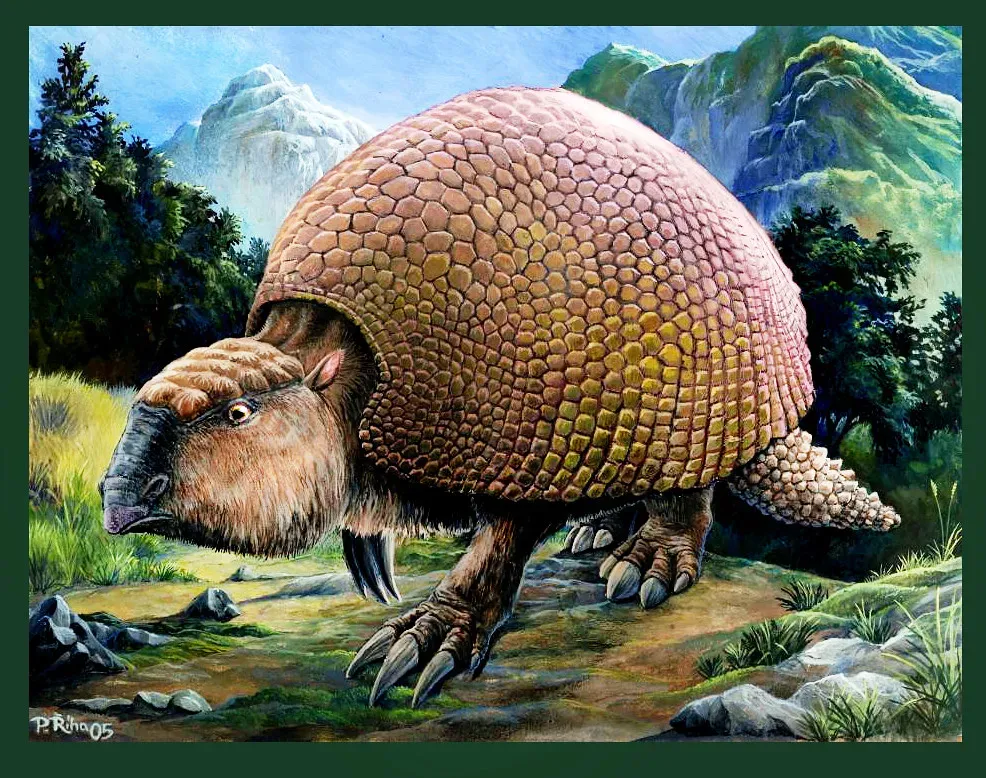
Glyptodon was a massive armored mammal comparable in size to a Volkswagen Beetle, related to modern armadillos, sporting a heavy protective shell composed of bony plates, and it roamed the Americas during the Pleistocene epoch, foraging on grasses and plants. Honestly, if you stumbled across one of these in a field today, you’d think someone had left a small car behind. Glyptodon had a mixed diet of grasses and other plants, living at the edge of forests and grasslands, with a wide muzzle adapted for bulk feeding, and its armor likely protected it from predators such as Smilodon and the giant bear Arctotherium.
The armored one-ton creature likely traveled to North America from South America via the Isthmus of Panama and, after reaching North America about 2 million years ago, Glyptodon prospered in what is now coastal Texas and Florida, before going extinct about 10,000 years ago. Evidence of hunting of glyptodonts by recently arrived Paleoindians suggests that humans may have been a causal factor in their extinction. There’s something both awe-inspiring and quietly sad about an animal so perfectly armored against natural predators being unable to protect itself from early people.
8. The American Lion: Bigger Than Anything in Africa Today
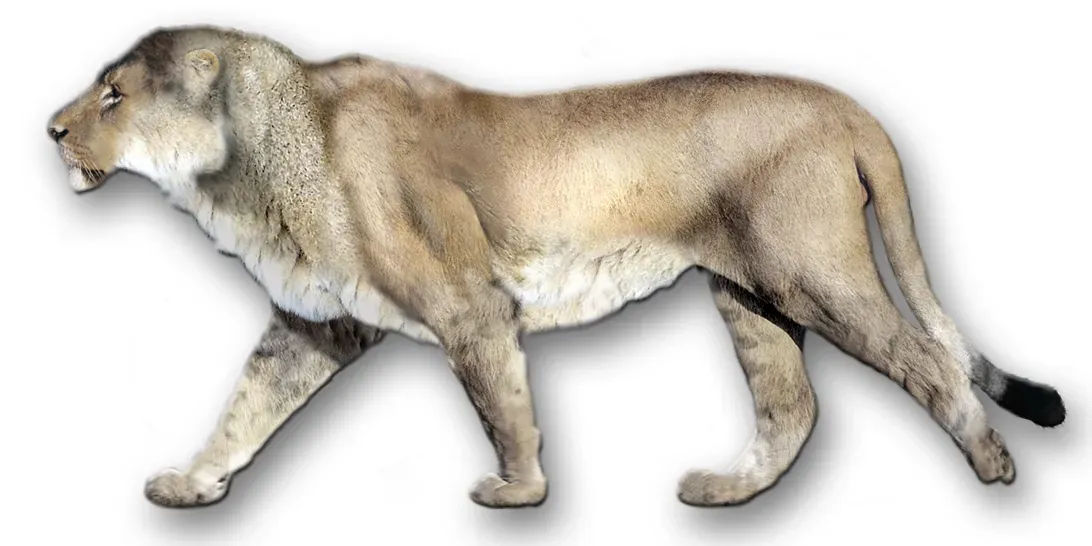
Twenty thousand years ago, lions roamed the entire planet. The American cave lion (Panthera atrox) called this continent home and was one of the largest known cats, almost 25 per cent bigger than the lions we see in Africa and India today, standing 1.2 metres at the shoulder and weighing up to 420 kilograms. Let that sink in for a moment. The biggest, most powerful lion alive today would have been outclassed by what was roaming across prehistoric North America.
Paleolithic art of similar lions found on cave walls in France and Russia shows that these prehistoric cats had a faintly striped coat and no mane, unlike modern lions, and scientists think they could have lived in prides, working together to hunt and raise young. Stable isotope analysis based on bone collagen shows evidence that the dire wolf, Smilodon fatalis, and the American lion competed for the same prey, making prehistoric North America a truly cutthroat competitive arena for apex predators.
9. The Ancient American Horse: Born Here, Lost Here
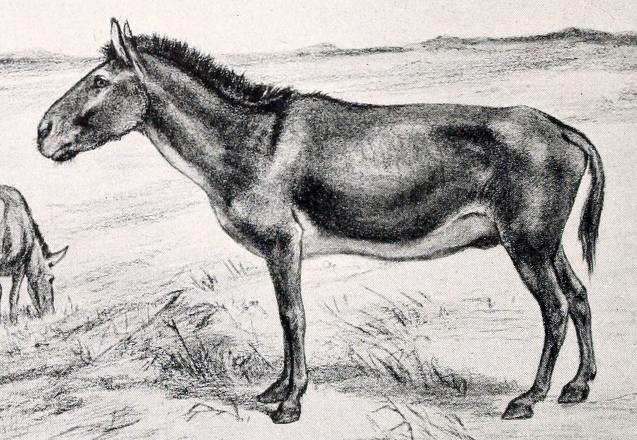
Here’s something that surprises almost everyone: you did not get your first horses from Europe. It is commonly believed that European settlers introduced horses to the Americas for the first time. The truth, however, is quite the opposite. Ancient horses once roamed North America approximately 50 million years ago until they went extinct at the end of the last Ice Age about 11,000 years ago. The horse, in other words, is originally an American animal.
In spite of the fact that horses and donkeys died out in North America, they managed to survive in Eurasia and Africa, which explains why horses are still here today. As one researcher noted, the great peculiarity of this extinction is that horses died out in North America yet managed to survive in Eurasia and Africa, which is why we still have horses and their relatives today. When Spanish explorers arrived with horses centuries later, they were, in a strange twist of natural history, returning them to their ancestral homeland.
10. The American Camel: Desert Ships of the Ancient US
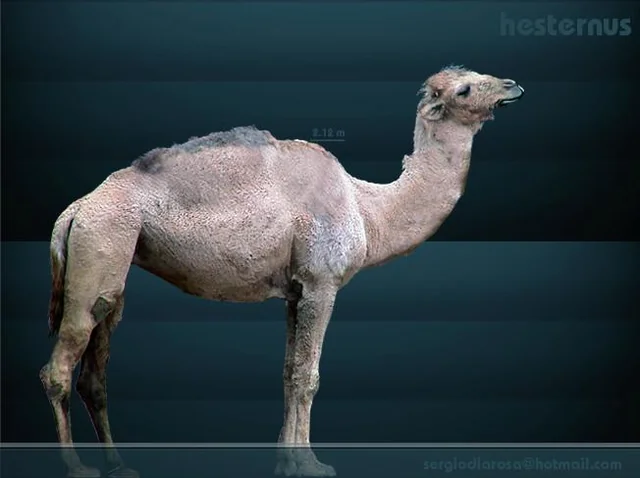
Most people are stunned to learn that camels didn’t originate in the deserts of Africa or the Middle East. The very first camels on the planet evolved in North America around 44 million years ago, and those ancient camels migrated westward over the Bering land bridge around 7 million years ago, later becoming the one-humped (dromedary) and two-humped (Bactrian) camels of North Africa and Asia. You read that correctly: the camel is essentially a North American invention that emigrated overseas.
Seven-foot camels once roamed the shores of marshy seas as part of the Ice Age world that humans encountered when they crossed from Asia into North America between 14,000 and 25,000 years ago. Their prey probably included the extinct camel Camelops hesternus alongside other megafauna that grazed the ancient North American grasslands. The camel species that remained in North America, including Camelops, eventually disappeared alongside the other megafauna at the end of the Pleistocene, leaving behind no living descendants on this continent.
11. The Giant Beaver: The Rodent That Dwarfed a Bear Cub
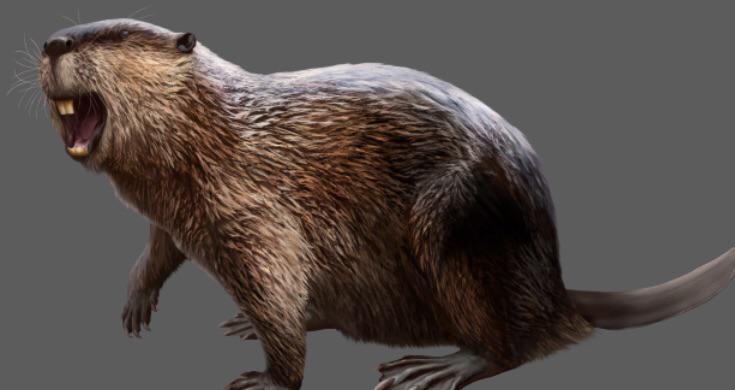
This rodent was the largest ever found in North America, comparable in size to a black bear. An aquatic plant-eating animal, the giant beaver lived in lakes and ponds, and giant beavers are ancient ancestors of modern beavers. You might look at a modern beaver and think it’s already a pretty solid-sized creature. Now imagine one the size of a bear, lumbering into a prehistoric North American pond. That’s the giant beaver in a nutshell.
Beavers the size of bears and sloths weighing more than 3,000 pounds were real inhabitants of Ice Age North America. When the glaciers receded in the late Pleistocene, North America was home to dozens of thriving species of extra-large mammals known as megafauna. The giant beaver, like so many of its ancient neighbors, vanished around 10,000 years ago, likely a victim of the same catastrophic combination of climate shifts and early human pressure that swept away nearly every large animal on the continent in a geological blink of an eye.
Conclusion: A Lost World Beneath Our Feet
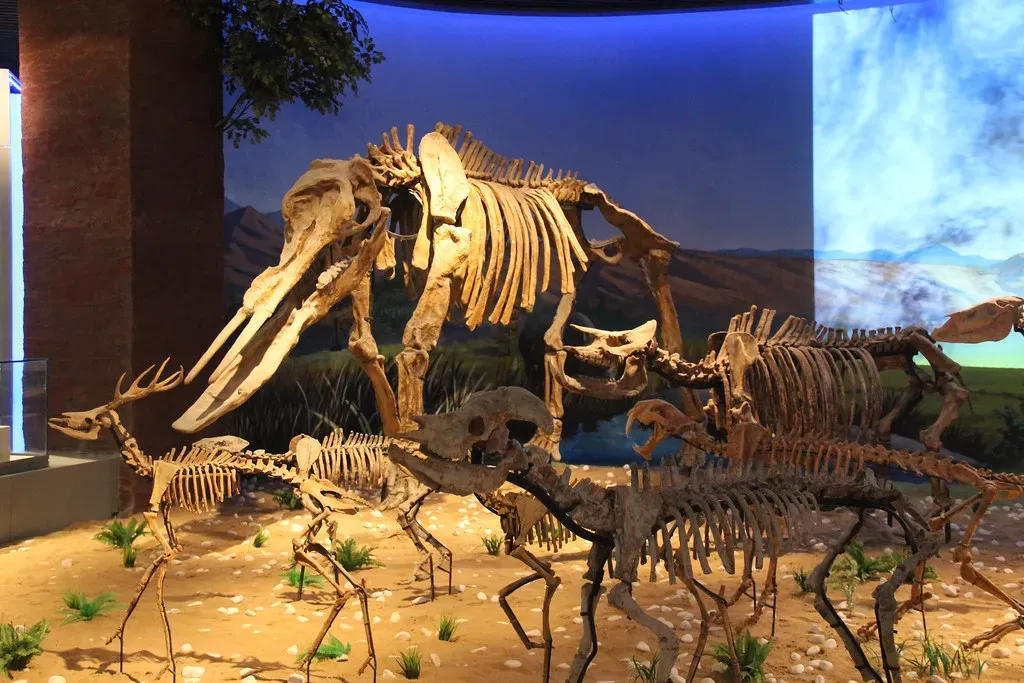
The prehistoric United States was, quite frankly, one of the wildest places Earth has ever hosted. From towering mammoths to armored tank-like glyptodonts and bear-sized beavers, the land you walk on today carries the memory of creatures almost too extraordinary to believe. Many of these giant mammals may have been hunted into extinction as prehistoric humans expanded into North America. The debate between climate change and human impact continues, but the loss itself is undeniable.
What makes all of this even more striking is how recent it really was. Unlike dinosaurs, which are known only through fossils, some mammoth specimens have been found frozen with soft tissue, hair, and even stomach contents preserved, giving us unprecedented insights into these magnificent animals that once roamed across what would become the United States. These were real, warm-blooded, breathing creatures that shared this land not so very long ago. Every time a fossil is pulled from the earth, another chapter of an unbelievably rich story comes back to life. What would you have felt, standing face to face with a short-faced bear or watching a herd of woolly mammoths move across a frozen plain? Let us know your thoughts in the comments below.