When most people think about prehistoric life, their minds jump straight to T. rex, Triceratops, and Brachiosaurus. Honestly, you can’t blame anyone for that – dinosaurs have had an incredible PR team for decades, thanks to Hollywood blockbusters and childhood toy sets. But here’s the thing: the story of life on Earth is so much stranger, so much weirder, and honestly so much more fascinating than any dinosaur could ever be.
Long before the first dinosaur set foot on land, and long after the last one disappeared, our planet was crawling, swimming, and flying with creatures that seem almost too bizarre to be real. Some of them looked like something out of a fever dream, others like living tanks or underwater nightmares. You’ll find their stories both thrilling and, at times, a little unsettling. Let’s dive in.
1. Dunkleosteus: The Armored Predator With a Guillotine for a Mouth
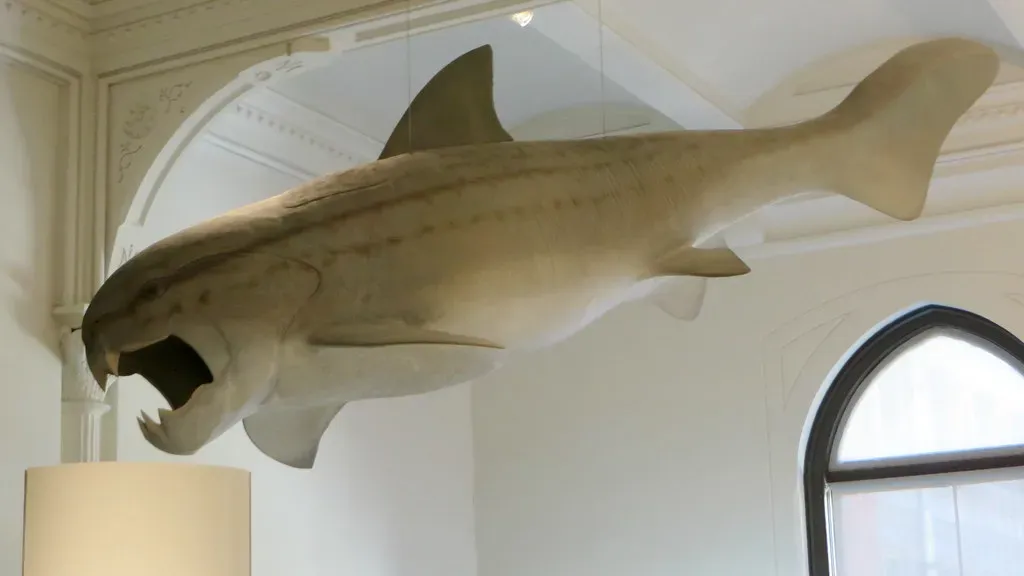
Forget the great white shark as your go-to symbol of aquatic terror. Dunkleosteus was an extinct genus of large armored fish that existed during the Late Devonian period, about 382 to 358 million years ago, and was one of the first vertebrate apex predators of any ecosystem. It was essentially the ocean’s top killer long before sharks figured out how to run things efficiently.
Dunkleosteus lacked proper teeth; instead, it had two pairs of long, bony blades that protruded from its upper and lower jaws, creating a cutting apparatus that crudely resembled a guillotine. Researchers estimated it could open its jaws in just 20 milliseconds – lightning fast – and this speed was enough to create a small vacuum in front of its mouth, thought to have helped it suck prey in before biting straight through them. That’s right. It literally vacuumed its victims into its mouth. Sleep well.
2. Titanoboa: The Snake That Makes Anacondas Look Like Earthworms

If you have even the slightest discomfort around snakes, prepare yourself. Titanoboa cerrejonensis is considered the largest known member of the suborder Serpentes, and it lived during the Paleocene epoch roughly 60 million years ago. Paleontologists estimate it reached lengths ranging between 42 and 49 feet and weighed an astonishing 2,500 pounds. To put that in perspective, that’s roughly as long as a school bus.
There is a scientific explanation for its colossal size. Warmer temperatures during the Paleocene epoch would have provided favorable conditions for reptilian growth and development, since reptiles are ectothermic, meaning they rely on external sources of heat to regulate their body temperature. Warmer climates would have allowed reptiles to metabolize food more efficiently, facilitating rapid growth and potentially leading to larger body sizes. In other words, a hotter ancient Earth literally cooked up the world’s biggest, most terrifying snake.
3. Anomalocaris: The Cambrian Killer With Eyes Like Dinner Plates

More than half a billion years ago, the world’s oceans were stalked by a soft-bodied predator that looked unlike anything alive today. This bizarre-looking animal was Anomalocaris, or “unusual shrimp,” and is widely regarded as the world’s first apex predator – the killer whale of its day. The name “unusual shrimp” is, I think, the most inadequate label ever given to any living thing in history.
Resembling a large shrimp with long, segmented body, this formidable creature had mouthparts that formed a circular disc of sharp plates to crush prey. Its compound eyes were among the most advanced of its time, allowing it to effectively hunt a variety of marine life. Anomalocaris was the largest hunter of the Cambrian period, measuring up to a metre in length from its grasping frontal appendages to the tips of its tail fans. For something the size of a large lobster, it ruled half a billion years of ocean history.
4. Hallucigenia: The Creature That Left Scientists Baffled for Decades
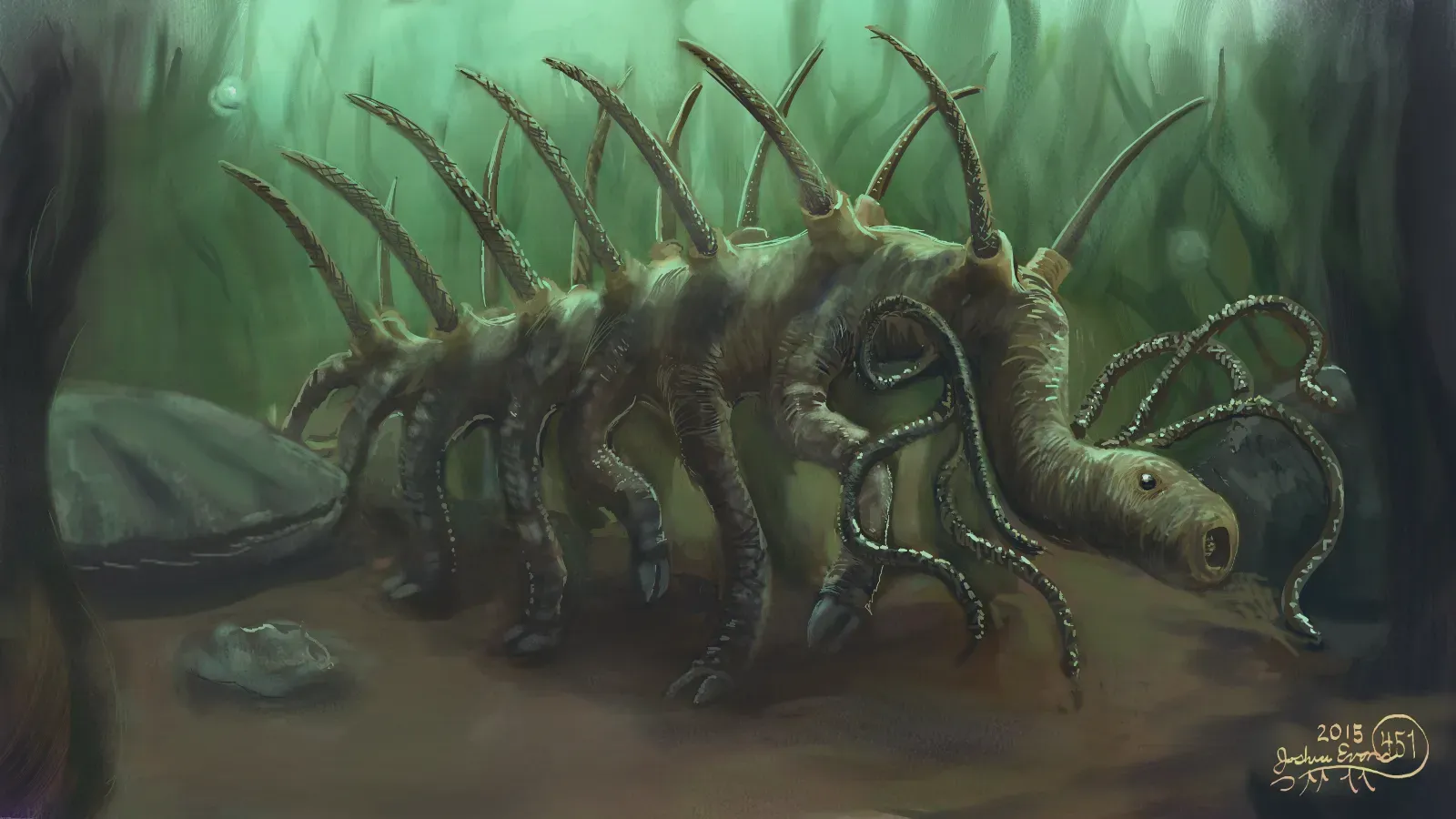
Named for its bizarre form, Hallucigenia was a worm-like organism with elongated, spiny appendages protruding from its back, resembling nothing less than a living nightmare. Living roughly 508 million years ago during the Cambrian Explosion, this oddity had a conical head and multiple pairs of articulated legs. Initially, scientists struggled to identify its head from its tail. Let that sink in – experts literally couldn’t tell which end was which for decades.
Its strange body plan, with spines, leg-like structures, and what were once mistaken for tentacles, led to countless reinterpretations of its anatomy. Only in recent decades have researchers clarified which end was the head, revealing a creature complete with eyes and a row of grinning teeth. It is now known as an early ancestor of modern-day velvet worms, reflecting the experimental nature of evolutionary development during the Cambrian period. Evolution was clearly in a very experimental phase back then.
5. Arthropleura: The Millipede the Size of a Car
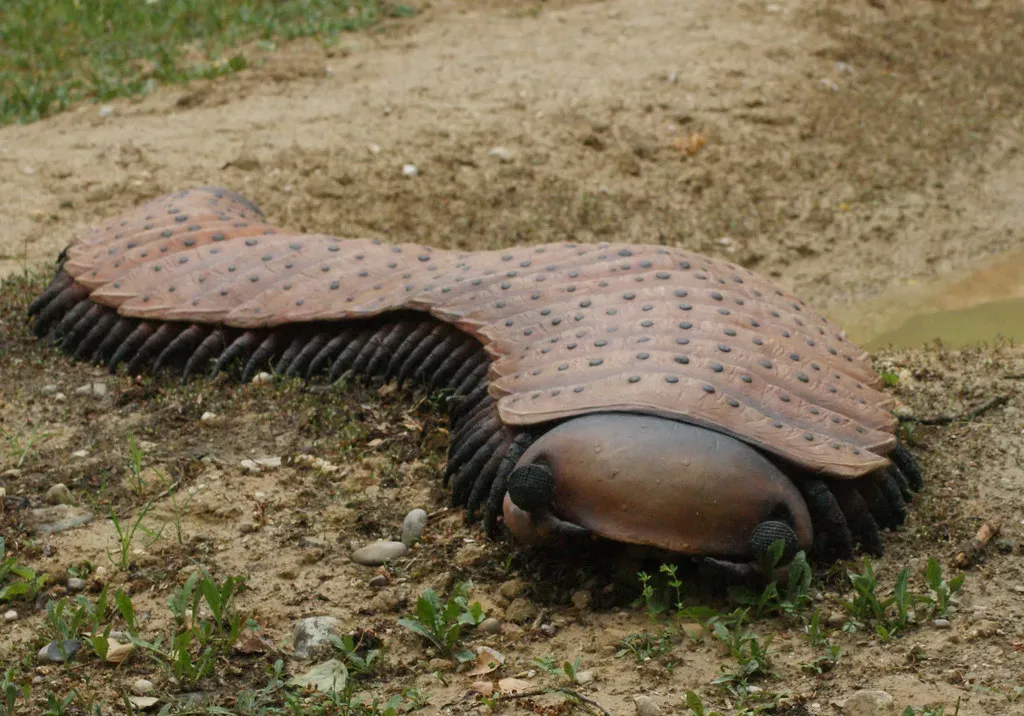
Imagine a millipede so massive it could stretch up to 8 feet long. That is Arthropleura, the largest-known land invertebrate of all time, which inhabited the Earth during the Carboniferous period around 300 million years ago. Eight feet. That is bigger than most sofas. Picture that crawling through your garden and try to stay calm.
Bugs grew to huge sizes in the Paleozoic period. Scientists aren’t sure why, but theorize their size was due to more oxygen in the atmosphere and few predators. Although these creatures might look terrifying, their diets primarily consisted of decomposing vegetation. Their sheer size reflects the oxygen-rich environment of the time, which allowed for extraordinary growth in arthropods. So essentially, higher oxygen levels turned prehistoric millipedes into living nightmares. Peaceful nightmares, but nightmares nonetheless.
6. Helicoprion: The Shark With a Buzzsaw for a Jaw
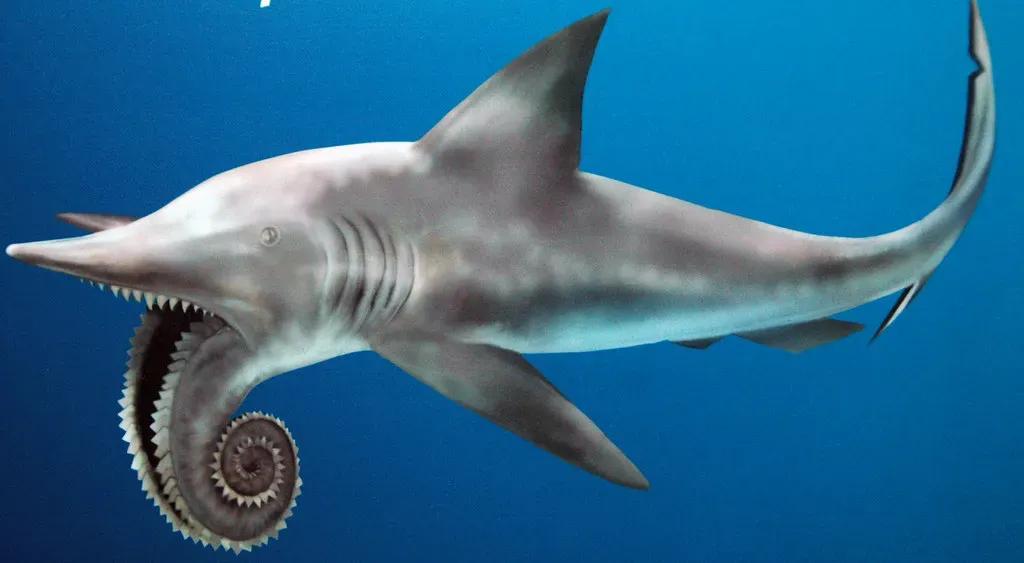
Helicoprion is not only a candidate for the weirdest fossil ever, but also for the most enduring scientific mystery. This 270-million-year-old fish was first described in 1899 based on its buzzsaw-shaped whorl of teeth and nothing else. Paleontologists figured the teeth belonged to some kind of shark, but beyond that they were at a loss. For over a century, scientists argued about where in the body this spiral of teeth even belonged.
It wasn’t until 2013 that researchers, led by Leif Tapanila, concluded that the whorl actually filled the lower jaw, functioning as a buzzsaw that rotated its teeth backward as the jaw closed. This ancient shark living around 290 million years ago had a distinct spiral arrangement of teeth resembling a buzz saw blade, which likely helped it capture and slice through the soft bodies of its prey, such as squid. Nature essentially engineered a circular saw and attached it to a prehistoric fish. Remarkable and deeply unsettling.
7. Megatherium: The Giant Sloth That Could Be a Predator

Megatherium was a pretty large mammal. It was actually a giant ground sloth related to modern sloths. An inhabitant of South America during the Quaternary period, an adult standing on its hind legs could reach a height of 20 feet. Think about that for a second. Your average modern sloth fits in a backpack. This thing stood taller than a giraffe.
Megatherium was previously regarded as a slow tree ripper. But recent studies show that its great claws might have been used for stabbing and killing. If this was the purpose of its claws, it would make the giant sloth the largest predator of the South American plains. So the creature you might imagine lazily hanging in a tree was potentially the apex predator of an entire continent. That’s a plot twist nobody saw coming.
8. Glyptodon: The Volkswagen Beetle of the Ice Age

A fully grown Glyptodon could reach 4 metres long, 1.5 meters high, and 2 tons in weight, about the size and shape of a Volkswagen Beetle automobile. This is honestly the most endearing comparison in all of paleontology. Glyptodon was an extinct group of large, herbivorous armadillos that lived from the Pliocene, around 3.2 million years ago, to the early Holocene, around 11,000 years ago, in South America.
Its most distinguishing feature was a large shell composed of over 1,000 scutes, each 2.5 centimetres thick. Like human fingerprints, each Glyptodon’s scute pattern was different. Glyptodon seems to have gone extinct around eleven thousand years ago, which coincidentally is not long after the very first humans arrived in South America. There’s also evidence suggesting that early humans actually used the shells of dead Glyptodon as makeshift shelters. Truly a multi-purpose animal, even in death.
9. Opabinia: The Five-Eyed Freak of the Cambrian Ocean
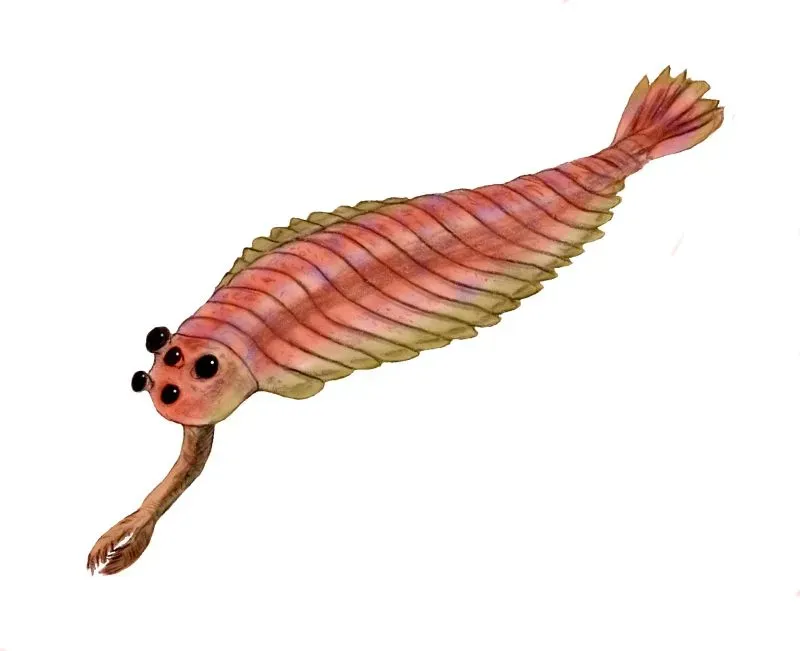
Opabinia was a marine arthropod that lived over 500 million years ago. This small, soft-bodied marine animal is notable for its unusual appearance, with five eyes on stalks and a long, flexible proboscis with a claw-like structure at the end, which was likely used to grasp and manipulate food. Five eyes. Let that image settle in your mind for a moment.
The body of Opabinia had lobes along its sides and a fan-shaped tail, suggesting it was a swimmer that moved through the water by undulating its body and lobes. Its unique anatomy has made it one of the most intriguing and iconic creatures from the Cambrian period. It’s worth noting that when this creature was first presented at a scientific conference in 1972, the audience reportedly burst out laughing. It’s hard to say for sure how you’d react either, but laughing seems fair.
10. Basilosaurus: The Terrifying Ancient Whale That Hunted Sharks

Basilosaurus, meaning “king lizard,” is a genus of large, predatory, prehistoric archaeocete whale from the late Eocene, approximately 41.3 to 33.9 million years ago. It was the first archaeocete and prehistoric whale known to science. The irony of its name is rich: scientists initially thought it was a giant reptile, hence the “saurus,” but it was actually a whale – a very, very dangerous whale.
Analyses of the stomach contents showed that one species fed exclusively on fish and large sharks, while bite marks on the skulls of juvenile Dorudon have been matched with the dentition of another species, suggesting a dietary difference between the two species. Basilosaurus was a 66-foot-long predatory carnivorous whale that went extinct about 40 million years ago. So yes, this ancient whale routinely hunted and ate sharks. Today’s sharks are lucky they missed this particular neighbor.
11. Scutosaurus: The Rhino-Sized Armored Reptile Before Its Time
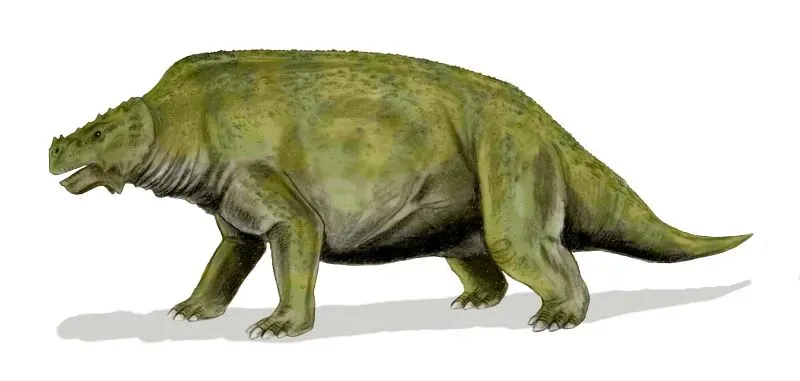
There weren’t many animals bigger than Scutosaurus during the Late Permian, particularly in the cold deserts of ancient Russia. These forklift-sized reptiles weren’t just long, at around 3 metres from head to tail, but heavy too, breaking the scales at a whopping 1,100 kilograms – equivalent to a black rhino. A lot of Scutosaurus’s weight came from a thick layer of rough plates, or osteoderms, that covered almost its entire body.
Scutosaurus and other large members of the pareiasaur family were among the first megaherbivores to walk the Earth. They were pioneers in a niche that would later be dominated by dinosaurs such as Stegosaurus, Triceratops, and Ankylosaurus. Scutosaurus looked a lot like these dinosaurs, but was as distantly related from them as we are from whales and dolphins. So next time someone talks about dinosaurs being the first armored giants, you know differently.
Conclusion

The prehistoric world was not just the age of dinosaurs. It was a long, wild, and spectacularly strange experiment in what life could look like. From ocean terrors with guillotine jaws to snake-shaped whales that hunted sharks, from five-eyed micro-swimmers to planet-spanning giant sloths, Earth’s history is packed with creatures that would make any modern animal feel rather ordinary.
Honestly, I think the biggest takeaway here is that evolution doesn’t play it safe. It throws everything at the wall and runs wild with whatever sticks. These eleven creatures remind us that nature’s imagination is far greater than ours. The next time you feel like you’ve seen everything the natural world has to offer, just remember that somewhere in the fossil record, there’s a fish with a buzzsaw jaw and a millipede the size of a car waiting to prove you wrong.
What’s the creature on this list that surprised you most? Tell us in the comments – and don’t be surprised if your answer changes after you’ve had a little time to think it over.